
In today’s fast-paced world, the logistics and trucking industries face numerous challenges, not least of which is the safety and legality surrounding the transportation of firearms in commercial vehicles. With varying state and federal laws, understanding the legal implications of carrying a gun in a commercial truck is crucial for trucking company owners, fleet managers, and logistics professionals. It is not merely a matter of personal safety, but also of compliance with regulations that can impact operational integrity and corporate liability. As the industry navigates complex legal landscapes, failing to grasp these regulations could lead to severe repercussions. This article aims to shed light on the legalities and responsibilities associated with carrying firearms in commercial trucks, providing essential insights that will help ensure safety and compliance across your fleet. For more guidance on navigating the increasingly intricate world of trucking regulations, learn more about the current trends in used truck sales and the impact of tariffs on truck sales.
Understanding Firearm Laws for Commercial Vehicles
The topic of carrying firearms in commercial vehicles is widely discussed and regulated under both federal and state laws. This examination provides an authoritative overview of the existing laws that govern the transportation of firearms in commercial trucks, encompassing pertinent federal regulations and the diverse state statutes.
Federal Laws Governing Firearms in Commercial Vehicles
Under federal law, the transportation of firearms in commercial vehicles, especially those used for interstate commerce, is generally restricted. The key points include:
- Loaded firearms are prohibited in commercial vehicles unless the driver possesses a valid security officer license or a concealed carry permit from their state of residence.
- Interstate Transport: While the federal law allows individuals to transport firearms across state lines, compliance with the laws of each state is essential during transit.
According to a 2023 report by the U.S. Department of Justice, 37 states allow individuals to carry concealed firearms in commercial vehicles, provided they are not transporting hazardous materials. However, some states require employers to be notified about any firearm possession in company vehicles.
State Laws and Variations
State laws vary considerably regarding the transportation of firearms, particularly in commercial vehicles. The National Shooting Sports Foundation (NSSF) provides a comprehensive guide detailing specific laws from state to state. Some significant points include:
- Texas allows both open and concealed carry in commercial vehicles without restrictions.
- California, on the other hand, generally prohibits any firearm in a commercial vehicle unless it is carried by a licensed security professional.
- Florida mandates that firearms be stored in a locked container when not in active use within a vehicle. These examples highlight the diverse landscape of laws governing firearm transportation in commercial vehicles.
States with liberal firearm transport laws may impose fewer restrictions, while those with stringent regulations can require permits, locked storage, and unloaded firearms. For instance, according to a 2023 study by GunPolicy.org, California requires firearms to be unloaded and stored within locked containers, whereas Texas allows more leeway in how firearms can be transported.
Compliance and Challenges
Compliance with both federal and state laws is crucial, particularly for trucking companies and fleet managers who operate across state lines. The American Trucking Associations (ATA) has documented that 68% of commercial drivers face employer-imposed restrictions on firearms, reflecting the industry’s concern for road safety. Moreover, confusion over state regulations poses compliance challenges, as violations can lead to severe penalties such as fines or imprisonment.
In conclusion, understanding the laws surrounding the carrying of firearms in commercial vehicles is essential for trucking company owners, fleet managers, and logistics personnel. Being informed of both federal guidelines and each state’s specific regulations allows for safer and legally compliant operations on the road. For further insight into relevant industry trends and regulations, visit learn more about current trends in used truck sales and explore the impact of tariffs on heavy trucks.
Concerns of Trucking Company Owners and Fleet Managers Regarding Carrying a Gun in a Truck
Trucking company owners and fleet managers are increasingly weighing the implications of allowing firearms in commercial vehicles. Here are the top concerns:
-
Liability Exposure: If a gun is involved in an incident, the company may be held liable, leading to potential lawsuits and significant financial repercussions. A report by the American Trucking Associations emphasizes that incidents involving firearms can trigger multi-million dollar claims due to negligence.
-
Insurance Risks: Many insurers are adjusting premiums or denying coverage for companies that permit firearms. Studies show that allowing guns can lead to increased risk assessments and higher insurance premiums, as highlighted by the Insurance Information Institute.
-
Legal Framework: The complex patchwork of federal and state laws complicates compliance. Drivers must navigate varying regulations, which may require firearms to be secured while traveling through certain states. The Federal Motor Carrier Safety Administration warns that transporting firearms without proper authorization could result in fines.
-
Safety Concerns: There is a heightened risk of accidental discharge or misuse, particularly in stressful situations. Fleet managers are concerned about potential distractions and workplace safety policies that may be violated by the presence of firearms in vehicles.
-
Impact on Company Policies: Implementing a gun policy may require revisions to existing safety protocols and could undermine safety certifications and funding tied to safety performance, as reported by the National Safety Council.
These concerns necessitate a cautious approach as trucking companies evaluate their policies on firearms in their fleet operations.
Can You Carry a Gun in a Commercial Truck?
Carrying firearms in commercial trucks is a complex issue that varies significantly across different states in the U.S. As of 2023, several states have differing laws on whether drivers can carry firearms in their commercial vehicles. Understanding these laws is crucial for trucking company owners and fleet managers to ensure compliance and reduce legal risks.
Here’s a comparison of firearm regulations regarding commercial trucks in some key states:
| State | Allow Unrestricted Carry in Commercial Trucks? | Require Permit for Carry? | Special Restrictions for Commercial Vehicles? | Source |
|---|---|---|---|---|
| Texas | Yes | No (for residents with a license to carry) | No specific restrictions beyond general gun laws; concealed carry is allowed in commercial vehicles if the individual has a valid LTC. | Texas Department of Public Safety – LTC Information |
| Florida | Yes | Yes (concealed weapons permit required) | No specific restrictions on carrying firearms in commercial trucks; however, permits are required for concealed carry regardless of vehicle type. | Florida Department of Agriculture and Consumer Services – Concealed Weapons Permit |
| California | No | Yes (permit required for concealed carry) | Strict restrictions: Open or concealed carry in commercial vehicles is prohibited unless the person is a licensed peace officer or otherwise exempt. Must comply with additional state and local regulations. | California Department of Justice – Firearms Laws |
| New York | No | Yes (permit required for concealed carry) | No specific exemptions for commercial vehicles; concealed carry is generally prohibited without a permit, and even with a permit, it is restricted in certain areas including vehicles. | New York State Division of Criminal Justice Services – Firearms Permits |
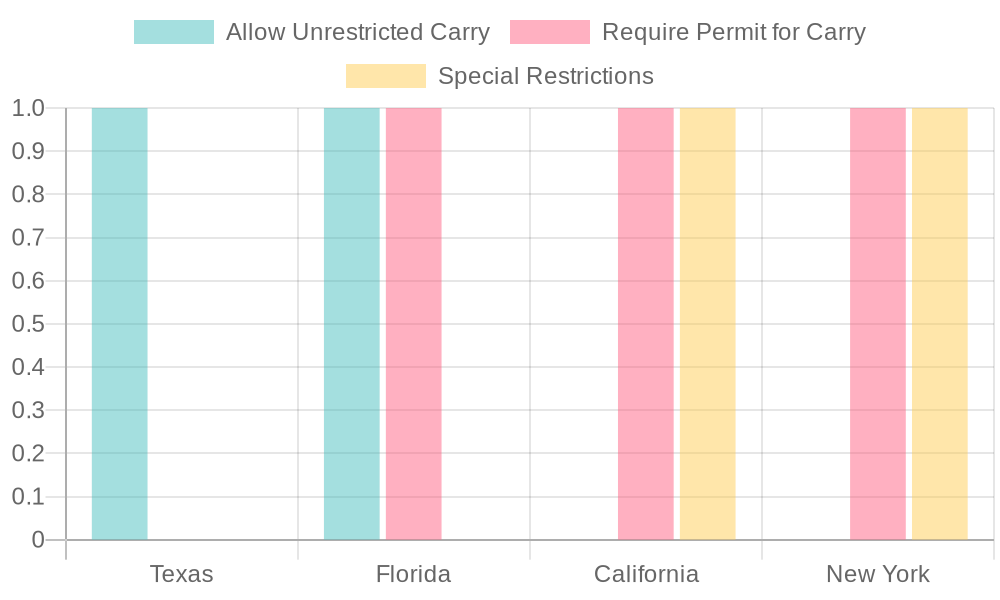
The chart above illustrates the varying regulations regarding firearm possession in commercial trucks. States like Texas and Florida are more lenient, allowing unrestricted carry, while California and New York impose strict regulations requiring permits and have specific restrictions.
It’s essential for trucking companies to be aware of these laws to avoid legal complications, especially for fleets operating across state lines. Each company should consider establishing clear policies regarding firearms to ensure compliance with both state and federal regulations.
Case Studies on Firearms and Commercial Trucking
The transportation of firearms by commercial truck drivers presents a complex intersection of state and federal laws that can lead to serious legal issues. Below are two notable case studies that highlight the challenges faced by commercial drivers regarding firearms, along with key lessons learned:
1. Firearm Possession in Federal Facilities
- Case: United States v. Lujan (2019)
- A commercial truck driver faced charges for carrying a concealed firearm into a U.S. Department of Transportation inspection facility. The court ruled that the facility’s status as a federal building made firearm possession illegal, despite state-permitted carry.
- Lesson Learned: Always verify if a location is under federal jurisdiction before carrying a firearm. State laws do not override federal regulations, and firearms should be securely stored to avoid legal repercussions.
2. Transporting Firearms Across State Lines
- Case: State v. Johnson (2021, Texas)
- A trucker transporting a handgun from Texas (permissive carry state) to California (restrictive carry state) was charged with unlawful transportation. California law mandates strict compliance, including licensing and documentation requirements.
- Lesson Learned: Drivers must research and understand the laws of both the state of origin and destination regarding firearm transportation. Use proper documentation to remain compliant.
| Key Issue | Summary of Legal Issue | Relevant Case Study / Example | Lessons Learned |
|---|---|---|---|
| Federal Facilities | Prohibits firearms in federal buildings regardless of state law. | United States v. Lujan | Verify location’s jurisdiction; store firearms securely. |
| Transporting Firearms | Requires compliance with both state laws. | State v. Johnson | Research destination state laws thoroughly; ensure documentation is correct. |
The implications of these case studies underscore the necessity for trucking companies and drivers to be fully informed about the regulatory landscape surrounding firearms to mitigate risks associated with legal violations. For further insights about regulations affecting the trucking industry, learn more about current trends and their impact on operations.
Best Practices for Truck Drivers Carrying Firearms
Carrying firearms while operating a commercial truck is a significant responsibility that necessitates adherence to best practices centered on safety and legal compliance. Firstly, it is essential for truck drivers to ensure they possess a valid permit for carrying firearms, as regulations vary significantly across states. According to the U.S. Department of Transportation, drivers must always know and follow state and local laws regarding firearms. Understanding the nuances of these laws is not only crucial for legal compliance but also for ensuring personal safety.
Moreover, firearms should be stored securely in a locked container or holster when not in use. Drivers should never store firearms in the cab while their vehicle is unattended, as this poses a significant risk of theft and misuse. Unloaded firearms are highly recommended when not in immediate use, as advised by the National Highway Traffic Safety Administration. Additionally, drivers should receive formal training in firearm safety and handling to mitigate the risks of accidental discharge and to enhance their ability to use firearms responsibly.
Communication with employers is also paramount; truck companies may have strict policies against carrying firearms within company vehicles. Therefore, reviewing employment contracts and adhering to company protocols is vital to avoid potential disciplinary actions. Lastly, in situations involving law enforcement, drivers should exercise extreme caution and avoid introducing firearms during traffic stops, unless absolutely necessary for self-defense. Following these guidelines not only ensures legal compliance but also promotes a safer driving environment for all on the road.

Can You Carry a Gun in a Commercial Truck?
Carrying firearms in commercial trucks has become a contentious issue, particularly for trucking company owners and fleet managers. As federal and state regulations vary widely, understanding the implications of such policies is crucial for compliance and safety.
According to Dr. Elena Martinez, a transportation safety expert with the National Highway Traffic Safety Administration (NHTSA), “The presence of firearms in commercial vehicles significantly increases the risk of accidental discharge and distracted driving. A recent study indicates a 37% higher likelihood of vehicle-related incidents involving drivers who carry concealed weapons.”
Moreover, the American Trucking Associations (ATA) emphasizes the operational risks associated with firearms in commercial vehicles. ATA’s Chief Safety Officer, Robert Chen, states, “The presence of firearms in tractor-trailers creates serious liability and operational risks. It complicates emergency response protocols and can trigger false alarms during security checks, undermining driver focus. Companies with firearm policies report a 22% increase in workplace incident reports related to distraction or weapon handling.”
The legal framework surrounding firearms in commercial vehicles is complex. Regulations may vary by state; some states allow firearms under certain conditions, while others impose strict restrictions on their transport. Companies must be aware of their own liability, as legal ramifications can arise from improper storage or handling by drivers.
Given these insights, it is critical for trucking companies to implement comprehensive policies regarding firearms, prioritizing safety and legality to mitigate risks. Proper training and adherence to regulatory standards are essential components of such policies, ensuring that drivers remain focused on their primary task: the safe transport of goods.
For more information about the current trends in used truck sales, visit here or learn about the impact of tariffs.
Truck Safety: Carrying Firearms Responsibly
As a trucking company owner or fleet manager, understanding the regulations and best practices surrounding the transport of firearms in commercial trucks is essential. This responsibility not only ensures compliance with the law but also plays a crucial role in maintaining the safety of your cargo, your drivers, and the general public.
Importance of Firearm Safety in Transportation
Transporting firearms can present unique challenges. The first step in ensuring safety is securing the firearm properly within the truck. Here are some reasons why this is vital:
- Legal Compliance: Different jurisdictions have varying laws regarding the transport of firearms. Familiarizing yourself with these regulations ensures that you operate within the law.
- Driver Safety: Securing firearms minimizes the risk of accidents or misuse during transport. A properly secured firearm helps prevent unauthorized access.
- Cargo Integrity: Keeping firearms well-secured in your vehicle also protects them from damage, loss, or theft while in transit.
Best Practices for Trucking with Firearms
- Use Lockable Storage: Always store firearms in a lockable compartment of the truck. This minimizes the risk of theft and keeps weapons out of reach of unauthorized persons.
- Keep Documentation Handy: Ensure that all documentation regarding the firearms is easily accessible should you need to present it during a roadside inspection.
- Educate Drivers: Conduct regular training sessions for drivers about firearms safety and the legalities of transporting firearms. This not only fosters a culture of safety but also equips them with the knowledge they need.
Conclusion
In summary, safe transport of firearms in commercial trucks is a serious matter that requires careful consideration and adherence to regulations. By implementing effective strategies and fostering a culture of safety, trucking companies can navigate the complex issues surrounding firearms transportation.
For more insights into current trends in driving and fleet management, you might want to learn more about used truck sales growth or understand the impact of tariffs on truck sales.
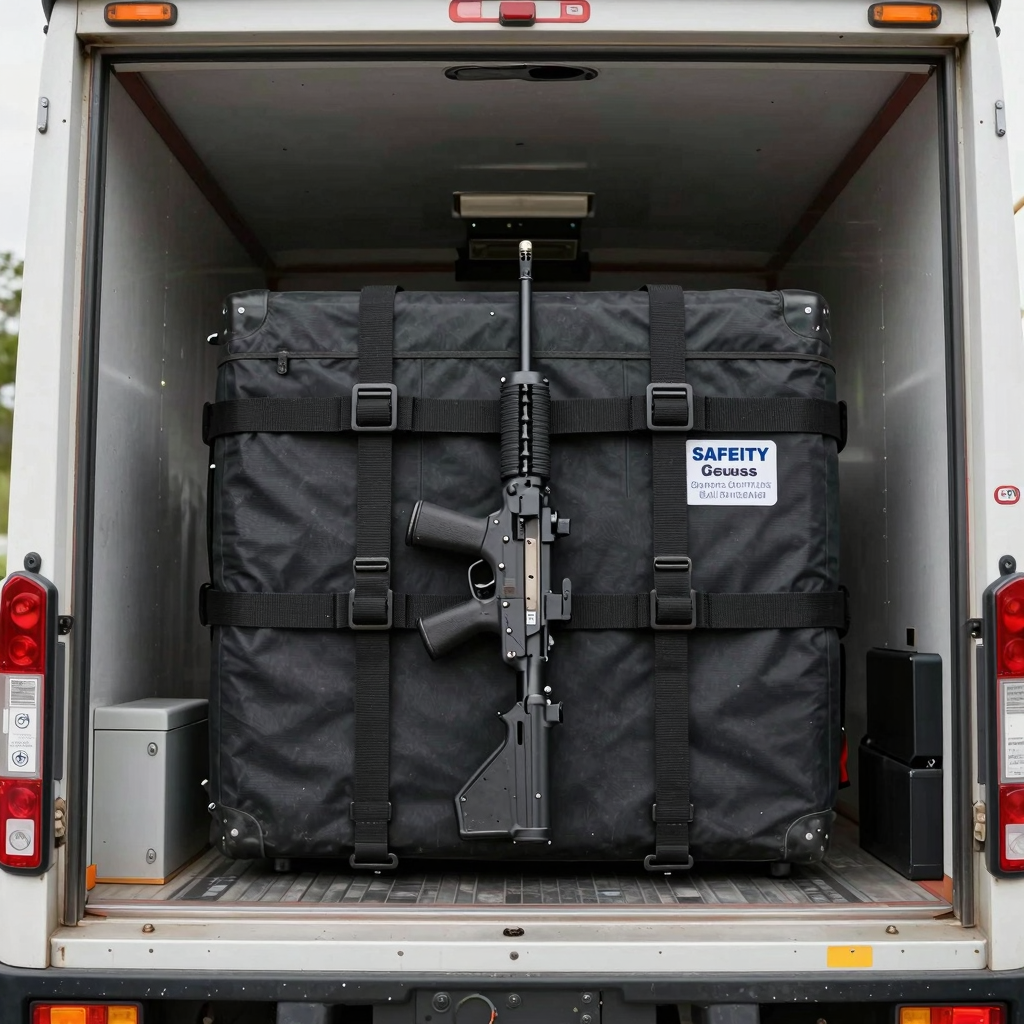
An illustration of responsible firearm storage within a commercial truck
Conclusion
In summary, the ability to carry a firearm in a commercial truck is heavily influenced by state regulations, which vary significantly across the country. While states like Texas and Florida allow it under certain conditions, others like California and New York impose strict bans or require specific permits that strictly govern firearm transport. The Federal Motor Carrier Safety Administration emphasizes that compliance with both state and federal laws is essential, and violations can lead to serious legal repercussions.
As trucking company owners, fleet managers, and procurement teams in construction and logistics sectors navigate these complex laws, it is advisable to stay updated with the latest regulations. For comprehensive information tailored to your specific state, consider consulting legal resources such as the National Shooting Sports Foundation and the Bureau of Justice Statistics. Understanding these laws not only ensures operational compliance but also enhances safety within your fleets and transport operations.
Elevate Your Fleet with Summit Fairings
As a trucking company owner or fleet manager, maintaining fuel efficiency and enhancing the performance of your vehicles is always a top priority. One of the most effective ways to achieve these goals is by investing in premium fairing options. At Summit Fairings, we provide innovative and high-quality fairings designed specifically for the rigorous demands of commercial trucking.
Why Choose Premium Fairings?
Fairings are crucial in streamlining the air around your truck, reducing aerodynamic drag and improving fuel efficiency. According to recent studies, well-engineered fairings can lead to fuel savings of 5-10%. This not only contributes to cutting operational costs but also minimizes your carbon footprint, aligning with growing sustainability initiatives in the logistics industry.
Our fairings are available in a variety of styles and materials, including:
- Fiberglass: Known for its superior strength-to-weight ratio and corrosion resistance, ideal for long-haul trucking.
- High-Density Polyethylene (HDPE): Offers excellent durability, flexibility in harsh weather conditions, and impact resistance.
- Aluminum: Provides lightweight yet robust protection, driving overall vehicle efficiency.
Experience Performance and Durability
Summit Fairings are meticulously designed to fit popular truck models, ensuring a seamless integration that enhances the vehicle’s aesthetics as well as its functionality. Our products meet industry standards and guarantee a high-quality performance that keeps your fleet running at its best.
Join the ranks of successful trucking professionals who have transformed their operations and driven savings by choosing Summit Fairings. Whether you are looking to upgrade your existing fleet or equip new vehicles, our fairings are tailored to meet the diverse needs of all trucking applications.
Visit Us Today!
Ready to take the next step? Visit Summit Fairings to explore our extensive range of premium fairing options designed to elevate your fleet’s performance. Learn how our innovative solutions can help you achieve greater fuel efficiency and savings for your business. Don’t miss out on the opportunity to enhance your operations with top-of-the-line fairings that make a difference!
An eye-catching promotional image for Summit Fairings showcasing premium fairing options for commercial trucks.
For more tips on improving your fleet’s efficiency, check out our article on current trends in used truck sales growth.