
Do You Have to Display VIN on Commercial Trucks?
As a trucking company owner or fleet manager, have you ever considered how crucial the visibility of the Vehicle Identification Number (VIN) is for commercial trucks? This seemingly simple requirement carries significant implications for compliance, safety, and business operations within the transportation industry. The VIN serves as a unique fingerprint for each vehicle, offering essential information that can streamline maintenance procedures, support lawful vehicle registration, and assist in recovering stolen units. With increased scrutiny surrounding vehicle safety standards and regulations, understanding whether and how to properly display the VIN on commercial trucks is more relevant than ever.
By adhering to VIN display regulations, trucking companies not only comply with legal requirements but also foster trust among clients and partners. An improperly displayed VIN can lead to confusion, fines, or worse, operational disruptions. In a rapidly evolving market-with factors such as economic uncertainties and evolving regulations impacting the trucking landscape (learn more about current trends)-it’s vital to remain informed. In this discussion, we will explore the necessity of VIN visibility in commercial trucks, the regulations governing it, and how it impacts fleet management and operational efficiency.
Importance of VIN for Commercial Trucks
The Vehicle Identification Number (VIN) is a crucial element in the lifecycle of commercial trucks. Comprising 17 characters, the VIN serves as a unique identifier, similar to a fingerprint, that tracks a vehicle’s history and complies with regulatory standards.
Role in Vehicle Registration
For commercial trucking operations, proper vehicle registration is paramount. When registering a commercial truck, the VIN is the primary identifier used by the Department of Motor Vehicles (DMV) and the Federal Motor Carrier Safety Administration (FMCSA). This ensures accurate documentation of vehicle specifications and ownership, preventing potential fraud. As stated by the National Highway Traffic Safety Administration (NHTSA), a valid VIN is legally required and must match official records for compliance in interstate transportation. Failure to maintain accurate VIN records can lead to legal repercussions and operational disruptions.
Importance for Safety Compliance
The VIN also plays an instrumental role in safety compliance. It enables manufacturers and regulatory bodies to swiftly identify vehicles subject to safety recalls. For example, if a truck has a defect in critical components such as brakes or tires, the VIN allows for efficient communication between manufacturers, safety regulators, and fleet managers. This rapid response is essential for maintaining safety standards and ensuring the safety of both the driver and the public.
Insight into Vehicle History
Moreover, the VIN provides access to a comprehensive vehicle history. Services like Carfax and AutoCheck use the VIN to compile reports that detail any accidents, repairs, and maintenance records throughout the vehicle’s life. For fleet managers, this data is invaluable when making decisions about vehicle acquisitions, maintenance schedules, and risk management. Understanding a truck’s history supports informed decisions regarding its operational reliability and residual value in the market.
In summary, the VIN’s significance extends beyond mere identification; it is a critical tool that enhances safety, ensures compliance with regulations, and provides essential information about a vehicle’s past. Fleet managers and trucking company owners must recognize the importance of properly displaying and maintaining VINs as part of their operational protocols. For further insights into trends affecting the trucking industry, you can learn more about current trends in used truck sales and the impact of tariffs on truck sales.
| State | VIN Display Requirement | Consequences of Non-Compliance |
|---|---|---|
| California | Must be visible on the dashboard and permanently affixed to the vehicle. Additional display on the driver’s side door jamb for vehicles manufactured after 1981. | Fines, possible out-of-service orders during inspections; source: California DMV |
| Texas | Displayed on the front portion of the truck’s frame, inspected during annual safety inspections. | Fines and potential registration holds for non-compliance; enforcement details at FMCSA |
| New York | Must be visible through the windshield without covering. | Citations and towing fees may apply for non-compliant vehicles; see NHTSA |
| Federal | All CMVs must have a legible VIN, unaltered and in standardized position (commonly on dashboard or frame rail). | Violations can incur fines up to $10,000, mandatory repairs, and potential suspension of operating authority; TruckingInfo |
Legal Requirements Related to Displaying VIN on Commercial Trucks
Displaying the Vehicle Identification Number (VIN) on commercial trucks is not just a best practice; it is a legal requirement enforced by both federal and state regulations. The VIN serves as a unique identifier for the vehicle, providing essential information about its specifications, history, and ownership.
Federal Regulations
At the federal level, the VIN must be displayed in compliance with regulations set forth by the National Highway Traffic Safety Administration (NHTSA). According to 49 CFR Part 565, the following are key requirements:
- VIN Format: The VIN must be a unique 17-character code that includes both letters and numbers, with certain letters like I, O, and Q excluded to avoid confusion.
- Placement: The VIN should be permanently affixed to the vehicle in a specified location, often on the dashboard or the driver’s side door frame. This ensures visibility for inspections and law enforcement purposes.
- Manufacturers’ Responsibility: Manufacturers are responsible for ensuring that the VIN is correctly assigned and that the vehicle meets applicable safety standards.
Failure to adhere to these federal requirements can result in significant penalties. Vehicles that do not comply may be subject to rejection in safety inspections, which can severely affect operations for trucking companies seeking to maintain regulatory compliance.
State Regulations
In addition to federal regulations, individual states have their own requirements regarding VIN display in commercial trucks. Here are some examples:
- California: The California Department of Motor Vehicles (DMV) mandates that VINs be displayed prominently and readable from outside the vehicle. Non-compliance can lead to fines or additional scrutiny during vehicle inspections and registrations.
- Texas: In Texas, commercial vehicles must have the VIN clearly marked to prevent fraud and misrepresentation. The Texas DMV utilizes VIN checks to ensure compliance, and penalties for non-compliance can lead to heavy fines and potential loss of the vehicle’s registration.
Different states may have specific conditions regarding the inspection process, which may require the submission of VIN verification during initial registration or renewal. Therefore, it is imperative for trucking companies to understand the specific regulations applicable in the states where they operate to prevent any legal complications.
Consequences of Non-Compliance
Non-compliance with VIN regulations can lead to severe repercussions:
- Fines and Penalties: Non-compliance can result in substantial monetary fines. Each state may impose different penalties that can accumulate, leading to increased operational costs.
- Vehicle Impoundment: Trucks that do not display the VIN correctly may be impounded by authorities until compliance is achieved. This can cause costly delays in operations and loss of business opportunities.
- Increased Scrutiny from Authorities: Vehicles lacking proper VIN display can attract unwanted attention from law enforcement, increasing the likelihood of inspections and potential regulatory issues.
- Loss of Business Licenses: In extreme cases, repeated violations can jeopardize a trucking company’s business license or operational permits, putting its future in jeopardy.
Conclusion
Fleet managers and trucking company owners must ensure compliance with both federal and state regulations concerning VIN display. This not only avoids the substantial penalties associated with non-compliance but also sustains the integrity and legitimacy of their operations in the highly regulated transportation industry. For more detailed insights on the impact of regulatory compliance in trucking, learn more about compliance guides. It’s a small cost to ensure smooth operations and uphold industry standards.
Importance of Proper VIN Display for Commercial Trucks
The proper display of Vehicle Identification Numbers (VINs) is crucial for commercial trucks not only for regulatory compliance but also for legal accountability in cases of investigations or incidents. A legal expert from the American Trucking Associations emphasizes:
“From a legal standpoint, proper VIN display is not just a procedural formality but a fundamental requirement for operational legality. Failure to maintain a visible, unaltered VIN exposes carriers to significant risks, including federal citations, increased insurance premiums, and potential liability in accident investigations. In litigation involving accidents or theft, an improperly displayed or missing VIN can undermine a carrier’s defense and credibility with regulators and courts.”
This sentiment is echoed by the National Highway Traffic Safety Administration, which points out that improper or fraudulent VIN displays can lead to substantial penalties and loss of operational authority. For instance, any missing, obscured, or altered VIN can result in immediate out-of-service orders and fines, highlighting the necessity of compliance with VIN regulations.
Failure to adhere to VIN display requirements not only affects legal standing but can also have serious financial implications for companies, making it essential for trucking companies to understand these regulations to avoid legal repercussions. Learn more about the impact of VIN compliance and its importance for your operations.
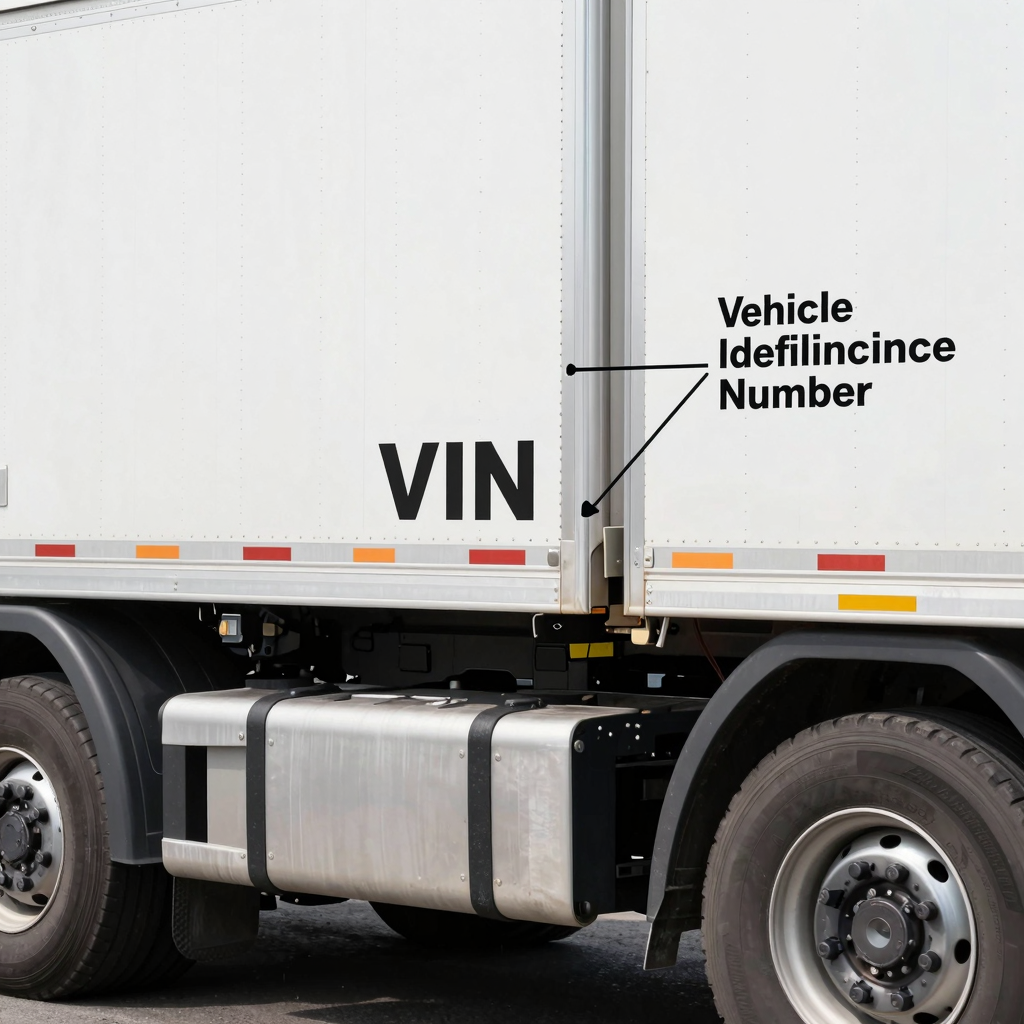
FAQ – VIN Display Requirements for Commercial Trucks
1. Is it mandatory to display the VIN on commercial trucks?
Yes, under federal regulations, commercial trucks must display the Vehicle Identification Number (VIN). This is stipulated in the 49 CFR Part 565 which outlines that the VIN must consist of 17 characters and must be printed in a clear, standard font on the vehicle.
2. Where should the VIN be displayed on the truck?
The VIN must be placed in a conspicuous location on the truck’s body to ensure it is easily accessible for inspection and identification. Common placements include on the driver’s side door frame, dashboard, or near the front of the engine compartment.
3. What are the consequences of not displaying the VIN?
Failure to display the VIN appropriately can result in legal ramifications, including fines, registration issues, and complications in instances of theft or accidents. Not having a visible VIN could hinder law enforcement efforts to track vehicle ownership or history.
4. What regulations specify the VIN’s construction?
The VIN is composed of 17 characters, including digits and letters (excluding I, O, and Q to avoid confusion with numbers). This standardization ensures that each VIN is unique and can be tied back to specific vehicle information, such as its manufacturer and year of production. For more detailed guidance, visit the NHTSA guidelines.
5. How does VIN affect vehicle insurance and registration?
The VIN plays a crucial role in vehicle registration and insurance. Insurance companies use the VIN to determine the vehicle’s history, value, and coverage eligibility. Failing to comply with VIN display requirements can complicate these processes and could lead to denial of claims or issues with registration.
6. Are there different VIN requirements in various states?
While federal regulations provide a baseline, individual states may have additional requirements regarding VIN display or vehicle identification. It is advisable for trucking companies to consult their state’s motor vehicle department for any specific regulations.
7. Can I customize the VIN display on my trucks?
No, any modifications to the VIN itself, including its display format, are illegal. The VIN must remain unaltered and in the designated format specified by federal and state regulations.
The importance of Vehicle Identification Number (VIN) display in the trucking industry cannot be understated. A clear and compliant VIN display is integral to vehicle identification, regulatory compliance, and maintaining safety standards. Despite its critical role, several trucking companies have faced penalties for VIN display issues, prompting broader discussions about compliance and operational improvement.
Case Study Highlights
- Estes Express Lines: California Emissions Violation
- Background: Estes Express Lines, a prominent trucking company, faced scrutiny for alleged violations of California’s stringent particulate matter emission standards.
- Penalty: The Environmental Protection Agency (EPA) levied a fine of $100,000 against Estes and mandated the company to fund environmental projects.
- Lessons Learned:
- VIN Compliance: In this context, the focus on VIN compliance during inspections became apparent. Mismanagement or inaccuracies in VIN disclosure contributed to broader compliance issues, highlighting the need for better adherence to state regulations regarding emissions.
- Enhanced Training: Following the incident, Estes implemented enhanced training programs to educate drivers and fleet managers about the importance of maintaining and displaying accurate VINs on all vehicles.
- California Air Resources Board (CARB) Enforcement
- Background: The CARB emphasizes stringent emissions standards for diesel vehicles, making compliance with VIN labeling a critical concern.
- Compliance Issues: The board has noted that non-compliance can lead to significant financial penalties.
- Lessons Learned:
- Documentation and Readiness: Fleet operators were advised to regularly check VIN visibility and ensure databases reflect proper VIN records. Ensuring that VINs are clearly displayed prevents issues during inspections and avoids liabilities.
- Internal Audits: Implementing regular internal audits became key for many companies to address compliance proactively and assure adherence to regulations.
- American Transportation Research Institute (ATRI) Findings
- Background: ATRI’s research highlights the ramifications of enforcement actions concerning heavy-duty vehicles.
- Key Insights: The study underlines that even relatively minor issues, such as obscured VINs, can lead to extensive compliance investigations.
- Lessons Learned:
- Proactive Compliance Culture: The significance of fostering a proactive compliance culture was emphasized. Companies that consistently verify VIN accuracy and visibility minimize risks.
- Regular Training and Awareness: Ongoing training sessions about compliance issues can lead to better awareness among drivers and fleet managers regarding the repercussions of VIN errors.
Importance of Adherence
The lessons learned from these case studies underline the critical need for trucking companies to adopt a comprehensive compliance strategy involving the following:
- Routine Checks: Regular checks should be instituted to ensure VINs are always visible and accurately recorded in compliance databases.
- Training Programs: Continuous professional development for drivers and management about compliance standards, particularly concerning VIN displays and emissions.
- Internal Reviews: Establishing a system of periodic review and audits can help identify potential compliance risks before they escalate to enforcement actions.
Conclusion
The proper display of VINs is not merely a regulatory necessity but a foundational aspect of operations within the trucking industry. Enforcement actions against companies reveal essential takeaways related to compliance, operational integrity, and financial implications. Addressing VIN display issues proactively can help trucking companies mitigate risks and enhance their overall compliance framework.
For further insights into the implications of compliance in the industry, you may find it useful to learn more about current trends in used truck sales or explore how economic uncertainties impact the trucking market.
The trucking industry must prioritize adherence to compliance standards not just to avoid penalties but to ensure the operational efficiency and safety of their fleets.
VIN Display Compliance Trends Among Commercial Trucking Companies
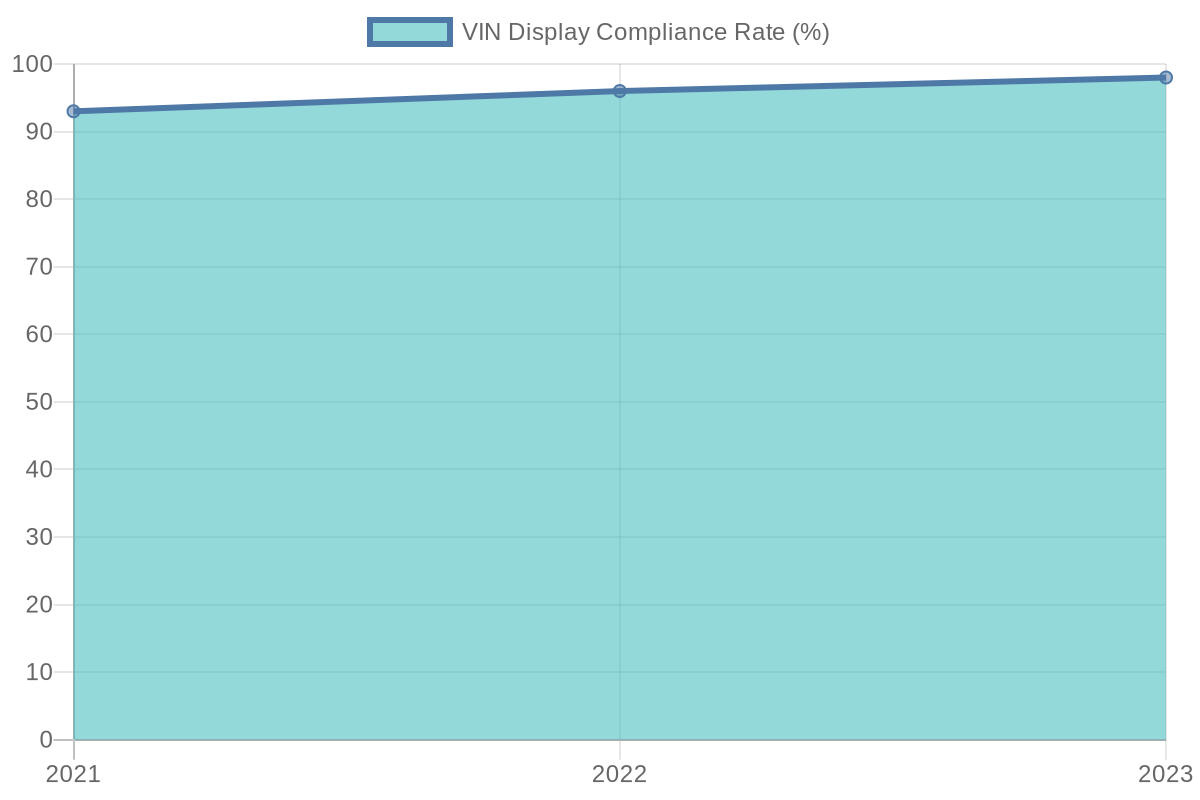
The display of Vehicle Identification Numbers (VIN) is critical in the commercial trucking industry for safety and compliance. Over recent years, there has been a noticeable trend toward higher compliance rates regarding VIN displays among commercial trucking companies. The following chart illustrates this improvement from 2021 to 2023:
Compliance Rates Over the Years
| Year | VIN Display Compliance Rate (%) |
|---|---|
| 2021 | 93 |
| 2022 | 96 |
| 2023 | 98 |
Compliance by Fleet Size (2023):
- Larger Fleets: 99.2%
- Smaller Fleets: 94.5%
Key Drivers of Improvement
The increase in compliance rates can be attributed to several factors:
- Enhanced driver training programs.
- Updated fleet maintenance protocols.
- Stricter enforcement measures from regulatory bodies.
These trends indicate a positive response from the industry towards adhering to VIN display regulations, improving overall fleet management and safety standards. For more insights on current trends in truck sales, you can learn more here.
Conclusion
In summary, understanding and adhering to VIN display regulations is crucial for commercial truck operators, including trucking companies, fleet managers, and procurement teams in construction and logistics. The Vehicle Identification Number (VIN) is not just a series of characters; it serves as a critical link between the vehicle and its legal and operational identity. As outlined, regulations mandate that the VIN be clearly displayed in a permanent, accessible location on commercial trucks to facilitate registration, compliance verification, and safety inspections.
Failure to comply with these regulations can have serious repercussions, including fines, operational interruptions, and increased risks of fraud or theft. For instance, as emphasized by the NHTSA, improper display can hinder law enforcement efforts and complicate safety recall processes. Compliance not only ensures that a vehicle remains operational and legally registered but also promotes trust with customers and partners, underpinning business integrity within this highly regulated industry.
For those involved in managing fleets, it is imperative to implement comprehensive strategies that ensure VIN visibility and accuracy across all vehicles. By streamlining compliance measures, you can avoid unnecessary legal issues and ensure the smooth operation of your business.
Additionally, to support your compliance efforts and enhance operational efficiency, consider the services offered by Summit Fairings. With their expertise, you can ensure your vehicles meet all required standards conveniently and efficiently. Don’t leave anything to chance-act now to secure your fleet’s compliance and operational readiness!