In the UK, the role of pickup trucks extends beyond personal leisure and commuting; they often serve as vital tools for commercial operations. This article explores whether pickup trucks can be classified as commercial vehicles in the UK, aided by a detailed analysis of their use, economic impact, regulatory environment, societal implications, and practical examples within various industries. As fleet managers, procurement teams, and logistics firms delve deeper, this exploration will illuminate the multifaceted role of pickup trucks, ensuring you make informed decisions within your operational frameworks.
From Personal Ride to Business Workhorse: How UK Usage Classifies Pickup Trucks as Commercial Vehicles
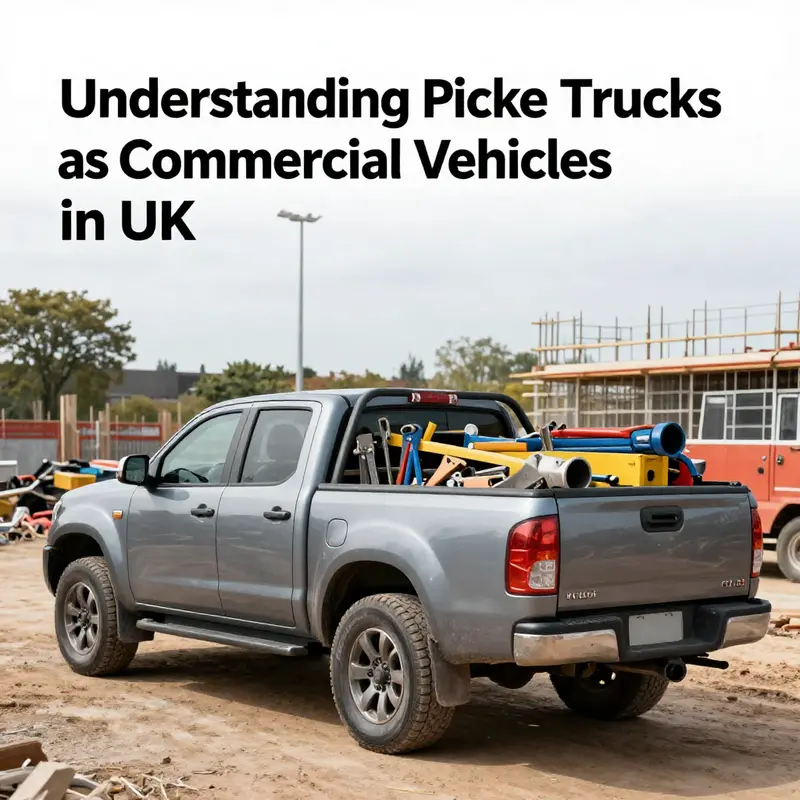
When people ask whether a pickup truck is a commercial vehicle in the UK, the simplest answer is not determined by the shape of the cab or the size of the bed. It hinges on how the vehicle is used. In the United Kingdom, the line between private transport and commercial operation is drawn by usage and purpose, not by the badge on the grille or the looks of the chassis. This distinction matters because it drives the duties you owe, the insurance you carry, and the broader regulatory framework you must navigate. A pickup can sit comfortably in both camps, and knowing which side it falls on in a given context is essential for any business owner, tradesperson, or fleet manager who relies on it for daily operations. The governing logic is straightforward in its intent, even if it occasionally feels nuanced in practice: if a pickup is designed to carry goods or is employed for business purposes, it is treated as a commercial vehicle for regulatory and taxation purposes. The DVLA’s guidance makes this emphasis explicit. It is not enough to look at the make or model; the decisive factor is whether the vehicle is used for business activities, or primarily intended to support such activities. A pickup used to haul tools, equipment, or goods for a company, for instance, clearly sits within the commercial category. Likewise, a personal pickup that is used, even intermittently, for work-related tasks can slip into commercial use if that work is part of a business operation. The practical implication is that classification shapes the kind of road tax you pay, the level of insurance that is appropriate, and the licensing or compliance standards that may apply to your fleet. In the background of this framework lies a straightforward, if sometimes overlooked, truth: the cost calculus around a pickup shifts when you turn it from a hobby vehicle into a workhorse. Vehicle Excise Duty, insurance premiums, and even the permissible purposes for which the vehicle can be used are all colored by whether the vehicle is treated as commercial in practice. The DVLA’s guidance makes this emphasis explicit. It is not enough to look at the make or model; the decisive factor is whether the vehicle is used for business activities, or primarily intended to support such activities. A pickup used to haul tools, equipment, or goods for a company, for instance, clearly sits within the commercial category. Likewise, a personal pickup that is used, even intermittently, for work-related tasks can slip into commercial use if that work is part of a business operation. The practical implication is that classification shapes the kind of road tax you pay, the level of insurance that is appropriate, and the licensing or compliance standards that may apply to your fleet. In the background of this framework lies a straightforward, if sometimes overlooked, truth: the cost calculus around a pickup shifts when you turn it from a hobby vehicle into a workhorse. Vehicle Excise Duty, insurance premiums, and even the permissible purposes for which the vehicle can be used are all colored by whether the vehicle is treated as commercial in practice. The DVLA’s guidance makes this emphasis explicit. It is not enough to look at the make or model; the decisive factor is whether the vehicle is used for business activities, or primarily intended to support such activities. A pickup used to haul tools, equipment, or goods for a company, for instance, clearly sits within the commercial category. Likewise, a personal pickup that is used, even intermittently, for work-related tasks can slip into commercial use if that work is part of a business operation. The practical implication is that classification shapes the kind of road tax you pay, the level of insurance that is appropriate, and the licensing or compliance standards that may apply to your fleet. In the broader context of market dynamics, the adoption of pickups for commercial purposes has been shaped by the evolving needs of trades, logistics, and construction. A pickup’s value for a small business lies not only in its payload and versatility but also in how it integrates with cost management and compliance. A pickup can be a versatile tool in tight urban sites or rural job locations, serving as a mobile workshop that carries a toolbox, spare parts, and essential consumables. When it acts as a workhorse rather than a weekend toy, its economic logic shifts: depreciation, maintenance planning, fuel efficiency, and the ability to schedule loads in line with customer expectations become central to decision-making. For buyers and operators, this means weighing the total cost of ownership through the lens of potential commercial classification: tax implications, insurance provisions, and the regulatory expectations attached to the vehicle’s use. Trade professionals, who often depend on a pickup for multiple tasks, may find that the most practical path is to configure the vehicle for commercial use from the outset. This could involve ensuring the payload aligns with the tasks at hand, considering modifications or fit-outs that improve tool efficiency, and budgeting for insurance that accounts for business exposure. But while the strategic planning begins with the vehicle itself, it is the ongoing use pattern that ultimately determines whether a pickup remains a personal vehicle with occasional work duties or a bona fide commercial asset. In the context of governance, the use-based framework is reinforced by government guidance that emphasizes the function of the vehicle over its label. The official source outlines the criteria used to classify vehicles and directs users to the appropriate registration, taxation, and regulatory requirements. For readers seeking authoritative, up-to-date information, the official resource provides a clear framework to verify status and responsibilities. The legal anchor is straightforward: if the vehicle is used to move goods or support business operations, it is treated as commercial, and so must be treated accordingly in terms of registration, insurance, and taxation. If the vehicle remains primarily for private use, the commercial obligations may be lighter. For those weighing purchase or fleet decisions, market context matters as well. The used-truck market, in particular, helps determine when a pickup may be more cost-effective as a commercial asset rather than a private vehicle. Trends in demand, pricing, and availability influence how businesses approach vehicle selection, and a good sense of current market dynamics can guide budgeting and strategic planning. For a deeper sense of these market dynamics, readers may refer to analyses exploring current trends in used truck sales growth, which provide a practical lens on how demand shifts intersect with policy and usage patterns. In practical terms, the decision to position a pickup as a commercial asset should be anchored in a clear understanding of how it will be used day to day, a disciplined approach to documenting usage, and a proactive alignment of registration, insurance, and regulatory compliance with that use. The objective is not to force a vehicle into a box but to ensure it supports the business while staying within the framework of the law. This approach helps businesses avoid unexpected tax or insurance costs and ensures that the vehicle can meet the demands of the job without creating friction with regulators. If you are researching this topic for a business plan or a fleet strategy, consider how the usage pattern you anticipate will shape the classification and the associated financial implications. The question you answer first—whether a pickup is a commercial vehicle—reveals itself as a practical question about how the vehicle will be used, managed, and insured in the real world. It is less about the pickup’s silhouette and more about how its daily function aligns with business goals, client expectations, and regulatory responsibilities. For more on the regulatory definition and to verify how a specific vehicle might be classified in a given context, consult the DVLA guidance on vehicle classification. https://www.gov.uk/government/publications/vehicle-classification
Pricing the Payload: The Economic Ripple of Classifying UK Pickup Trucks as Commercial Vehicles

When a pickup truck moves from being a simple, personal workhorse to a participant in a business’s logistics, field service, or construction operations, its economics begin to shift in ways that can surprise even seasoned operators. In the UK, the boundary between private and commercial use is not drawn by the vehicle’s shape or badge alone, but by how it is used. This distinction matters because it triggers a cascade of costs and regulatory obligations that ripple through small trades, expanding fleets, and the wider market for light-duty work trucks. The core idea is straightforward: a pickup used to deliver goods, carry tools to a site, or shuttle equipment for a business is, by virtue of its use, a commercial vehicle. This means that many pickups, which people might assume are personal-use vehicles, actually bear a commercial designation in practice. The Driver and Vehicle Licensing Agency’s guidance on vehicle classification emphasizes that usage—not design—determines the classification. In the context of UK business and road policy, that usage matters because it governs taxes, insurance, and compliance as much as it governs badge or body style. For readers navigating this terrain, it helps to anchor the discussion in the tension between convenience and cost, between the flexibility a pickup offers on the worksite and the fiscal and regulatory weight that comes with commercial status. While the DVLA guidance is the formal anchor, the practical implications unfold in the daily arithmetic of a fleet manager or a sole trader with a single, well-used pickup. A craftsman who delivers parts to a customer’s site and then returns with bulky waste may be using the same vehicle in a way that pushes it into the commercial bracket even if the vehicle looks like a private purchase. The same logic applies to occasional work tasks performed by a private driver who also has a small business, because the line between personal and business use can blur in real-world operations. The result is that the economic calculus for ownership, operation, and growth cannot ignore the classification framework that ties usage to policy. The most immediate and tangible consequence is cost of ownership, a broad category that encompasses taxes, fees, and insurance. In the UK, commercial vehicles typically face higher registration fees and Vehicle Excise Duty (VED) than private passenger vehicles, a difference rooted in the vehicle’s anticipated operational profile, its emissions, and the way it is taxed for business use. The effect is to raise the total cost of ownership for operators who rely on pickups as work platforms. Insurance is another stress point. Commercial vehicle insurance pricing reflects the risk profile associated with higher-mileage use, potential commercial hazards, and the likelihood that a vehicle is deployed in ways that go beyond weekend errands. For many small businesses, these costs accumulate quickly, especially when a single pickup is tasked with multiple roles across different sites in a week. The financial math becomes more intricate as operators begin to consider the total cost of ownership over the lifecycle of a vehicle, not just the upfront price or monthly payments. The distinction between private and commercial use also influences fleet planning and maintenance regimes. For field service, agriculture, infrastructure, and construction sectors—where pickups often form the backbone of on-site operations—the ability to move tools, spare parts, and personnel efficiently can determine project timelines and service levels. In these contexts, quicker maintenance cycles and more frequent inspections may be pursued to prevent downtime, even if that means higher ongoing maintenance spend. Fleet managers increasingly weigh fuel efficiency and emissions against payload capacity and reliability. Emissions-related regulations and cleaner technology incentives intensify this calculation. A shift toward lower-emission, more fuel-efficient, or even hybrid options is not just about regulatory compliance; it is about stabilizing operating costs in the face of fluctuating fuel prices and tax regimes. The emphasis on efficiency also nudges businesses toward smarter routing, load planning, and vehicle assignment—an orientation that encourages more deliberate fleet management rather than ad hoc use of available pickups. The regulatory framework amplifies these pressures. Commercial vehicles in the UK are subject to stricter standards for emissions, maintenance, and in some cases driver licensing and operational procedures. While these rules can elevate compliance costs and administrative overhead, they also drive innovation, prompting manufacturers to develop commercial-grade model updates and more robust service and support ecosystems. The incremental burden of compliance can be daunting for tiny operations, yet it also creates a market for vehicles designed to meet these standards, and for services that help fleets stay within them. The interaction between higher costs and regulatory demands is a dynamic that shapes market trends and the trajectories of different sectors. Market research projects the UK pickup trucks market to reach substantial revenue by the end of the decade, with a projected figure of around US$2,717.9 million by 2030 and a CAGR of roughly 3% from 2025 onward. These numbers reflect a market that remains attractive to a broad set of users, including agriculture, infrastructure, and emergency services, all of which rely on the payload-and-pioneer versatility of pickups. The projections suggest that despite the added costs associated with commercial classification, the structural demand for pickups persists, driven by the unique combination of capability, price, and adaptability that small and mid-sized enterprises prize for on-site work. This resilience does not happen by accident. It is underpinned by a continued preference for vehicles that can serve as mobile workplaces, enabling tradespeople to carry tools, spare parts, and even technicians to remote sites without requiring a separate van-plus-trailer setup. Yet the economic calculus is not purely a tale of higher costs. The classification pushes operators toward efficiency gains that lower the total cost of ownership over time. For example, the emphasis on fuel economy and lower emissions can yield meaningful savings on fuel and taxes over the vehicle’s life. It also spurs market responsiveness: manufacturers and suppliers respond to tighter regulations with greater emphasis on durability, reliability, and serviceability for commercial users. In practice, businesses weigh the tradeoffs between payload, towing capabilities, and running costs when selecting a pickup for commercial use. A higher-capacity payload is helpful for a tradesperson carrying heavy equipment, while better fuel efficiency reduces the daily cost of operation for the same vehicle on a multi-site schedule. These choices reflect a broader strategy: optimize the mix of vehicle types within a fleet to balance upfront cost, operating expenses, and regulatory compliance. Operators increasingly adopt smarter fleet-management strategies, leveraging data to optimize routes, maintenance schedules, and vehicle assignment. The aim is not merely to stay within regulatory requirements but to extract maximum value from each asset. In the interconnected economy of the UK, the impact of classifying pickups as commercial vehicles extends beyond the balance sheet. It influences the availability of financing, the structure of insurance products, and even the design direction of the vehicles themselves. The market dynamics hint at a cycle in which higher compliance costs propel innovations in durability and efficiency, which in turn reduce long-run operating costs and improve service levels for customers. The practical takeaway for businesses is to align procurement and fleet policies with the realities of classification. This alignment includes verifying how a pickup is used, documenting business tasks, and planning ownership costs with an eye toward the total lifecycle. The educational takeaway for policy readers is the importance of a clear, usage-based framework that supports legitimate business needs while ensuring that users of commercial vehicles contribute appropriately to the tax base and road infrastructure maintenance. For further context on how broader emissions considerations shape pricing and used-truck markets, see the discussion on emissions considerations for used trucks. emissions considerations for used trucks. As policymakers and industry players examine the evolving landscape, the conversation about pickups as commercial vehicles remains a telling example of how regulatory design, cost structures, and market demand interact in a modern economy. For readers seeking a more market-wide perspective on trends and outlooks, external analyses offer additional depth: https://www.marketresearchfuture.com/reports/pickup-trucks-market-uk-4686
Beyond the Badge: Navigating the UK’s Regulatory Reality for Pickup Trucks in a Shifting Tax Landscape
In the United Kingdom, the question of whether a pickup truck is a commercial vehicle hinges on more than badge or cab style. The law separates vehicle classification from vehicle design, focusing on how the vehicle is used. A pickup can serve as a personal conveyance on weekends and as a workhorse on weekdays. The critical issue for owners, fleets, and insurers is not whether the truck has a long or short bed, but whether it functions as a tool of business. When a pickup is employed to move goods, carry equipment, or support service delivery, it falls into the realm of commercial use for taxation and licensing. This distinction can affect the rates of Vehicle Excise Duty, insurance premiums, and even how it is treated in accounting and VAT calculations. The logic is straightforward in principle: use drives regulation, regulation drives cost, and cost drives decisions about ownership, maintenance, and financing. Yet the policy landscape is not static, and a single change in policy can shift the relative economics of owning a mid-weight pickup, with ripple effects through manufacturers, dealers, and customers.
At the core of the UK framework is the official guidance on vehicle classification published by the Driver and Vehicle Licensing Agency and supported by government policy documents. The DVLA guidance emphasizes usage as the determinant of classification. In practice, a pickup used to transport tools between job sites, or to supply a tradesperson’s business with parts, is treated as a commercial vehicle regardless of the door count or bed length. Conversely, the same chassis owned by a sole trader for mixed personal and business use can be viewed as commercial if business use is ongoing and material. This approach means that when a vehicle is used as part of a business operation, it is subject to the same taxation and licensing rules as other commercial goods carriers or work vehicles, not solely based on its physical design. And for those who rely on government rules for planning and compliance, the canonical reference remains the DVLA materials and the public-facing vehicle classification guidance on gov.uk. The classification practice remains an essential lever for regulators to track how many vehicles, in what capacity, move on roads funded by business users and taxed accordingly.
The most consequential regulatory development to date in this sphere arrived in April 2025. The government introduced a reclassification for light-duty pickups that have a gross vehicle weight of at least one tonne and are configured with a double cab. In this scenario, such vehicles that would previously have been treated as commercial goods vehicles suddenly moved into the passenger-car category for tax purposes. The logic is anchored in aligning vehicle taxation with broader fiscal policy and with shifting notions of what constitutes a passenger-focused vehicle versus a work tool. For owners, the effect is immediate: many are no longer paying the higher commercial rates for Vehicle Excise Duty (VED) that applied to heavier commercial vehicles. They now benefit from the lower, passenger-car rates. Insurance arrangements, too, can change as underwriter classifications adjust to the new category. The net result is a noticeable reduction in annual ownership costs for buyers who previously faced a premium tied to a commercial designation. Of course, the administration side—fleet registration, company-car policies, and driver allowances—must adapt to the new taxonomy, and finance teams must recalibrate depreciation schedules, capital allowances, and cash flow expectations accordingly.
The market response to this regulatory shift has stirred concern and opportunity in roughly equal measure. On the one hand, manufacturers and fleet operators worry that demand for heavier two- or four-door pickups could soften as the total cost of ownership decreases in one segment and shifts in policy influence profitability models. Dealers face new questions about pricing, residual values, and the pace at which customers re-evaluate whether a vehicle remains fit for purpose in a business setting. On the other hand, a broader policy alignment can encourage a different mix of buyers: tradespeople who previously constrained by higher commercial rates may find the once-reserved pickups more affordable, expanding usage beyond vocational work to light-duty personal use. In global supply chains, that shift can have ripple effects, from production schedules to financing arrangements, and even to barter-style trade in older models as fleets tune their portfolios to reflect new cost structures. There are reports that large brands with international footprints are adjusting plans in response, weighing workforce and plant utilization against the slower or re-prioritized demand in a key European market. For instance, industry analyses cited by supply-chain observers note that shifts in UK policy can influence operations as far away as assembly lines, highlighting how a domestic tax tweak can translate into a broader strategic recalibration.
From a practical standpoint, business owners and fleet managers should take a careful look at how their pickups are used day-to-day. The reclassification does not erase the fact that many pickups fill critical roles in construction, service delivery, and field maintenance. It does, however, prompt a closer audit of usage patterns, vehicle registration status, and the boundaries between business and private use. Companies may find it advantageous to maintain explicit usage records or to configure procurement choices around cab configurations that keep them within desired tax treatments. In some cases, traders who need to maximize cargo space for shipments might prefer lighter commercial variants where the economy of the operation is clearly tied to business use, while those who regularly carry teams and tools might assess whether a double-cab arrangement still delivers the optimal balance between occupancy, payload, and cost. The decision becomes a budgeting exercise, balancing upfront purchase price, ongoing taxes, insurance, maintenance, and potential reimbursements from tax authorities. It also underlines the value of staying connected to sector commentary through industry blogs and professional networks, where practical implications are discussed in real time. For readers seeking ongoing perspectives, the McGrath Trucks blog provides accessible commentary on market dynamics and regulations that touch the world of trucks and business use.
Ultimately, the regulatory arc surrounding pickup trucks in the UK demonstrates how a vehicle’s role can redefine its legal and financial identity. The twist in 2025—moving certain double-cab pickups from the commercial to the passenger category—illustrates that the relationship between form and function in vehicle regulation is contextual and dynamic, not merely cosmetic. This is a reminder that, for business planning, a fleet’s true metric is not the bed length or the number of doors but the way the vehicle is employed across the workday, the roads it travels, and the expectations attached to its use by both the business and the authorities that regulate it. The DVLA’s vehicle classification guidance remains the anchor for firms seeking clarity amid shifting policy, while the broader fiscal framework continues to influence decisions on purchase, leasing, or alternative transport solutions. In the end, the question “is a pickup truck a commercial vehicle in the UK?” resolves into a more expansive answer: yes, if business use dictates it will be regulated as such; and not, if the policy and practical use align the vehicle with passenger taxation and licensing. External sources lay out the formal contours of this regime, and the ongoing dialogue among policymakers, manufacturers, and fleets ensures the landscape will continue to evolve.
External resource: https://www.gov.uk/government/publications/vehicle-classification
Rethinking the Road: The Societal Footprint of Classifying UK Pickup Trucks as Commercial Vehicles

When people ask whether a pickup truck can be a commercial vehicle in the United Kingdom, the immediate reflex is to glance at the vehicle’s appearance. The real decision rests on usage. In the UK, the law and the administrative framework distinguish commercial from private use not by how a vehicle is built, but by how it is used. This subtle but consequential distinction sits at the heart of a broader societal conversation. If a pickup is employed to carry tools between customer sites, deliver parts for a business, or transport work crews and equipment for a construction task, its day-to-day operation aligns with commercial activity. Conversely, if the same pickup is bought for weekend mobility, family trips, or hobbies, its use remains personal.
What changes when the line between these spheres hardens and pickup trucks slide into the category of commercial vehicles for policy purposes? The answer threads through taxation, insurance, road access, urban planning, and everyday equity in ways that ripple far beyond a single vehicle category.
From an administration perspective, a usage-based approach to classification aligns regulation with purpose rather than design. The DVLA’s guidance emphasizes that commercial status follows the work a vehicle is asked to perform. That means a single vehicle can be a private car by day and a tradesman’s workhorse by night depending on the employer’s needs or the owner’s activities. This nuance matters for Vehicle Excise Duty, insurance requirements, and where a vehicle can legally operate during restricted hours or in certain zones. The practical effect is that a rise in business use could tilt them toward higher costs, stricter emissions expectations, and altered regulatory obligations, even before hardware changes.
Economically, reclassification is not trivial. Treating pickups as commercial vehicles could push up running costs, but clarity can streamline fleet management for small businesses and rural operators who rely on them daily. Many tradespeople, farmers, and logisticians already treat pickups as essential tools; for them, clearly defined status can translate into more predictable budgeting and better access to business-focused incentives that support cleaner technologies. Yet the price tag of stricter emissions standards could fall unevenly on households with tight margins. In rural areas, a pickup often doubles as a practical workhorse; higher costs might limit options for dependable transport, with knock-on effects on service delivery and resilience.
Equity considerations loom large. A pickup that serves a tradesperson may also ferry a family or enable access to remote sites. If reclassification raises operating costs, it could burden those with lower incomes who run essential low-margin businesses or depend on flexible transport for caregiving. In the short term, this could dampen rural mobility; longer term, it could accelerate electrification or shift demand toward charging infrastructure and training needs. The social fabric of small towns would feel these shifts.
From an environmental perspective, gains are possible if policy pairs reclassification with incentives. Moving toward cleaner configurations could narrow emissions limits, improve air quality in mixed-use areas, and drive investment in zero-emission fleets. Even without immediate electrification, reclassification can spur behavior changes: route optimization, smarter loading practices, and preference for vehicles closer to the lower end of the emissions spectrum. Health benefits scale with uptake.
Policy design must anticipate consequences for road use, urban access, and daily routines. Urban low-emission zones and congestion charges shape how vehicles circulate; if pickups are treated as commercial, they could face tighter access rules in certain zones. In rural regions, policymakers must guard against restricting mobility or raising basic operating costs. The goal is to balance environmental and public health benefits with economic vitality and daily life for people who rely on these vehicles.
Any transition should pair reclassification with supportive measures: incentives for electrification, investment in charging, and transitional support for small operators. Training on efficient vehicle use, fleet optimization, and data-driven maintenance can maximize lifespan and performance. If designed with nuance, the policy can advance environmental goals without undermining livelihoods.
Finally, the broader question is about the social contract: a transport system that serves diverse needs while pursuing cleaner mobility. The debate is not only about rules for vehicle classification but about fairness, opportunity, and resilience in rural and urban communities. The objective remains to enable versatile transport that supports work, family life, and local economies while reducing harm to health and the environment.
Bed, Brawn, and Business: The Real-World Utility of Pickups as Commercial Vehicles in the UK

The line between private convenience and commercial necessity is often thinner in a pickup truck than in any other wheelbase. In the United Kingdom, a vehicle’s classification as commercial is not locked to its body shape or badge; it is tied to how the vehicle is used. A pickup, with its open bed and practical stance, can serve equally well as a private companion on weekends and as a reliable workhorse during the week. What makes a pickup a commercial vehicle is not a single feature but a pattern of use that aligns with business needs: transporting tools, materials, or goods on a regular basis, meeting client schedules, and supporting a service or trade operation. This usage-based distinction sits at the heart of UK vehicle regulation, road tax, and insurance requirements, and it is essential for business owners, tradespeople, and fleet managers to understand it if they want to operate within the law and keep costs predictable.
The practical reality is that pickups are inherently versatile. In urban lanes and rural lanes alike, their cargo bed is a portable workshop, a temporary warehouse, and a flexible staging area for an array of professional tasks. A plumber’s creaking metallic toolbox, a welder’s gas cylinders, or a painter’s rolls and cans can be stowed securely, accessed quickly, and transported with a balance of payload capacity and maneuverability that larger vans often struggle to match. In the hands of tradespeople, the pickup becomes less a vehicle and more a mobile workplace. In the UK, where space in city centers is at a premium and congestion charges can influence decisions about fleet composition, the pickup’s compact footprint, combined with robust payloads, makes it an attractive option for small businesses and sole traders alike. The same logic applies to electricians, HVAC technicians, and carpenters, who frequently require both a reliable drive and ready access to a varied set of tools and materials during back-to-back jobs.
The construction and landscaping sectors offer a parallel case study. A crew arriving at a site often carries lumber, cement mixers, soil, or plant stock in the bed of a pickup, while still leaving cab space for crew and gear. In these settings, four-wheel drive remains a valuable asset, not as a lifestyle feature but as a practical solution for uneven surfaces, mud, or rural access routes. The vehicle’s ability to convert from a near-task-ready platform to a capable transport unit mirrors the broader logic of British small-business logistics: keep the job moving, keep downtime to a minimum, and stay adaptable to changing site conditions. It is no accident that many local fleet operators choose pickups for these roles, pairing dependable performance with the flexibility to reconfigure the loadout as needed.
Delivery and logistics present another nuanced angle. A small business delivering stock, office supplies, or even perishables in a local radius can leverage a pickup’s reliable loading area and easier navigation through congested streets. In such use cases, the vehicle is a direct extension of the business’s operations, not merely a means of getting from A to B. The pickup supports same-day fulfillment, reduces handoffs, and enhances customer service by ensuring timely delivery. This practical capacity to support immediate distribution makes pickups especially relevant for micro-entrepreneurs and regional tradespeople who must respond quickly to customers while managing budget constraints.
Rural and agricultural contexts showcase the rugged practicality of pickups in the countryside. Farmers and agricultural contractors frequently need to shuttle feed, fencing, tools, and small machinery between fields, markets, and repair yards. The vehicle’s payload capacity and off-road capability enable work in fields and lanes that would challenge smaller passenger cars or cargo vans. In regions where farm routes cross loose terrain or uneven surfaces, the pickup’s durability becomes a business asset rather than a mere convenience. These configurations underscore a crucial point: in many parts of the UK, pickup trucks are not a niche choice but a practical backbone for agricultural operations, maintenance tasks, and fieldwork that require both mobility and cargo space.
Utility and emergency services also reveal how versatile pickups can be when the mission demands speed, reach, and readiness. Utility companies rely on pickups for maintenance tasks—whether repairing power lines, clearing obstacles after storms, or deploying crews to remote sites. In emergencies, a modified pickup can be equipped with gear for rapid deployment, offering a balance between readiness and payload. While the primary purpose of these vehicles is service delivery rather than transport, their core attributes—payload capacity, quick access to gear, and reliable on-site presence—firmly place them in the commercial category when used for business purposes. This is not about design pedigree but about function in service of the workforce and community needs.
Mobile repair and service units illustrate another dimension of the commercial pickup. Mobile mechanics and tire service operators often work from a pickup outfitted with a lift, toolboxes, and spare parts. The bed becomes a compact, on-site workshop, enabling faster response times and reduced downtime for customers. The vertical integration of transport, tools, and technical capability is what transforms a pickup from a personal vehicle into a critical business asset. In practice, the decision to use a pickup in a commercial context is driven by cost-efficiency, operational flexibility, and the ability to adapt to changing work orders across diverse locations.
This practical landscape aligns with the broader regulatory framework in the UK. The Driver and Vehicle Licensing Agency (DVLA) emphasizes that classification hinges on how the vehicle is used, not solely its body style. If a pickup regularly transports goods for business or is used in the course of trade, it is treated as a commercial vehicle for purposes of road tax and insurance in many cases. That distinction matters for owners who want to optimize their total cost of ownership, plan for potential tax implications, and ensure compliance with insurance requirements. In other words, a pickup can be a personal vehicle on weekends and a commercial vehicle on weekday job sites, depending on the user’s patterns of operation.
For readers seeking a broader perspective on how these classifications play out in regulatory terms, the UK government’s guidance on vehicle classification provides authoritative detail. The interplay between usage, tax, and insurance is a central consideration for anyone who uses a pickup in a business context. Understanding this landscape helps avoid unexpected charges or coverage gaps and supports prudent fleet management as businesses evolve from sole proprietorships to small fleets. The practical examples above illustrate how the vehicle’s inherent versatility translates into tangible business value, especially for small operators who prize agility, reliability, and the ability to scale operations without a heavy investment in multiple vehicle types.
If you are exploring this topic in more depth, the broader industry conversation—covering market trends, depreciation, and fleet optimization—can be found in the industry blogs and trade resources that frequently discuss how pickups fit into commercial operations. For readers seeking further industry context, the McGrath Trucks blog serves as a hub for related discussions and updates on trucks and commercial use patterns. mcgrathtrucks.com/blog/
Ultimately, the question of whether a pickup is a commercial vehicle in the UK depends on the daily rhythm of work. When the vehicle’s primary role is to move tools, equipment, and goods to client sites, to support service delivery, or to enable on-site repairs and construction tasks, the pickup earns its place in the commercial fleet. The design remains versatile enough to accommodate a private life, but the business use case—where the payload, reach, and reliability directly contribute to earnings—defines its classification and its value to the operation. In light of this, owners and managers should assess not only the vehicle’s capabilities but also the regularity of its business use, the nature of the loads carried, and the regulatory implications for tax and insurance. This approach ensures that a pickup can continue to serve as a practical, cost-effective asset in the UK business landscape, aligning everyday mobility with organizational goals and legal compliance.
For authoritative guidance on vehicle classification, see the government’s vehicle classification framework: https://www.gov.uk/government/publications/vehicle-classification
Final thoughts
The classification of pickup trucks as commercial vehicles in the UK is not merely a matter of design but predominantly determined by their usage. From enhancing operational efficiencies in various industries to complying with specific regulatory frameworks, understanding this classification aids logistics firms, fleet managers, and construction teams in making informed strategies. Recognizing the dual role of these vehicles enables better resource allocation and can lead to significant economic benefits. Preparation for the evolving landscape of commercial transportation ensures that your business remains at the forefront of industry standards.