
In the competitive landscapes of trucking and logistics, optimizing vehicle functionality extends beyond performance and safety to enhancing driver experience. The audio system in a commercial truck can play a crucial role in achieving a comfortable and productive environment for drivers who spend long hours on the road. While many professional truck operators may be tempted to install smartphone-compatible car stereos, the installation is not without its complexities. This article discusses critical components: physical considerations for fitting car stereos into commercial trucks, ensuring electrical compatibility with existing systems, and understanding functionality as well as compliance with regulatory standards. By the end of this exploration, trucking company owners, fleet managers, and procurement teams will be equipped to make informed decisions on audio upgrades that enhance their fleet’s operational efficiency.
Making It Fit and Work: Physical and Technical Realities of Installing a Car Stereo in a Commercial Truck
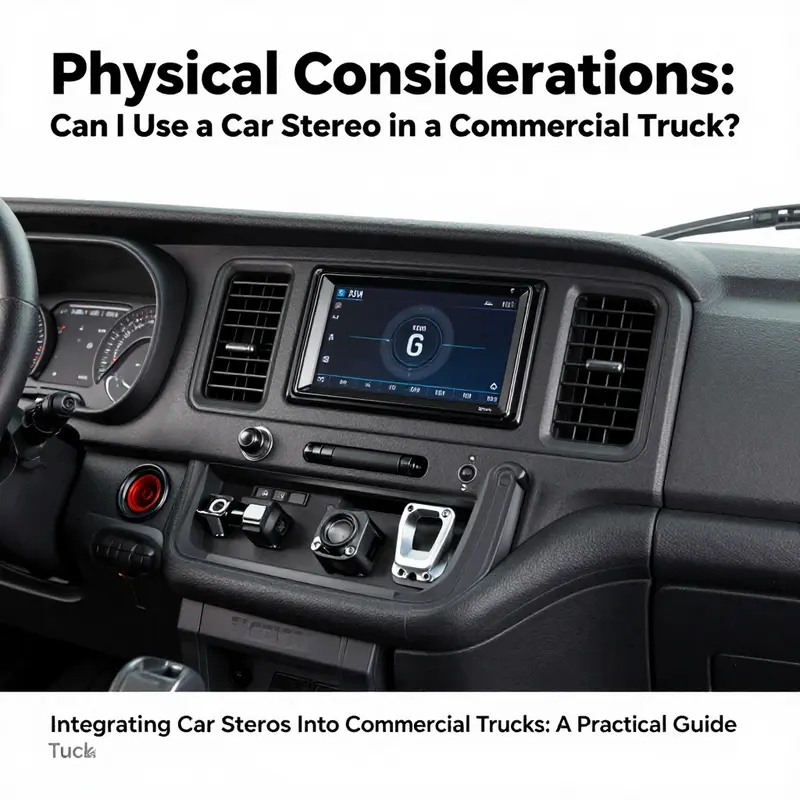
Physical and Technical Considerations for Using a Car Stereo in a Commercial Truck
When you ask whether a car stereo will work in a commercial truck, the short answer is yes—but the real response is more nuanced. A successful installation depends on aligning physical fit, electrical compatibility, wiring integration, functionality needs, and regulatory or safety constraints. These elements interact. Overlooking one can turn what seems like a simple swap into a chronic reliability issue or an unsafe modification. This chapter walks through the practical realities you will face, explains how to evaluate and mitigate common problems, and offers pragmatic guidance so the stereo performs reliably in the demanding environment of a commercial truck.
Fit and mounting are the most visible challenges. Passenger vehicles generally use standard single-DIN or double-DIN openings, and stereos are designed accordingly. Commercial truck dashboards, however, were built for controls, specialized gauges, and large ventilation or storage modules. The opening may be deeper or shallower, offset, or framed by irregular trim. This mismatch means you will typically need a dash kit or a custom mounting plate. A proper kit does more than fill the gap: it ensures the unit is secure against vibration, aligns controls and the display for ergonomic reach, and preserves the truck’s aesthetics so switches and warning lights remain visible. Without a correct bracket or adapter, the stereo will shift, create noise from loose trim, or suffer mechanical stress that shortens its life.
Depth and clearance are often underestimated. Even if a stereo’s face fits the opening, its rear chassis must clear wiring, HVAC components, and structural ribs behind the dash. Measure the available depth precisely, accounting for the harness and antenna lead. If space is tight, low-profile head units or shallow-mount options may be necessary. In some trucks, the best solution is relocating the chassis into a nearby console or behind a panel and using an extended control face or satellite faceplate; this approach keeps the main electronics away from heat sources and provides better airflow.
Vibration and shock are constant in commercial trucking. Long-haul rigs expose electronics to higher-amplitude, long-duration vibration than typical passenger cars. Mounting hardware and the stereo’s own chassis must resist this. A dash kit that isolates vibration or rubber grommets at mounting points can reduce stress. In severe cases, choosing a unit with reinforced mounting brackets or those designed for heavy-duty applications is worth the investment. Proper securing also reduces the chance of connectors loosening and causing intermittent power loss.
Electrical compatibility is a critical decision point. Most consumer car stereos expect a nominal 12-volt DC supply, and that is a match for many medium-duty commercial trucks. Yet heavy-duty trucks—particularly those with commercial diesel engines or larger electrical systems—may operate on 24 volts or have dual-battery setups. Connecting a 12V-only stereo to a 24V feed will likely destroy the unit instantly or quickly through heat stress. Before buying, verify the truck’s nominal system voltage and the voltage present at the stereo wiring harness. If your truck uses 24V, you have a few options: select a stereo rated for 24V operation, install a DC-DC converter or voltage regulator to step down to 12V, or tap into an accessory circuit that provides 12V. A DC-DC converter must be properly rated for surge events and continuous current draw. Many in-vehicle audio loads are modest, but start-up current spikes and amplifier draws can be much higher. Choose a converter with ample headroom and proper thermal protection.
Fusing and circuit protection should not be ignored. Car stereos usually rely on inline fuses sized to the unit’s lead. When adapting to truck wiring, match or improve the fuse rating to protect both the stereo and the vehicle wiring. If a converter is used, fuse both the input and output sides according to manufacturer guidance. Properly located and rated fuses prevent fire risk and make diagnostic work easier when faults occur.
Wiring harnesses connect the head unit to the vehicle’s power, speakers, and accessory circuits. Factory harnesses in trucks often use different pinouts, colors, and connector types than those in cars. Adapters exist for many popular truck models and can save time and reduce error. A harness adapter maps the truck’s factory wiring to the stereo’s standardized pinout, preserving functionality like switched accessory power, constant memory power, and illumination dimming where supported. If an adapter is not available, careful tracing and labeling of wires before cutting is essential. Use quality connectors and solder plus heat shrink for permanent, vibration-resistant joints. Crimp connectors can be acceptable if they are automotive-grade and properly sized.
Grounding deserves special attention. Poor ground connections cause noise, intermittent resets, and diminished performance. Trucks may have separate chassis islands or long ground runs; choose a clean, unpainted metal surface close to the stereo and use a ring terminal with a locking nut. If grounding to the body is difficult, run a short ground to the vehicle’s main battery negative terminal. For amplified systems, a single-point ground strategy—where all audio grounds meet at one location—reduces hum and ground loop issues.
Integration with vehicle systems varies in complexity. Modern car stereos often provide Bluetooth, hands-free calling, smartphone mirroring, and navigation features. These functions are beneficial for truck drivers but rely on consistent radio and phone connectivity, clear microphone placement, and reliable software. Microphones mounted under a visor may pick up cab noise. Consider using an external microphone mounted near the driver’s head for clearer calls. If you depend on navigation for route planning or fleet dispatch, verify the unit’s GPS reception in a steel cab and dense mounting locations. Antenna placement and amplified antenna adapters can improve signal.
Compatibility with other truck systems cannot be overlooked. Fleet vehicles may have telematics, alarm, or driver-facing cameras. Your stereo must not interfere with or disable these systems. Check with the fleet manager or consult wiring diagrams. In some cases, retaining factory connections requires preserving certain wires for vehicle diagnostics or warning indicators. Avoid cutting factory harnesses until you confirm they are not tied to vehicle-critical systems.
Durability and environmental resilience are meaningful considerations in commercial settings. Stereos in trucks face a wider temperature range, greater dust exposure, and higher humidity. Components designed for passenger cars may not hold up under these conditions. Look for units with robust chassis, sealed buttons, and corrosion-resistant connectors. If the selected car stereo lacks rugged features, protect it by adding environmental shielding, using conformal coatings where appropriate, or installing the unit in a more climate-stable compartment. Vibration-rated connectors and locking harnesses reduce the risk of disconnection during long trips.
Audio performance is another practical consideration. Truck cabs have different acoustics from cars: larger enclosed spaces, metal surfaces, and insulation variations. Speaker placement and impedance matter. If you plan to use the truck’s factory speakers, confirm impedance and power handling match the stereo’s outputs. Mismatched impedance can reduce sound quality or harm the amplifier. If replacing speakers, choose speakers rated for the truck environment with mounting brackets that align to the available space. Consider adding an external amplifier if you need higher volume with clarity; ensure it is mounted securely and fused properly.
Human factors are often underestimated. Control placement and screen readability while driving are essential for safety and convenience. Large touchscreens designed for cars can be difficult to reach or read in a truck. Glare from windows and instrument brightness also matter. Consider units with clear physical controls for common tasks and menus accessible while stationary. Where regulations restrict driver interaction, minimize complexity and configure the stereo to launch essential functions automatically when the engine starts.
Safety and compliance go beyond personal preferences. Commercial vehicles often have stricter standards about modifications. Fleet operators may require that any changes preserve the vehicle’s warranty or comply with company policies. In some jurisdictions, modifications that obscure or alter safety systems or the instrument panel can violate regulations. Before installing, consult fleet maintenance policies or local regulations and keep records of any wiring changes. Insurers sometimes require disclosure of significant electrical modifications; failure to disclose can complicate claims.
Installation quality and long-term maintenance determine whether the stereo remains an asset or a liability. Use proper installation kits, secure all wiring away from moving parts and high-heat sources, and label connections for future service. Keep spare fuses and modular connectors accessible. Regularly inspect mounting points and harnesses for wear, corrosion, or chafing. A checklist approach—verify fuses, test speaker outputs, confirm microphone and Bluetooth pairing—before each long haul prevents roadside frustration.
Troubleshooting basics are straightforward if you prepare. If the stereo does not power on, check fuses first, then verify the converter output if used, and finally confirm the accessory and ground connections. For audio issues, swap speaker wires to isolate whether the problem is the stereo or a speaker. For intermittent resets, inspect for loose connectors and test on another 12V source if possible. When persistent faults appear, a professional installer with experience in commercial vehicles can save time and avoid expensive mistakes.
While a standard car stereo can work, a growing selection of aftermarket units is designed specifically for commercial or industrial vehicle use. These units address many of the problems mentioned: they accept wide voltage ranges, provide ruggedized mounting, and use sealed controls. When the operating environment is extreme, the added cost can be justified by reduced downtime and lower maintenance. If you are unsure which path to take, consult with a professional installer experienced in commercial trucks or review technical guides tailored to rugged vehicle audio.
Finally, consider the long-term total cost of ownership. A low-cost car stereo may seem attractive initially, but recurring failures, added accessories like converters or isolation mounts, and lost time for troubleshooting can push the lifetime cost well above that of a purpose-built unit. For fleet managers, standardizing on a rugged platform reduces inventory complexity and simplifies maintenance.
For additional technical reference on industrial-grade vehicle audio and compatibility considerations, review this detailed industry guide which covers design principles and implementation strategies for commercial vehicles: https://www.caska.com/industrial-car-stereo-guide
For resources on truck market trends, maintenance topics, and broader industry context, see the McGrath Trucks blog for relevant insights and practical articles: https://mcgrathtrucks.com/blog/.
Navigating Electrical Compatibility: Installing a Car Stereo in a Commercial Truck

When considering whether you can install a car stereo in a commercial truck, one of the most critical aspects to address is electrical compatibility. While at a glance it may seem straightforward—both cars and trucks typically run on similar voltage systems—the reality is nuanced. Successfully integrating a car stereo into a commercial truck requires careful attention to the truck’s electrical system, wiring intricacies, and the overall durability needed for the demanding commercial environment.
The majority of car stereos are engineered to operate on a 12-volt DC power supply, a standard shared by most light-duty vehicles and many commercial trucks. This commonality forms the baseline for compatibility. However, commercial trucks, especially heavy-duty or long-haul trucks, often employ a 24-volt electrical system rather than the 12-volt system found in typical passenger cars. This difference means a direct swap without assessing voltage compatibility could lead to significant damage to the stereo unit or create electrical hazards. Before installation, it is essential to verify the voltage specifications of both the stereo and the truck. If your commercial truck uses a 24-volt system, you’ll need a voltage converter or regulator designed to step down the power to 12 volts to safely operate a standard car stereo.
Voltage considerations extend beyond straightforward power supply. Commercial trucks rely on robust electrical systems designed to handle higher current loads from multiple auxiliary systems such as air brakes, lighting, and engine controls. This larger and more complex electrical network can introduce electrical noise or interference, which may affect the audio quality or the stereo’s operation. Some car stereos lack the filtering or shielding required in a commercial truck’s environment, so choosing a unit with enhanced electrical noise immunity or incorporating line filters during installation can prevent unwanted static or distortion.
Beyond voltage and noise, the physical connections between the stereo and the truck introduce another layer of complexity. Commercial trucks rarely use the same wiring harness connectors as passenger vehicles. Car stereos come with a wiring harness designed for standard automotive connectors, but truck dashboards often feature different harnesses that don’t directly mate with these connectors. To bridge this gap, vehicle-specific wiring harness adapters are necessary. These adapters match the stereo’s connector types to the truck’s factory harness, enabling a plug-and-play connection without the need for cutting or splicing wires, which preserves the truck’s original electrical integrity and facilitates easier removal or servicing of the stereo later on.
When an adapter is not available, custom wiring splices might become necessary. This process involves identifying the truck’s wiring for power, ground, ignition, speaker output, and accessory controls, then matching these wires carefully to the stereo’s inputs. It’s crucial to use proper connectors, heat shrink tubing, and confirm each connection with a multimeter to avoid shorts, reversed polarity, or signal loss, all of which can damage the equipment or pose safety risks. Incorrect wiring could also interfere with the truck’s electrical systems or trigger fault codes, especially in modern trucks with integrated electronic controls.
Physical mounting is closely intertwined with electrical installation. Most car stereos conform to single-DIN or double-DIN sizing standards, designed for compact passenger vehicle dashboards. Commercial trucks often have dashboards built for specific OEM audio units, which may use different mounting shapes or depths. Installing a car stereo in a truck’s dash will typically require a bespoke dash kit or mounting adapter. These kits provide the appropriate frame, brackets, and spacers to ensure the stereo fits securely and aligns flush with the dashboard. Proper mounting is vital not only for aesthetic integration but also for functional reliability. A poorly mounted stereo can loosen due to the intense vibrations common on highways, causing wiring damage or disrupted connections that affect sound quality and unit longevity.
Durability and operational stability are also important electrical considerations, although they stretch into broader functionality. Commercial trucks operate in harsher environments with frequent vibration, temperature fluctuations, and exposure to dust or humidity. Car stereos designed solely for passenger cars may lack enhanced shock resistance or thermal tolerances necessary for these conditions. Many aftermarket stereo units cater specifically to commercial vehicle demands, featuring reinforced internal components, protective casings, and temperature-optimized electronics. When using a standard car stereo, it is prudent to check the manufacturer’s specifications for durability ratings or to seek units tested for commercial environments.
The integration of modern connectivity features also plays into electrical considerations. Truck drivers benefit from hands-free communication, GPS connectivity, and multiple media input options like Bluetooth, USB, and auxiliary ports. Ensuring your chosen car stereo supports these features enhances usability and driver safety. Some stereos incorporate built-in amplifiers that draw significant current, so confirming that your truck’s electrical system can sustain these loads without draining the battery or stressing alternator output is necessary. Additionally, some units include wiring for steering wheel controls or vehicle-specific settings; ensuring compatibility or availability of adapters for these functions keeps the installation professional and seamless.
Safety and regulatory compliance must not be overlooked. Depending on your jurisdiction or fleet regulations, any modification to commercial vehicle electrical systems might require inspection or approval. This is particularly relevant when the modification could affect critical systems or driver safety. For example, improper wiring might interfere with vehicle diagnostics or alarm systems. Adhering to local regulations protects you from liability and ensures continued vehicle certification for road use.
In summary, while installing a car stereo in a commercial truck is generally feasible, it is not simply a matter of physical swapping. A thorough understanding of the truck’s electrical system, availability of proper wiring adapters, voltage compatibility, and installation hardware is essential. Selecting a stereo capable of withstanding commercial vehicle challenges and verifying compliance with safety standards rounds out a successful upgrade.
For those seeking a deeper understanding of vehicle electrical systems and tailored advice on aftermarket installations, resources such as Beyond the Box’s guide on vehicle electrical systems provide valuable insights. Additionally, consulting professional installers who specialize in commercial vehicle electronics can save both time and costly mistakes, ensuring your new stereo performs reliably under the demanding conditions your truck faces on the road.
For more insights on commercial truck features and market trends, explore current industry discussions and truck evaluations.
Sound, Safety, and Standards: Weighing Functionality and Regulation When Mounting a Car Stereo in a Commercial Truck
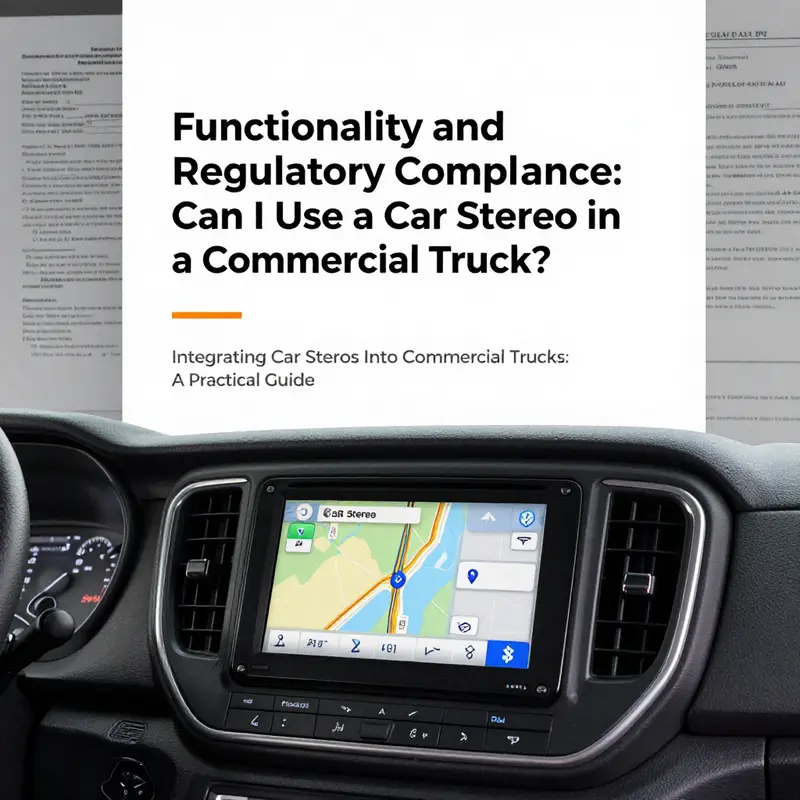
Installing a car stereo in a commercial truck is not as simple as dropping a familiar dome-shaped radio into a familiar dashboard. The idea is tempting: bring in the conveniences of a modern car stereo—Bluetooth hands-free calling, streaming audio, navigation, and smartphone integration—into a cab where the driver spends long hours on the road. Yet the move sits at the intersection of practical functionality, mechanical compatibility, electrical integrity, and regulatory responsibility. When a fleet wants a better in-cab experience, it must do more than swap components; it must balance what the driver needs with what the vehicle can safely and legally support. The guiding principle, then, is clear: any upgrade must preserve, or ideally enhance, safety and reliability while respecting the unique environment of commercial operations. The result is not a single universal answer but a carefully considered pathway that begins with feasibility and ends with ongoing oversight from professionals, fleets, and regulatory bodies.
Functionality lies at the heart of the decision. Car stereos today are built to be versatile, and many units deliver a suite of features that can improve operations and driver satisfaction. Most units offer AM/FM radio, Bluetooth for hands-free calling, USB and auxiliary inputs, and sometimes built-in navigation or smartphone integration through platforms like CarPlay or Android Auto. In a passenger car, those features often align with daily commuting and leisure use, but the same features in a commercial context can be leveraged for safer, more efficient driving. Hands-free calling reduces distractions, and easily accessible music or podcasts can help maintain alertness on long hauls. USB inputs enable drivers to connect devices for charging and audio playback without resorting to makeshift connections that can become hazardous. A navigation feature or smartphone integration can simplify route planning and real-time updates, potentially reducing the time drivers spend fiddling with devices while behind the wheel.
Yet functionality in a truck is not only about capability; it is also about how well the system endures the rigors of a commercial environment. Dash spaces in trucks are usually designed for utilitarian dashboards and rugged controls, not for the aesthetic contours of a passenger car dash. A unit that looks right in a car may crowd gauges or block switches in a truck, or it may require a dash kit or mounting adapter to fit securely. The reality is that dash shapes, mounting brackets, and air vents differ widely across heavy-duty vehicles and light commercial trucks. A successful installation rests on a correct assessment of fit, mounting method, and the ability to secure the head unit without compromising the structural integrity of the dashboard. Improper mounting can lead to vibrations that degrade audio performance, looseness that rattles in high-speed travel, or, in worst cases, a device that becomes a projectile in a collision. In other words, the thought is not merely whether the stereo can power on, but whether it can stay put and function under the vehicle’s daily demands.
Electrical compatibility is the next critical frontier. Commercial fleets typically operate on a 12-volt electrical system, which aligns with standard car stereos. However, the electrical system in a robust truck is more complex than a passenger car’s. The truck’s power distribution may have higher current demands for accessory loads, and the alternator can deliver more constant charging pressure in heavy use. A stereo’s power requirements, including voltage, current draw, and fuse ratings, must be matched to the truck’s electrical architecture. A mismatch can cause nuisance fusing, voltage dips that affect audio performance, or, in the worst case, damage to the stereo or to other electrical components. The safest approach is to examine the vehicle’s electrical diagram, often available through the manufacturer or through a qualified installer, and to verify that the chosen unit’s power needs can be met without compromising other circuits.
A related element is the wiring harness. The factory harness in a truck is rarely the same as in a passenger vehicle. The wiring harness carries more than just power; it feeds speakers, control signals, illumination, and possibly CAN bus communications that influence how a head unit interacts with the vehicle. In many cases, installation will require a vehicle-specific harness adapter or a custom wiring solution. The goal is a clean, plug-and-play connection that preserves the truck’s factory circuitry and avoids creating splices that can degrade reliability or introduce heat, corrosion, or interference in a vibration-prone environment. A trusted installer will map out the required connectors, power and ground paths, speaker outputs, and any integration with the vehicle’s existing audio system. They will also plan ground isolation to minimize noise, ensure proper signal routing to prevent interference with engine management or safety systems, and confirm that the installation does not create a hazard in the control vicinity of the dash.
Beyond fit and wiring, there is the matter of durability and performance under harsh operating conditions. Commercial vehicles are exposed to continuous vibration, wide temperature swings, dust, and moisture in certain segments of the fleet. A consumer-grade stereo, designed for the controlled environment of a passenger car, may not hold up under these stresses. The display and touch controls can degrade in extreme heat or cold, the mounting brackets can loosen over time, and waterproofing can fail in a dusty, humid cab. For that reason, many fleets consider aftermarket units specifically engineered for harsher environments or professional-grade infotainment systems that emphasize shock resistance, thermal resilience, and long-term reliability. Even with rugged units, the installation should include secure mounting, weather protection for any exposed connectors, and careful routing of wires away from heat sources, vibration points, and possible contact with moving parts. In short, the best outcomes arise when the system is designed with the truck’s life cycle in mind rather than retrofitted as an afterthought.
Another layer of consideration concerns regulatory and safety compliance. The regulatory landscape for commercial vehicles is not a single codebook but a network of federal and state rules, plus employer fleet policies that vary by region and operation. In the United States, the FMCSA sets the framework for commercial motor vehicles and requires that safety equipment and driver aids function as intended in ways that do not compromise safety. A car stereo, by definition, is not a safety-critical device like lighting, brakes, or anchorages, but any modification to a vehicle’s electrical system must be performed in a way that does not interfere with these critical systems. The key question becomes whether the installation could impact essential functions in the event of an electrical fault or fault isolation scenario. A poorly shielded or miswired harness might inadvertently affect critical circuits, create interference with vehicle electronics, or even violate electrical standards designed to minimize fire risk, especially in commercial fleets where duty cycles and road conditions can be unforgiving.
Distraction is another central concern. Governments and safety agencies acknowledge the potential risk that large displays or overly complicated interfaces can pose if they pull a driver’s attention from the road. In the trucking context, distracted driving laws and regulations are keenly enforced, given the higher risks associated with heavy vehicles. A large touchscreen, a display that requires manual scrolling, or a console that diverts manual control away from essential driving tasks can be seen as a distraction risk. The prudent path is to select a unit whose interface is legible and intuitive, whose controls are accessible without taking hands off the wheel or eyes off the road for longer than necessary, and whose operation can be performed with minimal interaction while driving. Even features intended to improve efficiency, such as dynamic routing prompts or excessive on-screen prompts, should be evaluated for their potential to introduce distraction under real-world driving conditions. The ethical and legal responsibility rests on fleet managers and installers to choose configurations that minimize distraction while preserving the intended benefits of enhanced connectivity and information at the driver’s fingertips.
Intertwined with these practical and safety considerations are the regulatory expectations for fleets that operate across state lines or within interstate commerce. While a car stereo itself is not a device required by regulation, the way it is installed can affect the vehicle’s certification and maintenance standards. Some regions may require that any aftermarket electrical installation be documented, inspected, and approved to ensure it does not compromise safety equipment or the integrity of the vehicle’s electrical system. Employers may also have internal policies governing what kinds of electronic devices can be installed and where they can be placed in the vehicle. The best course of action is to approach the upgrade with a clear process: verify the installation plan with the fleet’s compliance officer, consult the vehicle’s warranty and service documents, and obtain professional installation services who can provide certification of proper integration. The end result should be an installation that is not only functional and durable but also traceable to standards and policies that govern fleet safety and reliability.
What emerges from these considerations is a practical framework rather than a single rule. The decision to install a car stereo in a commercial truck hinges on five interdependent pillars: fit and mounting, electrical compatibility, wiring integration, environmental durability, and regulatory compliance. Each pillar reinforces the others. A dash kit or mounting adapter may be essential to achieve a secure fit, but that kit must work within the truck’s electrical and ergonomic realities. A rugged unit may survive the bumps and heat of a cab, but it will only deliver its promised connectivity if wiring is clean, connectors are secure, and electrical loads are accounted for. Regulations may not explicitly ban car stereos, but they demand that any modification does not compromise safety or the vehicle’s acceptance under fleet standards. Taken together, these pillars form a disciplined approach that favors professional assessment and installation, not improvisation.
To translate this into a practical path, a few steps can anchor the process. First, conduct a pre-installation assessment that focuses on fit and space. Confirm whether the dash can accommodate a standard head unit without interfering with the air conditioning controls, instrumentation, or warning lights. If space is tight, seek a professionally designed dash kit and mounting brackets tailored to the truck model. Next, verify electrical compatibility. Obtain a detailed list of the stereo’s power requirements and fuse ratings, then compare these to the truck’s electrical design. If necessary, the installer can add a dedicated circuit with appropriate protection to isolate the stereo from other systems. Third, plan the wiring path with care. Use vehicle-specific harness adapters, organize channels to avoid chafing, and shield any lines that could pick up electrical noise or interference. Fourth, evaluate the operating environment, asking whether the stereo and its mounting can withstand constant vibration, fluctuating temperatures, and dust exposure. It may be prudent to opt for a unit with a robust chassis and sealed components, along with grommets and weatherproof connectors where applicable. Fifth, weigh compliance and policy. Engage with fleet management to confirm that the upgrade aligns with internal standards and with local and federal regulations. Where needed, secure documentation of the installation process and seek verification that the system will not interfere with critical vehicle functions or with safety equipment. The installer should provide a warranty that covers both the unit and the installation work, and the fleet should track post-installation performance, making adjustments if any electrical noise, grounding issues, or display distractions appear in day-to-day operation.
The chapter’s core message rests on a balanced view: a car stereo can serve as a valuable addition in a commercial truck, but only if the upgrade is designed, installed, and governed with discipline. It should be treated as a project that requires expertise rather than a quick swap. When you adopt this approach, you align with a broader industry trend that favors durable, purpose-built solutions for trucks and other commercial vehicles. In recent years, the market has responded to the needs of fleets by offering entertainment and connectivity solutions engineered for heavy-duty use, including better vibration resistance, easier serviceability, and compatibility with fleet management ecosystems. These solutions acknowledge the realities of long-haul driving and the harsh cab environment while delivering the conveniences that drivers increasingly expect from modern vehicles. This, in turn, supports driver wellbeing and operational efficiency, which are central to a productive, compliant trucking operation.
Embedded in this discussion is a broader understanding of the relationship between technology and safety. The car stereo is a tool for comfort, navigation, and communication, but its value rises when paired with a design ethos that prioritizes reliability and safety over novelty. The possibility of improved driver assistance through smarter integration exists, but it is tempered by the need for conservative, non-disruptive configurations. An installer who respects these boundaries will avoid creating new blind spots, avoid interfering with lighting or signaling circuits, and ensure that any interactive features are used in a way that supports safe driving. The integration should be approached as a collaborative process among fleet managers, drivers, installers, and safety officers. In practice, this means documenting decisions, posting clear guidelines about device use and mounting, and scheduling periodic checks to verify that the system remains secure and functional as the vehicle ages. The outcome is a cab that offers enhanced connectivity and comfort without sacrificing the reliability and safety that commercial operations demand.
As with any substantial modification to a vehicle that operates under strict regulatory scrutiny, there is also a humility to the process. Laws and standards evolve; fleets adapt; and technology advances. A decision that feels right today may require revisiting tomorrow as new compliance requirements emerge or as the operating environment changes. The responsible path is ongoing oversight: keep records, stay informed about regulatory updates, and engage in preventive maintenance to ensure the installation remains sound. The broader lesson extends beyond a single head unit. It highlights how modernization must be paced and measured so that the truck’s core functions—safety, reliability, and efficiency—are not compromised by the allure of new features. In the end, a thoughtfully installed car stereo is not a break with tradition but an evolution that fits the truck’s purpose, respects the rules, and supports the driver’s workday rather than complicating it.
To connect this practical reasoning to ongoing industry discourse, consider the broader context of how fleets navigate regulation, policy, and market pressures. The trucking sector continuously seeks to optimize the balance between cost, safety, and driver satisfaction. Upgrades that seem small in isolation can have outsized effects on reliability, maintenance costs, and compliance footprints. That makes it essential to approach any upgrade with a clear design objective, robust engineering practices, and governance that covers testing, documentation, and review. This holistic view helps ensure that a car stereo remains a benefit rather than a liability, and it aligns with the goals of modern fleet management: improve driver experience, maintain fuel efficiency and uptime, and comply with a regulatory landscape that is both explicit and evolving.
For readers who want to explore related industry dynamics as they consider upgrades in a broader sense, there is value in examining how fleets navigate uncertainties and adapt to market changes. The conversation around equipment upgrades sits within a wider discussion of how fleets balance capital expenditure with reliability gains, how maintenance ecosystems adapt to new technologies, and how policy frames the permissible boundaries for in-vehicle electronics. The linked exploration of market trends and policy considerations provides context for the practical decisions discussed in this chapter and reinforces the idea that the best outcomes come from aligning technical choices with fleet strategy and regulatory prudence. You can explore this broader context through industry analyses that examine the interplay between economic conditions, policy developments, and fleet needs, including how these forces shape decisions about in-vehicle technology upgrades. navigating economic uncertainties: key insights from the Canadian and US trucking markets.
In conclusion, a car stereo can be a functional enhancement in a commercial truck when the upgrade is treated as a systems engineering problem rather than a quick cosmetic fix. The emphasis should be on secure mounting, electrical integrity, durable design, and alignment with safety and regulatory expectations. When these elements are in place, the cab can offer enhanced driver comfort and better connectivity without compromising the truck’s reliability or compliance. This careful, measured approach ensures that the driving experience improves in ways that matter while keeping the vehicle within the boundaries of sound engineering practice and regulatory standards. The result is a cab that respects the job’s demands and the road’s realities, delivering value to drivers and fleets alike.
External reference: For regulatory context and safety-related standards, you may refer to the U.S. Department of Transportation’s resources at https://www.dot.gov.
Final thoughts
Equipping a commercial truck with a car stereo is feasible and can enhance the overall driving experience. However, it is essential to thoroughly consider the physical fitment, electrical compatibility, and the unique functionality necessary for a commercial environment. Compliance with regulations plays a crucial role as well, ensuring that any upgrades do not compromise safety or operational standards. Ultimately, truck fleet managers and procurement teams should weigh these factors carefully to select the most suitable audio equipment that meets the needs of their operations while safeguarding compliance and functionality.