
The intersection of commercial trucking and residential neighborhoods is an area of significant complexity. As urban areas grow and the demand for swift delivery services escalates, trucking companies and fleet managers must navigate local regulations and community sentiments regarding the presence of commercial trucks in residential zones. This article offers a comprehensive overview of the rules governing such operations, the types of trucks permitted, their impact on the community, real-world examples, and the delicate balance between economic activity and residential quality of life. Each chapter contributes valuable insights to help stakeholders make informed decisions in this multifaceted domain.
Between Deliveries and Doorsteps: How Regulations Shape Commercial Trucks in Residential Areas
In dense urban mosaics, the presence of commercial trucks near living spaces is a constant negotiation between economic needs and everyday quiet. Deliveries, maintenance calls, and last mile logistics require vehicle access that makes sense for business operations and for residents who juggle parking, noise, and safety. The question of whether commercial trucks can operate in residential areas is not a simple yes or no; it is a dynamic, multi layered regulation that varies from city to district and can shift with evolving traffic patterns, environmental concerns, and community pushback. In practice, most cities tolerate routine, short term access for legitimate services during specific hours, with strict limits on vehicle size, speed, and parking behavior. This balance springs from a broader aim: to keep neighborhoods safe and livable while sustaining the kinds of on demand services that modern urban life relies on. The regulatory scaffolding often rests on three pillars: national or state level principles that establish broad rights and duties, municipal or district ordinances that tailor access to local conditions, and community level rules administered by homeowners associations or neighborhood committees that translate policy into curbside behavior. Taken together, they determine who may enter a residential zone, when, for how long, and under what safety or noise constraints. The picture becomes clearer when we look at how different jurisdictions articulate access, and how those rules translate into everyday movement of medium and light duty trucks, service vans, and delivery vehicles that touch residential life on a near daily basis. In the national frame, some legal traditions lean on a general permissive principle: otherwise permitted uses are allowed unless specifically restricted by signage or regulation. In other words, the default is to permit, provided no explicit prohibition blocks entry. Yet this seemingly simple rule operates inside a larger field where private property rights, community safety, and the rights of neighbors to quiet enjoyment take priority in many situations. Residential zones often sit at the intersection of private property and public street networks, and they are frequently managed through local arrangements. Homeowners associations or neighborhood committees can implement traffic guidelines that exceed national or even municipal rules, especially around loading zones, parking limits, or limitations on hours of operation. This layering means a delivery truck can pass through a residential area for a service visit or a scheduled delivery, but only if it respects the local load restrictions, observes posted signs, and adheres to any time windows designed to protect school arrivals, morning commutes, or evening quiet. The result is a practical workflow where fleets optimize routes to minimize disruption while ensuring timely service. The tension between commerce and community intensifies when the scale of a truck moves beyond light duty to medium or heavy duty. In many jurisdictions, heavy trucks face tighter restrictions because their size, weight, and maneuvering requirements pose greater risks to road surfaces, street parking, and pedestrian safety. This reality pushes fleets toward designated corridors or urban freight zones where access is calibrated against peak traffic times and sensitive locations, such as schools and hospitals. The regulatory response to this tension often draws from real world case studies that reveal how policy makers and communities negotiate limits without hampering essential services. A telling case study comes from a high population density region in China, where recent local measures illustrate a careful balancing act. In Wusheng County, Sichuan Province, effective January 23, 2026, authorities delineated what kinds of vehicles may traverse urban freight restricted zones and under what conditions. Medium sized box trucks, with defined length, width, and height constraints, plus electric or hydrogen powered options that avoid hazardous materials, were granted the same passage rights as light duty trucks within the urban freight zone. But there were explicit operational guardrails: avoid peak hours such as morning, midday, and evening rushes; respect traffic signs on load sensitive roads, bridges, and densely populated areas including residential neighborhoods and schools. The package of rules also tightened limits for other medium and heavy duty trucks, adjusting their allowed hours to a tighter window and emphasizing the need for orderly parking with clear warnings for temporary stops. This local calculus demonstrates a broader principle: access is granted with adaptive, context specific constraints rather than broad exemptions. The enforcement logic in Wusheng is plain and practical. If a truck enters a residential zone outside permitted conditions, the standard response is to coordinate with the property management body or neighborhood authority, who can halt the violation and request the vehicle to depart. If non compliance persists, higher level authorities can be involved to ensure adherence. The process mirrors how many other communities translate policy into street level behavior: a cooperative network of property management, municipal enforcement, and community advocacy that can escalate as needed. The Wusheng example also highlights how the concept of responsibility extends to the design of urban spaces themselves. Residential garages or private parking spaces that back onto public roads must align with Road Traffic Safety Law, while on street parking is regulated to prevent obstruction and unsafe conditions. The result is a practical need for coordination among owners, residents, delivery operators, and local authorities to ensure that essential services still reach households without transforming neighborhoods into constant loading yards. A further nuance emerges in the distinction between light duty and heavier trucks, and the way that blue plate or light commercial vehicles are treated within residential zones. Even when these lighter vehicles are permitted for block level deliveries or service visits, there is growing awareness that long term or repeated parking within neighborhoods can disrupt daily life and create visual clutter or safety concerns. The regulatory emphasis, therefore, leans toward limiting prolonged idling, restricting excessive curbside parking, and maintaining clear passages for other road users. The practical impact for operators is clear: route planning becomes a balancing act that weighs delivery speed against community impact. In places where market dynamics demand fast, reliable service, cities may deploy time windows or restricted routes to accommodate high demand while still protecting residents. In addition to formal rules, community norms play a meaningful role. Residents may report violations to property management who have formal authority to intervene and request departure. When violations persist, residents can engage with local government representatives to pursue legislative changes tailored to their community needs. Such local action is not simply about restricting trucks; it is about crafting predictable, transparent rules that allow deliveries to occur without undermining living standards. The broader lesson for anyone studying the feasibility of commercial trucks in residential areas is that access is not just a matter of whether a vehicle is allowed to enter. It is a function of what type of vehicle is entering, what time it arrives, where it parks, whether it is compliant with noise and emissions expectations, and how the surrounding infrastructure supports loading and unloading without creating hazards. The urban freight landscape increasingly recognizes the value of designated micro hubs, loading zones, or shared logistics facilities positioned near residential neighborhoods. Such arrangements can reduce the need for large trucks to navigate every street, while providing controlled opportunities for deliveries, maintenance services, and curbside pickup. They also enable fleet managers to plan the most efficient routes that minimize disruption, conserve energy, and comply with local rules. For readers tracking the market and regulatory trends, a useful lens is the evolving relationship between fleet strategy and regulatory context. Fleet planners increasingly consider not only the immediate legality of access but the long term implications for operating costs, route optimization, and community relations. To connect market dynamics with policy outcomes, consider the broader implications of how urban regulations shape vehicle mix, delivery scheduling, and parking behavior. The logistics market continues to adapt through a combination of smaller, more maneuverable delivery vans, electric or alternative power options for urban operations, and smarter load management that can reduce dwell times in residential areas. For readers interested in how market shifts influence policy and practice, the topic ties into ongoing discussions about fleet composition and urban efficiency. For further reading on how fleet dynamics influence regulatory perspectives in the broader market, see the article on current trends in used truck sales growth. Current trends in used truck sales growth. The relationship between market conditions and policy choices underscores a simple truth: access by commercial trucks in residential areas is not an absolute right but a negotiated arrangement shaped by traffic, safety, and neighborly consideration. The unit of measure is not only vehicle size or number of trips but the overall impact on the liveability of a neighborhood. In jurisdictions outside of China, similar themes appear in cities across the Americas, Europe, and beyond, where authorities seek to balance the essential needs of commerce with the right of residents to quiet streets and safe sidewalks. In places like the Miami metropolitan area or Jacksonville, Florida, local ordinances frequently regulate when and how commercial vehicles may operate within residential neighborhoods. The common themes are time windows, size restrictions, noise controls, and clear rules about parking, loading, and unloading. They are not universal templates, but they reveal a shared objective: keep neighborhoods functional and livable while preserving the economy of urban logistics. Understanding these patterns empowers communities to participate constructively in the regulatory process, whether through engaging with city planners, attending public meetings, or working with property managers to establish fair guidelines. The practical takeaway for residents and operators alike is to anticipate and adapt. If you operate near a residential zone, you should know the local rules, request clear guidance from property managers, and adopt flexible routing and scheduling to minimize disruption. If you live near a frequent delivery corridor, you can contribute to a cooperative approach by reporting violations promptly, participating in policy discussions, and supporting the creation of loading zones that reduce curbside congestion. In sum, commercial trucks can indeed traverse residential areas under carefully designed constraints. The legality hinges on a layered framework that combines national principles, municipal ordinances, and community rules, all aimed at preserving safety and livability while enabling essential services. The Wusheng County model demonstrates how such a framework can function in practice, with explicit vehicle type allowances, precise dimensional limits, controlled hours, and clear enforcement mechanisms. The broader international experience reinforces the message: access is conditional, predictable, and engineered to minimize friction between commerce and daily life. For anyone charting the path of urban freight planning or evaluating the feasibility of a specific residential project, the key is to view access as a calibrated instrument—one that can be tuned to reflect local needs, neighbor concerns, and evolving technologies. External reference: City of Jacksonville Vehicle Access Regulations, official city website: https://www.jax.gov/transportation/traffic-operations/vehicle-access-rules
Access That Balances Needs and Neighbors: The Real Landscape of Commercial Trucks in Residential Areas
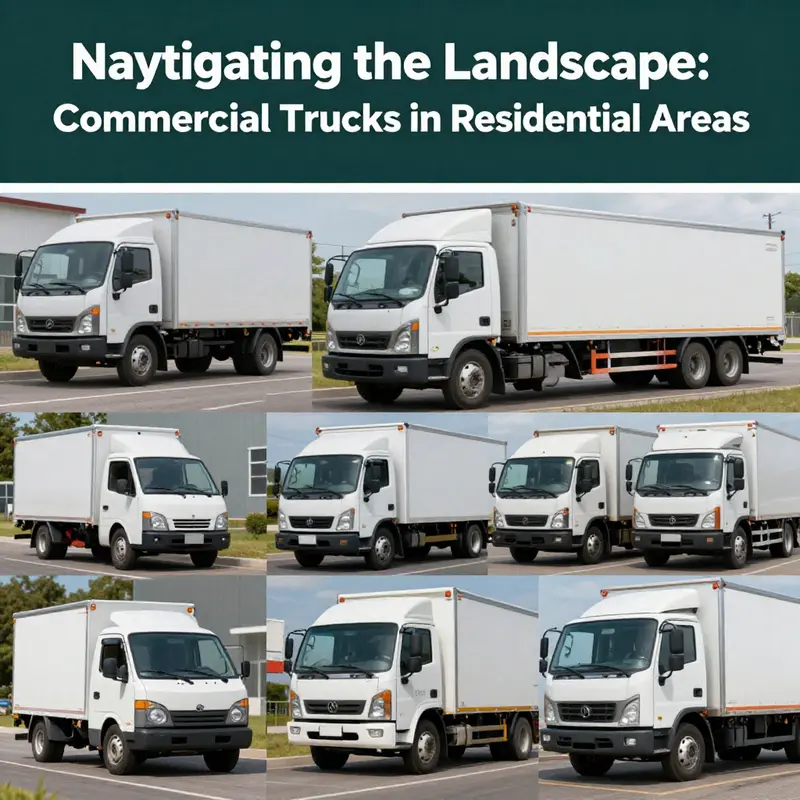
The question of whether commercial trucks can operate in residential areas isn’t a simple yes-or-no. It is a negotiation, guided by safety first, traffic efficiency, noise considerations, and the evolving demands of urban logistics. Across cities and neighborhoods, regulators, fleet operators, and residents continually calibrate what kinds of trucks may enter quiet streets, when they may do so, and under what conditions. What emerges from this ongoing balancing act is a layered regime in which the size, emissions, purpose, and timing of a vehicle all help determine admissibility. For readers charting a path through urban delivery planning or municipal policy, the central truth is that access is tightly controlled but increasingly nuanced in favor of efficiency and cleaner technology. This is not about banning trucks from neighborhoods; it is about shaping the most appropriate tools for city living while keeping commerce moving.
At the core of access decisions is the distinction between small, light-duty operations and larger, heavy-duty movements. In many municipalities, the everyday cadence of urban life is served by light-duty and mini box trucks that fit neatly within narrow streets and parking constraints. These vehicles are typically capped by size requirements: a length no longer than about six meters, a width no wider than 2.2 meters, and a height not to exceed roughly 2.8 meters. They usually bear blue plates or a light-duty designation on the registration, signaling to inspectors and planners that they belong to a lower-risk category in terms of road impact and neighborhood disturbance. Vehicles in this class are considered the practical backbone of last-mile deliveries in dense areas and are often preferred for their maneuverability, relatively quiet operation, and lower energy use when compared with larger fleets. Across many jurisdictions, their eligibility is further conditioned by emissions standards, with a preference for vehicles meeting or surpassing national or regional thresholds. In practice, that means fleets can assign such trucks to residential routes with less friction, provided they observe local rules about time, noise, and route planning.
The rise of new energy technology is gradually shifting the calculus in favor of broader access for environmentally friendly trucks. New energy vehicles, including electric and hydrogen-powered options, are increasingly treated with favorable policy. The logic is straightforward: if a vehicle reduces pollution and noise, it is a better fit for neighborhoods. In several regions, medium-sized electric or hydrogen-powered box trucks have achieved access parity with light-duty trucks, and in some places they enjoy even more lenient or extended access, including 24-hour operation in limited zones. This shift is not universal, but it is becoming more common as city fleets and private operators push for cleaner urban logistics. The adoption pattern mirrors a broader trend toward decarbonization in commercial transport, driven by regional incentives, grid improvements, and the economics of fuel and maintenance. Even smaller electric and hydrogen-powered trucks are seeing a policy opening in certain areas that previously restricted non-passenger vehicle categories. In practice, this means a neighborhood’s delivery window can be supported by a cleaner, quieter vehicle that still satisfies the business’s need to move goods efficiently.
Another growth area is the gradual relaxation around pickup trucks and versatile multi-purpose vehicles with permits. In several major cities, permit-based access schemes have evolved to acknowledge the demand for flexible urban transport while maintaining protection for residents. A typical permit framework might allow a pickup or multi-purpose truck to enter urban corridors outside the strict peak-hour constraints when the operator provides a legitimate service justification and adheres to designated routes. Even where entry is still restricted in some central zones, these permit programs can create corridors or exemptions that reduce the friction for essential services, such as on-demand deliveries or routine maintenance visits to residential properties. As of the mid-2020s, many urban centers have moved toward more permissive policies for pickups, conditioned on compliance with local road rules and emission standards. This evolution reflects a broader recognition that not all trucks that venture into neighborhoods impose equal burden: a compliant, lower-emission pickup can be a different proposition from a heavy, noisy, non-compliant vehicle.
Cities that illustrate the subtleties of access often sit along a spectrum of rules. In high-density metropolitan regions, access is typically constrained by time-of-day restrictions, with peak hours reserved for resident movement and non-disruptive commercial activity outside those windows. In other districts, the focus may be on minimizing wheel-lad noise and avoiding streets near schools or hospitals during certain periods. The mesh of local ordinances means operators must be diligent about planning: selecting routes that minimize the number and duration of deliveries in sensitive zones, scheduling dwell times to reduce idling, and ensuring that loading and unloading occur in designated curb spaces or private driveways when possible. The regulatory climate is further shaped by broader city goals around air quality and climate resilience, which can tilt the balance toward smaller, cleaner trucks and away from large, diesel-powered rigs. The practical effect for operators is clear: success in residential areas hinges on choosing the right class of vehicle for the mission, adhering to size and emission thresholds, and respecting time and noise constraints.
Regulatory nuance also surfaces in the way cities communicate access rules. Some jurisdictions maintain comprehensive, publicly accessible guidelines that outline what qualifies as a light-duty or NEV-eligible vehicle, what documentation is required to obtain a permit, and which streets or zones are subject to restrictions. These guidelines are not merely bureaucratic steps; they are a practical map for fleets aiming to serve populated neighborhoods without triggering resistance from residents. For companies navigating these rules, the first priority is often to align vehicle selection with the letter of the law. This means prioritizing smaller, lower-emission equipment for routes that penetrate residential cores and designing delivery schedules that minimize dwell time and noise. It also means investing in the capability to monitor compliance, whether through telematics that track daytime activity, noise-measurement technologies, or robust documentation that demonstrates adherence to permitted routes and hours. The goal is not only to stay within the rules but to demonstrate responsible operation that respects neighbors while preserving the integrity of the business’s delivery promises.
Alongside regulatory compliance, a practical lens on vehicle choice emphasizes the relationship between fleet strategy and urban form. The types of trucks that are allowed in residential areas typically reflect a city’s values and constraints: the desire to maintain livable neighborhoods, the need to keep commerce flowing, and the willingness to reward cleaner technologies with easier access. In tightly regulated zones, operators may lean heavily on light-duty box trucks, which are easier to fit into tight streets and easier to shield from noise impacts and emissions concerns. Where infrastructure and incentives align, there is room for NEVs to carry a growing share of residential deliveries, especially in neighborhoods that already host charging or fueling stations associated with public or private fleets. And for services that require flexibility and agility, permitted pickups provide a compromise: they preserve the ability to perform maintenance or small-scale deliveries in a broad set of neighborhoods while preserving the protections that residents expect.
For readers who manage fleets or study urban transport, the practical takeaway is clear. Shipments to residential areas can be supported by a spectrum of vehicle types, but success hinges on conscientious vehicle selection, precise adherence to size and emission standards, and disciplined scheduling. It also requires engagement with local authorities to understand the specific rules that apply in each community. The landscape is dynamic: cities in different regions might adopt new standards as technology advances or as traffic and pollution concerns evolve. To stay current, fleet operators should consult official municipal guidelines and stay alert to updates in policy that could widen or tighten access. In this evolving context, the most resilient fleets are those that pair operational flexibility with a strong compliance culture, ensuring that every delivery in or near a home becomes a case study in responsible urban logistics rather than a point of contention.
A useful way to connect policy with practice is to recognize how market dynamics intersect with regulation. The demand for efficient, clean delivery options has created an incentive for fleets to renew toward smaller, lower-emission vehicles, particularly in areas with stringent night and weekend restrictions. This trend is mirrored by shifts in the used-truck market, where buyers increasingly seek compact, compliant equipment with good energy performance and long-term maintenance prospects. For readers following the broader arc of the industry, a look at trends in used-truck sales growth can provide a barometer of how quickly fleets are pivoting toward the vehicle classes favored for residential access. See the ongoing analysis here: current-trends-in-used-truck-sales-growth. This lens helps connect the policy-centric discussion with the practical realities of purchasing decisions and fleet management. It also reinforces the point that regulatory changes and market responses are not isolated events; they feed into a shared dynamic that shapes which trucks are seen in neighborhoods and how often they appear.
In sum, the types of commercial trucks allowed in residential areas are not a monolith but a carefully negotiated set of options. Small, low-emission, and often electric or hybrid box trucks are the most common and pragmatic choices for urban neighborhoods. NEVs are gaining ground as policy instruments to reduce pollution and cut noise, while permit-based access for certain pickups offers a measured path for more flexible operations. The governing principle remains consistent: every vehicle entering a residential zone should be appropriate for the street’s scale, sensitive to residents, and compliant with local standards of emissions and timing. Operators who align fleet decisions with these principles are better positioned to deliver reliably while maintaining harmony with the communities they serve. For anyone seeking to deeper understand the concrete realities behind these rules, the official city guidelines offer essential detail, including precise measurements for size limits and the specifics of permit processes. And for those watching the broader market, the evolving mix of truck types reflects both policy priorities and the practicalities of modern urban logistics.
External resource: https://www.epa.gov/greenvehicles
Heavy Wheels, Quiet Streets: The Real Dynamics of Commercial Trucks in Residential Neighborhoods
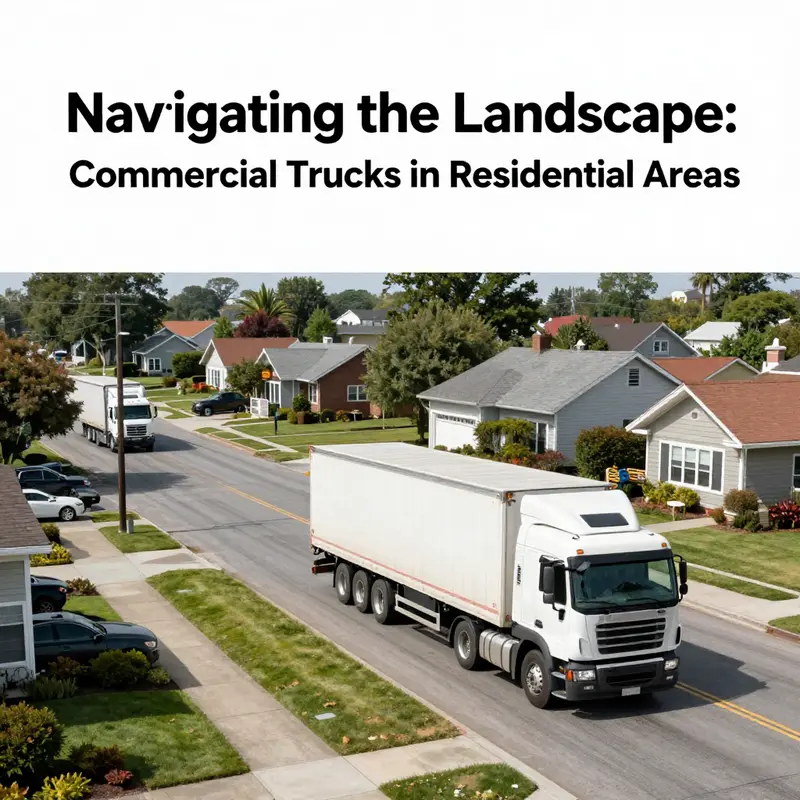
In many cities, the presence of commercial trucks in residential neighborhoods is not a binary question of allowance or ban but a carefully negotiated reality. Deliveries, service visits, and routine urban logistics require movement of vehicles that are larger, heavier, and louder than typical passenger traffic. The choreography of urban life thus depends on where and when those vehicles can operate, how they move through tight streets, and what measures are in place to shield residents from disruption while still sustaining the economy that relies on timely goods and services. The core tension is not about the intrinsic illegitimacy of trucks in homespun neighborhoods but about the conditions under which their presence can be managed so that the benefits of efficient urban logistics do not exhaust the everyday quality of life that makes residential areas livable. In practice, this means a regulatory framework that allows necessary access for certain times and purposes, paired with investments in technology, planning, and community engagement that reduce the negative externalities of truck traffic.
The overarching pattern is familiar: in many dense urban corridors, light and medium-duty delivery trucks frequent residential streets during business hours, ferrying parcels, groceries, and rapid-response services. These smaller, more maneuverable vehicles are often chosen because they can operate within narrower streets, fit into tighter curb spaces, and comply more readily with neighborhood noise and emission standards. By contrast, larger construction and warehouse transfer trucks, designed for bulk loads and longer-distance routes, face stricter constraints. Their access to residential zones tends to be conditioned on specific deliveries, service calls, or permitted routes that minimize disruption. Local ordinances frequently regulate access by time of day, vehicle size, and noise thresholds, creating a practical balance between citywide logistics needs and residents’ desire for predictable, quiet living environments.
Consider how a city negotiates this balance in high-density regions such as rapidly developing urban cores where commercial activity and housing density collide. In areas where population density meets heavy commercial activity, authorities often implement a tiered access regime. Deliveries may be restricted to daylight hours, with exceptions carved out for overnight waste collection or critical maintenance. The objective is not to eliminate truck activity but to restrict it to windows that least disturb sleep, outdoor gatherings, and street-level pedestrian activity. The rationale is grounded in the functional need for goods movement and the residents’ right to a reasonable standard of living. For residents, the experience is one of perceptible, predictable patterns rather than constant, jarring encounters with large, noisy vehicles. For businesses, the arrangement translates into predictable scheduling, smoother operations, and a clearer expectation of when access to certain streets is permissible.
Several practical realities shape this dynamic. First, the size and type of the vehicle are decisive. Light- to medium-duty delivery trucks and vans can navigate narrow streets more effectively and with less acoustic impact than their heavier cousins. The latter impose more significant constraints because of their length, turning radius, braking dynamics, and diesel exhaust profiles. Second, timing is crucial. Scheduled delivery windows align with residential rhythms—morning routines, midday errands, and evening calm periods—so that urban logistics do not collide with peak noise periods or sleep cycles. Third, route design matters. Urban planners increasingly favor short, direct routes that minimize back-and-forth travel through residential blocks, reducing both traffic and air pollution on small-scale street networks. In this sense, the conversation about access is as much about how streets are used as about which trucks are permitted to use them.
The regulatory language itself often reflects a compromise among stakeholders: city planners, neighborhood associations, and the carriers or contractors who shoulder the operational burden. A concrete illustration can be found in metropolitan settings where guidelines specify when certain vehicle classes can cross into residential neighborhoods for deliveries or service visits. In practice, this means neighborhood streets may see a blend of regulated activity—some days with higher, more disruptive truck presence and other times with a quiet lull. The effect on residents is nuanced. There can be a sense of intrusion when large vehicles appear during late hours or when a string of deliveries arrives in a short period. Yet the same residents may acknowledge the benefits of reliable deliveries and essential services that keep homes stocked and facilities functional. The challenge lies in making the ordinary course of urban life resilient to the occasional high-load truck event while preserving long-term livability.
The spatial distribution of commercial facilities and truck activity also matters. When distribution centers or service hubs sit near residential zones, the volume and frequency of trucks can intensify the perceived disruption. Urban planners therefore grapple with trade-offs: locating facilities close enough to support fast last-mile solutions and supply chain efficiency, yet distant enough to prevent disproportionate burdens on nearby households. The literature underscores that poorly planned placements can shift negative externalities to adjacent neighborhoods, undermining the very aims of livability and sustainability that cities claim to champion. A 2018 examination of urban development patterns highlights the need to balance logistical efficiency with equitable access and environmental health. The takeaway is not to shun urban logistics but to design urban forms that decouple peak traffic pressure from sensitive residential zones by thoughtful zoning, buffering, and multimodal strategies.
Mitigating the adverse effects of truck activity in neighborhoods has become a central mission of modern urban policy. Among the most commonly adopted strategies are designated delivery windows, which confine most non-emergency truck movements to hours that are least disruptive to residents. These windows often correspond to mid-morning or mid-afternoon periods when streets are active but not overly congested, allowing for more predictable noise and traffic patterns. Low-emission zones and the encouragement of cleaner, quieter vehicles represent another axis of mitigation. By restricting access for the most polluting or loudest vehicles in certain corridors, cities attempt to improve air quality and reduce community stress associated with heavy traffic. This is not merely about reducing diesel exhaust; it is about reducing the cumulative sensory load on neighborhoods—engine drone, harsh braking on steep driveways, and the siren-like beeps that accompany reversing alarms.
A forward-looking dimension to mitigation lies in the electrification of delivery fleets. Electric-powered delivery vehicles promise quieter operation and lower local emissions, helping to reconcile the need for urban deliveries with the desire for tranquil streets. When a city contemplates how to modernize its logistics ecosystem, electrification is not merely a technocratic upgrade; it is a policy instrument with direct social consequences. Quiet, low-emission trucks can move through residential streets with less audible intrusion and less impact on air quality, potentially widening the set of times and routes during which access is acceptable. This perspective aligns with broader discussions about decarbonizing urban transport and can inform conversations about how neighborhoods evolve as logistics become more efficient and less disruptive.
The possibility of integrating electric delivery fleets into the urban fabric invites further reflection on companion policy measures. For instance, smart curb management and dynamic routing technologies can help balance demand with available street capacity, steering trucks toward less congested corridors and off-peak windows. Community engagement becomes essential here. When neighborhoods participate in transportation planning, the resulting policies reflect local values, histories, and priorities. Residents who contribute to planning dialogues often frame issues less as abstract constraints and more as practical concerns—how noise at 2 a.m. affects sleep, how headlights glare through living room windows, or how street-cleaning schedules intersect with the rhythm of daily life. In turn, planners can respond with adaptive strategies that blend technical optimization with humane outcomes.
In weaving together these threads, it is clear that the question of whether you can have commercial trucks in a residential area does not surrender to a single rule. It hinges on a matrix of factors: vehicle class, delivery necessity, time of day, street design, emissions, noise control, and community governance. The practical reality is that trucks can be present, but their access is conditioned by carefully calibrated constraints that protect residents while preserving commerce. The best-case scenarios emerge where regulatory frameworks, technological innovation, and community voices coalesce to create neighborhoods that are both economically vibrant and socially resilient. This synergy invites a reimagining of what a modern, livable city can look like—one where a smooth, predictable rhythm for trucks accompanies a steady heartbeat of residents who enjoy peaceful streets.
On a final note, the conversation about residential access for commercial trucks benefits from recognizing the role of ongoing data collection and evaluation. Cities that monitor truck activity, noise levels, air quality, and health indicators can adjust policies to reflect real-world outcomes rather than assumptions. This iterative process helps ensure that the balance between urban logistics and residential well-being remains responsive to changing conditions—population growth, shifts in delivery demand, or the emergence of new vehicle technologies. It is through this adaptive approach that communities can sustain both economic vitality and the everyday comfort that makes neighborhoods more than just places to live, but places to belong. If readers want to explore how electrification of fleets is reshaping this discourse, there is a related discussion on electric trucks and market adaptation that offers a practical lens on the convergence of technology and policy. In particular, a discussion around electrified delivery fleets points to a future where quieter, cleaner movement through residential streets becomes a foundational aspect of urban logistics rather than a contested exception. For readers curious about that evolution, a broader industry perspective highlights the potential for quieter, more sustainable urban freight solutions to accompany regulatory progress and community engagement.
For readers seeking direct municipal context beyond general theory, the City of Jacksonville’s vehicle access regulations provide an explicit example of how access rules get translated into practice on the ground. This kind of reference helps ground the discussion in real-world governance and shows how local authorities translate the tension between commerce and calm into concrete, time-bound traffic patterns and curbside norms. This practical dimension matters because it demonstrates that policy is not an abstraction but a daily instrument shaping street life. In the end, every neighborhood negotiates its own equilibrium between the needs of commerce and the aspiration for peaceful, healthy living spaces. As urban areas continue to densify and e-commerce logistics intensifies, this equilibrium will likely become more refined, guided by data, dialogue, and a shared commitment to livable streets for all residents.
That ongoing refinement is where the chapter intersects with broader industry and policy conversations. It invites consideration of how a community can leverage technological innovations, smarter routing, and targeted investment in cleaner fleets to expand the envelope of permissible access without sacrificing the quiet, safe, and healthy ambiance that families and individuals expect in their homes. The journey is practical: it begins with acknowledging that commercial trucks have a legitimate role in modern cities, proceeds through thoughtful regulation and design of delivery windows, and culminates in a future where electric options, better urban design, and participatory governance collectively reduce friction between movement and stillness. As this balance evolves, neighborhoods may increasingly see trucks not as intruders, but as components of an integrated urban system that respects daily rhythms while keeping the wheels turning on the city’s economy. For anyone curious about how this evolution plays out in real markets and how electrification may shift the calculus, a broader resource that investigates the empirical links between truck traffic, property values, and health outcomes can offer additional context and insight: https://www.sciencedirect.com/science/article/pii/S019592521830056X. And for readers interested in the ongoing dialogue around practical, real-world trucking policy and neighborhood experience, a general industry hub provides curated perspectives on the evolving landscape of urban freight and community impact: Electric trucks revolutionize the Canadian market.
When Wheels Enter the Quiet: Navigating Commercial Truck Access in Residential Neighborhoods
Cities in motion often sit at a paradox where commerce depends on road networks that residents also rely on for daily life. The question of whether commercial trucks can operate in a residential area isn’t simply a matter of permission; it is a balancing act between the needs of local businesses and the daily rhythm of homes. In practice, commercial trucks do appear in residential neighborhoods, but their presence is usually regulated and purpose-limited. Delivery and last-mile operations—those small-scale, city-centric movements that bring goods to doorsteps or storefronts—tend to be the most common form of truck activity in these areas. These operations favor compact, maneuverable vehicles that can navigate tight streets, find parking that minimizes disruption, and complete trips within predictable time frames. Heavier, warehouse-to-site movements, by contrast, generally stay off residential streets unless there is a scheduled service visit or a legitimate, time-bound delivery window. The regulatory framework that governs these movements reflects a city’s need to protect residents from persistent noise, heavy traffic, and safety concerns while preserving the economic vitality that relies on timely goods movement. In many densely populated urban zones, this framework translates into concrete constraints: time-of-day access, vehicle size limits, and noise thresholds that together shape whether a truck can even enter a given block during a given hour. The practical upshot is clear. A residential neighborhood can experience commercial truck activity, but only under carefully defined conditions that keep commerce functional without compromising neighborhood livability. This tension lies at the heart of the local-expert perspective on commercial truck operations and will be a throughline as we examine examples and the broader regulatory logic that makes sense of them.
In the real world, the types of trucks found in residential areas differ by task, and that difference matters as much as the surrounding rules. For everyday urban deliveries, fleets tend to rely on smaller, boxy work trucks or compact delivery vans designed for city streets. Their size, step-in access, and loading configurations make it easier to navigate narrow lanes, curbside loading zones, and limited parking spaces. These vehicles are well suited to transporting retail merchandise, office supplies, and household items to a neighborhood’s doorsteps or to nearby stores for quick replenishment. The operational benefits are tangible: faster turnarounds, greater reliability in on-time delivery, and reduced risk of product damage when goods are loaded with secure restraints and proper insulation. In a well-run local operation, these advantages translate into improved customer satisfaction and smoother neighborhood relations because the trips are predictable, the parking is planned, and the days of the week when trucks come and go are known to residents and businesses alike.
A contrasting strand involves the larger, open-deck or flatbed configurations that service construction, maintenance, or industrial logistics. These vehicles are essential where heavy, oversized, or irregularly shaped loads must move from a yard to a site or between facilities. In residential districts, access for such trucks is typically restricted to specific, clearly defined occasions—usually a scheduled delivery, a service visit, or another time-limited purpose that aligns with both the vehicle’s size and the local tolerance for disruption. The underlying logic is not merely about weight or length; it is about how a street’s geometry, curb radius, and traffic patterns interact with the truck’s turning radius, braking distance, and visibility for other road users. When these larger vehicles do enter residential areas, it is often under a permitting process that governs when they may operate, where they may park, and how long they may remain on a block. The practical effect is that these movements become more predictable and auditable by city agencies, reducing surprises for residents while enabling essential work to proceed.
The regulatory landscape that shapes access to residential neighborhoods is not abstract. In high-density regions such as large metropolitan areas, local authorities articulate access rules that balance the demand for goods movement with the need for quiet, safe, and navigable streets. Time windows for deliveries are common; trucks may be allowed only during business hours or designated non-peak periods to minimize conflicts with peak traffic and school runs. Vehicle size limits can constrain the largest permitable loads, ensuring that even during authorized windows the fleet’s footprint remains compatible with the street’s geometry and parking rules. Noise regulations, sometimes supplemented by curbside loading standards, help ensure that loading and unloading do not become a persistent source of disturbance for nearby residents. These rules are not arbitrary; they reflect a city’s approach to urban livability, a synthesis of traffic engineering, noise control, and community engagement. In regions with high population density and robust economic activity, the approach is often collaborative: planners, law enforcement, business associations, and neighborhood groups participate in shaping access, testing changes, and refining guidelines to keep commerce moving while protecting residents’ daily routines.
To illustrate how these dynamics play out on the ground, consider a case study from a major urban center in the Midwest. A growing e-commerce fulfillment company in Chicago shifted from a fleet of standard passenger vans to a dedicated fleet of fifteen delivery trucks. The decision was driven by a need to improve delivery speed, safeguard goods during transport, and standardize loading procedures. The results were striking. Delivery speed improved by roughly a third, while the tighter loading configurations reduced damage to packages during handling and transit. Customer satisfaction rose as on-time delivery metrics stabilized and became more predictable. Although the fleet expanded, the city’s regulatory environment required careful coordination to ensure that the new pattern of activity did not overwhelm any single neighborhood. Routes were optimized to avoid heavy arterials during peak hours, and loading operations were scheduled within permitted windows that aligned with residents’ routines. The Chicago case demonstrates a broader truth: when delivery efficiency and protection of neighborhoods are pursued together, well-planned commercial truck operations can advance both economic performance and quality of life on a local scale.
The broader fleet-movement dynamic also highlights a fundamental distinction between city-center delivery and long-haul truck activity. In residential zones, the emphasis shifts toward speed, reliability, and safety rather than volume. This shift is not only about which truck is used, but how the operation is scheduled, where loading happens, and how the driver is trained to manage pedestrian interactions, curbside congestion, and parking legality. One practical implication for businesses is the value of a localized approach to fleet design. A fleet that blends smaller, city-optimized box trucks with a carefully planned schedule is better poised to meet service goals without provoking pushback from residents. A second implication is the strategic role of proximity to a hub or micro-fulfillment center within a neighborhood or adjacent district. By reducing travel distances, fleets can limit the number of times a heavy vehicle must traverse sensitive streets, easing the burden on residents while preserving service levels. These considerations are not merely theoretical; they shape real-world decisions about fleet size, vehicle type, loading equipment, and route planning.
For readers seeking practical direction, a cornerstone idea is the integration of community-informed practices into fleet operations. This includes ensuring loading zones are clearly marked, coordinating with building management on access points, and establishing predictable schedules that minimize curb obstruction during busy periods. It also means embracing technology to enhance transparency: route optimization software, real-time updates to dispatchers, and driver training focused on pedestrian safety, parking etiquette, and compliance with local ordinances. When businesses adopt this approach, the experience for residents improves, and the operational benefits for the company—such as fewer delays, lower damage rates, and higher on-time performance—become more sustainable over time.
The dialectic between access and restrictions can be observed in the everyday work of city operations. Officials regularly weigh the economic value of goods movement against the need to preserve neighborhood quiet and safety. They issue guidelines that typically specify where trucks can stage, how long they can occupy a curb, and during which hours loading and unloading may occur. These rules are frequently reinforced by targeted enforcement and clear signage, which helps drivers anticipate constraints before they reach a block. In this setting, the role of the fleet manager is to translate policy into practice: to design routes that respect time windows, to select vehicle configurations that fit street dimensions, and to communicate expectations to drivers so that loading does not become a recurring source of tension with residents. The result is a more predictable environment for everyone involved, even when a commercial vehicle is present on a neighborhood street.
Within this framework, an item worth noting is the ongoing dialogue between the private sector and public authorities. While regulations set the outer boundaries, neighborhood associations and business districts often negotiate practical adaptations. For example, temporary permits, designated loading corridors, and shared loading bays can reduce the footprint of trucking activity in sensitive areas. In turn, fleets gain clarity and consistency in their operations, which improves reliability and reduces the risk of fines or work stoppages. The net effect is a functional compromise: essential goods movement continues, residents retain daytime peace and nighttime quiet, and businesses sustain dependable service to their customers. This dynamic is a reminder that urban freight is not a one-size-fits-all proposition but a negotiated practice that evolves with city growth, technological advances, and community feedback.
For those who want to explore practical strategies further, a simple starting point is to consider how a city’s approach to residential freight aligns with the broader goals of urban mobility. What do residents value most: shorter trip times to their doorsteps, fewer nights with noisy loading, safer streets, or better air quality from optimized routing and vehicle efficiency? The answer will shape decisions about vehicle mix, scheduling, and site design. It will also influence how companies choose to invest in driver training, telematics, and the infrastructure needed to support a smoother integration of commercial trucks into residential life. In short, the feasibility of bringing commercial trucks into residential areas hinges on management as much as machinery: how well a fleet is designed, how precisely its activities are scheduled, and how effectively it engages with the communities it serves.
For readers seeking additional practical insights into the fleet and market side of this conversation, see the broader industry resources that discuss fleet structure, retrieval, and implementation strategies. A useful starting point is a dedicated industry resource that explains how commercial used truck sales are structured and applied within different sectors of logistics and transportation. This external reference offers a grounded view of how fleets scale, how vehicles are assessed for suitability in urban duty, and how acquisition strategies influence operational flexibility in tight, neighborhood-based routes. External resource: https://www.truckpaper.com/blog/commercial-used-truck-sales-explained/
If you want a concise portal to ongoing practical guidance and examples drawn from a broad trucking community, you can also explore the insights published on the main industry blog that hosts a wide range of trucking topics, including how operators in dense urban settings optimize their fleets and adapt to local regulations. For a centralized, current hub of information and case studies, visit the McGrath Trucks blog here: McGrath Trucks Blog.
In sum, the question of whether commercial trucks can operate in a residential area does not have a single, universal answer. It depends on the scale of the truck, the purpose of the movement, and how well local regulations—and the businesses that rely on these movements—are coordinated with residents’ expectations. The evidence from urban practice points to a nuanced reality: residential access is possible and increasingly common where it is planned, limited, and paired with strategies that minimize disruption. When delivery fleets prioritize route optimization, adhere to time windows, deploy appropriately sized vehicles, and engage with communities, they not only sustain essential service, they also contribute to a neighborhood fabric where commerce and daily life coexist with mutual respect.
Harmonizing Commercial Truck Presence with Residential Living: Innovations and Regulations for Sustainable Urban Freight
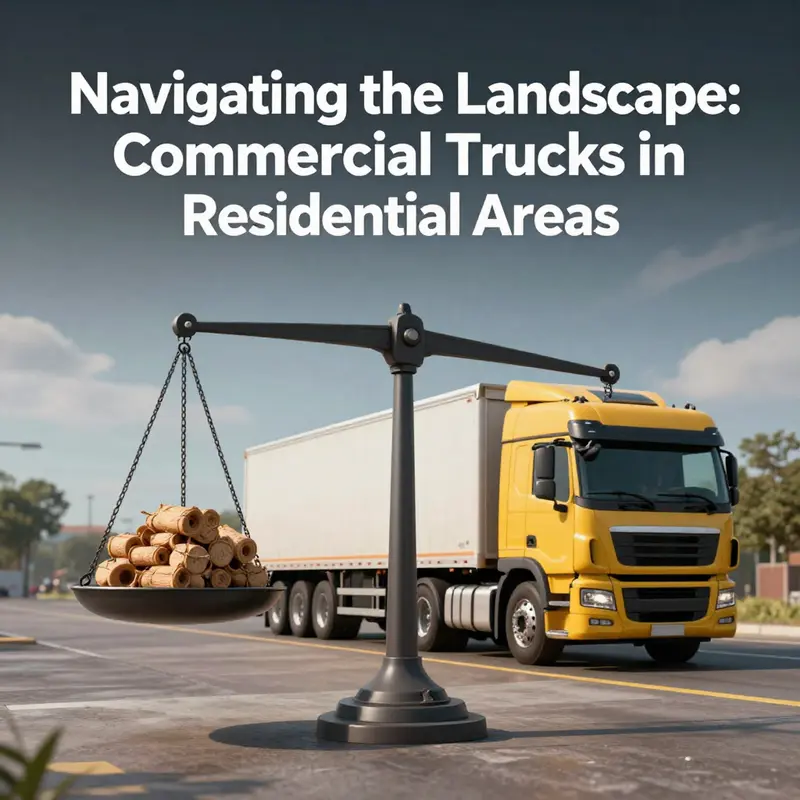
Commercial trucks play an indispensable role in today’s economy, serving as the backbone of freight movement and enabling the delivery of goods that sustain urban life. Their presence within residential neighborhoods is often viewed as a practical necessity but also raises significant concerns about environmental impact, noise, congestion, and safety. Striking an effective balance between the economic imperatives of commercial trucking and preserving the quality of life in residential areas requires a comprehensive approach that integrates technology, thoughtful urban design, and regulatory oversight.
The dilemma surrounding commercial trucks in residential zones is rooted in conflicting priorities. On one hand, residences rely on last-mile deliveries of essential items, construction materials, and services facilitated by commercial vehicles. On the other hand, heavy trucks generate noise pollution, contribute to air quality degradation through emissions, and exacerbate traffic congestion, all of which directly affect the well-being of residents. The urban environment is further complicated by residential streets often being narrower and less suited to accommodate large freight vehicles, which can cause safety hazards and infrastructural wear.
One of the foremost strategies to mitigate these challenges is the proactive adoption of cleaner and more efficient vehicle technologies. Transitioning from traditional diesel-powered trucks to electric powertrains is gaining traction globally. Electric commercial vehicles, which produce zero tailpipe emissions, drastically reduce particulate matter and nitrogen oxide pollutants notorious for contributing to respiratory and cardiovascular issues in dense communities. This technological shift aligns with broader environmental commitments such as national carbon neutrality targets. For instance, initiatives like China’s “China Green Freight Road” comprehensive design promote ambitious goals including a 12% reduction in energy consumption per ton-kilometer and a 13% reduction in trucking CO₂ emissions by the year 2030. Achieving such targets requires a coordinated effort involving alternative energy integration, improvements in energy efficiency, logistic system optimization, infrastructure enhancements, and continual technological innovation.
Beyond technology, urban and freight planning must adapt to accommodate commercial trucks within residential settings without compromising neighborhood tranquility. Smart city frameworks provide new avenues to integrate real-time data, allowing freight operators to optimize delivery schedules and route selection. Off-peak delivery windows minimize traffic disruptions during times when residents are most active, such as mornings and evenings, reducing the risk of congestion and noise disturbances. The development of dedicated freight corridors circumvents residential streets, channeling larger trucks toward roads designed for heavier loads, enhancing safety and minimizing damage to residential infrastructure.
Municipal policies form a critical backbone supporting these technological and planning advances. Effective regulation includes restrictions on truck weight and size within specific zones, time-of-day access controls, and noise ordinances to limit operational impact. Governments are increasingly enforcing fuel consumption monitoring and stringent emissions standards coupled with maintenance and inspection requirements to phase out older, high-polluting vehicles. Penalties for non-compliance incentivize fleet renewal and adherence to clean operations. Some cities, particularly those with dense populations and active urban commerce like Miami and Jacksonville, Florida, exemplify carefully calibrated regulations that allow commercial trucks only for necessary deliveries, typically during designated hours, balancing commercial activity with residents’ peace.
In the context of residential areas, smaller and more versatile commercial models—such as the Toyota Hilux, Nissan Navara, or Ford Ranger—are preferred due to their maneuverability and lower environmental footprint compared to heavier trucks. These vehicles permit essential delivery and service operations while causing less disruption. For larger freight needs, structured access and scheduling protocols are essential to prevent oversaturation of residential streets by heavy trucks and protect neighborhoods from excessive noise and pollution.
Integration of emerging technologies promises to further transform the dynamics of commercial trucking in residential settings. Automation, for example, can optimize vehicle routing with advanced algorithms to reduce idle times and emissions. Electrification paired with smart grid infrastructure can ensure freight vehicles recharge efficiently without straining power systems. Infrastructure investments such as dedicated loading zones, low-emission zones, and noise barriers complement these technological advances, creating urban environments that better accommodate freight needs.
Maintaining this balance demands ongoing collaboration among city planners, transportation authorities, businesses, and residents. Transparent communication channels enable communities to voice concerns while allowing industry stakeholders to innovate solutions that respect neighborhood integrity. Public education on the benefits of cleaner trucks and regulated deliveries can increase acceptance and support for necessary freight activities.
Ultimately, the coexistence of commercial trucks within residential areas hinges on fostering an ecosystem where economic vitality does not come at the expense of residents’ health and comfort. Approaches championing cleaner vehicle technologies, intelligent urban freight logistics, and firm yet sensible regulatory frameworks collectively forge a path toward sustainable, people-centered urban transport. This integrated model embraces progress while safeguarding the environment and residential quality of life.
For readers interested in the technological shift to zero-emission freight vehicles, there is valuable insight on how electric trucks are reshaping market dynamics in North America in this detailed discussion on the electric truck revolution.
For further details on strategic frameworks driving sustainable freight advancement in urban environments, the official China Green Freight Road Comprehensive Design Report offers an authoritative perspective from the Ministry of Transport, People’s Republic of China.
Final thoughts
In conclusion, the integration of commercial trucks into residential areas requires a careful approach that respects local regulations and addresses community needs. As we navigate this complex landscape, it is essential for trucking companies, fleet managers, and logistical enterprises to engage in meaningful dialogue with local communities, ensuring that their operations contribute positively. By fostering a balance between efficient logistics and the well-being of residential neighborhoods, we can create sustainable environments that benefit all stakeholders involved.