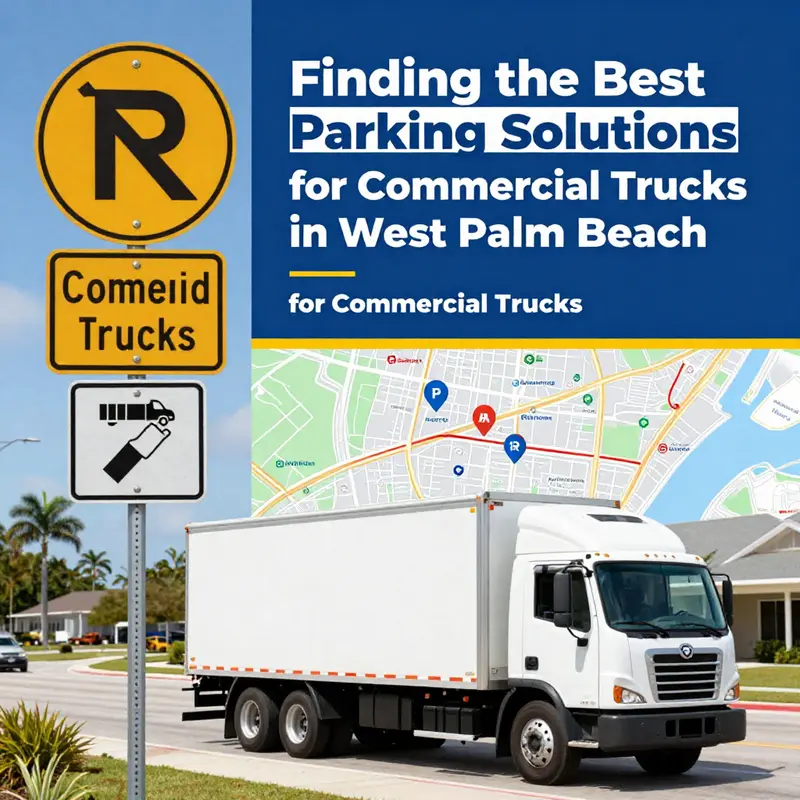
As the demand for reliable transportation and logistics increases, the need for adequate commercial truck parking becomes paramount. In West Palm Beach, understanding the intricacies of local parking regulations, locating safe stopping points, and utilizing technology can significantly enhance operational efficiency for trucking company owners, fleet managers, and logistics firms. This article explores the complexities surrounding parking regulations specifically for commercial trucks and presents a curated selection of truck stops and private facilities. Additionally, we delve into the role of technology in finding parking solutions, ensuring that fleet operations run smoothly and adhering to local laws.
null
null
Steady, Secure Parking Along West Palm Beach’s Freight Corridors: A Practical Guide for Commercial Truckers
Parking a commercial truck in West Palm Beach is less about finding a flat patch of asphalt and more about navigating a tapestry of rules, routes, and secure places that fit a driver’s schedule and a fleet’s bottom line. West Palm Beach sits at a crossroads of major freight corridors, with I-95 slicing north–south and the Turnpike Mainline threading farther inland. For the driver who needs to park safely overnight or for a few days between deliveries, the options are real, varied, and increasingly structured to support both safety and efficiency. The choice is rarely obvious at first glance, but with a clear sense of location, regulation, and the practical realities of long-haul life, a driver can match a parking spot to a trip plan rather than chasing a piecemeal solution that leaves the truck at risk or out of hours. In this city, the smart approach blends purpose-built facilities with up-to-date information and a respect for local rules that govern how and where large vehicles can rest, refuel, or dwell.
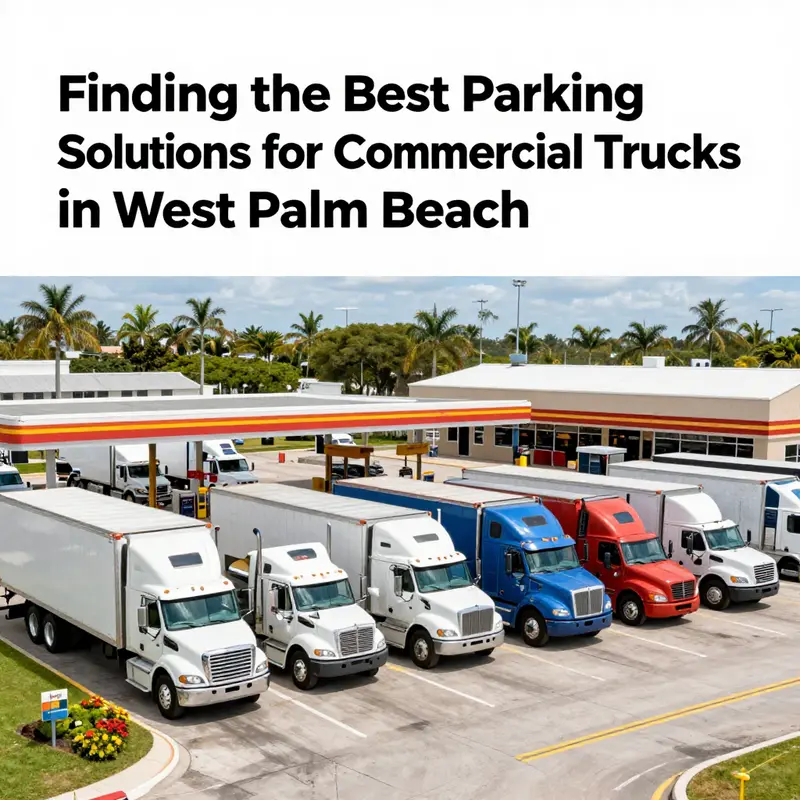
A first truth to accept is that not all parking is alike. In West Palm Beach, dedicated spaces exist in different flavors. There is the category of purpose-built parking areas designed specifically for commercial trucks. These spaces emphasize security, lighting, and efficient layout, with wide aisles that accommodate turning radii and the larger height profiles of long-haul fleets. A truck parking garage near the Turnpike Mainline exemplifies this concept. It is not simply a patch of asphalt but a managed environment where drivers feel confident leaving a rig for a few hours of rest or a longer stay during a multi-day delivery cycle. Security measures, monitored fencing, and controlled access contribute to a sense of safety that can be as important as proximity to the next load. For a driver moving through the region, a dedicated truck parking garage offers predictable conditions: reliable entry and exit, known operating hours, and a layout that supports efficient pre-trip checks and post-trip routines once the yard becomes a temporary home.
Alongside these purpose-built facilities, West Palm Beach has initiatives aimed at expanding capacity along major freight corridors. The ongoing improvements at the West Palm Beach Service Plaza on the Turnpike Mainline, notably around Milepost 94, reflect a broader intent: to reduce congestion on a corridor that carries substantial trucking volume and to provide more reliable places for trucks to park, wait, or stage for a delivery. These service plazas are not just rest areas; they are strategic nodes where drivers can step out for a quick walk, check equipment, or link to fuel and basic amenities. The expansion efforts are framed to accommodate more trucks, improve safety interfaces with other traffic, and offer easier access to the plaza’s amenities. The practical upshot for drivers is straightforward: more capacity along the Turnpike means fewer pinch points, fewer illegal parking spots, and fewer long detours between assignments. It is a development that recognizes the freight flow’s reality—that long-haul trips seldom align perfectly with a single delivery window—and responds with space and services that keep the operation moving.
For drivers who prefer or need to use private facilities, the landscape in coastal Florida generally offers well-secured, fenced lots with basic utilities such as electricity and water, along with 24/7 security monitoring. These private truck parks can be especially valuable for longer stays or when a driver’s schedule includes multiple nights in the same area. The value proposition centers on reliability and the practical comforts of a controlled environment. It is not merely about parking; it is about a temporary base camp where a driver can perform routine maintenance, recharge, and plan the next legs of the journey with a steady routine. In planning a stay, the driver should consider access to power hookups for reefer units, the availability of showers and laundry, lighting quality for safety, and the overall security posture of the facility. A well-run private truck park becomes more than a safe place to park; it becomes a resource for maintenance planning, rest quality, and readiness for the next shift.
Public options in a dense urban area tend to be limited for large commercial trucks. City-owned lots may exist, but many are not suited to the length, width, and height of typical commercial fleets. Size restrictions, turning radii, and local restrictions on long-term parking in certain zones can complicate even a casual overnight stop. The prudent approach is to treat public spaces as a supplementary option at best, useful for short-term needs or as a fallback when a more suitable facility is temporarily full. Drivers should be prepared to adjust itineraries to reach a facility that can safely accommodate their fleet’s dimensions and weight limits while staying within municipal rules. To ensure compliance, drivers should check local ordinances and consult official channels before settling into a public space for any extended period.
The regulatory backbone matters as much as the concrete beneath the tires. West Palm Beach enforces rules about parking large vehicles in residential or commercial zones, and permits or notices may be required depending on the location and duration of the stay. The city’s public works department and its non-emergency line provide essential guidance for drivers who must align a trip plan with legal parking options. The right approach is to verify requirements before arriving at a site, because enforcement can be strict if a truck is parked without proper permission or outside permitted hours. In practice, this means doing a quick check of current ordinances, confirming that a chosen lot allows overnight parking if needed, and, when in doubt, choosing a facility that explicitly advertises long-term or overnight parking.
For real-time information, a driver’s toolkit should include digital resources that list verified parking locations with GPS coordinates and user reviews. Apps and websites geared toward truck fleets help drivers compare options by price, space availability, and security. These tools are not infallible, but they can substantially reduce the guesswork that often accompanies short-notice parking decisions. They also serve as a practical way to confirm whether a recommended facility still operates with the same capacity and rules as when the driver first planned the trip. In addition to these apps, drivers should consider reaching out to the local transit or public works lines for updates on any temporary closures or changes in access during construction projects. The combination of official guidance and live, crowd-sourced insights creates a robust picture of the day’s parking landscape.
Beyond the practicalities of space and policy, the choice of where to park carries a broader strategic logic. If a driver knows they will deliver near a business district or a port area the next day, a spot close to the planned route that minimizes backtracking is worth prioritizing, even if it costs a bit more per night. A quiet, well-lit yard close to the next load reduces the risk of fatigue-related errors, helps with pre-trip inspections, and supports better sleep between shifts. The goal is to minimize the daily anxiety created by the uncertainty of where to park, which in turn improves reliability and performance for the fleet as a whole.
To weave these threads together, consider the following line of thought: when planning a West Palm Beach layover, identify whether the schedule favors a short rest in a well-secured truck parking garage near the Turnpike or a longer stay at a private truck park that offers full utilities and security. If the trip involves a sequence of deliveries along I-95 or SR 869, map the route to a facility that sits at a natural waypoint rather than forcing a last-minute swing through the city’s denser zones. In any case, maintain flexibility by keeping a couple of alternative locations in mind and be prepared to shift plans if a preferred site is temporarily unavailable.
For drivers seeking broader industry context and fleet-management perspectives, the landscape in which West Palm Beach parking exists is part of a larger conversation about how fleets balance safety, efficiency, and cost in an increasingly regulated environment. The trucking community has long emphasized the importance of predictable dwell times and secure parking as part of a driver’s overall well-being and productivity. Reading across industry resources and sector-specific updates can yield actionable ideas about optimizing route planning, maintenance scheduling, and even equipment investments that support more predictable overnight parking. If you want to explore a broader lens on how fleets navigate similar challenges, the McGrath Trucks blog offers additional context and practical insights that complement the local perspective here McGrath Trucks Blog.
In addition to these considerations, drivers should reference a map-based listing for a visual sense of parking options and their proximities to major arteries. A widely used resource provides a consolidated view of West Palm Beach truck parking facilities, helping drivers gauge distances, estimated drive times, and nearby services. For those who rely on turn-by-turn clarity, the MapQuest listing can be a helpful companion to the local guidance described above. Visualizing where a yard sits relative to the next load can prevent unnecessary delays and reduce the cognitive load that comes with last-minute parking decisions. External resource: https://www.mapquest.com/
The practical takeaway is straightforward: plan with intention, verify with official sources, and stay adaptable. West Palm Beach’s parking options reflect a mature system built around the real needs of drivers who traverse the city’s freight corridors. Whether you favor a dedicated truck parking garage near the Turnpike Mainline, the expanding service plaza facilities, or a well-secured private truck park for longer stays, the right choice hinges on aligning space, security, and regulatory compliance with a driver’s schedule. Staying ahead means knowing where to check for updates, which resources to trust, and how to integrate these choices into a single, coherent plan that protects the vehicle, the cargo, and the driver’s well-being. For ongoing learning and broader fleet strategy, you can explore industry insights at the linked blog, which offers perspectives that echo the practical realities of West Palm Beach parking. Keeping these elements in balance is what turns a potential bottleneck into a predictable, manageable part of the daily routine.
Safe, Legal, and Ready: Private, Secure Parking for Your Commercial Truck in West Palm
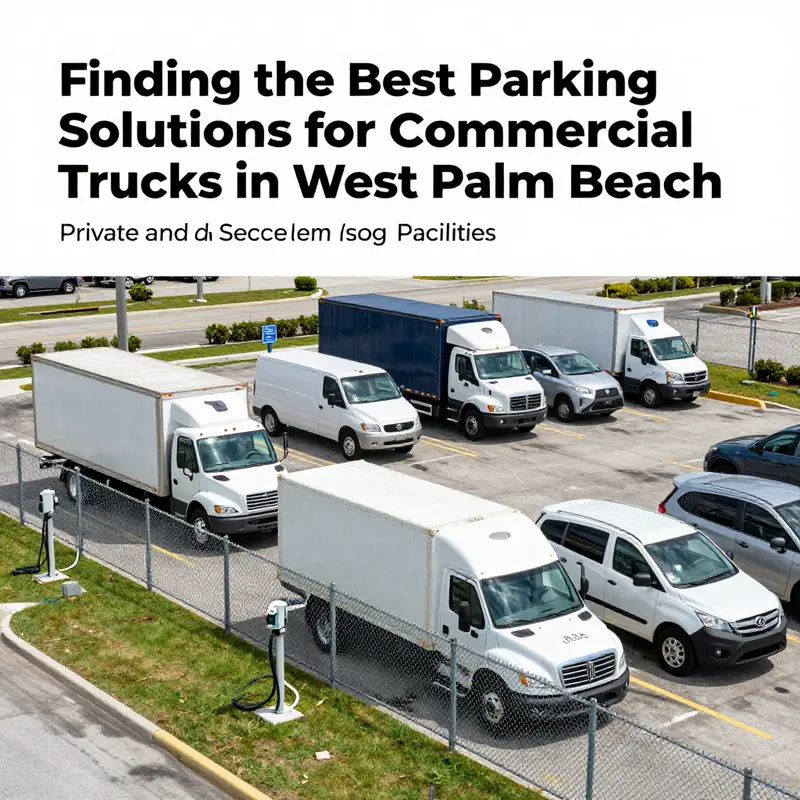
Finding a reliable place to park a commercial truck in West Palm Beach is less about finding a single spot and more about assembling a practical plan that respects local rules, supports your schedule, and protects your equipment. The city sits at a busy crossroads of cargo movement, with highways radiating outward and a dense mix of industrial corridors and residential neighborhoods. That combination makes parking decisions particularly consequential. Long-term or overnight parking can be a real constraint if you don’t know where to look, what the regulations permit, and how to verify the safety and accessibility of a site. The core of the process is simple in concept but nuanced in practice: identify options that balance proximity to your route, cost, security, and compliance, then verify the details directly with the facility and with city officials if needed. In short, you want a space that keeps you compliant while reducing the risk of damage, theft, or ticketing down the line.
West Palm Beach regulates parking of large vehicles with an eye toward neighborhood character and public safety. In residential zones, parking large vehicles overnight can trigger permits or be restricted altogether. In commercial districts, clear signage and time limits often govern what you can do on-street or in lots that abut storefronts. The rules are straightforward in intent—keep traffic flowing, preserve neighborhood quality of life, and prevent obstructed emergency routes—but the practical effect is that not every lot is equivalently suitable for a tractor-trailer. Because of this, most drivers position themselves between three reliable avenues: managed truck stops or rest areas near major arteries, private truck parks that maintain secure, fenced spaces, and city-owned or permitted lots that accommodate larger rigs with proper oversight. Each option has its own rhythm and requirements, and the best choice depends on your work pattern, the time of day, and the length of the stay you anticipate. When a driver understands these dynamics, the decision becomes less about luck and more about a deliberate plan.
Truck drivers in the area routinely look for spots that combine security with practical amenities. A well-located truck stop or rest area along a major corridor can provide essential services—fuel, showers, and a safe place to rest after a long leg of the trip. The tradeoff is that these sites often come with higher traffic, more exposure to public view, and sometimes strict dispatch-driven schedules. Private truck parks, by comparison, offer a different balance. They are typically fenced and gated, with controlled access that improves security and reduces the chances of vandalism or theft. Onsite managers or security personnel can provide assistance with check-in and can help resolve issues quickly if you encounter a mechanical problem or a security concern during a night shift. In West Palm Beach, several reputable private facilities are known among drivers for their robust security features, adequate space for large trucks, and predictable access hours. These facilities are designed with long-haul needs in mind, including durable surfaces for heavy equipment, lighting that keeps the lot feeling secure after dark, and basic utilities such as electricity hookups or water access where available. The overall design reinforces a simple truth: a well-managed yard reduces stress and helps drivers keep to schedules so that the next leg of the trip can proceed without delay.
Public parking options exist as well, though they tend to be limited for truly large commercial vehicles and often come with stricter rules than a private yard. City-owned lots can be legitimate choices in a pinch, but many are not sized to accommodate oversized trailers or may restrict overnight parking altogether. Those limitations make private facilities a compelling alternative for many drivers. The reality is that, in West Palm Beach, the most reliable long-term or overnight parking often lives in that private, secure category. These yards emphasize controlled entry, perimeter fencing, and surveillance, and they recognize the realities of trucking life—what drivers need is predictable access, a stable price, and the ability to plan a safe, restful stop that won’t attract penalties when the sun comes up.
Choosing a facility is rarely a question of a single feature. It’s the synthesis of several factors, all of which affect the bottom line and the reliability of a given stop. First, security matters. A fenced perimeter, gated access, well-lit lots, and active monitoring are not luxuries here; they are prerequisites for equipment protection and for driver peace of mind. Second, access to essential utilities can be a deciding factor, especially for longer stays. Many yards provide electricity for tractors or refrigerated units, as well as water connections where needed. Third, the logistics around entering and leaving the yard should align with your route. A site that is convenient to a highway on-ramp, with straightforward ingress and egress, reduces the risk of ill-timed maneuvers in heavy traffic. Fourth, the credibility and responsiveness of management. An on-site presence or a trusted management team can make a major difference if you need assistance at midnight or have an issue with a payment or a gate code. Finally, price and value. Long stays benefit from transparent pricing and predictable terms, even if the upfront cost is higher than a casual street parking option. In practice, the best choices balance all of these concerns so that you can focus on the job rather than the lot.
In the West Palm Beach landscape, two private yards are consistently cited by drivers for security, space, and reliability. They are repeatedly described as trustworthy environments that can handle the realities of long-haul operations. While these facilities themselves are not the focus here, their reputations underscore what to look for when evaluating any potential site: robust security infrastructure, ample room for large equipment, and dependable management that understands the trucking schedule. Prospective parkers should verify current availability and specific security offerings directly with the facility ahead of arrival, as policies and capacities can change with demand and city conditions. In addition, reviewers on reputable platforms often note how clean the yards are, how easy it is to access the gates, and how well the grounds are maintained after heavy use. These qualitative signals matter because they reflect how seriously a yard takes operator care and, by extension, how seriously the operators take the protection of your asset.
If you want a structured way to explore options without sacrificing the fluidity of your route planning, consider engaging a few practical research habits. Start by identifying a short list of candidate yards within a reasonable driving distance of your next waypoint. Contact them to confirm current gate access procedures, any required documents, and whether they can accommodate your vehicle’s dimensions and any special equipment you tow or haul. Clarify whether they offer long-term storage flexibility or 24-hour access, and ask about any safety protocols, monitoring, or patrols that protect parked rigs. It can also be helpful to inquire about nearby amenities, such as restrooms or showers on site, and whether there are restrictions on vehicle idling or outdoor storage of perishables if you transport refrigerated goods. A quiet, well-managed yard with consistent rules is typically more conducive to maintaining the integrity of your equipment and supporting a smooth operational cadence.
The practical side of this topic is why many drivers lean toward private yards. They provide predictable, secured space that can be reserved in advance, which is invaluable when you are juggling delivery windows, DOT logs, and the pressure of getting to a next drop on time. The same logic supports the use of digital resources that map and compare parking options across West Palm Beach and the surrounding region. In the most up-to-date practice, drivers turn to directory-style platforms that list verified locations, offer GPS coordinates, and host user reviews. While this chapter refrains from endorsing specific brands by name, it is worth noting that such resources exist to supplement your on-ground reconnaissance. They can help you assemble a practical, reality-based list of potential stops, confirm their security posture, and provide a sense of the real-time availability you will encounter when you arrive. When you combine this digital diligence with a proactive phone check and a quick on-site scan, you place yourself in a strong position to park safely without compromising your schedule or the security of your equipment. For a broader sense of the local landscape and to cross-check options, a quick look at the West Palm Beach area truck parking directory can be illuminating. If you are seeking additional context from a broader perspective while planning your route, a trusted, community-driven online resource can be a useful companion in your decision process.
For drivers seeking a lifecycle approach to parking in this region, starting with a formal check of city guidelines is prudent. The City of West Palm Beach Public Works Department maintains information about parking regulations that affect large vehicles in various zones. If you require clarification or need to address a specific scenario—such as a temporary permit for a project, or guidance on permitted locations for oversized vehicles—the department’s non-emergency line is the appropriate point of contact. This step is especially important if your stay drifts into a pattern that could raise concerns with local authorities, such as repeated overnight parking in a non-designated area. By anchoring your plan to official guidance, you reduce risk and set boundaries for your own practices and for others who share the space. In addition, if you want to keep a finger on the pulse of current conditions, you can review public notices or contact summaries that might affect parking permissions, noise restrictions, or enforcement policies that influence how trucks can operate at night.
As you finalize your parking plan in West Palm Beach, remember that none of this exists in a vacuum. Your choices should harmonize with your broader operations, including maintenance cycles, fuel returns, and rest periods required by hours-of-service regulations. The ideal parking solution blends security, convenience, and compliance into a single, repeatable routine. If you’re uncertain about a given site, a prudent approach is to reserve a space with a clear cancellation policy while you verify all the fine print. The most reliable long-term options are those that combine these elements into a predictable cadence, ensuring that you can meet your next itinerary with confidence rather than last-minute scrambling. And as you navigate the city’s streets and highways, keep a simple reminder in mind: the right yard is not just about space; it’s about security, accessibility, and the ability to stay compliant while keeping your equipment in peak condition.
For ongoing guidance, you can explore more perspectives and practical advice from industry resources, including general trucking content that often touches on parking strategy, fleet efficiency, and the evolving landscape of private storage solutions. These insights are valuable as you refine your approach to West Palm Beach parking and consider how broader market trends—such as equipment longevity, maintenance cycles, and regional demand—intersect with your daily routing decisions. As you plan, you’ll likely become adept at balancing cost with security and service quality, a combination that yields steadier operations and fewer roadblocks on the path to the next load. To deepen your engagement with this topic, you can follow a reputable industry blog that aggregates practical perspectives on truck storage and operational efficiency. The chapter benefits from remaining current, so consider bookmarking trusted resources and updating your plan as new facilities come online or as city policies shift. For a light touchstone of the practical geography of West Palm Beach truck parking and to map out potential yards, consult a regional directory of truck parking options that captures site specifics and distance from major corridors.
External resource: https://www.mapquest.com/directory/vehicle-storage/truck-parking/west-palm-beach-fl/
Internal resource: https://mcgrathtrucks.com/blog/
Charting the Route: How Smart Technology Rewrites Truck Parking in West Palm

Parking a commercial truck in the dense, shoreline-city fabric of West Palm Beach is less a matter of finding a vacant lot and more a question of navigating a web of regulations, spaces, and evolving technology. For drivers who routinely roll into this coastal metro, the challenge isn’t just distance or fuel; it’s time. Time wasted circling blocks, waiting for an open bay, or trying to recall where their rig is parked in a sea of large vehicles. The chapter that follows treats technology not as a gadget but as a navigation system for urban truck logistics. It envisions a future already taking shape in many large facilities: a seamless blend of location-aware hardware, intelligent software, and sensor-rich spaces that together reduce the guesswork, the stress, and the idle hours that can pile up in West Palm’s busy corridors near I-95, the Sawgrass Expressway, and the city’s core industrial zones.
At the heart of this transformation are advanced vehicle location systems. Today’s commercial trucks frequently come with built-in GPS and telematics. These tools don’t merely relay a vehicle’s position to fleets; they can also be leveraged by drivers to locate their own trucks within sprawling parking facilities. Instead of wandering to every row, a driver could enter the vehicle’s license identifier into a secure app, which then gives precise navigation instructions to the exact bay or stall where the truck sits. This capability is especially valuable when a lot hosting dozens or hundreds of spots is involved—warehousing districts, distribution hubs, or parking facilities near major arterials can become navigable mazes without the driver having to deploy a charged phone in a guessing game. The result is more time spent on delivery windows and less time spent searching, which is particularly meaningful in a city where street parking rules can be stringent and enforcement is tight.
Beyond the onboard systems, smart parking management platforms begin to operate behind the scenes, orchestrating space use with a blend of AI, high-precision mapping, and IoT devices. In a modern West Palm trucking hub, such a platform could allow a driver to reserve a designated parking spot in advance and receive real-time guidance upon arrival. The same system would support a consistent end-to-end experience: when the driver returns for departure, the app could reverse-navigate to the truck, listing the lane, the bay, and any necessary checklist items to get rolling again. Importantly, these platforms aim to reduce the friction drivers face when entering unfamiliar facilities or complex lots. The vision is a digital map that knows where every vehicle is, where every bay becomes available or occupied second by second, and where a driver should head next to minimize congestion and delays. Although widespread implementation varies by site, the directional pull is clear: give drivers a clear path from gate to truck and back, and you unlock substantial gains in efficiency.
A critical layer in this ecosystem is the integrated sensor and camera network. Smart parking systems increasingly deploy high-definition cameras and a mesh of sensors at entrances, in lanes, and near bays. License plates can be recognized automatically as a truck enters, and spot occupancy can be recorded in real time. The central dashboard—accessible by dispatchers, facility managers, and drivers via secure apps—knows precisely where every vehicle sits and how long it has been there. For drivers, this means that if a truck is temporarily relocated for a pickup or if space becomes temporarily blocked, the system can recalculate the route and present a new preferred bay within minutes. For operations teams, it translates into tighter control of space, lower risk of misplacement, and better accountability during high-traffic periods. The underlying promise is not new sidewalks and bright lights but a calm, data-informed flow of movement through a facility that once felt like a labyrinth.
Tied to these real-time capabilities is the concept of a digital twin—the virtual replica of a physical parking environment. A digital twin captures the layout, the bays, and live occupancy, then overlays this map with dynamic routing that can adapt as occupancy changes. In practice, a driver approaching a West Palm parking hub would see the nearest available bay highlighted on their device, with alternative routes proposed if the original choice becomes occupied. The digital twin also helps optimize space utilization over time. Facilities can simulate patterns—arrival peaks, rest-break windows, maintenance intervals—and reallocate bays to minimize idle time. The result is a virtuous cycle: better occupancy data makes routing smarter, smarter routing reduces search time, and reduced search time frees up more slots for late-arriving vehicles. The digital twin thus moves parking from a reactive process to a proactive one, one that aligns space management with the unpredictable rhythms of day-to-day trucking.
This integrated technological tapestry does not exist everywhere, and it is fair to acknowledge that West Palm Beach presents a mix of facilities at different stages of adoption. For the driver, the practical upshot is in how to tap into these tools when they land in the city. First, understand that public parking options for large trucks are limited in most urban cores. City ordinances often restrict oversized vehicles from residential and certain commercial zones without proper permits, and enforcement can be strict, especially during peak hours. The most reliable long-term and overnight options tend to be designated truck parking facilities and private truck parks that offer fencing, lighting, security monitoring, and utility hookups. These spaces are typically located close to major routes—near interchanges along I-95 or SR 869—where trucks can rest safely without infringing on residential neighborhoods. In practice, drivers often combine a planned approach with real-time updates: they check a facility’s capacity status ahead of arrival via a parking-management app, proceed to the site if a spot is available, and, once on site, rely on the established digital map to navigate directly to their assigned bay.
The tools described here are not purely theoretical; they reflect a broader shift toward data-driven logistics. For drivers operating in West Palm Beach, the combination of onboard location services, intelligent booking platforms, and real-time sensor networks translates into a predictable, less stressful parking experience. The driver can pre-plan the route to a chosen site, check arrival windows, and when necessary, receive a precise route that avoids long drives around industrial blocks searching for space. The digital twin’s live occupancy map proves especially valuable during peak traffic periods or when weather conditions limit visibility and street options. It is in these moments that the system’s capacity to quickly reroute to the nearest open bay becomes more than a convenience; it becomes a lifeline that protects delivery schedules and driver hours.
For those who prefer to ground-truth their approach with real-world know-how, the citizen-operator perspective matters as well. In West Palm Beach, and more broadly in southern Florida, parking regulations can change with the seasons and with city priorities. A driver’s best practice is to stay informed about local rules and to know where permits might be required for long-term storage in non-residential zones. This is not a call to fall back on guesswork; it is a reminder to pair technology with municipal guidance. The City of West Palm Beach Public Works Department offers official guidance and can be consulted for questions about parking in restricted areas or about the proper permits needed for oversized vehicles. Keeping the lines of communication open with city authorities helps ensure that a driver remains compliant while benefiting from the most up-to-date parking options. For accurate, current details, this public resource remains the anchor to the practical information that informs day-to-day decisions on where and how to park in the city.
In addition to official guidance, drivers can expand their knowledge by engaging with the broader trucking community through online resources that discuss parking availability and facility reliability. A practical touchstone is the local industry blog, where drivers share recent experiences about space availability, security, and the reliability of digital wayfinding tools. A well-curated resource can complement municipal guidance by offering recent, on-the-ground feedback about how technology is performing in West Palm Beach’s real-world parking environment. For readers seeking a digest of trucking logistics that intersects with West Palm Beach, a quick check of our broader trucking conversations can provide useful context and practical tips. You can explore this topic further on the McGrath Trucks blog.
As the city and its parking facilities evolve, so too does the driver’s toolbox. The trajectory is clear: the more drivers can rely on precise location data, pre-booked spaces, and real-time guidance, the more predictable their days become. The ultimate benefit is a streamlining of pre-trip planning, entry, parking, and post-shift departure. The driver arrives at the facility with a reserved bay or a clear sense of where to locate their truck, thanks to accurate digital instructions. The truck is parked in a space that is known to be available, and when it is time to leave, the same system helps pull the truck from its bay and direct it to the exit with minimal delays. In short, technology is turning a historically stressful part of trucking—finding a legal, secure space in a busy city—into a coordinated, efficient operation. The vision is not a distant dream; it is already taking shape in facilities across the region, and West Palm Beach is a microcosm of that broader shift.
For drivers seeking to ground themselves in local specifics, the starting point remains a solid understanding of where parking is allowed, where permits are required, and how to access the most current occupancy data. The city’s official channels provide authoritative guidance, while the evolving parking ecosystem offers practical, real-time support through digital maps, smart cameras, and occupancy sensors. The result is a more predictable workflow: pre-plan, arrive, park, and depart with confidence. The road to this improved experience may vary from one facility to the next, but the underlying logic is consistent. When space, law, and technology converge, West Palm Beach becomes less a maze and more a mapped route with clearly defined waypoints. The driver can focus on delivery windows and safety, knowing that the parking environment near I-95 and the surrounding industrial corridors is increasingly shaped by intelligent design rather than chance.
For readers who want to dive deeper into the practical, city-specific context, consult the public-facing resources of the City of West Palm Beach and stay attuned to updates from the local parking authorities. The combination of on-vehicle location data, sophisticated space-management platforms, and a growing network of sensors and digital twins offers a compelling path forward for truck drivers navigating West Palm’s busy landscape. The future of parking in this vibrant city is not simply about finding a space; it is about finding the right space quickly, legally, and with the least disruption to the day’s schedule. As technology continues to mature and adoption expands, the experience for drivers and operators will continue to improve, bringing greater predictability and efficiency to a core logistics challenge.
Internal link: To explore more about ongoing trucking topics and related insights, see the McGrath Trucks blog.
External resource: For authoritative municipal guidance on parking and related infrastructure, refer to the City of West Palm Beach Public Works Department at https://www.westpalmbeach.gov/government/departments/public-works.
Final thoughts
Parking solutions for commercial trucks in West Palm Beach encompass a range of considerations from local regulations to finding secure locations. By understanding city regulations, exploring various truck stop options, and leveraging technology, trucking companies and logistics firms can enhance operational efficiency while ensuring compliance and safety. With the increasing demand for truck services and tight deadlines, maximizing the efficiency of parking strategies is critical for successful fleet management.