The transportation industry in Michigan is heavily reliant on commercial trucks, which play a crucial role in the movement of goods across the state. Understanding what constitutes a commercial truck, the regulatory framework governing their operation, and their economic impact is vital for trucking company owners, fleet managers, and logistics professionals. This article delves into the definition and classification of commercial trucks in Michigan, the associated regulations that ensure safety and compliance, and the economic implications of these vehicles within the state. By providing a thorough exploration of these topics, readers will become equipped to navigate the complexities of commercial trucking in Michigan effectively.
Weight, Purpose, and Permission: A Practical Look at Michigan’s Definition and Classification of Commercial Trucks
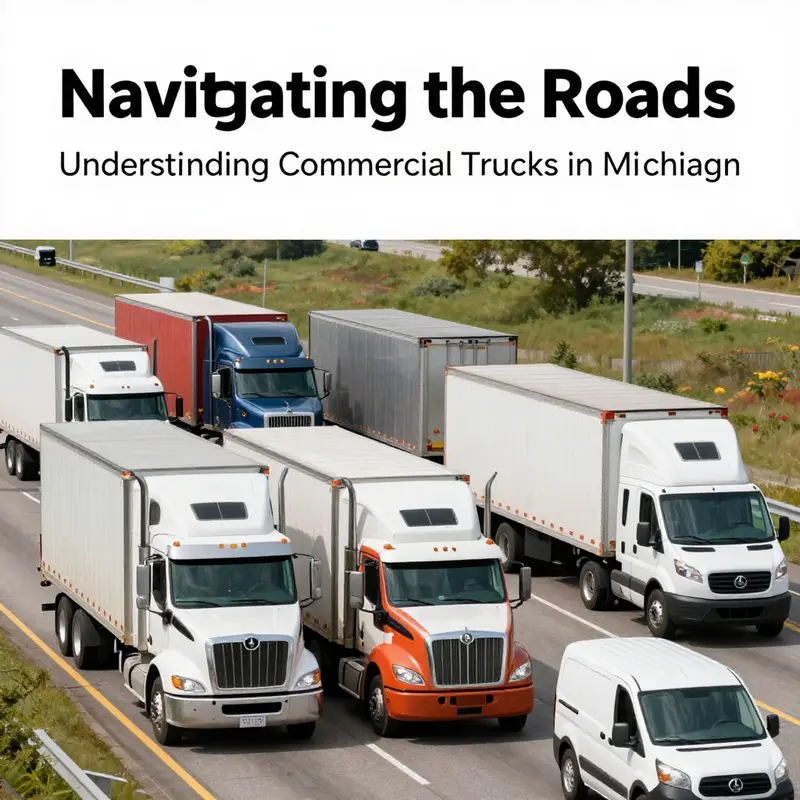
In Michigan, whether a vehicle is considered a commercial truck depends on weight, purpose, and the regulatory framework that governs freight movement. A GVWR threshold helps distinguish light-duty vehicles from heavier trucks that require specific licenses, endorsements, and inspections, with Class 7 and Class 8 vehicles typically falling into the heavy category. The state aligns with federal standards to ensure consistency for operators who cross borders, and it enforces licensing, safety, and hours-of-service rules based on vehicle weight and use. Fleets must verify GVWR on the vehicle, ensure drivers hold the appropriate CDL class and endorsements, and schedule maintenance and inspections to stay compliant. This framework aims to balance safety with commerce, providing clear criteria for when a driver needs a CDL, what training is required, and how load limits affect route planning and weigh-station interactions.
Under Heavy Rules: Navigating Michigan’s Regulatory Landscape for Commercial Trucks
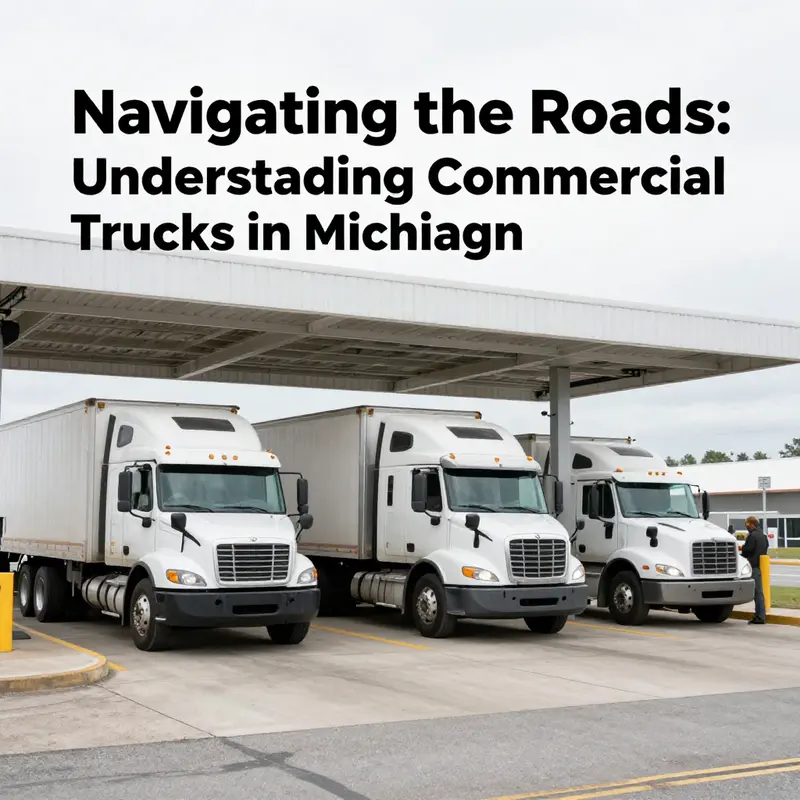
In Michigan, the line between a personal vehicle and a commercial truck is drawn not by appearance but by purpose, weight, and the role a vehicle plays in supporting a business. A commercial truck is generally a motor vehicle used for transporting goods or materials in the course of business, and it carries with it a set of regulatory responsibilities that are designed to keep highways safe, reliable, and efficient for everyone who shares the road. This is not merely a matter of paperwork; it is a framework that shapes the everyday decisions of fleet managers, independent owner-operators, and the countless logistically complex operations that underpin commerce across the state. The core criterion that differentiates a commercial truck from a typical consumer vehicle is often the gross vehicle weight rating, or GVWR. In Michigan, as in many states, a GVWR of 10,001 pounds or more places a vehicle into the realm of commercial transportation. This threshold is more than a numeric line in a regulationbook; it signals a raft of additional duties—from licensing and safety inspection requirements to hours-of-service rules and weight-and-size restrictions—that collectively support safe, predictable movement of goods on Michigan’s roads. Large freight trucks, delivery vans, and a range of other vehicles used for business purposes may fall under this umbrella, and each must be prepared to meet a spectrum of standards that are harmonized with federal guidelines as well as state specifics.
To understand the regulatory framework in Michigan is to appreciate how weight, responsibility, and accountability converge on the highway. The Michigan Department of Transportation (MDOT) stands at the center of this translation from weight class into daily practice. On the road, the difference between a legal operation and a citation often hinges on documentation, maintenance, and timely compliance. A commercial vehicle that crosses state lines or travels to neighboring states must also align with federal requirements administered by the Federal Motor Carrier Safety Administration (FMCSA). Yet within the state, MDOT tailors and enforces the rules to reflect Michigan’s geography, its industries, and its unique network of highways, bridges, and rural routes where the conditions for safe travel can vary dramatically from winter snowfall to summer heat. The interplay between state and federal oversight requires a careful balance: operators must meet the minimum federal safety standards while also observing Michigan’s particular thresholds, inspection schedules, and route constraints that affect every mile driven.
A central element in this landscape is the annual inspection—a rigorous, standardized check that all commercial vehicles operating in Michigan must undergo. This inspection process, overseen by MDOT in coordination with federal safety regulations, serves as the primary early warning system for mechanical defects or wear that could compromise safety on the road. The logic is straightforward: a vehicle that leaves the yard with brakes in poor condition, worn tires, faulty lighting, or compromised steering is more likely to contribute to a preventable accident. Inspections are not merely ceremonial; they document the safety status of a vehicle and create an actionable record for carriers, maintenance teams, and enforcement personnel. They also help regulators identify systemic issues that may require broader policy or enforcement responses, such as widespread brake wear on a particular class of trucks or recurring problems with certain tire models in specific weather conditions.
The MDOT inspection regime embodies the state’s commitment to reducing risk through proactive upkeep. Carriers are expected to maintain records that demonstrate ongoing compliance with maintenance schedules, defect repairs, and corrective actions. These records are not static filings; they are living documents that reflect a truck’s performance history, the reliability of its safety systems, and the operator’s discipline in addressing issues promptly. When a vehicle is flagged during inspection, the next steps may involve a temporary out-of-service order, mandatory repairs, or a follow-up inspection to confirm that deficiencies have been corrected. In a system built on accountability, timely maintenance is as important as capital investment in newer equipment. Fleet managers know that a well-documented inspection history can influence not only safety outcomes but also insurance costs, financing terms, and the speed with which a vehicle can move from yard to road again after a required repair.
The practical implications of Michigan’s regulatory framework extend well beyond the inspection bay. A commercial truck driver must hold a valid commercial driver’s license (CDL) appropriate to the vehicle’s class and the commodities hauled. In most cases, a GVWR of 26,001 pounds or more, or the vehicle designed to tow heavier combinations, triggers CDL requirements. This licensing framework is not simply about the driver’s skill; it also reflects the added responsibility that comes with operating large, heavy vehicles. CDL holders must meet medical standards, pass knowledge and skills tests, and comply with rules governing endorsements for transporting hazardous materials or transporting passengers, depending on the cargo and configuration of the vehicle. The driver’s responsibilities extend to hours of service (HOS), which regulate the amount of time a driver may operate within a given day or week and govern rest breaks to mitigate fatigue. Michigan aligns with federal HOS rules to ensure consistency for interstate commerce, while enforcement practices at the state level ensure that fatigue-related risk remains a focus at the local level as well, through weigh stations, roadside checks, and routine fleet audits.
Weight limits and route restrictions are another prominent feature of Michigan’s regulatory architecture. The state enforces legal weight limits on roads and bridges through a network of weigh stations and automated systems designed to catch overweights or out-of-spec configurations that could stress pavement and structures beyond intended design thresholds. Beyond raw weight, Michigan regulates axle weights and combinations to balance payload capacity with the integrity of the road network. For example, specific corridors may have bridge or highway restrictions during certain seasons or in response to construction, bridge wear, or structural concerns. Carriers often rely on permitting processes to haul oversize or overweight configurations that would otherwise be prohibited, and these permits carry conditions that may influence routing, times of day, pilot vehicles, or the use of particular lanes or bridges. All of these factors—weight, speed, axle configuration, and route choice—shape not only compliance costs but also operational realities, including scheduling and fuel efficiency, which in turn affect the competitiveness of Michigan-based trucking operations.
Given this layered regulatory environment, the annual inspection data function as a unifying thread. A vehicle that passes inspection demonstrates to regulators, customers, and insurers that its safety baseline is sound. It signals a commitment to ongoing maintenance rather than episodic repairs spurred by a roadside stop. The inspection framework thus becomes a practical gauge for fleet health. While the specifics of inspection procedures may evolve, the underlying principle remains constant: a well-maintained truck with documentation and proactive repairs reduces the likelihood of incidents and the downstream costs that follow from them—claims, downtime, and the reputational impact of safety lapses. The emphasis on routine checks also fosters a culture of accountability within the trucking operation. It encourages maintenance planning, scheduling discipline, and a proactive approach to equipment life-cycle management that ultimately supports reliability and service levels for customers who depend on timely deliveries.
To connect these concepts with everyday practice, consider how a Michigan fleet approaches compliance at the yard door. First, planners map out a transportation plan that accounts for the GVWR of each vehicle, the nature of the cargo, and the jurisdictions the trip will traverse. This planning is not simply a matter of meeting a weight limit; it involves anticipating potential inspection points, understanding which routes may require oversize permits, and ensuring that the equipment is in serviceable condition before the wheel ever rolls. Maintenance teams prioritize preventive tasks—brake system checks, tire tread depth, lighting and signaling integrity, steering alignment—and they document every intervention in a centralized log. When a vehicle approaches MDOT’s inspection point, the operator presents the vehicle’s maintenance records, mileage, and any corrective actions taken since the last inspection. The inspector uses a standardized checklist to verify compliance with safety standards, a process that, though routine, is foundational to public safety and business continuity.
This comprehensive system rests on clear definitions and consistent application of rules. For operators, the concept of what constitutes a commercial truck in Michigan becomes a practical toolkit for decision-making. The GVWR threshold guides the licensing and training requirements for drivers and informs vehicle maintenance priorities. The annual inspection acts as a public safety barometer, while weight and route restrictions shape fleet deployment and logistical planning. And because Michigan sits at the confluence of significant manufacturing activity, cross-border trade with Canada, and a robust distribution network spanning urban hubs and rural corridors, the state’s regulatory framework must be both precise and adaptable. It must accommodate a spectrum of cargo—from high-value electronics to perishable foods—without creating unnecessary friction for legitimate commerce. The balance is delicate. It requires robust enforcement to deter unsafe practices, yet it must remain predictable enough for carriers to plan and optimize operations without being stymied by inconsistent rule interpretation or bureaucratic delays.
The daily impact of these rules extends to the culture of the trucking industry in Michigan. Fleet managers invest in training that covers not only the mechanics of the vehicle but also the legal responsibilities tied to highway operation. Drivers learn about CDL classifications, the importance of maintaining logbooks and hours-of-service compliance, and the practical realities of routing under weight and bridge-height restrictions. Maintenance personnel come to appreciate how inspection results translate into actionable work orders and how to prioritize repairs in a way that minimizes downtime while preserving safety margins. For independent owner-operators, the regulatory environment also frames risk management strategies, from selecting equipment with longer inspected lifespans to building buffers into delivery schedules to accommodate unexpected inspections or maintenance needs. These operational realities, while shaped by policy, ultimately translate into reliability and trust. Customers, shippers, and dispatchers rely on the consistent performance that comes from a well-regulated, well-maintained fleet. The regulatory framework, then, is not a burdensome constraint but a scaffolding that supports predictable service, safer roads, and a level playing field for businesses that depend on road transport.
Within this framework, it is useful to keep a few guiding expectations in mind. One is that compliance is a dynamic, ongoing process rather than a one-time event. Vehicles must be kept in a state of readiness for annual inspections, with records up to date for each maintenance activity, and with any defect corrected promptly. A second expectation is that the relationship between state and federal rules is collaborative rather than adversarial, designed to harmonize standards for the benefit of interstate commerce while respecting Michigan’s particular road network and climatic realities. A third expectation is that the human element—drivers, mechanics, and logistics planners—plays a central role in translating rules into safe, efficient practice. The best operators view compliance as an enabler of performance: fewer roadside interruptions, steadier delivery schedules, and lower risk of costly violations that could disrupt service and raise operating costs.
For readers seeking practical, up-to-date guidance on how these procedures unfold in day-to-day life, certain resources offer deeper, actionable detail. For example, a fleet leader who is curious about practical fleet management practices—such as how to align maintenance planning with inspection cycles or how to optimize routes given weight and highway restrictions—can benefit from guides that translate regulatory concepts into operational strategies. As an illustrative point of reference, consider a resource on strategic buying and management of trucks that emphasizes how fleets navigate a complex regulatory terrain while pursuing efficient, compliant growth. See the guide titled Buy-Sell Trucks Campers Efficiently, which offers perspectives on practical decision-making in this context: Buy-Sell Trucks Campers Efficiently. This kind of guidance complements the regulatory framework by addressing how fleets balance compliance with cost, utilization, and uptime in a real-world setting.
The conversation about Michigan’s commercial trucking rules would be incomplete without acknowledging the ongoing need for accurate, authoritative information. The state’s official channels provide the most current requirements, procedures, and deadlines. For readers who want to verify inspection procedures, compliance timelines, and enforcement policies in their exact jurisdiction or for their specific vehicle class, the best primary source is the Michigan Department of Transportation’s website: https://www.michigan.gov/mdot/. This resource serves as a critical reference point for understanding how the general principles of weight, size, and safety inspections are implemented in practice across Michigan’s diverse transportation landscape. In a field where policies can shift in response to safety data, infrastructure needs, or changing federal guidelines, staying connected to that official source can make the difference between staying ahead of regulatory obligations and facing avoidable disruption. The broader implication is clear: knowledge of the rules that govern Michigan’s commercial trucking sector is a continuous process of learning, application, and verification, rather than a once-and-done compliance exercise.
Ultimately, Michigan’s regulatory framework for commercial trucks embodies a philosophy that safety and efficiency can coexist when rules are clear, enforced consistently, and supported by transparent records. The GVWR threshold, CDL requirements, hours-of-service rules, weight and route restrictions, and the annual inspection regime together form a cohesive system. They encourage operators to invest in reliable equipment, disciplined maintenance, and thoughtful planning. They also support a standardized approach that helps regulators monitor risk, identify emerging issues, and adapt to structural changes in the state’s economy and infrastructure. The result is a trucking environment where compliance is understood as an essential component of service quality—one that protects drivers, protects other road users, and ultimately sustains Michigan’s vibrant mix of manufacturing, distribution, and commerce. As the chapter on the regulatory framework unfolds in the broader article, readers will see how these principles connect to the everyday reality of what a commercial truck is in Michigan: a vehicle that, by meeting weight, safety, and operational standards, becomes a trusted instrument of business that keeps communities supplied and economies moving.
In considering the broader implications, it is important to recognize that rules are not static. They evolve with technology, traffic patterns, and safety data. The emergence of new trailer configurations, changes in fuel economy expectations, and evolving enforcement tools all influence how the regulatory landscape adapts. The annual inspection remains a steadfast pillar, but its focus can shift as new safety technologies become standard, or as the state infuses additional checks to address emerging risk factors. For fleet owners and drivers, adaptability is part of compliance: staying informed, adjusting maintenance schedules, and aligning with updated standards without sacrificing productivity. As ongoing changes unfold, Michigan’s approach—grounded in clear definitions, rigorous inspection practice, and coordinated enforcement—offers a model of how regulatory clarity can support safe, efficient commercial trucking while preserving the accessibility and resilience of the state’s transportation network.
To close this thread without closing the conversation, consider how the regulatory framework shapes the day-to-day reality of operations across Michigan. The GVWR-based classification informs who operates what, the CDL framework defines who may drive it, the hours-of-service rules govern how long they can stay on the road, and the annual inspections anchor safety in a standardized process. Weight and route restrictions ensure the state’s roads and bridges are treated with care, and the recordkeeping demanded by the system ties safety, accountability, and performance into a single, auditable narrative. The delivery of goods, the movement of services, and the very texture of commerce in Michigan are continuously braided with these requirements. And while the individual rules may seem dense, the overarching purpose is simple: to keep people and payloads secure, to maintain the reliability of a critical transportation system, and to enable businesses to plan, invest, and grow with confidence that the vehicle that moves their goods is prepared to perform its job safely day after day. The practical implication for readers—whether they are seasoned fleet managers or aspiring operators—is that knowledge of these rules translates directly into more predictable uptime, better safety outcomes, and a clearer path to sustainable operation in Michigan’s dynamic trucking environment. For continued clarity, keep in mind the core threshold of 10,001 pounds GVWR, the mandatory annual inspection framework under MDOT, the CDL and HOS requirements, and the essential balance between weight, route, and compliance that shapes every mile of commercial trucking in the state.
Rolling Toward Growth: The Economic Power and Regulation of Michigan’s Commercial Trucks
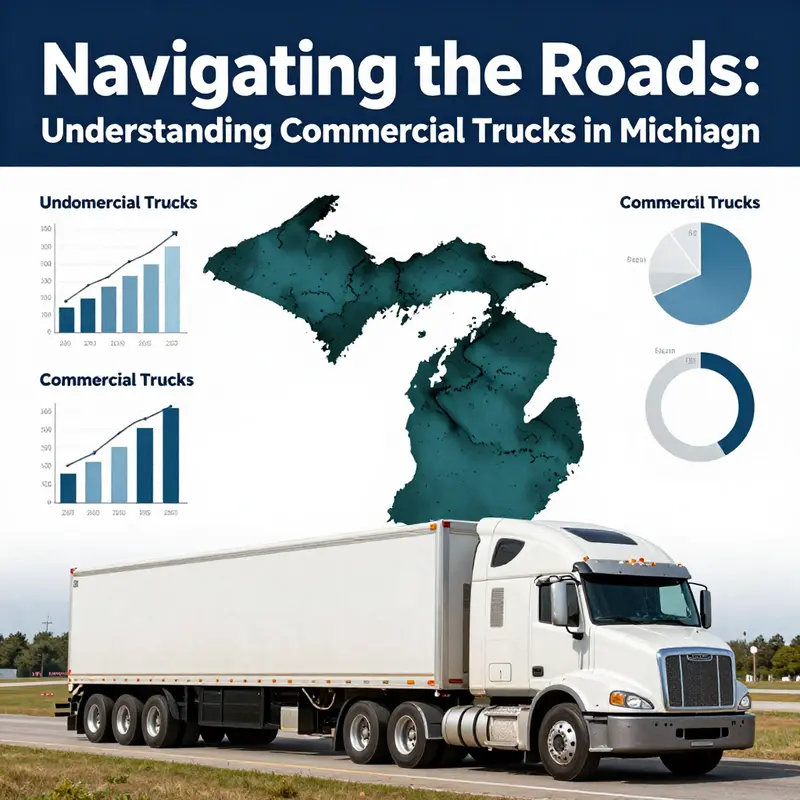
Michigan sits at a crossroads of industry, geography, and logistics. Its roads weave through a landscape shaped by manufacturing, agriculture, energy, and a dynamic retail sector that relies on timely deliveries. At the heart of this system are commercial trucks, vehicles that move goods from factories to markets, parts to assembly lines, and groceries to storefronts. In Michigan, a commercial truck is defined by a practical threshold that anchors policy and practice: a vehicle with a gross vehicle weight rating, or GVWR, of 10,001 pounds or more. This weight criterion is more than a technicality; it signals to regulators, insurers, and carriers that the vehicle operates under a distinct regime of rules designed to safeguard road safety while sustaining the efficiency required by modern commerce. The scope of what counts as a commercial truck is broad, encompassing everything from large freight tractors and box trucks to delivery vans that routinely shoulder freight ahead of peak shopping seasons. While the doctrine appears straightforward, the implications ripple through licensing, road use, infrastructure, and the broader economy, revealing a system in which regulatory choice and market need are closely aligned.
The regulatory framework that governs Michigan’s commercial trucking is not static; it reflects a balance between safety, reliability, and the demands of a state with significant industrial activity. Central to this framework is the requirement for a commercial driver’s license, or CDL, which differentiates a commercial fleet from standard passenger transport in both skill and accountability. The CDL is more than a credential; it is a standard that certifies a driver’s ability to handle a vehicle of substantial size and weight, manage the complexities of urban and rural routes, and respond to emergency situations with appropriate decision-making. Beyond licensing, commercial trucks in Michigan are subject to regular safety inspections and compliance checks that align with federal and state hours-of-service rules. These rules regulate how long drivers may operate without rest, a policy designed to reduce fatigue and improve road safety. In practice, this means that fleets must balance efficiency with rest periods, plan longer routes to incorporate legally mandated breaks, and maintain meticulous records to demonstrate compliance in the event of audits or roadside inspections.
As a practical matter, the operation of commercial trucks in Michigan also hinges on the physical constraints imposed by weight limits on roads and bridges. Michigan, like many states, enforces weight restrictions through weigh stations and automated systems intended to prevent overloading that could damage infrastructure or threaten safety. The interplay between GVWR, axle configurations, and legal weight limits on highways requires careful route planning and maintenance. Fleet operators must understand where they can legally carry loads of a given size and weight, how to distribute weight across axles to minimize stress on roadways, and how seasonal restrictions or bridge-specific rules might alter a usual route. In a state with a robust port system and a logistics-intensive economy, this planning is not merely about compliance; it is about reliability. A dependable route that remains within weight limits and avoids congestion is a competitive advantage, reducing the likelihood of delays that ripple through supply chains.
The economic significance of Michigan’s commercial trucking network extends well beyond the immediate cost of fuel, maintenance, and insurance. The REMI (Regional Economic Modeling, Inc.) analysis of Michigan’s transportation system points to trucking as a key driver of state output, employment, and overall economic vitality. Freight transport underpins a wide array of industries—from manufacturing and automotive parts supply to agriculture, retail distribution, and natural resources. The demand for trucking services has expanded in tandem with economic growth and population shifts, particularly the decentralization of certain activities toward regions outside of traditional urban cores. In practical terms, trucking enables just-in-time inventory practices that automotive manufacturers rely on to minimize material inventories while maintaining high production rates. This just-in-time capacity reduces warehouse costs, avoids capital tied up in stock, and sustains the competitive advantage of Michigan-based producers who must synchronize thousands of parts arriving from diverse suppliers. The broader consequence is a more resilient regional economy: goods move efficiently to where they are needed, and Michigan’s manufacturers can respond rapidly to changing demand patterns.
The networked nature of Michigan’s transportation system means that trucks do not operate in isolation. They function within a web that includes ports, rail connections, distribution centers, and road corridors that link rural producers with urban consumers and export markets. The Port of Detroit, for example, stands as a critical gateway for goods moving into and out of the Midwest, while the Port of Saginaw and other regional facilities provide access to inland markets and international trade routes. In this context, commercial trucking serves as the connective tissue that translates regional production into national and global supply lines. This dynamic helps explain why a disproportionate share of Michigan’s job creation and GDP growth in the transportation sector stems from trucking activity. When freight flows accelerate—whether due to expanding manufacturing output, shifting consumer demand, or economic recovery after a downturn—trucking capacity becomes a primary constraint and, at the same time, a lever for growth. The REMI framework helps policymakers and industry stakeholders quantify these effects, illustrating how improvements in trucking efficiency can yield measurable gains in regional prosperity.
Within this economic narrative, technology and design choices in the trucking fleet can exert a meaningful influence on operating costs and safety. There is ongoing discussion within the industry about tanker designs and their long-run economic viability. While some analyses highlight higher initial capital costs for alternative designs, many of these configurations can offer lower operating costs over the life of the vehicle, particularly for larger capacity vehicles. The translation of this efficiency into the Michigan economy is multifaceted. Reduced fuel consumption, lower maintenance costs, and decreased downtime contribute to lower total cost of ownership, which in turn makes freight rates more predictable and freight markets more competitive. Safety features embedded in modern design—improved rollover resistance, advanced braking systems, and robust chassis integrity—also play a pivotal role. By mitigating the risk of severe incidents, these features can lower insurance premiums and reduce emergency response costs, contributing to a safer driving environment and fewer disruptions to supply chains. In practical terms, these safety and efficiency gains flow into the broader cost structure that governs how Michigan-based fleets plan their routes, allocate capital, and meet the demands of customers who expect reliable, timely service.
The economic benefits of commercial trucking extend beyond the direct costs of moving goods. Efficient trucking supports intricate supply chains that rely on tight inventory control and predictable delivery windows. Automotive manufacturing—the state’s longstanding pillar of economic activity—depends on freight movement for both components and finished products. The ability to deliver precise parts at exact moments minimizes downtime on assembly lines and reduces the risk of costly line stoppages. This just-in-time capability has a cascading effect: fewer buffers in warehouses mean lower occupancy costs and higher throughput, which in turn strengthens Michigan’s position in national and international markets. The distribution network that moves consumer goods—from electronics to household staples—also benefits, as reliable trucking reduces stockouts and improves customer satisfaction. All of these advantages reinforce the economic logic that views commercial trucking not merely as a mode of transport but as a strategic asset in the state’s economic toolkit.
The human dimension of this system is essential to understanding its full impact. Jobs in trucking go beyond long-haul drivers to include dispatchers, maintenance technicians, logistics planners, and warehouse personnel who coordinate the handoffs between inbound and outbound legs of a movement. The REMI-based projections underscore that improvements in transportation efficiency can translate into higher employment in related sectors and higher regional output. In Michigan, where labor markets are diverse and manufacturing remains a significant employer, the stability and growth of trucking-related jobs are closely tied to how well the state maintains its infrastructure, calibrates regulatory requirements, and promotes a business environment that encourages investment in fleet modernization. In this sense, policy choices about driver training programs, road maintenance funding, and incentives for fleet upgrades become instruments for shaping both the size and quality of employment in the broader economy.
As fleets adapt to evolving demand, many operators are attentive to the broader market signals that shape capital replacement and procurement strategies. The used-truck market, in particular, has shown resilience and dynamism, serving as a conduit through which smaller fleets and new entrants participate in the economy. For readers who want to track how the market is evolving, recent trends in used-truck sales growth illuminate how buyers respond to shifting financing conditions, maintenance costs, and depreciation expectations. These dynamics influence fleet composition, loan terms, and insurance pricing, all of which feed back into the price of goods and services carried by the trucking sector. A useful lens for understanding these shifts is to consider how the mix of vehicle age, horsepower, torque, and fuel efficiency affects total cost of ownership. When fleets balance upfront capital outlay with long-run operating costs, they can preserve liquidity while expanding capacity to meet peak demand periods. For practitioners and policymakers alike, the intersection of finance, technology, and regulation within the Michigan trucking landscape is a fertile area for ongoing study, and it helps explain why a robust, adaptable trucking sector matters for the entire state economy. As part of this ongoing dialogue, readers may want to explore current market signals and trends in the industry, such as the shifts in used-truck pricing and availability, which influence strategic decisions across fleets and service providers. See for example the evolving landscape described in current trends in used truck sales growth.
Beyond the market dynamics and regulatory scaffolding, Michigan’s commercial trucking system operates within a broader policy context that can either accelerate or constrain growth. Investment in road infrastructure, for instance, has a direct bearing on travel times, fuel efficiency, and vehicle wear. Efficient roads shorten trips between key industrial corridors and ports, lowering transportation costs and enabling more predictable delivery schedules. Conversely, underinvestment or delays in maintenance can create bottlenecks that ripple through the logistics chain, increasing dwell times at distribution centers and elevating the risk of missed deadlines. The policy debate surrounding these issues encompasses funding mechanisms, maintenance priorities, and regulatory alignment with national standards. A well-timed investment program that targets high-traffic corridors and aging bridges can yield outsized benefits by reducing congestion and improving safety, thereby reinforcing Michigan’s competitive position as a hub for manufacturing and commerce. In this sense, the trucking sector both shapes and is shaped by public investment, creating a dynamic where public policy and private enterprise reinforce each other to sustain growth.
The practical takeaway for readers who seek to understand what a commercial truck means in Michigan is not limited to a single definition or a narrow set of rules. It is a living system in which vehicle specifications, licensing requirements, and road-use policies interact with market forces to shape how goods move, how jobs are created, and how communities experience growth. The GVWR threshold marks the gatekeepers of regulation, but the real story lies in how fleets manage safety, efficiency, and reliability across thousands of daily miles. It is in the way that truckers balance time-sensitive deliveries with fatigue management, how fleets optimize routes within weight limits, and how insurers calibrate risk in response to safer, more capable designs. The chain of consequences extends from the cab to the economy at large: safer trucks reduce the likelihood of catastrophic incidents, which can lower costs for everyone—from drivers and carriers to manufacturers and retailers. Safer roads also translate into more consistent service levels for customers who rely on predictable deliveries to keep their own operations running smoothly.
In closing this arc of connection between regulation and economy, it is evident that Michigan’s commercial trucks do more than transport goods. They are an essential instrument of state resilience and prosperity. They enable parts to reach factories, groceries to reach stores, and finished products to reach consumers with minimal delay. They connect rural producers with urban markets and facilitate cross-border trade that expands Michigan’s footprint in the national and international economy. The regulatory framework ensures that this vital activity occurs with a high regard for safety and infrastructure integrity, while the market dynamics—supported by REMI’s modeling—underscore that efficient trucking translates into measurable gains in employment, GDP, and quality of life for Michigan residents. For policymakers, industry leaders, and everyday readers, the takeaways are clear: sustaining Michigan’s economic momentum requires attention to the fundamentals of trucking—its regulation, its technology, its financing, and its role in linking people with the goods they rely on. As the state continues to adapt to changing freight patterns and evolving vehicle technologies, the story of Michigan’s commercial trucks will remain a telling indicator of how well the state can align public priorities with private enterprise to keep commerce moving forward. External resource for further reading: https://www.remi.com/insights/economic-impact-analysis-michigan-transportation-system/
Final thoughts
Commercial trucks are essential to the infrastructure and economy of Michigan. By understanding their classifications, the regulatory landscape, and their economic significance, stakeholders in the trucking industry can better navigate operational challenges and leverage opportunities for growth. The presented information emphasizes the importance of compliance with regulations while acknowledging the vital role that commercial trucks play in ensuring the smooth flow of goods, ultimately contributing to the state’s economic vitality.