
The Queens-Midtown Tunnel operates as a vital conduit for commercial trucks, facilitating essential transportation between Queens and Manhattan. This article delves into the regulations governing commercial truck access, the size limitations imposed for safety and structural integrity, and the economic ramifications resulting from permitting these vehicles. Each chapter reveals key insights, equipping trucking company owners, fleet managers, procurement teams, and logistics firms with knowledge to optimize their operations while ensuring compliance with city regulations.
Under the East River: Navigating Commercial Truck Access in the Queens Midtown Tunnel
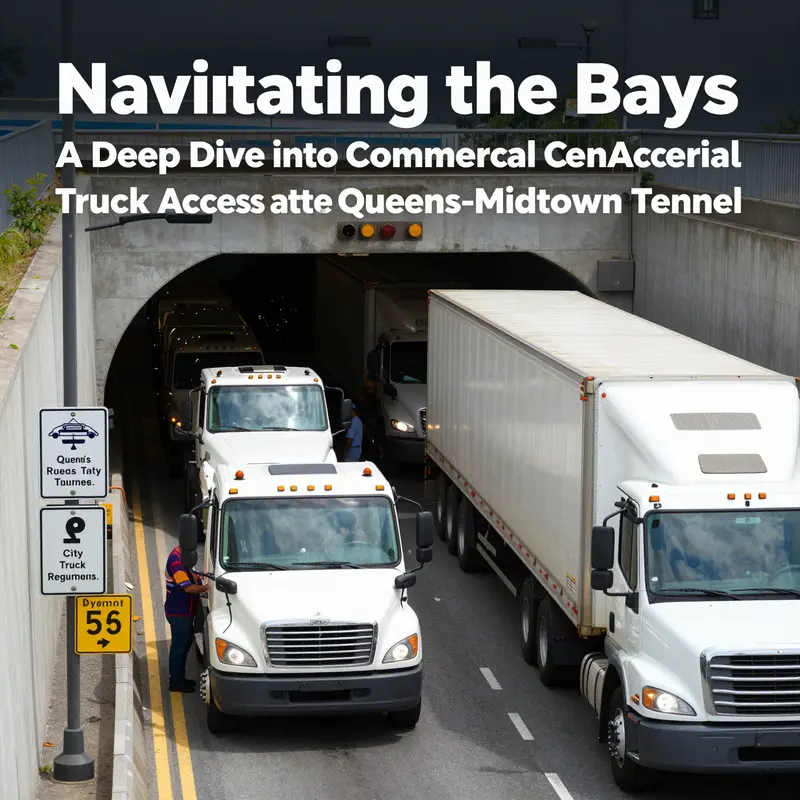
The Queens Midtown Tunnel sits at a crossroads of urban logistics and city life. It is more than a passage under the East River; it is a carefully managed conduit that keeps Queens connected to Midtown Manhattan, enabling timely deliveries, just-in-time inventory, and the steady flow of goods that city businesses rely on daily. For planners, drivers, and fleet managers alike, the essential question is not merely whether commercial trucks can use the tunnel, but under what conditions they may do so safely and efficiently. The answer lies in a blend of structural realities, regulatory rules, and the unpredictable rhythms of city traffic. In this sense, the tunnel acts as a test case for how modern urban freight interfaces with historic infrastructure, where the need for speed and reliability must be balanced against the risks that can arise when a heavy vehicle meets a tight clearance corridor and an aging ventilation system.
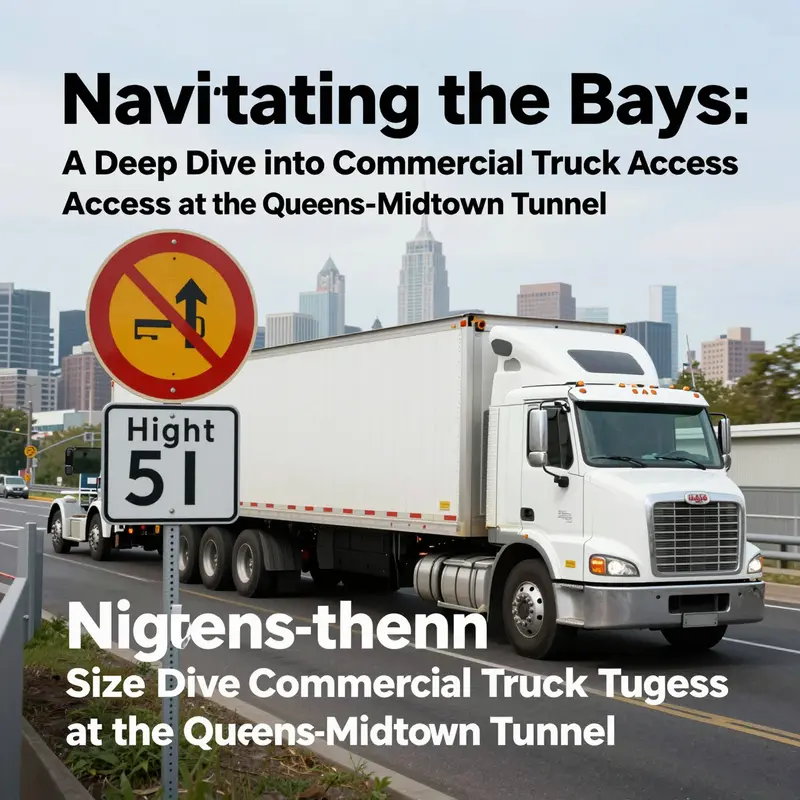
From the outset, it is important to distinguish between access in principle and access in practice. In principle, commercial trucks are permitted in the Queens Midtown Tunnel. In practice, that permission comes with constraints designed to protect the tunnel and its users. The most visible constraint is height: the tunnel clearance is 12 feet 1 inch. This dimension matters because many freight carriers rely on long, tall trailers that maximize payload. When a truck’s height approaches or exceeds the ceiling, the risk of contact with structure or overhead equipment rises significantly. A second constraint—width—often interacts with the geometry of the tunnel’s lanes and the positions of curbs and barriers. The width limit, set at 8 feet 6 inches, screens out broader vehicles that might struggle to maneuver through the tunnel’s cross-section, especially in the moments when lanes narrow or traffic slows and driver attention tightens. Together, these dimensional limits function as a practical threshold. They enable a substantial subset of commercial fleets to operate through the tunnel while keeping the risk profile within acceptable bounds for the facility and its users.
The practical implications of these restrictions ripple through urban logistics in several ways. First, the tunnel provides a critical east-west route under the East River, linking industrial pockets in Queens with distribution hubs in Manhattan. This link supports not only local businesses but also wider supply chains that depend on predictable travel times, even in a dense urban setting where every mile can influence a delivery window. When trucks can pass through without detours or delays, the city avoids bottlenecks that would otherwise cascade across bridges, other tunnels, and roadway corridors. The Queens Midtown Tunnel thus plays a vital role in shaping how freight moves through one of the nation’s most traffic-saturated metropolitan regions. Yet the same role amplifies the consequences of any restriction. If a load cannot fit under the height clearance, or if a vehicle’s width becomes a problem, shippers and drivers must reroute, potentially increasing transit times, fuel usage, and labor costs. In a city where efficiency is a competitive edge for commerce, even modest increases in drive time have measurable effects on service levels, schedule adherence, and ultimately the affordability of goods.
Second, the presence of dimensional limits reinforces a broader practice of route planning that many fleets have institutionalized. Fleet managers routinely evaluate the geometry of a route before committing to a shipment. They consider the vehicle’s height and width, the cargo type, and the likelihood of encountering maintenance-related closures that temporarily alter the tunnel’s capacity. The result is a workflow in which the route choice is as important as the load’s weight. It is not unusual for planners to designate alternative corridors during peak hours or during rehabilitation work, when the tunnel’s capacity is temporarily reduced and queues lengthen. This planning discipline helps prevent the type of disruption that can arise when a large, time-sensitive delivery finds itself suddenly blocked by a lane closure or a temporary restriction. As a result, the Queens Midtown Tunnel becomes a litmus test for how well a city can accommodate commerce within the physical limits of its own infrastructure.
The lane geometry and the control of traffic through the tunnel add another layer of complexity. The Queens Midtown Tunnel is a two-bore facility, with a tradition of coordinating traffic flow to minimize clashes between heavy vehicles and passenger cars. In practice, this coordination means that when maintenance, repairs, or congestion pressures require lane reductions, the risk of delays grows, and with it the pressure on drivers to choose alternate routes or to adjust departure times. Temporary restrictions, whether to accommodate rehabilitation work or to ensure safe passage during a weather event, remind everyone that the tunnel is not a static corridor but a dynamic system. In those moments, even trucks that fit within the height and width limits can experience slower speeds or diverted routes, which complicates delivery planning and can ripple outward to affect multiple supply chains in the surrounding urban economy. The most reputable practice in these instances is proactive, frequent communication about conditions and a willingness to adapt plans quickly when conditions change.
Of course, the everyday reality for many operators is far more routine than dramatic. A large portion of the commercial fleet that serves the city is designed to fit within the tunnel’s envelope, delivering goods that define urban life—from grocery shipments to retail inventory, from building materials to time-sensitive components that fuel manufacturing and healthcare operations. The tunnel’s clearance limits shape the characteristics of this fleet. Vehicles that barely clear the height or scrape a wheel on a curb may still be perfectly serviceable for many tasks, while others that are taller or wider must be re-routed to alternate corridors, such as bridges or other tunnels that can accommodate larger loads. In this sense, the tunnel’s rules do not merely restrict; they also guide economies by shaping which trucks can operate on which routes, and by influencing the distribution patterns that evolve within the city’s freight network.
Navigating these rules requires a disciplined approach to compliance and safety, a topic that deserves emphasis because the cost of noncompliance extends beyond a simple traffic citation. Prohibited access carries potential penalties, but more impactful are the safety risks and the potential for structural damage or unsafe conditions that could force a broader shutdown. The tens of thousands of daily interactions between drivers, pedestrians, cyclists, and other motorists impose a high standard of adherence to posted regulations. The tunnel’s safety culture relies on clear signage, careful enforcement, and ongoing public information campaigns that remind the trucking community about the specific vertical and horizontal limits that apply to this corridor. This is not purely a matter of legal compliance; it is a matter of urban resilience, ensuring that freight channels remain open and reliable while protecting the integrity of the tunnel and the safety of all who use it.
For operators who plan trips through the Queens Midtown Tunnel, a few practical considerations help translate policy into smooth operations. First, consistent pre-trip checks for height and width are essential. A quick measurement of the vehicle’s overall height and width, along with a cargo assessment that confirms there is no top-heavy load or protruding equipment, can prevent an expensive misstep at the tunnel entrance. Second, stay current with temporary restrictions. The city’s maintenance calendars and traffic advisories frequently update during rehabilitation work or weather-related events. Third, allow extra time during peak periods and when lane closures are in effect. The tunnel’s capacity can shrink quickly, and a driver who arrives with a margin for delay can avoid the stress and the risk that comes with attempting a late entry in a constricted traffic milieu. Fourth, consider routing contingencies. If a shipment is urgent and the vehicle does not fit the tunnel’s clearance, it may be necessary to use an alternate route that still maintains service levels without compromising safety or incurring penalties.
Beyond the mechanical rules and the practicalities of daily traffic, the Queens Midtown Tunnel embodies a more subtle principle: the city’s freight system must be resilient in the face of constraint. The height and width restrictions are not arbitrary limits but a reflection of a design that prioritizes structural integrity, ventilation, and safe egress. They enforce discipline in fleet design, encourage the use of well-suited equipment, and incentivize operators to cultivate planning practices that emphasize reliability over last-minute improvisation. In this way, the tunnel acts as a discipline that supports both safety and efficiency, rather than a rigid barrier that arbitrarily blocks movement. The value of this discipline becomes especially apparent when the city experiences industrial surges, seasonal fluctuations in demand, or unexpected disruptions. When fleets have already integrated the tunnel’s constraints into their standard operating procedures, they can respond to disruptions more gracefully, rerouting with minimal impact on service quality and without compromising safety.
For readers who want to connect these insights to broader questions about urban freight and policy, resources such as industry publications and policy blogs provide ongoing discussions about how cities balance freight needs with congestion management and environmental goals. A useful entry point for those who want to explore these themes further is the McGrath Trucks blog, which offers perspectives on fleet management, modal choices, and the regulatory landscapes that shape trucking in dense urban environments. This kind of resource can help readers translate the Queens Midtown Tunnel’s restrictions into broader conclusions about what makes urban freight work under pressure. McGrath Trucks blog.
Ultimately, the answer to the central question—whether commercial trucks are allowed to use the Queens Midtown Tunnel—is yes, with important qualifications. The tunnel accommodates a broad range of commercial freight, provided vehicles meet the height and width limits and operators remain vigilant for temporary restrictions that arise from maintenance or rehabilitation work. This arrangement reflects a pragmatic compromise: it preserves a critical urban freight artery while protecting the tunnel’s structural health and the safety of its users. For trucking fleets, that means a predictable framework within which to design equipment, plan routes, and coordinate schedules. For freight planners, it means an opportunity to optimize interchanging points with distribution facilities, minimizing backhaul miles and improving overall efficiency in the city’s logistics ecosystem. For policymakers and the public, it underscores the ongoing challenge of sustaining essential infrastructure in a city that continues to grow and evolve, where every freight movement must be weighed against safety, reliability, and the city’s broader transportation goals.
In this sense, the Queens Midtown Tunnel is not merely a corridor beneath the East River. It is a living component of the city’s logistics backbone, a reminder that urban freight operates within a framework of design, risk, and shared responsibility. Its height and width restrictions may appear technical or narrow at first glance, yet they speak to a larger story about how a global city manages the daily flow of goods through a very real, very crowded urban landscape. They demand that operators think ahead, measure carefully, and communicate openly about conditions that can change in an instant. And they invite readers to recognize that the movement of freight through the tunnel is not simply a function of horsepower or tonnage but a carefully orchestrated balance of infrastructure, policy, and human judgment crafted to sustain city life in a dense, dynamic metropolis.
External resource: For the most current conditions or any temporary regulatory changes that may affect commercial truck usage, consult the official New York City Department of Transportation page dedicated to the Queens Midtown Tunnel: https://www.nyc.gov/html/dot/html/travel/queensmidtowntunnel.shtml
null
null
Bridging Freight Flows: Economic, Safety, and Urban Impacts of Allowing Commercial Trucks Through the Queens Midtown Tunnel
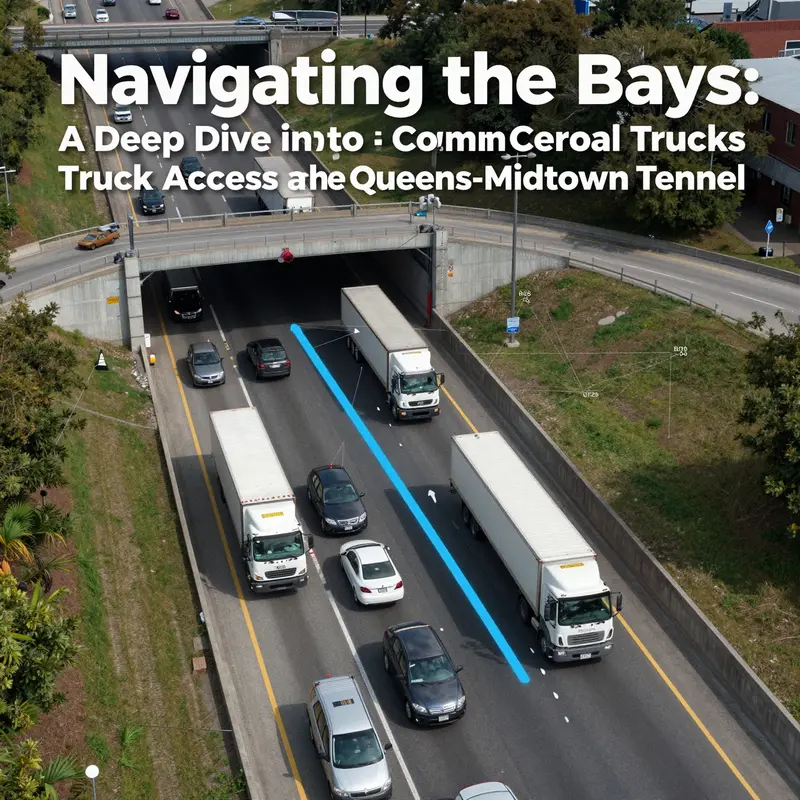
The Queens Midtown Tunnel, officially known as the Grand Central – Queens Midtown Tunnel, stands as a spine of New York City’s east-west freight movement. Its role is not just to shuttle passengers across the East River; it is a critical conduit for a steady stream of goods that keeps Queens’s warehouses, retail outlets, manufacturing facilities, and service industries supplied. When policymakers—and by extension, the trucking industry—consider opening or expanding access for commercial trucks, the conversation naturally shifts from whether entry is technically possible to what it would mean for the city’s economy, its streets, and its air. The tunnel’s current framework does permit commercial vehicles, but with a narrow set of physical constraints that reflect both the tunnel’s mid-20th-century design and the modern realities of urban freight. Height limits are fixed at 12 feet 1 inch, width restrictions at 8 feet 6 inches, and these dimensions matter as much as any toll or traffic signal. They define which types of trucks can pass, influence routing decisions across the region, and shape the logistics strategies of firms that rely on timely deliveries to Manhattan’s commercial core. Yet the question is not simply about compliance with height and width. It is about balancing the undeniable economic benefits of a more direct cross-river route against the social costs of heavier truck flows through a dense urban corridor, and about imagining what a smarter, safer, and more resilient freight system might look like if policy choices were oriented toward sustainability and efficiency rather than sheer volume.
From an economic standpoint, the tunnel represents a direct link between Queens’s productive capacity and Manhattan’s consumer market. Allowing commercial trucks to traverse this artery reduces the need for circuitous detours that otherwise add time, fuel, and wear to a large share of urban freight activity. When trucking can move more efficiently between Queens and Manhattan, the downstream effects ripple through entire supply chains. Manufacturers rely on predictable delivery windows; retailers pursue just-in-time replenishment to minimize warehousing costs while keeping shelves stocked; and service sectors—from hospitals to hospitality—benefit from reliable access to essential goods. Even small improvements in transit time and reliability can translate into measurable reductions in landed costs, which, in a city with high rents and tight margins, translates into price stability and broader economic resilience.
But the economic argument is not a simple ledger of time saved versus congestion created. The Queens Midtown Tunnel is a finite structure, designed decades ago with traffic patterns and vehicle technologies that differ markedly from today’s realities. The 12 feet 1 inch height limit excludes many newer, taller tractor-trailers, certain double-length configurations, and specialized freight equipment that, while essential in some sectors, would bypass the tunnel due to its physical footprint. The 8 feet 6 inches width limit similarly rules out wide, high-volume trailers that might offer economies of scale in trunk line freight but would impose escalated risk in a tunnel’s constrained passage. Thus, any expansion of permissible truck types would not simply be a matter of “more trucks equals more goods.” It would require careful alignment of vehicle design with the tunnel’s structural realities, reinforced by targeted investment in supporting infrastructure to manage safety, ventilation, and maintenance demands.
Logistically, the practical implications of allowing more commercial traffic through the tunnel hinge on a constellation of operational controls. Traffic management in a tunnel environment is a specialized discipline, designed to respond to incidents, weather, and peak loads with a calm, technically grounded approach. If policy were to loosen the door in any meaningful way, it would need to be matched with precise routing guidance, calibrations of entry and exit points, and, crucially, clear standards on what constitutes acceptable vehicle configurations. The city’s current approach already restricts trucks entering Manhattan through certain corridors, acknowledging that the urban core’s vulnerability to backups, pedestrian risk, and air quality concerns is nontrivial. Any expansion would thus demand a system of intelligent enforcement—real-time vehicle classification, height and width checks at entry points, and perhaps a permit regime that favors certain freight profiles during off-peak hours. In this sense, the tunnel could become a testbed for a more nuanced, data-driven freight policy that prioritizes reliability without compromising safety and livability for residents.
A careful calculation of the tunnel’s impact on congestion is indispensable. The East River crossing is a chokepoint where even small changes in volume can reverberate through adjacent streets and bridges. Manhattan’s road network is already heavily strained during peak periods, and the addition of more cross-river freight traffic could exacerbate that strain unless managed with time windows, dynamic lane assignments, and perhaps incentives for off-peak movement. The literature on urban freight points to a robust set of mitigation strategies: staggered entry times, dedicated truck lanes where feasible, and the deployment of smart traffic systems that adjust signal timing to accommodate freight flows without unduly delaying passenger traffic. These strategies can, in principle, yield a more predictable freight pattern that minimizes the perception—and reality—of gridlock. The key lies in aligning the sensitivity of the tunnel’s operation with the city’s broader mobility objectives and environmental commitments. Without such alignment, even a policy that promises faster deliveries could inadvertently boost total travel time for all road users, rise fuel consumption, and worsen air quality in nearby neighborhoods.
From a safety perspective, the tunnel compresses the complexity of urban freight into a single, high-stakes corridor. The structure’s mid-century design—while iconic—entails ventilation and emergency response considerations that modern urban planners must respect. Heavier vehicles, compared with standard passenger cars, carry greater mechanical loads, longer braking distances, and different heat and exhaust profiles. A sudden incident in a tunnel triggers a cascade of safety concerns: smoke control, traffic isolation, and rapid egress for occupants. Any expansion in truck access would, therefore, need to be accompanied by upgrades in tunnel monitoring, ventilation capacity, and firefighter access. It would also require an escalated emphasis on driver training and enforcement. The risk calculus is not simply about the probability of an accident; it is about the consequences of a worst-case scenario within a confined, densely populated urban space. The cost of a single derailment in a crowded tunnel can be measured not only in dollars but in lives, in long-term air quality impacts, and in the temporary shuttering of a critical economic artery.
Beyond the mechanics of risk, there is a broader question of how the city’s housing stock, schools, and neighborhoods would experience a shift in truck traffic. Increased freight movement through the tunnel could reallocate some trips that currently pass through more circuitous routes, potentially alleviating pressure on some local streets. But it could also crowd the air and noise profile in adjacent communities, especially if freight volumes rise during late hours or early mornings when residential zones are particularly sensitive. Environmental justice considerations come into focus here: any freight policy must scrutinize who bears the burden of shifted traffic and how mitigation measures—such as more stringent idling rules, retrofits to reduce diesel emissions, or the deployment of cleaner technologies—are distributed across the city’s diverse neighborhoods.
The environmental dimension is not a monolith, either. On one hand, more direct cross-river movement can reduce the total miles traveled by freight vehicles if trucks avoid longer detours around Manhattan’s southern approaches. Fewer miles on the road translate to lower fuel usage and reduced emissions, especially when modern engines and alternative fuels are in play. On the other hand, a higher density of freight traffic through the tunnel could concentrate emissions in a relatively narrow corridor, affecting air quality and public health if not counterbalanced by clean-tech mandates, electric vehicle options, or rigorous retrofits to ventilation and filtration systems. The net environmental impact thus hinges on a suite of policy choices—vehicle standards, fuel types, speed limits, and incentives for zero-emission truck adoption—that extend well beyond the tunnel’s immediate footprint.
From the perspective of urban planning and regional logistics, the question also invites a broader rethinking of freight distribution networks. If the Queens Midtown Tunnel becomes more accessible to commercial trucks, the city has an opportunity to redesign inter-borough freight movement in ways that emphasize reliability, dwell-time reduction at loading docks, and end-to-end visibility of shipments. Integrating the tunnel into a wider freight ecosystem—one that links Queens’s distribution centers with Manhattan’s consumer demand and with the New Jersey and upstate corridors—could yield a more interconnected, resilient supply chain for the metropolitan area. It would require collaboration across multiple agencies: city transportation, state commerce, transit authorities, port and freight stakeholders, and environmental regulators. The aim would be to craft a policy that preserves the tunnel as a backbone of cross-river freight while ensuring the city’s neighborhoods remain breathable, safe, and economically vibrant. Such a policy would also reflect a nuanced understanding of modal balance: trains, ships, and trucks each play a role in the triad that moves goods efficiently through a dense urban fabric.
The practical path toward any policy adjustment would likely unfold through phased pilots and rigorous evaluation. A staged approach allows policymakers to measure impacts on travel times, congestion levels, incident rates, and air quality under controlled conditions. It would also provide an empirical basis to answer fundamental questions: Which truck configurations can safely use the tunnel without triggering unacceptable risk? How do peak-hour restrictions affect the broader traffic network? What are the maintenance implications for the tunnel’s aging structure if additional heavy traffic is permitted? And crucially, can the city deploy complementary technologies—such as dynamic tolling, real-time traffic advisories, and vehicle-to-infrastructure communications—to harmonize freight flows with urban mobility? These inquiries require not only technical analysis but political consensus and community engagement. Transparent communication about trade-offs helps residents understand the benefits of improved freight reliability while acknowledging concerns about noise, air quality, and local traffic conditions.
As with any complex urban infrastructure question, there is no single silver bullet. The potential economic gains from expanded cross-river freight access must be weighed against safety, environmental, and social considerations. The core challenge is to strike a balance between improving supply chain efficiency and safeguarding the city’s livability, especially in neighborhoods adjacent to the tunnel’s Queens and Manhattan entry points. The solution, if it emerges, will likely rest on a combination of selective vehicle restrictions, peak-time controls, continuous improvements to tunnel infrastructure, and a governance framework that emphasizes data-driven decisions and adaptive management. In this vision, the Queens Midtown Tunnel remains a vital artery but one that operates within a modernized freight ecosystem—one that uses technology to guide trucks through safely, efficiently, and with minimal disruption to the city’s residents and daily life.
For practitioners and scholars seeking further context or industry perspectives, these conversations often benefit from cross-pertilization with freight strategy literature and case studies from other metropolitan areas where urban freight policies have undertaken similar evolutions. A useful resource where practitioners can explore broader trucking strategy and policy considerations is the McGrath Trucks Blog. It offers a range of insights into how freight operators adapt to evolving regulatory environments, route optimization challenges, and the economics of urban delivery. McGrath Trucks Blog.
Ultimately, the question of whether commercial trucks should or can be expanded through the Queens Midtown Tunnel does not rest on a single metric. It rests on a rigorous assessment of whether the benefits to the region’s economy and supply chains can be realized without compromising safety, air quality, and neighborhood livability. The answer will hinge on thoughtful policy design, targeted infrastructure upgrades, and an ongoing commitment to monitoring outcomes and adjusting course as needed. The tunnel’s future will be shaped not only by the size and weight of vehicles that pass through it but by the city’s willingness to invest in smarter traffic management, cleaner freight technologies, and equitable solutions that protect public health while supporting the dynamic economies that make New York City such a uniquely influential urban center.
For those seeking official regulatory context and current procedural guidelines, the authoritative source remains the city’s transportation department. The agency’s truck routing page outlines the broader framework for where and how trucks can operate within the city, including restrictions that apply to the Queens Midtown Tunnel and adjacent corridors. This information is essential for logistics planners, fleet operators, and policymakers as they evaluate any potential changes to freight access. External readers can review the official regulations here: NYC DOT Truck Routing.
Queens Midtown Tunnel: Commercial Truck Access and Compliance
The Queens Midtown Tunnel provides a critical freight link between Queens and Manhattan, but only for trucks that fit within the posted limits. The maximum height is 12 ft 1 in and the maximum width is 8 ft 6 in. Vehicles exceeding these dimensions must use alternative routes. Operators should perform pre-trip checks to confirm vehicle measurements, accounting for protrusions such as antennas, mirrors, or racks that could push the profile over the limit. Real-time advisories from NYSDOT and MTA may close lanes or alter traffic patterns, so planners should verify current conditions before departure and consider off-peak travel when possible. Access decisions should balance efficiency with safety and tunnel integrity, and fleets should consult official NYC DOT resources and NYSDOT/MTA advisories for the latest updates.
Final thoughts
Understanding the regulations surrounding commercial truck access to the Queens-Midtown Tunnel is crucial for maintaining efficient urban logistics. Compliance with height and width restrictions not only safeguards the tunnel’s infrastructure but also ensures the safe passage of goods across this critical route. Staying informed on regulations and their economic impact enables trucking companies and logistics firms to enhance their operational strategies effectively. By prioritizing regulatory adherence, businesses can foster smoother transportation flows, ultimately benefiting the broader urban economy.