
The 26-foot box truck plays a pivotal role in numerous industries, serving as a backbone of logistics and freight transportation. Understanding its classification as a commercial vehicle is essential for trucking company owners, fleet managers, and procurement teams in construction and logistics. In this discourse, we will explore the definitive classification of a 26 ft box truck as a commercial vehicle and its implications in logistics systems. The economic ramifications of incorporating such vehicles into business operations will be examined alongside the necessary regulations and licensing requirements, providing a comprehensive overview for professionals navigating this segment of the market.
Beyond Length: How GVWR Defines the Commercial Identity of the 26-Foot Box Truck
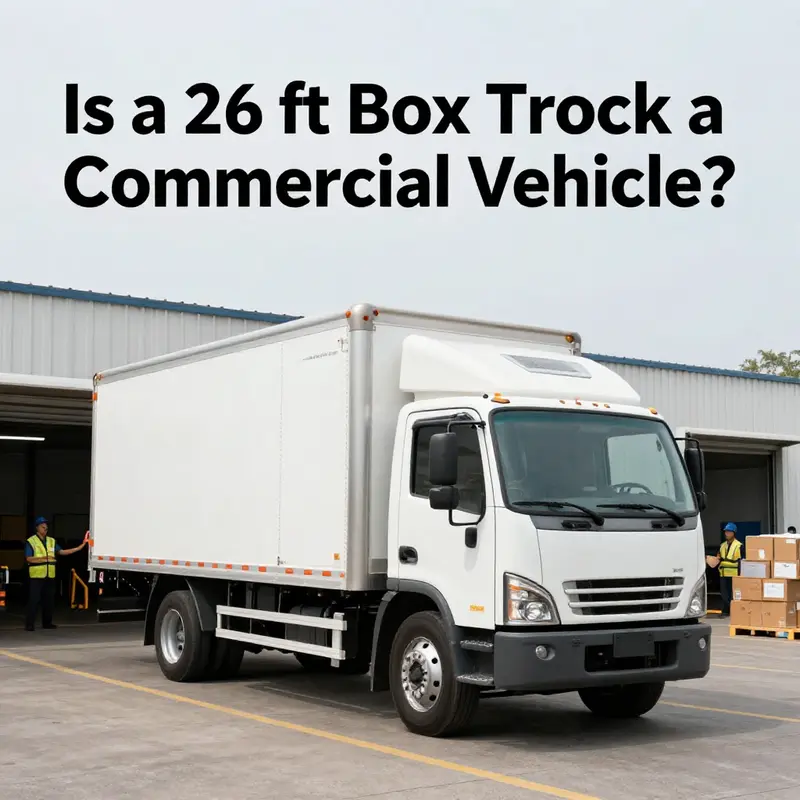
Few operators or policymakers measure a vehicle’s commercial identity by its length alone. A 26-foot box truck is a familiar sight across freight lanes, moving parcels, furniture, and a range of industrial goods. Yet its status as a commercial vehicle rests not primarily on the box’s length but on the vehicle’s weight ratings and the regulatory framework that governs weight, operation, and safety. In practical terms, the classification hinges on the Gross Vehicle Weight Rating, or GVWR, a specification that embodies the vehicle’s maximum permissible combination of vehicle weight and payload. This emphasis on weight rather than merely on size reflects a core principle of the federal framework that regulates trucking across the United States. When fleets and drivers ask, “Is this vehicle a commercial vehicle?” the answer often comes down to GVWR, and only secondarily to how long the box is perched behind the cab. The distinction matters because it sets the stage for licensing, insurance, safety obligations, and day-to-day operational requirements that keep freight moving in a regulated, predictable manner. The box truck’s role in commerce is clear: it serves as a practical workhorse for business operations, a fact that aligns with the Cambridge Business English Dictionary’s broad definition of a commercial vehicle as “a vehicle used for business purposes.” That definition, however, gains specificity when viewed through the federal lens that assigns each truck to a weight-based category with corresponding rights, duties, and constraints. To understand how a 26-foot box truck earns its commercial designation, it helps to trace the classification ladder used by the Federal Highway Administration (FHWA) and the broader regulatory ecosystem that governs the U.S. trucking industry. The FHWA’s framework divides trucks into Light Duty, Medium Duty, and Heavy Duty, delineated by GVWR thresholds rather than simple length or apportionments of cargo space. Light Duty includes Classes 1 and 2, with GVWR up to 10,000 pounds. Medium Duty covers Classes 3 through 6, spanning GVWR from 10,001 to 26,000 pounds. Heavy Duty then takes Classes 7 and 8, defined by GVWR over 26,000 pounds. In this scheme, a classic 26-foot box truck almost always lands in Class 4 or Class 5, a band that the industry typically classifies as medium-duty. That placement mirrors a GVWR range commonly between 14,000 and 26,000 pounds, depending on the chassis, the body, and the vehicle’s configured payload. The precise class for any given 26-foot box truck, however, is not implied by its length alone; it is dictated by the actual GVWR listed on the vehicle’s label, a figure that represents the maximum safe combined weight the truck may carry and still remain within regulatory bounds. The body and chassis together determine this figure, and manufacturers sometimes offer multiple variants of a given box truck with different GVWR options. This nuance is essential because two trucks that look nearly identical on the street can carry different payloads or face different regulatory thresholds simply because one has a higher GVWR than the other. The practical outcome is that most 26-foot box trucks used in commercial operations are medium-duty vehicles, and their GVWR often places them narrowly within the mid-range of the regulatory spectrum. This positioning carries real consequences for drivers and fleets. A central playing field in this drama is the Commercial Driver’s License, or CDL. In most scenarios, a CDL is required when a vehicle has a GVWR of 26,001 pounds or more. In other words, if a 26-foot box truck’s GVWR crosses that critical threshold, the operator must hold a CDL to drive it legally. If the GVWR is exactly 26,000 pounds, many states do not require a CDL; however, the exact GVWR must be checked for the specific truck in question, as state interpretations and requirements can differ. The door jamb sticker or the vehicle’s data plate provides the definitive GVWR for that particular unit, and it is the consistent reference point for determining licensing obligations. This framework helps explain why some drivers with a Class B license can operate a slightly lighter box truck while those operating the heavier variant must hold a CDL and comply with hours-of-service rules, vehicle inspections, and a host of federal and state requirements designed to reduce risk on the road. The weight-based approach also makes sense when considering other high-stakes qualifications: hazardous materials and passenger transport. Regardless of GVWR, any vehicle that transports hazardous materials requiring placards or carries 16 or more passengers (including the driver) triggers CDL-related requirements. The weight threshold becomes a secondary consideration in these scenarios, but the safety and regulatory implications are equally significant. For managers weighing the total cost of ownership and the risk profile of a fleet, this distinction matters as much as payload capacity or fuel efficiency. A 26-foot box truck with a GVWR just under 26,001 pounds sits on the cusp of CDL requirements. For a fleet that prizes flexibility and simplicity, it can be advantageous to confirm the exact GVWR before making a procurement decision, because the licensing burden and the compliance overhead change with even a few thousand pounds in weight. The federal layer that governs these decisions is primarily administered by the FMCSA, or the Federal Motor Carrier Safety Administration, which operates under the Department of Transportation. The FMCSA sets the broad regulatory envelope for commercial motor vehicles, including licensing, safety programs, vehicle classifications, and inspection regimes. The official resource for these standards is found at the FMCSA’s website, which provides a complete map of classification rules, licensing requirements, and safety obligations. In practice, the GVWR-based framework translates into a simple but powerful rule for buyers and operators: the box length is a useful cue for capacity planning and maneuverability, but the vehicle’s GVWR is the true determinant of its commercial classification and regulatory treatment. And that is why a 26-foot box truck can be a commercial vehicle without any ambiguity, so long as its GVWR places it within the medium-duty range, and so long as it is used for business purposes as defined by the dictionary and the regulators alike. For fleet managers and procurement teams, this distinction informs decision-making from the outset. If the priority is to avoid CDL requirements while still securing a robust cargo capacity, selecting a vehicle with a GVWR below the 26,001-pound threshold is a practical tactic. Yet the ultimate choice must align with the operator’s daily duties, payload needs, and operating environment. A truck that appears to be the ideal fit for urban delivery routes might need the heavier GVWR option if it will be used for heavier loads or longer trips where payload management becomes more critical. The reality is that many fleets rely on 26-foot box trucks in a broad spectrum of industries—from local delivery fleets and moving companies to light industrial transport operations. These vehicles serve as essential connectors in supply chains, bridging the gap between small business fulfillment and larger warehouse ecosystems. The weight rating, rather than the box length, is the metric that validates their role as contributors to business activity. The decision-making process, then, naturally extends beyond the GVWR alone. Fleet executives assess payload capacity, accessibility in tight urban spaces, maintenance profiles, resale value, and total cost of ownership. The regulatory backdrop informs insurance requirements, vehicle registrations, and inspection regimes, all of which shape the economic calculus of owning and operating a 26-foot box truck. As such, the classification is not merely a labeling exercise; it is a practical framework that channels how trucks are used, who may operate them, and what kind of compliance program accompanies them. For readers seeking a broader market perspective, industry resources that discuss market conditions, procurement considerations, and fleet strategies can be a valuable companion to technical regulatory details. For example, resources such as Navigating economic uncertainties: insights from the Canadian and US trucking markets offer broader context about how fleets adapt to policy changes, fuel costs, and evolving demand. This kind of market lens helps connect the regulatory identity of the 26-foot box truck with real-world operational choices and strategic planning. It reminds us that the GVWR-based classification intersects with business objectives and market dynamics in meaningful ways. In the end, recognizing a 26-foot box truck as a commercial vehicle comes down to a clear, weight-centered criterion that aligns with a structured regulatory framework. The vehicle’s GVWR is the keystone that unlocks licensing requirements, determines whether a CDL is necessary, and sets the boundary conditions for compliance and safety regimes that fleets must navigate daily. The box size informs how much cargo can be moved, how easily it can maneuver in congested environments, and how it adapts to diverse work sites. Yet it is GVWR that empowers or restricts the operator in the eyes of the law. This alignment of weight-based regulation with business utility underscores a fundamental truth: the commercial identity of a 26-foot box truck is defined by regulatory weight, not by length alone. As the chapter unfolds, readers will see how this understanding threads into the broader themes of cost of ownership, safety culture, and strategic fleet decisions that anchor the article’s exploration of what makes a box truck a true business tool rather than a simple conveyance. For a deeper dive into official classifications and licensing standards, consult the Federal Motor Carrier Safety Administration’s guidance at the general hub of regulatory information. The FMCSA’s site offers the authoritative definitions, thresholds, and programmatic details that help fleet operators plan, prove compliance, and maintain safety on the road. External resource: https://www.fmcsa.dot.gov/.
null
null
The Economic Payload: Profit, Regulation, and Resilience in the 26‑Foot Box Truck as a Commercial Vehicle
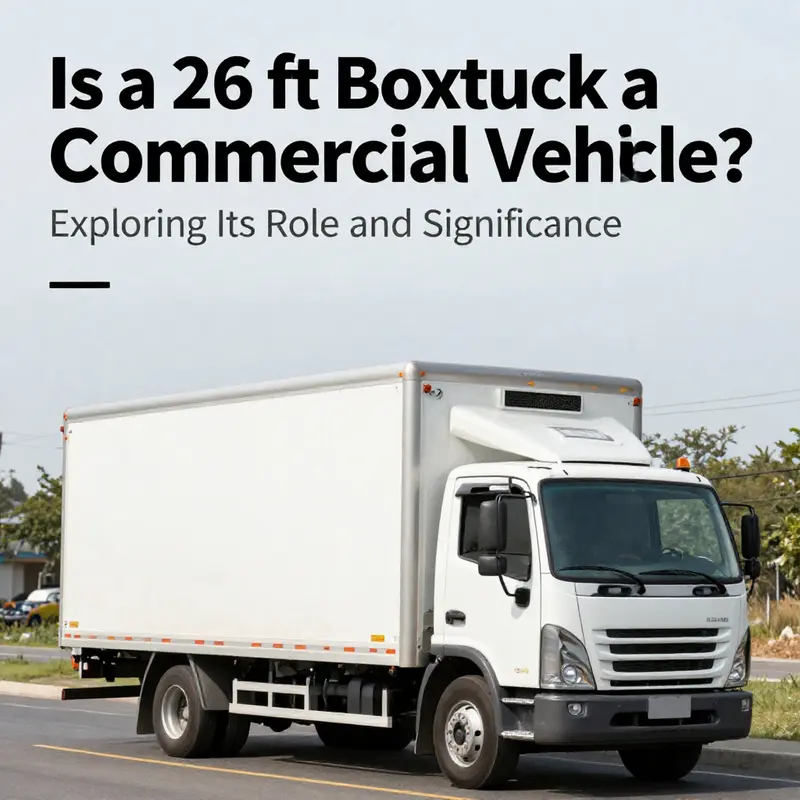
A 26‑foot box truck is not merely a form of transport; it is a carefully calibrated business asset whose value rests as much in its economics as in its ability to move goods. When the Cambridge definition frames a commercial vehicle as one used for business purposes, the implication is clear: this is a tool built to convert time, space, and capital into revenue. In practice, operators across logistics, last‑mile delivery, moving services, and specialized B2B freight rely on these vehicles to bridge supply chains, consolidate multiple customer needs into single trips, and extend the reach of business operations into markets that long-haul fleets alone cannot profitably serve. The 26‑foot box truck combines substantial cargo capacity with a relatively nimble footprint, enabling a fleet to execute high‑frequency deliveries, service non‑dock locations, and respond quickly to shifting demand. This versatility makes the vehicle a focal point in economic planning, where managers must balance upfront costs against ongoing expenses and potential revenue streams to determine whether the truck’s role remains a net positive for the business model.
From an acquisition standpoint, the economics begin with a substantial capital outlay. Purchasing a box truck of this size represents a major investment for a small business or a growing fleet. Premium pricing is tied not only to raw capacity but to durability, safety features, and the ability to endure high‑demand cycles where downtime translates directly into lost revenue. While buyers can pursue leasing to spread the cost over time, the looming question remains: what is the cost of capital, and how does that interact with utilization rates, maintenance needs, and depreciation? In this context, the decision is rarely about sticker price alone. It is about aligning the asset with a clear revenue model—one that reflects the number of trips required to amortize the purchase, the expected payload per mile, and the reliability needed to meet service level agreements that can define customer retention and contract pricing. The economic calculus thus starts with projective utilization: how many deliveries per week, per month, and per year, and what share of those trips can be scheduled to maximize payload while minimizing empty miles?
Operational expenses (Opex) form the other side of the cost equation. Fuel remains a dominant variable, given the diesel powertrain common to these trucks and the expansive fuel tanks that support longer trips and higher miles between fill‑ups. Typical fuel economy for box trucks of this class falls in the 8 to 13 miles per gallon range, a spread driven by engine design, load weight, terrain, and driving behavior. In practical terms, a 13 MPG figure translates into a meaningful difference in annual fuel spend when multiplied by miles driven and current diesel prices. Conversely, fuel efficiency can hinge on driving patterns, route optimization, and maintenance that preserves engine performance. Even seemingly modest improvements in efficiency—engine tuning, tire selection, and aerodynamic refinements—can yield meaningful cash‑flow benefits over the fleet’s lifecycle. Beyond fuel, maintenance and repairs become a predictable line item. The most economical long‑term operation requires a planned maintenance regimen, not reactive repairs. Modern, high‑duty powertrains bring advanced systems that enhance performance and safety but also introduce complexity. Regular oil changes,Filters, brake servicing, and suspension upkeep are essential to prevent unscheduled downtime, which erodes utilization and squeezes margins. In addition to mechanical care, insurance premiums rise with vehicle value and size, reflecting the greater liability and replacement cost compared with smaller cargo options. Registration and regulatory compliance add another layer of cost, particularly when a Commercial Driver’s License (CDL) is required for drivers operating vehicles above certain weight classes. The combination of these costs pushes operators to optimize driver productivity, route planning, and load discipline to produce a sustainable cost profile rather than an always‑on, race‑to‑the‑bottom cost structure.
Yet the economics of the 26‑foot box truck are not only a matter of expense. The vehicle’s revenue potential is anchored in its ability to move a substantial payload efficiently and to adapt to a wide range of shipment profiles. The cargo area—roughly 1,700 cubic feet with a typical width of about eight feet—can accommodate a notable number of pallets in a single layer, often enabling 12 to 14 standard pallets per trip depending on packaging. This capacity allows for consolidation of multiple small shipments into one efficient run, delivering what is effectively an economy of scale within the urban and regional lanes that many companies depend on. Such payload capability becomes especially valuable in less-than-truckload (LTL) contexts where maximizing load per mile lowers per‑shipment costs and increases the revenue per mile. The economics here are nuanced: higher payloads can reduce the number of trips needed, but they also demand careful vehicle configuration to avoid overloading, which risks downtime and regulatory penalties. When the vehicle is equipped with a liftgate, the operator gains access to non‑dock deliveries, broadening the customer base from bulk industrial sites to residential neighborhoods, retail locations, and event venues. This liftgate capability is not merely a convenience; it represents an expansion of serviceable markets and a lever for increasing utilization in environments where dock facilities are scarce or nonexistent. Additionally, the possibility of outfitting the truck with a reefer unit opens access to refrigerated goods, ice‑cream, pharmaceuticals, and temperature‑sensitive inventory—a strategic expansion of revenue streams that commands premium rates but also imposes higher operating costs and maintenance scrutiny. All told, the truck’s capacity to fluidly switch among general freight, bulk deliveries, and specialized services is a powerful driver of revenue potential when paired with disciplined pricing and route execution.
The regulatory and market context shapes the viability of that revenue potential. The CDL requirement for vehicles above 26,000 pounds GVWR introduces a constraint on labor supply. Qualified drivers command higher wages, and the process of hiring and retaining capable personnel becomes a fixed cost that operators must accommodate in their pricing structures. This dynamic encourages strategies that maximize driver productivity, such as optimized routing, precise scheduling, and careful asset utilization to minimize idle time and avoid overstaffing. Market demand, especially in the era of booming e‑commerce, tends to reward fleets that can provide reliable, flexible, and timely service. The last‑mile and reverse logistics segments, in particular, have shown sustained growth, presenting a favorable backdrop for operators who can consistently meet tight delivery windows, protect product integrity, and maintain customer visibility through real‑time updates. The selling proposition extends beyond mere delivery: a 26‑foot box truck is a practical instrument for fulfilling replenishment cycles, moving inventory in seconds to days’ worth of consumer demand, and absorbing spikes associated with promotions, seasonal peaks, or product launches. In such scenarios, pricing power can be exercised through service levels, on‑time delivery metrics, and the ability to offer value‑added services such as notification, staging, and white‑glove handling in urban cores where access is limited.
To translate these possibilities into sustainable profitability, many operators lean on a framework of disciplined operations and strategic planning. Route optimization sits at the core of cost control, ensuring that the synergy of higher payload, reduced deadhead, and shorter cycle times translates into more trips with less wear and tear. A well‑tuned operation uses data to align vehicle assignments with demand patterns, geographic clustering, and customer priorities. This necessitates robust scheduling, precise load planning, and proactive maintenance planning to minimize downtime. It also invites a candid assessment of lifecycle costs: depreciation, resale value, and the changing economics of truck ownership as new regulations emerge and fuel costs fluctuate. In markets with vibrant used‑truck ecosystems, depreciation curves can offer favorable tax treatment and potential recovery of a sizable portion of the initial investment through resale, provided the truck has maintained a reliable maintenance history and demonstrated consistent utilization. Even with strong resale prospects, the decision to deploy a box truck as a core asset should be accompanied by a clear plan for depreciation, a strategy for financing, and a governance framework that monitors utilization, maintenance costs, and driver performance.
An important dimension of the decision is the vehicle’s versatility and the way it enables business diversification. The ability to serve multiple customer segments—ranging from B2B wholesale deliveries and e‑commerce replenishment to residential delivery and event logistics—introduces optionality that can stabilize revenue across cycles of demand. This flexibility often translates into smarter procurement and more resilient cash flow. A truck that can move furniture, electronics, retail stock, or temperature‑controlled goods is not just a transport asset; it is a platform for service expansion. As markets evolve, the capacity to pivot—from general freight to specialty logistics—can be a differentiator when bidding for contracts or pursuing new channels. For operators who want to deepen their knowledge and align practices with industry wisdom, there is value in tapping into practical industry discussions and insights shared on sources like the McGrath Trucks blog, which offers perspectives on how fleets navigate the terrain of acquisition, pricing, and market strategy.
The viability of a 26‑foot box truck as a commercial vehicle, then, rests on a delicate balance of cost management, utilization, and market opportunity. On one side sits the up‑front and ongoing cost structure: purchase price or lease payments, insurance, CDL‑related payroll costs, fuel, maintenance, and regulatory compliance. On the other side stands the potential for substantial revenue per trip, grounded in high payload capacity, broad applicability, and the ability to address the growing demand for flexible, last‑mile, and regional freight services. The levers that tilt the balance in favor of profitability include strategic route optimization, disciplined maintenance, and intelligent utilization that minimizes empty miles. The liftgate and optional reefer capabilities, when deployed with careful load planning, unlock markets that can bear premium pricing and reduce service time, further enhancing margins. The broader market backdrop—fueled by e‑commerce growth and the continuing need for reliable, scalable distribution—creates a receptive environment for operators who can demonstrate consistent performance, safety, and customer satisfaction. In this sense, the 26‑foot box truck is more than a vehicle; it is a financial instrument whose value is realized through precise management, not just its physical capacity.
For readers seeking further context on the standards, pricing, and market conditions surrounding these trucks, industry discussions and practical guidance are available in the broader trade literature and practitioner blogs. A helpful starting point is the industry resource that analyzes standards and market dynamics for 26‑foot box trucks and related equipment. This external reference provides additional depth on how pricing, model variety, and operating costs intersect with regulatory requirements and fleet strategy. Meanwhile, ongoing conversations in trade media and fleet management forums emphasize that the most successful operators treat the 26‑foot box truck as a long‑term asset that must be continuously aligned with a living business plan—one that adapts to fuel volatility, driver labor markets, and evolving customer expectations. For a closer look at the practical implications of standards and procurement considerations, you can explore further reading in the linked external resource. In the meantime, the internal knowledge base on fleet operations and procurement best practices—such as the ongoing examination of used-truck pricing, lifecycle management, and dealer–customer dynamics—offers a useful internal compass for teams evaluating whether a box truck belongs in their commercial portfolio. If you are exploring practical, industry‑level discussions, the McGrath Trucks blog provides a concise, accessible perspective on how fleets balance capital costs, utilization, and market opportunity in real-world settings. See the linked resource for a broader, reader‑driven view of how these decisions play out in the market today.
External reference: https://www.example.com/26ft-box-truck-sale-standards
Weight, Duty, and Paperwork: The 26-Foot Box Truck and Its Commercial Vehicle Identity
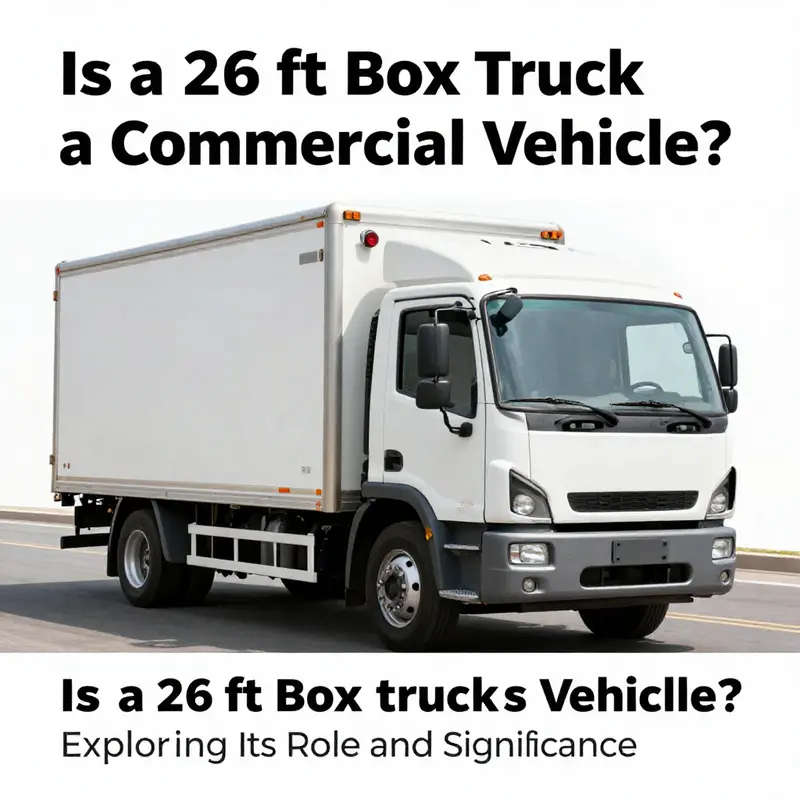
A 26-foot box truck is not defined by its length alone. In the world of commercial transportation, the term commercial vehicle rests on a set of criteria that tie a vehicle to business use, regulatory scrutiny, and a framework of licensing and compliance. When a fleet manager or a small business owner looks at a box truck and asks if it qualifies as a commercial vehicle, the answer hinges on weight, purpose, and the regulatory regime that governs operation on public roads. The pivotal measure is the gross vehicle weight rating, or GVWR, which represents the maximum loaded weight the vehicle is designed to carry safely. In practice, the critical threshold is 26,000 pounds. If the GVWR exceeds that mark, the vehicle is typically treated as a CDL-eligible asset, and the driver’s licensing and a suite of federal and state regulations come into play. If the GVWR stays at or below 26,000 pounds, a driver may operate under non CDL rules, though the specifics can vary by model and configuration. This distinction matters in everyday business decisions, from the cost of insurance to the hours a driver can spend behind the wheel and the maintenance responsibilities that keep a fleet moving. In short, the classification is a weight-based taxonomy that sits at the heart of how a 26-foot box truck is managed as a business asset rather than a private-use vehicle. The practical impact flows through every layer of fleet operations, from hiring and training to procurement, route planning, and safety performance. This is why the weight rating, not the mere length, governs licensing, inspections, and the cadence of regulatory compliance.
For many operators, the truck’s GVWR is not a fixed number on a brochure. It is a dynamic figure shaped by the chassis and the cargo box, by the equipment installed to handle specific goods, and by the way the payload is distributed across the vehicle. A box added after the chassis is manufactured—commonly seen in modern fleets seeking refrigeration units, shelving, or specialty crates—can push the final GVWR over the CDL threshold. In scenarios like these, the business moves from non CDL operations into CDL requirements, with all the accompanying obligations for drivers, maintenance, and recordkeeping. This reality underscores a simple but crucial point: the 26-foot box truck is not a generic category of vehicle; it is a class that can shift depending on the exact specifications of the build and configuration. To understand the licensing framework, one must first acknowledge that the governing standard is federal, but the application is deeply influenced by state rules, and the nuances of the vehicle’s own weight and dimensions.
The licensing landscape is straightforward in concept: a CDL is generally required when the GVWR exceeds the 26,000-pound threshold. In most 26-foot box trucks that ride on commercial chassis, the GVWR is above that limit, which means the operator falls under CDL rules. The CDL designation carries with it a bundle of regulatory expectations: specialized testing in many jurisdictions, medical qualification requirements, and the need to adhere to hours-of-service rules that limit daily driving time and mandate rest breaks. For fleets, this translates into planning cycles that account for driver availability, fatigue management, and the maintenance discipline necessary to keep a CDL-qualified vehicle compliant at all times. The alternative, operating a box truck that sits at or below the threshold, is not a universal exemption. Some configurations may still be regulated in other ways, and even non CDL vehicles require routine inspections and adherence to safety standards. The practical takeaway is clear: verify the exact GVWR of the vehicle at issue before assuming the licensing pathway, because a single label change or a small alteration to the cargo box can flip the regulatory switch.
Beyond the licensing gate, the regulatory envelope embraces federal oversight as much as it does state-specific practice. The Federal Motor Carrier Safety Administration, or FMCSA, administers core requirements that apply to CDL-qualified operators across the nation. Drivers operating CDL vehicles must comply with hours-of-service regulations that govern daily and weekly driving limits, mandatory rest periods, and logging standards. Vehicle maintenance rules demand that the truck remains in safe operating condition, with regular inspections, brake checks, and weight-bearing tests that ensure stability on the road. Drug and alcohol testing requirements are woven into the fabric of CDL compliance, creating a standardized discipline that transcends state borders. This federal frame, however, interacts with state rules on a daily basis. Some states impose stricter limits on size, weight, or access to particular routes. In urban centers, for instance, certain corridors or bridges may regulate heavy vehicles differently or restrict operation during peak traffic windows. In practice, the operator must map not only the vehicle’s weight and dimensions but also the routes it is allowed to take, seeking alternatives when the typical corridor is restricted.
The physical dimensions of a 26-foot box truck matter, but they do not tell the whole story. Width and height limits, often set at around eight and a half feet and thirteen and a half feet respectively, constrain what the truck can physically traverse on public roads. The length, while commonly 26 feet for the cargo box, interacts with the wheelbase and the box’s integration with the chassis to influence maneuverability, turning radius, and the feasibility of certain loading docks or parking configurations. In practice, the width and height cap the truck’s ability to navigate tunnels, bridges, and narrow streets, while the length becomes a factor in docking alignment and yard operations. When fleets customize the box or add specialized equipment, those dimensional metrics can drift from the standard, prompting reevaluation of permits, route restrictions, and even insurance designations. This is not mere paperwork; it is a live consideration that affects how a business can bid on jobs, how it staffs routes, and how it manages risk in a system that prizes predictability and safety.
The landscape is further complicated by the reality that box trucks are often built from a chassis produced by a manufacturer and then outfitted with a cargo box, refrigeration units, shelving, or other equipment in a separate process. This separation between chassis and box means weight distribution can shift as the cargo hold changes. If the added equipment increases the unloaded weight, the GVWR can rise toward or past the CDL threshold, even if the box itself is only modestly larger. For operators, the implication is clear: every configuration change should trigger a recheck of GVWR, the licensing category, and the corresponding compliance obligations. The same logic extends to specialized uses. A refrigerated box, for example, may require additional certifications related to powered equipment or temperature control systems. A fleet that handles hazardous materials would face a separate, stricter set of requirements. In other words, while the box truck shares a common form, its regulatory identity can diverge based on the precise equipment and its intended use. The result is a nuanced picture in which a single chassis can serve as a platform for different regulatory regimes, depending on how the cargo area is equipped and what goods are carried.
All of this converges on a practical truth for businesses: the 26-foot box truck is a commercial vehicle by function, not merely by form. It is designed to move goods, parcels, and industrial materials between points of business activity, and its role in the supply chain is defined by how it is operated rather than by how it looks. For a fleet, the question of whether a truck is CDL or non CDL is not a philosophical debate; it is a live operational decision with real consequences for driver training, maintenance schedules, insurance costs, and the ability to meet customer expectations. As a business asset, the truck must earn its keep by offering predictable performance, safety, and reliability. That means a disciplined approach to procurement, so the exact GVWR is known before buying, and an ongoing program to track any changes that occur after delivery. The center of gravity in the regulatory discussion is weight: it shapes licensing, dictates the driver’s qualification, governs the daily and weekly rhythms of operation, and anchors the safety and compliance framework that keeps the fleet moving through the day and into the night.
All of this does not happen in a vacuum. It sits on the desk and in the operating manuals of fleet managers who must balance cost, service levels, and risk. For those who want to continue learning about truck procurement, fleet optimization, and the practical realities of moving goods efficiently, a good resource is the McGrath Trucks blog, which gathers hands on insights about buying and operating commercial trucks. For readers exploring the business side of selection and deployment, the blog offers perspectives on how to source vehicles, compare configurations, and plan for long term asset value. You can explore that resource here: McGrath Trucks blog.
In the end, the 26-foot box truck embodies a convergence of business purpose and regulatory discipline. It is a tool built for commerce, not a whimsical passenger vehicle. Its true identity rests on weight and the obligations that accompany it, not on the box’s silhouette or the length alone. The licensing pathway you choose reflects how the vehicle will be used, the routes it will travel, and the kind of safety culture you want to build around your operation. It is a reminder that in commercial logistics, the vehicle is more than metal and cargo space; it is a governed instrument in a system designed to move goods responsibly, efficiently, and with accountability across state lines. For operators, the path forward is one of careful specification, diligent compliance, and continual adaptation as equipment, routes, and regulatory expectations evolve. The box remains 26 feet long, but the job of turning that space into a reliable business asset hinges on the precise alignment of weight, licensing, and the daily discipline that underpins every successful run. For a federal perspective on weight and dimension rules, consult the official guidance at the federal resource linked below to deepen the understanding of how these thresholds are defined and applied in practice across the country: https://www.fhwa.dot.gov/ohim/ohim.cfm
Final thoughts
The examination of a 26-foot box truck’s classification as a commercial vehicle reveals its integral role in various sectors, particularly in logistics and delivery. Understanding the specific economic implications can significantly enhance fleet management and operational strategies for businesses that rely on these vehicles. Additionally, adhering to the regulations and licensing requirements ensures compliance and facilitates seamless operations. Ultimately, recognizing the importance of 26 ft box trucks enables industry stakeholders to capitalize on their utility and ensure effective and efficient transportation solutions.