Registering your truck for commercial use is a critical step in ensuring compliance and operational efficiency. Whether you’re managing a fleet, running a logistics firm, or involved in construction and mining, understanding the nuances of commercial truck registration can significantly impact your business operations. This article explores the immediate requirements for registration, the necessary documentation and processes, special cases and exemptions, and the strategic considerations regarding deadlines. Each chapter will provide important insights that will prepare you to navigate the complexities of commercial truck registration effectively.
When a Truck Becomes a Commercial Vehicle: Timing, Thresholds, and the Road toward Legal Use
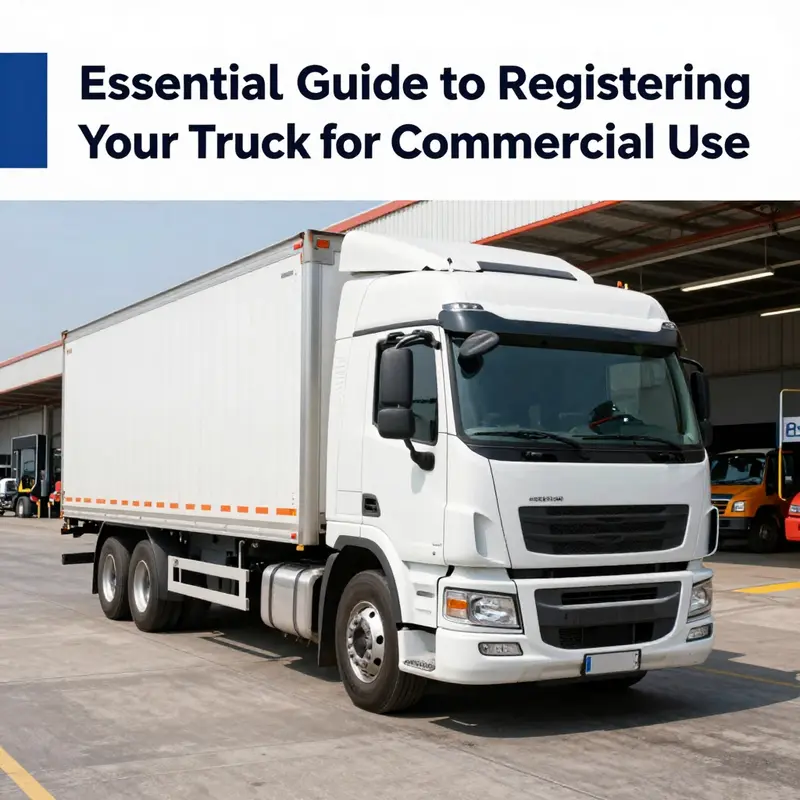
The moment a truck shifts from personal use to commercial operation is more than a change in intention. It is a legal threshold that activates a chain of registration, licensing, and compliance requirements designed to keep roads safe, cargo secure, and businesses accountable. The core idea is simple enough: if you intend to earn money by moving goods or people, you need to be able to prove that your vehicle and your operation meet standards set by transportation authorities. Yet the specifics—what qualifies as commercial, when the paperwork must be in place, and which permits follow from which activities—vary by jurisdiction and by vehicle type. Reading the rules across contexts helps truck owners avoid a common trap: assuming that one registration status covers all activities or that compliance can wait until a new phase of operation. In truth, the decision to register commercially is a decision about timing, responsibility, and protection.
In broad terms, the universal condition is straightforward: you register a truck commercially as soon as you begin using it for paid freight or business delivery. If your vehicle is used to carry goods for hire, you should treat it as a commercial asset from day one. This is not merely a bureaucratic nicety; it determines how you title the vehicle, how you insure it, how you record driver hours, and how you prove compliance during inspections or audits. A crucial distinction is the weight and use of the vehicle. Many regulatory frameworks set a weight threshold that triggers more stringent requirements. In a recent example from China, vehicles with a total mass over 4,500 kilograms used for general freight transport are required to obtain a Road Transport Permit, a Road Transport Certificate, and to meet a series of preconditions tied to the carrier’s authorization. This threshold isn’t arbitrary. It aligns the scope of the permit with the potential risk and impact of moving heavier loads and the greater infrastructure and safety considerations that accompany those operations. For operators in or connected to Chinese markets, that 4.5-ton line is a practical standard that determines when the Road Transport Certificate becomes part of the fleet’s legal profile.
Yet the same principle applies to other regulatory environments with different numerical thresholds and licenses. In the United States, for example, the Federal Motor Carrier Safety Administration uses a framework built around the vehicle’s gross vehicle weight rating (GVWR) and the nature of the operation. If a truck has a GVWR of 26,001 pounds or more and is used for interstate commerce, a commercial driver’s license (CDL) becomes a must for the operator, and the carrier typically must register with the FMCSA and obtain a USDOT number. The consequence is the same in spirit: commercial use triggers a formal permission structure that governs safety programs, insurance requirements, and hours-of-service rules. The common thread across jurisdictions is clear: if you intend to transport goods or passengers for compensation on public roads, your operation must be organized around a recognized commercial framework. This is not only about staying out of trouble; it’s about access. Commercial registration opens the door to lawful operations, eligibility for certain subsidies or incentives, and the ability to contract with businesses that require compliance evidence before they hire a carrier.
The practical steps to reach that door are procedural, but they are also informationally linear: you must demonstrate that you operate as a business, that the vehicle is registered under that business, and that you meet the standards that the road authority requires for your specific use. In many places, the first step is establishing a business entity or registering as an individual with clear intent to operate commercially. The vehicle must be formally titled and registered in the name of the business, not as a personal asset. This shifts the ownership record from a personal to a corporate or business framework and ensures that insurance, taxes, and liabilities align with the commercial nature of the activity.
From there, the road toward full compliance often proceeds through a sequence of licenses and inspections. A Road Transport Operating License is frequently required to authorize a carrier to conduct freight activity in a given jurisdiction. In some systems, you must obtain this operating license before the road transport permit itself can be issued. The logical order may vary, but the underlying requirement remains consistent: the vehicle’s use must be sanctioned by the appropriate transportation authority before it can legally carry goods on public roads in a commercial capacity. The vehicle itself must pass safety and technical inspections, meeting minimum standards for operation. In heavier classes, the vehicle may be required to be equipped with GPS tracking and other telematics to ensure visibility and compliance with route, hours, and safety rules.
Driver qualifications mirror the vehicle standards. In the United States, heavy-duty operations typically require drivers to hold a CDL, and specialized transport—such as hazardous materials or passenger transport—adds further certifications. In other jurisdictions, the equivalents may be framed as road transport professional qualification certificates, ensuring that drivers understand the regulations governing commercial freight and the responsibilities of maintaining safe operations on the road. Even beyond licenses, the regulatory picture includes ongoing compliance requirements: drivers must adhere to hours-of-service rules, carriers must maintain certain insurance levels, and vehicles must undergo periodic inspections and be prepared for random or scheduled audits. The cumulative effect is a compliance ecosystem: a comprehensive, auditable record of who drives what, where, and why, backed by a combination of documents, registrations, and technologically supported reporting.
Of course, there are exceptions and special cases that shape the timing and the path to registration. Small trucks, those at or below 4,500 kilograms, often face a lighter touch. They may not require a Road Transport Operating License for ordinary freight, yet this does not exempt them from commercial registration. In some jurisdictions, the weight threshold determines the need for a road transport license, while in others the license is tied to the type of freight or the frequency of operation. What remains constant is the idea that commercial use—the act of transporting goods for compensation—creates an automatic shift in the vehicle’s regulatory standing. For new energy vehicles, the policy landscape can be more nuanced. While electric trucks may qualify for government subsidies or incentives under programs designed to promote cleaner fleets, the fundamental requirement for commercial registration persists. Subsidies are often tied to compliance milestones, fleet modernization goals, and formal recognition of the vehicle’s status as part of a business operation. This is not a contradiction but a complement: incentives reward compliance and modernization, while registration confirms that the operation is legitimate and auditable.
The timeline is equally important. There isn’t a universal universal deadline that applies everywhere, but the policy environment in many regions has lines that become especially important as incentives and programs evolve. In scenarios where governments are updating fleets or promoting the adoption of new energy solutions, the period through 2026 has been highlighted in several jurisdictions as a time frame in which certain upgrades, subsidies, or reform initiatives remain active. If your plan includes applying for upgrades or subsidies, it is prudent to ensure that your vehicle is properly registered before those programs shift or terminate. The local timeline is the most reliable compass, which is why the recommended action is to engage directly with the local transportation authority to confirm the exact process and any impending changes. The authority can outline the precise steps, required documents, and the order in which licenses and certifications must be secured. In a representative jurisdiction in China, for instance, the Xiangzhou District Transportation Bureau and the local government service center offer a template for navigating administrative steps, including where to submit documents, who to contact, and when the offices are open. This practical anchoring reminds operators that while the rules are standardized in principle, the daily path to compliance is built within a local framework with its own nuances.
The bottom line remains explicit and actionable: commence commercial registration as soon as you begin to use the truck for paid freight or business delivery, particularly if the vehicle exceeds the 4.5-ton threshold. Delaying registration can result in a cascade of consequences—fines, penalties, impoundment, or the loss of eligibility for incentives that can offset fleet costs. These outcomes are not mere bureaucratic inconveniences; they can disrupt contracts, delay deliveries, and undermine the trust of business partners who require evidence of regulatory compliance before engaging with a carrier.
To navigate the process with confidence, the practical advice is to treat registration as a step that anchors your operations in legitimacy and protection. Start by clarifying the business structure and ensuring that the vehicle is registered in the business name. Gather proof of ownership, evidence of insurance that meets or exceeds the minimums set by your jurisdiction, and the relevant vehicle inspections. Prepare to present a safety record and a maintenance plan that demonstrates ongoing compliance. If your operations cross borders or involve different types of freight, prepare for additional permits or registrations, such as hazardous materials credentials or state-specific licenses, and be ready to align with federal or national requirements where applicable. In cases where the operation relies on a heavy vehicle or specialized equipment, anticipate the need for GPS or telematics, as these devices are often part of the compliance package for heavy or commercial fleets. And for driver qualification, be prepared to document licenses, endorsements, and any professional certificates that apply to the operation. The point is not to accumulate paperwork in a vacuum but to build a coherent, auditable system that supports efficient operations, clear liability boundaries, and consistent service quality for customers who rely on traceable, accountable freight or passenger transport.
Within this framework, one practical touchstone is the availability of direct, local guidance. Governments and transportation departments often provide service centers and one-stop windows where applicants can learn the exact steps and submit documents. For example, in a specific district in China, you might find a government service center where the Transportation Bureau window can assist with licensing, vehicle registration, and issuing the Road Transport Certificate once prerequisites are met. The address, phone number, and hours of operation become part of the registration journey, turning a potentially opaque process into a navigable path. While these local procedures will differ by city or district, the underlying architecture of the process—business registration, vehicle registration, transport licenses, and compliance checks—remains consistent. The goal for every operator is to move through this architecture with clarity and efficiency, minimizing delays and avoiding missteps that could trigger enforcement actions or penalties.
For readers seeking a broader perspective that connects policy updates to practical fleet decisions, a quick immersion in the industry blogosphere can be enlightening. The McGrath Trucks blog offers a vantage point on how policy shifts, market conditions, and fleet composition converge to shape registration strategies. You can explore that broader discussion here: McGrath Trucks blog.
As the regulatory landscape continues to evolve, the anchor remains the same: act early, act decisively, and document everything. Whether you are preparing a single heavy-duty truck for a regional freight contract or scaling a small fleet with mixed equipment, the steps and safeguards described above form a durable template. The cost of inaction is not merely a violation of a regulation; it is the potential interruption of revenue streams, the risk of contract termination, and the exposure of owners and drivers to uncertain liability. By aligning your operations with commercial registration requirements from the outset, you establish a solid foundation for growth and resilience. This is the kind of preparation that translates into smoother inspections, clearer insurance terms, and a more reliable service offering to customers who demand compliance as a condition of business.
To ground these principles in a concrete touchstone for ongoing compliance, remember this key idea: do not treat commercial registration as a one-time hurdle. It is part of an ongoing lifecycle that includes regular inspections, license renewals, updated certifications, and, crucially, alignment with the latest policies that govern road transport. If you are considering upgrades to newer energy solutions or plan to apply for subsidies, ensure your registration is current so that you can leverage those programs fully. The regulatory journey may feel intricate, but it is designed to safeguard the entities that rely on safe, predictable, and legal freight movement. The better organized your records, the more straightforward your audits will be, and the more your customers will trust your ability to deliver.
For official guidance, refer to the Ministry of Transport of China: https://www.mot.gov.cn. This external resource provides the authoritative statements, standards, and updates that inform the registration process and the evolving requirements for road transport. In the meantime, the local guidance you obtain from your district or city transportation offices will translate these broad standards into practical steps, submission timelines, and locally available forms and offices. Plan for a little flexibility in scheduling; the windows for permits and licenses can be affected by seasonal demand, staffing, and the volume of applicants. Yet the overall map is stable: decide to operate commercially, prepare the vehicle and the business for registration, obtain the necessary operating licenses and certifications, and maintain continuous compliance thereafter. The result is not only legality; it is confidence—a reliable framework that supports growth, protects you against penalties, and makes your freight a dependable part of the supply chain.
External reference: Ministry of Transport of China. https://www.mot.gov.cn
When to Register Your Truck as Commercial: A Practical Roadmap for Documentation and Registration
Understanding the trigger: when use becomes commercial
Knowing the exact moment your truck needs commercial registration starts with a simple rule: if you use the vehicle to carry goods or passengers for money, reimbursement, or in support of a business, you must register it as commercial. This applies whether you operate as an individual, a sole proprietor, or a company. The threshold that converts private use to commercial use is not just intent; it is defined by weight, passenger capacity, and the nature of your operations. For example, in many jurisdictions a truck designed to carry more than eight passengers becomes commercial. In the United States, another common trigger is the vehicle’s gross vehicle weight rating — 10,001 pounds or more often places the truck under commercial rules. In China, vehicles with a total mass over 4,500 kg used for general freight transport must secure a Road Transport Permit before they operate in paid freight.
The stakes for registering correctly are high. Operating without the right registration can lead to fines, business disruptions, or denied access to incentives and permits. Conversely, timely registration unlocks legal protection, access to certain routes and contracts, and eligibility for subsidies when applicable. If you expect to use the truck for paid pickups, deliveries, or any compensated transport, treat registration as an immediate priority.
A single, logical path: assess, register the business, register the truck, secure operating authority
Begin by assessing how you will use the vehicle. Ask whether the truck will move goods or people for compensation, cross state or provincial lines, or meet specific weight or passenger thresholds. That assessment determines which authorities you will work with and what documents you will need.
Next, formalize the business entity if you have not already. Most registration regimes require the vehicle be registered to a business name when used commercially. Choose a legal structure—sole proprietor, partnership, limited company—and complete your state or local registration. This step gives you a business license and a legal name under which to register vehicles and apply for operating permits.
Once the business exists on paper, register the truck under that business name. Vehicle registration transfers title and responsibility into the company and often distinguishes commercial plates from private plates. In some areas you will need to demonstrate active business registration before a commercial plate can be issued.
After the vehicle registration, secure any required operating authority. In the U.S., that generally means registering with the Federal Motor Carrier Safety Administration and obtaining a USDOT Number when you operate in interstate commerce or meet federal weight or passenger thresholds. If you carry freight across state lines, you will likely need a federal operating authority in addition to state permits. In China, truck operators transporting general freight over 4.5 tons must obtain approval from the local transportation authority and a Road Transport Certificate. That approval usually follows a county- or city-level operating license.
Documentation you will need and why each piece matters
A few documents appear across most jurisdictions. Having them ready will speed the process and prevent repeated trips to government windows.
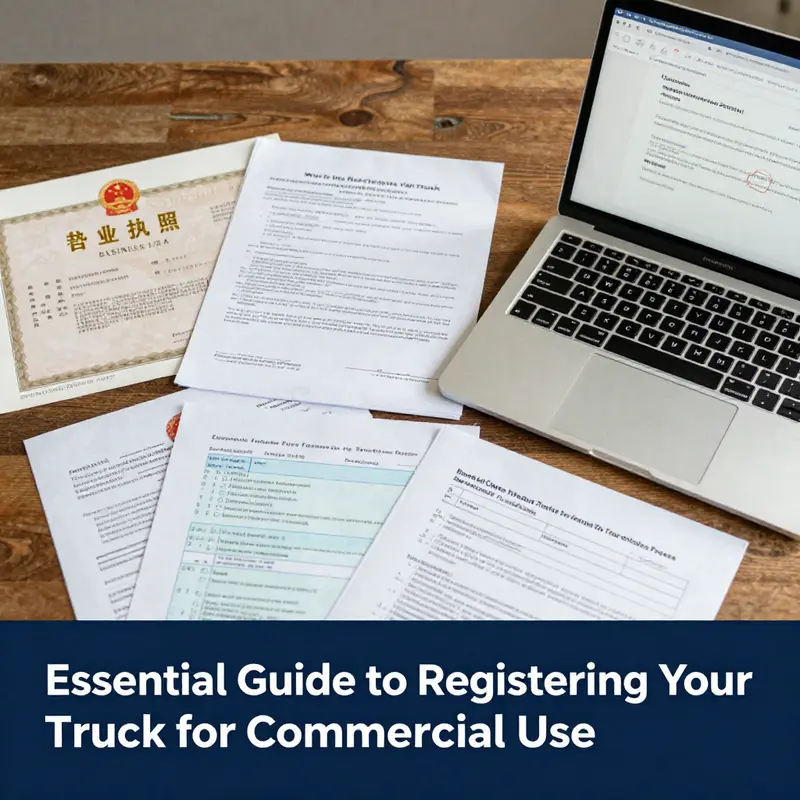
- Business registration and license. This shows you have a legal entity authorized to operate commercially. The vehicle is typically registered to that business.
- Proof of ownership or a vehicle title. Authorities must confirm who owns the truck and whether liens exist. Financial institutions may need to be listed when the truck is financed.
- Vehicle registration application and fees. Commercial registrations often carry different plate classes and fees.
- Insurance certificates. Commercial auto insurance with required liability limits is mandatory in many areas. For interstate carriers, federal minimums apply.
- Vehicle inspection and compliance records. Many regions require technical inspections to confirm the vehicle meets safety and emissions standards. In China, heavy trucks and semi-trailers often must meet a minimum technical level and install GPS trackers.
- Driver qualifications. Drivers often need more than a standard license. In China, drivers for vehicles over 4.5 tons must hold professional road transport qualification certificates. In places with heavy commercial operations, drivers may also need special endorsements for passenger or hazardous materials transport.
- Operating permits and special licenses. These include USDOT numbers, state operating authorities, local road transport permits, or a Road Transport Operating License where applicable.
Keep organized copies of each document. Authorities will expect vehicle inspection files, maintenance logs, driver qualification files, and insurance records on demand.
Practical steps and sequencing to avoid delays
Start with clear, simple sequencing: decide, register the business, register the vehicle, apply for operating authority, and verify compliance.
Decide: confirm whether the truck will be used commercially. If you are uncertain but occasionally haul goods for pay, treat the vehicle as commercial. It is safer and avoids penalties.
Register the business: obtain your business license or individual business registration. This gives you the legal identity to register the truck and apply for permits.
Register the vehicle under the business: move the title or update registration from personal to business name. Record any liens and ensure insurance is issued to the business.
Apply for federal and state permits where required: in the U.S., obtain your USDOT number through the FMCSA Unified Registration System. Apply for state operating authority and any local permits you will need. In China, apply for the Road Transport Operating License at the county or city transportation department before seeking the Road Transport Certificate for trucks over 4.5 tons.
Complete inspections and equipment upgrades: many jurisdictions require safety inspections, emissions testing, or installation of mandated equipment like GPS devices on heavy trucks. Complete these steps before final permits are issued.
Train and qualify drivers: verify drivers have the required licenses, endorsements, and professional certificates. Maintain a driver qualification file for each driver that includes medical certificates and training records.
Maintain insurance and compliance files: commercial operations demand higher liability protection. Keep policies current and on file, and retain inspection and maintenance logs.
Special cases and common pitfalls
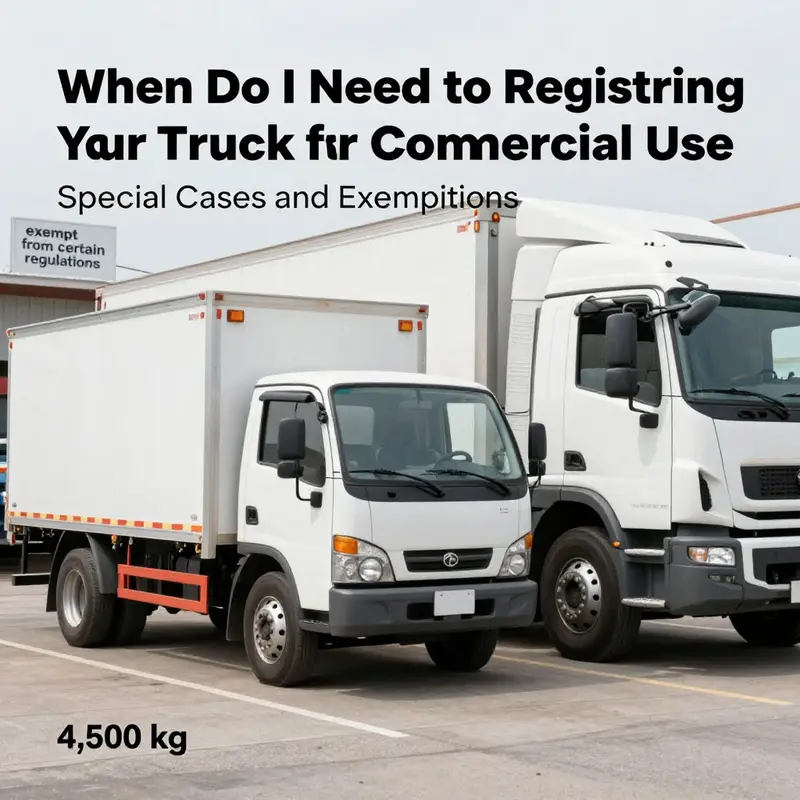
Small trucks often cause confusion. Vehicles at or under a certain mass—4,500 kg in China, or under specific weight thresholds in other places—may not require a full operating license but still need to be registered as commercial if used regularly for freight. Check local rules: a small truck used for routine paid deliveries can still need a road transport certificate or commercial registration.
New energy and electric trucks deserve special attention. They are increasingly eligible for subsidies and incentive programs, but they still must be registered and meet all commercial requirements. If you plan to claim replacement or subsidy programs, ensure registration and compliance are completed before application deadlines. For example, regional programs that update older freight trucks and promote new energy buses may set hard cutoffs. Missing registration before a program deadline can make you ineligible for benefits. For a practical perspective on the electric truck landscape and implications for operators, see this overview of new energy truck trends from our blog: electric truck developments and market trends.
Another frequent misstep is delaying registration until a contract or route has been secured. Promote registration as part of your startup checklist. Many shippers require copies of operating authority and insurance before signing a contract. Waiting can cost you business.
Ongoing obligations once the truck is registered commercially
Registration is not a one-time task. Commercial operators must stay current with renewals, inspections, and recordkeeping. Keep driver files updated, maintain vehicle inspections, and ensure insurance coverage meets or exceeds regulatory levels. If your operations expand—adding vehicles, routes, or interstate work—you may need to update your USDOT number, add supplemental permits, or apply for additional authorities.
Watch for regulatory changes. Rules for weight thresholds, equipment mandates, and incentive programs change over time. In China, for instance, the 2026 program for old truck updates and new energy bus adoption sets deadlines that affect eligibility for subsidies. In other places, environmental and safety standards can introduce new inspection or emissions requirements. Regularly check with your local transportation authority to remain compliant.
When in doubt, ask the local transportation authority
Regulatory interpretations vary by region. Contact your local municipal transportation bureau or DMV when you have questions about timing, required documents, or process steps. Local offices can confirm whether a vehicle needs a road transport permit, what inspections are necessary, and how to apply for subsidies. If you operate cross-border or interstate, also consult federal authorities.
If you operate in a specific district, visiting the local government service center can often clear up ambiguities faster than web searches. Keep a record of the guidance you receive and the names of the officials who assist you. That paper trail can be helpful if permit dates or requirements are later disputed.
Final practical checklist
- Confirm the truck will be used commercially.
- Register your business entity and secure a business license.
- Transfer vehicle registration to the business name.
- Obtain required operating authorities (USDOT number, state MC number, or local road transport permits).
- Complete vehicle inspections and install mandated equipment.
- Ensure drivers hold required licenses and professional certificates.
- Purchase and maintain required commercial insurance.
- File for any eligible subsidies before program deadlines.
Getting registration right protects your business and opens the door to legal work, contracts, and incentives. Treat registration as an integral business task and complete it before you begin compensated transport.
For federal U.S. registration and operating authority details, consult the Federal Motor Carrier Safety Administration: https://www.fmcsa.dot.gov
null
null
Register Your Truck for Commercial Use: Deadlines, Risks, and Strategic Moves for 2026–2029
Timing and Strategic Considerations for Commercial Truck Registration
If you plan to use a truck to carry goods for hire, you must register it for commercial use before it ever operates in that role. The rule is simple: put the truck into commercial registration the moment it will perform paid or business transport. This applies whether you are an individual owner-operator, a small enterprise, or a logistics company. Missing this point is costly: fines, operational disruption, or disqualification from subsidy programs can follow.
Start by understanding the two essential documents that govern commercial trucking in China. First is the Road Transport Operation License (《道路运输经营许可证》), which authorizes an entity to provide transport services. Second is the Road Transport Permit (《道路运输证》), issued for each vehicle and required to be carried whenever the truck is working. For many smaller trucks, the operation license step is not required, but the permit remains mandatory once you use the vehicle for commercial freight. Since September 2022, these licenses are issued electronically, so ensure your digital credentials are accessible through the national platform and match your vehicle details.
Vehicle type and total mass change the timing and the paperwork. Trucks with a total mass over 4,500 kg used for general freight require prior approval and a Road Transport Permit. For vehicles above 12 tons, or for semi-trailer tractors, regulators demand dynamic monitoring positioning devices linked to government-approved platforms. These trackers are not optional; they tie vehicle location and status to national monitoring systems. Additionally, drivers for vehicles heavier than 4.5 tons must hold road transport professional qualification certificates. If your operation uses heavy equipment, plan for regular technical inspections and for meeting a minimum technical grade, typically Level 2 or better.
Deadlines are not the same everywhere, but 2026 marks a clear inflection point in policy. Urban access restrictions for fossil-fuel light trucks will increase from mid-2026 in many major cities. This means that if your business focuses on city distribution, continuing to buy or operate gasoline and diesel light trucks after 2025 is increasingly risky. Many municipalities will begin enforcing stricter entry rules for non-electric vehicles starting mid-2026. On a longer horizon, heavy long-haul diesel trucks are expected to face a phased transition through 2028 and 2029. This creates both compliance pressure and market opportunity: early adopters of new energy trucks will avoid future restrictions and benefit from incentives.
Consider three practical scenarios when deciding timing and strategy. For city delivery and light trucks, shifting to electric models or vehicle-battery separation (VBS) designs is advisable. These vehicles are increasingly eligible for local subsidies, sometimes in the range of 10,000 to 30,000 RMB per unit. For long-haul heavy trucks, hybrid, plug-in hybrid, or hydrogen options merit evaluation now. Infrastructure and energy economics are improving quickly, and converting or leasing new-energy heavy trucks before 2028 will reduce regulatory and resale risks. For fleet operators and logistics companies, a comprehensive plan that blends new energy vehicles with battery swapping or centralized charging can lower downtime and total cost of ownership.
A timely registration strategy does more than meet the law. It preserves eligibility for financial support and tax incentives tied to the national push for green logistics. Many subsidy programs and fleet update initiatives require vehicles to be properly registered and to meet technical standards before application. If upgrading an older truck or applying for replacement subsidies under national or local programs, confirm that the commercial registration is complete before you submit documents. In short, registration is both a legal obligation and a gateway to incentives.
Operational realities shape the registration timeline. Before you apply, prepare a concise dossier: business license or individual business registration; vehicle registration under the business name; proof of vehicle technical compliance; driver qualification documents; and any required photos or inspection reports. If your truck is heavier than the 4.5-ton threshold, secure the Road Transport Operation License early, since it is a prerequisite for the vehicle permit. For heavy or semi-trailer trucks, install approved tracking devices and ensure they link to the government platform before inspection. Technical inspections can reveal required repairs or upgrades; factor inspection lead times into your schedule.
Electronic issuance of licenses simplifies processes but increases the need for accuracy. Digital mismatches between your vehicle registration and the national transport platform can delay authorization. Keep corporate records consistent and update entries promptly when ownership or operation details change. Carry proof of electronic permits on a device while operating, and maintain backups of certificates and inspection reports.
Delaying registration carries immediate and long-term risks. Fines for operating without the proper permit can be significant. Worse, operating without a compliant registration can lead to impoundment of the vehicle or suspension of licenses for the business. From a financial angle, non-compliant vehicles will suffer resale value declines as cities tighten access for ICE trucks. The secondary market for diesel trucks will likely soften after 2026 as more buyers prioritize long-term operability and access.
Planning your fleet transition is a business decision as much as a compliance task. If your routes are urban and predictable, electric light trucks or VBS models cut operational cost and simplify compliance. If you serve long-haul lanes, run the numbers on hybrid and hydrogen options, and consider short-term leasing to avoid obsolescence. For mixed-use fleets, stagger investments so that urban vehicles convert first, while heavy-haul units transition on a schedule aligned with charging and fuel infrastructure expansion.
A useful rule of thumb: align registrations, upgrades, and subsidy applications to avoid last-minute disqualifications. Many local subsidy windows close by the end of 2026 for specific programs. If you hope to take part in fleet renewal programs or in subsidy-funded replacements, ensure your vehicle’s commercial registration and technical compliance are in place well before the program deadline. This guarantees you can meet documentation checks and inspections when authorities review your application.
Practical steps to act now are straightforward. First, contact your county or city transportation bureau to clarify local implementation rules. Local bureaus manage the Road Transport Operation License and the vehicle permits. Second, schedule vehicle inspection and installation of any required monitoring devices. Third, verify driver licenses and professional qualification certificates. Fourth, register your truck under the business name and upload your electronic permit to the national platform.
Monitor the regulatory landscape. Local enforcement schedules may vary, and cities may announce phased restrictions with short lead times. Stay connected to industry updates and national guidance to anticipate enforcement windows. Also, keep an eye on how emissions policy affects used-truck pricing, since that factor influences replacement timing and resale strategies; for a deeper perspective on market effects, see this analysis of the impact of emissions on used truck prices.
In practice, acting early simplifies compliance and reduces cost. Registering before commercial operations begin protects you from penalties. It preserves access to subsidies and incentives. It also positions your business to respond to urban restrictions without scrambling. For fleet owners, incremental conversion plans and compliance audits reduce operational risk and smooth capital expenditure.
Finally, use official portals for applications and verification. Apply through the national road transport electronic certificate system and work with local bureaus for operation licenses and permits. Confirm that tracking devices meet approved standards and that drivers hold the required professional qualifications. For authoritative guidance, review the Ministry of Transport’s road transport licensing guidelines here: https://www.mot.gov.cn/zhengce/zhengceku/202602/t20260201_337212.html
Register early, plan the vehicle transition, and align your paperwork with local enforcement calendars. Doing so protects your business and creates flexibility to seize incentives during this decade of rapid change in commercial trucking.
Final thoughts
Effective truck registration is essential for your business’s legal compliance and operational efficiency. By registering your truck as soon as it is used for commercial purposes, ensuring you have all necessary documentation, and being aware of special cases and deadlines, you can avoid potential fines and operational interruptions. Remember to stay informed and proactive in your registration efforts to leverage your vehicle’s full potential in your commercial operations.