Understanding the mileage potential of commercial trucks is paramount for trucking company owners, fleet managers, and logistics professionals. The lifespan of these vehicles significantly impacts operational costs and fleet efficiency. This article delves into the various factors affecting how many miles a commercial truck can endure, examining the essential role of maintenance, analyzing specific usage patterns, and discussing industry standards that govern durability. Each chapter will provide insights to enable stakeholders to make informed decisions to maximize their fleet’s longevity and reliability, ultimately enhancing profitability.
null

null
Miles That Endure: Maintenance and the Long Life of a Commercial Truck
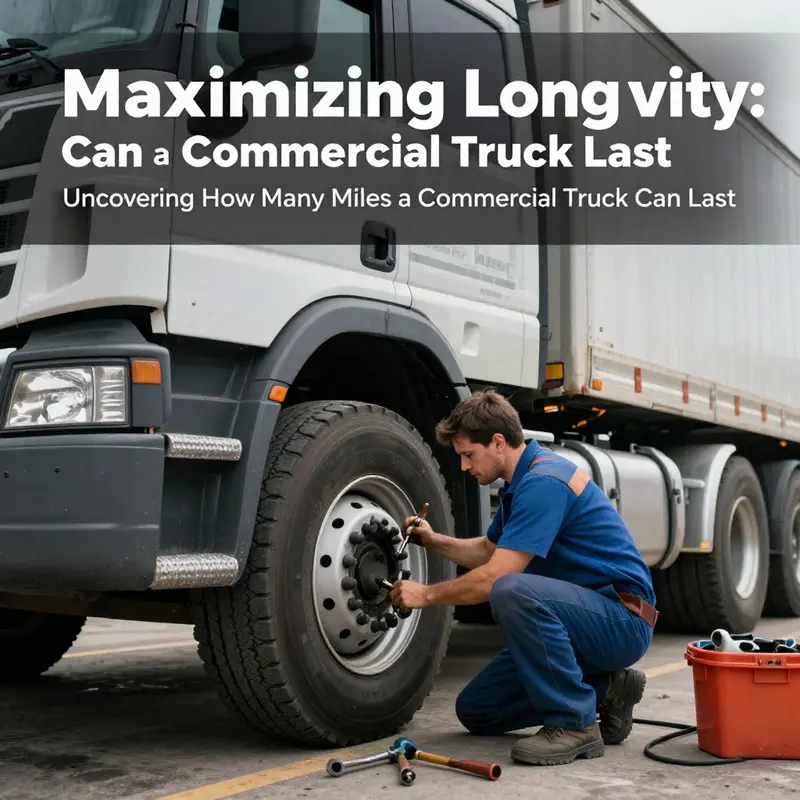
Maintenance determines how much of the design ceiling can be used. A well-kept long haul truck can reach hundreds of thousands of miles and often approaches a million with disciplined upkeep. The chassis and powertrain set the potential, but hands on maintenance unlocks the real life that can be lived on the road. In practical terms, a well maintained tractor-trailer often reaches the 750,000 to 1,000,000 mile range, and with meticulous care some units exceed 1.2 million miles. These figures come from real world fleets where maintenance is treated as a strategic asset, not a cost center.
Maintenance is layered. It starts with the basics: regular oil changes, timely filter replacements, tire rotations, and brake inspections. These actions keep moving parts in harmony and prevent minor issues from becoming major failures. Oil changes protect tolerances and reduce friction, helping the engine sustain power and efficiency over thousands of miles. Tire care matters too; correct inflation and rotation reduce rolling resistance and extend tire life. When air pressure and alignment are monitored, premature wear drops and the risk of roadside failures declines.
The data backing these practices is clear. Fleet studies routinely show that preventive maintenance reduces breakdowns and lowers repair costs over a truck’s lifetime. Industry groups emphasize that trucks on preventive schedules experience fewer disruptions, which translates into more miles and better uptime. Predictive maintenance uses health data to flag issues before failures occur, enabling maintenance to be scheduled during planned downtime and keeping the vehicle moving longer. Diagnostics and real time sensor feeds allow technicians to anticipate problems and act before downtime arises.
In practice, mileage longevity grows from the intersection of maintenance intensity, usage patterns, and operating environments. Extreme climates strain cooling systems and lubricants, while routine long interstate runs demand engine endurance and reliable transmissions. Modern fleets leverage telematics to monitor oil temperature, fuel pressure, brake wear, and tire health, turning maintenance into a data driven discipline. The result is more consistent uptime, higher miles, and lower total cost of ownership over a truck’s life.
Economically, maintenance is an investment in uptime and fuel efficiency. Regular service reduces unscheduled downtime, lowers repair costs, and improves per mile efficiency. When a fleet plans maintenance around workload and climate, miles accumulate more reliably and at a lower cost. Predictive maintenance improves budgeting by aligning parts inventory and service windows with actual needs, further improving uptime and miles driven.
For practitioners, three pillars provide a practical path: routine care, predictive monitoring, and continuous improvement. Routine care covers the daily rituals that keep engines clean and components aligned. Predictive monitoring turns data into actionable maintenance windows before failures occur. Continuous improvement closes the loop by analyzing downtime and mileage results to tighten the maintenance schedule. External guidelines from the trucking industry offer a framework for preventive maintenance and its benefits; consult the official guidelines for detailed standards and best practices at a recognized authority such as trucking industry organizations. You can explore these guidelines here: https://www.trucking.org/industry-topics/preventive-maintenance/.
Beyond One Million Miles: A Unified Vision of Commercial Truck Longevity and the Real Mileage Question

When someone asks how many miles a commercial truck can last, the question sounds simple, but the answer unfolds as a complex profile of care, use, and circumstance. The mileage a well-maintained long-haul tractor-trailer can accumulate is not a fixed figure; it is a spectrum shaped by maintenance discipline, driving practice, the nature of the operation, and the conditions under which the vehicle works. The guiding thread through this conversation is a basic truth: with steady preventive maintenance, consistent attention to wear and tear, and operating choices that respect the drivetrain, a truck can not only endure long distances but do so with reliability that turns mileage into productive uptime rather than downtime.
In practical terms, industry data lays out a broad canvas. A well-maintained vehicle classically routes through a lifecycle that can hover between a quarter-million and a half-million miles in older expectations, and with modern standards and careful fleet management, many trucks traverse far more. Within the longer arc of a vehicle’s life, fleets report that service periods of 15 to 20 years are common, with cumulative mileage that often sits in the 250,000 to 500,000 range in that span. Those are not hard caps, but baseline expectations anchored in the rhythms of maintenance, usage, and environment.
The picture grows more nuanced when one considers the upper reaches of mileage. If a truck is kept in near-prime condition, with regular oil changes, timely brake inspections, tire care, coolant and cooling system upkeep, and a proactive approach to addressing minor issues before they become major failures, the mileage ledger can stretch much farther. We are talking about the potential for three quarters of a million miles, a million miles, or even more, for a vehicle that has been treated as a long-term asset rather than a disposable workhorse. This is not mere optimism; it is a reflection of how modern heavy-duty platforms are engineered to absorb wear and how disciplined practices translate into real, measurable uptime over years and across millions of miles.
Of course, the global picture depends on the type of operation, the driving profile, and the surrounding conditions. A long-haul tractor performing steady highway miles tends to confront fewer abrupt stresses than a city-delivery fleet that cycles through constant starts, stops, and idling. The engine and transmission endure different patterns of duty cycles, and the drivetrain adapts accordingly. The vehicle’s design—its engine architecture, transmission quality, and the robustness of cooling and lubrication systems—also plays a decisive role.
In broad terms, the industry recognizes that fleets implementing strong preventive maintenance—regular oil changes on an appropriate interval, timely tire rotations, brake inspections, and prompt attention to any abnormal sounds or fluid leaks—tend to see higher uptime and longer average lifespans. Data from the American Trucking Associations (ATA) and fleet management sources consistently highlight this correlation: disciplined maintenance drives better outcomes in both reliability and longevity.
Yet maintenance alone does not tell the full story. Driving habits and load management—how a vehicle is operated—exert a parallel and powerful influence. Aggressive driving patterns, rapid acceleration, hard braking, and long periods of idling wear engines, transmissions, and brake components more quickly. Conversely, drivers who apply smooth techniques—anticipating traffic, moderating speed changes, and minimizing unnecessary idle—tend to extract more life from the same equipment. Load management is another crucial factor: when fleets push components toward or beyond their design limits, stress accumulates in the engine and drivetrain, shortening life. It is not just about the heaviest loads; it is about consistent overloading or operating at performance extremes that undermine longevity over time.
The type of operation matters as well. Long-haul routes, with relatively stable speeds and extended periods of highway cruising, generally place less mechanical strain on critical systems than city routes characterized by repeated starts, accelerations, and frequent braking. The vehicle’s upbringing—the quality of its core components, the sophistication of its powertrain, and the perceived durability engineered into the chassis—shapes how many miles it can convincingly cover with minimum downtime.
In this broader context, the most compelling takeaway is that mileage is a function of readiness. The same truck that can cover a million miles in pristine condition might fall short of that mark if neglected, or if it has to endure corrosive environments without appropriate protective measures. Extreme environmental conditions, road quality, or exposure to salt and moisture all contribute to accelerated degradation in components such as the frame, undercarriage, and fasteners, even as the engine and drivetrain stay healthy from routine care.
Another layer in the longevity equation is technology and upgrade cycles. The adoption of telemetry and connected maintenance solutions helps fleets monitor performance, predict failures, and schedule interventions before issues escalate. This proactive stance reduces the likelihood of unscheduled downtime and keeps the vehicle on the road longer, converting potential mileage losses into dependable miles.
In the grand arc of what is possible, the research landscape suggests a remarkable horizon. While older expectations framed the ceiling around a few hundred thousand miles, current understanding supports the view that a well-maintained commercial truck can realistically reach 750,000 to 1,000,000 miles or more. This upper tier is not a guarantee for every vehicle, but it represents a credible, experience-based target for fleets that treat maintenance as a strategic asset and driving discipline as a core skill. The net effect is not just about miles; it is about the value those miles deliver in uptime, reliability, and total cost of ownership.
For readers who want to connect the maintenance and longevity discussion to the broader market and fleet strategies, a useful pathway lies in understanding how trends in used trucks relate to this mileage conversation. The ongoing evolution of maintenance standards, residual values, and life-cycle planning can be explored through current discussions of used truck markets, which illustrate how fleets balance aging assets against the cost and risk of replacement. See Current Trends in Used Truck Sales Growth for a lens into how market expectations influence decisions about when to retire or repurpose a truck before it finally reaches the implied mileage ceiling. This connection underscores that mileage is not a single-variable metric. It is interconnected with maintenance quality, operating discipline, and market conditions, all of which coalesce to determine when a truck becomes more expensive to operate than it is worth to keep in service.
For concrete data and ongoing guidance, the American Trucking Associations (ATA) remains a standard reference. Their materials emphasize the value of preventive maintenance programs and the measurable gains in vehicle uptime and longevity when fleets commit to disciplined service, timely repairs, and a proactive stewardship of wear and tear. The practical implication for owners and operators is clear: plan for the long haul by investing in robust maintenance processes, training drivers to optimize duty cycles, and designing routes and loads that minimize unnecessary stress on critical systems. In turn, those decisions push the mileage envelope outward, turning a rough mileage estimate into a confident gauge of remaining value and return on investment.
To bring this discussion back to action, consider how your own fleet would fare under a maintenance-forward regime. If you implement a preventive maintenance calendar that codifies oil changes, filter replacements, coolant checks, brake inspections, and tire care at consistent intervals, you begin to align with the pathways that have proven effective in industry data. Pair that with driver coaching focused on smoother acceleration, optimal braking, and reduced idle time, and you create a culture where longevity is not an afterthought but an explicit objective. In the end, the mileage figure you can reasonably expect will reflect not a single number but a composite picture: a baseline range of several hundred thousand miles when maintenance is inconsistent or driving patterns impose heavy wear, and a horizon that pushes toward the million-mile mark when maintenance, operation, environment, and technology converge in a disciplined, well-managed program. The precise mileage is less important than the trajectory it implies: a truck can travel far beyond conventional thresholds when the entire lifecycle is treated as a structured program rather than a series of reactive repairs. For readers who want to explore related insights on fleet strategies and market dynamics, see Current Trends in Used Truck Sales Growth. External resources also provide broader validation of these principles, including industry standards and testing that emphasize durability and performance under demanding conditions. External resource: https://www.trucking.org/
Mileage Patterns and Real-World Use Cases: How Far a Commercial Truck Can Go

Mileage Patterns and Real-World Use Cases
Commercial trucks are built to run long hours and long distances. What they achieve in the field depends less on a single number and more on patterns of use, maintenance, and operating environment. Across fleets, trucks commonly reach very high odometer totals. In many cases, tractors and heavier units can approach or exceed three quarters of a million miles. With disciplined care, they often pass one million miles before major retirement decisions occur.
How those miles accumulate matters. A truck that spends most of its time on steady interstate runs sees predictable stress. Engines run at steady cruise RPM. Cooling and lubrication stay consistent. That predictability lowers sudden thermal and mechanical shocks. As a result, components wear slowly and evenly. In contrast, urban and last-mile delivery work is harsh in a different way. Frequent starts and stops stress brakes, transmissions, and driveline components. Low-speed laboring increases soot and acid accumulation in engine oil. Those effects shorten intervals between services and accelerate component replacement.
Driver behavior is a clear pattern that shows up in fleet data. Gentle acceleration and smooth braking reduce load spikes across the drivetrain. That extends life for consumables such as brake linings, tires, and transmission clutches. Conversely, aggressive driving increases fuel burn and amplifies cyclical loads. Over time, those cycles add up into more frequent overhauls. Modern fleets use training programs and telematics to reduce risky habits. The gains are straightforward: lower repair bills and delayed capital replacement.
Maintenance regimen is the second core pattern. Scheduled oil changes, filter replacements, and fluid checks are not optional. They are economic levers. A consistent maintenance calendar keeps wear particles and corrosive byproducts from accelerating component failure. Gear oil and coolant chemistry also matter. Using the right fluids for climate and duty limits micro-wear in bearings and seals. Properly documented maintenance histories also improve resale value, which influences mid-life economic decisions for a truck.
Load profile and gross weight are often overlooked when people compare mileage figures. A truck that consistently hauls near its maximum payload experiences higher mechanical stress. Frame, suspension, and axle components see larger bending moments. Engines run with greater load percentages. Those loads shorten the life of brake systems and the frequency of driveline rebuilds. Lighter, consistent loads reduce stress and allow trucks to rack up miles more easily. Many high-mileage tractors in fleets operate under regional or linehaul conditions where loads are consistent and not always maximum.
Environment shapes longevity in obvious and subtle ways. Salted roads accelerate corrosion in underbody structures and electrical connectors. High heat promotes fluid breakdown and accelerates rubber deterioration in belts and hoses. Extreme cold increases battery stress and thickens fluids temporarily, raising wear at startup. Roads with poor surfaces introduce repeated shock loads, which lead to fatigue failures in welded joints and suspension mounts. Fleets operating in diverse climates plan tailored maintenance intervals and corrosion prevention strategies. Those adjustments save cumulative miles and maintenance costs.
Patterns in component life are also consistent. Engines can outlast transmissions or vice versa depending on duty cycle. For long-haul tractors, engines often do the heavy lifting and can run hundreds of thousands of miles before a top-end or full rebuild is needed. Transmissions and clutches see wear from both torque and shifting patterns. Urban trucks with heavy stop-and-go duty may require transmission work earlier, even with lower total miles. Regular inspections and addressing small leaks or anomalies early prevent cascading failures that would otherwise remove a truck from service prematurely.
Economic decision points follow predictable patterns. Retiring or rebuilding a truck is rarely a purely mechanical decision. Fleets balance repair cost against diminishing returns. Fuel efficiency standards, emissions compliance, and resale market conditions can all change the math. Sometimes a truck is retired while still mechanically capable because upgrading to newer technology reduces operating costs. At other times, the resale market values older models strongly enough to justify selling rather than rebuilding. For discussion about how resale conditions influence retirement timing, see this piece on used truck prices stability and market insights: used truck prices stability key insights 2025.
A second economic angle is the rebuild cycle. Some fleets rebuild engines and replace major components to extend service life beyond factory expectations. Rebuilds return capacity at a fraction of a new truck cost. When planned and executed promptly, rebuilds push many trucks well past one million miles. The decision to rebuild rather than retire depends on remaining frame life, cab condition, and projected regulatory changes. If emissions rules or fuel economy regulations make older powertrains less desirable, rebuilds may not be economical.
Use cases create clear mileage clusters. Long-haul interstate tractors tend to log the highest annual miles. Those trucks often average 120,000 to 140,000 miles per year. Over a decade, that adds up. Regional and short-haul units log fewer miles annually, but they endure more cycle-related wear. Local delivery trucks show the opposite pattern: lower lifetime mileage yet higher component turnover. Mixed-use fleets must manage both extremes. Predictive analytics that combine duty profiles, failure rates, and component life yield better fleet strategies.
Operational processes that extend life are simple and repeatable. Tightening fluid-change intervals for harsh-duty units, avoiding overloading, and managing idle time reduce cumulative wear. Corrosion control measures like undercoating and electrical connector sealing extend structural and electrical life. Driver incentives tied to fuel efficiency and safety improve behaviors that correlate to longer vehicle life. Telematics can identify idling hot spots, severe braking events, and other behaviors to correct systematically.
Regulatory patterns also matter. Emissions regulations sometimes prompt early retirement of older models. A truck may be mechanically sound but fail to meet new standards. Fleets facing compliance deadlines often retire or retrofit to maintain operational permissions. Tax incentives and grants for newer, cleaner trucks also speed replacement in some regions. Those policy-driven retirements reduce average service life in statistical reports, even if mechanical longevity would permit more miles.
When considering how many miles a truck can last, it helps to view mileage as a variable that responds to choices. Design and manufacturing quality set an upper bound. Use case and environment pull the needle in different directions. Maintenance, inspections, and rebuild decisions provide the levers a fleet uses to extend service life. With disciplined maintenance and predictable duty, many trucks cross the million-mile mark. If duty is rough, maintenance lax, or regulations impose constraints, trucks may retire much earlier.
This pattern-based view clarifies what fleet managers measure. They track mean-time-between-failure for key systems. They monitor cost-per-mile and resale values. They plan rebuilds when the incremental cost of repair remains below the economic value of continued operation. Those choices create the real-world mileage outcomes fleets report. For deeper industry benchmarking and durability standards, see the American Trucking Associations fleet maintenance and longevity findings: American Trucking Associations – Fleet Maintenance & Longevity Report (2025)
Road-Tested Endurance: How Standards and Durability Testing Define a Commercial Truck’s Mileage Ceiling
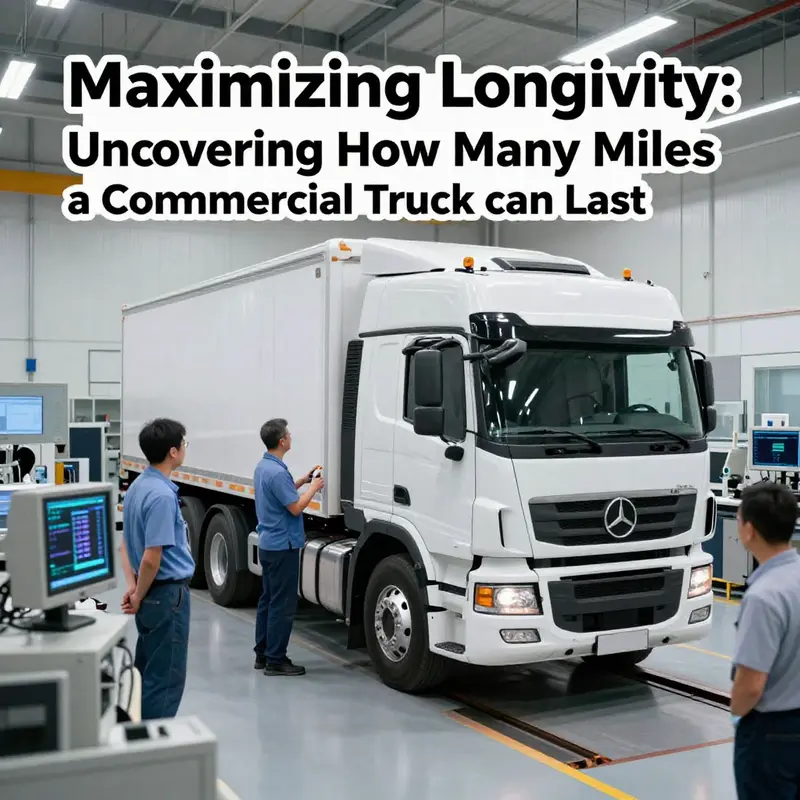
The question of how many miles a commercial truck can last is more technical than it first appears. Mileage is a useful measure, but it is only one way to describe longevity. Industry standards and testing protocols shape realistic expectations for service life. They also guide design choices, maintenance programs, and fleet replacement cycles. Understanding those standards and the tests that inform them explains why reported lifespan figures vary so widely.
Durability targets begin at design. Engineers set benchmarks for subsystems such as the engine, transmission, axles, frame, and cab. They optimize materials and geometries for fatigue resistance. Design choices reduce stress concentrations and improve load paths. That reduces the pace of wear under heavy loads. Manufacturers then validate designs with staged laboratory and field testing. Laboratory tests simulate tens of thousands of hours of operation in a compressed timeframe. Field tests run for months or years across varied climates and routing profiles. Together, these tests produce the statistical basis for lifetime claims.
Standards bodies supply a framework for durability evaluation. They define test methods, data reporting formats, and pass-fail criteria. Those standards ensure that one manufacturer’s claim can be meaningfully compared with another’s. They do not, however, guarantee a single mileage number. Real-world outcomes depend on variables not fully captured in controlled tests. The same truck that passes a standard endurance cycle may perform differently when operating continually on mountainous routes or when driven primarily in urban stop-and-go traffic.
Two complementary kinds of testing form the backbone of confidence in a truck’s projected miles. The first is accelerated lab testing, which reproduces the mechanical stressors of long-term use. Engineers run engines and drivetrains for extended periods on dynos. They cycle suspensions and steerings on rigs that mimic potholes and highway vibration. These tests can simulate hundreds of thousands of miles in weeks. A major advantage is repeatability. Testers can isolate single failure modes while holding other variables steady.
The second kind is real-world fleet testing. Trucks are placed into service with instrumented data collection. These trials capture human factors, maintenance practices, and environmental conditions. Fleet testing reveals how maintenance lapses, heavy payloads, or rough roads accelerate wear. It also demonstrates how effective preventive maintenance can push a truck beyond conservative estimates. Fleet results offer the clearest insight into realistic mileage ranges for specific duty cycles.
Those ranges vary. Conservative assessments used by many fleets place reliable service between 250,000 and 500,000 miles for heavy-duty trucks in long-haul duty. Other analyses extend that range to 750,000 or even 1,000,000 miles under ideal conditions and disciplined maintenance. The gap arises because the term “last” can mean different things. Some organizations treat retirement as the point when operational costs exceed revenue potential. Others define retirement when safety margins narrow or emissions equipment fails to meet regulations. Maintenance frequency, aftermarket repairs, and operational profile drive that decision.
Maintenance matters more than any single design feature. Regular oil and filter changes, timely replacement of wear parts, and adherence to manufacturer service intervals keep systems within their design tolerances. Preventive maintenance arrests small failures before they cascade. A well-managed lubrication program alone can double the life of some drivetrain components. Brake and tire maintenance reduce secondary stresses, lowering the chance of damage to suspension and axles. Simple record keeping, combined with condition-based monitoring, lets technicians replace parts at the right time. That practice saves labor and prevents expensive, sudden failures.
Operational profile also determines mileage potential. Highway-only fleets generate far less stop-start stress than urban delivery operations. A truck that hauls consistent long-distance routes accumulates miles with less thermal cycling and brake wear. Conversely, frequent heavy loads, steep grades, and aggressive driving increase component temperatures and stress. Those conditions shorten the useful life of engines and drivetrains. Matching truck specification to intended duty is therefore a strategic decision. Over-specifying can waste money; under-specifying can force premature replacement.
Testing and standards also influence warranty and resale markets. Warranties reflect confidence in expected life and reveal where manufacturers place risk. A manufacturer willing to cover major components for several years signals strong confidence in durability. That confidence tends to stabilize resale prices for older units. Likewise, independent used-truck markets price vehicles based on documented service histories and known test records. For fleets that track maintenance and repair histories closely, vehicles often fetch higher resale values. Market dynamics, in turn, affect decisions about whether to repair a high-mileage truck or to replace it with a newer unit.
Advances in materials, manufacturing, and design continue to push the practical ceiling for mileage. Lighter but stronger alloys, improved coatings, and better sealing techniques reduce corrosion and wear. Electronics and sensors allow continuous condition monitoring. Diagnostics help technicians find and fix root causes quickly. These improvements slow degradation and reduce the frequency of catastrophic failures. However, regulatory changes and emissions systems add complexity. Emissions controls can be expensive to maintain or replace, and they influence retirement decisions even when mechanical systems remain functional.
To put testing into perspective, consider a truck tested through a standardized durability cycle. The cycle imposes repeated loads, temperature swings, and vibration. A truck that reliably completes such a cycle has demonstrated resistance to common failure modes. Yet a single cycle cannot replicate every route or driver. That is why fleets combine standardized test results with long-term field performance data. Together, these data sets produce a practical roadmap for maintenance, repair intervals, and eventual retirement.
Decision-makers use miles as one input among many. Lifecycle cost models convert projected maintenance and fuel costs into a cost-per-mile metric. When that metric rises above what a replacement can offer, retirement becomes likely. Properly calibrated models factor in periodic overhauls, mid-life capital expenses, and resale value. They also incorporate downtime risk. A vehicle that lowers the risk of revenue loss may warrant extended service even with higher per-mile costs.
Standards also foster innovation. When testing protocols evolve, manufacturers respond with improved designs. Changes in test severity, for instance, encourage stronger frames and more robust suspensions. New test requirements for climate extremes push manufacturers to enhance cooling and heating strategies. When standards tighten, the industry gains a baseline of improved durability, benefiting the entire fleet community.
Industry data and independent fleet reports are the best sources for nuanced mileage expectations. They reveal how particular use cases map to real-world outcomes. For managers seeking deeper insight into model-specific durability and testing, consult manufacturer-provided durability resources and independent fleet studies. For broader market context, including resale and sales trends, see current trends in used truck sales growth.
Finally, a single external reference with consolidated technical detail helps bridge lab tests and fleet experience. For those wanting manufacturer-level specifications and testing summaries, consult this manufacturer durability resource: https://www.scania.com/en/vehicles/trucks/.
Understanding mileage potential requires blending standards-based test results with operational realities. Standards establish the baseline. Testing exposes limitations. Maintenance and duty cycle determine whether a truck will reach the optimistic end of mileage projections. Combining these elements gives fleets the confidence to plan replacement cycles and to maximize value from each vehicle on the road.
Final thoughts
The longevity of commercial trucks is a multifaceted topic influenced by numerous factors including maintenance, usage patterns, and industry standards. With proper care, a significant portion of trucks can surpass 200,000 miles, with many models capable of reaching 500,000 miles or more. Understanding the specifics of how truck usage, maintenance practices, and environmental conditions play roles in longevity can empower trucking company owners and fleet managers to make informed decisions that enhance operational efficiency and minimize costs. Taking proactive steps in maintenance and being aware of the truck’s intended use will ensure that these critical assets can serve their full lifespan effectively, benefiting your bottom line.