As the trucking industry increasingly embraces technological advancements, the question of camera systems’ legality in commercial vehicles has come to the forefront. With safety regulations always evolving, understanding the legal framework surrounding camera systems is vital, not just for compliance but also for enhancing safety on the roads. This article delves into the legality of camera systems in commercial trucks, exploring their safety enhancements, technological innovations, state regulations, and the growing trends in the industry. Each chapter is structured to provide valuable insights to trucking company owners, fleet managers, construction procurement teams, and logistics firms, ensuring they are well-informed on this critical topic.
null
null
Clear Vision, Clear Compliance: How Camera Systems Strengthen Safety and Legality for Commercial Trucks
Camera systems on commercial trucks convert safety theory into practice by expanding the driver’s view without distracting from the primary task of driving. They provide a 360-degree or multi-camera overview that makes blind spots visible, improve night visibility, and support safer backing, lane changes, and docking. When paired with ADAS features, camera data gives timely alerts to hazards in blind spots or while reversing, reducing rear-end collisions and lane-departure risks. Beyond safety, these systems aid incident review, coaching, and training, helping fleets document events, verify compliance, and streamline claims. The FMCSA permits cameras on commercial motor vehicles as long as installations do not obstruct vision or distract the driver, and states advocate safety practices that enhance accountability. Proper installation and ongoing maintenance, weather resilience, and robust data handling are essential to keep imagery reliable and actionable over the life of the fleet. Looking ahead, higher resolution sensors, better low-light performance, and stronger integration with telematics will further improve safety and efficiency across the trucking industry.
Clearview at the Wheel: The Legal and Safety Implications of Camera Systems in Commercial Trucks
A quiet but profound shift is reshaping how commercial trucking operates: camera systems are becoming a standard element of the vehicle suite rather than a luxury add-on. Across the United States, the legal landscape has evolved to accommodate these tools as long as they do not interfere with the driver’s ability to operate the vehicle safely or obstruct the essential vision through windshields and windows. The Federal Motor Carrier Safety Administration (FMCSA) does not outlaw the use of camera systems on commercial motor vehicles, and in practice, regulators at state levels tend to align with this permissive stance when installations meet safety standards. This permissiveness, however, is not a carte blanche; it is a conditional trust that hinges on proper installation, reliable operation, and vigilant maintenance. In this context, camera systems are not merely gadgets; they are safety devices that interact with human judgment and automated safety features to reduce risk in ways that were unimaginable a generation ago. The broader industry, including fleet operators and safety organizations, recognizes this potential and actively promotes camera-assisted driving as a cornerstone of modern safety programs.
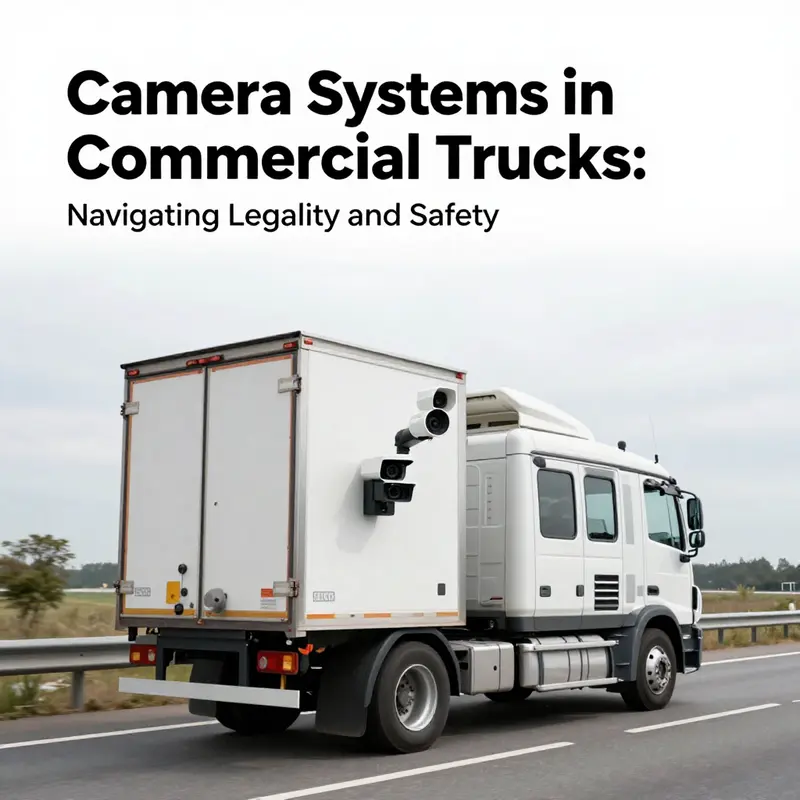
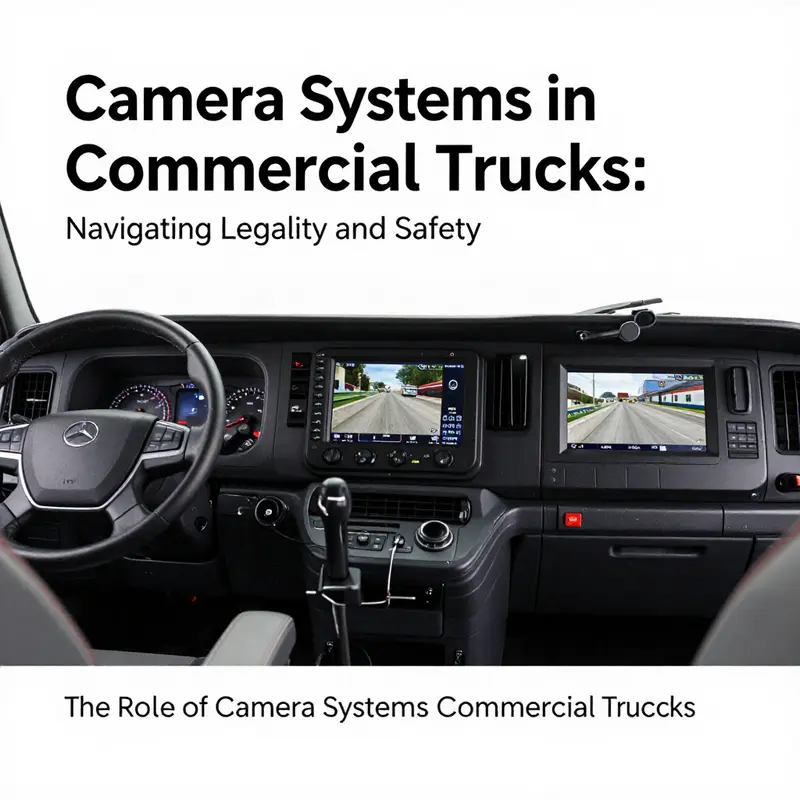
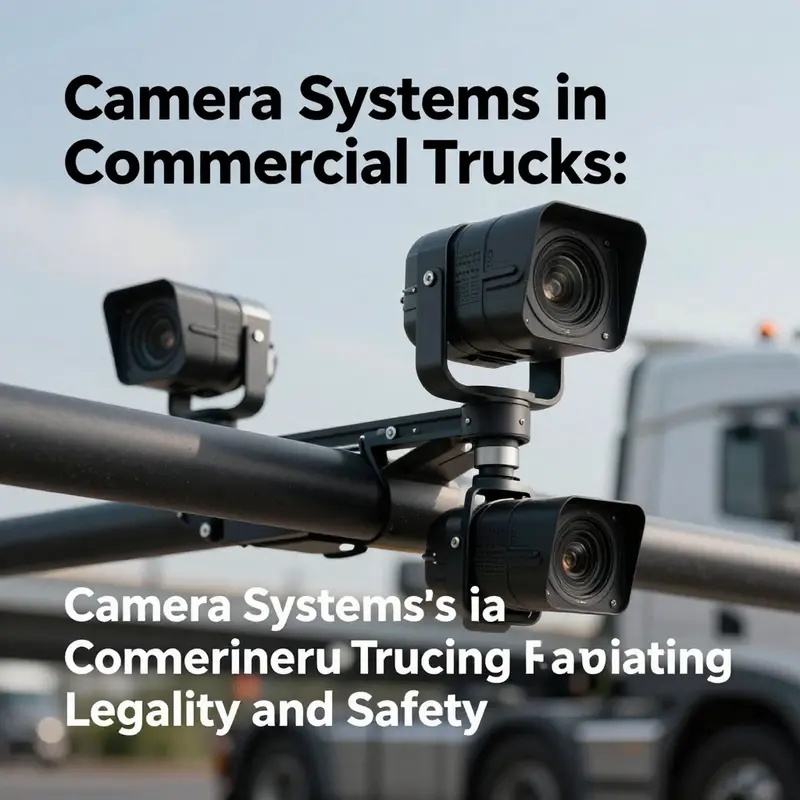
Among the most impactful developments are 360-degree surround view systems. Mounted at each corner of the truck, these configurations stitch together feeds from multiple cameras to generate a seamless bird’s-eye view of the vehicle and its immediate surroundings. The result is a dramatic reduction in blind spots that have long plagued large trucks during complex maneuvers. This capability proves especially valuable in crowded urban landscapes, where back-up spaces are tight, pedestrians move unpredictably, and other vehicles encroach from unforeseen angles. The effect is not merely academic; it translates into tangible benefits for drivers who must thread long machines through tight loading docks and narrow corridors. Night operations also benefit, as many systems offer improved visibility with low-light and infrared capabilities, helping drivers anticipate obstacles when street lighting is limited or weather conditions degrade sightlines.
A key advantage of these systems lies in their integration with vehicle safety features. Modern camera platforms do not exist in isolation; they feed data into a broader safety ecosystem within the truck. When paired with technologies such as automatic emergency braking (AEB) or collision warning systems, cameras can enhance early detection of obstacles and provide critical information that supports autonomous or semi-autonomous intervention. The synergy is designed to prevent collisions at moments when human reaction times might fall short. In practice, this means a driver benefits from both enhanced situational awareness and a layer of automated protection that acts as a secondary line of defense. The result is a safer work environment for drivers and a reduced likelihood of costly, disruptive incidents that can derail service schedules and erode customer trust.
Yet, as with any advanced electronic system, real-world performance is not flawless. Weather and environmental conditions—fog, heavy rain, snow, or dust—can degrade image quality and muddy the signals that drive decision-making. It is well understood in fleet maintenance circles that camera performance hinges on consistent calibration and regular sensor checks. The calibration process ensures that the stitched panorama accurately represents distances and angles, a critical factor when a driver relies on the system to judge clearance and proximity. When calibration drifts, the risk of misinterpretation grows, potentially creating a false sense of security or prompting unnecessary evasive maneuvers. Regular preventive maintenance, sensor cleaning, and prompt replacement of degraded components are standard parts of a responsible safety program. In this light, camera systems are not “set it and forget it”; they require disciplined upkeep and periodic testing to preserve reliability across shifting weather patterns and changing road conditions.
Beyond safety, these systems contribute to operational efficiency and driver development. Data capture capabilities turn the truck into a rolling data source, recording incidents and near-misses that can be analyzed to improve training, routing, and load-handling procedures. For fleet managers, the value lies not only in post-incident claims support but in proactive coaching. Instructors can use real-world footage to demonstrate safe backing techniques, hazard anticipation, and the proper use of mirrors and side cues—alternatives that reinforce rather than undermine driver skill. Over time, this leads to a culture of continuous improvement, where camera footage becomes a teaching tool as much as a safety safeguard. Additionally, the ability to document incidents with objective video evidence streamlines insurance processes and reduces the ambiguity that often accompanies disputes about fault in complex trucking scenarios.
From a procurement perspective, the rise of surround-view systems reflects a strategic shift in how fleets balance performance, cost, and supply resilience. The global supply chain underpinning these systems is heavily oriented toward Asia, with well-established hubs that manufacture high-performance components at scale. For buyers, this means evaluating not only the image quality and field of view but also the durability of cameras under vibration, temperature fluctuations, and exposure to road grime. Long-haul fleets, urban delivery operations, and high-traffic highway services each have distinct requirements, shaping the specification choices that fleets make. Leading suppliers emphasize rugged design, seamless integration with existing telematics and safety architectures, and the ability to deliver consistent performance across thousands of vehicles. In such a landscape, procurement decisions extend beyond upfront cost to consider total cost of ownership, including calibration, maintenance, and potential downtime caused by sensor issues.
Regulatory clarity and industry best practices play crucial roles in guiding implementation. The FMCSA’s stance—allowing camera use when vision remains unobstructed and operation remains safe—provides a permissive framework within which fleets can innovate. States often mirror this approach, offering guidelines that underscore the avoidance of driver distraction and the necessity of clean sightlines. This alignment is essential because it reduces the risk of contradictory requirements that could complicate deployments across a nationwide fleet. Safety standards, installation protocols, and routine evaluation practices become the backbone of compliant operation. When a fleet invests in camera systems, it is not simply adopting new hardware; it is embracing a governance approach that codifies how data is collected, stored, accessed, and used for training and risk management. Because the capabilities of these systems touch both operational behavior and regulatory compliance, adopters must weave technical readiness with policy discipline to avoid missteps.
An important, often overlooked, facet of legality concerns privacy and data governance. The footage captured by exterior cameras may include bystanders and other private information. Responsible fleets implement robust access controls, retention schedules, and clear policies about who can view the footage and for what purposes. Transparency with drivers and shippers is essential, and compliant practices help prevent misunderstandings or disputes that could erode trust. In practice, this means documenting use cases, establishing archiving timelines, and ensuring that data is used strictly for safety, training, and legitimate business purposes. When done correctly, camera programs can enhance safety while preserving the privacy expectations of customers and the public—a balance that is increasingly central to the social license of modern trucking.
For operators weighing the decision to equip a fleet with such systems, the legal question becomes part of a larger risk management conversation. The answer, grounded in current regulations and industry norms, is that camera systems are legal and often advisable, provided installations are carefully designed to meet safety standards and do not impede essential vision. This is not a one-time compliance check but an ongoing discipline: timely calibration, weather-aware operation, attentive maintenance, and thoughtful data governance. The practical upshot is clear. Fleets that implement surround-view and related camera technologies can enhance visibility, reduce blind spots, and shorten maneuvering times without compromising safety or compliance. The benefits accrue not just to drivers but to the entire operation—from maintenance scheduling and incident analysis to insurance claims handling and customer satisfaction. And as the technology matures, with more seamless integration and smarter data use, the role of camera systems in commercial trucking will only deepen.
For readers seeking a practical gateway to further exploration of features, suppliers, and procurement strategies, resources such as comprehensive guides on 360-degree camera systems offer valuable frameworks. Additionally, those looking to connect with real-world industry perspectives can explore broader industry content through established trucking community channels and blogs, which often discuss the evolving safety culture and regulatory environment surrounding camera-equipped fleets. For a broader view of how these technologies are sourced and implemented at scale, see the external resource linked below. The pattern is clear: legality follows safety, and safety thrives on reliable, well-maintained hardware paired with disciplined governance. This is the core dynamic shaping the modern legality and practicality of camera systems in commercial trucks. McGrath Trucks Blog offers perspectives that complement these themes, linking technology, safety, and strategy in ways that illuminate both daily practice and long-term planning.
External resource: https://www.globaltruckcams.com/sourcing-guide-2026
The Legal Lattice: State-by-State Variations in Camera Systems on Commercial Trucks
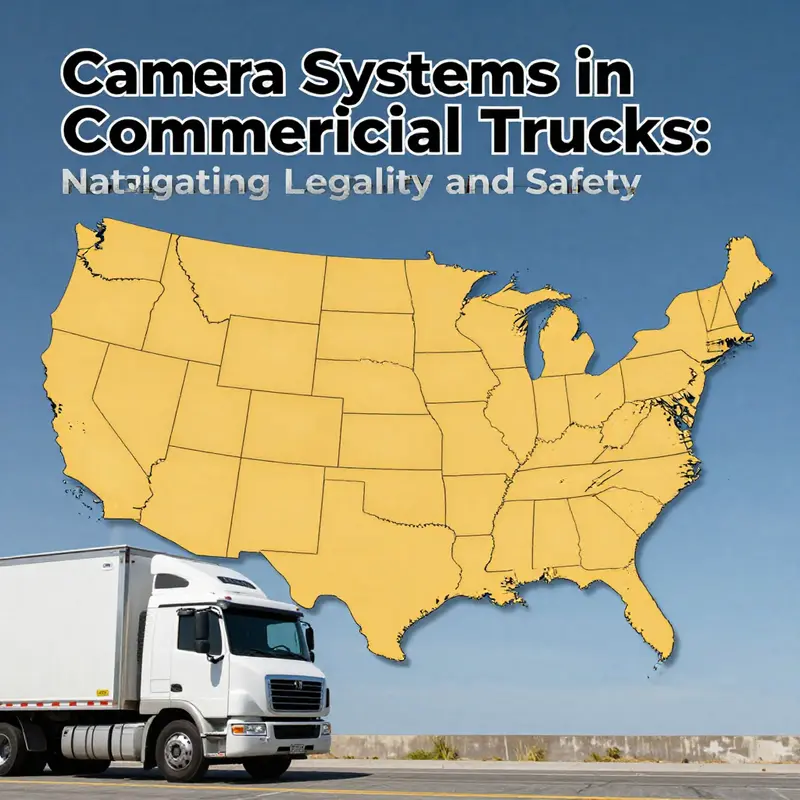
Federally, cameras on commercial motor vehicles are not banned and can be used to reduce blind spots, verify maneuvers, and document incidents, provided they do not interfere with operation or obscure the driver’s required field of view. State laws, however, vary in privacy protections and notice requirements, creating a practical map for operators who travel across jurisdictions. California allows dash cameras as long as recordings do not capture passengers without consent and as long as retention and usage respect privacy expectations. Illinois and Maryland impose explicit notice requirements and, when audio is recorded, heightened consent obligations. Arkansas and South Dakota provide a more restrained or uncertain environment, lacking explicit camera statutes and leaving compliance to broader privacy protections, which can give carriers flexibility but also create risk if policies are not clearly defined. Across borders, fleets must adopt robust internal policies: clear recording notices, restricted access, defined retention periods, and training so drivers understand when and why cameras operate. Installations should avoid obstructing the windshield or other critical vision, and power and cable routing must be secure to prevent damage and tampering. For interstate operations, a policy framework that articulates safety rationale, data handling practices, and consent where required helps maintain consistent safety gains while respecting local privacy norms. Industry resources and state-by-state summaries published by associations can help fleets stay current and adapt policies as regulations evolve. The overarching goal is to realize safety benefits without infringing on civil liberties or triggering privacy violations, recognizing that the legal landscape is a moving target shaped by technology, public expectations, and evolving statutory interpretations.
Seeing the Road Clearly: Legal Realities and Safety Promise of Camera Systems in Commercial Trucks
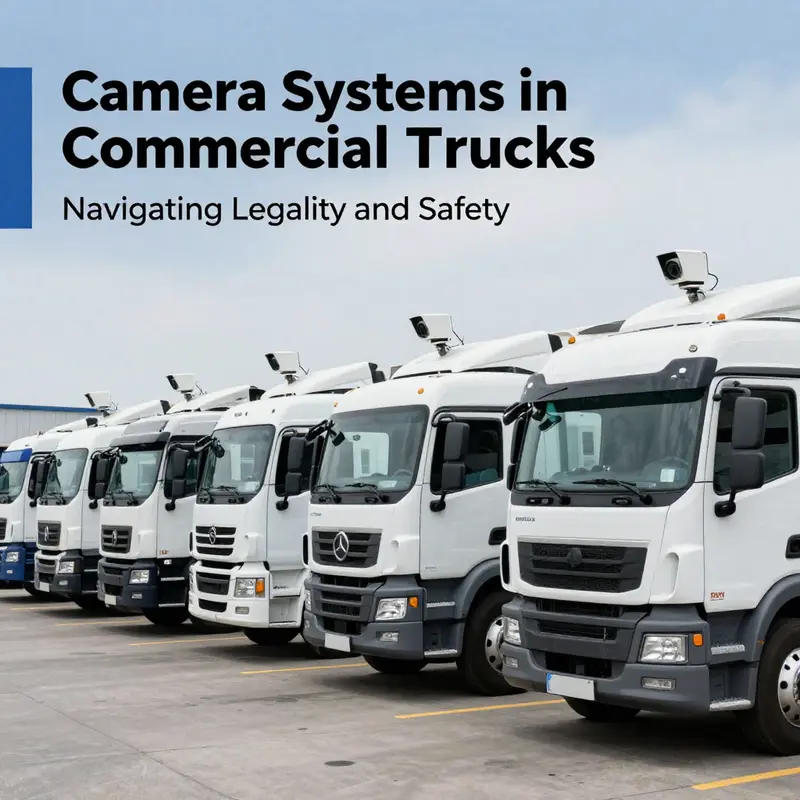
The highway has always demanded sharp perception from drivers, and as fleets push farther, into denser urban corridors and longer hauls, the incentive to augment human vision with technology grows stronger. Camera systems have emerged as a practical answer to enduring safety challenges in commercial trucking, not merely as optional upgrades but as integral components of modern safety programs. They offer drivers a window into spaces the naked eye cannot routinely monitor—from narrow alleys and loading docks to the rear and sides of a towering vehicle. Yet the critical question for fleets, operators, and drivers remains: are camera systems legal in commercial trucks? The short answer is yes. The longer answer is nuanced, anchored in federal guidance, shaped by state regulations, and reinforced by a shared industry commitment to safer operations. At the federal level, the governing body for commercial vehicles does not prohibit camera systems on CMVs. The core condition is straightforward: cameras must not interfere with the driver’s ability to operate the vehicle safely, and they must not obstruct the required vision through the windshield or side windows. This pragmatic stance allows fleets to pursue clarity and redundancy in visibility while maintaining compliance with the essential safety standards that undergird the industry. When a device is installed and used as a tool to enhance awareness rather than as a distraction or a visual obstruction, it sits comfortably within the regulatory framework that governs motor carrier operations. State laws can vary, but the central thread is consistent: a camera system is permissible when its installation respects the driver’s field of view and the safe operation of the vehicle. This alignment between federal guidance and state practice has created a permissive yet disciplined environment in which camera technology can flourish as part of a broader safety strategy. The legal landscape therefore favors adoption, provided fleets implement best practices around installation, usage, and training. A driver’s day is transformed by camera-assisted awareness, but the legal obligation remains: these tools must support, not supplant, safe driving. In practice, this means cameras are positioned and calibrated to maximize visibility—without creating glare, blind spots, or reliance on footage that could tempt drivers to take their eyes off the road. Modern systems are designed to be intuitive, stitching multiple camera feeds into a seamless bird’s-eye view that can be consulted during maneuvers that historically pose the greatest risk, such as backing into tight docks or negotiating traffic in congested streets. Some configurations extend into low-light and infrared capabilities, offering dependable guidance when exterior lighting is limited. The result is a safety-enhancement layer that remains compliant as long as the core rule holds: the driver retains full operational control and primary visual access to the road. The practical legal reality thus mirrors the safety logic. If a fleet’s policy or installation veers into placing the camera feeds in a way that could distract the driver or obscure critical views, regulators and auditors will rightly flag the issue. The emphasis on safety is not merely aspirational; it translates into how fleets design, test, and audit their camera deployments. From the operator’s perspective, the legal green light is paired with real-world benefits. High-resolution camera systems provide drivers with real-time visual feedback that supplements mirrors and windows, enhancing situational awareness in ways that were previously achievable only through extensive practice and risky trial-and-error maneuvers. The impact is most evident during backing and narrow-space navigation, where an enhanced view can prevent costly scrapes, injuries, or private property damage. Beyond the individual truck, these capabilities ripple through the fleet, contributing to reduced incident rates, smoother loading and unloading processes, and more predictable schedules—factors that downstream customers and service partners value highly. The regulatory climate has evolved in step with these expectations. As the industry leans into safety technologies, the general trajectory is toward harmonizing compliance with performance. The FMCSA’s permissive stance is complemented by a broader industry trend that treats camera systems as components of a safety ecosystem rather than standalone gadgets. Operators increasingly depend on multi-camera configurations that deliver a 360-degree perspective, often integrated with telematics, speed regulators, and collision-avoidance strategies. This convergence is not merely about compliance; it is about building a culture of proactive safety that can be demonstrated in audits, CSA scores, and insurance discussions. The adoption narrative is reinforced by compelling market signals. While the latest figures cited in industry analyses focus on the forklift sector, they illuminate a broader pattern: camera systems underpin a substantial and growing market for advanced safety technologies in heavy vehicles. A global market valued at USD 15.4 billion in 2025, with a projected CAGR in the neighborhood of 11 percent through 2030, indicates that fleets are investing in camera-driven visibility as a standard operational practice rather than a discretionary upgrade. The cross-application reach—from warehouses to long-haul corridors—underscores the belief that better vision translates into safer, more efficient operations across the truck spectrum. It’s important to connect these trends to practical fleet decisions. The procurement and installation of camera systems must align with safety standards and regulatory expectations, not merely with cost considerations or aesthetic preferences. Maintenance plays a pivotal role; cameras, lenses, mounts, and connectivity must withstand exposure to weather, vibration, and road grime. Fielded properly, a camera system remains a reliable ally through day and night cycles, rain or shine, enabling drivers to rely on vision-enhanced feedback rather than endure the fatigue of repetitive manual checks. In this sense, camera systems become part of a continuous safety program rather than a one-off improvement. For fleet managers seeking to translate policy into practice, a straightforward approach helps ensure both compliance and value. Prioritize installation methods that preserve clear lines of sight and do not constrain the driver’s direct view of the road. Calibrate the system for the specific vehicle geometry, mounting points, and typical operating environments. Establish clear usage policies that define when and how footage should be consulted, who has access to recordings, and how long data are retained. Integrate camera data into broader coaching and safety initiatives, turning footage into constructive feedback rather than punitive surveillance. It is also worth noting the importance of readable signage and transparent communications with drivers and stakeholders. When drivers understand that camera systems exist to support safe operation and to protect people and assets, the potential for distraction or mistrust diminishes. Transparent policies, training, and ongoing dialogue help ensure that the technology becomes a trusted component of day-to-day operations. The literature and industry practice converge on a simple truth: legality exists where safety and non-interference converge. The camera systems that fleets deploy—when properly installed and used—contribute to a safer road environment, while remaining fully within the boundaries of federal and state law. This alignment between legislation, industry best practices, and operational realities is what makes the trajectory of camera adoption not only legal but desirable for many operators. For readers seeking practical reflections and broader industry context, the MCGrath Trucks blog offers accessible discussions on how fleets integrate safety technologies into their daily procedures, including insights that bridge policy with on-the-ground implementation. MCGrath Trucks blog. In addition to the policy and practice considerations, a wider economic and strategic frame helps illustrate why camera systems have earned their place in modern trucking. The 2025–2030 market outlook for camera-based safety solutions in heavy-duty fleets aligns with a broader push toward data-driven safety programs. The interlocking of real-time visibility with analytics supports not only safer driving but also more efficient loading, routing, and incident response. This combination—legal permissibility, safety efficacy, and operational value—creates a compelling case for continued and expanded adoption across the trucking industry. External resources that analyze related market dynamics provide additional perspective and depth. For a broader industry context on the growth and impact of camera systems in commercial fleets, see the external market analysis: https://www.grandviewresearch.com/industry-analysis/camera-systems-for-forklift-truck-market.
Final thoughts
In conclusion, the integration of camera systems in commercial trucks not only aligns with the evolving legal standards but also significantly enhances safety and operational efficiency across the industry. By understanding the legal compliance, safety benefits, and technological advancements offered by these systems, trucking company owners, fleet managers, and industry stakeholders can make informed decisions that positively impact their operations. As regulatory variances exist across states, staying proactive in compliance and embracing industry trends will position businesses advantageously in the competitive landscape of commercial trucking.