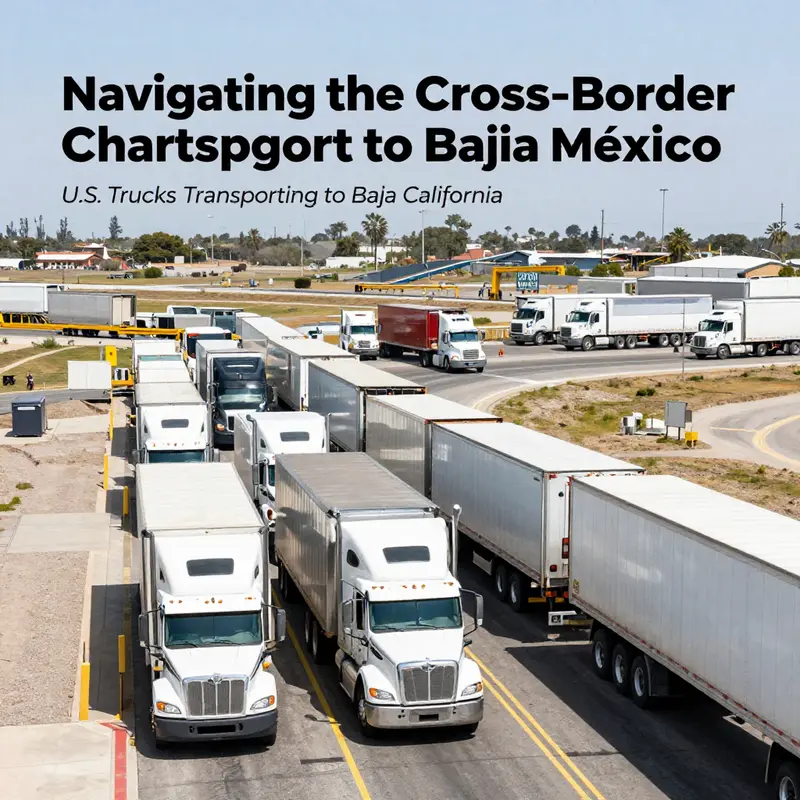
Transporting goods across the U.S.-Mexico border, especially to Baja California, requires a thorough understanding of applicable regulations and procedures. As a trucking company owner, fleet manager, or part of a logistics or procurement team in construction and mining enterprises, it is crucial to grasp the intricacies involved in cross-border trucking. This article delves into four vital areas that affect your operations: the regulatory framework governing transport to Baja California, the permits and documentation essential for compliance, the customs and import/export regulations that shape trade, and the safety standards required for vehicles. By exploring these chapters, stakeholders can gain a comprehensive understanding of how to effectively manage the transportation of goods to Baja California, ensuring legality, safety, and efficiency.
null
null
Crossing the Border with a Commercial Truck: Permits, Paperwork, and Practical Pathways to Baja California
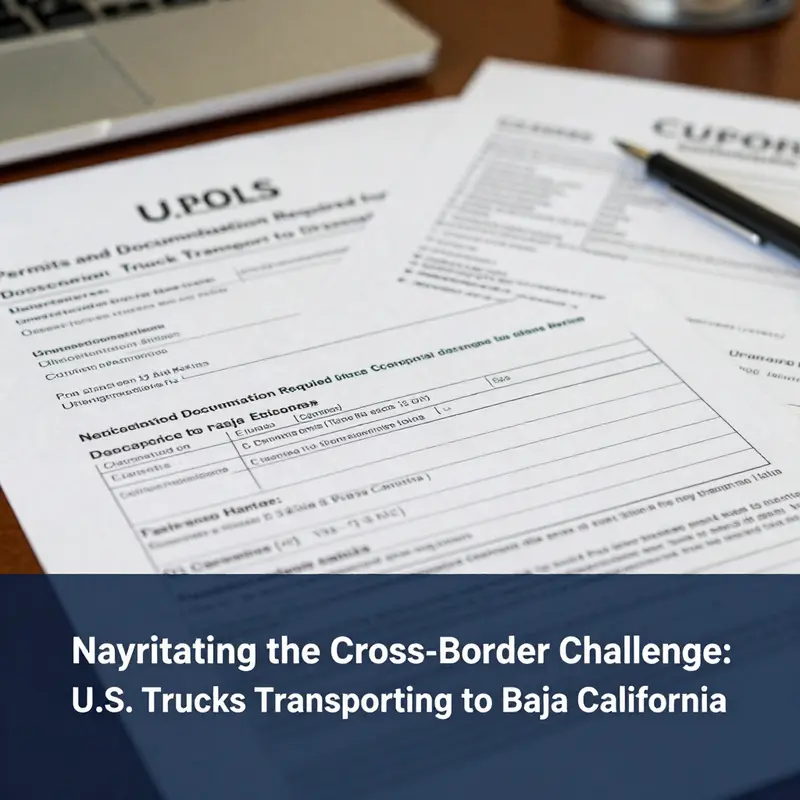
The question of whether a United States commercial trucking operation can move a load all the way into Baja California is not a simple yes or no. It is a logistics puzzle that demands a careful understanding of how cross border commerce works at both ends of the journey. From the moment a carrier contemplates a trip toward the Baja Peninsula, the route becomes a negotiation with rules that are enforced by a pair of national authorities. On the U.S. side, customs and border protection agencies look for documents that establish the legitimacy of the shipment and the operator. On the Mexican side, the corresponding agencies assess importability and safety, and they can require licenses or permits specific to the cargo in question. The practical consequence is that a successful move into Baja requires more than a reliable tractor and trailer; it requires a well mapped sequence of paperwork, registrations, and permissions that align with how cross border trucking functions in the current regulatory environment. The Baja destination itself sits close enough to the U.S. border that a large share of cross border freight moves through the common gateways near San Ysidro, Tijuana, Mexicali, or other border points that funnel traffic into Baja California. The proximity is an advantage for planning, but it does not replace the necessity of compliance. A carrier must be prepared to present a clean and complete set of documents at the port of entry, and must also anticipate that certain goods may trigger additional permitting regimes or inspection regimes beyond the standard transit documents. In practice, the operation begins long before a driver pulls onto the highway and extends long after the cargo has crossed the border and begun the journey through northern Baja to its final destination. That continuum of preparation and verification shapes the reliability of cross border shipments and it is where most delays originate when paperwork trails the actual movement of the truck. The interplay of U S customs requirements and Mexican import controls is not a hurdle to be cleared in a single moment but a set of touchpoints that must be anticipated and managed with discipline. One place to begin is the recognition that carriers must be properly registered and in good standing with the U S Department of Transportation. A USDOT number is more than a badge of legitimacy; it is a signal that the operator has met the basic compliance prerequisites that enable cross border operations. Beyond registration, the nature of the cargo drives the exact path of paperwork. A routine commercial shipment of general consumer goods might pass through with a standard set of documents, while a shipment that includes regulated products such as pharmaceuticals, electronics with restricted components, or items subject to dual use controls will require additional licenses or permits. The distinction matters because it informs not only the documents needed but the channels through which the cargo must travel when entering Mexico. The presence of a permit is often the hinge on whether a shipment can be cleared for import at the border or whether it must be routed through a different regulatory track. The core and universal documents, however, remain central to every cross border movement. A Bill of Lading functions as the contract and the formal receipt for the goods. It outlines the type and quantity of cargo, its weight, its packaging, and its ultimate destination. Without a properly executed B L, the carrier loses the binding formal basis for movement, and the risk of misdeclaration grows. The Commercial Invoice complements the B L by providing a transaction specific record that identifies the value of the goods, the HS code used for customs classification, and the terms of sale such as FOB or CIF. This documentation becomes a bridge between the two regulatory regimes, ensuring that the declared value and classification align with what the Mexican customs service expects to see when the goods cross into Baja California. Alongside the invoice, a Packing List itemizes each package or container, with precise weight, dimensions, and item descriptions. Customs inspectors frequently use it to verify that the shipment declared on the B L and the Commercial Invoice corresponds to what is presented at the border. The Certificate of Origin can matter, particularly when tariff treatment under trade agreements like USMCA might apply. While not always mandatory for every shipment, it can unlock preferential duty rates for goods that were produced in the United States or in a country that benefits from the agreement, and it can influence the overall cost of import. These documents together establish the legal and financial frame of the shipment. Then there are the more cargo specific permits. Mexican authorities may require an Import Permit for certain categories of goods, such as pharmaceuticals, agricultural products, electronics, or even vehicles. Such permits come from agencies like the Secretaría de Economía or the Secretaría de Salud and may be time sensitive or tied to compliance standards that require additional testing or labeling. This is not mere bureaucracy for the sake of formality. It reflects the Mexican government’s objective to manage safety, public health, and market integrity at a border that sees high volumes of goods passing through. In some cases a U S Export License might also come into play, especially when dual use items or sensitive technologies appear in the shipment. Export control regulations under the EAR administered by the Bureau of Industry and Security can create a separate compliance path, requiring careful classification and licensing before the goods depart the United States. These layers of regulation make it essential for the carrier to plan with foresight and to work with trusted partners who can interpret the rules for the specific cargo in question. The practical mechanics of moving a truck into Baja also involve the people and processes on the ground. The driver carries the expected identification, including a passport, and depending on nationality and visa arrangements, other documents may be required to cross into Mexican territory. Border crossing procedures at major ports of entry are structured, with corridors for trucks and controls designed to facilitate legitimate trade while maintaining security. The gatekeepers at the border will compare the driver and the vehicle documents to the shipment paperwork, review the B L and invoice, and inspect the cargo if needed. The inspection can be routine or intensified, depending on the shipment profile, risk assessments, and any concerns raised by authorities. In a cross border trucking operation toward Baja, it is common to coordinate with a licensed Mexican customs broker who can handle the Mexican side of the clearance. The broker serves as a trusted translator of paperwork into the Mexican system, ensuring that import permits are current, classifications are accurate, and the invoicing aligns with the tariff schemes that Mexico uses at the border. The broker’s role extends to arranging the correct channels for cargo release and ensuring that the truck can continue its route into Baja California without undue delay. It is important to emphasize that the success of such an operation is rarely a matter of a single document or a single port of entry. It is the cohesion of the entire process that determines whether a shipment reaches Baja on time and in compliance. This is why many seasoned carriers plan in advance, verifying that their paperwork, permits, and registrations are in harmony with the cargo’s characteristics and destination. Vendors and shippers also participate in this choreography, preparing the necessary documentation with care and ensuring that the information on the B L matches the Commercial Invoice and the Packing List in every respect. Mismatches can trigger scrutiny that slows the crossing, and slow crossings have a price, particularly for high-value or time-sensitive deliveries. In this context, a carrier can benefit from an ongoing relationship with a trusted broker and from reference materials that outline best practices and common pitfalls. A well-prepared shipment will typically include clear product descriptions, accurate HS codes, and a consistent valuation that mirrors the commercial invoice. Any variance can be interpreted as a risk signal by customs authorities, prompting more detailed scrutiny or even a temporary hold. For readers who want a practical touchstone, a forward-looking logistics blog can be a helpful place to see how industry participants frame these issues. For example, the material in a recent post on a well-known trucking blog offers insights into how carriers balance paperwork, cost, and reliability in cross border operations, including Baja. This kind of resource can complement official guidance by translating regulatory language into actionable steps for day-to-day operations. The path into Baja California is, in that sense, a test of organizational discipline as much as a test of regulatory knowledge. It rewards carriers who adopt a system of checks and balances, who standardize their documentation packages, and who treat border crossing as a process rather than a moment. In reviewing the practice guide for cross border trucking, it is useful to consider the likely sequence a shipment will follow from origin to Baja. The shipper prepares the commercial documentation while the carrier confirms that the USDOT registration is current and that any necessary permits are in place for the target goods. The truck then approaches the border at a designated port of entry and presents its documents. If everything aligns, the gateway allows the cargo to transition onto Mexican soil, where the broker or Mexican authorities may complete the final clearance steps, including the final tariff assessment and the release of the goods. Throughout this journey, there is a palpable tension between speed and compliance. The pressure to minimize dwell time at the border can tempt operators to skimp on the paperwork, but the consequences of such shortcuts are costly. The opposite truth holds as well: meticulous preparation reduces risk, prevents delays, and keeps the Baja delivery on track. The value of this approach becomes even clearer when one compares cross border operations with purely domestic trucking. In domestic work, the paperwork centers around compliance with U S road and safety regulations. In cross border work to Baja, those domestic requirements become nested within a wider regime that spans two sovereigns and multiple ministries. The result is a more complex but manageable system if approached with organization and respect for the process. For carriers seeking to refine their approach, it is worth noting the importance of the operator’s reputation and the integrity of the documents. A shipment that arrives with clean and consistent B L, invoice, and packing list is more likely to cross smoothly and be released quickly. Conversely, inconsistent or incomplete paperwork becomes a liability that can not only delay a single shipment but erode trust with shippers, brokers, and border authorities. A practical mental model is to treat each border crossing as a small audit, with the ultimate aim of producing a clean set of records that can be understood instantly by anyone reviewing them. That mindset aligns well with the broader aims of international trade compliance and helps avoid the friction that can derail a delivery into Baja. For those who want to explore further practical guidance, the internal resources of industry participants provide useful corroboration of these principles. In particular, a widely consulted trucking blog discusses how carriers balance speed, cost, and compliance in cross border routes, including Baja. You can read more at the following resource: McGrath Trucks Blog. The exchange of ideas in such forums often complements official frameworks by offering concrete examples of how a cross border shipment is assembled, documented, and cleared. When planned with care, a cross border truck move to Baja California is not an insurmountable obstacle but a traceable sequence of steps, each with its own checks and verifications. The operator who maintains a disciplined approach to documentation, licensing, and port procedures will find that Baja is accessible as a destination for U S trucks, provided the cargo and the paperwork align with the rules on both sides of the boundary. The journey into Baja is thus contingent on a reliable combination of formal permits, accurate classification, and coordinated broker support, along with a driver who understands the importance of border procedures. This is not merely about crossing a line; it is about sustaining a workflow that respects the regulatory environment and the practical realities of international freight. In sum, a U S commercial truck can transport to Baja California, but the path requires deliberate preparation, an awareness of cargo-specific permits, and a collaborative approach with brokers and authorities that recognize the shared objectives of safe, legal, and timely delivery. For the most up-to-date guidance, consult official resources designed to keep cross border commerce orderly and safe.
External resource: CBP International Trade
null
null
Safety Standards on the Border Road: Vehicle Inspections and the Route to Baja California
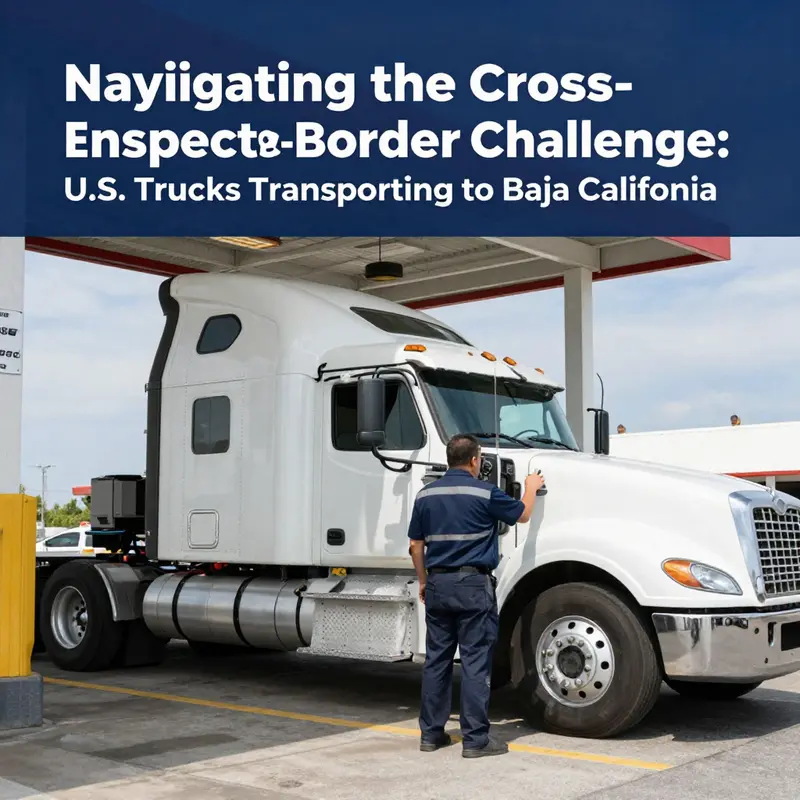
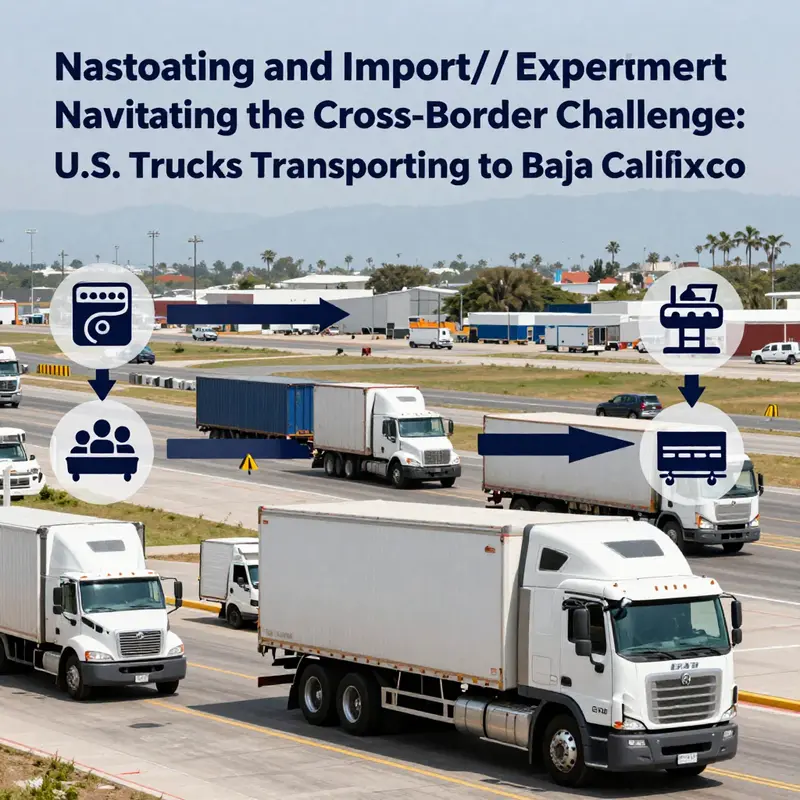
Crossing from the United States into Baja California with a commercial truck is a journey that blends logistics with law, safety culture, and meticulous planning. It is not enough to have a cargo ready and a route mapped; operators must align with two regulatory ecosystems that govern safety, equipment, and accountability. On the U.S. side, federal standards and inspection regimes set the baseline for vehicle fitness and driver readiness. On the Mexican side, a parallel, albeit distinct, framework enforces vehicle safety, emissions, and cross-border permit requirements. When these two systems interact, fleets must navigate a seamless series of checks that intensify the closer the truck gets to the Baja corridor. The route to Baja California is not merely about moving goods; it is about proving, at every border waystation and every inspection lane, that the vehicle is a living safety system that can withstand the stresses of long hauls, mountain grades, and variable weather while keeping other road users protected.At the core of the U.S. regulatory landscape is the Federal Motor Carrier Safety Administration (FMCSA). This agency administers the rules that govern interstate trucking, driver qualifications, and a carrier’s overall safety program. Any truck participating in cross-border commerce under U.S. regulation must typically fall under the umbrella of the U.S. Department of Transportation (DOT) and bear a valid USDOT number to operate legally. A carrier’s compliance is not a one-time declaration; it is an ongoing duty. Trucks must pass regular inspections to verify adherence to federal standards, and maintenance cannot be an afterthought. The maintenance schedule is not simply about keeping a truck on the road; it is a framework for preventing failures that could endanger the operator, the crew, and other travelers at border crossings and along the Baja corridor. The driver, in turn, must meet qualification requirements that include a commercial driver’s license (CDL), medical certification, and a clean safety record that supports the ability to operate a vehicle of significant size and weight. In practice, this means that before any cross-border move, a carrier assembles documentation that demonstrates ongoing compliance with health, safety, and training standards, a requirement that extends beyond basic licensing to encompass continuous education and periodic requalification. The regulatory logic is simple in intent—reduce preventable incidents through proactive safety—and complex in execution, because it requires real-time alignment of paperwork, vehicle condition, and driver readiness across two countries with different enforcement styles and inspection practices.On the Mexican side, the Secretaría de Comunicaciones y Transportes (SCT) regulates road safety and freight transport. This framework emphasizes vehicle safety standards, emissions controls, and the integrity of cross-border entries through a system that often overlaps with the operations of Mexican customs brokers and border inspectors. A key component is the mandatory compliance with Mexican vehicle safety standards, which may include distinct mechanical and safety evaluations tailored to the local road network and climate conditions. Vehicles crossing into Baja must also meet emissions and mechanical inspection standards, typically enforced through the Programa de Inspección Técnica Vehicular (PITV) in many jurisdictions. The aim is clear: ensure that trucks entering Mexico are not only legally cleared at the border but also prepared to operate safely within Mexico’s environmental and road-safety expectations. In practice, this creates a joint safety verification for operators, where a truck must speak the formal language of both systems to move goods with minimal friction. The SCT’s surveillance is complemented by a framework of documentation—most notably a valid Mexican import permit, often referred to as a permiso de entrada—and proof of Mexican insurance. These documents are not mere formalities; they are the authorization that allows a U.S.-registered truck to take the next step into Mexican territory and, crucially, to operate within Mexican regulations once it has crossed the border. A vehicle might be cleared to cross, but its continuation into Baja depends on maintaining compliance with Mexican standards and having the appropriate permissions for the specific cargo in transit.Beyond the overarching safety standards, the specifics of vehicle inspections create a tangible texture to the cross-border process. In the United States, a commercial vehicle inspection is not a single event but a journey through a family of checks. The Commercial Vehicle Safety Alliance (CVSA) organizes inspections at various levels, with Level I being the most comprehensive, including a thorough review of driver credentials, hours-of-service compliance, and vehicle components. A truck bound for Baja will undergo these checks at the border or at pre-selected inspection sites, and a failing inspection is not merely a delay; it is a potential disruption to a tightly scheduled cross-border operation. The maintenance program that supports these inspections must be robust. Regular, documented preventive maintenance helps demonstrate that the truck’s braking system, steering, suspension, tires, lighting, and critical safety devices meet U.S. standards. The driver qualification process, including the medical card and screening for dangerous behavior, ensures that the people behind the wheel are prepared for demanding cross-border routes that involve long stretches on the Baja highway system, variable traffic, and the cultural and regulatory complexities of crossing international boundaries. The aim is not to trap carriers in red tape but to reduce risk in an environment where a single brake issue or tire failure can transform a routine border crossing into a life-threatening incident for the driver and other road users.On the Mexican side, the inspection regime shares the objective of safety, but the mechanics differ in emphasis and method. The SCT oversees vehicle safety standards and the integration of inspections into the cross-border flow. Heavier or high-capacity vehicles may face more rigorous scrutiny to ensure their safety profile meets local expectations. The inspections may examine braking systems, suspension, tire condition, and the structural integrity of the chassis and superstructure. While the U.S. side often emphasizes fuel efficiency, emissions, and general mechanical soundness, the Mexican framework may impose additional checks that reflect local road conditions, climate considerations, and the operational realities of cross-border fleets in Baja. The PITV, a cornerstone of this regime, integrates emissions testing with technical vehicle inspection, aligning environmental responsibility with road safety. In practice, this means a truck must not only perform well in terms of safety components but also comply with environmental performance standards that can influence the vehicle’s eligibility to operate in certain jurisdictions, especially within the Baja corridor where urban areas and sensitive ecosystems may be affected by truck emissions. As with any cross-border operation, the chain of custody for the vehicle, its permits, and its insurance is the thread that ties inspections to permissions. A truck that fails to present a valid permiso de entrada or appropriate Mexican insurance may be delayed or turned back, regardless of the U.S. inspection status. The interplay between U.S. and Mexican checks reinforces a broader safety ethic: the highway is shared, and the responsibility for safe operation travels with the vehicle as it moves between regulatory worlds.Compliance is most effective when it is proactive rather than reactive. Fleets that succeed in crossing into Baja California consistently apply preventive maintenance as a nonnegotiable discipline. A well-documented maintenance log, aligned with FMCSA requirements, serves as a living record of safety investments—driveline integrity, brake system calibration, tires with adequate tread depth, suspension components that meet wear limits, and steering gear that responds predictably. This documentation supports a driver’s readiness and the vehicle’s fitness for cross-border duty. It also smooths the passage through inspection lanes, where a crisp, transparent record can reduce dwell time and signal a genuine safety culture to inspectors on both sides of the border. The driver’s qualifications extend beyond a CDL; they embody the safety ethos that the FMCSA and SCT seek to preserve. A driver who maintains health and safety standards, who adheres to standardized pre-trip checks, who understands how to respond to border-specific contingencies—such as cold weather on inland Baja routes or sudden changes in cargo temperature—contributes to a safer corridor for everyone sharing the road. The cross-border journey, then, becomes less a test of paperwork and more a test of operational discipline—an ongoing commitment to safe driving, responsible maintenance, and compliance with the whole spectrum of safety expectations native to two regulatory systems that converge in Baja.For operators seeking practical continuity, the cross-border process often involves careful coordination with brokers or import specialists who understand the nuanced requirements of both sides. A Mexican customs broker, for example, can facilitate the submission of the permiso de entrada and assist with ensuring that the cargo-specific permits are in order. This is particularly important for certain cargo types that might trigger additional permitting or inspections. The vehicle itself may be subject to local emission standards and PITV protocols that some U.S.-based fleets have not encountered in the same form before. In such cases, the bridge between U.S. safety culture and Mexican regulatory expectations needs to be built and maintained through ongoing training, documentation, and a shared commitment to safety that transcends jurisdictional boundaries. It is helpful to cultivate a mindset that places inspection readiness at the center of planning rather than treating it as an inconvenient gate to be navigated at the last moment. When carriers embed safety and regulatory readiness into their route designs, the Baja corridor becomes a predictable, safer place to operate, even amid the logistical complexity of crossing an international boundary and confronting the distinctive road conditions of the region.From an operational perspective, the policy landscape also shapes decisions about vehicle type, cargo, and route selection. Some cargo classes, such as hazardous materials or perishable goods, introduce extra layers of permission and inspection that can lengthen crossing times and require pre-notification to border authorities. Even for bulk or general freight, the decision to use a U.S.-based tractor-trailer versus a regional Mexican-registered equivalent can be influenced by the relative ease of obtaining cross-border permits, the availability of Mexican insurance, and the predictability of inspection outcomes. In every case, the objective remains the same: to move goods efficiently while preserving the highest possible level of safety for drivers, other motorists, pedestrians, and the communities along the Baja route. The best cross-border operators approach this objective with a unified safety strategy that combines robust preventive maintenance, clear driver qualifications, meticulous documentation, and a proactive understanding of both U.S. and Mexican inspection regimes. They recognize that crossing into Baja is not merely about extracting a truck from one country and placing it into another; it is about translating a shared commitment to safety into a physical, on-the-ground practice that safeguards lives and keeps commerce flowing smoothly. For readers who want a practical roadmap that respects these dual obligations, the growing literature and guidance—such as official cross-border trade resources—offers a dependable compass. And for those who want to explore a broader mix of insights into the trucking ecosystem, the broader industry conversations, including the evolving role of maintenance standards, driver training, and border compliance, can be found in the ongoing dialogue on the field’s thinking and practice. To explore additional perspectives on safety culture in trucking, you can visit the MCGrath Trucks blog for related discussions [blog]. For current cross-border procedures and authoritative guidance, refer to the U.S. Customs and Border Protection International Trade portal and the SCT’s official information hub to ensure you are up to date with the latest requirements and procedures. As always, the most reliable path across Baja is paved by disciplined safety practice, structured compliance, and a willingness to adapt as rules evolve. For further context and an up-to-date reference point, see the CBP resource on international trade and cross-border trucking: https://www.cbp.gov/trade.
Final thoughts
Successfully transporting goods from the U.S. to Baja California involves navigating a complex landscape of regulations, permits, customs procedures, and safety standards. For trucking company owners, fleet managers, and procurement teams, understanding this intricate web of requirements is not only pivotal for compliance but also vital for optimizing logistics operations. By adhering to the regulations outlined throughout this article, stakeholders can ensure streamlined processes and reduce risks associated with cross-border transport. Ultimately, a well-informed approach to cross-border trucking can enhance operational efficiency and contribute to the growth of international trade.