
In the expansive world of the trucking industry, the significance of ensuring compliance with transport regulations cannot be overstated. A critical aspect for trucking company owners, fleet managers, and procurement teams in the construction and mining sectors is understanding whether a Commercial Driver’s License (CDL) is necessary for operating water trucks. This knowledge not only impacts operational legality but also influences liability, insurance requirements, and the overall efficiency of logistics operations. As water trucks play a vital role in various industries-ranging from dust control on construction sites to providing critical water supplies for remote operations-knowing the licensing requirements is essential for maintaining a responsible and compliant fleet. Learn more about the current trends in used truck sales to ensure your company is making well-informed decisions in a competitive market.
Commercial Driver’s License (CDL) Requirements for Water Trucks in the U.S.
Obtaining a Commercial Driver’s License (CDL) is essential for drivers wishing to operate water trucks in the United States. The requirements for a CDL can vary significantly, particularly for vehicles transporting water, which may also be used in essential services such as firefighting and construction. Here’s a summary of the key requirements:
| Requirement Category | Details |
|---|---|
| CDL Class | Most water truck driver positions in the U.S. necessitate a Class A CDL due to the size and weight of many water trucks. For smaller vehicles, a Class B CDL may suffice, although Class A is more prevalent. Class C is generally not suitable unless the vehicle is regulated for hazardous materials. |
| Age Requirements | Applicants must be a minimum of 21 years old to drive commercially across state lines. Some states may permit drivers as young as 18 for intrastate operations. |
| Health Standards | CDL recipients must meet federal health standards mandated by the Federal Motor Carrier Safety Administration (FMCSA) which includes a physical exam assessing vision, hearing, and potential medical conditions. |
| Written Test | Candidates must pass a written examination covering safety rules and vehicle operation. The specifics may vary by state as administered by local DMV offices. |
| Driving Test (Skills Test) | A practical driving test is required to demonstrate the ability to operate a commercial vehicle, including a pre-trip inspection and road driving. |
| Endorsements | While endorsements may not be necessary for standard operations, if transporting hazardous materials or carrying a passenger, specific endorsements (e.g., HazMat, Tanker) may be mandated. |
These requirements are not merely bureaucratic hurdles but are crucial for ensuring safety and compliance in the trucking industry. For trucking companies, compliance with CDL regulations mitigates risks and liabilities associated with the operation of water trucks. This ensures that drivers are adequately trained and capable of handling the vehicles responsibly, thereby enhancing overall operational safety and efficiency.
For more detailed insights into the trucking industry, learn more about the current trends in used truck sales growth and the impact of emissions on used truck prices.

Source: FMCSA
Water trucks play a crucial role in various industries, especially in construction and mining, where their operations directly contribute to project efficiency and safety. Primarily utilized for dust control, road compaction, and soil conditioning, these trucks are essential for maintaining optimal working conditions.
Uses of Water Trucks
-
Dust Suppression: One of the primary functions of water trucks is to suppress dust generated by heavy machinery and truck movements on construction and mining sites. Effective dust control is vital not only for visibility but also for the health and safety of workers. Keeping the air clear helps in reducing respiratory problems and enhances overall site conditions, making work safer and more efficient. The need for stringent dust control also stems from compliance with environmental regulations that govern construction activities.
-
Soil Compaction: Water trucks are used to moisten soil, facilitating better compaction during construction. Properly compacted soil leads to a stable foundation for structures, ensuring longevity and safety. In mining operations, compacting loose materials prevents collapses and other hazardous situations. The moisture provided by water trucks also aids in maintaining the integrity of the terrain.
-
Fire Control: In areas prone to wildfires, water trucks serve as a preventive measure. They can rapidly distribute water to curb any small fires before they escalate, protecting both life and property. Their role in fire safety is particularly critical in mining, where flammable materials may be present.
-
Concrete Curing: Water trucks are also employed in concrete applications. They help maintain the necessary moisture levels during curing, which is vital for strength and durability. Inadequate curing can lead to issues such as cracking, which can significantly affect the quality of construction.
Importance in Operations
The operation of water trucks is not just about transportation; it encompasses strategic planning and execution in line with the project goals. Fleet managers and procurement teams should understand the specifications and the varied applications of these vehicles in their operations. Regular maintenance and efficient routing of water trucks ensure that they deliver the necessary resources precisely where and when needed.
In essence, the integration of water trucks into construction and mining operations alleviates environmental impacts, promotes worker safety, and enhances overall project efficiency. As industries increasingly focus on sustainability, effective water truck operations remain pivotal for achieving compliance and operational excellence.
By leveraging the capabilities of water trucks, companies can not only meet regulatory standards but also promote a safe and productive work environment. Fleet owners should consider these factors when evaluating their water truck operations and the necessity of commercial drivers’ licenses for operators.
Overview of State-Specific CDL Regulations for Water Truck Drivers
When it comes to operating water trucks in the United States, compliance with state-specific regulations regarding Commercial Driver’s Licenses (CDLs) is crucial. While federal regulations set the baseline, individual states can impose additional requirements that differ significantly. Below is an overview of these state-specific regulations that water truck drivers must be aware of:
Key Requirements
- CDL Class Type: Most states require a Class B CDL for water trucks, especially those that weigh over 26,001 lbs Gross Vehicle Weight Rating (GVWR).
- “W” Endorsement: This endorsement is essential for those operating water tanks, indicating specialized training in liquid cargo handling.
- Medical Examiner’s Certificate (MEC): All CDL holders must obtain this to ensure they are physically fit to drive a commercial vehicle.
Comparison of Requirements
| State | Federal CDL Requirement | State-Specific CDL Requirement | Required Documentation | Safety Training Requirements |
|---|---|---|---|---|
| Alabama | Class A or B CDL for vehicles > 26,001 lbs | Class B CDL required for water trucks | Valid state driver’s license, CDLA application, MEC, vision test | HAZMAT training if transporting hazardous substances |
| California | Class A or B CDL for vehicles > 26,001 lbs | Class B CDL; “W” endorsement for water tankers | DL-44 application, MEC, vision test, DMV interview | Mandatory HAZMAT training if carrying hazardous liquids |
| Florida | Class A or B CDL for vehicles > 26,001 lbs | Class B CDL required; “W” endorsement | DL-253 application, MEC, vision test | HAZMAT training if applicable; pre-trip inspection training |
| New York | Class A or B CDL for vehicles > 26,001 lbs | Class B CDL required; “W” endorsement | CDL application, MEC, vision test, fingerprints | HAZMAT training if applicable; daily inspection procedures |
| Texas | Class A or B CDL for vehicles > 26,001 lbs | Class B CDL required; “W” endorsement | CDL application, MEC, vision test | HAZMAT training if applicable; daily pre-trip inspections |
Note: Federal regulations require a CDL for vehicles weighing over 26,001 lbs, but state-specific nuances exist. Always check your local Department of Motor Vehicles (DMV) for the most accurate and relevant information.
For a detailed understanding of the federal and state-specific regulations regarding commercial driver’s licenses applicable to water truck drivers, you can refer to the FMCSA and explore additional resources on State DMV websites.
This infographic summarizes the requirements across various states and is an excellent reference for trucking companies and fleet managers.
Table comparing CDL requirements across states for driving water trucks.
| State | Required CDL Class | Weight Limitations | Specific Endorsements Required |
|---|---|---|---|
| Alabama | Class A or B | Class A: 26,001 lbs+; Class B: 26,001 lbs+ (if towing) | Hazardous Materials (H), Tanker (N) |
| Alaska | Class A or B | Class A: 26,001 lbs+; Class B: 26,001 lbs+ (if towing) | Hazardous Materials (H), Tanker (N) |
| Arizona | Class A or B | Class A: 26,001 lbs+; Class B: 26,001 lbs+ (if towing) | Hazardous Materials (H), Tanker (N) |
| Arkansas | Class A or B | Class A: 26,001 lbs+; Class B: 26,001 lbs+ (if towing) | Hazardous Materials (H), Tanker (N) |
| California | Class A or B | Class A: 26,001 lbs+; Class B: 26,001 lbs+ (if towing) | Hazardous Materials (H), Tanker (N) |
| Colorado | Class A or B | Class A: 26,001 lbs+; Class B: 26,001 lbs+ (if towing) | Hazardous Materials (H), Tanker (N) |
| Connecticut | Class A or B | Class A: 26,001 lbs+; Class B: 26,001 lbs+ (if towing) | Hazardous Materials (H), Tanker (N) |
| Delaware | Class A or B | Class A: 26,001 lbs+; Class B: 26,001 lbs+ (if towing) | Hazardous Materials (H), Tanker (N) |
| Florida | Class A or B | Class A: 26,001 lbs+; Class B: 26,001 lbs+ (if towing) | Hazardous Materials (H), Tanker (N) |
| Georgia | Class A or B | Class A: 26,001 lbs+; Class B: 26,001 lbs+ (if towing) | Hazardous Materials (H), Tanker (N) |
| Hawaii | Class A or B | Class A: 26,001 lbs+; Class B: 26,001 lbs+ (if towing) | Hazardous Materials (H), Tanker (N) |
| Idaho | Class A or B | Class A: 26,001 lbs+; Class B: 26,001 lbs+ (if towing) | Hazardous Materials (H), Tanker (N) |
| Illinois | Class A or B | Class A: 26,001 lbs+; Class B: 26,001 lbs+ (if towing) | Hazardous Materials (H), Tanker (N) |
| Indiana | Class A or B | Class A: 26,001 lbs+; Class B: 26,001 lbs+ (if towing) | Hazardous Materials (H), Tanker (N) |
| Iowa | Class A or B | Class A: 26,001 lbs+; Class B: 26,001 lbs+ (if towing) | Hazardous Materials (H), Tanker (N) |
| Kansas | Class A or B | Class A: 26,001 lbs+; Class B: 26,001 lbs+ (if towing) | Hazardous Materials (H), Tanker (N) |
| Kentucky | Class A or B | Class A: 26,001 lbs+; Class B: 26,001 lbs+ (if towing) | Hazardous Materials (H), Tanker (N) |
| Louisiana | Class A or B | Class A: 26,001 lbs+; Class B: 26,001 lbs+ (if towing) | Hazardous Materials (H), Tanker (N) |
| Maine | Class A or B | Class A: 26,001 lbs+; Class B: 26,001 lbs+ (if towing) | Hazardous Materials (H), Tanker (N) |
| Maryland | Class A or B | Class A: 26,001 lbs+; Class B: 26,001 lbs+ (if towing) | Hazardous Materials (H), Tanker (N) |
| Massachusetts | Class A or B | Class A: 26,001 lbs+; Class B: 26,001 lbs+ (if towing) | Hazardous Materials (H), Tanker (N) |
| Michigan | Class A or B | Class A: 26,001 lbs+; Class B: 26,001 lbs+ (if towing) | Hazardous Materials (H), Tanker (N) |
| Minnesota | Class A or B | Class A: 26,001 lbs+; Class B: 26,001 lbs+ (if towing) | Hazardous Materials (H), Tanker (N) |
| Mississippi | Class A or B | Class A: 26,001 lbs+; Class B: 26,001 lbs+ (if towing) | Hazardous Materials (H), Tanker (N) |
| Missouri | Class A or B | Class A: 26,001 lbs+; Class B: 26,001 lbs+ (if towing) | Hazardous Materials (H), Tanker (N) |
| Montana | Class A or B | Class A: 26,001 lbs+; Class B: 26,001 lbs+ (if towing) | Hazardous Materials (H), Tanker (N) |
| Nebraska | Class A or B | Class A: 26,001 lbs+; Class B: 26,001 lbs+ (if towing) | Hazardous Materials (H), Tanker (N) |
| Nevada | Class A or B | Class A: 26,001 lbs+; Class B: 26,001 lbs+ (if towing) | Hazardous Materials (H), Tanker (N) |
| New Hampshire | Class A or B | Class A: 26,001 lbs+; Class B: 26,001 lbs+ (if towing) | Hazardous Materials (H), Tanker (N) |
| New Jersey | Class A or B | Class A: 26,001 lbs+; Class B: 26,001 lbs+ (if towing) | Hazardous Materials (H), Tanker (N) |
| New Mexico | Class A or B | Class A: 26,001 lbs+; Class B: 26,001 lbs+ (if towing) | Hazardous Materials (H), Tanker (N) |
| New York | Class A or B | Class A: 26,001 lbs+; Class B: 26,001 lbs+ (if towing) | Hazardous Materials (H), Tanker (N) |
| North Carolina | Class A or B | Class A: 26,001 lbs+; Class B: 26,001 lbs+ (if towing) | Hazardous Materials (H), Tanker (N) |
| North Dakota | Class A or B | Class A: 26,001 lbs+; Class B: 26,001 lbs+ (if towing) | Hazardous Materials (H), Tanker (N) |
| Ohio | Class A or B | Class A: 26,001 lbs+; Class B: 26,001 lbs+ (if towing) | Hazardous Materials (H), Tanker (N) |
| Oklahoma | Class A or B | Class A: 26,001 lbs+; Class B: 26,001 lbs+ (if towing) | Hazardous Materials (H), Tanker (N) |
| Oregon | Class A or B | Class A: 26,001 lbs+; Class B: 26,001 lbs+ (if towing) | Hazardous Materials (H), Tanker (N) |
| Pennsylvania | Class A or B | Class A: 26,001 lbs+; Class B: 26,001 lbs+ (if towing) | Hazardous Materials (H), Tanker (N) |
| Rhode Island | Class A or B | Class A: 26,001 lbs+; Class B: 26,001 lbs+ (if towing) | Hazardous Materials (H), Tanker (N) |
| South Carolina | Class A or B | Class A: 26,001 lbs+; Class B: 26,001 lbs+ (if towing) | Hazardous Materials (H), Tanker (N) |
| South Dakota | Class A or B | Class A: 26,001 lbs+; Class B: 26,001 lbs+ (if towing) | Hazardous Materials (H), Tanker (N) |
| Tennessee | Class A or B | Class A: 26,001 lbs+; Class B: 26,001 lbs+ (if towing) | Hazardous Materials (H), Tanker (N) |
| Texas | Class A or B | Class A: 26,001 lbs+; Class B: 26,001 lbs+ (if towing) | Hazardous Materials (H), Tanker (N) |
| Utah | Class A or B | Class A: 26,001 lbs+; Class B: 26,001 lbs+ (if towing) | Hazardous Materials (H), Tanker (N) |
| Vermont | Class A or B | Class A: 26,001 lbs+; Class B: 26,001 lbs+ (if towing) | Hazardous Materials (H), Tanker (N) |
| Virginia | Class A or B | Class A: 26,001 lbs+; Class B: 26,001 lbs+ (if towing) | Hazardous Materials (H), Tanker (N) |
| Washington | Class A or B | Class A: 26,001 lbs+; Class B: 26,001 lbs+ (if towing) | Hazardous Materials (H), Tanker (N) |
| West Virginia | Class A or B | Class A: 26,001 lbs+; Class B: 26,001 lbs+ (if towing) | Hazardous Materials (H), Tanker (N) |
| Wisconsin | Class A or B | Class A: 26,001 lbs+; Class B: 26,001 lbs+ (if towing) | Hazardous Materials (H), Tanker (N) |
| Wyoming | Class A or B | Class A: 26,001 lbs+; Class B: 26,001 lbs+ (if towing) | Hazardous Materials (H), Tanker (N) |
Note: The table above summarizes standard CDL requirements for operating water trucks across the U.S. as of 2026. While federal requirements are consistent, state-specific regulations regarding enforcement and additional requirements may apply. Water truck drivers typically require at least a Class A or B CDL with Hazardous Materials (H) and Tanker (N) endorsements due to the nature of their cargo.
Consequences of Non-Compliance for Trucking Companies Operating Water Trucks Without a CDL
Operating a water truck without the necessary Commercial Driver’s License (CDL) can lead to serious legal and operational repercussions for trucking companies. Understanding these consequences is vital to ensuring compliance and maintaining a safe working environment.
Legal Implications
The legal consequences of operating a water truck without a CDL are severe. According to various sources:
| Consequence | Details |
|---|---|
| Fines | Significant fines ranging from $500 to $1,500 can be imposed on operators for each offense. Repeated offenses may lead to escalating penalties. |
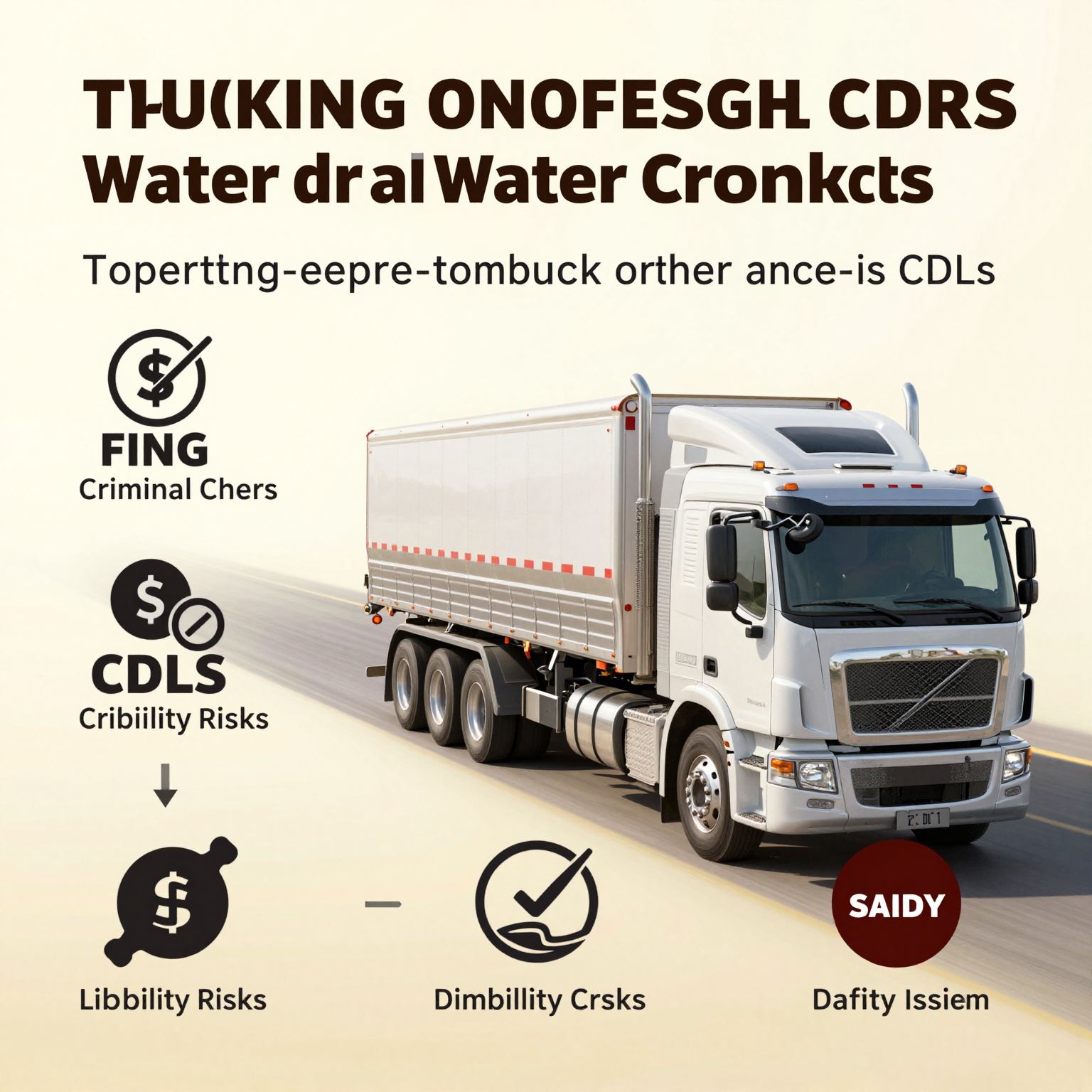
| Criminal Charges | In many states, driving without a valid CDL may lead to misdemeanor or felony charges, especially if involved in an accident. This can result in jail time for repeat offenders. |
| Vehicle Impoundment | Law enforcement has the authority to impound vehicles driven without a valid CDL, leading to substantial recovery fees. |
| Employer Liability | Employers can be held responsible for hiring unlicensed drivers, incurring fines, lawsuits, and increased insurance premiums, especially if an accident occurs. |
| Insurance Issues | Many commercial insurance policies become void if the driver lacks a valid CDL, financially exposing both the operator and employer in the event of an accident. |
| Loss of Business Licenses | Companies could face disruptions in operations and potentially lose their business licenses due to employing unlicensed drivers. |
For further insights on how such legal consequences can cripple operations, you can read DOT Regulations for Non-CDL Drivers.
Safety and Liability Risks
Employing unlicensed drivers significantly increases safety risks on the road. These operators may not possess the necessary training or experience, leading to higher accident rates and liability claims. Should an accident occur, the company can not only face legal repercussions but also suffer damage to its reputation and financial losses.
Ultimately, the stakes are high for trucking companies operating water trucks without the appropriate licenses. For a deeper look at the impacts on operations, check out insights on the current trends in used truck sales.

Is a Commercial Driver’s License (CDL) Necessary for Water Truck Operators?
The necessity of a Commercial Driver’s License (CDL) for operating a water truck has drawn various expert opinions and regulatory guidelines aimed at enhancing safety and compliance within the trucking industry. Here’s a summary of the key points justifying the need for a CDL:
Regulatory Guidelines
- Federal Motor Carrier Safety Administration (FMCSA): The FMCSA mandates that a CDL is needed to operate commercial motor vehicles (CMVs). This regulation has been in effect since April 1, 1992, covering a variety of vehicle types, including water trucks utilized in utilities and emergency services.
- Gross Vehicle Weight Rating (GVWR): A CDL for water trucks often depends on the GVWR. If the water truck exceeds a certain weight threshold, a CDL becomes necessary. This ensures that operators are trained to handle larger and heavier vehicles, thereby reducing accident risks.
Importance of Licensed Drivers
- Emergency Services Compliance: Many departments and contractors, especially those involved in emergency services, require water tender operators to possess a CDL. This necessity underlines the importance of having sufficiently trained and capable drivers when responding to emergencies, ensuring that tasks are performed safely and efficiently.
- Safety Enhancements: The regulations enforced in the U.S. aim to reduce accidents involving trucks and buses. The mandate for a single commercial driver’s license helps in disqualifying unsafe drivers, reflecting higher safety standards on roads where heavy and commercial vehicles operate.
Educational Resources
- Understanding Requirements: Articles discussing when a CDL is necessary often elucidate the qualifications needed for drivers in various applications, encompassing exemption conditions. Such resources are invaluable for trucking company owners and fleet managers in maintaining compliance across fleets while ensuring driver competency.
In summary, while water truck operators may question whether a CDL is required, regulatory guidelines and expert opinions emphasize its necessity, particularly for safety and operational effectiveness. Ensuring that drivers are properly licensed is crucial in minimizing risks associated with heavy vehicle operation and complying with legal standards.
This understanding is vital for trucking business owners, fleet managers, and procurement teams involved in construction and logistics, ultimately contributing to a safer work environment.
The Need for a CDL When Operating a Water Truck
In the construction and mining industries, water trucks serve crucial functions such as dust control and site preparation. However, one common question arises for trucking company owners and fleet managers: Is a Commercial Driver’s License (CDL) needed to operate a water truck?
Yes, generally a CDL is required if the water truck’s Gross Vehicle Weight Rating (GVWR) exceeds 26,001 pounds. However, this requirement can vary based on state regulations and the specific use of the vehicle. For example:
- Weight Compliance: If the water truck is used to haul water and its weight exceeds the threshold, a CDL is essential.
- Hazardous Material Transport: If the water being transported is considered hazardous (for example, when used on construction sites), additional certifications may be necessary.
For more detailed information, you can check the regulations provided by the FMCSA or explore further resources on CDL requirements.
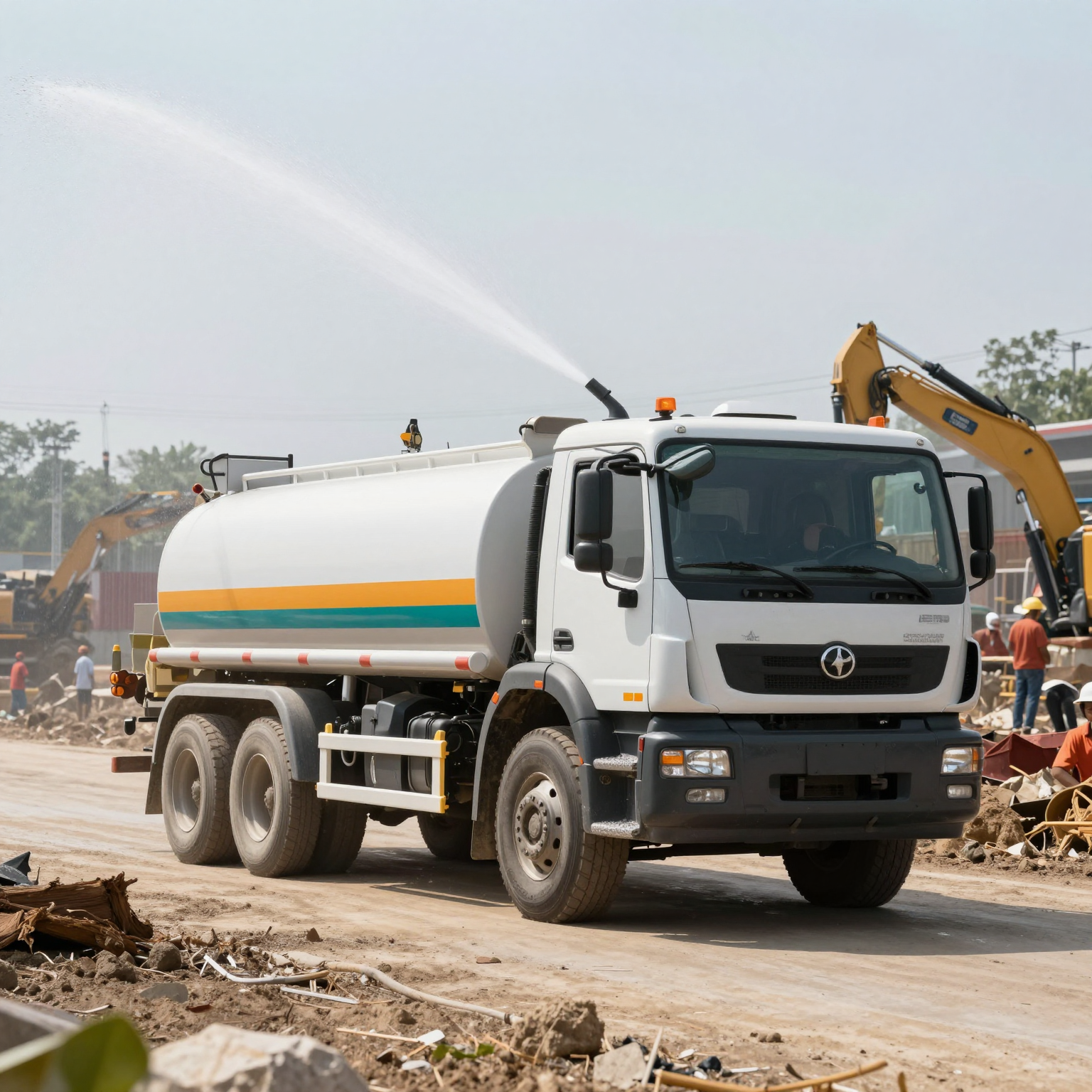
This image showcases a water truck in operation, effectively demonstrating its role in construction work.
In summary, obtaining a Commercial Driver’s License (CDL) is paramount for those who operate water trucks, particularly in the construction and mining industries. Given that most water trucks exceed the federally mandated Gross Vehicle Weight Rating (GVWR) of 26,001 pounds, the necessity for a CDL is not only a matter of legal compliance but also a significant factor in ensuring safety and accountability on the job. As highlighted by the U.S. Bureau of Labor Statistics, the demand for skilled heavy-duty vehicle operators continues to grow, affirming the importance of proper training and licensing in maintaining high industry standards. Fleet managers and trucking company owners must educate their teams about these regulations and ensure compliance to avoid legal repercussions and enhance operational efficiency. Therefore, it is essential to stay informed about both state and federal CDL requirements, which may vary significantly. For further insights on current regulatory frameworks and operational trends in the trucking industry, feel free to explore more on the impact of tariffs on trucking sales and navigating economic uncertainties in trucking.
In the ever-evolving landscape of the trucking industry, water trucks have become indispensable, especially in sectors like construction and mining. As the demand for reliable and efficient transportation solutions rises, investing in high-quality, affordable trucks is paramount for any fleet manager. At Summit Fairings, we understand the unique challenges you face in your business, which is why we are committed to providing durable and cost-effective truck solutions.
Partnering with us not only enhances your fleet’s efficiency but also aligns with your budgetary goals without compromising quality. With a focus on innovation and affordability, our offerings are tailored to meet the specific needs of your operations.
Don’t miss the opportunity to equip your fleet with the best. Visit our website today to learn more about our products and how we can support your trucking needs with excellence and reliability. Let us help you succeed in your industry with superior water truck solutions.