In the realm of commercial trucking, securing appropriate insurance is a non-negotiable aspect of operational success. Trucking company owners, fleet managers, and procurement teams face a myriad of options and regulatory requirements that can be daunting. This article addresses essential factors to consider when selecting commercial truck insurance, ranging from mandatory liability coverage to the nuances of premium costs. By understanding these critical elements, businesses can better navigate the complexities of insurance, protect their assets, and ensure compliance with legal obligations. Each chapter will focus on a distinct area of concern, equipping decision-makers with the knowledge necessary for making informed insurance choices.
Mandatory Third-Party Liability Coverage: The Cornerstone of Safe, Compliant Commercial Truck Insurance
A commercial truck is more than a moving asset; it is a legal obligation, a financial exposure, and a public trust all rolled into one. At the heart of this complexity sits third-party liability coverage. In many jurisdictions, including Singapore as a benchmark, it is not negotiable but mandated by law. A policy that covers third-party risks ensures that if a truck injures someone or damages property, the financial consequences don’t erase a company’s survival. Yet the mandate is more than a stick to avoid penalties; it is a pragmatic shield that supports steady operations, protects cash flow, and preserves a company’s hard-won reputation. When fleets operate on public roads, every mile is a potential claim, and every claim can stress a business’s balance sheet. Third-party liability creates a clear boundary between what the operation must cover out of pocket and what the insurer shoulders, enabling a company to plan, price its services, and maintain level-headed dealings with customers and lenders. It is the baseline against which all other insurance decisions are measured, the floor beneath which risk cannot drop without exposing the enterprise to ruinous costs or operational disruption.
Beyond the letter of the law, third-party liability coverage shapes how a fleet manages risk in practice. Accidents involving trucks carry outsized legal and financial stakes. Serious injuries or fatalities can trigger multi-claim lawsuits, complex settlements, and extended court involvement. In these moments, robust liability protection does more than pay for damages; it coordinates with defense costs, settlements, and medical expenses, relieving a company’s pocketbook from absorbing every hit. This is where the insurance partner’s role becomes pivotal. A reputable carrier doesn’t simply write a policy and send a bill; it helps a fleet respond efficiently when a claim arises, coordinating investigations, communicating with stakeholders, and supporting risk mitigation in the aftermath. When claims are handled smoothly, the business preserves continuity—drivers return to service, clients experience minimal disruption, and cash flow remains less volatile. The long view of third-party liability, therefore, is not fear of penalties alone but confidence in the system that keeps operations credible and dependable in the market.
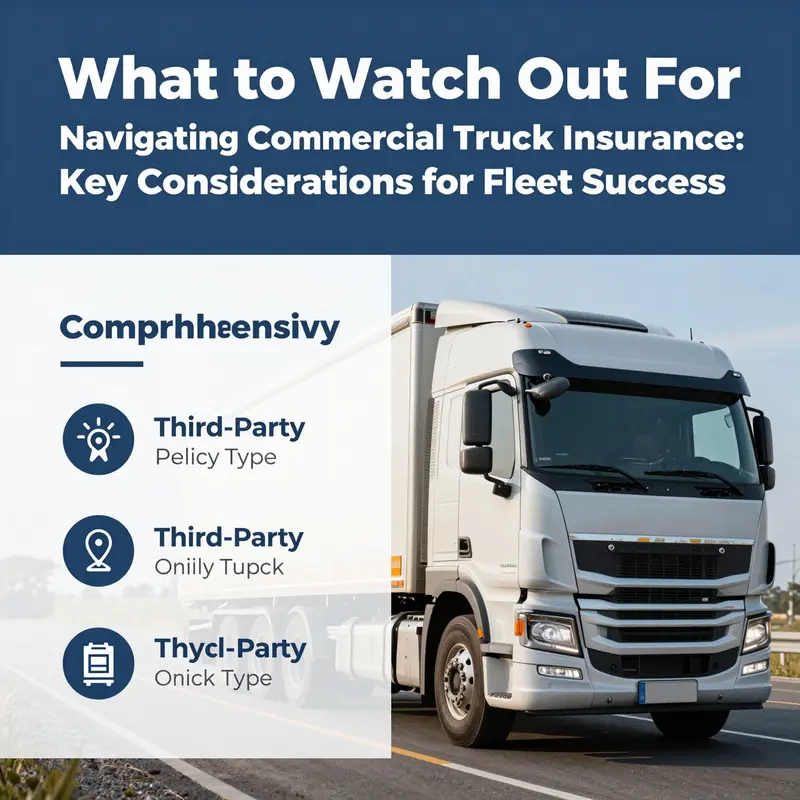
The decision to rely on third-party liability coverage also intersects with how a fleet structures its overall risk program. While the law may set the floor, the practical floor can be much higher depending on the truck’s use, cargo, and geography. This is where the choice between coverage options becomes consequential. A comprehensive policy, which includes damage to the insured vehicle from accidents, theft, fire, and certain natural events, offers a broad shelter for the fleet’s own assets. It is a natural fit for fleets that rely on uptime and asset value to deliver on contracts and maintain equipment fleets. A third-party-only policy, by contrast, tends to come with a lower premium and is often tempting for smaller operators or those with tight margins. But that lower cost can come at a high price if a truck is damaged or a driver makes a mistake that leaves the company exposed to large out-of-pocket costs. The balance between cost and protection is not a one-time calculation; it is a dynamic assessment that should track asset value, operational risk, and the financial resilience of the business over time.
As with any insurance decision, the true value of third-party liability hinges on understanding what is included and, equally important, what is excluded. The fine print matters as much as the headline. Most policies carve out specific exclusions that can surprise a fleet if not anticipated. Wear and tear, gradual mechanical failures not caused by a specific collision, and certain maintenance issues may be excluded from liability coverage. Some endorsements are required for specialized operations, such as transporting hazardous materials or moving internationally, and these endorsements can significantly alter the risk profile and price. There can also be geographic limitations that restrict coverage to certain regions or routes. The lesson is clear: a fleet should read the policy with a careful eye, mapping every exclusion to the realities of daily operations. When a driver is dispatched to a remote site or a long-haul leg crosses state or border lines, the coverage map should align with the planned routes and cargoes. A prudent operator uses this mapping to avoid gaps that could derail a claim or leave a costly window open for dispute.
Premiums, too, are not arbitrary numbers but reflections of measurable risk. They rise and fall with a mosaic of factors: the truck’s make, model, age, and overall value, the driver’s experience and claims history, the type of cargo, and the geography of operation. A high-value asset in a high-risk corridor will command a higher premium, all else equal. If a fleet runs hazardous materials, oversized loads, or multi-state routes, the risk profile shifts, and so should the insurance program. Even factors like maintenance discipline, telematics adoption, and safety culture can influence prices. Insurers weigh these signals when pricing, and they can also influence the availability of certain coverage terms. In practice, this means a fleet that invests in preventive maintenance, driver training, and route optimization may enjoy more favorable terms over time, not merely lower premiums but broader inclusions and favorable endorsements.
In addition to the pricing dynamics, the reliability of the insurer matters just as much as the premium. A licensed provider with strict solvency controls, transparent claims processes, and accessible risk management resources creates a healthier insurance experience. In regulated markets, licensing signals that the insurer operates under a framework designed to protect policyholders, ensure fair handling of claims, and support timely settlements. For fleets, this is not a theoretical comfort but a practical guarantee that coverage remains enforceable when it is most needed, and that claim payments won’t be stalled by a provider in trouble. Selecting a licensed carrier is thus a foundational step in assembling a trustworthy risk program that can endure the bumps of busy operations and comply with regulatory expectations.
The conversation about third-party liability cannot ignore the practical steps of obtaining and managing coverage. A fleet should begin with a clear picture of its daily realities: where trucks travel, what they carry, and who they share the road with. This clarity informs the right level of liability limits, ensuring there is enough buffer to cover potential claims without eroding profitability. It also guides the selection of endorsements for specialized operations, such as increasing the coverage for hired and non-owned vehicles, or extending protection to out-of-area driving when distributions cross state lines or borders. Engaging a licensed insurer early in this process brings in expertise on regulatory requirements and industry best practices. The insurer can help map risk exposures, propose appropriate coverage levels, and tailor endorsements that match the business model rather than a one-size-fits-all policy. This collaborative approach is where insurance becomes a strategic tool rather than a mere compliance cost.
To maximize protection without overpaying, fleets should approach third-party liability as part of a broader risk-management architecture. That means connecting coverage with risk-control activities on the ground. Driver qualification standards, ongoing training, fatigue management, and performance monitoring all interact with liability risk. A driver with a spotless record and strong safety habits reduces both the probability and severity of incidents, which can translate into better terms and lower costs over time. Likewise, robust preventive maintenance reduces the likelihood of mechanical failures that could lead to a claim. Telematics and route planning contribute even more by illuminating high-risk segments of a network and enabling targeted interventions. The objective is to create a virtuous circle: better safety performance lowers risk, which lowers premiums, which frees up capital to invest in further safety improvements. This is how third-party liability, while legally required, becomes a lever for strategic value creation within a fleet.
For readers seeking a deeper dive into how third-party liability functions within trucking regulations and the broader landscape of best practices, authoritative guidance from national transportation authorities offers grounded, practical insight. This resource provides context on how these protections operate in real life and why they matter for daily operations: https://www.dot.gov/
If you are looking to explore more about how fleets think about insurance and risk in the context of market changes and operational realities, a visit to the industry blog can offer helpful perspectives and examples from practitioners who live this balance every day. McGrath Trucks blog is a useful point of reference for ongoing discussions about the trucking ecosystem, fleet management, and how risk choices translate into performance.
Ultimately, the cornerstone of any commercial truck insurance program remains the alignment of legal requirements, risk appetite, and operational realities. Third-party liability coverage is the essential floor that prevents catastrophic financial shocks from derailing a business. It is the baseline that supports confident bidding, stable cash flow, and steady service delivery. It is also the starting point for a mature, proactive risk program that treats insurance not as a cost to be minimized but as a strategic asset to be optimized. As fleets grow or evolve—whether by expanding routes, upgrading equipment, or diversifying cargo—this core protection should be revisited and refreshed in light of the new exposures. The process should be collaborative, iterative, and grounded in real-world data rather than generic assumptions. By maintaining a relentless focus on what third-party liability covers, what it excludes, and how it blends with broader risk controls, operators can navigate the road ahead with greater certainty, knowing that they have a reliable partner in the insurance dialogue and a durable shield against the unpredictable hazards of the road.
In sum, mandatory third-party liability coverage is more than a compliance checkbox. It is the practical engine that powers responsible fleet management, protects assets, and sustains continuous operations even when the worst happens. For fleets that treat it as a foundational asset rather than a burden, insurance becomes a collaborator in performance—helping to preserve uptime, safeguard reputations, and keep the business on the move.
External resource for further guidance: https://www.dot.gov/
null
null
null
null
The True Price of Protection: Reading Premium Costs and Managing Risk in Commercial Truck Insurance
Premiums are the blunt instrument by which insurance companies price exposure, yet they are also the clearest signal of how a fleet manages risk. For anyone running a commercial trucking operation, the number quoted for coverage is not simply a line item to be minimized. It is a proxy for the likelihood of a claim and the potential severity of losses across the life of a policy. In practice, this means premium costs reflect a moving target: the type of cargo you carry, the experience and behavior of your drivers, the age and condition of your equipment, and the geographies in which you operate. To watch the premiums is to watch the interplay of safety, discipline, and markets—the quiet arithmetic of risk translated into dollars that turn into budgets, bids, and balance sheets. And because insurance is a requirement for lawful operation in many jurisdictions, understanding this arithmetic is not just a matter of cost control; it is part of strategic fleet management aimed at sustaining service levels, ensuring compliance, and protecting business continuity.
At the heart of premium formation is risk assessment. Carriers evaluate the exposure you bring to the table. Hauling hazardous materials, for example, immediately expands liability exposure. The added risk is not only the chance of a spill or accident but the potential consequences that can follow. Even within the same cargo category, risk can vary based on materials’ classification, handling requirements, and routes. This is why insurers scrutinize the details of cargo manifests, routing plans, and loading practices. They want to know whether your operations include specialized handling, storage restrictions, or time-bound deadlines that might force drivers into high-stress decisions behind the wheel. Each variable nudges the premium higher or lower, but the pattern is consistent: higher exposure, higher price.
Driver quality and track record sit close to the core of premium pricing. An operator with a veteran workforce and a track record of safe driving will typically secure more favorable terms than one with a higher accident frequency or a patchwork of minor violations. This is not merely about punishing past behavior; it is about predicting future risk. Insurers look at the driver pool, including experience, training, disciplinary history, and adherence to rules such as speed limits, fatigue management, and maintenance routines. They understand that a capable driver who consistently applies best practices reduces the probability of a costly claim. Fleet managers who invest in ongoing training, coaching, and performance monitoring create a safer baseline that translates into tangible premium relief over time. In short, improving driver safety is not only the morally prudent approach but also a direct driver of cost efficiency.
The vehicle itself matters just as much as the people behind the wheel. Age, mileage, condition, and maintenance history all feed into the risk equation. Newer trucks can carry lower mechanical risk, but they can also come with higher replacement costs and possibly different exposure profiles depending on technology installed. Older vehicles may invite more frequent repairs, but if you maintain them diligently and keep detailed service records, you can present a disciplined risk profile that reduces premium surprises. Insurers increasingly value proactive maintenance and telemetry data that demonstrate consistent upkeep, proper tire and brake wear management, and timely repairs. When a fleet can show a disciplined approach to uptime and reliability, it signals to insurers that the risk of sudden, catastrophic failures is reduced, which can translate into more favorable terms.
The market for used versus new equipment subtly influences pricing as well. As the market for second-hand trucks shifts, the value assigned to a vehicle in the underwriting process also shifts. A truck with a lower resale value might yield different premium dynamics than a similarly used unit with a strong maintenance history and verifiable uptime. The evolving cost of replacement or repair—especially in a volatile market—directly affects the cost of protection. Fleet leaders who stay attuned to used-truck price trends and depreciation patterns can adjust their asset mix and risk management programs to optimize both performance and insurance costs. For a deeper look at how market dynamics affect asset values and risk, see the ongoing coverage of trends in used-truck sales growth and its implications for pricing and replacement strategies.
Geography adds another layer of complexity. Where you operate matters because the regulatory environment, traffic density, road conditions, and incident frequency all influence risk. Regions with congested corridors, higher theft rates, or tougher weather patterns can push premiums upward. Conversely, more predictable markets with robust enforcement of safety regulations and lower accident rates may yield cost advantages. This geographic sensitivity is why many fleets adopt a distributed risk management approach, adjusting routing, scheduling, and maintenance cycles to align with regional risk profiles. In practice, this means more than choosing a route; it means designing your operations around a mindful map of risk that changes with seasons, construction activity, and local compliance climates. If your fleet covers multiple jurisdictions, your insurer will expect you to document how you manage cross-border or cross-region operations and to show continuity in safety practices across the network.
Another driver of cost is regulatory compliance itself. In some markets, advancing safety technologies and strict hours-of-service rules have become central to risk mitigation. Electronic logging devices, collision avoidance systems, and other telematics solutions do not just improve safety; they can also unlock premium discounts when they demonstrate measurable reductions in risk. The logic is straightforward: a fleet that can prove it eliminates or dramatically reduces high-risk behaviors—fatigue, aggressive acceleration, harsh braking—appears less risky to underwriters. Implementing these technologies often requires capital outlays, but the upside can be an extension of the policy’s value through lower premiums, improved service reliability, and better driver retention. The challenge is to balance upfront investment against long-term savings, while ensuring that the fleet remains compliant with evolving federal and regional requirements. Even where discounts apply, noncompliance raises risk profiles quickly, potentially offsetting any savings. Staying current with regulatory expectations thus becomes a strategic discipline, not a box to check annually.
The cargo and equipment mix also affects premium dynamics beyond the obvious hazardous materials scenario. Some categories of freight carry inherently different risk profiles, such as temperature-controlled loads, high-value electronics, or perishable goods that demand urgent and time-sensitive delivery. Each category can incur distinct rating factors, including closer monitoring of chain-of-custody and more frequent inspections along the supply chain. This nuance encourages fleets to assess not just the primary risks but the ancillary risks embedded in their service offerings. If you are expanding into new lines of service or adjusting your client mix to include more time-critical or high-value loads, you should anticipate corresponding shifts in insurance pricing and coverage requirements. Planning for these shifts—through revised endorsements, redesigned policies, or new risk-control programs—can prevent unexpected premium surges when business activity changes.
Policy structure itself shapes the premium conversation. The choice between comprehensive coverage and third-party-only coverage is more than a premium decision; it reflects the balance a business seeks between asset protection and cost containment. Comprehensive policies typically cover damage to your own vehicle, theft, fire, and certain kinds of natural disasters, offering peace of mind that your capital investment is protected even if an accident involves your own asset. Third-party-only policies, by contrast, address liability to others and their property, but leave the truck and its equipment at greater financial risk if something happens under your control. For a fleet with high asset value, valuable cargo, or critical uptime requirements, comprehensive coverage often proves cost-effective in the long run because it caps the total cost of ownership by reducing out-of-pocket repair or replacement expenses after incidents. For fleets prioritizing lean expense and lower premiums, third-party coverage provides essential protection while preserving cash flow, but it requires a risk tolerance regarding asset depreciation and repair costs. The prudent path usually involves a tailored mix that reflects asset value, risk appetite, and the operational realities of the business, rather than chasing the cheapest option alone.
Understanding exclusions and limitations is a discipline in its own right. Policies rarely cover every possible scenario, and the fine print matters as much as the headline premium. Many policies exclude wear and tear or mechanical breakdowns not caused by a defined incident. Others limit coverage to specific uses of the vehicle or particular geographies. Some endorsements may be required to transport certain classes of cargo or to operate in certain environments. The only reliable way to avoid an expensive dispute when a claim hits is to read the policy with care, map out every potential gap, and align your risk controls to close those gaps wherever possible. This alignment includes documenting maintenance cycles, driver training logs, incident reports, and drug and alcohol screening programs. When the insured–insurer relationship is built on transparency, your ability to recover from losses improves, and the premium conversation shifts from reactive pricing to proactive risk management. The net effect is not merely avoiding repudiation of a claim; it is building a credible, data-backed narrative that supports sustained coverage at a fair price.
The economics of premiums also reflect market cycles and the broader insurance environment. Catastrophe events, investment returns, and the rate environment influence the baseline cost of capital for underwriting. A fleet that experiences a spate of claims in a short period can see a lasting impact on the renewal premium, particularly if the claims reveal a structural risk issue—such as chronic maintenance deficiencies or systemic driver safety gaps. Conversely, a well-managed period with few or no incidents can yield gradual premium reductions, especially if the carrier believes the improved risk profile will persist. In practice, this means management teams should view premium negotiation as a continuous process, not a one-off annual exercise. Regular risk reviews, data-driven dashboards, and ongoing fleet coaching can keep a business in a state of steady improvement, which over time translates into more predictable and competitive pricing.
A final consideration is the role of a licensed provider who understands both the local regulatory landscape and the intricacies of risk calculation. The legitimacy of the insurer matters because it affects the reliability of coverage when it is needed most. A licensed carrier brings credibility, standardized claims handling processes, and recourse in disputes. It also ensures that the policy is properly underwritten and that coverage terms remain enforceable across renewals. In markets with complex regulatory requirements, such as those that demand strict compliance with safety and maintenance standards, choosing a licensed and reputable provider helps protect against gaps in coverage that could otherwise arise from unlicensed or unregulated operators. For readers seeking a starting point, official information from established providers often outlines standard policy structures and the rationale behind typical endorsements. A careful, informed choice of insurer is as essential as selecting the right coverage tier.
In sum, watching premium costs and understanding risk factors is not a sterile exercise in cost control. It is a comprehensive, ongoing process that intertwines safety culture, asset management, regulatory compliance, and strategic market awareness. The premium you pay is a bellwether of your risk posture, a signal that can guide decisions about capital investments, driver development, routing strategies, and even service offerings. By aligning risk controls with coverage objectives, you can stabilize costs over the long haul while preserving the protection that keeps your operation resilient in a volatile transportation landscape. For businesses looking to delve into current trends in insurance pricing and risk assessment models, a useful external perspective is provided by industry analysis that synthesizes where pricing is headed and why certain risk factors matter more today than yesterday. See the Insurance Information Institute’s examination of commercial truck insurance trends and risk factors for a broader framework that complements the operational insights shared here: https://www.iii.org/article/commercial-truck-insurance-trends-and-risk-factors.
As you continue to build a risk-aware operation, keep in mind that the story of your premiums is also the story of your service. A fleet that manages risk deliberately—through driver training, proactive maintenance, disciplined cargo handling, and transparent collaboration with its insurer—does more than keep the price down. It strengthens reliability, protects people, and sustains the very capacity that transport businesses depend on to meet the demands of customers and the marketplace. That is the deeper value behind every line item in an insurance policy: not only the protection it provides in the event of a loss, but the steadying influence it has on growth, planning, and operational efficiency. In this sense, premium costs become a proxy for the health of your risk management program, and the path to favorable pricing is paved with clear data, disciplined practice, and a shared commitment to safety and accountability.
Final thoughts
Selecting the right commercial truck insurance is a strategic necessity for trucking company owners and fleet managers. As outlined in this article, understanding mandatory third-party liability coverage, discerning between policy types, recognizing exclusions, and assessing premium costs are foundational for safeguarding your fleet. By prioritizing these elements, businesses can enhance compliance, minimize risks, and ultimately protect their operations in an increasingly complex regulatory landscape. Remember, the right insurance policy not only secures your vehicles but also supports your overall strategic goals.