The commercial trucking industry is essential to the U.S. economy, requiring skilled drivers to ensure the safe and efficient transportation of goods. For trucking company owners, fleet managers, and procurement professionals, understanding what it takes to become a commercial truck driver is crucial for building a competent and reliable workforce. This guide delves into the key requirements to become a truck driver, including age and legal prerequisites, the process of obtaining a Commercial Driver’s License (CDL), essential training and education, and health, background checks, and proficiency in English. Each chapter will equip industry stakeholders with knowledge to enhance recruitment strategies and meet operational needs effectively.
Crossing the Threshold: Age, Eligibility, and the Road to Becoming a Commercial Truck Driver

Every journey onto the highway starts with a gatekeeper that you must respect and meet. For aspiring commercial truck drivers in the United States, that gate is defined by age, legal standing, and the paperwork that proves you belong behind the wheel. The path is clear enough in its essentials, yet it is nuanced in practice. If you imagine the road as a corridor that leads from curiosity to a licensed, working professional, you will find that the first miles are paved with precise requirements rather than vague ambitions. The guidance that follows threads together the fundamental gates you must pass before you ever touch the cab, and it also situates these gates within the broader arc of what it takes to make a living as a commercial driver. As you read, you may glimpse how this gatekeeping looks in real life, from the kind of documentation you must carry to the discipline of staying current with federal safety rules, and you may sense why many would-be drivers choose to align with training programs that prepare them for both the tests and the road ahead. For a practical overview and ongoing updates, many readers turn to trusted trucking resources that curate the evolving rules of the road; the dialogue in those spaces can be a companion to your plan as you move from curiosity to qualification.
The most visible gate is age, and its contours are simple on the surface but consequential in practice. To operate a commercial vehicle across state lines, the Federal Motor Carrier Safety Administration (FMCSA) sets a minimum age of 21. This requirement marks the federal boundary between a young driver and a professional who can legally carry freight into another state’s jurisdiction. It’s a rule built on safety, but it also shapes career timelines. Some states, however, allow younger drivers to obtain a CDL for intrastate work—driving within the borders of the same state—at 18. The distinction matters because many beginner opportunities exist in regional or local roles that don’t cross state lines, and those positions can be enticing for someone who wants to start sooner. Yet for the long arc of a trucking career, especially one that aims for long-haul routes or HazMat transport, the 21-year minimum is a meaningful milestone.
Even when age aligns with the door’s height, there is a longer, more universal condition: you must have the legal right to work in the United States. The law is explicit that only individuals with lawful status may operate commercially in a way that becomes a workplace. Citizenship is a straightforward path, and lawful permanent residency (a Green Card) or an eligible work visa can also suffice. The takeaway is simple: you must be legally authorized to hold employment in the U.S. if you intend to drive for a living. The reality is that this gate matters because the trucking industry, regulated closely at the federal level, demands verifiable eligibility across all drivers who traverse state lines or handle certain types of cargo.
Beyond the gate of status, the gateway to driving a truck becomes the Commercial Driver’s License, or CDL. The CDL is the practical passport that verifies you meet the minimum knowledge and skills to operate large vehicles. It is issued by the state’s Department of Motor Vehicles, and the process to obtain it is twofold: a knowledge examination and a skills demonstration. The knowledge test surveys your understanding of traffic laws, safety regulations, and the basic principles of vehicle operation. The skills test, meanwhile, requires you to demonstrate a pre-trip inspection, basic vehicle control, and a supervised on-road drive that showcases your ability to respond to real-world traffic and cargo-handling scenarios. There are different classes of CDLs, with Class A covering combination vehicles like tractor-trailers, Class B for single heavy vehicles such as certain box trucks, and Class C for vehicles that carry smaller passenger or hazardous materials loads. The practical implication is that your intended duties—whether you want to haul heavy freight across states or manage local deliveries—will shape which CDL class you pursue and what particular endorsements you might seek.
To prepare for those tests, most aspiring drivers pursue some form of training. Formal programs, while not universal requirements, are highly recommended and often preferred by employers. Training can be found through community colleges, vocational schools, or private truck driving academies. The curriculum typically covers defensive driving, routine inspections of the vehicle, the rules governing hours of service, and safe handling of cargo. It also grounds students in the day-to-day realities of being a professional driver: the cadence of dispatch communications, the routine maintenance checks that keep a truck rolling, and the discipline of staying within legal limits on driving time. A strong training foundation not only increases the likelihood of passing the CDL exam but also improves your on-road judgment and your readiness to respond to unexpected events on the highway.
Once the paperwork is set in motion, the medical screen becomes the next essential gate. A DOT medical examination is required to verify that you meet health criteria that support safe operation behind the wheel. The medical examiner assesses vision, hearing, cardiovascular health, and general physical and mental well-being, including screening for conditions or substances that might impair safe performance. Those who pass receive a Medical Examiner’s Certificate, sometimes called a MEC, which you must carry while driving. The health gate is not a barrier to entry for everyone; it is a protective measure that helps ensure that those behind the wheel can sustain long hours on the road and respond effectively to demanding driving conditions.
Another gate that often sits closely to health is the background check. This is especially salient for roles involving hazardous materials or certain high-safety mandates. A federal fingerprint-based criminal history check is commonly required for HazMat endorsements. The emphasis here is not punitive so much as it is protective—ensuring that drivers entrusted with hazardous materials have a clear and reliable history, given the potential risk to communities and partners in the supply chain. This layer of screening complements the standard background checks many carriers perform for all applicants, reflecting the industry’s commitment to safety, compliance, and trust across nationwide operations.
A practical, everyday requirement accompanies all of the above: language proficiency. To function effectively in a trucking job, you need to read, write, and understand English well enough to parse road signs, interpret shipping documents, and communicate with dispatchers, law enforcement, and fellow drivers. The job demands precise comprehension and clear, unambiguous communication, particularly when timing, route changes, or safety instructions are involved. The clarity of your language skills helps you avoid misunderstandings that could compromise safety or efficiency on the road.
The journey through these gates is cumulative. Carriers often look for demonstrated experience and a clean driving record, and many positions favor applicants with additional years of accident-free driving. While this isn’t a universal prerequisite, it is a reliability signal that employers use to gauge how a driver might perform under pressure and how consistently they might maintain safety and compliance in real-world conditions. Some candidates begin their careers with intrastate work or local routes and gradually transition to interstate duties as their experience and confidence grow. The path is rarely a straight line, but the gates—age, legal status, CDL qualification, medical clearance, background clarity, and language proficiency—work together to determine who gets onto the highway and who remains at the gate.
As you picture this progression, it helps to integrate a few practical reminders. First, the official FMCSA resources remain the most authoritative source for the rules that govern licensing, medical requirements, and safety standards. Keeping a finger on the pulse of those guidelines can prevent missteps and clarify expectations as you plan your next steps. Second, practical preparation matters as much as formal qualifications. Training programs, even when not strictly required, cultivate the habits and skills that make a driver safer and more competent from day one. They also provide a structured path to practice tests, which can reduce stress on the day of the exam and increase the odds of success. And third, it helps to ground your journey in community knowledge. Reading about experiences, timelines, and common hurdles on reputable industry blogs can provide realistic expectations and practical tips for navigating the process. For those who want a quick gateway to ongoing discussions and career guidance, the McGrath Trucks blog offers a broad repository of insights that can complement formal preparation. McGrath Trucks blog (https://mcgrathtrucks.com/blog/) can serve as a helpful companion as you move from curiosity to credential.
Once you frame the gates this way, the sequence of steps to become a commercial truck driver feels manageable rather than opaque. Start with an understanding of your age and your eligibility to work legally in the United States. Confirm whether you would pursue interstate driving or intrastate opportunities, since that choice will influence the CDL class you target and the scope of endorsements you may seek. Then prepare for the CDL program by reviewing the knowledge test content and engaging in a training curriculum that covers the fundamentals of vehicle inspection, safe operation, and the rules of the road as they apply to heavy vehicles. Plan for the two-part exam—the written knowledge component and the practical skills test—and arrange training or practice time that emphasizes the inspection routine and the on-road maneuvers that instructors look for during the test. While contemplating training, coordinate with a medical professional who can guide you toward obtaining the DOT medical certificate and maintaining your health criteria as you gain experience behind the wheel.
As you progress, you should also anticipate the ifs and maybes that come with a driving career. A clean background improves job prospects and access to more routes and cargo types, while a HazMat endorsement can unlock lucrative freight but adds the additional fingerprint and background scrutiny. The balance between opportunity and screening reflects the industry’s emphasis on safety and accountability. In the end, the core of this journey is predictable: the gates you pass, the documentation you carry, and the discipline you bring to the road day after day. The road you choose to travel—regional, long-haul, or specialized freight—will shape the pace and the destination of your professional life, but the fundamental gates stay the same for anyone who wants to join the ranks of licensed commercial drivers.
For those who want to map this path now, start with credible, up-to-date official resources to confirm eligibility and requirements as they apply to your situation. And consider supplementing your study with practical guides and community discussions that translate rules into real-world steps. The journey from curiosity to credential is concrete and navigable when you approach it with patience, preparation, and a clear picture of the gates that structure your entry into one of the country’s most essential professions. Official guidance remains your anchor, but the daily work of learning, training, and staying compliant will ultimately define your ability to move freight safely and efficiently across the vast American landscape. For a broader sense of the industry landscape and ongoing conversations about trucking careers, you can explore the broader trucking community through the linked resource above, or consult the FMCSA portal for the latest standards and requirements.
External resource: For official guidance and current standards, visit the FMCSA site: https://www.fmcsa.dot.gov
From Learner’s Permit to the Open Road: The Real Journey to a CDL and a Career Behind the Wheel
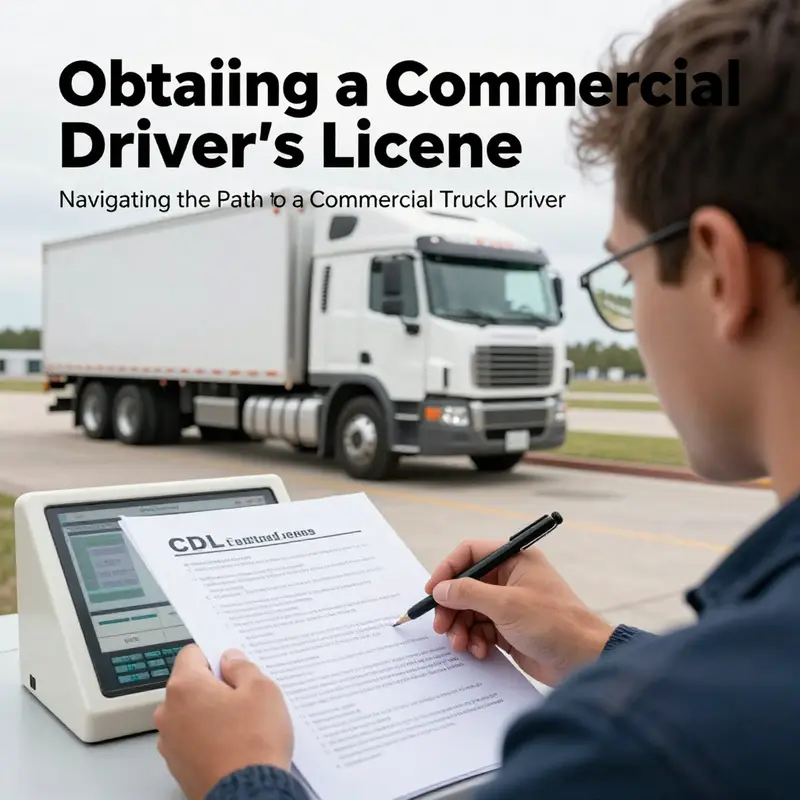
Becoming a commercial truck driver starts long before you twist the key and roll onto the highway. It begins with a precise, multi-layered path that blends legal eligibility, formal licensing, health requirements, and real-world skill development. The road to a CDL is not a single exam but a sequence of gates you must pass to prove you can operate large, heavy vehicles safely, legally, and consistently. This journey aligns with the broader question at the heart of this chapter: what does it take to become a commercial truck driver? The answer is a careful balance of age, authorization, licensing, training, health, and a track record that shows you can handle the responsibilities of the road. A driver’s life is built on preparation, discipline, and ongoing learning, because the rules change, roads evolve, and safety remains the core of every trip you will undertake.
Age is one of the simplest yet most consequential filters in this process. For intrastate driving, the minimum age is typically 18, a threshold that allows a young operator to begin building experience within a state’s borders. Yet if the aim is to cross state lines, haul hazardous materials, or work in the most common long-haul segments, federal law requires you to be at least 21. This split reflects the broader aim of the federal government to ensure that drivers manipulating very heavy and potentially dangerous vehicles carry a maturity, judgment, and decision-making capacity appropriate to higher-risk operations. The practical effect is that many entrants into the industry begin by gaining experience on local routes, perhaps accumulating hours in a single state while they work toward the interstate standard. The distinction matters, because your first jobs, training commitments, and even the CDL class you pursue can be shaped by the state or the type of work you expect to do in the early years of your career.
Beyond age, legality to work in the United States is a non-negotiable baseline. You must have permission to engage in employment here. That can be through U.S. citizenship, lawful permanent residence, or a valid work visa that authorizes employment. Non-citizens who lack legal status cannot legally drive commercially in the United States. This rule is not merely a formality but a safeguard that ensures drivers can work without the risk of immigration complications that would interrupt both a driver’s career and the broader supply chains that rely on steady, compliant trucking operations. For aspiring drivers who meet this criterion, the next step is the Commercial Driver’s License, the gatekeeper credential that makes all the other requirements possible.
The CDL is not a badge you receive with a single test; it is a license earned through a structured process at your state’s DMV. The license comes in several classes, each aligned with the type of vehicle you intend to drive. Class A covers combination vehicles such as tractor-trailers and is the most common path for long-haul trucking. Class B applies to single vehicles with a heavy GVWR, like box trucks, while Class C targets vehicles designed to transport a smaller capacity of people or hazardous materials. Each class carries its own set of eligibility rules and testing requirements, but all share a common commitment to safety, knowledge, and practical ability. The core tests are twofold: a written knowledge exam and a skills test. The knowledge test covers traffic laws, safety regulations, and vehicle operation, while the skills test demonstrates you can perform a pre-trip inspection, control the vehicle safely, and navigate real-world driving with a disciplined approach to safety. The emphasis on pre-trip inspection is not cosmetic; it teaches you to spot issues before they become problems, helping prevent breakdowns and accidents on the road.
Training plays a pivotal role in turning potential into reliable performance. Although not uniformly mandatory in every jurisdiction, formal training is highly recommended and often demanded by employers. Training programs, whether offered by community colleges, vocational schools, or private trucking academies, immerse you in the fundamentals of defensive driving, vehicle maintenance, and the critical Hours of Service (HOS) regulations that govern how long you can drive and how you must rest. You will learn to perform thorough vehicle inspections, recognize potential cargo handling hazards, and understand the nuances of delivering freight safely and on time. The value of training lies not only in passing the tests but in cultivating habits that reduce risk on every mile you drive. In an industry defined by long hours and varying road conditions, a solid training foundation translates into fewer costly mistakes, more consistent delivery times, and greater confidence behind the wheel.
The medical and physical requirements are equally indispensable. A federal medical examination, commonly referred to as the DOT physical, is required to confirm you meet the physical and mental health standards necessary for operating a commercial vehicle. The exam evaluates vision, hearing, cardiovascular health, and general medical fitness, and it culminates in the issuance of a Medical Examiner’s Certificate. This certificate must be carried whenever you drive professionally. Vision is a particularly sensitive area, with standard expectations often described as 20/40 acuity in each eye, with or without correction. While this standard is a baseline, some cases require more specialized testing or corrective options, so you should approach the process with a clear plan for any vision concerns you may have. A successful medical examination signals to employers that you can manage the sustained physical demands of long trips, rigorous schedules, and the potential stress of adverse driving conditions.
In addition to physical health, a driver’s medical readiness intersects with substance abuse screening. The certification process includes screening designed to confirm that you can operate a vehicle without impairment. The DOT certificate is not just a piece of paperwork; it is a symbol that you can be trusted to make sound, risk-aware decisions in high-pressure situations. The medical and screening elements reinforce the industry’s core commitment to safety and professionalism—a promise you must uphold in every yard, every highway, and every dock.
Alongside health, your driving record matters as much as your technical skill. A clean driving record is a valuable asset, often affecting how quickly you can move from training to employment and the kind of positions you can secure. Serious violations, such as DUIs or repeated high-risk incidents, can disqualify you from CDL eligibility or limit you to certain routes or employers. Background checks may extend beyond traffic safety history to include criminal records, depending on the employer and the nature of the position. In a field where reputation for safety translates to reliability and job security, cultivating a pristine table of hours and responsible decisions on the road becomes a foundational investment in your career.
English proficiency is another practical necessity. You must be able to read and understand road signs, shipping documents, and safety instructions, and you must be able to communicate clearly with dispatch, law enforcement, and fellow drivers. The ability to read and comply with complex regulations protects you, your cargo, and the traveling public. This language requirement is not merely about grammar; it is about safety, clarity, and the ability to act quickly and correctly in diverse, potentially hazardous settings. For those who may doubt their English skills, many training programs incorporate focused language and comprehension practice as part of the curriculum, recognizing that language proficiency directly impacts on-road performance.
Experience matters, but it is not a barrier at the outset. Employers often prefer candidates with prior driving experience, particularly with large vehicles, and they typically favor a clean record. Two years of accident-free driving is a common benchmark for many trucking positions, though some roles may accept shorter histories or offer training-based pathways. As a driver progresses, the accumulation of miles under safe operation becomes the most trusted credential. The value of safety, reliability, and adherence to regulations compounds over time, transforming a newly minted CDL holder into a dependable asset for a fleet. The combination of a solid training foundation, a clean record, and a track record of safe operation is what ultimately opens doors to higher-paying opportunities and more specialized freight.
As these pieces come together, the practical steps to obtain a CDL crystallize. First, verify your eligibility: confirm you meet the minimum age requirements, have legal work authorization, and understand whether you will pursue intrastate or interstate driving. Next, secure a valid driver’s license from your home state, with consideration given to whether an international license is accepted in your path. Then, initiate CDL training through a recognized program that covers vehicle inspection, safety protocols, and essential driving techniques. Prepare for and pass the CDL knowledge test, followed by the skills test that will demonstrate your proficiency in pre-trip inspections, basic control, and on-road operation. Schedule and complete the DOT medical examination to obtain the Medical Examiner’s Certificate, and maintain it for the duration of your CDL career. Build a clean driving record through disciplined, safety-forward driving behavior. Develop and demonstrate English-language proficiency so you can read, comprehend, and communicate effectively in all trucking contexts. Finally, begin applying for positions with reputable fleets and freight companies, knowing that entry-level roles may emphasize local routes before you break into long-haul or hazardous-material assignments.
For those who want to connect the learning to practical, up-to-date guidance, the journey can be complemented by industry-focused resources that synthesize regulations with real-world paths to employment. The following perspectives can help you see how the framework translates into everyday steps: a formal training program, practice exams, and the mental model of a driver who plans, inspects, and operates with a safety-first discipline. In particular, many would benefit from referring to the broader trucking community and its ongoing conversations about best practices, route planning, and safety culture. For readers seeking a concise but reliable repository of insights, the McGrath Trucks blog offers a useful hub of practical knowledge and evolving trends that accompany the CDL journey. It serves as a bridge between formal requirements and the realities of daily driving, helping learners translate exam prep into the rhythm of the road. You can explore it here: https://mcgrathtrucks.com/blog/.
As you map the path from aspirant to professional, consider a concrete example to anchor the process. Take the state-specific guidance as a reference point. In Oregon, for instance, applicants must meet core prerequisites—being 18 or older for intrastate driving and 21 for interstate operations, holding a valid state license, demonstrating legal presence in the United States, passing the DOT physical, and maintaining a clean driving record. A vision test is the standard for entry, and the general sequence mirrors the national pattern: knowledge testing, then a practical skills evaluation that includes pre-trip inspection, basic vehicle control, and on-road driving. The Oregon DMV’s procedures illustrate how state requirements harmonize with federal standards, offering a practical blueprint for aspirants in other states as well. This alignment is essential for understanding what you are getting into and how to plan your training, schedule, and job search effectively. The Oregon example reinforces the principle that while the CDL is a federal credential, its journey is navigated largely through state-level processes with federal rules shaping the boundaries and expectations.
The testing process itself is designed to be cumulative rather than a one-off hurdle. After meeting the prerequisites, you will take the CDL knowledge test to demonstrate your grasp of traffic laws, safety rules, and the practicalities of operating large vehicles. The skills test follows, with three components. The pre-trip inspection tests your ability to identify mechanical and safety issues before the vehicle hits the road. The basic control test assesses fundamental maneuvers such as straight-line backing, offset backing, and turning accuracy in a controlled setting. Finally, the on-road driving portion confirms your competence in a real-world environment, where coordination with dispatch, adherence to hours-of-service rules, and safe decision-making under pressure are on display. A successful pass in both tests earns you the CDL, marking a transition from student to professional driver and unlocking the door to a career that, while demanding, can be deeply rewarding.
As you move from examination to employment, the practical realities of the trucking industry come into sharp relief. Earnings potential, career progression, and the opportunity to specialize are all influenced by your initial decisions—the vehicle class you pursue, the type of freight you choose, and your willingness to commit to extended or hazardous routes. Those who aim for higher earnings will often focus on fields where demand is high and the training and certification requirements are navigable with experience. Specializing in hazardous materials transport, refining routing efficiency, or pursuing long-haul assignments can lead to more favorable compensation, provided you maintain an exemplary safety record and a steady, reliable operation. The path to six-figure earnings, while possible, is earned through discipline, continuous improvement, and a willingness to adapt to evolving regulations and market conditions.
In the end, the CDL is less a single moment of achievement and more a doorway into a profession that requires continuous learning, steady judgment, and consistent performance. The framework—legal eligibility, licensing, training, health, and record—constitutes a durable structure that supports a career built on safety, reliability, and service to the supply chain. If you’re embarking on this path, approach it as a process: study the rules, train with intention, protect your health, and cultivate a driving record that speaks to your commitment to safety. The road awaits, but you will arrive prepared. For more context and ongoing updates on practical steps, the McGrath Trucks blog can offer helpful insights as you plan your next move and track the industry’s evolving landscape. External resources, such as the federal FMCSA guidelines, provide the authoritative framework that underpins every decision you make on this journey: https://www.fmcsa.dot.gov/.
From Classroom to Cab: The Training Blueprint Behind Every Successful Commercial Truck Driver
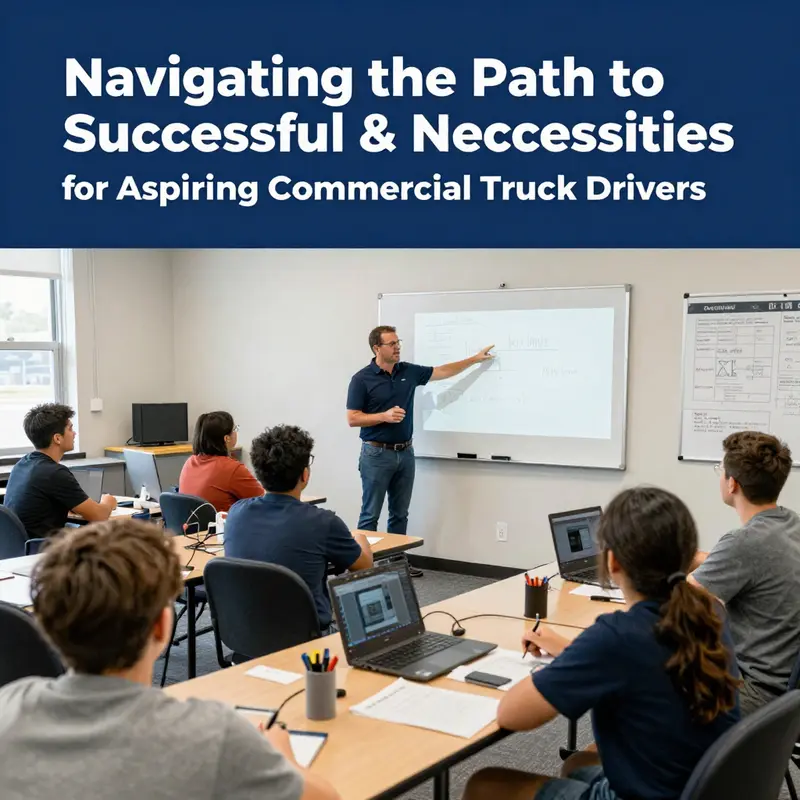
Entering the world of commercial trucking begins long before the first mile is logged. It starts with training that translates ambition into competence, responsibility, and, above all, safety on America’s highways. Driving a heavy vehicle is not a mere skill set assembled from a few data points; it is a disciplined practice grounded in federal standards, institutional learning, and ongoing professional development. The pathway to a CDL is the visible doorway, but the real work unfolds in a carefully designed training sequence that blends classroom instruction with hands-on practice, testing the driver not just on how to pass exams but on how to think like a professional behind the wheel. In this chapter, we explore how training and education form the backbone of a successful trucking career, how programs are structured to prepare drivers for the demands of modern freight, and why ongoing learning remains essential once the license is earned.
At the heart of every training program lies a clear recognition: commercial trucking operates under a complex web of federal and state rules designed to keep people and cargo safe. The Federal Motor Carrier Safety Administration (FMCSA) sets national standards for training and licensing, outlining what a prospective driver needs to know before stepping into a cab and taking control of a vehicle that can weigh several tons. This is not a checklist to rush through but a framework that ensures every operator has a grounded understanding of traffic laws, safety regulations, and the mechanics of vehicle operation. Within this framework, training programs weave together two complementary strands: knowledge and hands-on proficiency. The knowledge component covers the legal and regulatory landscape—the chapters of federal and state transportation law—while the practical component builds the muscle memory and judgment required for real-world road conditions, cargo handling, and daily job pressures.
The classroom portion of training is designed to demystify the rules of the road and the specifics of operating large vehicles. Students learn about pre-trip inspections, post-trip inspections, and a systematic approach to identifying and addressing potential failures before they become safety hazards. This is where the habit of thoroughness is born. The exam process mirrors this emphasis: the knowledge test assesses comprehension of traffic laws, safety regulations, and the basics of vehicle operation, while the skills test probes the driver’s ability to perform a precise pre-trip inspection, manage basic vehicle control, and navigate an on-road driving course. Yet the value of training extends far beyond the moment of testing. A well-structured program builds a framework for decision-making under pressure, encouraging drivers to apply the rules under the stress of deadlines and the variables of road feedback.
A critical element of training is understanding the weight of cargo and the physics that govern its securement. Cargo securement and weight distribution are not abstract concepts; they determine whether freight stays put or shifts in a way that endangers the vehicle, the driver, and other road users. Trainees immerse themselves in the practicalities of securement methods, distribution planning, and the consequences of improper loading. They learn to assess payload characteristics, tie-down strategies, and the interplay between weight distribution and braking performance. This is not merely a matter of compliance; it is a core professional responsibility that falls squarely on the driver every time a load leaves the dock. The program thus reinforces a mindset that cargo isn’t just “something to move” but cargo to be safeguarded through meticulous preparation and execution.
Defensive driving sits as a central pillar of training because highways demand constant anticipation, quick judgment, and calm execution. Trainees study hazard perception, space management, speed adjustment for road and weather conditions, and a disciplined approach to communication with dispatch and other drivers. They practice scanning patterns, maintaining safe following distances, and responding to unexpected events with controlled, safe actions. This emphasis on defensive driving also dovetails with the evolving nature of the job. Modern trucks may be equipped with advanced driver assistance systems (ADAS) and digital platforms that support safer operation, but they do not replace the driver’s judgment. Training programs incorporate exposure to these technologies, teaching drivers to leverage assistive features while staying fully engaged and ready to take manual control when necessary. The result is a driver who can blend traditional seamanship with contemporary toolkits, maintaining safety without sacrificing efficiency.
Beyond the rules and the road, effective training delves into the fundamentals of vehicle inspection and maintenance. Pre-trip and post-trip inspections are not mere rituals; they’re a disciplined routine that empowers drivers to identify issues before they become failures. Trainees learn to examine tires for tread depth and proper inflation, inspect brakes, review lighting and signaling systems, and assess the cab and trailer condition for any wear or damage. They also gain a working knowledge of basic maintenance tasks, understanding which problems require professional attention and which simple checks can keep a truck running smoothly between service visits. This practical know-how supports reliability and minimizes downtime, underscoring that a driver’s value lies not only in the miles accumulated but in the consistency of safe operation.
Given the breadth of responsibilities, many programs place emphasis on the ethical and professional dimensions of trucking as well. Students are taught the importance of compliance with Hours of Service (HOS) regulations to prevent fatigue and reduce risk. They learn how to plan trips in ways that prioritize rest, efficiency, and safety, balancing customer needs with personal and public welfare. The content also covers regulatory compliance in areas like hazardous materials (HazMat) if the learner seeks endorsements later. While HazMat is not a universal requirement for all truckers, the training path is designed to accommodate those who choose to pursue additional endorsements. This approach aligns with the reality that the industry values adaptability; drivers who demonstrate a solid foundation in general trucking standards are better prepared to specialize, if they wish, without having to start from scratch.
Accredited or reputable training programs carry particular weight with employers. Many carriers prefer candidates who have completed formal programs because accreditation signals a higher level of rigor, consistency, and safety culture. Accredited programs typically adhere to standardized curricula that reflect FMCSA guidelines and national best practices. They also provide structured hands-on experiences, often with access to well-maintained equipment and seasoned instructors who bring real-world scenarios into the learning environment. Prospective students should therefore look for programs that clearly articulate their alignment with FMCSA standards and that offer transparent information about curriculum, instructor qualifications, placement outcomes, and graduation timelines. This is not a mere formality; the credibility of a program often translates into smoother transitions into paid employment and earlier opportunities for career advancement.
There is also a practical reality of financing and logistics. Training decisions are frequently influenced by the time and cost involved, but students should approach enrollment with a long-term view. A comprehensive program may require weeks of study and several thousand dollars, but the payoff is a valid CDL with the potential for stable, scalable earnings. The decision should balance not only the price tag but the quality of instruction, the availability of on-site driving experience, and the eventual pathway to certification in the most relevant endorsements. In this sense, the choice of program becomes an investment in a driver’s professional identity. When a graduate exits the program with a solid foundation in pre-trip inspections, safe cargo handling, and defensive driving, they are better positioned to meet the exacting demands of the job market and to establish a track record that employers trust.
As the trucking industry evolves, so does training. Ongoing education is no longer optional for serious drivers. The industry continually introduces new regulations, evolving safety standards, and advanced technologies that reshape how trucks operate and how freight moves across the country. Refresher courses, safety seminars, and periodic updates ensure that drivers stay current with the latest procedures and best practices. This cycle of continuous learning helps reduce risk, extend the life of equipment, and keep drivers competitive as routes shift and demand patterns change. For an individual who has already earned a CDL, continuing education becomes a professional habit that sustains a career over the long haul, rather than a one-time hurdle to clear.
Within this framework, the search for training resources can feel daunting. Prospective drivers can begin by exploring official sources and then seeking out reputable programs that align with their goals. The FMCSA remains the authoritative touchpoint for regulatory guidance, but a robust training pathway also includes guidance from industry associations, vocational instructors, and experienced carriers who understand the practicalities of modern trucking. For those who want a tangible starting point, practical tips and perspectives often appear in industry-focused blogs and training portals. For example, the mcgrathtrucks blog offers a glimpse into real-world considerations about starting a trucking career, including how training choices influence job readiness and early career opportunities. See more at the source: mcgrathtrucks.com/blog/.
Endorsements represent another facet of training that can shape a driver’s trajectory. HazMat endorsement training, for instance, opens doors to specialized freight that commands premium rates but demands rigorous safety and security standards. If a driver pursues double or triple trailer endorsements, the training path becomes a bit more involved, reflecting the added skill and confidence required to manage complex vehicle configurations. Programs that offer clear guidance on these endorsements, their prerequisites, and the time commitments involved help students plan their careers with clarity. The emphasis here remains steadfast: thorough preparation, regardless of whether the driver plans to haul general freight or specialty loads, yields safer roads and better job outcomes.
Throughout the journey from enrollment to employment, the narrative of training remains inseparable from the broader story of professional trucking. The CDL is not the finish line but the first major milestone on a path that requires discipline, curiosity, and a commitment to lifelong learning. A driver who invests in comprehensive training—one that blends theory with practical application, aligns with federal standards, and remains engaged with ongoing education—emerges not just with a license but with a professional identity grounded in safety, reliability, and service. This is the real essence of what it takes to become a commercial truck driver: robust education that translates into consistent, responsible practice on the road, supported by a culture of continuous improvement and accountability.
For readers seeking a reliable map of where training fits within the overall journey to a CDL, the FMCSA’s resources provide the authoritative compass. They outline the standards, the testing framework, and the medical and regulatory prerequisites that sit alongside training. In practical terms, a successful trainee should approach training with a mindset of deliberate mastery—highly focused study on regulatory content, thoughtful practice of pre-trip and post-trip inspections, and deliberate, supervised driving that builds confidence and safety habits. And as they progress, they should stay connected to the broader trucking ecosystem: engage with mentors, participate in safety briefings, and seek feedback from instructors who understand the daily realities of highway life. In doing so, they establish a foundation not only for a first job but for a durable, evolving career that can adapt to changes in technology, regulation, and market demand.
External resource for further study: https://www.fmcsa.dot.gov/
null
null
Final thoughts
Understanding the requirements to become a commercial truck driver is vital for enhancing your recruiting efforts and ensuring you employ qualified individuals. From age and legal requirements to obtaining a CDL and undergoing medical examinations, these processes are designed to create a safe and efficient workforce. For truck companies, recognizing these standards allows for better hiring practices, contributing to operational success and compliance with regulations. As the demand for reliable truck drivers continues to grow, adapting your hiring criteria in line with these requirements will be instrumental in fostering a skilled and dedicated team.