Within the landscape of mobile commerce, food trucks have emerged as pivotal players, merging culinary arts with entrepreneurial spirit. As trucking company owners and fleet managers, understanding the business nuances behind food trucks is essential. This article systematically unpacks what defines a food truck as a commercial business, with insights tailored for logistics, procurement teams, and brokers. Each chapter delves into the multifaceted operational dynamics of food trucks, focusing on their profit-driven nature, mobile retail viability, and the entrepreneurial drive they foster. By the end of this exploration, readers will gain a comprehensive understanding of the commercial business paradigm that encapsulates food trucks.
null
null
Rolling Revenue: How Food Trucks Operate as Profit-Driven Commercial Businesses
Operational and Financial Realities Behind the Mobile Counter
A food truck is more than a temporary vendor on a street corner. It is a compact commercial enterprise shaped by the same financial incentives, operational demands, and market pressures that govern brick-and-mortar shops. Owners invest capital in specialized equipment, secure permits, manage inventory, and run targeted marketing campaigns with the explicit aim of generating profit. That profit motive frames every decision, from menu design and pricing to route planning and staff shifts, and it is what squarely classifies food trucks as commercial businesses.
Operators begin with a clear business calculus. Startup costs typically include the vehicle itself, a fitted kitchen, refrigeration, fire suppression systems, and point-of-sale technology. Beyond the initial outlay there are recurring commercial expenses: fuel and maintenance for a mobile unit, commercial insurance, staff wages, food supplies, and fees for city permits or designated vending spots. These expense categories mirror those of any retail business and require routine budgeting, cash flow management, and forecasting. A food truck that treats operations casually will quickly find its margins eroded; one that applies rigorous commercial discipline can scale, brand, and compete in diverse markets.
Regulation is a defining constraint and a strategic variable. Local health codes, zoning rules, and permitting processes shape where and how trucks can sell, often limiting access to high-foot-traffic locations or imposing costly compliance measures. These rules force operators to balance legal adherence with profitability. Some owners opt to follow restrictions closely and accept lower margins, while others push boundaries to sustain revenue. This tension is not anecdotal; it is a fundamental business consideration that influences pricing strategies, scheduling of service windows, and decisions about expansion.
Menu design and product selection are deliberate profit drivers. Successful trucks curate offerings that maximize margins while meeting customer expectations for speed and quality. Operators often favor high-appeal, impulse-friendly items—crispy snacks, signature sandwiches, or distinctive ethnic dishes—that sell quickly and have predictable prep costs. The shift in recent years toward gourmet and specialized street foods reflects strategic positioning. By targeting niche tastes or premium segments, trucks can command higher prices and cultivate customer loyalty. These choices are marketing and financial tactics, not mere culinary experiments.
Marketing itself has become a crucial commercial tool. Social media and real-time location updates turn trucks into dynamic retail points. Announcing daily routes and pop-up appearances builds urgency and drives foot traffic. Many operators use digital channels to promote limited-time offerings and cross-promotions with local events, leveraging scarcity and convenience to convert social engagement into sales. This approach mirrors retail practices: controlling customer flow, timing promotions for peak demand, and using branding to increase lifetime value per customer.
The business model allows multiple revenue streams beyond daily sales. Catering private events, partnering with festivals, offering delivery through platforms, and franchising menu concepts all create opportunities to diversify income. Some trucks operate seasonally or rotate locations to chase high-volume events, while others establish recurring schedules at business districts and campuses to secure steady revenue. These variations demonstrate the strategic flexibility of the model and its commercial maturity.
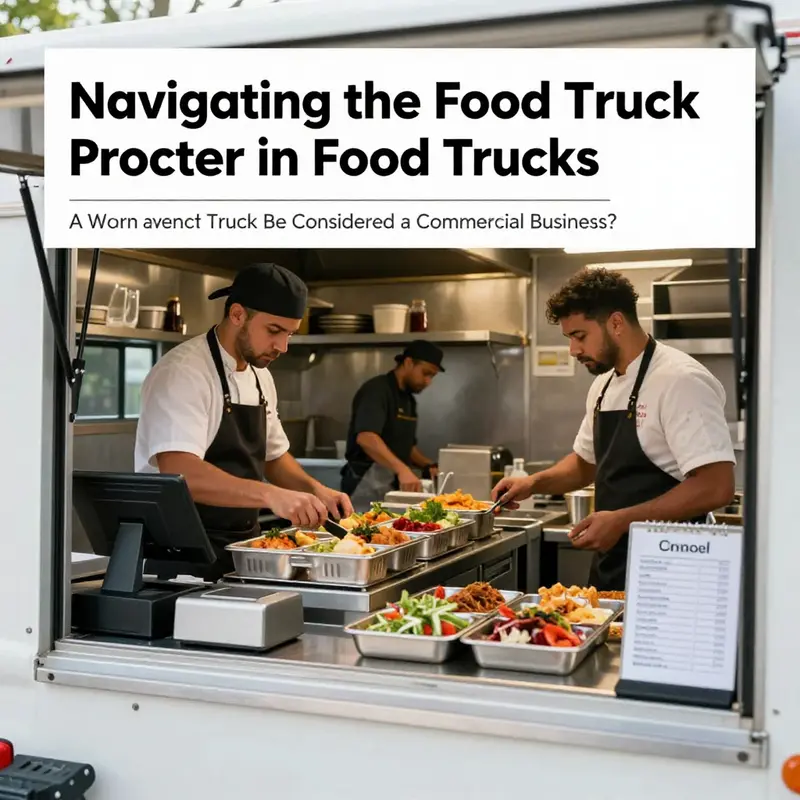
Operational efficiency underpins viability. Kitchens inside trucks are space-constrained, so workflow design, inventory par levels, and staff training are essential. Each minute of service time translates directly into revenue potential. Operators optimize prep methods, standardize recipes to control food costs, and implement systems to reduce waste. Purchasing decisions—sourcing ingredients at scale, negotiating with suppliers, and timing inventory buys—are business activities aimed at protecting margins.
The truck itself is a tangible commercial asset. When owners sell an established food truck, the transaction often includes more than the vehicle: it can involve a transferable city permit, an established route, and brand goodwill. These elements have measurable value and change hands in formal sales. Treating a truck as a business asset anchors it in the commercial economy, subject to valuation, depreciation, and regulatory transfer conditions. Prospective buyers evaluate historical sales, permit transferability, and the cost of bringing the truck up to code—exactly the analysis used in other small-business acquisitions. If you want practical guidance on buying and selling a truck and camper efficiently, see this resource on buying and selling trucks and campers efficiently.
Market dynamics shape entry and growth. For experienced cooks suddenly without work, or entrepreneurs seeking lower overhead than a restaurant, food trucks present an accessible commercial pathway. The relatively lower fixed costs and mobility make them attractive for testing concepts. Yet market saturation in some areas, competition for premium locations, and fluctuating consumer trends can compress profitability. Successful operators therefore pay close attention to local demand patterns, competitive positioning, and seasonal cycles to sustain revenue.
Risk management in this sector is commercial and multifaceted. Insurance covers liability and protects the asset. Maintenance plans and contingency funds defend against downtime that would otherwise halt income. Legal risk—arising from noncompliance with health or zoning laws—can result in fines or closures that directly impact profit. The combination of operational risk and regulatory exposure means that food truck owners need formal risk mitigation strategies, which are characteristic of any responsible commercial enterprise.
Scaling a food truck business follows commercial logic rather than novelty. Owners may seek to add additional trucks under the same brand, replicate a menu in fixed locations, or license recipes. Such growth requires systems: consistent supply chains, standardized operating procedures, and brand management. Access to capital becomes a central concern; lenders and investors assess the business case using familiar metrics—profit margins, sales growth, and asset value. Where a truck develops strong local brand recognition, it can attract outside investors or be franchised, transforming a single mobile unit into a regional commercial operation.
The role of data and measurement is increasingly prominent. Point-of-sale systems track sales patterns, peak hours, and item-level profitability. Operators use this data to refine menus, adjust prices, and reallocate resources. Tracking costs per food item and labor productivity allows precise margin management. These metrics convert intuition into measurable performance and align the truck with commercial best practices for retail analytics.
Public perception sometimes frames food trucks as informal or temporary, but this perspective overlooks the structure and strategy many operators bring to their businesses. The movement from sidewalk carts to polished mobile kitchens offering curated menus and polished branding reflects a shift to commercial sophistication. Cities that treat trucks as part of the commercial sector reinforce this reality through formal permitting and enforcement. They recognize trucks as economic actors that create jobs, generate tax revenue, and contribute to the local food ecosystem.
Profit remains the ultimate classifier. Everything about a food truck’s operations—cost control, revenue generation, regulatory compliance, marketing investments, and asset transactions—serves the bottom line. Whether a single owner-operator running a lunch loop or a multi-unit brand catering events and managing social campaigns, the objective is consistent: generate sustainable profit. That objective places food trucks squarely within the commercial business category.
External reporting underscores these dynamics. Coverage of regulatory pressures and the choices owner-operators face highlights the clash between compliance and profitability, demonstrating that decisions are commercial, not casual. For a deeper look at how regulation affects profitability in this sector, see the coverage on food truck regulations and profitability.
The mobile kitchen is a compact, nimble business model that demands the same commercial rigor as any retail operation. Its mobility and lower initial barriers make it accessible, but long-term viability depends on applying sound business practices: disciplined cost control, targeted marketing, strategic location choices, and legal compliance. Treating a food truck as a legitimate commercial enterprise is not just accurate; it’s necessary for anyone planning to operate, invest in, or regulate these businesses.
Rolling Commerce: How Food Trucks Operate as Full-Fledged Commercial Businesses
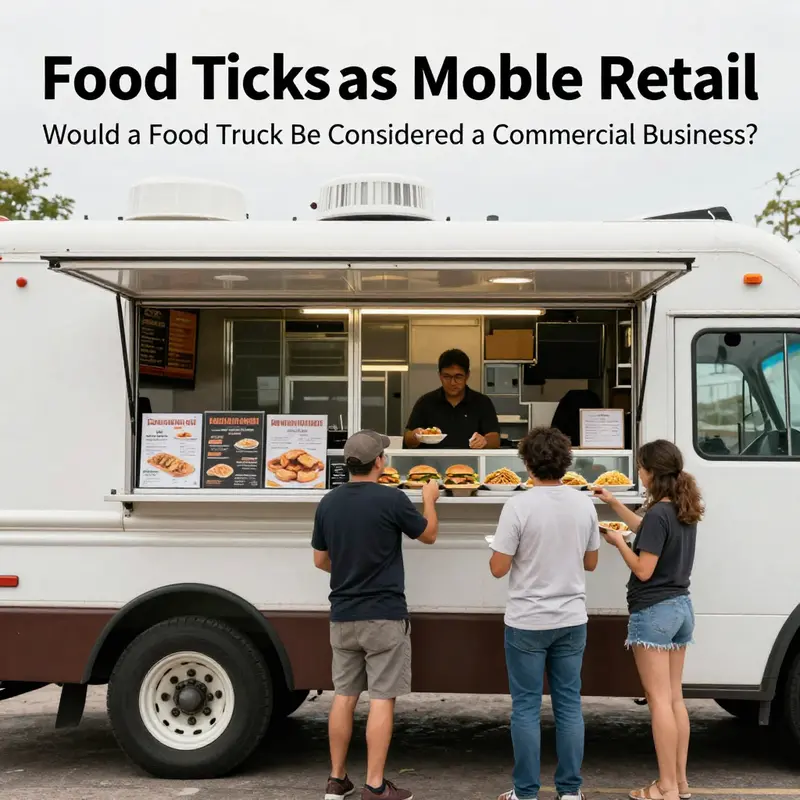
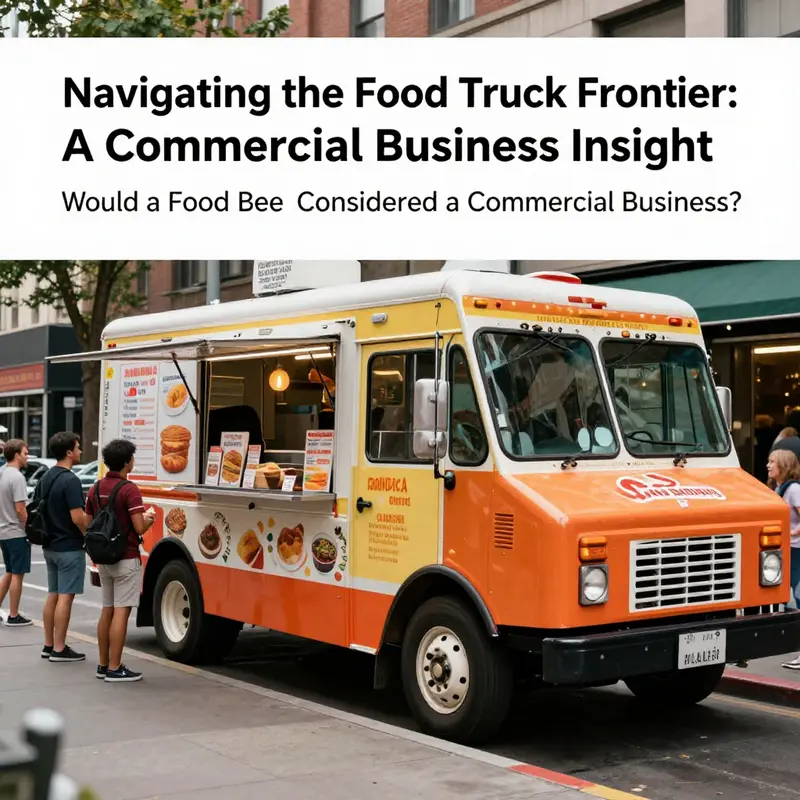
A food truck is more than a vehicle that serves meals. It is a compact, mobile retail enterprise built around clear commercial objectives. At its core, a food truck exists to generate revenue by preparing and selling food and beverages to customers. That simple fact places it squarely within the commercial sector and brings it under the same practical, regulatory, and financial forces that shape other small businesses.
Operating a food truck requires upfront capital and ongoing investment. Entrepreneurs must secure a vehicle or trailer, retrofit it with cooking and storage equipment, and install safety and ventilation systems. Permits, licenses, and insurance are necessary before the first service. Owners budget for ingredients, staff wages, fuel, routine maintenance, and disposal of waste. These recurring costs mirror the operational structure of a brick-and-mortar restaurant, even when a food truck enjoys lower fixed overhead. The need to manage margins, control inventory, and forecast demand marks food trucks as conventional commercial ventures rather than casual hobbies.
Regulatory compliance is a defining feature of commercial status. Food trucks are subject to health and safety inspections by local departments, and must meet food handling and sanitation standards. Zoning rules and street use regulations define where trucks can operate and when. Business licensing and tax registration bring food trucks into the formal economy. Sales tax, payroll taxes, and income tax obligations apply in the same way they do to other commercial entities. Failing to meet these obligations can lead to fines, temporary closure, or revocation of operating permits. Compliance thus reinforces the truck’s status as a regulated commercial actor.
The business model of a food truck reflects commercial strategy and market logic. Operators choose locations based on foot traffic, event schedules, and customer demographics. Many trucks use social media and mobile updates to announce daily routes and menu specials, a marketing tactic shared by many retail and service businesses. Partnerships with festivals, corporate campuses, and private events create predictable revenue streams. Some operators rotate locations to test new markets or maximize exposure. These choices are guided by cost-benefit analysis, revenue goals, and brand building—the essentials of commercial planning.
Financing and profitability are central commercial concerns. Prospective owners often seek loans, equipment financing, or investor capital to cover initial outlays. Lenders and investors evaluate business plans, projected cash flows, and market viability before supporting a truck operation. Profitability hinges on controlling food costs, reducing waste, optimizing labor, and choosing high-return operating windows. Seasonal shifts, weather, and local competition influence revenue and require adaptive planning. Treating the truck as a scalable asset—one that may expand to multiple units or evolve into a brick-and-mortar location—is a common growth pathway among commercial operators.
Comparing food trucks to permanent restaurants clarifies their commercial identity. Both sell food to consumers for a profit, yet each offers a different cost structure and customer experience. Food trucks can be more nimble and test new menu items with lower risk. Conversely, they have limited cooking space, may face stricter location constraints, and often work with fewer staff. Despite these differences, the legal and financial frameworks that govern trade, safety, employment, and taxation are largely overlapping. That overlap confirms that food trucks are not informal street vendors in every case, but formal commercial businesses adapting traditional retail practices to mobile operations.
The equipment and supply chain behind a food truck further emphasize commercial characteristics. Operators source commercial-grade appliances, refrigeration, and storage systems suited for continuous use. Suppliers and manufacturers market mobile food equipment to meet these demands, framing trailers and fitted vehicles as tools for profit-driven ventures. Inventory management and vendor relationships become essential for maintaining consistent service and flavor. These procurement practices align closely with retail supply chain management, reinforcing the truck�s role within commercial ecosystems.
Food trucks also play a broader economic role. They provide entrepreneurial access for cooks and operators who might lack the capital for a full restaurant. For experienced food professionals transitioning from other roles, a truck can be an efficient pathway to independent business ownership. Additionally, food trucks contribute to local economies through employment, event support, and by drawing customers to surrounding businesses. Their mobility allows them to serve diverse neighborhoods, attend civic events, and adapt to shifting consumer patterns, which demonstrates commercial flexibility in response to market demand.
Challenges remain that are particular to mobile retail. Location restrictions can limit revenue potential in dense urban areas or leave trucks competing fiercely for prime spots at events. Weather dependence creates volatility, and infrastructure needs such as power, water, and waste disposal complicate operations. Insurance rates and compliance costs vary by jurisdiction and can be significant. Yet these constraints do not negate commercial status; rather, they define the operating environment for a type of retail that must manage unique logistical risks while pursuing profit.
For entrepreneurs, the commercial nature of a food truck means deliberate business planning is crucial. Success rests on identifying target customers, setting realistic pricing, and creating efficient service workflows. Operators must model cash flows, understand tax responsibilities, and maintain accurate records for payroll and expenses. Marketing becomes a continuous effort, blending social media outreach with on-the-ground visibility at markets and festivals. Many operators use data from daily sales to refine menus and schedules, turning real-time feedback into smarter inventory and labor decisions. This disciplined, data-driven approach is characteristic of commercial enterprises.
The food truck trend also invites policy and community considerations. Municipalities wrestle with balancing public space use and small business opportunity. Clear permitting processes and fair enforcement help legitimize food trucks as contributors to local commerce. When policy recognizes the truck as a commercial entity, it enables predictable operations and can spur investment in infrastructure that benefits both mobile vendors and the broader public. Thoughtful regulation ensures that trucks meet public health and safety standards while enabling entrepreneurship.
In sum, a food truck functions as a commercial business in every material respect. It is financed, regulated, and operated with profit in mind. It must meet legal obligations, manage supply chains, and adopt marketing strategies common to the retail sector. Its mobility may offer cost advantages and unique market access, but it does not exempt the truck from the responsibilities and structures that define commerce. For anyone evaluating whether a food truck qualifies as a commercial business, the answer is clear: the truck sits within the commercial economy and should be managed with the same rigor, planning, and compliance as any other retail or food service business.
For further reading about operational considerations for mobile retail and truck acquisition strategies, see the McGrath Trucks blog: McGrath Trucks blog.
For product listings of commercial mobile food trailers and trailers for sale, consult this external resource: https://www.amazon.com/s?k=Commercial+Mobile+Food+Trailer+for+Sale
Rolling Retail, Real Profits: The Commercial Case for Food Trucks
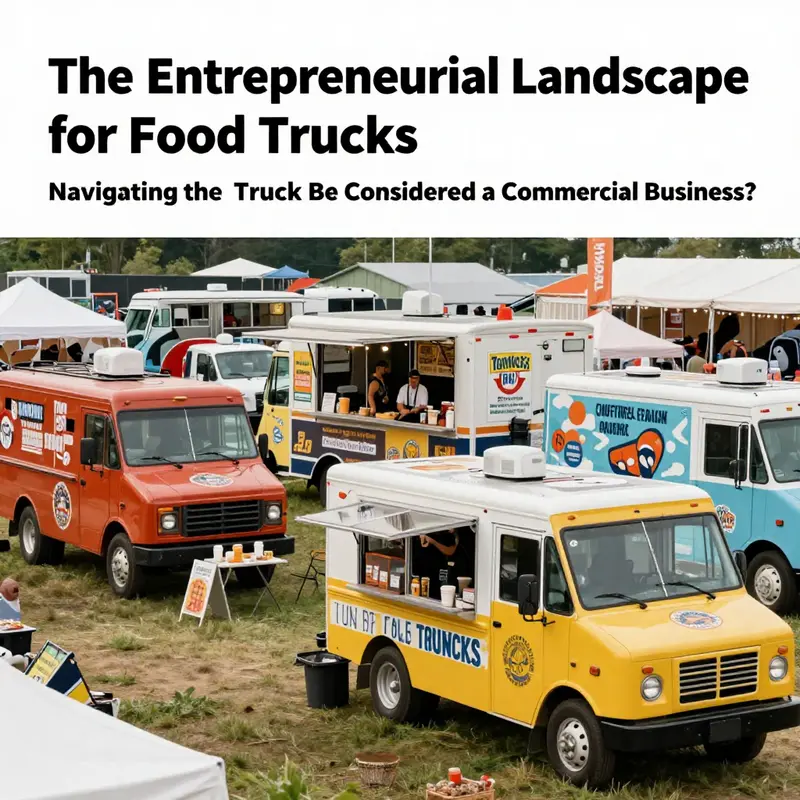
The question of whether a food truck is a commercial business may seem obvious at a glance, yet it deserves a careful, narrative exploration. A food truck is not merely a rotating kitchen on wheels; it is a deliberate, profit-focused enterprise that operates within the frameworks of commerce, regulation, and competition. At its core, the vehicle itself is a dual instrument: a mobile storefront and a compact culinary production site. This combination turns what many might view as a novelty into a legitimate mode of retail that exists to generate revenue through the sale of prepared foods and beverages. In that sense, the food truck belongs to the commercial sector because its primary purpose is value creation for customers and profits for owners, financed through a business model that marries mobility with market timing and branding. The line between a casual street demonstration and a regulated business is not a blur but a delineation that becomes clearer when one considers the operational realities that underwrite the enterprise.
From the moment a truck rolls into a new location, the enterprise activates like any other retail operation. It leverages location-based marketing, visibility, and the promise of fast, satisfying meals to attract customers who are navigating busy days, events, and neighborhoods. The marketing approach is distinctly modern: operators use social media and real-time updates to tell followers where the kitchen is today, creating a direct feedback loop between the business and its patrons. This use of technology to inform and engage customers is a hallmark of a professional, profit-driven operation rather than a casual pastime. The research material highlights this precisely: food trucks employ social media as a central tool for attracting customers, managing expectations, and sustaining episodic demand across different venues and times. In this sense, the vehicle is not just a mobile kitchen; it is a mobile brand incubator, a point of sale, and a conduit for customer relationships that sustain a steady cash flow.
Yet the straight line from a curbside concept to a formal business is bridged by compliance, receipts, and risk management. Operational requirements turn the truck into a regulated space that must meet health, safety, and traffic standards. Food safety is more than a courtesy; it is a governance regime. Trucks must store, prepare, and serve food in a way that protects public health, which means maintaining appropriate cold storage, preventing cross-contamination, and following strict sanitation protocols. Health inspections are a recurring dimension of day-to-day operations. Unlike a single pop-up, a food truck must demonstrate ongoing compliance with health codes that align with brick-and-mortar restaurants, albeit adapted to the mobile context. This regulatory backbone, which also includes licensing and routine inspections, is a crucial reason the enterprise qualifies as a bona fide commercial venture rather than a casual culinary experiment.
Alongside health and safety, there are regulatory sheets of a different kind: zoning and vehicle operation. Local ordinances dictate where a truck can operate, how long it can stay in one spot, and what kind of signage or outdoor seating is permissible. Zoning laws shape the strategic geography of the business. A truck owner often has to plan routes and event calendars not only to meet demand but to stay within the boundaries set by municipal authorities. Vehicle operation further adds a layer of complexity: the truck must comply with traffic regulations, weight limits, and safety standards for the vehicle itself. In short, the enterprise is a synthesis of culinary skill and administrative rigor, where the revenue engine depends on every regulatory precaution being in place as a matter of routine, not exception.
The research also points to a significant reality in the industry: the regulatory burden can be tight, and the choice between following regulations and maximizing profits is not simply a trade-off but a, at times, painful calculus. A 2026 article from a major metropolitan newspaper underscored that operators often face the dilemma of choosing between compliance and profits. This tension is not a moral gloss on the industry but a practical consequence of operating at the intersection of local policy, public health, and consumer demand. It is this interplay—between the appetite for fast, delicious food and the disciplined, sometimes costly requirements of legal operation—that defines the commercial character of the food truck. The presence of such constraints, rather than negating the business aspect, actually reinforces it: a legitimate commercial venture must hedge against regulatory risk through planning, insurance, and prudent capital deployment.
The business model itself is telling. Food trucks are designed for speed and turnover, a feature that answers the demands of urban life where customers seek quick, satisfying meals and the option to grab something on the go. The design emphasizes efficiency: kitchens on wheels, compact layouts, and systems that minimize throughput time. Cold storage is essential, not merely for quality but for compliance with health standards that require proper temperature control for ingredients and finished products. The emphasis on high turnover also explains why many operators curate menus with a balance of crowd-pleasers and seasonal specialties. The model rewards consistent service, predictable quality, and the ability to pivot quickly as circumstances change—rain, festivals, city events, or road closures. In this sense, the truck becomes a mobile generator of revenue that can be tuned to demand landscapes across neighborhoods and times of day.
Beyond immediate sales, the industry has evolved into a broader ecosystem that sustains the commercial profile of food trucks. The evolution includes branded operations, which build recognizable identities that customers come to trust and seek out. Branded trucks cultivate loyalty in a way that generic street vending cannot, often supported by curated experiences such as festivals and events. Participation in food truck festivals—where vendors often pay membership fees that contribute to the event infrastructure—adds another revenue and cost dynamic. The documented ranges for festival membership or participation fees illustrate how operators integrate non-operational expenses into their business planning, further underscoring the professional, commercial nature of the enterprise.
The entrepreneurial language surrounding food trucks also reinforces their status as commercial ventures. If the kitchen-on-wheels represents an entry point for aspiring business owners, it is also a platform for seasoned chefs seeking new markets or outlets for their craft. The literature notes that experienced cooks, suddenly without traditional employment, often view food trucks as a practical and accessible route to business ownership. This dual function—as a training ground for new entrepreneurs and a viable platform for established culinary professionals—speaks to the breadth of the commercial landscape the trucks inhabit. In addition to culinary talent, the industry increasingly leans on technology and data to optimize operations. Location-tracking apps, customer feedback loops, and social media analytics help operators refine their routes, adjust menus, and forecast demand with greater precision. The professional texture of the industry is visible in these tools and practices, which resemble the data-driven approach of any mature retail business.
A consistent throughline in the research is the explicit framing of a food truck as more than a perishable curiosity. It is a fully formed commercial venture that requires licensing, insurance, capital investment, and strategic planning to succeed within a competitive market. The notion of a small, mobile kitchen becoming a dominant player in the gastronomic landscape rests on three pillars: the capacity to deliver quality quickly, the discipline to comply with a dense regulatory environment, and the ambition to cultivate a brand and a customer base that can sustain profits over time. In that sense, the food truck is a case study in the modern retail economy: a portable unit that travels to where customers are, a brand that travels with it, and a business that must balance speed, standards, and margins under real-world constraints.
The industry narrative is further enriched by examples of broader market dynamics that touch every vendor, regardless of location. The literature points to a shift from mere street vending to branded, festival-connected, and even capital-market-aware operations. Some trucks imagine ambitious plans for growth, including the possibility of public offerings when the scale and governance mature enough to attract institutional investors. While such trajectories are not the norm, they reflect a broader truth: food trucks sit at the convergence of culinary art, retail strategy, and corporate governance. The commercial nature of the enterprise is not incidental but central to how the industry is strategized, funded, and measured against success metrics like revenue growth, unit economics, and customer lifetime value.
The research rounds back to a practical synthesis: a food truck is an on-the-ground, profit-seeking enterprise with a distinctive combination of mobility, culinary labor, regulatory compliance, and marketing acumen. It functions as a kitchen and as a storefront on wheels, and its success depends on balancing the immediacy of service with the prudence of regulation and the creativity of branding. The classification as a commercial business is not simply a label; it is an acknowledgement of the sophisticated, multi-faceted machinery that drives this industry forward. This machinery includes not only the cooks and the food but also the schedules, the compliance frameworks, the supply chains, and the community networks that enable a truck to move from one venue to the next, delivering consistent value to customers while generating sustainable profits for owners.
For readers seeking a window into the regulatory environment that shapes daily operations, consider the broader reporting on the topic. The discussed 2026 Los Angeles Times article highlights the tight restrictions faced by food truck operators and how these constraints influence decisions about compliance and profitability. It serves as a reminder that the commercial status of the enterprise is closely tied to the policy climate in which it operates. The article is a useful external reference for understanding how local governance, health departments, and transportation authorities interact with mobile food retail. In this light, the food truck is not a marginal fad but a resilient, evolving component of the urban economy, anchored in commerce and continually adapting to regulatory expectations.
To connect this overview with related industry conversations, readers can explore ongoing discussions in industry blogs that examine the intersection of mobility, regulation, and market demand. For example, the discussion of navigating economic uncertainties in the broader trucking ecosystem can provide useful context for food truck operators as they contend with supply chain variability, fuel costs, and shifting consumer preferences. See the overview on navigating-economic-uncertainties-key-insights-from-the-canadian-and-us-trucking-markets for reflections on how seasoned operators adapt to macro forces while maintaining profitability at the unit level. While the subject matter differs in scale and scope, the underlying discipline—data-informed planning, risk assessment, and continuous improvement—ties these discussions to the everyday realities of running a mobile food business.
In sum, a food truck is not simply a culinary novelty but a fully formed commercial venture that embodies the convergence of service, supply, and sale. It is a mobile retail operation designed to produce profit through the sale of food and beverages, backed by a regulatory framework, a defined business model, and a brand-building strategy. The industry’s evolution—from street vending to branded events, from low-cost curiosity to potential public-market aspirations—speaks to the robustness of the commercial proposition. The real test of this status lies in execution: how well a truck negotiates the regulatory landscape, builds a loyal customer base, and maintains the discipline required to convert daily sales into sustainable profitability. As this chapter roams through the landscape of fast service, compliance, and brand development, the central claim remains clear: the food truck is a legitimate, dynamic, and resilient form of commercial business that continues to shape and be shaped by the urban economy it serves.
External reference: https://www.latimes.com/business/food/story/2026-01-31/food-truck-regulations-challenges
Final thoughts
The exploration of food trucks as commercial businesses reveals a compelling intersection of culinary passion and entrepreneurial opportunity. As demonstrated in each chapter, food trucks thrive on the principles of profit generation, mobile retail dynamics, and the readiness of skilled individuals to engage with the market. For trucking executives and logistics teams, understanding this segment of commerce not only enhances insights into the operational models of mobile enterprises but also highlights the adaptability needed in a competitive landscape. Embracing this knowledge could yield benefits in various related sectors, emphasizing the significance of the food truck phenomenon.