The landscape of commercial truck safety has been scrutinized under the lens of various regulatory and operational standards. While the inclusion of airbags in passenger vehicles has become a non-negotiable standard, the same cannot be said for commercial trucks. In this article, we will delve into why airbag systems are not universally adopted in large semi-trucks, exploring alternatives that enhance truck safety, the options provided by original equipment manufacturers (OEMs), and the evolving industry trends that influence fleet safety policies. This journey will provide trucking company owners, fleet managers, and procurement teams with comprehensive insights on the safety standards and options available for effective fleet operation.
Beneath the Dash: The Quiet Why Airbags Aren’t Standard in Commercial Trucks—and What Might Change
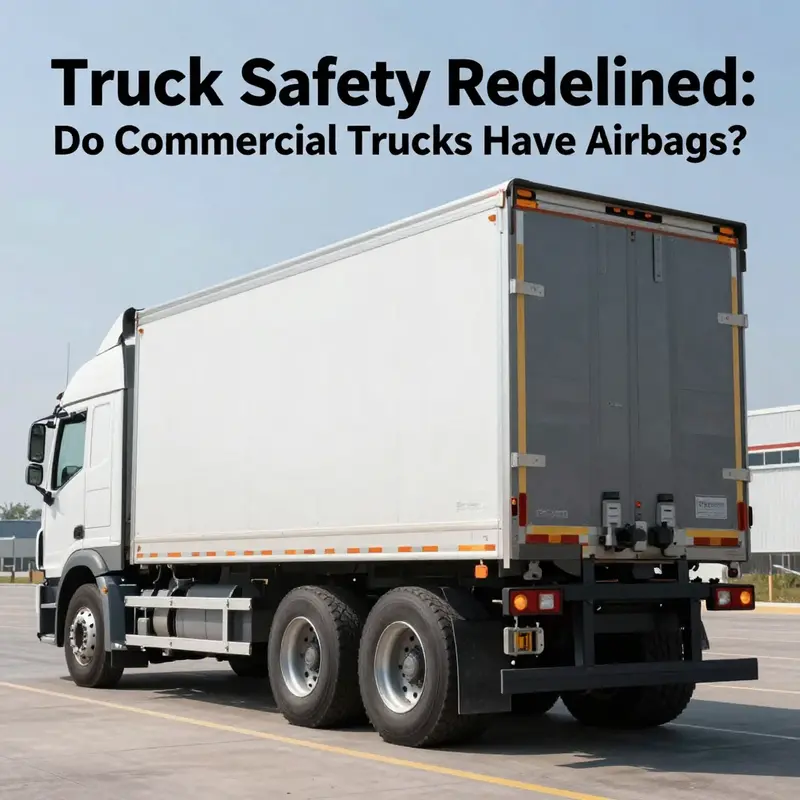
When people ask whether commercial trucks carry airbags, the answer is not a simple yes or no. It is a nuanced picture shaped by the distinctive demands of heavy trucking, the economics of fleet operation, and the evolving mathematics of crash safety. The general scene is that airbags are not a standard, across-the-board feature in most large trucks. They exist in pockets—often as an optional add-on or a configuration for specific duties or regions—not as a universal baseline like they are in most passenger cars. To understand why requires a walk through the cab, the cargo, the road, and the way safety has to be designed when a vehicle can weigh as much as a small building and travel long highway distances in service of supply chains that hum with reliability. The question, in other words, invites a broader conversation about how safety works when the machine at the center of it all is fundamentally different from a family sedan. It invites us to look not only at the sensor and the airbag module itself, but at the entire architecture of protection that a fleet operator seeks to optimize.
The most immediate and practical answer to why airbags are not standard in semi-trucks lies in space, cost, and the crash dynamics that govern heavy-vehicle incidents. Inside a big-cab truck, the interior is designed to maximize driver comfort and operational practicality within a compact, purpose-built space. The driver’s seat is surrounded by controls, dashboards, and, in many configurations, seating for a co-driver or trainer in addition to a driver. That limited interior volume makes the physical integration of an airbag system challenging. Airbags demand not only a deployment space but also a carefully engineered choreography with seat belts, sensors, and airbags of other airbag types—front, knee, and sometimes side or curtain varieties. The installation must be such that airbag deployment reduces risk rather than introducing new hazards. In a heavy truck, a deployed airbag can interact with a larger-than-life steering column, a high-rigidity cab, and a seat with a vertical and horizontal range of motion that may differ markedly from a passenger car. All of this increases the complexity—and the cost—of a compliant, reliable airbag system.
Beyond space, the crash dynamics of commercial trucks shape the cost-benefit calculus. In a multi-ton vehicle with a high center of gravity and a long stopping distance, the energy profile of a collision can be very different from that of a passenger car. The typical demolition derby of a crash in a passenger car—where airbags have become a standard defense against a kinetic strike in the upper chest and face—does not map cleanly to a long tractor-trailer impact. The severity and type of injuries seen in truck crashes often involve heavy structural components, rollovers, and secondary impacts with other vehicles or objects, where the protective envelope of an airbag is only one piece of a larger safety puzzle. Structural crumple zones, reinforced cabs, and high-performance braking systems play central roles in mitigating harm. In that risk framework, airbags may offer certain protection in specific scenarios—for instance, in a frontal impact with a cab occupant in the driver’s seat or in a controlled environment with a co-driver who occupies the second seat—but they do not automatically translate into the same proportional safety gain seen in passenger cars.
The cost dimension cannot be understated. Airbag systems are not a one-time purchase; they require sensors, onboard computers, fault-detection logic, calibration, regular maintenance, and ongoing replacement after deployments or test activations. Fleets, especially those operating in price-sensitive markets or with tight utilization cycles, weigh these ongoing costs against the incremental protection benefit. The result, in many cases, is a decision to treat airbags as an optional feature rather than a standard one. This is not to say airbags are never valuable; rather, fleets assess whether the daily reliability, serviceability, and lifecycle costs align with their risk management strategies and operating budgets. The decision often hinges on who pays for the vehicle, who monitors maintenance, and what regulatory or insurance requirements exist in a given region or industry segment.
That said, the landscape is not static. There are signs that some manufacturers are exploring airbag concepts in heavy-duty configurations, especially in contexts where passenger transport is involved or where the vehicle design supports an airbag without compromising other critical systems. In such configurations, airbags are typically integrated with advanced crash-sensing networks, and they tend to be deployed in models designed for specific applications—for training fleets, co-driver configurations, or scenarios where additional occupant protection is prioritized. The pattern here is deliberate and selective: airbags are not a universal feature but an option that gains traction in niches where the perceived safety return justifies the cost and integration effort.
An important point often overlooked in quick summaries is that airbags are only as effective as the surrounding safety architecture allows. For trucks, this means that even when airbags are offered, their value is amplified by complementary technologies and practices. Advanced braking systems that modulate speed and maintain traction, stability control that senses and counters skidding, and collision mitigation systems that slow or steer away from an imminent impact all contribute to a safer operating envelope. The cab’s structural integrity, designed to absorb and distribute crash energy, also plays a decisive role. If the cab remains rigid and the occupant is restrained by a seat belt, an airbag can help manage a portion of the forces that would otherwise be transferred directly to the driver. If, however, the crash dynamics overwhelm the system or the airbag deployment would create other risk vectors, the net safety benefit may be diminished.
These considerations help explain why a leading manufacturer in the space has begun to experiment with airbags in select configurations. The approach is careful and targeted: identify application profiles where airbag benefits are most likely to accrue, ensure integration with the vehicle’s sensor network, and align with the maintenance cycles of fleets that demand high uptime and predictable service costs. The broader lesson is that airbags in commercial trucks are not a universal fix; they are a specialized tool that might be deployed where the cost of a particular safety gap is deemed high and the operational context can accommodate the added technology. For now, the dominant safety message in the trucking world remains anchored in robust cab design, proactive vehicle maintenance, rigorous driver training, and the broad suite of active and passive safety features already standard in many fleets.
As technology matures, the cost of airbag systems is likely to decline, and their installation could become more feasible to scale. This potential shift hinges on several converging factors: the continued downward trend in sensor and module costs, the development of more compact and modular systems that can adapt to varied cab designs, and the regulatory environment recognizing the value of enhanced occupant protection in commercial vehicles. Even with cost reductions, adoption will still be a function of fleet safety policies, regulatory expectations in different regions, and clear evidence of meaningful risk reduction in real-world operations. In other words, airbags could become more common in the future, but only if fleets perceive a compelling return on investment in terms of injuries prevented, insurance premiums stabilized, and downtime minimized.
For readers curious about how industry storytelling around safety features evolves, a broader view can be found in the industry-facing discussions and guidance published on the McGrath Trucks blog. It offers perspectives on safety, fleet management, and the practical realities of implementing new technologies across a diverse used-truck ecosystem. You can explore that resource here: McGrath Trucks blog.
Yet, even as airbags occupy a growing corner of the safety conversation, they remain a topic of ongoing debate and study. The questions driving this debate include: Do airbags in heavy trucks meaningfully reduce injuries across the full spectrum of crash types encountered on highways and interstates? Are the safety gains worth the addition of maintenance complexity and potential deployment risks? How do airbags interact with other restraint and protection systems when a crash involves multiple vehicles or when occupants are shifting between seats during transit? These questions do not have simple answers, but they guide researchers, regulators, and manufacturers as they weigh the costs and benefits of broader airbag adoption in the trucking sector. In the meantime, the standard remains clear: commercial trucks rely on a layered safety approach built from robust structural design, proven braking and stability technology, disciplined maintenance, and careful driver training. When airbags become a standard feature, the decision will likely reflect a widely accepted certainty that the incremental protection justifies the additional complexity in a vehicle that moves millions of tons of goods each day.
The topic is also part of a larger conversation about how safety evolves as vehicle technology becomes more connected and autonomous in its capabilities. As fleets adopt more telemetry, predictive maintenance, and adaptive safety systems, the calculus for any single safety feature changes. If a future era arrives where lightweight, modular airbag systems can be integrated without disrupting cab ergonomics or serviceability, and if insurance and regulation align to reward lower risk, airbags could find a more permanent and universal home in commercial trucks. Until then, the industry will continue to balance the trade-offs with the same pragmatic mindset that has guided heavy trucking for decades: prioritize reliability, protect the driver with the most effective means available, and deploy new technologies only when they demonstrably improve safety without compromising uptime or operational efficiency.
For readers seeking a broader external perspective on why airbags are not standard in semi-trucks, see the detailed analysis provided by industry safety resources: https://www.truckingsafety.org/airbags-in-semi-trucks/.
Airbags in Heavy-Duty Fleets: Do Commercial Trucks Have Them, and What Safety Systems Really Protect Drivers
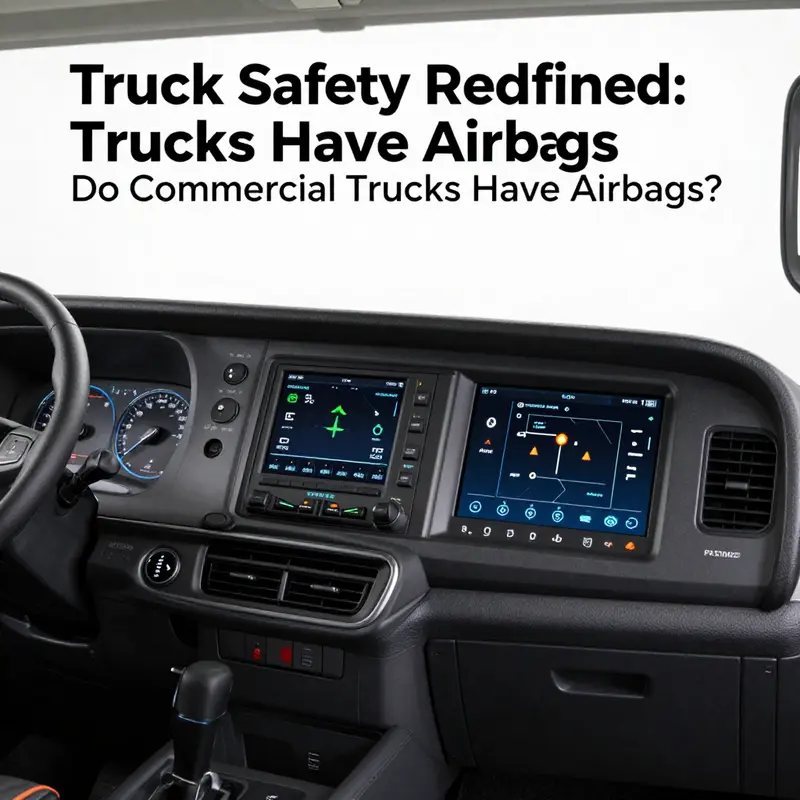
In the world of heavy hauling, airbags are not the default line item on every cab spec sheet. The question, Do commercial trucks have airbags, invites a broader look at how safety is engineered for vehicles built to move mountains of payload, not people. The straightforward answer is that airbags exist in many modern commercial trucks, but they are not as universal or as central to safety as they are in passenger cars. Their presence often hinges on the tradeoffs that fleets and manufacturers negotiate—costs, space, maintenance, and, crucially, the overall safety strategy of the vehicle. In practice, airbags in commercial trucks tend to be options bundled into larger safety packages rather than standard features, and their deployment is tailored to the specific risks and operational contexts that heavy trucks face on real roads and highways. This nuanced reality reflects the broader aim of heavy trucks: to combine structural resilience, efficient braking, and stability with restraint systems, all orchestrated to protect drivers across diverse scenarios.
When airbags do exist in commercial trucks, their most common form is a driver-focused system embedded in the steering column or the driver’s seat. These locations are selected because the driver is the primary occupant during a frontal event, and the goal is to cushion the head, neck, and chest as the cabin absorbs and redirects crash energy. In newer or higher-end configurations, a more integrated approach may include passenger-side protection or knee airbags, depending on the cab design and the anticipated seating arrangement. Yet even among fleets that choose to equip airbags, the decision is rarely a one-size-fits-all mandate. The option can come with a cascade of related safety features, aligning airbags with sensors, intelligent crash detection, and a broader driver-assistance ecosystem. The result is not a single device but a safety envelope that works in concert with other technologies to manage risk.
A critical distinction in the discussion about airbags in trucks is the notion of necessity versus optimization. Unlike passenger cars, where airbags are almost universally expected and often legally required, commercial trucks operate under a different calculus. The cab and frame are engineered for durability, with an emphasis on protecting occupants through structural integrity, seat belt performance, and energy absorption. In this framework, airbags function as one tool among several for reducing injury in a collision, particularly frontal impacts where the driver’s posture and restraint system come under high loads. The cost of adding airbags is weighed against the marginal safety gain in a given fleet, the maintenance implications, and the vehicle’s lifecycle economics. As a result, airbags are frequently marketed as an option in heavy-duty models and fleet configurations rather than a baseline provision.
The decision to include airbags is also shaped by the operational realities of trucking. Carriers prioritize uptime, fuel efficiency, and maintenance predictability. An airbag system, while sophisticated, introduces additional service requirements: sensors, control modules, and the need to ensure the airbags deploy correctly after years of vibration and exposure to the elements. Fleet managers weigh these considerations against the potential benefits in a crash, and the balance often tilts toward a layered safety approach rather than reliance on a single component. In practical terms, this means that a truck may feature state-of-the-art electronic stability control, advanced driver assistance systems, and reinforced restraints, while airbags remain an optional enhancement that complements but does not dictate overall safety performance.
It is also worth acknowledging the diversity of heavy-duty vehicle configurations. Not all trucks are the same, and safety fixtures vary with cab size, seating layout, and intended use. In some vehicle types, particularly those designed for alternative roles such as training rigs or co-driver operations, the calculus shifts again. The presence of airbags in these contexts is less certain, and in some cases, the design philosophy emphasizes space, legibility of instrumentation, and robust crash protection through other means rather than relying on airbags. In contrast, many newer, high-demand applications—where a driver spends long hours behind the wheel and the risk profile includes fatigue, erratic traffic, and varying load conditions—tend to favor a more comprehensive safety package that can include airbags for the driver. The essential point is that airbags are not uniformly standard across all commercial vehicle segments; they are a strategic decision anchored in risk assessment and operating priorities.
Beyond the physical device itself, airbags in trucks sit within a broader safety ecosystem that is increasingly sophisticated. Electronic Stability Control, for example, helps prevent rollovers by sensing loss of grip and automatically applying brakes to individual wheels to restore directional control. Advanced Driver Assistance Systems expand the safety net further with features like automatic emergency braking, lane-keeping support, and adaptive cruise control. These technologies do not replace airbags; rather, they complement them by reducing the likelihood or severity of incidents in the first place. The combination of stability control, collision avoidance, and active restraint systems creates a multi-layered defense that serves truck drivers across a spectrum of driving conditions—from steep grades and heavy winds to congested urban corridors and remote routes where a single fault could have outsized consequences.
Rollover Protection Structures, or ROPS, represent another pillar of heavy-truck safety that often operates independently of airbags but works in concert with them. ROPS are designed to maintain survivable space around occupants in a rollover, preserving the integrity of the cab and helping to prevent crush injuries. This structural resilience is paired with seat belts and pretensioners that actively manage occupant motion during a crash. In this framework, airbags contribute to a more forgiving crash dynamic by reducing the moment of impact for the driver, but they depend on a stable seating position, the restraint system, and timely deployment to deliver their protective value. The synergy among these components is where modern trucking safety often proves more effective than any single feature could on its own.
Regulatory landscapes and market forces also shape the prevalence of airbags in commercial trucks. Regulations evolve gradually, with different regions prioritizing different aspects of safety. This variability means that, even within the same fleet, you may see trucks equipped with airbags in some geographies or configurations while others linger with the base set of safety features. The practical upshot is that fleets must craft safety roadmaps that align with local regulations, insurance considerations, and operator needs. In many fleets, the choice to add airbags sits alongside decisions about maintenance cycles, diagnostic readiness, and the reliability of sensor networks that support the broader safety suite. The net effect is a safety strategy that integrates airbags as one element of a comprehensive risk management approach rather than as a universal fix.
Buses, while not the same as heavy trucks, often illuminate the challenges of deploying airbags in larger passenger-focused vehicles. In some bus designs, the concentration of survival space and the cabin geometry does not favor airbag effectiveness in all crash scenarios. This example underscores the broader principle: safety devices must be evaluated within the context of vehicle architecture and occupant dynamics. The takeaway is not that airbags cannot be practical in commercial transport, but that their usefulness depends on detailed engineering judgments and mission-specific safety goals. As technology advances and manufacturing costs decline, airbags are more likely to appear across a wider array of commercial configurations. Yet even as acceptance grows, fleets will continue to test, calibrate, and balance airbags with a spectrum of other protective systems to optimize outcomes for drivers and operators alike.
The practical implications for drivers and operators are clear. When airbags are present, they become part of a broader story about vehicle safety. Drivers benefit from the layered protection of a robust restraint system, advanced sensing and deployment logic, and the stabilizing effects of ESC and ADAS. Fleets benefit from reduced risk exposure, which can translate into lower insurance costs, improved driver retention, and a stronger safety culture that emphasizes proactive risk management. The decision to equip airbags, therefore, is rarely about chasing a single feature; it is about building a resilient safety architecture that supports drivers in the demanding tasks of heavy transport while aligning with broader fleet objectives. This integrated perspective helps explain why airbags, though increasingly common in modern trucks, are not universally standard and why the most effective safety strategies rely on a holistic portfolio of technologies working together.
Looking ahead, the trajectory of airbag adoption in commercial trucking will likely hinge on continuing advances in sensor technology, materials science, and the economics of manufacturing. As crash sensors become more reliable and cheaper to produce, and as cab designs evolve to accommodate more sophisticated restraint systems without compromising space or comfort, airbags may move from option to expectation in more segments of the market. Until then, the industry will continue to refine how airbags fit into an overarching safety strategy that prioritizes driver protection through a balanced mix of restraint systems, crash energy management, and proactive collision avoidance. The reality in many fleets today is that airbags are part of a layered approach, complementing structural safety, belts with pretensioners, rollover protection, and intelligent driver assistance in a way that recognizes the distinct demands of heavy trucking while avoiding overreliance on any single technology.
For readers seeking a broader sense of how these safety dynamics are evolving in the trucking market, recent industry analyses highlight ongoing shifts in safety investments and equipment adoption across fleets. This broader context helps explain why the presence of airbags remains variable, even as safety standards continue to tighten and as the economic case for comprehensive protection becomes stronger. The trend line suggests that safety features in commercial trucks will grow more integrated and more data-driven, with airbags representing a piece of a more capable, more proactive safety system rather than a single, isolated fix. As fleets weigh cost, downtime, and reliability, they increasingly rely on a multi-layered safety strategy to keep drivers safer on every mile of the road. And as the landscape evolves, the conversation around airbags in heavy-duty vehicles will continue to reflect the fundamental truth about trucking safety: it is a system, not a single component.
In light of these considerations, drivers and fleet managers who want to understand the practical implications of airbags in commercial trucks should view them as one strand in a broader safety network. The goal of such a network is to reduce the chances of injury and to mitigate outcomes when incidents occur. Airbags contribute to that goal, but they are most effective when paired with strong restraints, robust cab design, and proactive driver-assistance systems that help prevent crashes from happening in the first place. This integrated safety philosophy—anchored by airbags where they fit best, and complemented by ESC, ADAS, ROPS, and pretensioned seat belts—offers the most reliable path toward safer long-haul operations. For fleets navigating the evolving price markets and regulatory expectations, understanding this tapestry helps align investments with the real-world demands of safety culture and operational excellence. It also highlights why conversations about airbags in heavy-duty trucks must be grounded in system-level thinking rather than in a single feature checklist.
Internal linking note: As the safety landscape continues to shift, many fleets are turning to market analyses that track how buyers value safety upgrades, including airbags, in the broader context of truck acquisitions. See the latest on market trends and used-truck growth here: Current trends in used truck sales growth.
External resource for deeper technical context: for a thorough technical overview of commercial truck air bag systems, types, standards, and how they are applied in manufacturing, consult this external reference: https://www.truckairbags.com/commercial-truck-air-bags-overview.
Airbags on the Heavy Road: OEM Choices and Safety in Commercial Trucks
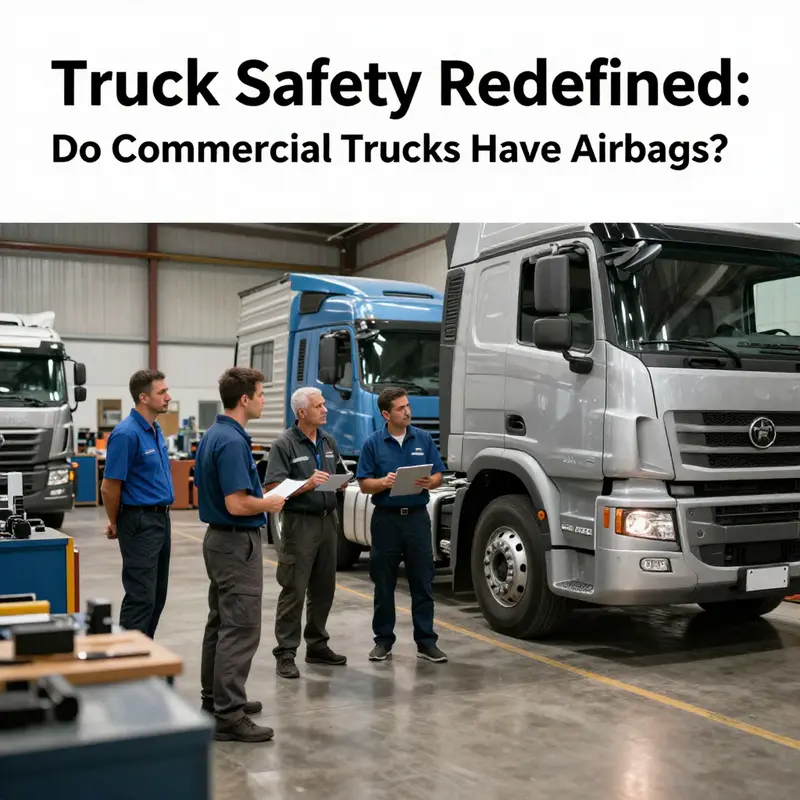
The question do commercial trucks have airbags is not a simple yes or no. It hinges on what counts as standard equipment, what counts as an option, and how fleets balance safety with cost, uptime, and regulatory compliance. In the realm of heavy-duty trucking, airbags are not part of the base configuration for most models. They exist as a specialty option that must be requested through the original equipment manufacturer (OEM) if a fleet or operator wants them installed. This reality reflects a broader design philosophy for commercial trucks. The core responsibilities of these vehicles—carrying heavy loads, enduring long duty cycles, and maintaining predictable handling under a wide range of weather and road conditions—drive a safety strategy that prioritizes structural integrity, braking performance, and chassis reliability over every possible occupant protection feature. While airbags can enhance protection in a crash, fleets often decide that other features deliver safer outcomes in day-to-day operations, at least up to the point where airbags become a justified, on-order enhancement. The rationale is pragmatic: every kilogram added to a cab and every dollar spent must be weighed against the fleet’s operating profile, the typical routes and loads, and the costs of downtime for installation and maintenance.
The absence of airbags as standard does not imply a neglect of occupant safety. Rather, it reflects a layered approach to risk management. Large commercial vehicles operate in environments that demand high performance from drivetrain, tires, braking systems, suspension, and cab integrity. Robust braking with advanced anti-lock systems, traction and stability control, and strong driver visibility all contribute to reducing crash risk and mitigating severity when incidents occur. At the same time, modern cab designs often incorporate reinforced structures to protect occupants in multi-vehicle crashes. These design choices are complemented by driver monitoring systems and, increasingly, driver assistance technologies that help prevent accidents before they happen. In this context, airbags are part of the safety toolkit, but not a universal prerequisite for safety, and certainly not a given in the same way they are for passenger cars.
When airbags do appear in commercial trucks, they almost always arrive as an optional feature. The process starts with an OEM configuration that includes the ability to add airbag modules to the driver’s seat or, less commonly, to the steering column area or dash module. The decision to offer airbag options is influenced by several factors. First, there is the weight and space penalty. Airbag assemblies, their sensors, and the associated deployment hardware add complexity, wiring, and potential servicing needs. In a vehicle designed for daily heavy loads, any added weight or complexity is evaluated against fuel economy targets, tire wear, and the ease of maintenance in a busy fleet operation. Second, there is cost. The up-front price of an airbag option must be justified by anticipated reductions in injury risk and the downstream savings from insurance, downtime, and improved driver morale. Third, there is compatibility with other safety systems. An airbag must be integrated with the cab’s restraint systems, seat structure, and occupant sensing capabilities. If a fleet already relies heavily on ADAS features such as adaptive cruise control, automatic emergency braking, and lane-keeping assist, the incremental benefit of airbags may be evaluated differently than in a vehicle without those systems.
Despite these considerations, the availability of airbags as an OEM option should not be read as a sign that the industry is moving away from airbags entirely. On the contrary, the safety landscape in commercial trucking is evolving toward more holistic protection. In many fleets, the decision to equip airbags is part of a broader safety program that includes enhanced cab structure for crashworthiness, improved air and electrical filtration for critical systems, and a rigorous maintenance regimen that keeps safety components in peak condition. For operators who want to explore this path, the recommended route is to engage directly with the OEM through an authorized dealer or representative. The certified pathway ensures that any airbag system complies with the vehicle’s architecture and with applicable safety regulations. It also helps ensure that the installation does not inadvertently affect other safety features or the vehicle’s resale value.
One practical implication of airbags in a commercial context is that their install often comes with considerations unique to trucks. For example, a driver’s seat airbag must align with the seat’s geometry, seat belt pretensioners, and the dynamics of a high-seat position common in cabs designed for long-haul comfort. The installation process may require recalibration of the airbag control module and verification that sensors communicate correctly with the rest of the vehicle’s safety network. This is not a trivial upgrade; it is a systems integration project that touches power supply, data networks, and diagnostic routines. Because of this, many fleets plan airbag additions during a voluntary maintenance window or a mid-life refresh, rather than as a routine, year-to-year upgrade during normal service. The total lifecycle impact, including inspection and potential replacement of deployed modules, is part of the fleet’s long-term budgeting and risk management plan.
From a fleet management perspective, the decision to order airbags as an OEM option is driven by the same calculus that governs other safety investments. Safety leaders in fleets must compare the probability and severity of injury in potential crashes against the total cost of ownership. This includes the cost of the airbag system itself, the required integration work, potential downtime during installation, and the ongoing maintenance and inspection requirements. They also consider compliance with Department of Transportation (DOT) regulations and the need to document that all safety equipment remains within manufacturer specifications. For these reasons, many operators lean toward a layered safety approach that emphasizes protections beyond airbags, including stronger cab construction, more robust air filtration for critical systems, and enhanced braking performance. If a fleet’s risk assessment identifies higher exposure to frontal impacts or specific crash scenarios, the case for airbags becomes stronger, especially when driver protection plays a central role in the operator’s safety policy.
Another layer to this discussion is how airbags interact with other technologies on the vehicle. In modern heavy-duty trucks, airbags are part of an ecosystem that includes electronic stability control, anti-lock braking, traction control, and a growing suite of driver assistance technologies. When viewed collectively, airbags contribute to occupant protection during a crash, but the preventative safety benefits come from a suite of proactive technologies that reduce crash likelihood. In some fleets, this synergy means that airbags are kept as a later-stage option, after a robust baseline of prevention technologies has been deployed and validated over years of operation. In other fleets, safety policy may favor airbags as a critical upgrade, especially when the anticipated crash exposure is high or when insurance models indicate meaningful premium reductions for equipped vehicles. The net effect is that airbags in commercial trucks exist along a spectrum of safety investments, chosen to align with operational realities and financial constraints rather than as a universal feature across all trucks.
For operators who want to pursue airbags, the path is straightforward but precise. Work with the OEM to define the exact configuration needed for the fleet’s use case. This includes verifying cab dimensions, seating arrangements, and the compatibility of the airbag system with existing restraint devices and passenger seating rules. The OEM will specify the required electrical harnesses, sensor locations, and software calibration steps. Post-installation, a careful commissioning process ensures that the airbag system is correctly integrated with the vehicle’s diagnostic systems and does not cause fault codes or false deployments. Warranties and service intervals associated with the airbag components are established at this stage, offering peace of mind that the system will perform as intended or be serviced by qualified technicians. Also important is ensuring that the chosen configuration remains compliant with DOT expectations and any regional safety requirements, a domain where official guidance and industry standards play a pivotal role in shaping acceptable practices.
From a maintenance standpoint, airbags add a layer of protection that requires specialized attention. After installation, technicians must perform periodic checks for sensor integrity, electrical connections, and proper seating alignment, especially if the vehicle frequently undergoes seat adjustments or driver changes. If a deployment occurs, the replacement of airbag modules and sensors must follow OEM-approved procedures. Fleets that maintain a robust preventive maintenance program often find that the added oversight for airbag systems does not significantly disrupt operations, especially when scheduled alongside other routine inspections. In contrast, fleets with less formal maintenance regimes may encounter unexpected downtime if a fault is detected in the airbag system, underscoring the value of enforcement through OEM-provided service and verification processes.
For those exploring safety enhancements beyond airbags, the combined effect of driver assistance technologies, reinforced cab design, and high-efficiency air filtration for critical components remains central. These features address the realities of long-haul operations, where comfort, reliability, and the ability to sustain uptime are as critical as occupant protection in a crash. The interplay between prevention and protection also shapes the resale and fleet value dimension. Vehicles with modern safety configurations, including optional airbags, may command different used-truck pricing and appeal to buyers who prize a comprehensive safety package. Operators who keep abreast of safety trends and maintenance best practices can align their equipment with evolving expectations in the market, while maintaining a practical lens on payback and uptime.
In parallel with the OEM path, there is a broader conversation about how the industry communicates safety features to drivers, owners, and insurers. Clear documentation about what is included in an optional airbag system, how it interoperates with seat design and harnesses, and what maintenance is required helps build confidence. It also helps ensure that drivers understand the protective intent behind the upgrade and how to respond in the rare event of a deployment. As a result, the conversation about airbags in commercial trucks is inseparable from the broader culture of safety that pervades modern trucking. The best outcomes arise when all stakeholders—drivers, maintenance teams, fleet managers, and insurers—are aligned on the goals of protection, reliability, and value.
For readers who want to explore related discussions about how safety configurations influence fleet decisions, a recent analysis of industry trends highlights how changes in safety technology shape purchasing and resale patterns. See the discussion here for more on how safety configurations influence market dynamics and decision-making in the used-truck segment: Current trends in used truck sales growth.
As a final note, if you seek a deeper technical understanding of how OEMs structure safety standards and how industrial vehicle safety components are specified, a dedicated standards guide from the industry’s standards bodies provides comprehensive detail on the design and testing expectations for truck safety components. The official standards resource offers a systematic overview of what constitutes acceptable safety performance and how components are validated for heavy trucks over the vehicle’s lifecycle. For a deeper dive into OEM standards and industrial use, see this official resource: https://www.freightliner.com/truck-parts-and-standards.
Do Commercial Trucks Have Airbags? Tracing a Quiet Safety Shift in the Cab
The question, Do commercial trucks have airbags, invites more than a yes or no answer. It opens a corridor into how safety design has evolved in the heavy vehicle world, where the cab is not merely a seat of operation but a space where protection must be engineered against some of the most demanding crash dynamics on the road. For many years the standard safety architecture in large trucks emphasized rugged structural integrity, braking performance, steering stability, and the robustness of the chassis. Airbags, when discussed at all, were frequently considered an optional add on rather than a baseline feature. This stance made sense to some operators who prioritized fuel efficiency, payload capacity, and the maintenance footprint of complex safety systems. Yet the tug of emerging technologies and the persistent drive to reduce driver injury has nudged the industry toward a broader safety conversation that now includes airbags as a growing, if not universal, consideration.
Historically, the cab of a heavy truck is a large, rigid compartment that can interact with crash forces in ways that are different from passenger cars. In many cases the design goal focused on maintaining survival space within the cab by absorbing impact energy through bunkers of steel and carefully engineered crumple zones around the engine bay and firewall. The procurement calculus for fleet operators weighted durability, reliability, and serviceability. Airbag deployment is a delicate balance: an airbag must cushion a collision without becoming a hazard itself, and in a truck, the deployment path intersects with a large occupant, a tall seat and a belt system engineered for high restraining forces. The risk of deploying an airbag into a space not designed for it, or in a collision with a different occupant posture, has historically been a concern in the heavy vehicle sector. For a long time, those concerns helped keep airbags on the periphery of standard equipment lists, available as an optional configuration rather than a mandatory feature.
What has shifted this balance is a combination of regulatory signals, economic realities, and a broader safety culture that now treats every mile of highway as an opportunity to prevent injury. Across fleets, there is a growing awareness that the driver is the most valuable asset on the road, and protecting that asset requires a layered safety approach. Airbags complement belts, seat design, knee protection, and the cabin layout in ways that can significantly alter injury outcomes in front-end crashes. When present, airbags are generally aimed at the cab occupants—primarily the driver, with some models offering front seat passenger airbags or dual front airbags as part of a driver-focused containment strategy. These deployments are designed to work in concert with seatbelts and pretensioners, and they rely on sophisticated sensors and timing logic to determine when restraint devices should deploy. The result is a more complete protection package, though not a one size fits all solution for every body style or vehicle class.
Adoption patterns reveal a terrain that is uneven but increasingly favorable toward airbags in certain segments. In newer Class 8 tractor configurations, the push toward occupant protection has gained momentum. Delivery vans and some light to medium duty trucks have shown a quicker uptake of comprehensive airbag systems, in part because their cab geometries and operating profiles align more closely with the safety engineering that has matured in passenger vehicle design. Transit buses, by contrast, tell a different story. Some safety assessments note limited survival space in many bus crash configurations, which can complicate airbag effectiveness. In those cases the cost-benefit calculus often tilts away from widespread airbag adoption in the bus market, or it frames airbags as part of a broader set of restraint and interior safety measures rather than as a sole remedy. Such variations underscore a central truth: safety technology in commercial vehicles is not deployed with a single blueprint. It is tailored to vehicle class, mission profile, and the ways fleets choose to balance risk, cost, and uptime.
The integration of airbag systems is inseparable from the wider ecosystem of technology that is reshaping safety on the road. Electronic stability control, collision avoidance systems, adaptive cruise controls, and camera and radar based driver assistance technologies are increasingly bundled with airbags in fleets pursuing a modern safety stack. These systems operate in concert to reduce the likelihood of crashes and to mitigate injury when a collision becomes unavoidable. The iterative nature of this progress means that the decision to spec airbags is rarely made in isolation. It intersects with fleet safety policies, insurance considerations, and regulatory expectations that together form a social and economic environment in which airbag adoption can flourish.
Economic considerations matter as well. The cost of airbag systems has historically been a hurdle for wide adoption in heavy trucks. However, the economics of safety technology have shifted in the last decade. Manufacturing efficiencies, economies of scale, and a more competitive supplier landscape have driven down per-vehicle costs. As a result, fleets that once viewed airbags as a discretionary upgrade are increasingly inclined to treat them as an integral component of a modern cab. The research snapshot in industry analyses shows a market reality: as the price of airbag systems declines and the value of reduced injury risk rises, fleets begin to align with airbag-equipped models as a standard component of new vehicle acquisitions. This trend is echoed in the broader airbag market, which is valued in the tens of billions of dollars and projected to expand at a double-digit compound annual growth rate over the next several years. The implication for heavy trucks is clear: airbag deployment will likely become more common as part of broader fleet safety investments rather than a niche option reserved for select builds.
Fleet operators play a pivotal role in how quickly airbags become common in the heavy truck universe. Safety leadership within a fleet—often tied to risk management, insurance costs, and regulatory compliance—presses for vehicles that integrate a modern safety suite. When a fleet uses data to compare total cost of ownership, uptime, and safety outcomes, airbag equipped models can emerge as a preferred choice, especially in segments where driver safety outcomes have direct implications for insurance premiums and incident costs. Data driven decision making, a practice widely reported by industry publications, shows that executives are prioritizing equipment choices that not only boost safety but also protect productivity and driver retention. In this environment airbags are more than a protective device; they become a signal about the level of investment a fleet is willing to make in human capital and operational resilience.
The broader market context reinforces this shift toward airbags as parts of comprehensive safety portfolios. Market analysts note a robust growth trajectory for the airbag sector, with the market valued in the tens of billions of dollars and continuing to expand as both passenger and commercial segments adopt protective technologies. This momentum is not solely about airbags in isolation; it is about airbags as a component of an integrated safety approach that includes active and passive protections. The logic is straightforward: when fleets see payoffs in reduced injury severity, fewer workers’ compensation claims, and improved driver morale, airbags become a natural extension of a safety-first procurement philosophy. In practice, this means that fleets experimenting with new safety configurations are increasingly including airbag options as standard or near standard in the latest builds, especially for the cab emphasis in driver safety.
From a policy perspective, the move toward airbags in commercial fleets reflects a serviceable alignment with ongoing federal and regional safety standards. Regulators promote safer vehicle designs and higher performance in crash outcomes, and fleets respond by aligning their equipment with those expectations. The result is a feedback loop: as airbags become more visible in fleets, insurers and regulators observe improved safety metrics, and manufacturers respond by offering more configurable airbag systems and optimizing their integration with other safety technologies. The interplay between regulation, insurance considerations, and corporate responsibility goals helps explain why certain regions and operators lead in airbag adoption while others move more cautiously. Yet even in markets where airbags are still optional, their presence on newer builds often marks a meaningful step toward a more protective cab environment.
One might wonder how far this shift has progressed across the spectrum of commercial vehicle types. The evidence points to variability by vehicle class and mission. Class 8 tractors show a rising incidence of airbags in newer releases, while delivery-oriented vans also display an upward trend in airbag options. In contrast, heavy transit buses retain cautious adoption patterns, shaped by the geometry of the cabin and the complexity of crash dynamics. This variability underscores the principle that airbags are part of a broader tailoring of safety features that fleets insist upon to fit their operational realities. The era when airbag technology was exclusively a passenger vehicle hallmark has passed; the heavy truck segment now negotiates safety through a more nuanced, context driven lens.
For readers who want a window into real world industry dynamics, consider the broader context of fleet management reports and industry publications. These sources illustrate how safety features, including airbags, influence the choices fleets make when replacing or expanding their fleets. The emphasis on occupant protection, the alignment with driver training, and the integration with electronic safety systems all contribute to a holistic view of safety in the cab. In practice, this means that while airbags are not yet universal in all commercial trucks, they are increasingly seen as a practical and prudent addition in many fleets. The trend is toward a more comprehensive cab safety architecture that treats airbags as a component of a larger strategy to keep drivers safer, longer on the road, and more productive in their assignments.
While the market and policy dynamics push toward broader airway adoption, the decision to include airbags remains nuanced and context dependent. Fleet safety policies are not one size fits all. They reflect a company’s risk tolerance, the nature of its operations, the age and condition of its equipment, and the sophistication of its safety training programs. A carrier with a high exposure to urban delivery routes, frequent stop and go traffic, and a large driver pool might consider airbag equipped cabs essential, not optional. In contrast, operations with longer haul routes and long lifecycles for vehicles may weigh the upfront cost differently against the anticipated uptime and maintenance needs. The reality is that airbags are a valuable safety feature, and their value is increasingly recognized in the heavy truck segment, even as some fleets continue to run older or more basic configurations where airbags are not yet standard.
As the industry evolves, the path toward widespread airbag adoption in commercial trucks will continue to be shaped by technology, policy, and economics. Sensor technology and smarter deployment logic add speed and precision to airbag systems, making them more reliable in a broader range of crashes. The interplay with other safety features, such as anti-lock braking and stability control, will define how effective airbags are in real world crashes. When fleets purchase new equipment, they are more likely to consider an integrated package that includes airbags because the combined safety value translates into tangible outcomes—lower injury risk for drivers, improved reliability of the vehicle, and more predictable total cost of ownership over the life of the asset.
The chapter on airbag adoption in commercial trucks would be remiss without acknowledging the role of external voices in shaping this trajectory. Trade publications and industry analysts emphasize the importance of a safety culture that treats technology as a means to protect people and to maintain productive operations. The practical impact of these trends is visible in the choices fleets make about equipment acquisitions and in the way manufacturers engineer cab safety to meet the expectations of operators who want to do more with less risk. The evolving narrative around airbags in commercial trucks is a story about how risk management, human factors, and the economics of uptime converge to elevate occupant protection without compromising the essential utility these vehicles provide in a modern economy.
For enthusiasts who want a practical takeaway, the current trajectory suggests that airbags will become a more standard expectation in many new heavy truck configurations. The very act of specing an airbag system is increasingly framed as a strategic decision about safety leadership in a fleet. It signals a fleet’s commitment to protecting drivers and a recognition that safer vehicles can also mean safer, more reliable operations. As fleets weigh the benefits, they often consult data on injury outcomes, reliability records, and the overall performance of safety systems in real world conditions. The result is a safety narrative where airbags are not simply an add on but an integral element of a modern cab that aims to reduce injuries and support driver well-being across long and short haul operations alike. For readers exploring fleet safety strategies or considering a vehicle purchase, the broader context of how airbag systems fit into comprehensive safety packages is worth understanding, as it helps explain why some operators prioritize airbag-equipped models in the next generation of their fleets.
In sum, commercial trucks do have airbags, but their presence depends on the model, the class, and the specific configuration chosen by fleets. The historical baseline where airbags were rare and optional is giving way to a more nuanced landscape where airbags are increasingly integrated into safety stacks. The trajectory is driven by a convergence of regulatory signals, cost dynamics, and a growing appreciation of how airbags complement a broader system that includes seat belts, cutting edge driver assistance, and robust cab design. This shift is not uniform, but it is persistent and meaningful, signaling a future in which airbags are a standard, or near standard, element of safe, high-performing commercial cab designs. For stakeholders inside fleets, the message is clear: when evaluating new equipment, consider airbags not as a luxury feature but as a core component of the safety and resilience you want your drivers to experience every day on the road.
External resource: For broader industry context and ongoing safety discourse, see Heavy Duty Trucking, which provides comprehensive coverage on fleet safety strategies and the evolving safety standards that shape how airbag technology is adopted in the commercial trucking sector: https://www.hdtnews.com/
Internal resource: For related discussions on how fleets weigh safety features in the current market, you can explore insights on trends in used-truck sales growth here: Current trends in used-truck sales growth.
Final thoughts
While airbags are not standard in commercial trucks, understanding the broader landscape of safety features, OEM options, and industry trends is crucial for effective fleet management. By focusing on innovative safety systems and employing adaptive strategies, fleet owners can enhance safety standards and potentially reduce accident rates. As regulations evolve, staying informed and adapting to new policies will ensure not just compliance but also the protection of drivers and cargo alike.