
In the logistics and transportation industries, understanding commercial truck weights is not merely a technical detail; it serves as a critical factor that influences operational efficiency, compliance, and cost management. For trucking company owners and fleet managers, knowledge of weight limits can mean the difference between profitability and loss, as exceeding allowable weights can result in hefty fines and damage to vehicles. Moreover, procurement teams in construction and mining sectors must accurately assess truck capacities to ensure optimal investment in fleet vehicles that align with project demands. This knowledge extends beyond mere weight metrics; it encompasses safety considerations, maintenance scheduling, and route planning, ensuring that companies operate within legal frameworks while maximizing efficiency in current trends in truck sales and performance.
Types of Commercial Trucks
When it comes to commercial trucks, they are typically classified into three main categories based on their weight and usage: light-duty, medium-duty, and heavy-duty. Each category serves different purposes within various industries, and understanding these distinctions is essential for trucking company owners, fleet managers, and procurement teams in construction and logistics. Here is an overview of each type:
-
Light-Duty Trucks
-
Weight Range: 0 to 10,000 pounds
-
Description: These trucks are often used for smaller deliveries and are commonly seen in urban environments. They often include vehicles such as pickup trucks and smaller cargo vans.
-
Use Cases: Delivery services, landscaping companies, and general trade businesses can benefit from their maneuverability and fuel efficiency.
-
Medium-Duty Trucks
-
Weight Range: 10,001 to 26,000 pounds
-
Description: Medium-duty trucks strike a balance between power and functionality. They are robust enough for heavier loads while remaining more fuel-efficient than heavier trucks.
-
Use Cases: Suitable for regional hauling, food distribution, and other applications requiring substantial payload capacities without the need for a heavy-duty vehicle.
-
Heavy-Duty Trucks
-
Weight Range: Over 26,000 pounds
-
Description: These trucks include tractor-trailers and large vehicles designed for maximum load capacity and powerful performance. They are essential for long-haul trucking and freight transportation.
-
Use Cases: Ideal for logistics companies, freight carriers, and industries such as construction and mining where heavy material transportation is requisite.
For further insights into today’s market trends in commercial trucks, you can learn more about current trends in used truck sales and understand how economic factors may impact your fleet’s operational efficiency in delivering resources and goods.
Average Weights of Commercial Trucks
When considering commercial trucks, it’s essential to understand the weight classifications that define their usage and capabilities. Below is a comprehensive table showcasing the average weights for different types of commercial trucks:
| Truck Type | Weight Range |
|---|---|
| Light-Duty | Up to 10,000 lbs |
| Medium-Duty | 10,001 to 26,000 lbs |
| Heavy-Duty | Over 26,001 lbs |
These categorizations are vital for trucking company owners, fleet managers, and procurement teams, as they impact everything from regulatory compliance to logistical planning. For further insights on current market trends, check out our article on current trends in used truck sales growth. Understanding these weight classifications also aids in making informed decisions regarding vehicle purchases and fleet management strategies, which you can explore more in the context of impact of 25% tariff on heavy trucks.
The weight of a commercial truck is influenced by several interconnected factors, including payload capacity, added equipment, and regulatory compliance. Understanding these factors is crucial for trucking company owners and fleet managers to optimize performance and adhere to legal requirements.
1. Payload Capacity
Payload capacity is the maximum weight that a truck can safely carry in its cargo area. This figure is critical as it directly impacts how much cargo can be transported. For example, a standard Class 8 truck typically has a payload capacity ranging between 15,000 to 20,000 pounds depending on the model and configuration. This capacity can be reduced if extra weight from the truck’s own components is considered, including fuel, passengers, and additional equipment.
- Example: A truck with a base weight of 30,000 pounds and a payload capacity of 20,000 pounds will have a Gross Vehicle Weight (GVW) of 50,000 pounds, assuming it is fully loaded. Each element of cargo, including the weight of pallets or boxed goods, is crucial as exceeding the payload capacity can lead to fines and penalties.
2. Added Equipment
Additional equipment such as refrigeration units, cranes, or specialized containers can significantly alter a truck’s weight. Fleet managers often equip trucks to meet specific job requirements, which can add substantial additional weight.
- Example: A flatbed truck weighing 24,000 pounds, when fitted with a crane that weighs 3,000 pounds, changes its operational weight to 27,000 pounds. This added weight reduces the available payload capacity correspondingly.
3. Regulatory Compliance
Trucking companies are subject to a variety of regulations that dictate weight limits to ensure safety and to prevent road and infrastructural damage. The Federal Motor Carrier Safety Administration (FMCSA) has set federal weight limits, with the maximum GVW capped at 80,000 pounds for trucks on interstate highways.
- Example: According to the regulations, single axles are generally limited to 20,000 pounds, while tandem axles are limited to 34,000 pounds. Exceeding these limits can lead to enforcement actions, including fines and the necessity to offload cargo to comply with weight restrictions (source).
4. Material of Construction
The materials used in the truck’s construction also play a role in its overall weight. For instance, trucks made with lightweight materials, such as aluminum, are generally lighter than those constructed from steel, which can impact payload capacity and fuel efficiency.
Summary
In summary, the total weight of a commercial truck is a complex interplay of payload capacity, added equipment, regulatory frameworks, and the materials used in its construction. Trucking company owners and fleet managers must navigate these factors diligently to enhance operational efficiency and stay compliant with regulations. For further insights on how these factors intersect with market trends, learn more about current trends in used truck sales and their implications. Additionally, understanding the impact of various tariffs can also guide purchasing decisions (source).
By optimizing these elements, trucking businesses can ensure that their fleets operate within legal limits while maximizing cargo capability and safety.
User Testimonials on Weight Considerations for Commercial Trucks
“As a fleet manager, the weight of our trucks significantly impacts our operational efficiency. We’ve learned that any extra weight can reduce our payload capacity, which directly affects our profitability. Utilizing lighter components wherever possible has given us substantial benefits in both fuel costs and load efficiency.”
- Fleet Manager at XYZ Logistics
“Our procurement team prioritizes trucks that not only meet weight regulations but also offer flexibility in payload. Balancing these aspects has proven vital in maintaining our delivery schedules without incurring penalties for overweight violations. Smart weight management is what keeps our operations running smoothly.”
- Procurement Lead at ABC Freight Services
Insights from Testimonials
The importance of weight considerations is underscored in testimonials from fleet managers and procurement teams. Here are the key points:
- Enhanced Profitability: Fleet managers aim for maximizing payload capacity while minimizing weight.
- Regulatory Compliance: Procurement teams ensure that vehicles meet regulatory weight limits to avoid any potential fines.
For more insights into how weight impacts truck operations, learn more about current trends in used truck sales.
Regulations Regarding Truck Weights
Commercial truck weight regulations are crucial for maintaining safety on the roads and ensuring the longevity of infrastructure. Here’s an overview of key regulations dictating truck weight limits across various states, including specific examples and recent changes.
Federal Regulations
At the federal level, the standard weight limit for commercial trucks is 80,000 pounds for gross vehicle weight. This limit is crucial as it helps maintain the safety of highways and limits wear and damage to roadways.
State-Specific Regulations
Regulations can vary significantly among states. Here are some notable examples:
- Alabama: Maintains the federal limit at 80,000 pounds with no significant variance.
- Alaska: Allows a maximum weight of 95,000 pounds, reflecting the unique transportation needs in remote areas.
- California: Allows a maximum weight of 85,000 pounds under specific permits, indicating sensitivity to infrastructure capability.
- Michigan: Provides a remarkable variance with permissibility up to 164,000 pounds under certain conditions related to specific routes.
- Georgia: Updated its truck weight regulations recently, allowing variances for specific types of loads, generally maintaining the 80,000-pound limit with up to 84,000 pounds under certain conditions.
Recent Changes and Impacts
Recent discussions among various states highlight an evolving landscape in truck weight regulations. For instance, in Alabama, the ongoing debates over higher weight limits for timber trucks aim to enhance efficiency for the logging industry while balancing safety concerns. The forestry sector lobbies for increased limits to improve operational profitability.
In Michigan, discussions abound regarding the need to reflect economic conditions in their weight regulations, which may affect trucking routes significantly. Potential adjustments cater to the growing demand for logistics efficiency amidst a tighter supply chain environment.
All states follow the Federal Bridge Gross Weight Formula, allowing for calculating specific axle weight limits to mitigate bridge damage, crucial for maintaining structural integrity as per federal standards.
Conclusion
Navigating the complex web of regulations regarding truck weights is vital for trucking company owners, fleet managers, and logistics firms. Understanding state-specific rules and ongoing changes is essential for compliance and effective operational strategies. For more insights into how these regulations impact trucking logistics, you can learn more about trends in trucking.
The following chart provides a visual overview of these variances across various states:

Understanding Commercial Truck Weights and Their Implications
Commercial trucks play a crucial role in logistics and transportation, but their weight has significant implications for fuel efficiency and operation costs. The average weight limit for commercial trucks operating on U.S. highways is typically 80,000 pounds when considering the combination of tractor and trailer. However, specific truck weights can vary based on type, design, and load capacity.
Average Weights and Classifications
The trucking industry mainly categorizes trucks into classes based on their weight. Here’s a summary of truck classifications and their average weights:
| Class | Weight (lbs) |
|---|---|
| Class 2 (Light) | 6,001 – 10,000 |
| Class 3 (Medium) | 10,001 – 14,000 |
| Class 4 (Medium) | 14,001 – 16,000 |
| Class 5 (Medium) | 16,001 – 19,500 |
| Class 6 (Medium) | 19,501 – 26,000 |
| Class 7 (Heavy) | 26,001 – 33,000 |
| Class 8 (Heavy) | 33,001 and above |
As of 2023, Class 8 trucks (the heaviest category) exhibit an average fuel efficiency of 6.5 miles per gallon (mpg), up from 5.8 mpg in 2015. This improvement, largely attributed to advanced technologies, represents a 30% increase in efficiency for these heavy-duty vehicles, translating to reduced fuel use per ton-mile transported.
Impacts on Fuel Efficiency and Operational Costs
Heavy-duty trucks account for approximately 21% of fuel consumption in the U.S. transportation sector, emphasizing the need for enhanced efficiency. The increased weight corresponds directly to fuel consumption; for instance:
- Great Wall Hi4-G heavy-duty trucks average 29.7 liters per 100 km.
- Technologies such as driver assistance systems and electronic route optimization have become prevalent, improving logistics and allowing operators to reduce travel distances by 5-15%.
This growing trend not only aids in operational efficiency but also lessens the overall environmental impact, further pushing the industry towards sustainable practices. As trucking companies and procurement teams evaluate options, understanding average weights, costs, and efficiency becomes crucial. Learn more about current trends in used truck sales growth to stay ahead in this competitive market.
Conclusion
The evolution of truck weights and associated efficiencies significantly reveals how vital these factors are in the trucking industry. By embracing newer technologies and weight management strategies, companies can enhance their operational efficiency while also contributing positively to their bottom line.
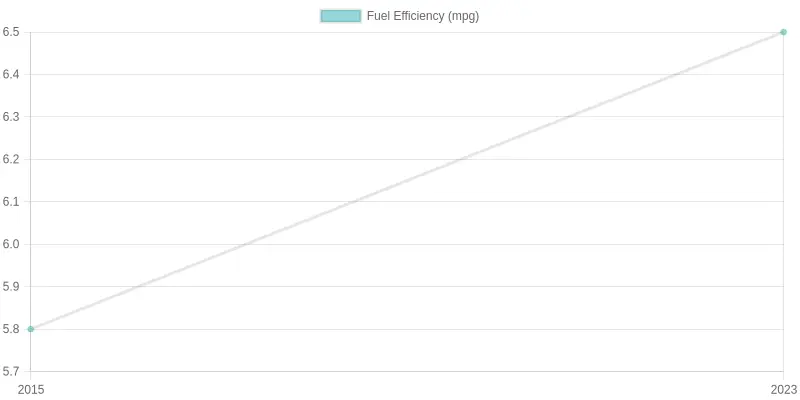
Fuel Efficiency Over Time
This chart highlights the improvement in fuel efficiency of Class 8 trucks from 2015 to 2023.
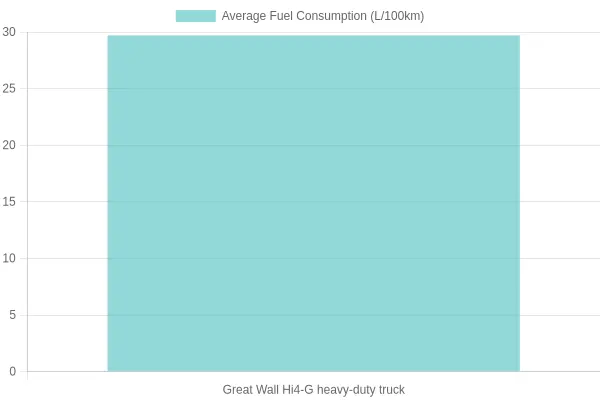
Average Fuel Consumption of Heavy-Duty Trucks
This chart illustrates the average fuel consumption in liters per 100 km for a typical heavy-duty truck.
Truck Weight Trends Over the Years
As commercial trucks have evolved, so too have the regulations and standards concerning their weight limits. The following chart illustrates the trends in average gross vehicle weight limits (GVW) from the year 2000 to 2023, highlighting significant regulatory changes that influenced these trends.
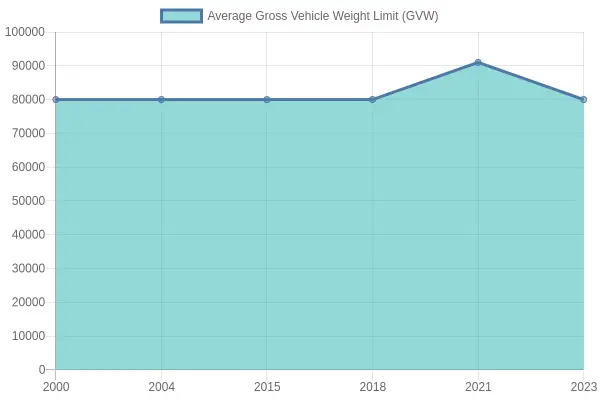
| Year | Regulation Changes | Average Gross Vehicle Weight Limit (GVW) | Notes |
|---|---|---|---|
| 2000 | Initial maximum weight limits enforced | 80,000 lbs | Standard weight limit for trucks |
| 2004 | Implementation of a federal bridge formula for highway weight limits | 80,000 lbs | Aimed to reduce stress on highways |
| 2015 | Enhanced truck safety regulations adopted | 80,000 lbs | Introduction of safety technologies |
| 2018 | New standards for electronic stability control introduced | 80,000 lbs | Required for certain truck classifications |
| 2021 | Proposal for increased weight limits for specific road types | Up to 91,000 lbs (under specific conditions) | Pending legislation for increased limits |
| 2023 | Focus on environmental impacts led to reevaluations | 80,000 lbs | Advocacy for eco-friendly trucking technologies |
For more insights on weight regulations and their implications, consider checking out our articles on current trends in used truck sales growth and the impact of emissions on used truck prices.
Conclusion
In understanding the weight dynamics of commercial trucks, it’s evident that adhering to regulations plays a crucial role in ensuring road safety, optimizing fleet performance, and safeguarding infrastructure. By recognizing legal weight limits, trucking companies can reduce the risk of accidents and improve their operational efficiency. Compliance with weight standards not only prevents legal repercussions but also enhances safety for drivers and other road users. As we’ve discussed, heavier trucks can affect accident severity and stopping distances, underlining the necessity for rigorous monitoring of truck weights.
At Summit Fairings, we are dedicated to empowering trucking company owners, fleet managers, and procurement teams by providing innovative solutions that improve the performance of your vehicles. Our products are specifically designed to enhance aerodynamics and fuel efficiency, dramatically reducing drag while maximizing your trucks’ capabilities. If you’re looking to elevate your operations and ensure your fleet runs smoothly and efficiently, explore Summit Fairings’ offerings today. Make the smart choice for your business and drive into a profitable future with us!