
As commercial rental trucks become an integral component of various industries, understanding their obligations, particularly regarding weigh stations, is crucial. Weigh stations serve as checkpoints for ensuring compliance with weight restrictions, which vary by state and vehicle use. The relevance of this topic extends beyond legal adherence; it impacts operational efficiency and cost management. This article delves into the legal requirements for commercial rental trucks and weigh stations, state-specific regulations, the impact of weight thresholds, and the enforcement mechanisms in place. Each chapter aims to provide trucking company owners, fleet managers, and logistics experts with a comprehensive understanding of the critical dynamics at play.
Reading the Weigh Station Rulebook: How Commercial Rental Trucks Navigate Weight and Compliance on U.S. Roads
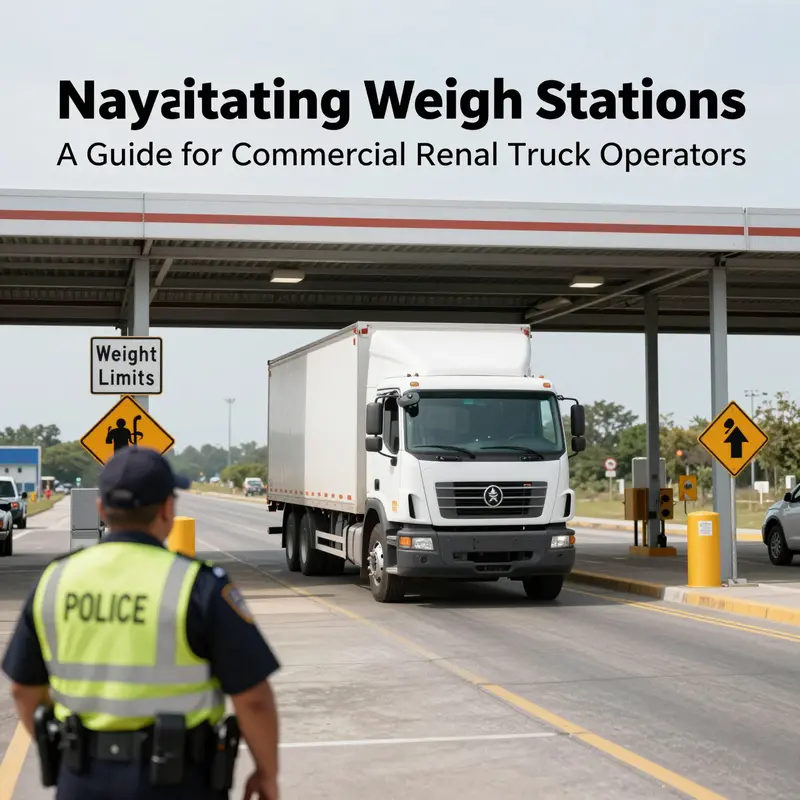
Across the expansive network of American highways, weigh stations are a visible reminder that the road system is a managed framework built on safety, infrastructure protection, and fair play among carriers. For commercial rental trucks, the need to stop at a weigh station is not a simple yes or no. It depends on state rules, the actual loaded weight of the vehicle, and the purpose of the trip.
In practice, many states require a stop when the loaded weight approaches or exceeds a commonly used threshold around 10,000 pounds gross vehicle weight (GVW) or when the trip is clearly commercial rather than a personal move. Heavier, fully loaded trucks cause more road wear and carry higher risk, so weigh stations serve as a governance tool to share infrastructure costs and enforce safety norms. Weight here refers to the actual loaded weight read by the scale; a truck with a high GVWR but light payload may not trigger a stop, while the same truck full of cargo could.
Two main inspection modalities exist: static scales, where the driver must stop and place the vehicle on a scale pad, and Weigh-In-Motion (WIM) systems, which screen weight as the vehicle passes by. A WIM reading does not waive the obligation to stop if the weight or paperwork triggers a closer inspection. For rental operators, this means planning routes that may cross states with WIM corridors but being ready to pull into a traditional scale if needed.
Beyond weight, licensing, insurance, vehicle condition, and permits form the broader regulatory environment. Fleets must keep vehicles in good condition and maintain up-to-date documentation, including registration and insurance. Regular maintenance helps reduce the risk of penalties and delays at the scale and supports safe loading practices.
Across regions, the underlying logic is consistent: commercial rental trucks used for business freight are treated like other commercial carriers with respect to safety, maintenance, and compliance with weight limits. The practical takeaway for renters is to perform pre-trip weight checks, verify licensing and insurance, and ensure the vehicle is mechanically sound before a route is undertaken. This preparation minimizes the chance of unplanned weigh station delays and protects route profitability.
The core message is that weigh stations are not arbitrary hurdles but essential controls that help preserve road quality and safety for everyone. Operators planning multi-state trips should verify rules for each jurisdiction, keep weight documentation ready, and maintain vehicles in first-class condition to pass inspections with minimal friction. For readers seeking broader market context, related material on trucking economics can provide additional insight into how weight compliance intersects with fleet utilization and profitability.
Weights on the Road: How Commercial Rental Trucks Encounter Weigh Stations Across States
The question of whether commercial rental trucks must stop at weigh stations does not have a single universal answer. It sits at the intersection of weight, usage, and geography. In broad terms, weigh stations exist to enforce federal and state weight limits and to keep highways safe and roadways fair for all carriers. But the precise obligation for a rental truck depends on where the truck is operated, how heavy it is when loaded, and whether its use is considered commercial or personal. From coast to coast, the rules ripple with nuance. What remains consistent is the purpose behind weigh stations: to verify that a vehicle does not exceed prescribed limits that protect bridges, pavement, and public safety, while ensuring competitive fairness across fleets and operators. This is not simply a matter of a vehicle’s age, its license class, or the rental agreement. It is a matter of how the truck is used and what it actually weighs on the highway at any given moment. The outcome for drivers and rental companies rests on careful alignment between the vehicle’s specifications, the load carried, and the regulatory landscape of each state traversed.
To understand the practical reality, consider the weight thresholds that frequently trigger weigh station interventions. Across many states, commercial trucks are subject to checks once they are loaded beyond a certain gross vehicle weight—often around 10,000 pounds, or more in many jurisdictions. When a rental truck is used for business transportation, hauling goods for a company or for professional purposes, it can easily cross into the regime where weigh stations monitor, weigh, and record. The idea is simple in theory: ensure that the combined weight of the truck, its cargo, and any passengers remains within legal limits so that infrastructure bears a predictable load. The federal benchmark—the backbone of most state policies—allows up to 80,000 pounds gross vehicle weight for interstate travel, but each state may apply more restrictive rules on state-maintained roads or in particular zones such as near bridges or in rural districts where structural capacity is tighter. Those differences matter for rental fleets, which operate under a mix of national guidelines and local ordinances that tailor enforcement to road conditions and local priorities. In practice, this means that a rental truck destined for a cross-state move could be within the federal allowance on interstates, while a detour onto a smaller highway or a restricted corridor could bring additional scrutiny, especially if the truck is heavily loaded or if the cargo arrangement appears to burden a specific axle beyond allowed limits.
Weigh stations operate through two primary mechanisms: static scales where a driver must stop and the vehicle is weighed, and Weigh-in-Motion (WIM) systems that screen trucks as they pass by at low speeds. The latter approach minimizes disruption yet still yields actionable data. Inspectors verify not just total weight but axle weights, per-axle limits, and, on occasion, the distribution of the load. The rules specify not only total weight but the weight that each axle may carry, with federal guidance traditionally emphasizing a maximum of 20,000 pounds per single axle and 34,000 pounds for tandem axles. States may tailor those limits based on road design, bridge capacity, and local safety concerns. Vehicles found overweight face penalties that can include fines, stop-work orders, and in some cases impoundment until the load is adjusted or redistributed. For a rental truck, this means a momentary line in the sand: either the load is rebalanced, or the driver contends with a longer stop, potential documentation, or even a reroute. Freight safety and bridge protection remain the core motives behind these checks, but their practical impact on how a rental move unfolds can be significant. The enforcement posture can vary with the time of day, traffic conditions, and the jurisdiction’s willingness to pursue overweight violations aggressively. In some places, a stop might feel routine. In others, it could become a cautionary pause, especially for first-time operators who are still navigating the legal framework of cargo weight and road usage.
The way rental trucks enter this world of thresholds and scales also hinges on how the vehicle is registered and how it is being used. Rental fleets span a spectrum of configurations, from light commercial movers to larger box trucks engineered for heavier cargo. While the core aim remains consistent, the exact vehicle’s gross vehicle weight rating (GVWR) and the weight of the cargo it carries can shift the compliance picture materially. A truck rented for a business move—loading office equipment, store fixtures, or inventory—likely falls under commercial usage rules that align with weigh-station expectations. If, on the other hand, the vehicle is loaned for a personal relocation, the question becomes cloudier. Some states recognize a personal use exemption or rely on the vehicle’s designation and use rather than the rental arrangement alone. Yet the line between personal and commercial use is often defined by the nature of the trip, the purpose of the move, and the cargo’s commercial character. The regulatory difference matters because a few states provide exemptions or more lenient treatment for genuinely personal moves, while others apply uniform commercial vehicle rules regardless of whether a company is paying for the rental or an individual is paying out of pocket. For renters, this is where the practice of vetting state regulations before setting out becomes more than prudent—it becomes essential. A plan that anticipates weigh station stops and potential delays can save time, money, and hassle on a trip that already mixes logistics with everyday life. The recommendation from regulatory and safety perspectives is clear: check each state’s DOT resources before departure, confirm the vehicle’s GVWR, and verify the intended use case with the rental agency to ensure the vehicle’s classification aligns with state expectations.
From a customer’s point of view, the rental process itself feeds into how weigh-station interactions unfold. The rental policy landscape—from minimum driver age to the required driver qualifications, and from insurance arrangements to road restrictions—frames what is permissible and what isn’t on the road. Age requirements can differ by state, with many rental policies defaulting to a minimum age of 21, while some jurisdictions and carriers allow younger drivers with additional fees or restrictions. California, for example, may push toward a higher minimum age, whereas New York and Michigan sometimes permit younger drivers with the right license status. Driver qualifications follow suit, with a valid license required and often a certain amount of behind-the-wheel experience, especially for younger renters. Insurance coverage remains a centerpiece of risk management. Comprehensive coverage is typically offered at varying levels, and renters must understand whether their policy is primary or secondary, and how it interacts with any credit-card coverage they might rely on. The vehicle itself also comes with restrictions on where it can be operated. Many routes—especially those designated for commercial traffic or bearing weight and size limitations—are off-limits for rental trucks without special permissions or routing considerations. The practical takeaway is that a rental operator should not merely assume compliance by loaded weight alone; context matters. The route chosen, the load plan, and the way the vehicle is loaded all influence whether weigh-station requirements will be triggered en route. A thoughtful approach to planning helps mitigate the risk of surprises at weigh stations and can smooth the path of a move that must respect both the letter of the law and the realities of the road.
Given the intricacies above, how should a driver prepare? Start with the basics: obtain the GVWR from the rental agreement or the vehicle’s documentation, and confirm whether the use case is clearly commercial or personal. If the move is business-related and the load is substantial, treat it as commercial driving and anticipate weigh-station checks. Build in extra time at potential weigh-station corridors, especially in states known for stricter weight enforcement or those with older bridges and sensitive infrastructure. When planning a trip, consider load balancing and axle weight distribution. A heavy front or rear payload can push certain axles beyond limits even if the total weight remains within a cap. Efficient packing, pallet distribution, and careful securing of cargo can reduce the risk of overweight violations and the penalties that follow. If a weigh station is imminent, remain calm and steady. Slow down to the posted speed limit for WIM systems and follow the directions of inspectors. Have the necessary paperwork ready—permit documents if required, proof of insurance, and, for some cases, a copy of the rental agreement showing the vehicle’s GVWR and the business purpose of the trip. The smoother the encounter, the less likely a driver will face delays or penalties. In the broader sense, weigh stations serve as a reminder that the road network is built to bear specific loads and that compliance supports infrastructure longevity, safety, and fairness across carriers. This is not just about compliance; it is about choosing routes, loading strategies, and driving practices that respect the system and keep the business moving.
For readers seeking a broader context on how rental policies intersect with state regulations and how these rules evolve as trucking markets shift, a deeper dive into the flow of information and practice can be illuminating. The trucking landscape is continually shaped by changes in demand, freight patterns, and regulatory attention. To explore related discussions and practical considerations, see the main blog hub where ongoing conversations about truck operations, policy changes, and market dynamics are gathered: mcgrathtrucks.com/blog/. This resource can provide background on how fleet managers and independent operators interpret shifting rules, plan equipment acquisition and deployment, and navigate the realities of a marketplace that emphasizes safety, efficiency, and cost discipline. The practical takeaway remains consistent: before you take the wheel, verify the vehicle’s classification and weight, confirm the route’s regulatory expectations, and prepare for weigh-station contingencies with diplomacy, preparedness, and respect for the road’s evolving rules.
In sum, whether a commercial rental truck must stop at weigh stations hinges on a combination of weight, use, and state-specific regulations. The weight threshold that commonly triggers attention—around 10,000 pounds or more—serves as a practical guidepost, but it is the interplay of federal limits, state adaptations, and the vehicle’s purpose that determines whether a stop is mandatory. The road demands awareness, planning, and an approach to loading that keeps a fleet compliant without losing time. For rental drivers, the most reliable path is to verify the GVWR and the intended use, understand the route’s weigh-station profile, and carry the proper documentation. With this approach, a routine weigh-station encounter can become a straightforward checkpoint rather than a stress point. And when in doubt, consult the official state Department of Transportation resources or the rental company for guidance, ensuring every move remains within the letter of the law and the spirit of road safety. External resource: https://www.fmcsa.dot.gov
Weighing the Miles: How Weight Thresholds Shape the Obligation of Commercial Rental Trucks at U.S. Weigh Stations
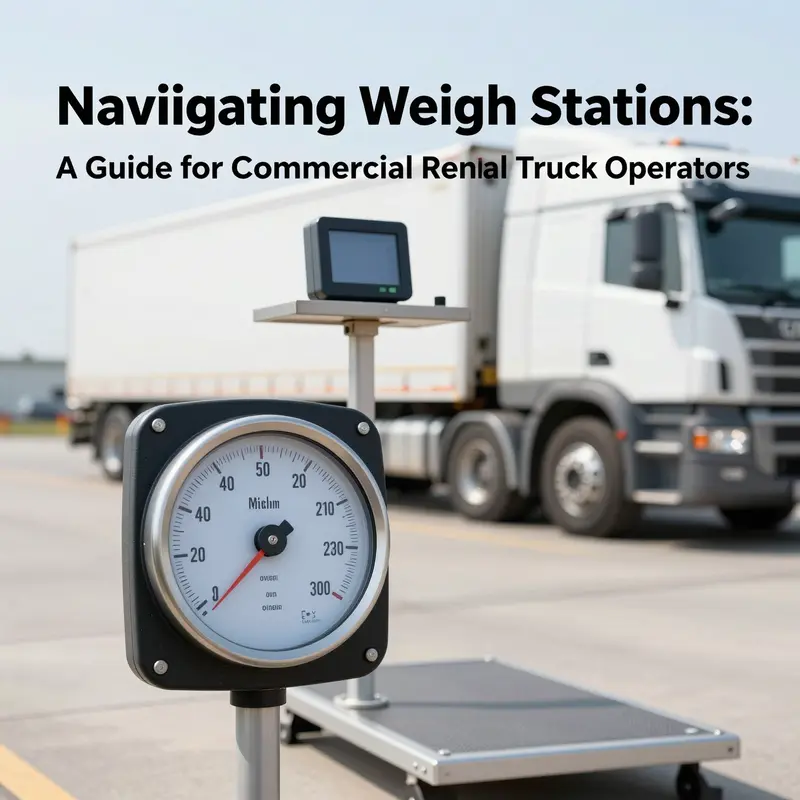
Weigh stations sit along the nation’s freight corridors as quiet sentinels, a practical reminder that every mile logged by a commercial rental truck carries a legal weight and a potential consequence. The question of whether rental trucks must stop at weigh stations does not admit a single yes-or-no answer; it unfolds in a landscape where weight, purpose, and state-by-state rules converge. The core of the matter rests on a simple, stubborn fact: the vehicle’s actual, loaded weight must never exceed the certified limits for its class. And those limits are not merely numbers on a spec sheet. They define what a truck can safely carry, how it should be loaded, and when it must pause to be weighed and inspected so that roads remain safe and infrastructure is protected.
At the heart of this framework lies the Federal Highway Administration’s standard for classifying heavy-duty trucks. A commonly cited threshold sits at a gross vehicle weight rating (GVWR) of 26,000 pounds, which marks the boundary between what the industry calls medium-duty and heavy-duty vehicles. Vehicles that cross that line typically fall into Class 7 or Class 8, with associated regulatory expectations that extend beyond simple loading limits. For rental fleets, this distinction is not just academic. It informs how fleets dispatch vehicles, how customers load them, and how operators prepare for the inevitable check at a weigh station. When a rental truck is employed to haul goods for a business, its use aligns with commercial transport rules as much as any fixed-route carrier would. The weight threshold becomes a practical trigger—an alert that a truck is in scope for weigh-station protocols, inspections, and potential penalties if the cargo pushed the vehicle beyond its certified capacity.
Yet the rulebook is not monolithic. States differ in whether a rental truck enjoying a weight near the threshold must halt at every weigh station or only when the vehicle exceeds a particular limit. Some states add extra layers of nuance depending on the vehicle’s intended use—personal moves vs. commercial distribution, for example. The result is a patchwork map where the same model of truck may be treated differently depending on the journey’s purpose and the stretch of road it travels. The practical upshot for drivers and fleet managers is clear: before hitting the road, it is essential to verify how the state you’re entering treats commercial rental trucks, what exemptions exist for personal moves, and where the line between a private move and a business operation is drawn. The prudent approach—validated by regulatory guidance and road experience alike—is to assume that weight will matter and to prepare accordingly rather than rely on a blanket exemption.
Weigh stations themselves have evolved from the days of mandatory stops at fixed scales to a more nuanced system that can speed up commerce while preserving safety. Static scales require vehicles to halt and be weighed, often in a dedicated lane, while Weigh-in-Motion (WIM) systems allow screening at low speeds, sometimes without the truck coming to a full stop. For a commercial rental fleet, this distinction matters because it shapes trip planning, driver routines, and the chance of unexpected delays. A WIM-enabled corridor can improve on-time performance and reduce dwell times at the border between weight compliance and cargo delivery. But even with WIM, the fundamental rule remains intact: the loaded weight must reflect the vehicle’s GVWR and the actual axle load distribution it carries. When a rental truck approaches a weigh station, the driver’s awareness of weight distribution—how the load is spread across axles, how much weight sits on each wheel, and how cargo is secured—can be as consequential as the total pounds registered on a scale.
For rental companies, the weight equation translates into a disciplined set of practices designed to protect safety and shield their customers from costly disruptions. A primary responsibility is ensuring that a vehicle’s GVWR, as listed in the rental agreement, remains an accurate baseline for all anticipated loads. Not every payload aligns neatly with the nominal capacity of the chassis, and misuse—whether intentional or inadvertent—can push a truck past safe limits. Overloading exerts extra stress on braking systems, suspension, tires, and steering components. It also degrades fuel efficiency and can produce uneven tire wear, which is a red flag for both regulatory bodies and insurers. In this light, rental agreements increasingly embed customer verification steps. Some agreements prompt renters to confirm the estimated loaded weight or to attest that the cargo complies with weight and dimension limits before the truck is dispatched.
Operationally, the prudent fleet manager treats weight compliance as a blend of planning, measurement, and discipline. Load planning begins long before the truck leaves the rental depot. Customers are urged or required to plan for weight distribution that respects axle-group limits, wheel-end capacities, and the vehicle’s GVWR. The use of tarps, straps, and other load-securement devices is not merely a matter of cargo security; it is a regulatory shield that helps maintain predictable weight distribution and reduces the risk of load shift during transit. A well-secured load minimizes the chance that shifting cargo could alter the vehicle’s center of gravity enough to trigger regulatory concerns or create unsafe handling characteristics at highway speeds. In many fleets, some form of onboard weighing technology or pre-departure weight validation is standard; the goal is to identify potential overloads before the vehicle hits the road and to give drivers a precise, actionable signal if adjustments are needed.
The practical consequences of those practices become most visible at the weigh station itself. A vehicle that arrives with a payload heavier than its GVWR or across an axle group exceeding its legal limit will face corrective actions. In some states, a short, immediate adjustment might suffice—unload a portion of cargo, reposition the load, or add ballast to balance axle weights. In more stringent settings, the truck may be held, fined, or refused access to continue until the weight issue is resolved. The reality is that a rental truck intended for commercial use carries higher expectations because it operates within a framework designed to keep heavier loads moving safely on congested highways. The cost of non-compliance is not limited to a single fine; it can cascade into trip delays, rental extensions, or even lease penalties if a customer cannot demonstrate immediate remediation.
This is where the evolving landscape of propulsion and emissions regulation intersects with weight management. As states tighten emissions standards and as fleets contemplate electrification, the total vehicle weight, including batteries, becomes a consideration in payload capacity. In some multi-vehicle rental fleets, heavier propulsion systems can erode payload margins, forcing managers to reallocate equipment or adjust contracts to reflect differing effective capacities. The broader implication is that weight management is not a static rule but a moving target shaped by technology, policy, and market demand. Fleet managers must stay attuned to how noxious emissions rules—such as forthcoming NOx regulations—interact with weight distribution and the ability to legally carry the intended cargo. In certain contexts, heavier electric powertrains may necessitate recalibrated load plans or more frequent use of weight-checks to verify that the actual loaded weight remains within permissible bounds for a given mission.
A further layer of complexity emerges from the fact that the weight thresholds commonly discussed in regulatory texts are anchored in vehicle classification, but enforcement can hinge on vehicle usage. A rental truck used for a business purpose is more likely to be treated as a commercial vehicle, with the corresponding expectations for weigh-station compliance, than a vehicle used solely for personal moves. This distinction matters not only for the driver at the roadside but also for the rental company’s risk management and insurance coverage. In the absence of a simple, universal rule, drivers should examine each state’s Department of Transportation guidelines and weigh-station policies before beginning a trip through unfamiliar corridors. The safest path is to prepare as if every state will require a weigh check for a commercial load, even if some jurisdictions may grant exemptions for certain personal moves or lighter-than-threshold loads.
In linking theory to practice, consider the intersection between market dynamics and regulatory expectations. The trucking industry is continually reshaped by asset utilization, demand cycles, and evolving safety standards. A useful lens on these shifts comes from observing how fleets adapt, from the way drivers organize payloads to how fleets select and deploy equipment that better aligns with weight thresholds without sacrificing efficiency. The prevailing takeaway is practical rather than punitive: weight thresholds are not mere hurdles but clarifying safeguards that help ensure that heavier trucks operate within their most capable and safe envelope. A side effect of this clarity is improved predictability for customers who rent these trucks. If renters understand the weight implications of their cargo and plan accordingly, the transportation workflow becomes smoother, with fewer unexpected stops and fewer disputes over compliance.
For readers who want to explore how market trends influence fleet composition and, by extension, weigh-station interactions, see the discussion on current trends in used-truck sales growth. This exploration highlights how shifts in supply, demand, and asset age can alter the typical weight profile of rental fleets, their maintenance schedules, and how operators approach compliance under varying regulatory environments. current-trends-in-used-truck-sales-growth This perspective helps frame weigh-station obligations not as isolated rules but as part of a broader ecosystem shaping the way rental trucks are chosen, loaded, and managed on the road.
Ultimately, the weight thresholds themselves crystallize a larger truth about commercial rental trucking. The systems of checks at weigh stations, the standards for cargo securing, and the technical specifics of GVWR and axle weights all reinforce the principle that heavy-duty transport demands deliberate, informed handling. The objective is not merely to avoid fines or delays but to preserve road safety, protect infrastructure, and sustain a fair operating environment for carriers of all sizes. When rental fleets articulate clear guidelines around GVWR, weight distribution, and load securement, they empower customers to participate in safe transport practices and reduce the risk of non-compliance on the highway. And when drivers are equipped with accurate information about state-specific exemptions and requirements—before the trip begins—they are less likely to encounter surprise weigh-station stops that disrupt schedules or incur penalties. In that sense, weight thresholds become a practical compass for responsible renting, guiding choices from vehicle selection and pre-trip planning to on-road decision-making at weigh stations.
External reference: For an official overview of regulatory standards and technical specifications related to commercial truck weighing and classification, see the U.S. Department of Transportation guidelines. https://www.transportation.gov/
Weights in Transit: How Enforcement Shapes When Commercial Rental Trucks Stop at Weigh Stations
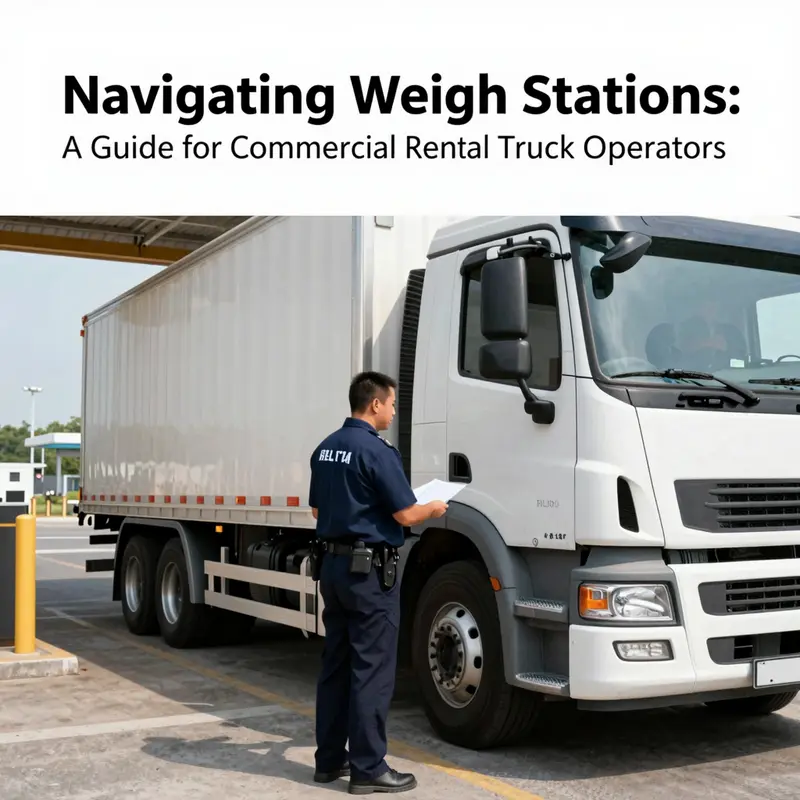
Across the United States, the question of whether a commercial rental truck must stop at weigh stations is not a single yes-or-no answer but a map of rules that shifts with location, weight, and purpose. Weigh stations exist to protect the highway system, maintain infrastructure lifespans, and ensure fair competition among carriers. For rental fleets, the intersection of rental terms and trucking regulations creates a tension between mobility and compliance that fleets must manage with precision. The way enforcement is designed—whether it relies on fixed scales, dynamic screening, or a combination of both—directly shapes how rental trucks are operated on the road and how fleets think about loading, routing, and even the types of equipment they rent out to customers. In practice, the traveler who rents a truck to move personal belongings for a weekend is often treated differently from a business customer who rents a truck to haul goods, but the dividing line is not always clear-cut. State by state, weight thresholds, and purpose definitions determine whether a given vehicle is subject to a stop or can pass through a weigh station at highway speed.
The enforcement architecture surrounding weigh stations has evolved in step with the growth of the broader freight system. Weigh-in-Motion (WIM) systems, which measure truck weight as vehicles move through a station at highway speeds, have become a cornerstone of that evolution. WIM offers a non-intrusive, high-coverage approach that allows authorities to flag overweight vehicles without forcing every truck to pull onto a scale. This capability is especially valuable on major freight corridors where fleets operate at scale and the cadence of stops would otherwise create bottlenecks. The presence of WIM devices has, in many jurisdictions, shifted the enforcement dynamic from a reliance on sporadic, manual stops to a more continuous screening regime. The practical implication for rental carriers is that load planning, route selection, and even the timing of moves must align with the probability of being screened rather than a simple compliance snapshot at a single checkpoint.
Beyond the technology, enforcement rests on a framework of inspections, audits, and regulatory expectations that collectively push rental companies toward disciplined compliance. State and federal highway agencies routinely conduct audits that require rental firms to present detailed records of vehicle weights, load documents, maintenance histories, and driver compliance data. When discrepancies emerge—not only with the weight of a vehicle but also with load documentation or maintenance intervals—enforcement actions can escalate quickly. Penalties range from fines and record corrections to more severe consequences such as suspensions of operating authority. For rental fleets, these consequences are not theoretical; they translate into planning constraints, reputational risk, and financial exposure that can ripple through pricing and utilization models. In this environment, rental operators are incentivized to implement robust internal controls that mirror the external enforcement ecosystem—calibrated scales, accurate load documentation, preloading checks, and clear transfer of weight data from rental events to fleet records.
Even as enforcement becomes more sophisticated, it remains fundamentally about measuring weight and ensuring that the combination of axles, tires, and payload stays within legal limits. The weight threshold that triggers enforcement varies by state, but a common reference point in many jurisdictions is a total vehicle weight around ten thousand pounds or more, depending on the vehicle’s configuration and intended use. A truck rented for a business purpose that carries goods is typically treated as a commercial vehicle under the state’s weight regulations, and therefore subject to weigh-station requirements or at least to screening under WIM. Conversely, a vehicle used solely for a personal move may escape certain commercial-imposed stops if it stays under the state’s weight limit and if the state provisions allow such an exemption. The reality is that the boundary lines are not universal. They shift with state law, and even within a single state, the interpretation can hinge on arguments about the vehicle’s purpose, ownership structure, and the nature of the load. For anyone moving through this landscape, the operative phrase is “check the state’s current guidance,” because the rules are not static and can change with regulatory updates, budget cycles, or safety campaigns.
Within this fabric of rules and technologies, the rental sector faces a particular set of pressures. Rental trucks are, by their nature, a blend of standardized equipment and highly variable payloads. A fleet built to serve general consumer moving needs may not reflect the same risk profile as a fleet dedicated to full-load commercial transport. Yet enforcement does not operate on a qualitative distinction between personal and commercial in the way a consumer might; it operates on weight, configuration, and use case. When a rental truck is used to transport goods for a business, it is reasonable to expect it to align with commercial vehicle standards just as if the operator owned the truck outright. That expectation translates into a need for diligent paperwork, accurate tonnage calculations, and an understanding that even a single heavy load can push a vehicle into the realm of compliance risk. For rental companies, this means maintaining clear records of the licensed weight, the loaded weight, and any deviations that occurred during a given rental period, as well as ensuring that customers understand load limits and the implications for weigh-station compliance.
As enforcement has grown more data-driven, rental operators have found value in adopting a data-forward approach to compliance. Weighing data can be integrated with other fleet information to create a composite view of risk. State enforcement databases, when augmented with rental company records, can reveal patterns: fleets that repeatedly push weight limits, loads that regularly exceed thresholds, or routes that funnel trucks through high-risk corridors. The use of adaptive WIM algorithms represents a cutting-edge development in this space. These algorithms refine weight estimation by accounting for dynamic loading conditions, axle configurations, and the evolving nature of truck weights across trips. The practical benefit is a more accurate, responsive enforcement process that minimizes unnecessary stops while still catching genuine violations. In turn, this reduces downtime for compliant fleets and concentrates enforcement resources where the risk is highest. For rental companies, the implication is clear: accuracy in payload documentation, timely calibration of scales, and transparent communication with customers about weight expectations and legal responsibilities become core service and risk-management practices rather than optional add-ons.
The regulatory backbone supporting these enforcement activities comes from guidelines and standards issued by federal and state authorities. The Federal Motor Carrier Safety Administration (FMCSA) provides broad guidelines intended to harmonize enforcement across jurisdictions. While FMCSA sets the overarching expectations for weight enforcement, the specifics—such as which vehicles must stop, which can be screened by WIM, and the exact thresholds—are implemented by state transportation departments. This layered structure creates a practical reality for rental operators: to stay compliant, fleets must navigate both federal norms and state-specific rules. Training for enforcement personnel, calibration and certification of weighing equipment, and public awareness campaigns about compliance are all part of this ecosystem. When a rental fleet understands these dynamics, it can implement proactive measures that align with both the letter of the law and the intent of protecting road infrastructure.
For rental operators and their customers, the implications are tangible in planning and operations. In practice, a commercial rental truck that carries goods for a business should anticipate weigh-station interactions as part of the route design, just as a traditionally owned fleet would. This often means more careful load planning, with a focus on ensuring that gross vehicle weight remains within the applicable limits for the selected route and time of day. It also means routine checks of the vehicle’s weight data, including verification of payload, loads, and distribution across axles. And it means clear customer communication about responsibilities for securing loads, selecting routes that minimize exposure to overweight checks, and maintaining documentation that can be presented at enforcement points if necessary. The goal is not to maximize speed or minimize stops but to harmonize operations with the regulatory environment in a way that sustains safety, protects infrastructure, and supports fair competition.
Market dynamics also shape how fleets approach weigh-station compliance. The broader trucking market has seen shifts in vehicle mix, utilization, and equipment standards. Fleets that are more actively engaged in commercial work may experience greater scrutiny, but they also have more mature processes for documentation and compliance. The ongoing evolution of fleet composition—how many trucks are deployed, what payloads are typical, and how often trucks run full loads—intersects with enforcement patterns in meaningful ways. For readers who want to connect macro trends with enforcement realities, industry analyses such as Current trends in used truck sales growth offer contextual insight into how fleets adapt to shifting demand and regulatory pressure. This perspective is especially relevant for rental operators who must align their inventory and rental terms with observed industry trajectories while preserving compliance discipline.
To that end, it is essential for any rental operation to treat weigh-station compliance as a core operational discipline rather than a regulatory afterthought. The practical steps are straightforward but require discipline: establish clear load limits for each rental vehicle, maintain up-to-date load documentation and maintenance records, invest in regular scale calibrations and inspections of safety equipment, and train staff and customers on the responsibilities associated with transporting goods. Route planning should incorporate known weigh-station locations and dynamic factors such as time of day, traffic conditions, and potential delays at screening points. Fleet managers should also consider partnerships with third-party compliance providers or technology platforms that help track weights, document loads, and supply production-quality data when needed at enforcement points. In doing so, rental fleets can reduce the friction between mobility and compliance, ensuring that customers experience a smooth, predictable service while authorities maintain the integrity of the road network.
For those seeking further technical depth on enforcement technology, including the role of adaptive WIM systems, there is a foundational body of research and practice that underpins these trends. Even as regulations differ by state, the underlying logic remains consistent: weigh trucks accurately, screen efficiently, and escalate only when weight exceeds permitted thresholds. The integration of data systems across agencies and fleets promises even greater accuracy and quicker responses in the future. As enforcement becomes more precise and data-rich, the onus is on rental operators to keep pace with calibration standards, load documentation, and route planning that aligns with both safety and commerce. For a more technical treatment of adaptive WIM algorithms and their role in truck weight enforcement, see the FHWA study referenced in the detailed materials.
In sum, whether a commercial rental truck must stop at a weigh station is not a blanket determination but a function of weight, use, location, and the evolving enforcement toolkit. The most reliable approach for rental operators is to treat compliance as a continuous process: verify weights before loads leave the depot, document every transportation event, calibrate equipment regularly, and design routes with awareness of weight screening realities. This approach protects road infrastructure, supports fair competition, and delivers predictable, responsible service to customers. For readers looking to place these considerations in a broader market context, the latest industry data on fleet composition and used-truck trends can illuminate how enforcement realities intersect with market dynamics. Current trends in used truck sales growth offers one snapshot of that environment, while the deeper regulatory and technological dimensions are explored in the external resource cited below. For a deeper technical understanding of enforcement technology and adaptive WIM algorithms, refer to the Federal Highway Administration study at https://www.fhwa.dot.gov/publications/research/infrastructure/structures/16052/index.cfm.
Final thoughts
Understanding the legal obligations related to weigh stations for commercial rental trucks is vital for any operator involved in business transportation. Non-compliance can lead to penalties and operational disruptions. By examining the legal framework, state-specific regulations, weight thresholds, and enforcement measures, trucking professionals can ensure that their operations remain compliant and efficient. Ultimately, adhering to these regulations not only protects infrastructure but also supports fair practices within the industry.