
Marker lights serve as a vital part of safe commercial truck operations, essential for compliance with regulatory standards and enhancing visibility on the roads. This article unpacks the necessity of marker lights, focusing on their regulatory requirements, key safety advantages, operational efficiency in compliance, and economic implications for trucking companies and fleet managers. By comprehensively exploring these themes, we will illustrate the importance of marker lights in the fleet management landscape, equipping logistics and procurement teams with the knowledge needed to uphold safety and efficiency in their operations.
Watching the Edges: How Marker Lights Shape Safety, Compliance, and the Modern Freight Fleet

Marker lights sit along the sides of commercial trucks like quiet sentinels, quietly defining the vehicle’s silhouette in the dim hours when other drivers are most vulnerable. They are not decorative accents; they are regulatory imperatives that translate a truck’s size and presence into visual cues that help other road users judge distance, speed, and space. The practical effect of this infrastructure is simple and profound: fewer lane changes, fewer close passes, and fewer miscalculations about where a long rig ends and where another vehicle begins. In the United States and in many other parts of the world, those cues are mandated by a framework built to standardize what a passenger car driver expects to see and how quickly a driver can react when the silhouette of a truck appears in periphery glare, rain-slicked pavement, or twilight haze. The regulatory language may feel dry, but the outcome is tangible: marker lights reduce the likelihood of fender-benders and more serious crashes that occur when a vehicle loses track of a truck’s width or its location on a multi-lane highway. This is why fleets invest in marker lighting not as a discretionary add-on, but as a core safety asset every mile of the year demands.
At the heart of the regulatory story is a standard that has grown from the practical needs of a ubiquitous asset on the nation’s highways—the large commercial vehicle. In the United States, the central reference point for marker lighting is FMVSS No. 108, the standard that codifies lighting equipment requirements for vehicles. This standard is not a single paragraph tucked away in a statute; it is a living framework that describes where lights belong, what colors they should emit, and how bright they must be under different operational conditions. The front marker lights, for example, are required to be mounted on the outermost edges of the vehicle and to emit white light that is visible from the front. They function to outline the width of the vehicle and to ensure that, even at a distance or in a sudden encounter, a truck’s breadth is apparent to oncoming traffic. On the rear, marker lights switch to red, projecting a signal that travels in the opposite direction, marking the vehicle’s rear boundary and helping following drivers gauge stopping distances and potential hazards in low visibility. These color conventions—white for the front and red for the rear—are not whimsical choices. They align with decades of field testing and cross-traffic conventions that create a predictable language for drivers who may be navigating fog, snow, or nocturnal corridors where the road becomes a sequence of shimmer and shadow.
Complying with this standard is not a matter of installing a single bulb and calling it a day. The positioning rules require a careful and repeatable installation: marker lights must be on the outer edges of the vehicle’s front and rear, clearly visible to other road users from the sides and from the approaching or trailing perspective. The visibility requirement is not merely about brightness; it is about photometric performance—how the light distributes, how it cuts through glare, how it maintains visibility at various viewing angles and distances. The front markers must be aligned to ensure a uniform perceived width across the vehicle’s corners, while the rear markers must maintain a consistent, unmistakable red signal that anchors the tail end of the truck to trailing drivers’ sightlines. The alignment aspect matters because a misaligned marker can blur the vehicle’s outline, reducing the very width cue that helps other drivers make safer lane choices. For fleets and owner-operators alike, this translates into a maintenance discipline: periodic checks to confirm that lamps are not only operational but precisely aimed and synchronized with the vehicle’s overall lighting profile.
The operational standard embedded in FMVSS 108 emphasizes two core ideas: functionality and durability. Lights must be operational, meaning a burned-out or flickering marker light triggers a non-compliance flag during inspections and can lead to fines or out-of-service orders if the problem is detected in a roadside check. A second layer of consideration is alignment. Malfunctioning alignment can distort the width cue and undermine the purpose of marker lighting altogether. Because marker lights serve a different function than clearance lights or headlights, the failure mode is not just reduced brightness; it is misrepresentation of the vehicle’s size and position on the road. This is why modern fleets treat marker lights as a non-negotiable maintenance item, scheduled with the same rigor as wheel bearings and brake linings.
In recent years, the technology underneath marker lights has evolved substantially. Traditional incandescent bulbs gave way to more durable, energy-efficient options, with LED technology predominating in new installations. LEDs offer high luminosity in a compact form, excellent color stability, and long life under the harsh conditions of highway operation—vibration, temperature fluctuations, humidity, and exposure to road spray. In practical terms, LEDs can be up to five to six times brighter than comparable incandescent markers, which translates to more reliable visibility in fog, rain, or when the sun is low on the horizon. The compact design also enables a more integrated lighting package, which can reduce aerodynamic drag and, in turn, marginally improve fuel economy. The performance criteria for lighting technology under the standard are not about raw brightness alone. They include color stability, electrical reliability, water resistance, and resilience to environmental conditions. LEDs have come to epitomize this balance of brightness, durability, and efficiency, and they are increasingly recognized by the DOT and NHTSA as compliant options when they meet all photometric and electrical standards set forth in FMVSS No. 108.
This regulatory pathway has practical implications beyond the letter of the law. For fleets operating across state lines or engaging in cross-border transport, marker lighting harmonizes expectations across jurisdictions, reducing the risk of misinterpretation by law enforcement and inspectors who rely on consistent standardization to speed up roadside checks and ensure safety on crowded corridors. The enforcement reality is that marker lights must function and be properly aligned at every inspection, a condition inspectors interpret as a straightforward indicator of a vehicle’s readiness to share the road. A vehicle with dim, misaligned, or malfunctioning rear or front marker lights communicates a downstream risk to following drivers and to the enforcement apparatus that verifies compliance. In this sense, marker lights are not only a safety feature; they are a signal of professional maintenance discipline. They reflect a fleet culture that prioritizes continuous readiness over last-minute patchwork. The broader safety message is that a truck is not simply a score of horsepower and payload; it is a moving signature that must be clearly read and understood by other drivers, even in the most challenging driving scenarios.
From a fleet operations perspective, the choice of lighting technology for marker lights interacts with a larger conversation about reliability and cost of ownership. LED solutions, with their longer life and lower energy draw, contribute to lower maintenance cycles and less downtime for bulb replacements. In a typical long-haul operation, even a small reduction in maintenance frequency can yield meaningful hours gained on the road and fewer disruptions to schedules. The reduced heat generation and improved durability of LEDs also mean fewer service calls in remote locations, a practical advantage where roadside assistance is a costly and time-consuming affair. Yet even with LED advantages, the standard remains clear about performance requirements: the lights must meet photometric specifications, provide stable color output, resist moisture ingress, and endure vibration without drifting out of alignment. The standard does not concede to fashion over function; it rewards technology that preserves the integrity of the signal that other drivers rely on when navigating around a mass of steel and cargo.
For operators who want to connect the regulatory dots to real-world practice, the narrative often turns to maintenance planning. The maintenance routine for marker lights sits alongside wheel-end servicing, brake checks, and lighting audits. A robust program includes regular visual inspections and a simple lamp test as part of the daily walk-around check. While a quick glance can reveal obvious failures, a more thorough inspection involves checking for proper alignment along the vehicle’s sides and verifying that the front and rear markers illuminate in synchrony with the rest of the lighting system. The maintenance discipline also anticipates environmental challenges—dust, road salt, spray from wet roads, and temperature extremes—that can compromise lamp housings and seals. Ensuring that the marker lights remain clean, sealed, and free of moisture intrusion is essential to preserving the integrity of the signal. It is a small investment with outsized safety dividends when it comes to reducing blind spots and the risk of nighttime incidents.
The regulatory and operational narrative would be incomplete without acknowledging the broader ecosystem in which marker lights operate. Properly functioning marker lights complement other lighting features on the vehicle, such as clearance lights at the top of the cab and along the trailer, as well as headlights and taillights that provide a comprehensive lighting canvas for the vehicle’s profile. The interplay among these lights creates a consistent visual language that other drivers instinctively understand. This is why the placement and performance criteria in FMVSS 108 have been preserved and refined over time: they reflect not only a technical specification but a practical playbook for maintaining predictable vehicle behavior in dynamic traffic environments. In that sense, marker lights are a foundational piece of the safety puzzle—a seemingly small element whose correct implementation enables bigger, more reliable decisions by other drivers in the moment a truck enters their field of view.
For readers who want to explore this regulatory text directly and see how the standards translate into specific requirements, the National Highway Traffic Safety Administration’s pages on FMVSS No. 108 offer the official language and photometric criteria that govern marker lighting. This external reference anchors the discussion in the precise expectations that manufacturers, fleets, and inspectors rely on during vehicle qualification and road checks. As a practical matter, most operators will encounter marker lighting in the context of supplier selection, installation, and ongoing compliance audits. The best practice is to treat lighting as an integrated part of the vehicle’s safety architecture, not as an aftermarket add-on. In this view, marker lights stand with mirrors, brakes, steering, and tires as essential systems that, taken together, determine a truck’s ability to move safely and predictably through heavy traffic and challenging weather. If you are navigating a fleet modernization or equipment refresh, the choice of marker light technology should align with a broader strategy for reliability and regulatory compliance. A well-chosen LED solution can deliver a durable, low-maintenance path to compliance that remains resilient across the life of the trucks and trailers, reducing the likelihood of non-compliance during inspections while helping drivers and other road users read the vehicle with greater clarity.
To connect this regulatory insight with practical resources and industry perspectives, consider visiting the broader content available on a trusted trucking information hub, which regularly synthesizes safety, regulatory, and market trends. For readers seeking a concise entry point into the broader conversation about how marker lighting fits into fleet operations and safety strategies, you can refer to the McGrath Trucks blog for a practitioner-oriented overview and ecosystem context. This link offers a gateway to a wide range of trucking topics and reflects how fleets translate rulebooks into day-to-day practice, maintenance routines, and compliance checklists. You can explore that resource here: mcgrathtrucks.com/blog/.
In closing, the regulatory landscape surrounding marker lights is not merely a compliance hurdle; it is a critical mechanism that shapes the way fleets plan and execute safe, efficient, and durable operations on America’s highways. The confluence of clear positioning, color-coded signaling, reliable operation, and robust technology yields a signal that underpins the broader safety culture of trucking. When a truck rolls into a dim corridor of traffic, the marker lights are doing their quiet job: providing a precise, universally understood outline that helps everyone on the road make safer, faster decisions. The bright line between compliance and safety is not drawn by a single bulb; it is drawn by a system designed to communicate length, width, and intent with unwavering clarity, regardless of the weather, the hour, or the miles traveled. External resource: https://www.nhtsa.gov/fmvss/108
A Conspicuity Imperative: How Marker Lights Fortify Safety for Commercial Trucks
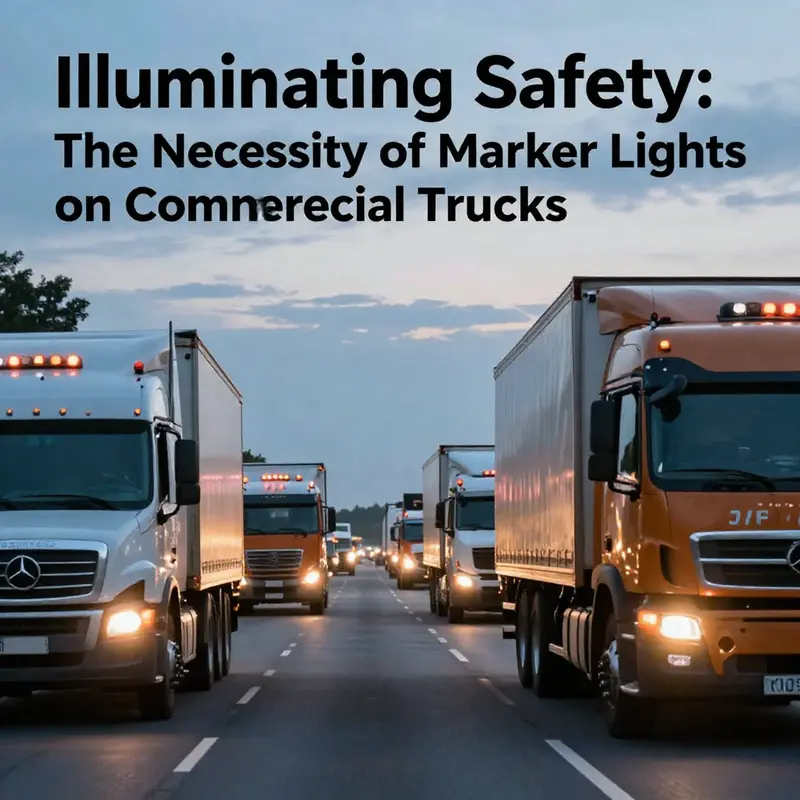
Marker lights are more than a regulatory checkbox on the long list of truck maintenance tasks. They are part of a safety language that communicates size, position, and intent to every driver sharing the road. On a two-lane rural highway at dusk or through a rain-soaked urban corridor at night, those small lights do a heavy lifting. They create a visual map of the vehicle, allowing other motorists to gauge width, approach distance, and trajectory with far greater accuracy. In a fleet context, this improved conspicuity translates into fewer close misses, smoother traffic flow, and operational efficiency that comes from reduced exposure to risk. The core purpose is straightforward: marker lights enhance visibility so other drivers can anticipate a truck’s movement and react sooner, reducing the likelihood of collisions in moments when judgment is most impaired by darkness, weather, or congestion. The regulatory framework that governs this equipment is designed not only to standardize appearance but to create a common expectation across the nation’s fleet operations. Federal and state rules coalesce around consistent marker lighting standards to ensure uniform visibility across varied vehicle configurations. In the United States, the FMCSA and related agencies have established guidelines that require side marker lights on many commercial vehicles, including trailers and the larger combinations that populate highways. These requirements are not arbitrary; they reflect decades of research and field observations about how conspicuity can prevent collisions in imperfect conditions. Fleet managers who prioritize safety do not view marker lights as a single feature to be checked off a maintenance list. They see them as a core component of a broader safety ecosystem—one that includes driver training, proper maintenance, and a deliberate approach to how a vehicle presents itself to the road at all hours. When fleets invest in reliable lighting, they invest in a lower overall risk profile that can pay dividends in productivity, insurance costs, and reputational standing. A marker light’s value is twofold: it improves visibility for other drivers and reinforces the truck operator’s ability to communicate clearly with surrounding traffic. This dual function emerges most vividly in the way marker lights align with the vehicle’s outline. Positioned along the front, rear, and sides, they illuminate the truck’s profile from multiple vantage points, making it easier for following drivers to assess where the vehicle begins and ends, especially when the truck sits within a wall of other vehicles or travels through a gust of wind-driven spray. In this sense, marker lights function similarly to a visual cue that a pedestrian or cyclist might instinctively search for in the dark. The more predictable the truck’s silhouette, the easier it is for others to pace themselves and maintain a safe distance. When lane changes are required, the turn signals that double as marker lights become critical indicators of intent. They provide a clear, unambiguous signal that something is about to happen, helping drivers anticipate a merge, a pass, or a shift to a new lane. The opportunity to signal intent without ambiguity reduces the likelihood of misjudgments that can escalate into rear-end collisions or side-swipe incidents. This is especially true in heavy traffic or adverse weather, where visibility is compromised and quick decision-making is essential. The science behind visibility also underscores the significance of modern lighting technology. LED marker lights, for example, have become the standard in many fleets because they deliver a robust increase in conspicuity while demanding less energy and offering longer service life than traditional incandescent bulbs. The brightness advantage is meaningful. LEDs can be up to six times brighter than their incandescent counterparts, a difference that translates into a greater chance that other drivers will notice and correctly interpret the truck’s presence and width. The energy efficiency of LEDs matters in operating budgets too. In fleets that rely on battery back-up systems or generator-based electrical architecture, the lower current draw of LED marker lights reduces strain on alternators and reduces heat generation, contributing to more reliable performance in extreme conditions. Longevity matters as well. Fewer bulb replacements mean less downtime for maintenance personnel and less time that a vehicle sits idle in the yard awaiting repairs. This reliability is not merely a matter of convenience; it translates into reduced exposure to risk—fewer hours during which a truck is partially illuminated and vulnerable to misinterpretation by other drivers. While the technology matters, the design of the lights also influences how effectively a truck is perceived. Circular or rectangular arrangements, as well as more sculpted oval shapes, have evolved to maximize horizontal dispersion. The geometry of a marker light can be optimized to eliminate gaps in visibility along the traveler’s line of sight. An oval LED marker light, for instance, offers broad lateral coverage, ensuring that a driver approaching from a side angle has a clear view of the vehicle’s width and boundary even when the truck sits at a slight offset from the lane line. This is not merely a stylistic choice; it is a practical consideration that shapes real-world outcomes on crowded roads. Industry research and fleet experience converge on the view that marker lights contribute to safer operations through continuous, consistent visibility. In dense port corridors, across multi-lane interchanges, and along the long stretches of highway typical of long-haul routes, the aggregation of marker lighting becomes a safety backbone. The lighting system operates in concert with other indicators—tail lights, brake lights, rear reflectors, and signaling elements—to deliver a cohesive and predictable signaling language. The combined effect helps other drivers gauge not only the position of the truck but its speed and planned trajectory. In the broader picture, marker lights support the efficiency and predictability that underlie safe and steady operations. Any fleet that aspires to low maintenance and high reliability recognizes that lighting is a foundational asset, not a cosmetic add-on. Yet the value goes beyond the immediate safety benefits. Operators frequently observe that well-lit vehicles are easier to manage in low-visibility environments, where the risk of incidental contact with blinds or blind corners increases. In urban settings with mixed traffic, marker lights assist in the early detection of large vehicles by pedestrians, bicyclists, and motorists who may otherwise be obscured by the vehicle’s bulk. The cumulative effect across a fleet is a measurable improvement in road safety metrics, a reduction in incident reports, and a more confident driving culture that treats visibility as a shared responsibility. As fleets consider the total cost of ownership, the durability and energy efficiency of marker lights also factor into long-run financial planning. While the upfront investment in LED markers may be higher than older lighting technologies, the total cost of ownership often declines because of reduced maintenance needs and less downtime. For fleets that pursue continuous improvement, the decision to specify more resilient marker lighting is not a fringe preference but a core capability that supports safer operation, smoother regulatory compliance, and better fleet performance. If there is a single takeaway about marker lights, it is this: they are a minimal investment with outsized returns in safety, reliability, and efficiency. They function as a quiet reliability feature that keeps a fleet’s risk profile in check while enabling drivers to operate with greater certainty in imperfect conditions. The modern lighting approach—especially where LEDs are used in thoughtfully designed shapes—maximizes visibility from multiple angles and under a wide range of weather scenarios. In this sense, the marker light is not just a courtesy or a regulatory obligation; it is a practical instrument that aligns with the broader aim of safer roadways for everyone. For readers seeking more practical, fleet-oriented guidance on LED marker lights—covering structure, grade options, and application benefits—one can consult comprehensive technical overviews such as the guide linked in the external reference. And for fleet teams looking to stay connected with industry trends and fleet-management resources, the McGrath Trucks Blog offers a gateway to ongoing discussions about safety, maintenance priorities, and the evolving landscape of commercial trucking equipment. McGrath Trucks Blog.
Seeing the Road Ahead: How Marker Lights Bound Safety, Compliance, and Efficiency for Commercial Trucks

Marker lights are a quiet backbone of highway safety and fleet reliability. They do not grab headlines the way engine power or aerodynamic innovations do, yet they perform a fundamental function: they outline the vehicle in low light, signaling width and position to other drivers so large trucks can be anticipated and navigated with confidence. In the United States and many other jurisdictions, marker lights are not optional adornments but regulatory necessities designed to minimize the blind spots created by sheer vehicle mass. The regulatory frame around marker lighting is specific and sometimes exacting. The Federal Motor Carrier Safety Administration (FMCSA) outlines lighting requirements that include side marker lamps, which must be clearly visible from the sides and accessible to observers from the front and rear angles. These markers turn what could be a cloud of dim silhouettes into a defined profile, enabling following motorists to gauge a truck’s width, orientation, and trajectory as they merge, pass, or contend with the damp glare of rain-slick pavement. Compliance with these rules is not merely about avoiding penalties; it is a critical ingredient in the safety calculus that governs every long-haul route, every urban curb, and every rural stretch where visibility is compromised by weather, dusk, or night. When a fleet operates without fully functional marker lighting, the risk to drivers increases, and so does the likelihood of fines, vehicle impoundment, or more severe regulatory consequences that can disrupt operations and erode trust with customers and insurers. The path from rule to road experience thus begins with a clear understanding of what marker lights are intended to do and ends with a practical, sustainable approach to maintenance and modernization that aligns with broader safety and efficiency goals.
The functional purpose of marker lights extends beyond mere compliance. They provide a visual cue that helps other road users judge the vehicle’s size and movement in challenging conditions. For trucks, which can be several meters in length and several tons in weight, a timely cue about the vehicle’s outline reduces the potential for side-swipe incidents, weaving in and out of traffic, or misjudged gaps in an already constrained roadway. The visibility function is especially crucial in environments where pedestrians or cyclists share the road, in dense urban corridors, and along highways traversing mixed-weather climates. In these settings, the marker lights work in concert with other lighting elements—headlamps, tail lamps, clearance lights, and side reflex reflectors—to deliver a comprehensive picture of the vehicle’s silhouette, width, and relative position. This integrated visibility is a safety system in its own right, and it is the backbone of predictable driver behavior around large commercial vehicles.
From a fleet operations perspective, marker lights translate into measurable efficiency gains as well. The modern fleet increasingly values technologies that are resilient, low-maintenance, and capable of operating at a high reliability threshold across long-haul routes. LED marker lights exemplify this trend. Compared with incandescent options, LEDs consume less power, extending electrical system efficiency and contributing to incremental fuel savings when deployed at scale. Their longer expected lifespans translate into fewer replacements and lower maintenance downtime—critical considerations for fleets chasing high utilization and steady service levels. The reliability of LEDs is not just about longevity; it also concerns rapid response times. LEDs light up quickly, which can make a meaningful difference in signaling and reaction times during critical driving moments. In the context of fleet performance, these attributes—energy efficiency, longevity, and fast response—combine to reduce total cost of ownership by lowering maintenance labor, minimizing vehicle downtime, and mitigating the risk of non-compliance penalties that can arise from failed or inoperative markers.
The value proposition for marker lights now frequently extends into the realm of advanced vehicle systems. Manufacturers increasingly design marker lighting to interface with smart vehicle platforms and telematics ecosystems. Real-time diagnostics enable fleet managers to monitor the health of lighting components remotely, receiving alerts if a marker light fails or shows reduced output. This proactive maintenance approach allows operators to address issues before they escalate into roadside failures or regulatory violations. The opportunity for proactive management aligns with broader trends in fleet optimization, where predictive maintenance, data-driven decision-making, and cross-system integration are becoming standard practice rather than exceptions. When a marker light becomes a warning indicator rather than an afterthought, it becomes a critical data point that informs scheduling, procurement, and risk assessment across the operation.
The source of marker lights, like most of the vehicle’s structural and electrical components, has become increasingly global in scale. The research landscape notes a robust supplier ecosystem, including manufacturers that can provide cost-effective, export-ready solutions with built-in compliance documentation. In particular, regions such as Shandong, Henan, and Hubei in China have emerged as centers of high-volume production with a focus on meeting international standards. Each hub contributes different strengths to the supply chain, from right-hand drive configurations and OEM branding services to high-volume, cost-efficient models adaptable to urban logistics and specialized body configurations. This sourcing dynamic matters because it influences lead times, regulatory documentation, and the ability to ensure that markers meet applicable standards, whether in the United States or abroad. In practice, fleets evaluate markers not in isolation but as part of a broader electrical and lighting package that must endure long-haul duty cycles, varying climates, and the shifting demands of an age of greater regulatory scrutiny and customer expectations.
Where technology and supply chain considerations intersect with regulation, the emphasis shifts to the maintenance practices and inspection routines that keep marker lighting compliant and effective. A disciplined maintenance regime—rooted in regular inspection of all marker lights, verification of alignment and visibility, and confirmation that markers meet the local and international standards such as FMVSS 108 in the United States or the equivalent ECE provisions—ensures that fleets maintain a reliable safety baseline. The practical imperative is clear: a marker light that remains off for too long is a hazard, while a well-maintained system contributes to dependable night operations and reduces the chance of service interruptions caused by regulatory issues. In this light, marker lights are not a cosmetic feature but a continuous obligation that supports safety, reliability, and regulatory peace of mind across the life of a vehicle.
Technology, regulation, and maintenance form a virtuous circle. As marker lighting systems evolve toward smarter, more integrated solutions, fleets gain not only better visibility but also richer data streams. Real-time status checks can trigger automatic maintenance tickets, while dashboards help maintenance teams prioritize interventions based on device age, environmental exposure, and historical failure patterns. The net effect is a reduced maintenance burden coupled with a lower probability of non-compliance events. In turn, this stability translates into smoother operations, fewer service interruptions, and more dependable delivery schedules—outcomes that are central to any fleet striving to maintain a competitive edge in a marketplace defined by tight margins and stringent safety expectations.
For readers seeking a broader regulatory and safety context, the operational safety and compliance guidelines provided by federal and national transportation authorities offer a vital reference point. These guidelines illuminate how marker lights fit within the larger matrix of vehicle lighting requirements and how fleets can align day-to-day practices with regulatory expectations. The emphasis across these guidelines is consistent: functional lighting, proper placement, and reliable performance underpin safer roads and more predictable operations. This alignment with standards also supports the confidence of customers, insurers, and regulators who rely on fleets to operate within a clear framework of safety and accountability.
Within this ecosystem, the decision to upgrade or standardize marker lighting across a fleet is rarely a single-factor choice. It is often a calculated trade-off among compliance risk, maintenance cost, energy efficiency, and the reliability of the vehicle’s overall electrical system. Fleets that adopt LED marker lights as part of an integrated lighting strategy typically report tangible improvements in each area: clearer signaling to other road users, lower energy draw, fewer replacement cycles, and better alignment with telematics-driven maintenance programs. These outcomes reinforce the strategic logic that marker lights, while small in size, are large in their impact on safety, efficiency, and uptime. When viewed through this lens, marker lighting becomes a strategic asset rather than a mere regulatory checkbox.
From a practical standpoint, fleet operators also weigh the regulatory implications and operational commitments when expanding their marker lighting programs. The need to maintain compliance with local and international standards means keeping abreast of changes in guidelines and ensuring that the supply chain can deliver compliant components with adequate documentation. This is where proactive supplier relationships and robust quality assurance become essential. The ability to source components that come with verifiable compliance certifications gives operators confidence that their fleets will remain in good standing during inspections and audits, reducing the risk of costly delays and rework. Incorporating marker lights into a broader strategy for vehicle safety and maintenance helps align daily practices with longer-term objectives, including safeguarding driver safety, protecting cargo, and sustaining customer trust.
As part of this cohesive approach, operators can leverage internal resources and external references to reinforce the decision to treat marker lighting as a core safety and compliance component. A well-rounded perspective acknowledges not only the immediate regulatory requirements but also the cascading benefits that follow from improved visibility, reduced maintenance interruptions, and enhanced data-driven management. The result is a more resilient operation that remains steady in the face of evolving safety expectations, regulatory scrutiny, and the dynamic pressures of a competitive logistics landscape.
To connect this discussion with broader industry discourse, consider how markets navigate volatility, regulatory change, and the push toward greater efficiency. For readers exploring related topics and broader market context, this chapter intersects with discussions on economic uncertainties in the trucking sector, the ongoing evolution of fleet management practices, and the adoption of smart, compliant, and durable lighting solutions as part of a holistic safety strategy. For further exploration of market dynamics in the Canadian and U.S. trucking markets, you can read about Navigating Economic Uncertainties: Key Insights from the Canadian and US Trucking Markets. Navigating Economic Uncertainties: Key Insights from the Canadian and US Trucking Markets.
In summary, marker lights embody a practical intersection of safety, regulation, and operational efficiency for commercial trucks. They are a quintessential example of how small, well-designed components can ripple through an organization, shaping maintenance practices, lowering risk, and enhancing performance across the fleet. The modern marker light—especially an LED variant—is not simply a light bulb in a cavity of metal and glass; it is a data-enabled, compliance-aware element of the vehicle’s safety architecture. When fleets invest in robust marker lighting and integrate it with proactive maintenance and smart diagnostics, they reinforce a culture of safety and reliability that travels with every mile of the road. For operators, this translates into fewer unexpected failures, smoother regulatory experiences, and the confidence to meet increasing service expectations while controlling operating costs.
External resource for regulatory context: U.S. Federal Highway Administration – Operational Safety & Compliance Guidelines for Commercial Vehicles (https://www.fhwa.dot.gov/operations/).
Luminous Levers: The Safety, Financial, and Operational Value of Marker Lights on Commercial Fleets
Marker lights are a small detail with outsized consequences for safety, reliability, and the economic fabric of a commercial trucking fleet. They may seem merely regulatory adornments, but in practice they act as constant, low-cost guardians of visibility that propagate through daily operations and long-term financial planning. In the dim hours of dawn and dusk, and during the heavy rain or fog that complicates every highway, those tiny lamps along the sides and sometimes the rear of a truck do far more than illuminate. They sketch the vehicle’s silhouette, marking width and position with a precision that other drivers quickly read. The result is a fleet-wide reduction in blind spots and errant maneuvers, a benefit that ripples through incident rates, maintenance schedules, and the balance sheet. The economic logic is straightforward: practices that improve visibility tend to reduce the chance of preventable contact, and those savings accumulate not just as fewer claim payments but as steadier uptime and more predictable service levels. In that sense, marker lights operate as a quiet but persistent driver of value, a practical axis around which fleet managers can align safety culture and financial strategy.
The physical placement of marker lights—along the sides and toward the rear of large commercial vehicles—serves a practical purpose that is easy to underestimate from a distance. Their positioning is not about aesthetic appeal; it’s about communicating the vehicle’s breadth and motion to surrounding traffic, especially in heavy traffic, when drivers need to make fast, correct judgments about space. In low light, the effect is even more pronounced. The lights function as boundary markers, helping other drivers gauge lane width, anticipate a truck’s turning radius, and understand when a vehicle is stopping or accelerating. When a fleet standardizes reliable, consistent marker lighting, the collective effect is a measurable bump in predictability on the road. That predictability translates into smoother traffic flows, fewer abrupt evasive maneuvers, and ultimately fewer incidents that can trigger insurance claims, vehicle downtime, and service delays. The cumulative impact on a fleet’s safety profile matters, not just for the bottom line but for the brand reputation that can influence carrier recruitment and customer trust.
From an economic perspective, the most immediate impact of marker lights is on collision risk and its financial consequences. Marked visibility reduces the likelihood of side-swipe and jackknife scenarios that are particularly costly for heavy trailers and multi-axle configurations. Even when incidents occur, well-maintained marker lighting can contribute to shorter repair cycles by reducing the severity of certain types of impacts or accelerating fault diagnosis after a collision that involves a vehicle’s exterior lighting system. The direct line to the financial ledger is seen in two channels: lower repair and downtime costs, and fewer days out of service. For fleets that operate thousands of miles each week, even a modest drop in incident frequency can compound into meaningful earnings improvements over a quarter or a year. The engineering logic here is not about extravagance but about dependable, repeatable performance that keeps vehicles in service and cargo moving.
Insurance economics provide another clear channel through which lighting decisions influence the bottom line. Insurance underwriters value fleets that demonstrate disciplined risk management, and a modern lighting setup is a tangible signal of such discipline. When a fleet adopts marker lights that are reliable, energy-efficient, and consistently maintained, the risk profile in the eyes of insurers shifts toward stability. This can manifest as lower premiums or more favorable terms, a benefit that compounds with time as fleets prove, through records, that risk mitigation measures pay off. The effect is not limited to premium reductions alone; it also supports smoother renewals, less price volatility, and a stronger negotiating position when terms for new routes or expanded operations are under consideration. In other words, marker lights contribute to a broader risk management architecture, one that makes the fleet more resilient to the cycles of insurance markets and the occasional spike in claims.
Regulatory compliance is the third leg of the economic tripod. The FMCSA and other safety regulators set clear expectations for lighting configurations on commercial vehicles, including marker lights. Compliance reduces exposure to fines and the operational disruptions that accompany regulatory audits and inspections. It also fosters consistent maintenance discipline across a fleet, because meeting the standard typically requires routine checks and timely replacements. For fleet managers, that translates into a predictable compliance cost profile—one that can be planned for and priced into maintenance budgets rather than treated as an ad hoc expense. When a fleet operates in multiple jurisdictions, harmonization of lighting standards becomes a strategic objective, helping to avoid patchwork compliance costs and ensuring uniform performance across all routes. In this sense, marker lights are not simply a safety measure; they are a compliance asset that stabilizes regulatory risk and supports ongoing operations.
On the fleet management side, marker lights contribute to uptime in a way that intersects with maintenance planning and asset utilization metrics. A well-maintained lighting system is less prone to sudden outages, replacing unnecessary downtime with predictable service intervals. The operational cadence of preventive maintenance programs often includes scheduled checks of lighting components, wiring integrity, and lens clarity. This routine not only preserves visibility but also acts as an early warning system for broader electrical or bodywork issues that can escalate if neglected. From a fleet operations perspective, uptime is a core performance indicator, tying directly to the ability to meet delivery windows, optimize route planning, and maintain high service levels with customers. The invisible benefit here is the maintenance discipline it reinforces: a relatively small, routinely managed system keeps a broader network of activities aligned and reduces the risk that a minor lamp failure becomes a service bottleneck later in a trip sequence.
Driver confidence is another subtly vital channel by which marker lighting influences operational outcomes. When drivers operate under a well-lit, clearly delineated vehicle profile, they experience less stress in complex driving environments. Confidence translates into steadier acceleration decisions, smoother lane changes, and more predictable responses to traffic gaps. All of these behavioral adjustments reduce the probability of corner-case mistakes that might lead to minor scrapes or more serious incidents. Confidence, however, is not merely the absence of anxiety; it is a function of reliability. If a driver cannot count on lights to perform as expected, the tension climbs, and the risk of hurried, imperfect decisions increases. A fleet that invests in robust marker lighting sends a signal to drivers that safety is embedded in daily practice, creating a culture where routine maintenance is valued and near-misses become learning opportunities rather than excuses for blame. In the long run, this cultural alignment reduces turnover costs and fosters a workforce that views safety as a shared, essential responsibility.
Technological progress has a clear but sometimes overlooked role in amplifying these benefits. The shift to LED marker lights represents a meaningful upgrade over older technologies. LEDs bring longer lifespans, lower energy draw, and higher reliability under vibration and temperature extremes—conditions typical of long-haul operations. Fewer replacements cut maintenance labor and part costs while reducing the risk of illumination failure during a critical leg of a trip. Increased reliability also strengthens the uptime narrative, as fewer lamp outages translate into fewer dispatch changes and fewer delays. The energy efficiency improvement might appear small in absolute terms, yet it trims marginal costs across a large fleet and a long operating horizon. When LEDs are paired with smart diagnostics—alerting maintenance teams to lumen degradation before a failure occurs—the result is a proactive rather than reactive maintenance model. In this way, marker lights become part of a broader technology adoption pattern that supports reliability, data-driven maintenance, and cost containment.
For fleet executives, the decision to invest in marker lights is a strategic financial decision as much as a safety one. The financial logic rests on a lifecycle view: initial capital outlay, ongoing maintenance costs, and the expected burden of downtime. The favorable economics come from a combination of longer replacement intervals, reduced energy use, lower risk of expensive repairs, and improved vehicle availability. The emphasis is not simply on choosing the brightest lamp but on selecting a system that integrates seamlessly with the maintenance cadence, parts supply, and technician training that a modern fleet already maintains. This is why marker lights are frequently discussed within broader asset management discussions; they provide a reliable return on investment through multiple channels and multiple time horizons. In other words, the value of marker lights compounds: reliability today supports higher uptime tomorrow, which sustains service quality, reduces disruption costs, and protects margin in the face of fluctuating demand and fuel prices.
The broader market context makes the case for marker lights more compelling. While safety regulations create the baseline, fleet executives must translate compliance into competitive advantage. Markets experience cycles defined by freight demand, driver availability, and regulatory trends. In times of volatility, fleets that maintain robust, well-documented safety practices—and that invest in durable, low-maintenance lighting systems—often enjoy smoother operations and more predictable cost trajectories. For those interested in how lighting investments intersect with fleet asset strategies in the current market, a broader look at industry trends offers helpful perspective: current trends in used truck sales growth.
These considerations are not isolated from the day-to-day realities of running a fleet. Maintenance teams must plan procurement, storage, and scheduling around lighting components, ensuring a steady supply of bulbs, connectors, and lenses compatible with the vehicle makes and models in operation. Procurement teams weigh total cost of ownership rather than first-year price, emphasizing the long horizon in which lights contribute to uptime and service continuity. When a fleet negotiates maintenance contracts or service-level agreements with carriers and repair shops, lighting reliability becomes a measurable KPI that can influence contract terms. Even when the market experiences pressure on capital budgets, the case for investing in quality marker lights remains robust: the savings from fewer interruptions, the easier compliance, and the enhanced driver performance collectively outweigh the incremental cost.
In the end, marker lights are about building a resilient operating model. They anchor safety, yet their value unfolds across insurance, maintenance, and regulatory compliance. They support a proactive maintenance culture, where components are inspected with the assumption that small wear will eventually manifest as a system-wide constraint if ignored. They also encourage a clear view of the fleet’s asset health, where lighting integrity becomes a proxy for the broader health of electrical systems, bodywork, and even the data streams that fleets increasingly use to monitor performance. For practitioners, the practical takeaway is simple: invest in high-quality marker lighting, integrate it into preventive maintenance, and treat it as a standard element of the fleet’s safety and reliability portfolio. That approach yields quiet, sturdy returns—improved uptime of vehicles on the road, steadier service levels for customers, and a financial profile that can weather market fluctuations with less volatility. The smallest lights, when well cared for, illuminate a path toward stronger operational discipline and more predictable economic outcomes for the entire fleet.
For readers seeking further regulatory context, consult the FMCSA’s safety standards and requirements on vehicle lighting. This framework helps ensure that the long-term operational gains from marker lights are aligned with enforceable rules, eliminating uncertainty in the budgeting and compliance processes. The objective is not to chase novelty but to embed proven safety and reliability into the daily rhythm of fleet management. As the trucking industry continues to navigate evolving markets, the marker light remains a dependable, low-risk lever that ties together risk management, asset utilization, and financial performance in a practical, repeatable way. Further regulatory details are available from FMCSA: https://www.fmcsa.dot.gov
Final thoughts
Marker lights play an indispensable role in the operational framework of commercial trucks, serving not just as a regulatory requirement but also as a lifeline for safety and business efficiency. Their contributions to enhanced visibility aid in reducing accidents, fulfilling compliance obligations, and ensuring smooth fleet operations. As the industry continues to evolve, embracing technology and adhering to safety standards will prove vital for trucking companies and fleet managers. Investing in quality marker lights is more than a regulatory formality; it is a strategic move towards sustaining business reliability and enhancing road safety.