The classification of company pickup trucks as commercial vehicles plays a vital role in various business sectors including trucking, construction, and logistics. Understanding this classification is essential for compliance with regulations, optimizing tax strategies, and managing insurance needs effectively. Each chapter in this guide delves into crucial components—defining what constitutes a commercial vehicle, exploring regulatory compliance, navigating tax implications, addressing insurance considerations, and evaluating operational costs. This holistic approach ensures that trucking company owners, fleet managers, and procurement teams are equipped with the knowledge to make informed decisions regarding their fleet management and operational strategies.
From Job Site to Tax Line: Defining and Classifying the Company Pickup Truck as a Commercial Vehicle
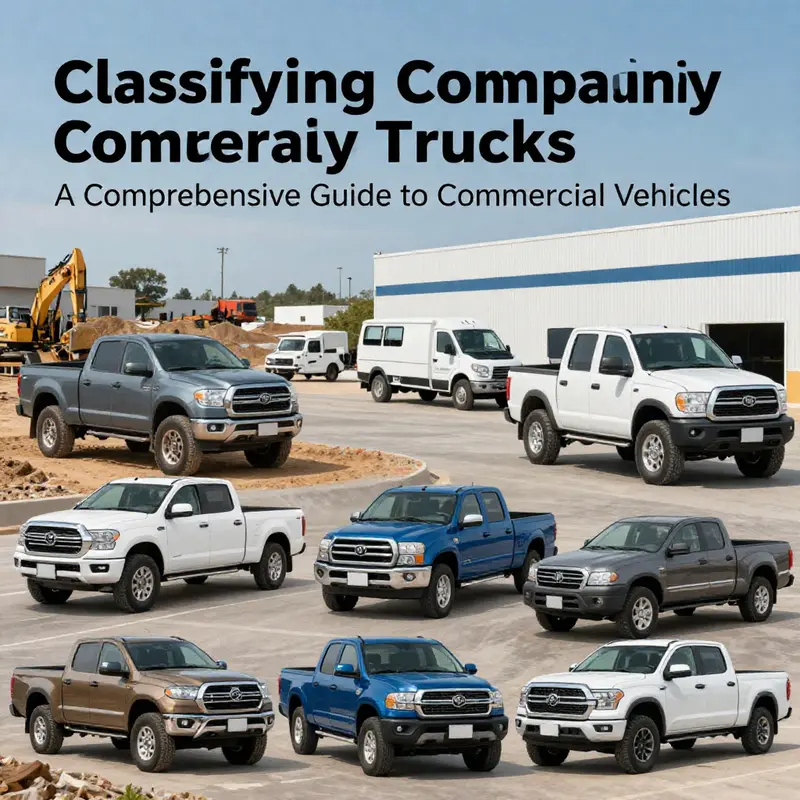
Defining a company pickup as a commercial vehicle requires looking beyond the body style to its function in the business ecosystem. A pickup is a light truck with an open cargo bed and relatively low sides, designed for cargo-carrying tasks. That cargo-carrying design is the hinge on which its commercial status turns. When a truck’s primary purpose shifts from personal transport to moving tools, equipment, materials, or personnel for a company, its classification moves from private to commercial in practice and in many regulatory regimes. This distinction matters because it shapes registration, insurance, tax treatment, and even emissions rules that fleets must navigate. The practical upshot is that the same physical vehicle can be a personal conveyance or a commercial workhorse depending on how it is used in the business setting. For fleet managers, owners, and operators, that distinction determines cost of ownership and the regulatory playbook that accompanies it.
From a regulatory standpoint, many authorities treat commercial vehicles by use rather than by the sticker on the door. The international Harmonized System classifies single-row pickup trucks under Heading 8704, which covers motor vehicles for the transport of goods. This technical framing recognizes their true function: they are designed to move cargo. When a pickup is employed by a business for job-related tasks—whether it’s delivering materials to a site, hauling tools between locations, or carrying crew and equipment to a project—the vehicle sits in the commercial category for purposes that range from licensing to taxation. The line between personal and commercial use can blur in practice, but the essential criterion remains function: is the vehicle fulfilling a business role more than a private one? In many jurisdictions, the answer is yes, and that answer has real financial and operational consequences.
Every fleet owner faces a moment of clarity when policy settings and incentives come into play. Commercial vehicle status can influence depreciation schedules, deductibility of fuel and maintenance, and even eligibility for certain tax incentives aimed at infrastructure or equipment. In the United States, for example, the tax code recognizes that vehicles used primarily for business have different depreciation timelines and deduction possibilities than private vehicles. While the exact rules vary by country and jurisdiction, the principle endures: business use unlocks a different set of financial tools that can improve cash flow and reduce total cost of ownership over the vehicle’s life. This is not merely about tax breaks; insurance premiums often reflect business risk, with commercial policies designed to cover fleet exposure, vehicle usage patterns, and potential for higher mileages and on-site tasks. The result is a layered cost structure that touches registration fees, inspections, and even emissions or weight considerations depending on where the vehicle operates.
Specialized variants further illustrate the classification logic. A technical pickup truck outfitted with mounted machinery for construction or utility work represents a clear commercial or industrial asset. The modifications themselves signal a business function and typically trigger regulatory and safety regimes aligned with work equipment rather than consumer transport. But even a standard pickup with seats for passengers can be a commercial vehicle if the business uses it to move tools, equipment, or staff on work sites. The key is not the number of seats but the vehicle’s operational profile. When a business assigns the vehicle tasks that support revenue-generating activities—delivery, maintenance calls, or field service—the vehicle’s identity shifts from personal to commercial in the eyes of many authorities, financiers, and insurers. For owners, this means aligning the fleet’s paperwork with its real-world use, including vehicle registrations, permits, and the relevant safety standards.
Within this framework, the practical tension lies in how people and organizations document usage. Businesses often keep separate records of mileage, job assignments, and site visits to demonstrate primary business use, which helps justify commercial insurance coverage and appropriate depreciation treatment. Some fleets cross the line into mixed-use territory, where a pickup serves both personal and business functions. In those cases, the proportion of business use becomes a critical factor in tax reporting and insurance risk assessment. What seems obvious at a glance—an open bed, a capable payload, a daily tool for crews—has to be validated by usage metrics and record-keeping that prove the business purpose. That is the core of why a company pickup is treated as a commercial asset even when it still looks and feels like a familiar consumer vehicle.
External standards reinforce this approach. The official practice across many customs and regulatory authorities is to ground classification in intended use and functional design. The World Customs Organization provides guidelines that inform how goods-moving vehicles are categorized at the border. For practitioners, this means accepting that headings and subheadings carry consequences beyond classification alone: they shape duties, compliance obligations, and the able-to-register status in different jurisdictions. In some markets, for instance, the same pickup might require a commercial license plate, different emissions testing, or higher insurance limits if it is used in business. Conversely, when the same vehicle remains purely for private use with minimal business tasks, the policy environment tends to treat it as a private vehicle with corresponding tax treatment and insurance terms. The practical takeaway is straightforward: to understand a company pickup’s status, look to function and usage, not merely the chassis or bed.
From a forward-looking perspective, fleets are increasingly sensitive to the broader shifts in the truck landscape. Trends surrounding electrification, maintenance cycles, and fleet utilization can reshape the cost calculus for commercial classification and ownership. For example, fleets that adopt electric or hybrid pickups may encounter different insurance models, charging infrastructure needs, and regulatory requirements. These considerations reinforce the central point: the business purpose of the vehicle drives its regulatory classification and financial treatment, creating a continuum rather than a rigid binary between personal and commercial use. See Electric trucks revolutionize the Canadian market for related discussions about electrification and fleet composition.
Thus, the question remains practical: is a company pickup a commercial vehicle? The answer is generally yes when business use predominates, and this classification follows from the vehicle’s function, not just its appearance. The implications reach into how fleets budget, insure, and register these trucks, and they ripple through the tax code and regulatory compliance regimes that govern modern freight and service operations. For a business, recognizing this status early can help align procurement, maintenance planning, and risk management with the realities of everyday work. As the chapter moves forward, readers can keep in view the nuanced balance between use and regulation that shapes every fleet decision. For official classification standards, see the World Customs Organization HS guidelines: https://www.wcoomd.org/en/topics/hs.aspx
Beyond Personal Use: Decoding How a Company Pickup Becomes a Commercial Vehicle and Why Compliance Follows
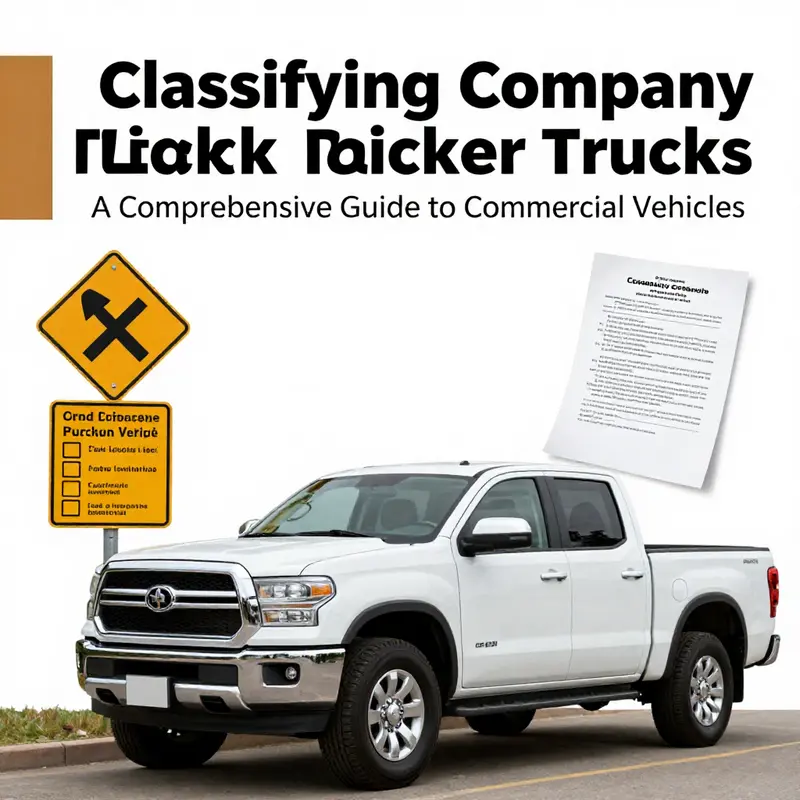
When a business puts a pickup truck into service, the question of its classification moves beyond the badge on the tailgate. The debate isn’t about prestige or brand; it centers on use. A company pickup is a commercial vehicle not because of its make or model, but because it is employed to move goods, tools, equipment, or people in the course of business. This distinction matters immediately. It affects how the vehicle is registered, insured, taxed, and maintained. It also dictates what kind of regulatory oversight the operation faces and what kind of records a company must keep. In practical terms, this means the same truck can sit in the same parking lot one day and be treated very differently the next, depending on how its owner uses it for commerce rather than for personal errands.
In the United States, the umbrella rule rests on the definition of a commercial motor vehicle and how a vehicle is used. The Federal Motor Carrier Safety Administration (FMCSA) provides the focal point for much of the regulation. A commercial motor vehicle is defined by usage and capacity criteria. Specifically, a vehicle qualifies as a CMV if it is used to transport passengers or property in commerce and meets certain benchmarks: a gross vehicle weight rating (GVWR) of more than 10,001 pounds, or a design to carry 16 or more passengers (including the driver), or the transportation of hazardous materials requiring placarding. This means that even a relatively ordinary pickup can become a CMV if its business use pushes it past one of these thresholds or circumstances. The result is a cascade of regulatory requirements that follow the truck from the driveway to the highway.
Yet the line is not always a strict threshold. The central idea remains straightforward: the purpose of the use determines the regulatory frame. If a company uses a pickup to haul construction tools to a site, deliver parts to a client, or transport crew members to a job, that use signals a commercial operation. The vehicle becomes a work tool, and with that status comes the expectation of a higher level of compliance and documentation. This is not merely a matter of adding up miles or days on the road. It is about ensuring safety, accountability, and predictability in business operations that rely on road transport.
The practical implications begin at registration and insurance. Commercial use often triggers commercial auto registration requirements. The vehicle may be subject to different insurance coverage types, higher liability limits, and specialized rating considerations. Insurance isn’t a mere formality here; it reflects the greater exposure that business work can create. The costs associated with commercial auto insurance can be higher, but the coverage is designed to address the risks that accompany transporting tools, parts, equipment, or personnel to job sites. Beyond insurance, the IRS and other tax authorities see business-use vehicles as candidates for depreciation and deduction, including potential write-offs related to depreciation, fuel, and maintenance. In other words, the truck’s financial life is managed not as a personal asset but as a tool of commerce.
The regulatory landscape extends into the realm of safety and driver qualifications. When a pickup qualifies as a CMV, operators must consider the rules around driver qualifications and hours of service, especially for interstate commerce. The FMCSA framework emphasizes that drivers may need specific qualifications, depending on the vehicle’s GVWR and the nature of the trip. In many cases, a company may not require a commercial driver’s license (CDL) for a pickup with a smaller GVWR, but if the vehicle meets the CMV criteria because of weight or usage, the driver could be subject to CDL-related standards and hours-of-service rules. The consequence is that a business cannot simply rely on a personal-vehicle mindset; it must align the driver’s credentials, log-keeping practices, and operational tempo with commercial rules.
Record-keeping becomes a core habit for any organization operating a pickup in a commercial role. Employers may be required to maintain logs or records that document vehicle usage, maintenance schedules, and driver training. In practice, this can translate into a formal logbook, although many smaller businesses adopt digital solutions that satisfy regulatory needs while remaining user-friendly. The maintenance record is equally important. Regular inspections, compliance with emissions standards, and timely maintenance all contribute to safer operations and lower risk. When a vehicle that serves as a workhorse on job sites is not properly maintained or its legal status is ambiguous, the likelihood of fines, legal liabilities, and increased insurance premiums grows.
A company’s approach to compliance often hinges on the specifics of how the pickup is used. If the vehicle transports goods that require special handling or if it routinely carries hazardous materials, the regulatory burden becomes more complex. Placing placards and following hazmat transport rules may be necessary even for a seemingly ordinary truck if the materials or risks involved demand it. Conversely, a vehicle used strictly for local, non-hazmat tasks may be subject to fewer complexities, though it can still fall under commercial vehicle rules if the GVWR or sector-specific regulations demand it. In all cases, the governing principle remains intent and use: the vehicle becomes commercial because it serves a business purpose, not because it wears a commercial badge on its grille.
For businesses seeking clarity amid this landscape, the FMCSA site stands as a primary reference. It is a reliable resource that helps distinguish the criteria that trigger CMV designation and explains how state and local regulations can supplement federal rules. The takeaway is not to fear compliance, but to integrate it into the company’s operating rhythm. By recognizing when a pickup moves from personal to commercial status, a business can align its registration, insurance, tax planning, and driver training with the realities of daily operations. This alignment, in turn, supports safer work practices, more predictable budgeting, and clearer accountability across the organization.
As regimes evolve, it helps to look at market context as well. The broader trucking ecosystem has shown that ownership models, utilization patterns, and regulatory expectations are interlinked. Businesses that embed compliance into their procurement and operations tend to see steadier insurance pricing, clearer depreciation schedules, and fewer regulatory headaches during audits or inspections. To explore how these dynamics are affecting present-day market conditions, consider the ongoing discussion around trends in used trucks and commercial vehicle utilization. Current Trends in Used Truck Sales Growth offers a lens into how market movements influence decisions about ownership, asset management, and compliance investments.
Despite the complexities, the central message for managers and fleet operators remains simple: treat the pickup as a tool that serves a defined business function, and let the function dictate the regulatory frame. Start with a clear assessment of how the vehicle is used. If the use pushes the truck into CMV territory—whether through weight, passenger count, or hazardous materials—it is wise to map out the required steps. This includes confirming appropriate vehicle registration, evaluating insurance needs, and establishing a record-keeping policy that covers logs, maintenance, and training. It also means preparing for potential adjustments in driver qualifications or scheduling to meet hours-of-service requirements when applicable.
In practice, this approach translates into a practical operating playbook. Before a company expands a pickup fleet or revises its business model around vehicle use, it conducts a quick but thorough regulatory check. The check considers GVWR, the typical payload, and the type of cargo or passengers being moved. It asks whether the work demands extended interstate travel, which would bring hours-of-service implications into sharper focus. It asks whether any hazardous materials are routinely transported, which could trigger placarding and additional safety regulations. It asks what kind of documentation and training the drivers will need to perform their tasks safely and legally. And it asks how the company will manage the associated costs and risk—through insurance, maintenance reserves, and a disciplined approach to compliance. If the answers point toward a commercial designation, the organization adapts its processes accordingly and then remains vigilant as rules evolve.
The bottom line is clear: a company pickup truck is typically a commercial vehicle when used for business activities that fall within the FMCSA framework or similar regulatory constructs. The classification hinges on use, not appearance, and it carries consequences for registration, insurance, taxation, maintenance, and driver compliance. The challenge and opportunity lie in building an integrated plan that keeps vehicles safe, operations compliant, and costs predictable. By approaching the issue with a disciplined, use-driven mindset, businesses can transform a routine work truck into a well-governed asset that reliably supports service delivery, project execution, and workforce mobility while respecting the regulatory environment that keeps roads safer for everyone.
External resource for further guidance on commercial vehicle regulations in the U.S. can be found at the FMCSA website: https://www.fmcsa.dot.gov
From the Worksite to the Ledger: Demystifying the Company Pickup as a Commercial Vehicle and Its Tax Deductions
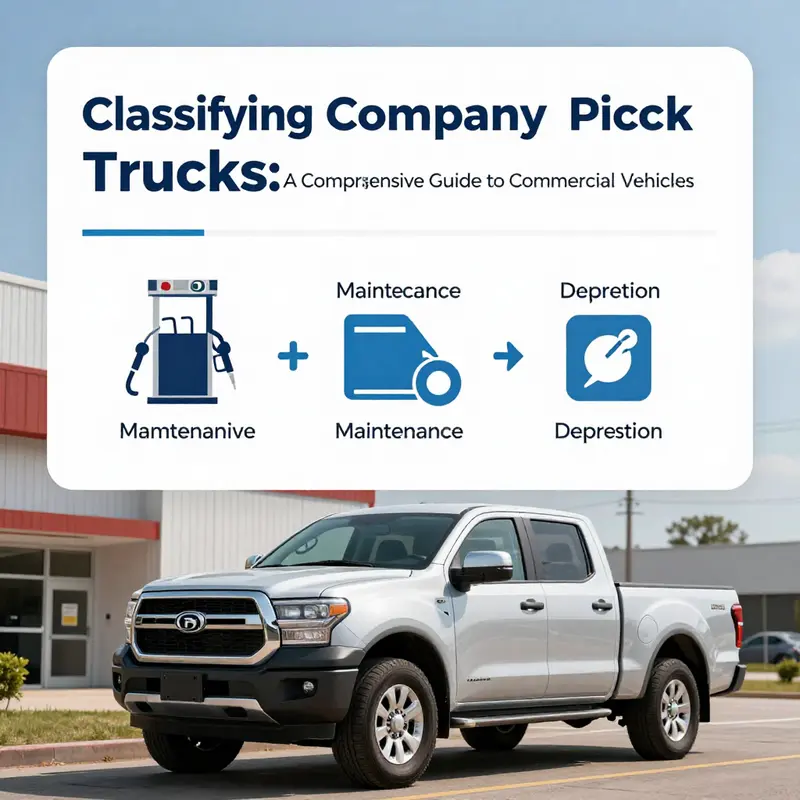
A company pickup truck often sits at the intersection of utility and identity. It carries tools, materials, and sometimes personnel to a job site, yet it also sits on a ledger that can unlock meaningful tax advantages. The question of whether a company pickup is a commercial vehicle hinges not on the color of the truck or the size of the tires alone, but on how the vehicle is used for business. When ownership aligns with operation—when the truck is deployed primarily to advance business objectives—it becomes more than a mode of transport. It becomes a commercial asset that changes the way costs are recorded, deducted, and depreciated. In the United States, this classification influences registration standards, insurance requirements, and, crucially, the tax treatment that a business can claim against its operating income. The link between purpose and policy is why the topic matters: it shapes the bottom line and the long term financial health of a company that relies on mobility to serve clients and move goods.
Classifying the pickup as a commercial vehicle does more than tidy up paperwork. It signals that the vehicle is a working member of the fleet, not merely a personal luxury or weekend hauler. The Internal Revenue Service defines deductions and depreciation around the vehicle use in business. The practical rule of thumb is straightforward: if the truck is used primarily for business, it qualifies for the deductions and depreciation schedules designed for commercial vehicles. What matters most is the degree of business use. If the vehicle business use exceeds the halfway mark more than 50 percent the business owner can generally expense or deduct operating costs in proportion to that business share. The more the truck serves business needs, the larger the share of costs that can be attributed to the business. A truck used 70 percent of the time for business activities will have 70 percent of its operating costs eligible for deduction, aligning tax relief with actual economic activity. The arithmetic is not merely accounting; it reflects the reality that a company relies on the truck to fulfill contracts, move inventory, and reach remote sites or clients efficiently. This proportional approach helps prevent double counting and ensures that personal trips do not dilute the value of legitimate business deductions, while also recognizing that some level of private use is often inescapable in real world operations.
Once the vehicle is recognized as a commercial asset, the door opens to several categories of deductions and depreciation methods. The IRS allows businesses to claim deductions for a broad range of costs associated with operating a commercial vehicle. These include depreciation, fuel, maintenance, insurance, and registration fees. Each of these expense categories can be allocated according to the business use percentage of the vehicle, providing a practical method to translate miles and tasks into dollars and cents. The framework that enables these deductions rests on well established codes and schedules notably Section 179 and the Modified Accelerated Cost Recovery System or MACRS. Section 179 offers an option for expensing a portion of the vehicle cost in the year the vehicle is placed in service. This election can be especially advantageous for a growing business that wants to accelerate write offs to match cash flow with investment in assets. MACRS, on the other hand, assigns a depreciation schedule to the vehicle over a defined recovery period, allowing the cost of the vehicle to be distributed over several years. The interplay between Section 179 and MACRS gives business owners a choice in how to shape their tax posture, balancing immediate deductions against longer term depreciation. The result is a more flexible strategy that can be tailored to the company income profile and capital plans.
The landscape becomes even more nuanced with the possibility of bonus depreciation. Under current tax rules, businesses may qualify to deduct up to a substantial portion of the vehicle cost in the year it is placed in service, subject to annual limits and specific vehicle specifications. The bonus depreciation provision can dramatically accelerate the recovery of the vehicle cost, effectively front loading some of the investment. A key caveat is that these benefits are typically linked to the vehicle gross vehicle weight rating or GVWR, and many standard pickups fall within a weight range that makes them eligible for these accelerated deductions. In practice, most traditional pickup trucks with a GVWR up to 6000 pounds fit squarely within the bonus depreciation framework that supports rapid cost recovery. The mechanism aims to spur investment in durable goods used in business, but it is not a blanket entitlement. The rules are deliberate and crucially they change with time and policy direction. Therefore, while the potential for a 100 percent first year deduction exists in some cases, it is contingent on the vehicle meeting the GVWR criteria and other statutory limits. For heavier duty pickups with GVWR exceeding the limit, the bonus depreciation benefits may be more restricted, and standard depreciation or Section 179 planning may take the lead. These distinctions underscore the importance of not treating all pickups as identical tax assets the exact weight usage and placement in service date all shape the available deductions.
Putting theory into practice means approaching the business use calculation with discipline. A clear record of business vs personal use is essential. Mileage logs, fuel receipts, maintenance invoices, insurance premiums, and registration fees all need to be aligned with the declared percentage of business use. The simplest way forward is to maintain a percentage basis that reflects actual use. If 70 percent of miles are for business, 70 percent of the associated costs fuel and maintenance, for instance, are deductible in that proportion. The remaining 30 percent attributed to personal use is not deductible. This proportional method keeps the books honest and reduces exposure to questions from tax authorities about personal hybrids dressed as business deductions. It also makes it easier to justify Section 179 elections or MACRS schedules when years with volatile business activity occur. In years of lighter activity, the business owner can adjust the percentage to reflect reality while maintaining records to support the chosen basis. The overarching goal is to align the tax treatment with actual business operations, rather than with an aspirational use case that never materializes on the road or at the job site.
Tax planning for a company pickup is not a one off decision tied to year end. It should be integrated into the companys broader asset management and budgeting processes. Leasing versus purchasing, the pace of fleet replacement, and the expected life of the vehicle influence how beneficial an accelerated deduction would be in the near term versus the long run. While this chapter stays focused on the tax implications and deductions, the practical takeaway is clear: classify the vehicle correctly, document usage meticulously, and apply the relevant deduction paths with a disciplined eye toward the business plan. In addition to the financial mathematics, it is prudent to consult a tax professional who can tailor guidance to the companys particular structure, revenue streams, and growth trajectory. IRS guidelines provide the official framework, but tax professionals translate the framework into a strategy that accounts for the companys unique fleet mix and scheduling realities.
For broader market context and to see how fleet dynamics evolve alongside vehicle usage, consider reviewing Current Trends in Used Truck Sales Growth. This resource helps connect how market movements availability pricing and demand interact with the decision to designate a pickup as a commercial vehicle and pursue tax deductions that align with business realities. Current Trends in Used Truck Sales Growth is a useful reference for market context but the main guidance remains the IRS. The vehicle expenses page on the IRS site offers official, up to date information that complements the practical insights discussed here.
Of course, the most authoritative resource for vehicle expenses remains the Internal Revenue Service. The IRS outlines what qualifies as a deductible vehicle expense, how to allocate costs based on business use, and the rules surrounding Section 179, MACRS, and bonus depreciation. This framework provides the backbone for any company planning to leverage a pickup as a commercial asset and maximize its tax efficiency. For a direct reference to the official guidance, the IRS Vehicle Expenses page offers detailed up to date information that complements the practical insights discussed here. External resource: IRS Vehicle Expenses https://www.irs.gov/businesses/small-businesses-self-employed/vehicle-expenses.
From Worksite to Policy: Insurance Implications When a Company Pickup Becomes a Commercial Vehicle
A company pickup truck often sits at the intersection of personal convenience and corporate necessity. It may serve as a daily workhorse for transporting tools, equipment, or small cargo, or as a shuttle for crew moving between sites. That functional utility does not simply classify the vehicle as a personal asset. When a pickup truck is used by a business for work-related activities, the vehicle typically becomes a commercial asset in the eyes of regulators, insurers, and tax authorities. The distinction matters, because it changes how the vehicle is insured, how risk is evaluated, what obligations the business must meet, and how expenses are handled come tax time. The core of the issue is straightforward: use, rather than ownership alone, dictates code and coverage. If the truck is employed to move goods between jobs, haul heavy tools, or transport personnel in the pursuit of business objectives, its risk profile expands beyond personal-use norms. Insurance carriers respond to that expanded risk with policies designed to address business exposures, such as higher liability limits, cargo protection, and coverage for business-related incidents. The practical implication is that a company pickup truck generally falls under commercial vehicle insurance rather than a personal auto policy. This shift is not merely bureaucratic; it represents a real difference in the protection framework available to the business, its drivers, and its customers.
The rationale behind classifying a company pickup as commercial revolves around risk allocation and accountability. In a business setting, the vehicle may be exposed to more frequent use, longer miles driven, and more complex payloads than a typical personal-use vehicle. A worksite might involve off-road surfaces, loading equipment, or hazardous materials handling, all of which introduce liabilities that standard personal policies are not designed to cover. Commercial vehicle insurance tailors coverage to these realities. It can provide higher liability limits to reflect the potential cost of injuries or property damage arising from business operations, and it can extend protection for cargo and equipment that are essential to daily workflow. It may also cover incidents that occur while the vehicle is engaged in business activities, such as transporting crew to a job site or delivering supplies to a client.
For many businesses, the move from a personal policy to commercial coverage is not optional but required. Insurance providers often require evidence that the vehicle is used for business purposes before issuing a commercial policy. That proof can take several forms: a business license, a registered business address, or documentation showing that the vehicle is registered in the company’s name and used primarily for work tasks. This is not a mere paperwork exercise. The insurer is assessing how the truck is operated, who is driving it, and what kinds of loads it routinely carries. They may ask for details about annual mileage, typical routes, and the nature of the cargo. The more precise and credible the information, the better the business is positioned to secure appropriate coverage with appropriate deductibles at a predictable cost.
In practice, commercial vehicle insurance for a company pickup often includes several key components that address the specific risks of business use. First, liability protection tends to be higher, reflecting the possibility of damage to clients’ property or injuries to others arising from business activities. Second, there is often cargo or equipment coverage that protects tools, materials, and installed equipment that the truck carries to job sites. Third, physical damage coverage—covering the truck itself against collision, theft, or other perils—can be structured to accommodate the higher utilization rate typical of a business vehicle. Fourth, there may be coverage for hired or non-owned vehicles when employees use the pickup to run errands or gather supplies under the company umbrella. Finally, uninsured/underinsured motorist protection can be critical when a business relies on its fleet to maintain operations, as gaps in coverage can translate into costly downtime.
The consequences of not securing proper commercial insurance can be severe. If a claim arises from a work-related incident while the pickup is being used for business purposes, a personal auto policy may deny the claim or provide insufficient coverage. That denial can leave the company exposed to out-of-pocket costs for medical expenses, property damage, and legal defense. In some jurisdictions, there are even penalties or fines for operating a vehicle used for business without the appropriate coverage. From a governance perspective, failing to carry commercial insurance can complicate risk management, disrupt project timelines, and erode client trust. The financial impact can extend beyond one incident; it can affect bonding, financing, and the ability to win future contracts if the business is perceived as a higher risk by lenders or partners.
To navigate these realities, most insurers require specific evidence of business use before issuing a commercial policy. Documentation commonly includes proof of a business license and registration in the company’s name for the vehicle, as well as records showing how the truck is used in daily operations. Some insurers may ask for a description of typical loads, routes, or the kinds of jobs the vehicle supports. While this can feel onerous, it is a practical safeguard: it ensures that coverage aligns with actual risk and prevents gaps that could derail a claim when it matters most.
Given the high stakes, businesses should approach this transition with deliberate planning. Start by mapping out how the pickup is used across weeks and months, noting patterns in cargo, routes, and personnel transport. Then engage with a licensed insurance professional who specializes in commercial auto policies for small fleets or single-vehicle operations. The advisor can help translate operational realities into policy terms—whether it is selecting appropriate liability limits, deciding on cargo coverage, or choosing comprehensive versus collision protection based on where the vehicle operates and how vulnerable it is to theft or vandalism. It is also wise to consider fleet management implications, even for a single truck. A centralized approach to tracking maintenance, inspections, and documentation can streamline renewals and claims processing while demonstrating to insurers that operational risk is being actively controlled.
Another practical aspect concerns the interplay between insurance, taxes, and regulatory compliance. Although the focus here is insurance, it should be noted that many jurisdictions view business-owned vehicles as components of a wider regulatory and fiscal framework. Vehicles used predominantly for business activities may qualify for tax considerations related to depreciation, fuel, and maintenance, which in turn influence budgeting for insurance. Understanding how to optimize this mix—coverages that meet statutory requirements, while also aligning with tax planning and cash flow—can yield tangible savings over time. In many instances, a thoughtful approach to coverage that reflects actual usage helps avoid paying for unnecessary duplicate protections while still ensuring robust risk mitigation.
For companies that operate a single pickup or maintain a lean fleet, the decision to secure commercial insurance can be straightforward yet crucial. It is not merely about compliance; it is about preserving business continuity. A well-structured policy protects workers and clients, keeps projects on track, and safeguards the company’s reputation. The distinction between personal and commercial coverage, while nuanced, translates into concrete benefits: timely claim processing, access to tools and services tailored to business operations, and the clarity that comes from knowing the vehicle is properly insured for its assigned tasks. When in doubt, the prudent route is to default to commercial coverage for any truck used primarily for business activities and to document its business use carefully so the policy reflects reality and minimizes surprises at claim time.
As a final note, readers seeking broader context on related topics can explore the resources available in the company’s blog, which often discusses practical implications of vehicle ownership, insurance, and fleet optimization. For a broader look at how truck-related decisions intersect with market trends and policy considerations, see the McGrath Trucks Blog. This resource offers perspectives that complement the insurance-focused guidance and can help business owners refine their approach to risk, cost, and operational efficiency.
External resource for further guidance: https://www.naic.org/documents/committeescommissions/commercialvehicles.pdf
null
null
Final thoughts
Understanding whether a company pickup truck is classified as a commercial vehicle encompasses various dimensions including regulations, tax implications, insurance needs, and operational costs. By recognizing these factors, business leaders in trucking, construction, and logistics can streamline their operations and ensure compliance while maximizing profitability. The insights provided in this guide are crucial for making informed decisions that enhance the efficiency and effectiveness of fleet management.