The trucking industry plays a vital role in the global economy, with diesel fuel being its lifeblood. However, understanding the composition of diesel fuel, particularly the absence of lead, is paramount for trucking company owners, fleet managers, and procurement teams in construction and mining. This article delves into the historical use of lead in fuels, emphasizing its phased-out role in modern diesel. We will explore current regulations, the health and environmental benefits of lead-free diesel fuel, and a comparative analysis of global standards. Finally, we will assess future directions in fuel regulations for commercial trucks, setting the stage for informed decision-making.
From Leaded Gasoline to Clean Diesel: Tracing the Lead-Free Promise in Commercial Truck Fuels

The central question about diesel fuel for commercial trucks is whether it contains lead. The quick answer is that modern diesel used in commercial trucking is lead-free. The broader story traces the rise and fall of lead additives in fuels and how regulation, technology, and public health goals converged to eliminate lead from most transportation fuels. Understanding why diesel did not rely on lead helps explain why fuel standards now prohibit it and how that transition supports cleaner powertrains and more reliable fleets.
The history of lead in fuels began with gasoline rather than diesel. In the 20th century tetraethyllead was added to gasoline to raise octane and prevent knocking, enabling higher compression and stronger performance. While effective in the short term and economical for refiners, lead emissions polluted air and soil and could accumulate in the human body, especially harming developing nervous systems in children. The environmental memory of lead remains a cautionary example of how industrial practice can outpace protective policy.
Across borders, policymakers, scientists, and industry worked to reduce exposure by phasing out leaded gasoline. The European Union and other regions banned leaded fuels in the late 20th century, resulting in lower atmospheric lead levels and measurable health benefits. International bodies such as UNEP documented the trajectory, highlighting the role of policy, refinery upgrades, and new fuel formulations in removing lead from vehicles worldwide.
Diesel remains distinct from these reforms. Diesel engines rely on cetane stability rather than octane, so they never required lead additives to function. Consequently, diesel fuel in commercial trucking has been lead-free through both the era of leaded gasoline and today. This separation helped preserve catalytic and emission control technologies that could otherwise be compromised by lead contamination.
Operationally, diesel emission control systems such as oxidation catalysts, particulate filters, and selective catalytic reduction require clean fuels and lubricants. Ultra low sulfur diesel and improved lubricity further reduce the risk of catalyst poisoning and support durable aftertreatment performance. The result is a two pronged advance: cleaner air and more robust engines across the freight sector.
For fleet operators and policymakers, the rule is straightforward: modern diesel sold in major markets adheres to rules that prohibit lead additives. These standards align with broader environmental protections and public health priorities, particularly in urban corridors and ecologically sensitive regions. They also reflect the engineering needs of diesel engines, which demand precise cetane, lubricity, and sulfur targets to maintain performance and longevity. International fuel quality efforts and regulatory frameworks continue to harmonize standards and support cross border trucking.
Looking ahead, the trucking sector continues to explore electrification and other alternative powertrains alongside ongoing improvements in efficiency, aerodynamics, and logistics. While the long term mix of technologies remains uncertain, the common thread is a commitment to cleaner, safer fuels and quieter, more resilient transportation networks.
The broader lesson is that the lead ban was a turning point for environmental and public health outcomes as well as a catalyst for engineering innovation. Refineries upgraded processes and reformulated products, and engine designers adapted to fuels with more predictable properties. The public health dividend—lower blood lead levels and healthier communities—complements the economic benefits of a cleaner freight system. The independence of diesel from lead additives reinforces a broader principle: progress in one fuel sector can occur without undermining another when policy, technology, and accountability align.
In summary, diesel fuel for commercial trucks does not contain lead, and it has not needed to since cetane driven ignition and global shifts away from leaded gasoline took hold. The environmental and public health gains from removing lead from fuels endure because of coordinated standards, refinery practices, and robust emission control architectures that define today’s heavy-duty transport. The lead story remains a guide for policy and practice, reminding stakeholders of the stakes involved in fuel composition, engine design, and emissions strategies.
Lead-Free Power: The Modern Diesel Fuel Landscape for Commercial Trucking

For anyone who works with commercial trucking—or studies how goods move across continents—the question of lead in diesel fuel rarely seems to be a live concern. Yet it stands at the heart of a broader story about how pollution controls and engine technology have reshaped every mile trucks travel. Lead was once a staple additive in gasoline to prevent knock, but it was never used to any meaningful extent in diesel fuel for on-road commercial engines. Today, diesel used in fleets across the United States, the European Union, and many other regions is formulated to be lead-free by law and by industry practice. The historical phase-out of lead in fuels stems from two linked goals: protecting public health from lead exposure and preserving the performance of modern emission-control systems, especially catalytic converters and aftertreatment devices that can be damaged by even trace amounts of lead.
The modern composition of diesel is not static; it evolves to optimize ignition quality, combustion stability, and the durability of exhaust treatment. A central metric is the cetane number, which gauges how readily the fuel ignites under compression. Higher cetane generally means quicker, more complete combustion, smaller smoke plumes, and lower soot formation. As researchers and refineries push toward higher cetane numbers, they also tackle practical challenges that show up in real-world service. One such challenge is laminarization, a tendency for diesel fuel to separate from water in storage or during operation, which can threaten fuel flow and injector performance. Modern formulations address this with carefully chosen hydrocarbons and additives that improve water tolerance. A 2024 patent describes a diesel fuel composition with enhanced cetane properties and improved resistance to water-related phase separation, reflecting a broader industry trend toward safer storage, easier handling, and steadier combustion in engines that must perform reliably on long-haul routes. This kind of innovation is part of a continuum: the fuel becomes easier to burn cleanly, the engine runs smoother, and the aftertreatment system can do its job with less effort.
Beyond ignition and stability, the absence of lead in diesel is essential for protecting engine hardware. Diesel engines rely on a delicate balance of high-temperature oxidation and precise fuel-air mixing, all coordinated with exhaust aftertreatment. The presence of lead—even in tiny traces—can poison catalysts and foul sensors, undermining particulate filters and nitrogen oxide reduction systems. For that reason, modern diesel fuel sold for on-road use is required to be lead-free in most developed markets. In tandem with lead removal, regulators also insist on very low sulfur levels. Ultra-low sulfur diesel, typically twenty-five parts per million or less in the past decade, has coalesced around a standard of 15 ppm or lower in many regions. Low sulfur helps the DPFs and SCR systems work efficiently, reduces sulfates in the exhaust, and extends the service life of catalysts and sensors. Together, lead-free and low-sulfur requirements enable engines designed to meet strict emissions standards to perform as intended over the long haul of commercial service.
Regulatory frameworks reflect this correlation between fuel chemistry and advanced emission controls. A widely cited trajectory has EU member states banning leaded fuels since the early 1990s, with on-road diesel aligning with lead-free mandates as technology matured. In the United States, the Environmental Protection Agency has codified standards that tie fuel composition to vehicle emissions performance, insisting that diesel for highway use meet stringent sulfur and cleanliness criteria. The result is a fuel that not only powers locomotives of commerce but also aligns with public health goals by reducing airborne lead exposure and other pollutants. While there may be niche or off-road applications where historical practices linger in legacy systems, the on-road commercial market is governed by clear prohibitions against lead in fuel, reinforced by monitoring and compliance regimes that penalize deviations. The net effect is a system in which lead content is essentially non-existent in mainstream diesel fueling.
This leadership in fuel chemistry has consequences for operators and technicians alike. With lead eliminated, fleets can rely on sensors and catalytic converters to monitor emissions without the risk that a single careless batch of fuel might degrade performance or trigger expensive repairs. The same safety margin is achieved through sulfur management; low sulfur grades reduce the formation of sulfur oxides and particulate matter, allowing DPFs to regenerate more efficiently and reducing the likelihood of clogging. In practice, that means smoother maintenance cycles, fewer unscheduled downtime events, and a more predictable cost of ownership for vehicles that rack up hundreds of thousands of miles annually. Fleet managers have to stay compliant with local regulations, but they also gain reliability and fuel economy benefits from fuels designed with high cetane and robust stability in mind. The interplay between refining choices, engine design, and aftertreatment strategies is no longer a niche concern; it is a core determinant of how efficiently goods move on highways and inland routes.
For readers who want to connect fuel chemistry to the broader economics of trucking, consider how emissions regulations influence used-truck prices and residual value. impact-of-emissions-on-used-truck-prices insights from industry analyses show that fleets that meet stringent standards tend to retain value better, reflecting lower maintenance risk and longer asset life. This perspective underscores that the science of fuel, with its cetane targets and water-tolerance improvements, has tangible financial implications across the fleet lifecycle. The path from a refined diesel formula to a well-maintained truck on the road is not a sequence of isolated events; it is a continuum in which fuel quality enables engine durability, provides cleaner exhaust, and sustains resale value over time.
For those seeking authoritative grounding in the regulatory and technical details, the best summary comes from official sources that monitor fuel standards and emissions. The U.S. Environmental Protection Agency maintains comprehensive guidance on fuel and vehicle emissions standards, which outlines how fuel composition, sulfur content, and aftertreatment requirements work together to meet air quality goals. This is the framework that keeps on-road diesel free of lead and compatible with modern engines, even as refiners respond to evolving concerns about performance, reliability, and supply security. In short, the evolution of diesel for commercial trucks is not just about reducing one pollutant. It is about aligning fuel chemistry with high-tech engines, durable catalysts, and a regulatory environment that rewards cleaner, more efficient, and more predictable trucking across long distances and varied climates.
As fleets adapt to changing markets, the practical takeaway stays simple: today’s diesel for commercial trucks is lead-free and designed to perform with advanced aftertreatment while meeting aggressive emission standards. The science of fuel—cetane, stability, water tolerance—supports the durability of engines that keep supply chains moving. And the policy framework—lead-free mandates and ultra-low sulfur requirements—ensures that the trucks running on these fuels reduce emissions without sacrificing reliability. The result is a transportation system that benefits public health and the bottom line alike, where fewer disruptions stem from fuel reliability issues and where the fleet’s value is anchored in a well-regulated, well-maintained fuel supply. This is the essence of modern diesel for commercial trucking: a clean, efficient, and dependable partner in the movement of goods.
For authoritative information on diesel fuel composition and regulations, see the EPA page: https://www.epa.gov/standards/fuel-and-vehicle-emissions-standards
Lead-Free Diesel for Commercial Trucks: Health Benefits, Environmental Gains, and the Path to Cleaner Roads

The fuel question for heavy-duty fleets is precise and essential: does diesel fuel used in commercial trucks contain lead? The concise answer is no. Lead was historically added to gasoline as an anti-knock agent, a practice that helped earlier engines tolerate higher compression. Diesel engines, by contrast, operate on a compression ignition principle and do not rely on octane-based additives. As a result, modern diesel sold for commercial use—whether in the United States, Europe, or most other regions—must be lead-free. The regulatory arc around fuels has shaped this outcome. The European Union banned leaded gasoline in 1993, and many other jurisdictions have followed with nationwide or regional standards that prohibit adding lead to fuels. Global monitoring and standard-setting bodies, including the International Energy Agency (IEA), track how fuel quality continues to improve. Taken together, these developments mean fleets today run on lead-free diesel as a baseline, with strict limits on impurities designed to protect public health and engine reliability. The question, then, becomes not whether lead exists in diesel, but how the move away from lead in fuels supports broader environmental and health goals.
Diesel engines do not require the anti-knock properties that lead once supplied for gasoline engines. The chemistry of diesel combustion relies on controlled, high-compression ignition, turbocharging, and precise fuel delivery. Lead additives would not only be unnecessary but harmful to emissions-control systems. Catalytic converters, once a concern for gasoline engines due to lead poisoning, do not face the same constraints in diesel exhaust aftertreatment, though diesel particulate filters (DPFs) and selective catalytic reduction (SCR) systems play their own critical roles. Contemporary diesel fuels are formulated to be lead-free while meeting stringent performance and emission standards. In practice, the presence of lead in diesel would be incompatible with the technology present in most modern fleets, including refinery processes and fuel distribution infrastructure that are designed to ensure purity and consistency.
Beyond the absence of lead, another important factor in today’s diesel performance is sulfur content. Ultra-low sulfur diesel (ULSD) has become the global standard in many markets because it enables aftertreatment systems to function as intended. Lower sulfur levels improve the efficiency of DPFs and SCR catalysts, reducing particulate matter (PM) and nitrogen oxides (NOx) from exhaust streams. This synergy between fuel chemistry and exhaust technology translates into tangible health benefits for people living and working near busy truck corridors and ports. When PM and NOx emissions are reduced, the risk of respiratory and cardiovascular problems in nearby communities drops, particularly in densely trafficked urban areas where freight movement is concentrated. In this context, lead-free diesel is not just a compliance issue; it is a public health tool that supports cleaner air for truck drivers and the communities that share their routes.
The health implications of removing lead from fuels extend beyond the direct emissions from engines. The UNEP’s long-running campaign to eliminate leaded fuels underscores how reductions in environmental lead translate into broad gains in public health, including fewer cases of lead exposure-related health crises. While the UNEP report specifically traces the progress of lead removal from gasoline, the reasoning—limiting a persistent neurotoxin in the environment—applies to diesel as well. When diesel fuels and the associated combustions are kept free of lead, and when sulfur is kept to very low levels, the chemical pathways that generate the most harmful pollutants are suppressed. The result is a cleaner driving environment, particularly in cities and along major freight corridors where truck traffic is a persistent feature of the landscape. This broader health narrative aligns with regulatory trends and scientific assessments that connect fuel quality, emissions control, and human well-being. For a detailed historical perspective on the global shift away from lead in fuels, see the UNEP resource on the 20-year campaign to rid the world of leaded fuel. UNEP Report on Lead-Free Fuel.
From an environmental standpoint, the removal of lead from diesel fuels complements the broader move toward cleaner combustion and improved energy efficiency. Lead-free and low-sulfur diesel fuels are engineered to work harmoniously with advanced emission-control technologies. DPFs trap soot and certain organic compounds, while SCR systems chemically process NOx to reduce harmful emissions. When fleets pair clean diesel with proper maintenance, the urban air around truck-heavy zones becomes markedly better. This is not a theoretical ideal; it is a practical outcome observed in many regions that have enforced stringent fuel standards and invested in diesel technology compatible with post-combustion controls. The reductions in PM and NOx contribute to lower incidences of asthma symptoms, fewer hospital visits for respiratory illnesses, and a general improvement in cardiovascular health outcomes for urban populations that contend with daily freight movement.
Operationally, fleets benefit from lead-free, low-sulfur diesel in several ways. Engine lubricity and fuel system cleanliness improve when lead additives are absent, and fuel refiners optimize formulations to maintain cetane numbers, viscosity, and cold-weather performance without compromising aftertreatment compatibility. For fleet managers, this means fewer maintenance surprises and more predictable service life for engines and exhaust systems. In cities where trucks congregate at ports, distribution centers, or logistics hubs, the consistency of fuel quality has a direct link to reliability, uptime, and total cost of ownership. In turn, those reliability metrics influence decisions about route planning, depot locations, and vehicle utilization strategies. The broader industry conversation—how to balance fleet readiness with environmental and public health goals—often touches on the role of cleaner fuels as a bridge toward even more ambitious options, including electrification in certain segments of the market. For readers exploring the broader evolution of truck propulsion and market strategies, our coverage of electrification trends provides a complementary view of how fleets adapt to evolving energy landscapes. In particular, the related discussion on how electrified solutions are reshaping the Canadian market offers insight into the pace and scale of change in fleet operations. electric trucks revolutionize the Canadian market.
A continuing consideration for fleet operators is how regulations shape the transition from traditional diesel to cleaner, lower-emission solutions. While lead in diesel is not a factor, other fuel characteristics—such as sulfur content, energy density, and lubricity—still influence performance and maintenance. Operators must stay informed about local fuel standards, refinery practices, and the availability of ULSD in their regions. Regular maintenance, proper fuel handling, and adherence to recommended service intervals remain essential to ensuring that post-combustion controls operate effectively. In parallel, the industry continues to explore complementary strategies, including alternative fuels, hybridization, and electrification, as part of a broader decarbonization agenda. This multi-pronged approach seeks to reduce the environmental footprint of heavy transport while preserving the reliability and economic viability that fleets depend on. The conversation around cleaner fuels is not about a single technology replacing another; it is about an integrated system in which lead-free diesel serves as a solid foundation for emissions control, fuel efficiency, and eventual transitions to lower-carbon powertrains when and where they make sense.
In sum, lead-free diesel is not merely a regulatory compliance detail; it is a cornerstone of modern, health-sensitive, and environmentally responsible freight mobility. By eliminating lead, reducing sulfur, and enabling efficient exhaust-control technologies, today’s diesel fuels support cleaner air, safer communities, and more resilient fleets. The trajectory of diesel in commercial trucking remains closely tied to advances in fuel formulation, engine design, and aftertreatment technology, as well as to policy decisions that accelerate or shape adoption. The ongoing shift toward cleaner propulsion—whether through continued refinement of diesel, greater reliance on low-emission fuels, or selective electrification—reflects a shared commitment to moving freight without compromising public health. As fleets navigate this transition, the data and insights from global fuel-quality assessments, health studies, and industry analyses provide a coherent framework for decisions about operations, investment, and long-term strategy.
Lead-Free by Design: The Global Move to Ultra-Low Sulfur Diesel and What It Means for Commercial Trucks
When people ask whether diesel fuel for commercial trucks still contains lead, the answer is clear and widely understood in today’s industry: it does not. Lead was historically associated with gasoline as an anti-knock additive, but the fuel landscape has shifted in the name of health, air quality, and engine longevity. Diesel, unlike the early gasoline era, has been formulated to be lead-free for decades. The transition did not happen by accident. It followed a broad recognition that clean engines and robust after-treatment systems could not tolerate lead compounds that would poison catalysts and clog filters. This shift has been reinforced by regulatory frameworks around the world, which have increasingly hardened the requirements for sulfur content, cetane performance, and fuel lubricity. As a result, modern diesel fuels used in commercial trucking are designed to deliver reliable combustion, protect sensitive emission-control technologies, and maintain the durability of fuel and engine components in a demanding operating environment.
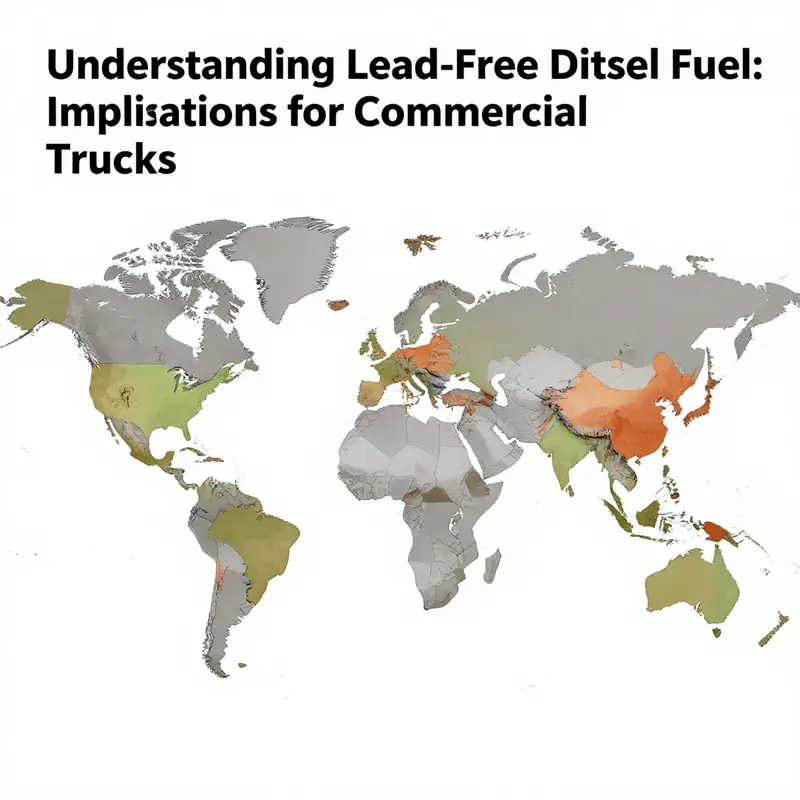
Across the globe, the move to lead-free diesel is inseparable from the broader push toward ultra-low sulfur diesel, a standard that has become the industry baseline in major markets. In the United States, the Environmental Protection Agency set a cap of no more than 15 parts per million sulfur for on-road diesel starting in 2006, with full compliance achieved by 2007. That regulation did more than curb sulfur; it indirectly safeguarded the performance of modern after-treatment devices like selectively powered catalysts and particulate filters. By eliminating sulfur and, with it, any lead-based additives, the fuel system maintained cleaner lubricity and reduced the risk of catalyst poisoning. In Europe, the story is similar but tightly coupled to the Euro emission regulations. Since 2009, diesel in the EU has been limited to 10 ppm sulfur across member states, reinforcing the tolerance requirements of diesel particulate filters and SCR systems. The objective was not only to cut sulfur but also to ensure that cetane numbers, cold flow properties, and lubricity met stringent thresholds that support high-efficiency, low-emission engines even in harsh winter conditions. In both regions, this framework also conveniently aligned with the broader transition away from leaded fuels altogether, a policy that dates back to the early 1990s in Europe and extended globally over the ensuing years.
China’s rapid modernization of its fuel standards mirrors this global trajectory. By 2023, the country had fully embraced National VI diesel specifications, which cap sulfur at 10 ppm and set minimum cetane numbers that strengthen ignition quality and combustion stability. China’s approach also emphasizes improved cold flow properties in northern regions and elevated lubricity to protect advanced after-treatment logic. India’s experience runs parallel, with the BS-VI regime implemented in 2020 that enforces 10 ppm sulfur and a minimum cetane threshold of 51. The Indian standards reflect a concerted effort to optimize after-treatment performance and ensure compatibility with the system architectures that minimize particulate and nitrogen oxide emissions. Taken together, these regional narratives show a universal tendency: lead additives have no place in modern diesel, and the push for ULSD underpins the operational reliability of today’s heavy-duty fleets.
The technical rationale behind banning lead in diesel rests on the interaction between fuel chemistry and after-treatment hardware. Lead compounds are aggressive poisons for catalytic materials found in diesel particulate filters and selective catalytic reduction systems. When lead is present, the catalysts can be impaired, reducing the efficiency of oxidation and reduction reactions that these systems rely on to break down soot and transform nitrogen oxides. In practical terms, fleets experience higher maintenance costs and more frequent service when fuel quality undermines catalyst performance. By contrast, ULSD fuels offer a much more predictable chemistry: low sulfur content minimizes corrosive byproducts and preserves lubricity, while maintaining a stable combustion profile that supports reliable engine operation and smoother cold starts. The result is a corridor of improved emissions performance, longer life for critical after-treatment components, and a lower risk of fuel-related reliability events that can disrupt long-haul schedules.
Fuel specifications do more than influence tailpipe emissions; they shape a fleet’s total cost of ownership and resale value. Fleets that rely on modern, compliant diesel are less exposed to unexpected catalyst failures, reduced fuel economy, and costly downtime. This reliability has a downstream effect on market dynamics, including used-truck pricing and demand for well-maintained machines. For fleets evaluating the market implications of emissions standards and fuel quality, there is a clear link between compliance and remaining-life projections for engines and exhaust systems. See how emissions considerations influence the value and efficiency of used equipment in the broader market by exploring related industry insights such as the impact of emissions on used-truck prices.
As the industry continues to adapt, fleets also benefit from the predictability of fuel characteristics. The cetane number, a measure of combustion quality, typically remains within a range that supports clean ignition and smooth engine operation in modern diesel formulations. Cold flow properties ensure fuel remains pumpable and responsive in low temperatures, a critical factor for regional operations that must deploy long-haul fleets across variable climates. Lubricity specifications protect moving parts within fuel pumps and injectors, helping to reduce wear and extend engine life. The overarching theme is that the absence of lead is not merely a historical footnote; it is a cornerstone of the design philosophy that enables advanced after-treatment systems to work as intended and saves operators from unplanned maintenance costs.
This seamless alignment of fuel chemistry with engine technology has practical implications for the trucking ecosystem. When trucks run on lead-free diesel with ULSD characteristics, the probability of catalytic poisoning declines markedly, and the performance envelope of post-combustion controls remains more stable over time. Operators can anticipate more consistent fuel efficiency, fewer erosive failures in exhaust components, and a lower likelihood of compliance-driven downtime during peak service periods. In that sense, the lead-free mandate in diesel fuels, while ostensibly a policy measure, translates directly into real-world outcomes: better reliability, lower emissions, and a smoother path to meeting evolving regulatory and customer expectations. The connection between fuel quality and fleet performance is clear, and the industry’s collective experience over the last two decades confirms that cleaner diesel fuels are a enabler for sophisticated emissions controls rather than a hindrance to performance.
For readers who want to consider this topic in the context of fleet strategy and market dynamics, the regulatory narrative dovetails with how fleets view emissions-related costs and asset depreciation. See how emissions considerations shape used-truck values and investment decisions in the linked discussion referenced here: impact-of-emissions-on-used-truck-prices. This resource illustrates how fuel quality, regulatory compliance, and post-treatment performance feed into total-cost-of-ownership calculations and the real-world economics of fleet renewal planning. In that light, the absence of lead in diesel is not simply a technical detail; it is a foundational element that supports the reliability of the modern heavy-duty fleet and reinforces the rationale for ongoing investments in compliant, low-sulfur fuels across regions.
Beyond policy and economics, the global pattern is clear: all major markets have eliminated lead additives in diesel. The practical implications extend from engine blocks to exhaust systems, from maintenance schedules to resale values, and from regional distribution networks to national emission inventories. The story is not about a single nation’s choice but a shared commitment to cleaner air, enhanced engine durability, and safer communities. For anyone watching the trucking sector, the lead-free characteristic of today’s diesel fuels is a baseline expectation rather than a debated exception. It reflects an mature understanding that fuel chemistry must harmonize with emission control technology to deliver reliable, efficient, and environmentally responsible transport.
External context that deepens this picture can be found in international fuel-quality assessments that track sulfur limits, cetane requirements, and lubricity across markets: https://www.iea.org/reports/diesel-fuel-quality
Lead-Free Trajectories: Navigating Diesel’s Future Through Clean Alternatives, Efficiency, and Regulation

In an industry built on throughput and reliability, a simple question often surfaces: does diesel fuel for commercial trucks contain lead? The answer requires a careful look at history, chemistry, and policy. Today, diesel offered to fleets across the United States, Europe, and most other markets is designed without lead. Lead was once used in gasoline as an anti-knock additive, but the reasons for its removal extend far beyond octane enhancement. The memory of leaded gasoline is a reminder of what happens when emissions, health, and engine technology intersect. Diesel, by design, has not relied on lead as an additive to improve combustion or lubricity in the same way gasoline once did. The global move away from lead was driven by a concerted effort to cut air pollution, protect public health, and ensure that modern engines can operate with catalytic emission controls and advanced fuel systems without exposure to lead in the fuel stream.
This shift did not happen by accident. It was embedded in policy frameworks and technical standards that matured over decades. The European Union banned leaded fuels in the early 1990s, and the United States gradually completed its transition with a comprehensive shift away from leaded gasoline by 1996 under the Clean Air Act. In the years since, regulatory bodies have maintained a steadfast stance: fuels must be unleaded, and engines must be compatible with distributions of fuels that support cleaner combustion. For diesel, the absence of lead is not a mere preference; it is a baseline requirement that aligns with the development of more robust emission controls and the durability of catalytic systems, exhaust aftertreatment, and modern fuel specifications. Any legacy or residual concerns about lead are addressed through the broader context of environmental health and the supply chain’s ongoing risk management, rather than as a feature of diesel chemistry itself.
Where this matters for fleet operators, regulators, and energy planners is less about whether lead exists and more about what fuels and technologies will shape future logistics. A recent study published on February 4, 2026, titled Future Substitutes for Diesel Fuel in U.S. Truck and Railroad Freight Transportation, maps a landscape in which several alternatives are already available or approaching commercial readiness. The options—natural gas in compressed or liquefied form, biodiesel blends, hydrogen fuel cells, and electric drive systems—each bring different strengths to different operations. Naturally, the near to mid-term path leans heavily on the maturity of natural gas and biodiesel infrastructures. These fuels have established supply chains, refueling options, and, in many cases, compatible engines and retrofitting options that allow fleets to pivot without a total rebuild of their operations. By contrast, electric drives and hydrogen-based solutions tend to target shorter routes, operations with fixed corridors, or closed environments such as port facilities and logistics hubs where charging and fueling time constraints are easier to manage.
A central thread running through these shifts is efficiency. The study emphasizes that any meaningful reduction in total operating costs will hinge on a combination of optimized fleet management, aerodynamic improvements, lighter vehicle architectures, and ongoing engine and powertrain innovations. The phrase “more with less” captures a practical truth: even as fleets diversify their energy sources, the gains come not from a single technology but from a suite of improvements that lower fuel consumption, reduce maintenance, and extend vehicle life. For fleets, this translates into decision frameworks that weigh upfront capital against long-term savings, fuel price trajectories, maintenance regimes, and the reliability of supply chains in a changing energy landscape. The balancing act may differ by sector—long-haul trucking, regional distribution, and rail freight each face different pressure points—but the underlying economics push toward smarter utilization of energy, not toward a return to old practices such as lead-based additives.
Regulatory momentum remains squarely on the side of cleaner emissions and decarbonization. The persistent narrative in U.S. policy at the federal and state levels focuses on reducing particulate matter and nitrogen oxides, increasingly with a view toward Zero Emission Vehicles. That trajectory complements the technical shifts in fuel composition. Lead additives are not on the table; the debate is rarely about whether to reintroduce lead, but about how quickly fleets can transition to lower carbon and zero-emission powertrains while maintaining reliability, payload, and service continuity. The regulatory architecture recognizes that the future of heavy transport hinges on cleaner fuels, more efficient operations, and a broader energy system that supports rapid deployment of new powertrains where they make sense. In practice, this means that regulatory bodies are tightening emissions standards, funding pilots and demonstrations for alternative fuels, and encouraging standards that allow seamless integration of hybrid and all-electric solutions into mixed fleets. For operators, the takeaway is clear: plan for a future where fuel choice is a strategic lever, not a relic of a bygone era of leaded fuels.
The international dimension adds texture to the domestic story. Even as the United States and Europe drive toward lower emissions, many regions of the world continue to refine their fuel-quality frameworks to meet evolving environmental and public health goals. In this context, the public record on fuel composition remains a moving target shaped by ongoing data collection, supply chain dynamics, and regional policy ambitions. The conversation around diesel’s future is less about reintroducing old practices and more about ensuring that new fuels and new engines align with environmental targets and business realities. Among the most compelling questions fleets face is whether investments in natural gas, biodiesel, hydrogen, or electric propulsion can be harmonized with existing assets and maintenance ecosystems. The answer, for many fleets, lies in modularity: adopt a mix of fuels and powertrains that covers routine routes while maintaining the flexibility to adapt to market signals and regulatory requirements. In other words, the diesel era is evolving, not ending abruptly, as decision-makers chart routes that optimize energy efficiency, reliability, and resilience.
For readers who want a window into current market trajectories and their implications for fleet procurement and asset utilization, the latest market intelligence underscores the value of staying connected to industry trends. One practical way to anchor this awareness is to monitor shifts in used-truck pricing, age distribution, and technology retrofits, which often foreshadow the pace and direction of fuel-pate changes. A concise resource tracking these developments is available in industry outlets and marketplace reports, offering timely context for fleet managers evaluating whether to modernize with alternative powertrains or extend the life of existing equipment. The strategic implication is that fuel conversations cannot be decoupled from asset strategy. If a fleet expects significant capital expenditures to convert, the timing of that decision will hinge on anticipated fuel pricing, charging or fueling infrastructure, and the reliability of supply chains for alternatives. See a current synthesis of market trends for used trucks here: current trends in used truck sales growth. The link provides a grounded sense of how operators are balancing the costs and risks of new powertrains against the durability and service life of their existing assets.
Ultimately, the chapter on the future of diesel in commercial trucking does not treat lead as a live policy issue. Lead is part of history, and the modern fuel system has moved beyond it. The broader lesson concerns how fleets adapt to policy direction and technology breakthroughs, how capital is allocated across a portfolio of energy options, and how performance and reliability are preserved as the energy landscape shifts. The 2026 research sheds light on practical near-term options while acknowledging that pathways will diverge by market, route structure, and support infrastructure. It is an invitation to industry players to engage in rigorous investment evaluation, pilot programs, and data-driven planning. The future of diesel is not a single trajectory; it is a spectrum of options that can be blended to meet regional realities and customer needs. The essential point remains robust and simple: diesel, in its current form and under existing regulations, is lead-free, and its evolution will be steered by a policy and technology mix designed to lower emissions while maintaining freight mobility.
External resource: For a global perspective on fuel quality standards that informs these debates, see the International Energy Agency’s Global Fuel Quality Assessment 2023. IEA Global Fuel Quality Assessment 2023.
Final thoughts
The understanding of lead-free diesel fuel is essential for stakeholders in the trucking and logistics industries. From grasping historical usage, recognizing modern regulations, and acknowledging the health and environmental impacts, it is evident that lead-free diesel fuel aligns with public health goals and environmental standards. As the industry evolves, continuous monitoring of regulatory changes regarding diesel fuel composition is crucial. Staying informed ensures not only compliance but also a commitment to safer air quality and healthier communities.