The logistics of parking commercial trucks can significantly impact operational efficiency, regulatory compliance, and safety. Trucking company owners and fleet managers, as well as procurement teams from construction and mining enterprises, need to make informed decisions about where their vehicles can park safely and legally. This article explores three primary categories of parking: designated truck parking facilities, public and temporary locations, and logistics parks and industrial zones. By understanding these parking options, businesses can streamline their operations, minimize legal issues, and enhance overall logistics management.
Mapped Havens for Big Rigs: Designing and Navigating Designated Truck Parking in Modern Cities
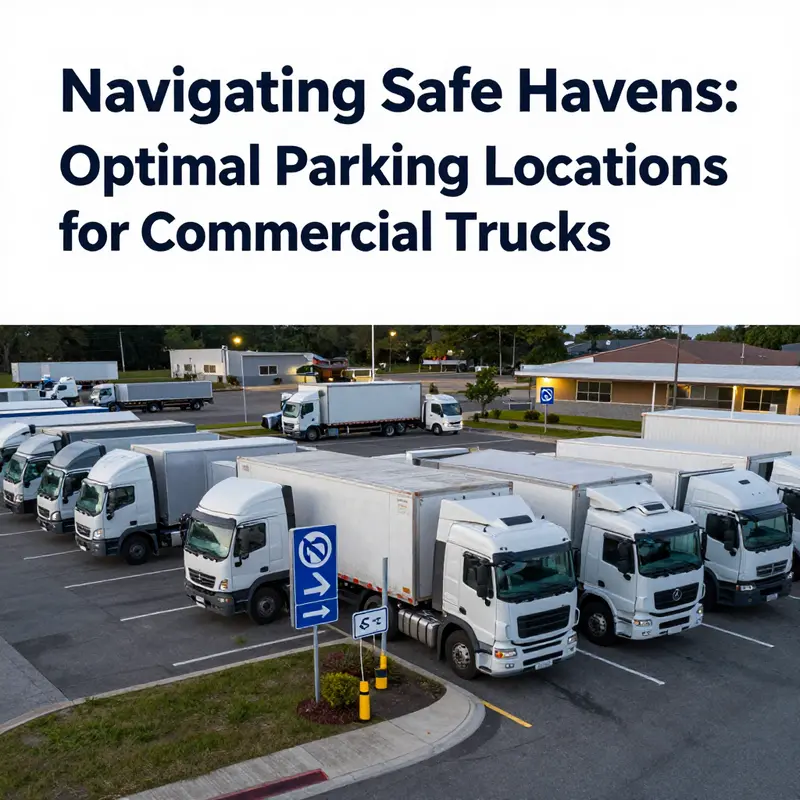
When a commercial truck leaves highway corridors and enters the urban fringe, the next act is not just stopping somewhere safe but entering spaces that respect safety, regulate access, and preserve the rhythm of a complex supply chain. The chapter of designated areas where trucks can park is not a quaint urband legend but a carefully engineered facet of modern logistics planning. These spaces, known in planning circles as loading zones and truck parking facilities, are not arbitrary patches of pavement. They are thoughtfully positioned within industrial zones, logistic hubs, and designated freight corridors to balance the needs of heavy vehicles with the realities of dense urban life. The result is a system that supports efficiency while reducing the friction that heavy traffic can inject into streets, neighborhoods, and commercial districts. In the strides toward safer roads and more predictable deliveries, designated truck parking serves as a foundational element that links the back end of the supply chain with the day to day realities of city traffic and curb space management.
In large metropolitan nodes, the architecture of designated parking emerges in layered forms. First are dedicated truck parking facilities, often embedded within logistic parks and industrial districts. These sites are conceived as robust, long span spaces that can accommodate the peculiar geometry of long vehicles, with clear sightlines for drivers and responsible for reducing the turning demands placed on urban streets. In practice, a well-designed facility provides more than a place to pause; it offers a controlled micro-environment where drivers can rest in safety, perform inspections, and prepare for the next leg of the journey. The ground beneath these vehicles is not incidental. It is flat, stable, and reinforced to handle heavy axle loads. Good pavement reduces tire wear and helps maintain traction during rain or snow, which in turn lowers the risk of roadside incidents that can cascade into traffic disruptions. Lighting is not an afterthought either. Bright, even illumination across the site supports visibility for drivers maneuvering at night, and it supports surveillance systems that deter theft and vandalism. In practice, this means a parking area is not just a patch of concrete; it is a designed landscape that facilitates orderly parking maneuvers, safe berthing, and ready access to loading docks and staging areas.
The spatial logic behind these areas is driven by the truck’s unique profile. A typical space is designed to be long enough to accommodate a vehicle that may stretch 12 meters in length, with a width of around 2.5 meters. Some rigs—especially those used for long-haul and specialized freight—may require longer berths, up to 18 meters, to allow comfortable entry and exit without encroaching on neighboring spaces. Turning radii are equally critical; a clear radius of eight to twelve meters is often necessary to prevent tight, inadvertent encroachments into adjacent lanes or parking bays. With this geometry in mind, the placement of designated bays within the broader urban fabric becomes a puzzle of accessibility, safety, and operational flexibility. It is why such spaces are frequently situated outside dense city centers where daytime access restrictions on heavy vehicles are more permissive, yet they remain within reach of industrial corridors, freight gates, and major distribution nodes. The aim is a choreography where trucks can be parked, staged, loaded, and dispatched with minimum conflict with other road users and with the surrounding community.
A successful network of designated parking spaces is supported by more than raw square footage. The best sites are planned with attention to ground stability, drainage, and the ability to support continuous, heavy-day traffic. Flat, stable surfaces reduce the risk of equipment damage and create predictable starting points for both parking and hitching operations. Adequate grading and drainage prevent water accumulation that could degrade pavement and undermine traction, particularly for heavy vehicles with limited agile steering. The surrounding infrastructure matters as well. Clear sightlines into the site from access roads, appropriate fencing, controlled entry points, and visible wayfinding all contribute to a sense of security for drivers who must rest or wait for regulatory windows to open. In modern urban planning, these elements are inseparable from broader security strategies that combine lighting with camera coverage and patrol presence, making the space less attractive to would-be thieves and more reliable for legitimate business use.
The space economy of truck parking enjoys a dynamic dimension when cities actively repurpose idle urban land. A notable trend in recent years has been the conversion of underutilized plots into quick, practical solutions for temporary parking. This approach recognizes that the demand for space is not static; it expands during peak freight periods and fluctuates with seasonal cargo flows. In practice, a district might launch a temporary parking project that yields several hundred spots within a short time frame, delivering immediate relief to drivers who otherwise circle congested corridors in search of safe berthing. The appeal of such arrangements lies in their speed and scalability. They can be deployed with modular fencing, lighting, and security measures to rapidly transform a vacant lot into a functional parking zone. These temporary facilities are not a substitute for permanent, well-planned truck parks, but they do provide a critical bridge that helps sustain delivery schedules and reduce pressure on residential streets during urban infill and growth phases. The result is a more flexible urban logistics fabric that can respond to unexpected demand spikes without compromising safety or access for the general public.
For the driving fleet, the decision of where to park hinges on a mix of regulatory clarity and real-time information. Municipalities issue announcements and guidance that define where parking is permitted during daytime and nighttime hours, and many regions maintain a catalog of official truck parking points that are updated as new facilities come online. The practical outcome is a system in which drivers consult local transportation authorities or rely on navigation tools that identify approved truck parking spots. The guidance is straightforward: avoid areas not designated for heavy vehicle parking, honor loading and unloading zones, and respect the boundaries of pedestrian zones. The consequences of noncompliance are real and immediate, ranging from traffic fines to vehicle impoundment and the risk of obstructing critical urban corridors during peak cargo flows. As a result, the emphasis remains squarely on compliance, safety, and predictability in operations.
Within the urban logic of these spaces, the role of the logistics operator is to plan with a longer view. This means mapping routes not only for the direct delivery but for the trip that follows a stop. The use of network planning tools—without naming brands—enables fleets to map service areas by travel time, creating a color-coded picture of safe havens in the city: green zones within a brief window, yellow zones within a longer window, and red zones beyond a given threshold. Such visualization helps dispatchers steer drivers toward parking options that minimize dwell time in sensitive zones and optimize the handoff between driving segments. In practice, this translates into more reliable delivery schedules, reduced risk of penalties for improper parking, and improved urban accessibility for cargo flows that must pass through busy metropolitan arteries.
Despite the clarity of this framework, drivers still face real-world frictions. Underground garages are rarely suitable for truck parking. They often lack sufficient space, height clearance, and the turning radii necessary for safe operations. Underground spaces can trap a heavy vehicle in a way that jeopardizes driver safety and complicates staging for loading. Likewise, parking in city centers, on sidewalks, or in bike lanes is not a permissible solution. These choices create hazards for pedestrians and cyclists, impede normal traffic flow, and invite enforcement action. The emphasis, then, is on choosing spaces that support the vehicle’s size and behavior while maintaining the integrity of the surrounding urban network. This is why loading and unloading zones, when officially marked and regulated, are preferred as the actual parking or staging points during cargo operations. They provide the controlled access and clear expectations that keep both the truck and the city moving smoothly.
The interplay between planning and practice is most evident where local governments actively invest in park-and-park or park-and-ride-style concepts, repurposed land, and disciplined enforcement. A recent example in one district highlights how a city can coordinate between industrial development and the demand for temporary parking by converting idle plots into two new temporary lots with hundreds of spaces. This strategy both eases the logistical strain on nearby streets and serves local residents by reducing curbside congestion. It is an illustration of how well-designed spaces support a city’s broader objectives: safer streets, cleaner air by reducing unnecessary idling, and a more predictable operating environment for freight providers. While the numbers may vary from district to district, the principle holds: flexible space, properly zoned and equipped, is essential for maintaining the efficiency of urban logistics in the face of growing freight activity.
In guiding the modern truck operator, the practical counsel remains straightforward: use official, clearly marked spaces; do not attempt to park in unapproved or unsafe locations; and stay aligned with local guidance and public information resources. Real-time guidance is increasingly embedded in the broader logistics toolkit that a fleet uses to plan routes, assign drivers, and monitor performance. The advice to drivers and dispatchers alike is simple and universal: designate a plan, confirm a space, and execute with discipline. The public infrastructure that supports this discipline—well-lit lots, clearly marked bays, real-time updates, and enforceable rules—ensures that trucks can pause, rest, and regroup without compromising safety or neighborly harmony. The goal is not merely to park but to park well—so that the next leg of the journey can begin on time and without incident.
For those seeking further reflections on how these spaces evolve with urban growth and logistic demand, a broader body of industry writing exists in public-facing platforms. Our own resource hub offers additional discussion on how space, policy, and technology intersect to shape the future of truck parking in fast-moving markets. To explore more, see the McGrathTrucks Blog. Its discussions, while not a substitute for official guidance, provide perspectives on the practicalities and evolving practices that accompany designated truck parking in modern cities. As the chapter closes, it bears repeating that the architecture of these spaces—dimensions, location logic, lighting, security, and the capacity to adapt—exists to keep freight moving safely and predictably in the urban world. The next chapters will situate these spaces within specific regulatory regimes and show how different cities balance competing demands for curb space, neighborhood livability, and freight efficiency. For official planning directions, consult municipal development reports and the local transportation department where you operate, and remember that the chance to reimagine space for trucks often begins with a clear map of where they are allowed to park and where they are not.
External resource: https://jtt.sc.gov.cn/.
Public and Temporary Truck Parking in Dongguan: A Pragmatic Blueprint for Safe, Regulated Freight Staging
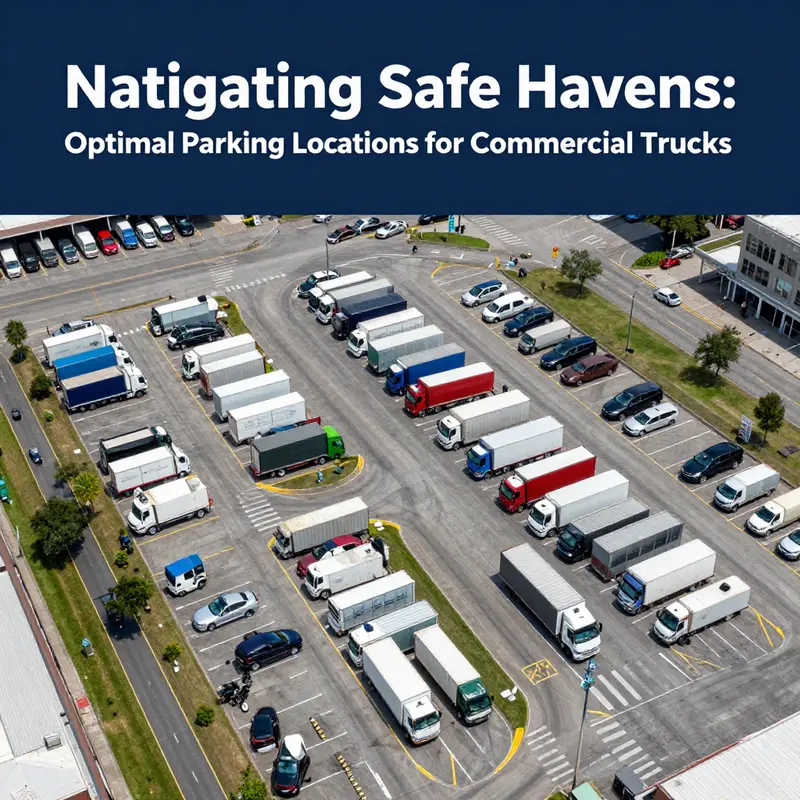
Designated truck parking is more than a convenience; it is a backbone of safe, efficient freight movement. In cities that pulse with manufacturing, port traffic, and dense commercial activity, the ability to park large vehicles in predictable, legally compliant spaces reduces risk, supports on-time deliveries, and protects both road users and valuable cargo. This chapter follows a concrete example from Dongguan, a city that has woven a multi-layered strategy to expand and formalize truck parking. It illustrates how public and temporary facilities can relieve pressure on city streets, how authorities balance urban development with freight needs, and how drivers, dispatchers, and fleet managers can navigate an evolving landscape. The story is less about a single location and more about a network—an ecosystem of industrial zones, municipal lots, and time-bound sites that together create reliable parking access for commercial fleets while maintaining safety, order, and legal compliance. In Dongguan, as in many rapidly growing industrial centers, parking is a logistical artifact as important as the routes trucks take or the warehouses they serve. The chain of parking spaces is not merely a buffer against curbside congestion; it is a strategic instrument that aligns with digitized logistics, dynamic traffic management, and the city’s broader effort to stabilize freight flows in a high-demand environment. The results show up in quieter streets, fewer parking disputes, better utilization of curb space for loading and unloading, and more predictable fuel and maintenance cycles for fleets. Yet the story is not just about space; it is about rules, timing, and the careful choreography of people and machines that keep freight moving while communities thrive. In this sense, Dongguan’s public and temporary truck parking network is a living system, continually adjusted as new sites open, old sites repurpose, and demand shifts with the manufacturing calendar and regional trade cycles. This integrated approach—anchored by industrial zones, municipal lots, and short-term sites—provides a practical template for other cities facing similar pressures. It also underscores an essential point for readers across the broader topic of where commercial trucks can park: legality matters as much as availability, and the safest, most efficient parking emerges where design, governance, and on-the-ground practice converge. As a general rule, drivers should seek out officially designated spaces in order to avoid fines, to ensure adequate turning radii for long trucks, and to reduce the risk of theft or damage during expected idle periods. In what follows, the Dongguan example is laid out with emphasis on four principles that underpin successful public and temporary truck parking: accessibility and capacity, safety and security, clarity of rules and hours, and real-time navigability. Those principles are universal, even as the concrete sites and local arrangements differ from place to place. What Dongguan demonstrates is how a city can grow its parking network in a way that supports both the needs of freight operators and the daily lives of residents and businesses that rely on smooth traffic flows. It is a reminder that effective parking is not a single lot but a distributed system that relies on coordination among industrial parks, district governments, and the drivers who rely on clear guidance and predictable availability. In the sections that follow, we walk through the specific locations that form the backbone of Dongguan’s public and temporary truck parking network, painting a picture of a city actively transforming its space into a safer, more efficient freight corridor. We begin with the industrial zones themselves, which often host the most robust collection of truck parking options, designed to accommodate long vehicles and wide turning radii, and backed by lighting, surveillance, and well-marked access routes. From there, we move to the municipal and government-owned lots that expand available capacity, including areas designated for temporary use during peak demand or service outages. We then turn to the newer temporary sites added in the last year, which reflect a rapid response to evolving freight patterns and a willingness to repurpose idle or underused space. Finally, we discuss how drivers can navigate this system in real time, leveraging official guidance tools and best practices to maximize safety, compliance, and efficiency. This narrative, grounded in Dongguan’s experience, is meant to illuminate a practical pathway forward for cities working to balance industrial growth with public safety and urban livability. The central message is straightforward: a well-planned network of public and temporary truck parking spaces can change the rhythm of freight work for the better, provided it is designed with attention to capacity, security, and transparent, driver-friendly navigation. A related discussion can be found at mcgrathtrucks.com/blog/, which expands on how fleet operations integrate parking decisions with route planning and logistics strategies. As drivers and fleet managers assess options in Dongguan and beyond, they should also look to official sources for the most current sites and guidelines. The local transportation authority, as well as city portals, typically publish updates about parking zones, hours of operation, and any temporary restrictions that affect where trucks may linger during the day or night. An essential component of this ecosystem is the commitment to real-time information. In many cases, drivers use GPS navigation apps that highlight approved truck parking spots and avoid unauthorized areas. The real-time nature of these updates helps prevent the double burden of idling in search of space and the risks that come with parking in restricted or unsafe locations. Dongguan’s approach, with its blend of long-standing industrial zones and newly created temporary sites, shows how a city can dynamically adapt to shifting traffic patterns, seasonal production cycles, and evolving regulatory demands. By treating parking as an integral element of the freight network rather than an afterthought, the city demonstrates how design choices in parking can ripple outward to improve safety, reliability, and the overall efficiency of supply chains. The following sections summarize the principal public and temporary parking assets that anchor Dongguan’s network. Each site typifies a facet of the system: the concentration of capacity in industrial zones with direct access routes and ample space for large vehicles; the use of municipal and government-owned lots that complement private or enterprise-run facilities; and the strategic addition of temporary spots in response to spikes in activity or to relieve pressure on high-demand corridors. The emphasis across all sites is on practical accessibility for trucks, robust safety features such as lighting and surveillance, and clear, enforceable rules about hours, loading zones, and prohibited practices. For drivers, this means a more predictable decision framework: where to park, when to park, and how to move safely in and out of restricted areas without impeding local traffic or breaching regulations. The spaces themselves show the spectrum of parking solutions: some are purpose-built truck parks within industrial districts, offering hundreds of spaces and designed with turning radii that accommodate 18- to 22-meter-long vehicles. Others are repurposed or purpose-built temporary lots that emerge in response to immediate needs, often located near major supply chains and along major arterial routes that serve freight traffic. In every case, the aim is to balance the demands of heavy freight with urban safety, road user experience, and cost-effectiveness for operators. The practical implications for fleet managers are clear. First, when planning routes and schedules, incorporate dedicated parking windows aligned with the known hours of operation of the designated lots. Second, integrate site-specific constraints into dispatching logic, such as a lot’s capacity, typical occupancy rates, and any seasonal limitations that affect availability. Third, recognize the value of real-time guidance and reward drivers who consistently route to approved spaces rather than attempting roadside parking, which can create hazards and penalties. Finally, maintain a culture of compliance by training drivers to respect loading zone boundaries, to use official spaces only, and to monitor the local signage for any temporary changes that could affect access. The Dongguan network also makes clear that parking infrastructure is not static. It evolves in response to growth in industrial activity, shifts in commercial patterns, and the city’s broader urban development agenda. As new sites open or former sites reconfigure for different use, dispatchers must stay current with the latest maps and policies, ensuring that drivers are directed to spaces that meet safety criteria and regulatory requirements. This continuous adaptation mirrors a larger trend in global freight logistics: the emergence of formally recognized, high-capacity, well-lit parking areas that support longer dwell times without compromising urban mobility. The practical impact extends beyond the truck wheel and into the daily life of the city. Fewer trucks parked illegally on sidewalks or in prohibited zones mean fewer pedestrian conflicts, better access for emergency services, and a more orderly image of freight traffic in commercial districts. It also translates into more reliable delivery windows for shippers and retailers, reducing the variability that often drives overtime hours and fatigue among drivers. In short, the Dongguan model demonstrates that a well-planned mix of industrial zone parking, municipal lots, and timely temporary sites can deliver tangible gains in safety, efficiency, and regulatory compliance. The key is clarity and accessibility: a driver should know where to park, when a lot is available, what the rules are, and how to navigate to the next site if space is full. To illustrate the breadth of the network, consider several of the most significant public and temporary locations. In Dongguan’s Niu Shan Industrial Zone, a dedicated truck parking area sits at the intersection of Huijing Road and Shanhu Road, offering approximately 210 parking spaces. This site is not merely a pad of asphalt; it is a carefully planned space that considers turning radii, lighting, surveillance, and secure access. For drivers who need a smaller but still substantial facility, the Jianhua Truck Parking near Zhongwuwei Village on Huijing Road provides around 100 spaces. The layout here balances convenience with efficiency, allowing trucks to stage without blocking key industrial access points while remaining within reach of nearby manufacturing operations and logistics hubs. Moving toward higher density, Xiaqiao Fruit Market Parking—located at the junction of Yinzhu Street and Qiaoshan Road—offers roughly 300 spaces. The proximity to a busy market complex yields both challenges and opportunities: high daytime activity can constrain space, but the surrounding road network often includes direct routes to major trucking corridors, enabling quick ingress and egress for trucks that are loading or unloading perishable goods. In Chujiang Town, a network of communities—Chiling, Liao Xia, Daling, Hetian, Xinwei, Qiaotou, Yongkou, and Xibian—has established truck parking areas across multiple locations. Notably, the Jiangjunling Parking Lot in Liao Xia Community sits at No. 169, Guantai Road, near the southwest side of Yuanmeng Textile. This clustered approach illustrates a practical principle: dispersing parking across several nearby neighborhoods reduces travel time to and from loading points and distributes parking demand away from a single choke point. Qiaotou Town hosts several community parking lots, including one at No. 36, Gongshang Sanlu in Qiaotou Community (about 20 spaces) and another at No. 3, Heshi Road in Shishui Kou Village (about 100 spaces). Additional lots populate villages in Shanhe, Dongjiang, Wuxia, Dengwu, and several other localities, with each site sized to fit the typical truck fleets active in that area. Such dispersion is a practical countermeasure to the kind of bottlenecks that erode reliability in freight schedules when a single lot is overwhelmed. Zhongtang Town marks a different approach: a large-scale, free temporary parking lot has been created by repurposing an idle area. It sits at No. 57, Beiwang Road, Yuanjiayong Section, within the Dongguan Zhongtang North Sea Industrial Park Land Reclamation Command Center. The space is intentionally generous, designed to absorb the overflow from nearby industrial activities and to serve as a no-cost option for trucks during peak times or while awaiting loading or unloading slots. The space is not a temporary experiment but a functional layer of the city’s logistics fabric, providing a relief valve that reduces the pressure on commercial streets and on primary approaches to industrial zones. In late 2025, Dongguan expanded its temporary network with several new Songshan Lake area sites. Four new temporary parking spots were added: Changhu Lu Bei Parking Lot, Ruihe Lu Parking Lot, Xinghui Lu Temporary Parking Lot, and the Dongfeng East Side Temporary Parking Lot. These sites reflect a strategic push to bring more capacity closer to growth corridors associated with high-tech development and new industrial clusters. In addition, two more temporary parking areas were announced in May 2025: a former Songshan Lake Bus Stop Temporary Parking at the intersection of Songbai Road and Cui Xiang Road, near the south side of Guanle Garden, and Wanwei Parking on Jutun Juyuan One Road in Libu Town. The pattern here is clear: as the city evolves, so too does the free and paid parking landscape. These sites add to previously established districts, delivering a broader geographic footprint and more choice for fleets with multiple terminals or routes. Beyond these specific locations, Dongguan has pursued a broader temporary initiative to free up public parking resources in early 2026. From February through March 3, city leadership opened government office and public institution parking lots along key urban arterial corridors—Wenxing Street, Tianqing Street, Fuxing Road, Chengzhong Road, and Guofan Road—to general public use, with the aim of increasing overall availability for both passenger vehicles and commercial trucks. This period illustrated a practical policy experiment: temporarily relaxing access controls to maximize space during a critical window of demand, while still maintaining basic parking discipline and safety. For drivers, such initiatives require vigilance and adaptability. Local authorities typically issue guidance through official transportation or municipal apps, with QR code routing to designated lots and clear signage indicating temporary open periods. In many cities, including Dongguan, these real-time updates reduce the time spent looking for parking and decrease the likelihood of encountering illegal or unsafe spots. They also underscore a broader point: the most effective parking ecosystems rely on a combination of long-term capacity planning and short-term, flexible arrangements that respond to evolving traffic and freight patterns. When planning a route, drivers should treat the parking network as integral to the journey, not an afterthought added at the end. This means pre-checking the status of the nearest industrial or municipal parking site, understanding capacity constraints, and recognizing that the best space today may be occupied tomorrow. It also means acknowledging that a robust network requires ongoing collaboration among industrial developers, district governments, and logistics operators. Such collaboration yields parking that is not only accessible but also safe and suited to the peculiarities of long vehicles: wide turning radii, ample lighting, robust surveillance, and clear signage that makes the rules non-negotiable and easy to follow. A practical implication of this collaborative framework is that drivers must stay attuned to the local rules of each site. Some spaces may require time-limited stays or specify designated loading and unloading windows. Others may operate under a first-come, first-served basis, with real-time occupancy updates accessible through municipal apps. In all cases, the emphasis remains on safety. The architecture of these sites—good lighting, visible cameras, defined circulation paths, and secure perimeters—contributes to deterrence against theft and vandalism, protecting both cargo and equipment. It also helps reduce the risk of collisions between large trucks and other road users by designating separate lanes and turning radii that can accommodate those colossal vehicles. In moving toward a more unified and efficient network, Dongguan’s experience also highlights the need for drivers and fleet managers to align with urban planning narratives. Parking is not merely a standalone support function; it is interwoven with freight routing, warehouse scheduling, and even the daily rhythm of local neighborhoods. The presence of significant commercial activity means that parking spaces are not unlimited. They are assets that must be managed with fairness and attention to demand, hours, and the length of time a vehicle intends to occupy a space. The city’s current approach—an expanding set of industrial, municipal, and temporary lots—reflects a mature recognition that supply chain reliability hinges on predictable staging options. For practitioners looking to translate this model to other contexts, the essential ingredients are clarity of access, capacity planning, site security, and real-time visibility. The specific site details matter less than the overarching architecture: a distributed network of spaces that can absorb peak loads, coupled with policies that keep those spaces accessible to compliant fleets rather than being siphoned off by unauthorized users. And because this is a living system, it benefits from continual feedback loops—data on occupancy, turnaround times, and incident reports—that inform future expansions or adjustments. The Dongguan example offers a blueprint for cities seeking to redesign parking as a strategic resource rather than a side effect of traffic. It illustrates how a city can convert underutilized spaces into valuable infrastructure, how public and private sectors can collaborate to deliver reliable parking, and how drivers can navigate a complex landscape with confidence when information is timely and accurate. In the end, what matters most is not the number of sites alone, but the coherence of the network, the clarity of the rules governing space use, and the confidence that drivers can find a safe, legal, and efficient place to pause, stage, and proceed. External resources can provide additional context for policymakers and operators looking to implement or expand similar networks. For example, government portals and regional transport agencies regularly publish updates on parking zones, hours of operation, and enforcement practices. A centralized reference point for authoritative information in this domain is the Sichuan Provincial Department of Transportation’s official website, which offers guidance and announcements that can be instructive for planners and fleet managers considering analogous deployments in other regions. External reading can complement the Dongguan case by offering broader perspectives on how public and temporary parking spaces are integrated into urban freight planning in diverse regulatory environments. (External resource: https://jtt.sc.gov.cn/).
Strategic Hubs for Safer Hauls: How Logistics Parks and Industrial Zones Redefine Truck Parking
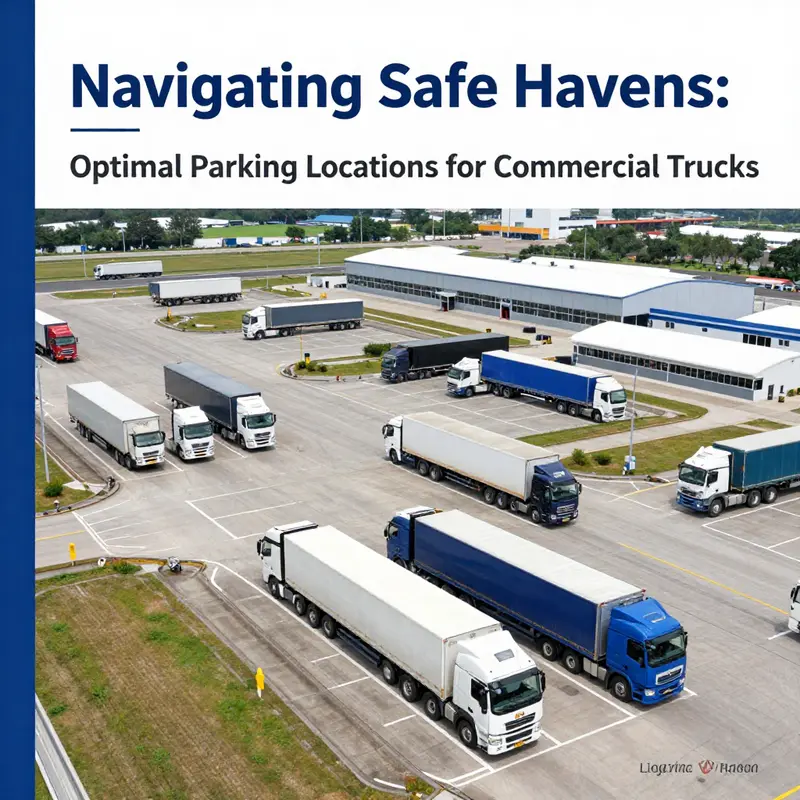
In the vast network of goods movement that underpins modern economies, truck parking is more than a pause point. It is a critical junction where safety, efficiency, and environmental stewardship intersect. The way a fleet negotiates parking space in a busy urban terrain or a sprawling logistics complex often determines not just arriving times, but the integrity of cargo, the welfare of drivers, and the broader rhythm of supply chains. The central idea guiding contemporary practice is simple yet powerful: park where the space and the conditions are designed for long vehicles, where space is flat, well lit, and configured to minimize maneuvering risk, waiting time, and idling emissions. This principle has found its most concrete expression in three interlocking spaces that many logisticians now treat as a unified ecosystem. First are designated truck parking facilities that sit alongside freight terminals and distribution hubs; second are public and temporary freight parking lots that municipalities establish to smooth peak loads and long-haul trips; and third are the more deliberate formations of logistics parks and industrial zones that tailor entire environments for the precise needs of heavy vehicles awaiting entry, loading, or routing through complex networks. Together, they form a logical progression from ad hoc roadside parking to purpose built, highly managed landscapes designed to optimize the entire lifecycle of a freight move.
The value of such spaces becomes even clearer when we reflect on the risks that arise when parking is improvised or misjudged. A truck left on a city street or in an underground structure can create a cascade of hazards. Congested curb space, obstructed bike lanes, and blocked emergency routes are not mere inconveniences; they are infringements on safety, law, and the predictable flow of commercial activity. In many regions, misparked vehicles also trigger regulatory penalties that escalate with repeated offenses. Therefore, the shift toward designated spaces is not a narrow preference but a strategic response to regulatory compliance, operational reliability, and environmental responsibility. In practice, this means embracing a spectrum of parking options that are clearly marked, officially sanctioned, and monitored by lighting, cameras, and patrolling security. The most efficient systems leave little room for improvisation and a great deal of room for predictive management.
Within this spectrum, logistics parks and industrial zones have emerged as the most ambitious and consequential nodes. These are not mere snapshots of parking a truck; they are carefully designed environments that anticipate the entire cycle of a heavy vehicle entering, queuing, waiting, and finally loading or exiting. The layout considerations are practical and precise. A successful park provides large, flat surfaces with turning radii that accommodate the widest of tractor-trailers, typically in the range of eight to twelve meters, to prevent sharp, risky maneuvers in the vicinity of workers and other moving equipment. Lighting is a nonnegotiable feature, spanning entryways, parking rows, and terminal approaches to deter theft, reduce error, and improve driver visibility during late shifts and early departures. Security interventions—surveillance cameras, controlled access points, and regular patrols—become as standard as the asphalt itself. Taken together, these design choices create an environment where the act of parking becomes a predictable, repeatable, and safe operation rather than a potential hazard zone.
A growing body of empirical work confirms the environmental and efficiency dividends of such spaces when managed with intelligence and science. A recent study conducted at a major logistics hub demonstrates how a confluence of design, signal sensing, and advanced traffic simulation can transform the way parking resources are allocated and used. In that research, signal sensing technology is integrated with a traffic modeling platform to create a dynamic, real time view of parking occupancy. The analytic framework relies on a Python-driven interface that feeds data into a VISSIM simulation, allowing planners to run iterative scenarios and quantify outcomes across a suite of configurations. The eleven sets of simulation experiments in this study reveal a consistent pattern: when parking spaces are guided by real time sensor data, idling is reduced, queuing times shrink, and emissions associated with engine operation drop measurably. The environmental benefit is not incidental; it follows directly from more orderly parking sequences, faster entry into loading zones, and less time spent idling in lanes and curb spaces. In practical terms, drivers wait less, fleets stay more predictable, and the surrounding air quality improves as trucks spend more time parked with engines off rather than idling near busy terminals. This is not science fiction; it is a replicable design principle that can be scaled and adapted to different terrains and regulatory regimes.
The implications of these findings extend beyond the fence line of a single park. When a logistics park uses intelligent parking management, it serves as a model for the broader urban freight ecosystem. It demonstrates that the interaction between space design and digital control has the power to reduce congestion on adjacent roadways, shorten the chain of wait times that ripple through a delivery network, and lower noise and pollution in surrounding neighborhoods. The value proposition is twofold. On the one hand, operators gain reliability and throughput gains; on the other, communities benefit from lower emissions and better air quality. The study from Gangchen Logistics Park illustrates that these benefits are not theoretical but measurable, and that the technology stack needed to achieve them—sensor networks, data analytics, and simulation tools—exists and can be implemented with careful planning, investment, and cross sector collaboration. For practitioners, the message is straightforward: if parking management is treated as a live system rather than a static facility, it can become a lever for efficiency, safety, and sustainability across the supply chain.
From a practical standpoint, the landscape of parking choices expands beyond the clean geometry of a purpose built park. In many regions, cities and districts designate public and temporary freight parking lots to accommodate long homeward or cross regional trips that would otherwise clog urban streets during peak hours. In large metropolitan areas, these spaces are often placed near industrial zones or along major freight corridors, where they can relieve pressure on central streets and trade the convenience of proximity for the discipline of proper zoning. In some places, such arrangements are formalized through official notices and maintained by municipal departments that track occupancy, tariff structures, and safety inspections. For drivers, these lots offer the stability of a known spot to rest, refuel, or wait for the next leg of a journey, while operators gain predictable dwell times and improved scheduling visibility. It is important to note that these spaces exist not as an optional convenience, but as part of a comprehensive approach to urban freight management. They reflect a deliberate decision to allocate space for heavy vehicles in a way that minimizes conflicts with other road users, protects public safety, and supports efficient throughput for critical supply chains.
An instructive example comes from the broader fabric of urban trucking networks in rapidly developing regions where space is at a premium. In several cities, municipal authorities have mapped and published official truck parking points that form a lattice across the metropolitan area. These points are typically associated with recognized transport corridors, construction sites, or industrial parks and are designed to be matched with digital guidance systems so that drivers can locate them quickly. The presence of such points reflects a shift in policy thinking: parking is not an afterthought but a designed element of the logistics system, one that requires continuous updating as traffic patterns, cargo demand, and regulatory landscapes evolve. Alongside these points, drivers are encouraged to consult local transportation authorities or rely on GPS based guidance that surfaces approved parking alternatives, rather than turning to informal or illicit spaces that can escalate risk and penalties. In practice, a driver will often plan a route that integrates these parking options into the trip choreography, weaving rest periods and waiting times into terminals and loading docks in a way that preserves throughput while respecting safety and labor standards.
Within this broader approach, the question of where to park becomes a practical art as much as a technical challenge. The research at Gangchen Logistics Park illustrates the kinds of decisions that planners must scrutinize: how many spaces should be allocated for long term waiting versus short term staging; how to align the timing of arrivals with the capacity at entry doors; how to design queuing lanes that do not choke the main road; and how to implement lighted, secure zones that deter theft but do not create visually overwhelming or energy intensive environments. The answers to these questions are not abstract. They translate into clearer turn-by-turn guidance for drivers, more direct communication between dispatchers and on road teams, and a reduction in the wasted time that often accumulates when trucks circle looking for a place to park. Importantly, the right parking configuration supports driver welfare by reducing unnecessary walking between trucks and loading zones, providing accessible rest areas, and ensuring that rest periods align with regulatory requirements for driving time and rest periods. When drivers can anticipate a stable, safe, and legally compliant parking experience, the reliability of the entire freight operation improves because the human factor—the driver’s concentration, fatigue management, and morale—receives due consideration alongside physical space design.
The social and regulatory context also matters. In many places, the rules governing truck parking are interwoven with broader traffic management policies, urban development plans, and environmental targets. Authorities increasingly recognize that the allocation of parking spaces is part of the infrastructure that supports safe driving, efficient cargo movement, and sustainable urban growth. In regions where these policies have matured, the process of obtaining and using designated parking spaces becomes smoother. Drivers know where to park, what the permitted uses are in each space, and which times of day are most conducive to safe waiting. This clarity lowers the risk of penalties and towing, which not only disrupts operations but can jeopardize safety on the road as drivers scramble to resolve violations in tight time windows. In other words, well publicized, well managed parking spaces contribute to a culture of compliance and safety that extends beyond a single company or fleet.
For operators and planners who are translating these insights into practice, the challenge is to integrate physical space with information systems in a way that scales. The Gangchen case demonstrates a practical blueprint: combine intelligent sensing with robust simulation to forecast how different parking layouts perform under varying demand and weather conditions. Use this information to inform capital investments, such as the construction of additional parking bays or the widening of turning radii, and to guide ongoing operations, including real time allocation of spaces as a function of arrival time, truck type, and cargo priority. The process is iterative rather than static. It requires collaboration between facility managers, traffic engineers, IT specialists, and the drivers themselves, whose on the ground feedback can reveal blind spots in the design that plans alone might miss. It also invites a broader conversation about energy and air quality—how a small change in parking discipline translates into meaningful reductions in engine idling and curbside emissions. In a time when climate considerations are not optional but expected, this is a powerful argument for investment in thoughtful parking ecosystems that are as intelligent as they are practical.
From a practical travel planning perspective, drivers will commonly visit multiple spaces within a single trip, each with its own constraints and opportunities. The most valuable parking systems are those that can accommodate this variability without forcing a driver to improvise ad hoc. They offer clear guidance about when to enter a park, where to stop within the facility, which gates are open, and how long the permitted dwell time lasts. Some spaces function as waiting zones outside of terminal hours, a feature that is particularly valuable for long hauls that cross time zones or pass through jurisdictions with limited loading capacity during peak periods. In practice, these spaces become a rhythm for the fleet, a cadence that aligns with loading windows, dispatch schedules, and road network conditions. For managers, the payoff is a more predictable timetable, reduced chain delays, and a stronger safety record. For drivers, it is a more humane and stable work environment, with accessible rest areas, hygienic facilities, and safe routes between vehicle and loading zones. In sum, a well designed truck parking strategy is not a bureaucratic ornament; it is a practical instrument for improving reliability, safety, and environmental outcomes across the supply chain.
To support readers who seek actionable pathways to apply these principles on the ground, there are practical steps that logistics teams can begin implementing right away. Start with a parking map that marks designated facilities, temporary lots, and industrial park spaces in a single, easy to interpret interface. Ensure that each space is accompanied by rules about usage, expected dwell times, and access controls. Integrate this map into dispatch workflows and driver apps so that the moment a route is planned, the system can propose a sequence of parking options aligned with current occupancy data. Invest in sensor networks or partner with providers who can supply real time occupancy information. Combine this with simulation tools to test how different layouts would handle peak demand, and use the results to justify expansions or modifications to the physical plant. Build a feedback loop that captures driver experiences, road conditions, and incidents, then translate these insights into design tweaks or policy updates to keep the ecosystem responsive and up to date. And finally, maintain an open channel with municipal authorities and regional transport bodies. When parking policies are coordinated with broader urban freight planning, the entire system gains legitimacy, clarity, and resilience. The best practice is to approach parking as a shared resource rather than a rival interest among operators, authorities, and communities, aligned with public safety, environmental stewardship, and the efficient flow of goods. In this sense, the parking strategy becomes a living architecture of the freight economy—one that grows more capable as data, design, and discipline converge.
For readers seeking further practical guidance and case studies, consider exploring industry resources that curate current parking options and policy updates across regions. As part of keeping this chapter grounded in real world practice, you can consult the following: mcgrathtrucks.com/blog/ for ongoing insights into truck operations and regulatory developments that influence parking decisions. This internal resource provides a window into how practitioners translate policy into daily workflow and how industry trends shape parking strategies over time. It is not a technical manual but rather a practical companion for planners and drivers seeking to align parking choices with the realities of modern freight networks. In addition, the broader literature corroborates the core message of this chapter: intelligent parking design, combined with real time guidance and robust simulation, yields tangible benefits in safety, efficiency, and environmental performance. The evidence from Gangchen Logistics Park and similar facilities underscores the importance of treating parking as a strategic asset rather than a secondary concern. As logistics networks continue to grow in complexity and scale, the imperative to design and manage these spaces with care will only intensify, reinforcing the central claim that well conceived logistics parks and industrial zones are not just convenient places to wait; they are essential components of a responsible, capable, and future oriented freight ecosystem.
From the perspective of the drivers who rely on these spaces, the day to day experience of parking in a well managed facility is distinctive. The safety aspect is tangible in every detail, from the layout that minimizes blind spots to the lighting that reveals any potential hazard early enough for a driver to react. The efficiency aspect is equally tangible: when a space is allocated promptly, and when the queue into a loading dock moves with minimal friction, a driver can maintain a steady rhythm of rest, pre shift preparation, and cargo handling. The environmental dimension is an often overlooked but critical benefit: reduced engine idling translates into lower emissions, cooler idling tires, and a quieter street presence that communities increasingly expect of freight activity. The cumulative effect is a freight system that feels steadier and more predictable, which in turn fosters stronger collaboration between carriers, dispatchers, port authorities, and local residents. In sum, the strategic design and management of truck parking within logistics parks and industrial zones do not merely accommodate vehicles; they enable safer driving, cleaner operation, and more reliable delivery performance across the supply chain.
External resource: https://www.sciencedirect.com/science/article/pii/S235214652600021X
Final thoughts
Understanding the various parking solutions available for commercial trucks is vital for ensuring operational efficiency, safety, and compliance with regulations. Designated areas, public options, and logistics parks each serve distinct needs within the trucking industry. By utilizing these resources effectively, trucking companies and fleet managers can avoid potential legal issues, optimize logistics operations, and ultimately contribute to a smoother transportation process. The importance of proper truck parking cannot be overstated, as it plays a fundamental role in the success of logistics management.