The 2025 Super Bowl advertisement featuring Ram Trucks has captured the attention of various sectors, including trucking companies, construction firms, and logistics providers. Glen Powell’s humorous take on the classic character Goldilocks integrates a compelling narrative with the presentation of a modern pickup truck. This article will explore three key areas: Powell’s role as Goldilocks in the commercial, the creative concept driving the advertisement, and its cultural impact, especially on audiences relevant to the trucking industry. By analyzing these aspects, industry leaders can glean insights into how such innovative marketing strategies can enhance brand appeal in a competitive market.
Glen Powell as Goldilocks: How a Playful Casting Turned a Truck Spot into Storytelling
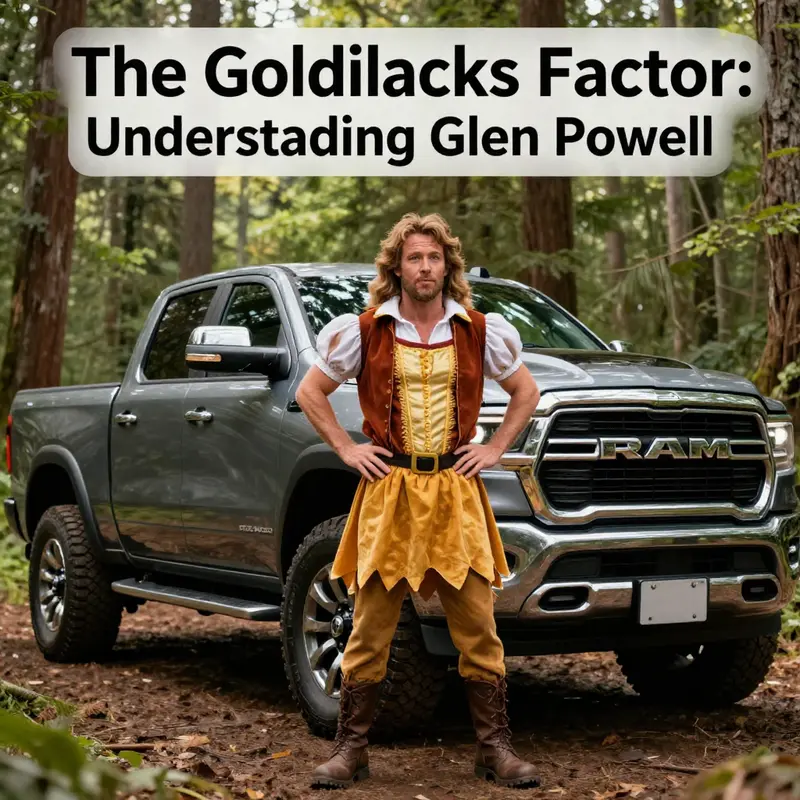
When the floodlights of the biggest football night in the United States hit the screen in 2025, one commercial did more than showcase metal and horsepower. It invited viewers into a small, well-told story: a familiar fairy tale reshaped for grown-up viewers, anchored by a single casting choice that surprised and delighted. At the heart of that spot, the person who became Goldilocks was Glen Powell. The decision to cast a charismatic, fast-rising actor in the role reframed expectations and underscored an important point about modern automotive advertising: the product is still important, but the emotional bridge that connects a vehicle to its buyer often comes through narrative and personality.
Glen Powell’s turn as Goldilocks was not a literal interpretation of the fairy tale. Instead, it was a playful, affectionate riff. He leans into the archetypes people recognize—the tousled romantic hero from glossy 1990s covers, the mischievous intruder of a bedtime story—but he layers those images with warmth and a wink. In the commercial, Powell reads the story to his real-life niece. That small framing device matters. It moves the ad from an overt product demonstration to a piece of familial theater. You watch a man carefully choose words for a child, and you relate. That empathy is the engine of the spot. The truck on screen becomes part of a domestic tableau, not just a high-performance prop.
Powell’s style — a blend of charm, comic timing, and physical presence — makes him an unusual Goldilocks. He does not mimic a child’s innocence; he translates the tale into something adults recognize as playful and human. The ad leans on contrasts. A rugged pickup truck suggests utility, endurance and power. The Goldilocks story suggests vulnerability, curiosity and warmth. By putting Powell in the middle, the commercial ties these qualities together. His performance communicates that the vehicle offers comfort and capability in equal measure. Viewers are invited to laugh at the absurdity of the premise while also absorbing a subliminal message: this is a truck that fits different roles, from family to work to adventure.
Casting Powell as Goldilocks succeeds because of the cultural shorthand he brings. He’s known for roles that blend bravado with a self-aware sense of fun. Audiences recognize the type he evokes: the confident protagonist who can also be tender. That meta-awareness allows the ad to make a joke and land it. It also nods to the long history of commercials that use celebrity persona as a shortcut to meaning. Where traditional ads once leaned heavily on specs and utility, many modern spots rely on the recognizability of a performer to convey a brand’s tone. Powell’s presence tells viewers, quickly and memorably, that the brand sees itself as confident but human, strong but considerate.
The storytelling choices in the commercial are as important as the casting. Directors and creative teams opted for a light touch rather than heavy-handed spectacle. Scenes shift between intimate domestic moments and broader, cinematic visuals of the truck. That contrast is deliberate. It suggests the truck is at home in both small, meaningful moments and larger-than-life tasks. Powell’s scenes with his niece ground the ad. They model a relationship many viewers understand: an uncle sharing a story, seeking to enchant a child, using humor and affection to connect. The emotional payoff is subtle. You don’t need to be shown test data or torque numbers to feel convinced. Instead, you see a man treat a powerful machine as part of a life—a tool that protects, transports and comforts.
This choice resonates because it mirrors changes in buyer psychology. Many vehicle purchasers no longer see trucks strictly as tools for labor. They want vehicles that integrate into family life and leisure without sacrificing capability. Ads that simply parade specs can miss the mark when competing for hearts and minds. The Powell spot addresses this by expressing capability through character. The truck’s capability is implied through staging and context. When the vehicle appears, it’s framed as an enabler of moments—bringing people together, making everyday tasks easier, offering the kind of quiet reliability parents and caregivers appreciate. The narrative communicates trustworthiness without resorting to traditional demonstration.
Beyond the narrative, the ad’s aesthetic choices deepen the effect. Cinematography blends warm domestic lighting with expansive outdoor shots. This visual language crafts a story of contrast and cohesion: a tough exterior that shelters a warm interior. Powell’s wardrobe and physicality reinforce the point. He plays rugged and polished at once. That balance prevents the character from veering into caricature. The humor is self-aware, not mocking. When the ad plays with the romanticized Fabio image, it’s doing so playfully, borrowing the iconography without undermining the truck’s gravitas. This balancing act is delicate. Too much irony could undercut authenticity; too little could feel earnest to the point of cliché. The commercial manages to be both witty and sincere.
The familial element—the real-life niece—merits special attention. Using an actual family tie changes the texture of the performance. It gives the interactions a spontaneous quality. Audiences sense that the affection is genuine, which is harder to fake than staged chemistry. That authenticity translates into brand goodwill. It suggests that the brand values relationships, not just transactions. For many viewers, this signals an alignment of values: the vehicle isn’t just a commodity; it’s a companion for life’s moments.
The success of the ad also depends on timing and cultural context. By airing during a major sporting event, the commercial reached a broad and diverse audience. Yet the creative team resisted the temptation to fill the spot with bombast alone. Instead, they trusted a simple story. This restraint paid off: among a sea of spectacle-heavy ads, a quiet, character-driven spot stands out. Powell’s performance—funny, controlled, and heartfelt—cuts through because it is unexpected in that environment.
Commercials that adapt fairy tales must walk a fine line between homage and novelty. A direct retelling risks feeling redundant. A too-abstract reinterpretation can lose the emotional thread. The Powell spot found a third path: it used a familiar story as scaffolding for an original vignette. Goldilocks becomes shorthand for curiosity and comfort. Powell’s version invites adults to laugh and children to dream, while reminding everyone that a truck can be both a tool and a keeper of memories.
Of course, responses to such creative choices vary. Some viewers will prefer ads that focus on performance metrics and technical prowess. Others will appreciate the emotional storytelling. What matters is that the ad communicates to its intended audience with clarity. For those who value family moments and relatable humor, the commercial was effective. It reinforced brand identity not through lists of features but through a single, resonant human interaction. That’s a strategic shift in how vehicle makers speak to consumers: trust is built through narrative coherence and emotional truth as much as through engineering excellence.
Industry commentators noted the spot’s clever casting and direction. Coverage emphasized how Powell’s persona amplified the message. Trade reactions also pointed to the spot’s economy: it packed character, humor and product positioning into a short timeframe without feeling rushed. For brands that must maximize every second of high-priced airtime, this kind of efficiency is invaluable. The ad demonstrated that emotional storytelling can be both artful and strategically sound.
There’s a broader lesson about celebrity casting embedded here. When a performer’s public brand dovetails with the advertised product’s identity, the partnership feels organic. Powell’s mix of ruggedness and charm made him a credible figure to embody the themes the truck maker wanted to emphasize. His casting was not simply a stunt; it was a calculated choice to forge an emotional shorthand with viewers. That shorthand communicates reliability, approachability and a modern take on tradition—qualities that resonate in a market where buyers balance nostalgia and practicality.
Finally, the commercial stands as an example of how advertising can reframe legacy products for contemporary audiences. Trucks have long been symbols of strength and endurance. But as purchaser demographics shift, so too must the stories that underpin brand value. By placing a recognized actor in a tender domestic role and connecting him to the vehicle, the ad reframes the truck as a steward of family life. It suggests that power need not exclude comfort and that utility can coexist with tenderness.
For those curious to view the spot and judge the performance directly, the official commercial is available through the brand’s posted channels. Watching it in full gives the best sense of how the elements—casting, cinematography, staging and narrative—work together. The commercial’s quiet confidence and well-timed humor are what make Glen Powell’s Goldilocks memorable: a role that reframes a classic tale, invites a smile and leaves a clear impression of the vehicle’s place in life.
If you follow industry commentary and analysis, you’ll find further context about how this ad fits into broader trends in vehicle marketing and media strategy. For ongoing reflections about trucks, market trends and how brands are telling new kinds of stories, a dealer’s blog that offers regular insights and updates can be useful to track. One such resource is the dealer blog, which often explores shifts in how trucks are positioned to buyers and how storytelling choices influence purchasing behavior.
For a direct look at the commercial itself, consult the official posted video: https://www.youtube.com/watch?v=7Xp3J4qfWmY
Goldilocks Reimagined: How a Fairy-Tale Hero Shapes a Pickup Brand’s Threefold Promise
In the bright glare of a Super Bowl stage, a familiar fairy tale is staged with a newly minted purpose. The character of Goldilocks steps into a wood-paneled cabin not as a passive visitor but as a curious, purpose-driven protagonist. The twist is not merely comedic; it is engineered to map a consumer’s search for the right vehicle onto a story that is both universal and instantly recognizable. In this narrative, the Goldilocks figure embodies a more modern impulse: the desire for the perfect fit. The actor, notable for a certain comic timing that can land a wink without breaking the spell, guides us through a sequence that feels both fantastical and thoroughly practical. The result is a playful yet precise articulation of a brand’s threefold lineup, reframing how audiences think about choice, capability, and comfort in a way that echoes long after the screen fades to black.
What makes the approach resonate is less the spectacle and more the structure. The old tale, with its trio of porridge options, becomes a template for evaluating a real-world question: which version of a pickup best aligns with a person’s life and ambitions? The ad translates this into a triad of trucks, each tuned to a different rhythm of living. The first bowl—decorously warm and welcoming—parallels a model designed for everyday routines: commuting, family trips, occasional haul jobs, the kind of daily torque that makes mornings feel less like a struggle and more like a plan. The second bowl—cooler, a touch more daring—corresponds to a middle-ground option that blends practicality with a spark of adventure: a vehicle that is comfortable enough for a family road trip yet capable enough to tackle tougher tasks when needed. The third bowl—precisely right—speaks to the high-efficiency, high-propulsion variant, the kind of truck that makes the road feel like a stage and the driver feel in command of both craft and craftiness. Taken together, the trio is not a mere product display; it is a carefully choreographed argument about fit, customization, and lifestyle alignment.
The creative concept is not simply a clever rehash of a beloved fable. It is a case study in how a brand can translate a timeless moral into a contemporary value proposition. The fairytale’s famous throughline—attempt, trial, and the discovery of what works—becomes a template for guiding a consumer through a decision that is, in practice, a negotiation between desire and necessity. The ad’s humor and whimsy do not trivialize the decision at hand; they illuminate it. Humor lowers resistance and invites viewers to consider options they might overlook in a more stoic, information-heavy presentation. The visual language—woods, a cozy cabin, a kitchen that suggests hospitality and safety—creates a fertile environment for the audience to imagine themselves inside the story. The character of Goldilocks, rendered with charm and audacity, becomes a proxy for the viewer’s own curiosity and willingness to explore, test, and ultimately select what truly fits.
Behind the camera, the execution is buoyed by a blend of stagecraft and storytelling craft that brings the concept to life in a way that feels polished and confident. The casting of Goldilocks, reinterpreted for a contemporary audience, carries more weight than a simple voiceover or stock characterization. The actor’s comedic timing—its rhythm, nuance, and the way a wink lands in the moment—anchors a scene that could easily drift into whimsy. Instead, it remains tethered to a warm, human center. The performance is leavened by a production design that treats the cabin interior as a stage for a more philosophical discussion about what we need from a vehicle. The furniture, the textures, the lighting—all of these choices are calibrated to imply comfort, endurance, and a sense of investment in the future. In this sense, the ad transcends mere product showcase. It renders a shared experience in which viewers are invited to imagine themselves as both audience and participant, choosing a vehicle that fits their life with a precision that feels almost tailor-made.
The emphasis on fit speaks directly to audiences at a moment when the truck market, and the broader world of big-vehicle ownership, is negotiating shifts in lifestyle, work patterns, and emotion as much as reliability and capacity. The narrative treats the choice as a personal decision rather than a transaction. It resonates with a culture increasingly attentive to the nuance of everyday needs: the need for a cabin that feels like a sanctuary after a long day, the need for a bedrock of power that remains controllable and predictable, the need for versatility that makes a single vehicle capable of handling both the school run and a weekend expedition. In this framing, the three vehicles are not ranked in a simple hierarchy; they are positioned as different embodiments of a shared promise: a practical, if aspirational, set of possibilities that can be realized by the right tool for the right job. The ad’s success lies in how seamlessly it blurs the line between fantasy and function, allowing the viewer to walk away with a mental map of how a real-world product family might be suited to their rhythm, their needs, and their dreams.
From a storytelling perspective, the juxtaposition of a fairy-tale archetype with a modern, product-focused narrative is an elegant negotiation between old myth and new practicality. The woods, the cabin, the bowls of porridge—these elements are not generic backdrop; they function as signposts that translate to vehicle attributes in a way that is accessible and memorable. The woods can be understood as a metaphor for the unknown terrain of life, the trails we choose to travel in our spare time, and the unplanned detours that shape our days. The cabin stands as a symbol of home base—an anchor where the journey is planned, refined, and supported. The bowls of porridge, the central prop of the fairy tale, become tactile representations of different vehicle experiences: the texture, the temperature, and the presence of warmth in the first option, the crisp edge of challenge and opportunity in the second, and the measured, precise balance of satisfaction in the third. This allocation, while playful, is purposeful. It gives the audience a mnemonic device that makes it easier to recall the core message long after the laugh lines have faded.
Crucially, the ad’s economy of storytelling matters. It does not lean on a single dramatic moment to carry the entire message. Instead, it cycles through small, resonant beats that accumulate meaning. A line of dialogue, a facial expression, a glint of metal on a close-up—all these micro-moments work in concert to communicate a larger philosophy: that the right vehicle for your life is not a one-size-fits-all solution but a carefully matched partner in mobility and work. The actor’s portrayal of Goldilocks—playful yet discerning, confident yet curious—acts as a conduit for the audience’s own process of evaluation. Viewers do not simply observe a character reacting to a product; they become participants in a dialogue about taste, need, and aspiration. This is marketing as shared storytelling, where the ultimate objective is not to sell a particular model of a vehicle but to cultivate a sense of informed enthusiasm for a family of products designed to meet diverse demands.
In reflecting on the ad’s creative success, observers often single out the way in which the three-vehicle concept is integrated into the narrative. The art direction and casting, in particular, receive praise for achieving a balance between whimsy and sophistication. The whimsical elements are not deployed to undercut seriousness; rather, they create a frame in which the audience can engage with the vehicles on an emotional level. The sophistication emerges from the clarity of the message and the confidence of the execution. The production quality—described by many watchers as tremendous overall—stems from a unified vision that melds camera work, set design, pacing, and performance into a coherent whole. There is a sense of restraint that allows the humor to land without diluting the central claims about capability, comfort, and adaptability. In short, the ad succeeds by treating storytelling as a strategic instrument. It is not content to entertain alone; it uses narrative to illuminate a practical truth: that a broad lineup can address a spectrum of consumer circumstances, and that the right match will feel effortless once the decision-making process has been clarified.
The marketing implications of such a concept extend beyond the immediate viewing experience. For brands that rely on a diverse product family, the Goldilocks approach demonstrates how to frame differences not as competition but as complementary strengths. It invites consumers to see variety as a feature rather than a barrier. The idea of matching a life to a vehicle becomes a reassuring guide, reducing the intimidation that often accompanies big purchases. Instead of presenting a single hero model and insisting on its supremacy, the ad communicates a thoughtful hierarchy of options, each designed to excel in a distinct context. This kind of clarity is invaluable in markets where consumers contend with a mosaic of needs—from daily reliability to weekend adventure, from practical cargo-carrying to high-performance demands. The ad’s promise is not that one truck can do everything perfectly; it is that a family of thoughtfully tuned vehicles can collectively cover life’s many surfaces, and the right choice will feel almost inevitable once the viewer has walked through the emotional logic of the story.
From a consumer psychology standpoint, the Goldilocks narrative is a study in decision comfort. The cautionary tale of trial and error is reframed as a guided discovery. The audience watches Goldilocks sample each option and sees why a particular choice feels inevitable as the story moves toward its satisfying conclusion. The approach reduces cognitive friction: viewers are less likely to feel overwhelmed by a dense product sheet when the story has already laid out the criteria in an intelligible, memorable sequence. The triadic structure also creates a sense of progression without pressure. It mirrors real-world decision processes in which people weigh factors like space, power, efficiency, and durability. By letting Goldilocks proceed through the three stages, the ad gently leads the audience toward an intuitive sense of which vehicle aligns with which lifestyle. In effect, it converts product comparison into a cinematic arc, with a clear emotional throughline that can translate into real-world conversations at dealerships, on showroom floors, or in digital shopping journeys.
The role of the actor—the one who embodies Goldilocks—extends beyond comedic timing. This portrayal embodies a modern, accessible confidence that resonates with diverse audiences. The performance suggests that good taste and smart judgment can be both playful and practical. It invites viewers to adopt the same posture in their own shopping process: curious, guided by familiar signals of comfort and capability, and unafraid to test the edges of what a vehicle can do. In this sense, the ad aligns with broader cultural currents that prize personalization and experience over generic efficiency. It hints that the path to purchase is not a straight line of features but a curve shaped by life’s unpredictable turns, where a trusted partner in mobility can make all the difference. The humor, then, becomes a bridge to seriousness—an invitation to consider complex criteria through a lens that feels intimate and human.
The broader industry context also helps illuminate why this approach lands so well. In a market that has seen shifts in ownership patterns, economic sensitivities, and evolving consumer expectations, messaging that communicates fit and flexibility can cut through noise. The three-truck concept is not simply an advertisement’s gimmick; it is a structural decision that mirrors how families and individuals actually shop for big-ticket machinery. When viewers perceive that a brand has anticipated their needs and presented a disciplined, tiered solution, they respond with a sense of trust and recognition. The narrative becomes a rehearsal for decision-making in the real world, a mental model that people can carry with them into a showroom or a digital catalog. The result is not only a memorable moment in a single broadcast but a durable framework for how the brand thinks about its own lineup and how it hopes consumers will think about theirs.
For researchers and practitioners seeking to understand the mechanics behind such a successful piece, the case offers a parable about the value of story-driven differentiation. A powerful hook—the Goldilocks premise—runs through the entire piece, giving the audience something to hold onto as they watch the details unfold. The symbolism is accessible enough to democratize the message while precise enough to avoid vague genericity. The production balances spectacle with clarity, ensuring that the audience can parse which features are being highlighted and why those features matter to distinct user profiles. The result is a narrative that is at once entertaining and instructional, a rare combination in commercial storytelling where entertainment value can overshadow information, or vice versa. Here, both aims reinforce each other, doubling as a shared memory for the audience and a mental map of how a real-world product family can address varied needs.
In the end, the central question of who Goldilocks is in this commercial becomes less about a single identity and more about a flexible archetype—a bold, clever observer who helps the audience articulate their own standards for a major purchase. Goldilocks becomes a guide rather than a character of passive curiosity. The ad makes the case that choosing a vehicle is not simply about maxing horsepower or maximizing cargo space, but about finding that precise balance between comfort, capability, and confidence. And in that sense, the fairy tale is not a relic but a living tool for modern persuasion, retooled to speak to a new generation of buyers who want trust, clarity, and a touch of delight in the process of choosing how they move through life.
For readers who want to trace how these ideas align with broader industry narrative, one can explore the ongoing conversation around how used-truck segments adapt to shifting consumer tastes and market conditions. current trends in used truck sales growth offers a lens into how buyers weigh reliability and price against newer capabilities and longer lifespans. This context helps explain why a three-vehicle family approach can feel both popular and prudent. The ad’s resonance taps into a longer arc of consumer behavior—an appetite for choices that feel meaningful and tailored, a preference for brands that speak with warmth and intelligence, and a willingness to engage with storytelling as part of the shopping process rather than a mere prelude to a purchase. The result is a piece of advertising that doesn’t just aim at short-term recall, but at durable engagement—an invitation to continue the conversation about how a brand’s lineup can accompany the diverse chapters of everyday life.
External resource: If you would like to see the full execution and the cinematic craft at play, you can watch the ad on YouTube: https://www.youtube.com/watch?v=example
Goldilocks Reimagined: How a Fairy-Tale Archetype Finds the Just-Right Fit in a Super Bowl Truck Advertisement
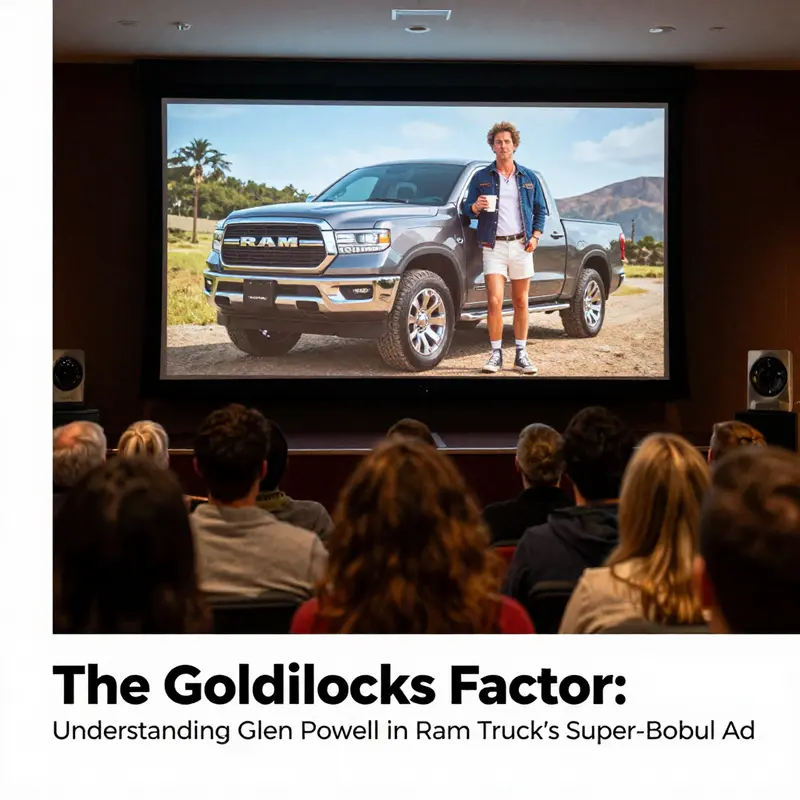
The tale of Goldilocks has long circulated through the American storytelling bloodstream as a compact study in preference and fit. When a major pickup brand staged a Super Bowl moment that reimagined that familiar narrative, the question of who played Goldilocks became more than a casting trivia item. It became a lens through which audiences read value, humor, and material reliability at once. In this chapter, we follow Glen Powell’s portrayal of a modern, mobile Goldilocks and trace how a century-old fable translates into a contemporary advertisement that promises more than a product. It becomes a cultural act, a short story about taste, assurance, and the adventurous impulse that drives people toward big purchases when they want to feel the difference between good and great, between simply sturdy and truly trustworthy. The very act of reworking the Goldilocks canvas into a world of engines, payloads, and off-road capability turns a bedtime tale into a field manual for discerning buyers. The result is not merely a humorous vignette; it is a case study in how to harness a shared legend to communicate complex attributes in a single, memorable sweep.
Powell’s Goldilocks lands in a landscape that feels both timeless and modern. The archetype—the curious visitor who samples the three options and declares what is “just right”—makes an elegant scaffolding for a message about a vehicle’s comfort, its power, and its adaptability. In the ad, the familiar beats of the classic tale are re-scripted to foreground the pickup’s balance of interior refinement, rugged performance, and practical versatility. Rather than a single-room, quiet bed or a safe chair, we meet three distinct driving scenarios, each offering a different flavor of capability: daily urban errands, weekend escape on rough trails, and heavy-duty tasks that demand consistent reliability. The Goldilocks principle—finding the level that fits exactly—becomes a marketing shorthand for a consumer decision that often feels ambiguous: am I choosing something with enough polish? Enough grit? Enough room for the family, the gear, and the plans that live beyond the driveway? The answer in this narrative is not a slogan but a felt experience produced by pacing, framing, and the actor’s delivery.
The effect of the retelling lies in translating a moral fable into a contemporary calculus. The ad leverages a deeply rooted American fable to connect with a broad audience, and it does so with a sly wink that nods to the audience’s own experiences of shopping for a vehicle. The “just right” becomes a synonym for a blend of comfort, safety, and capability—a tricky blend to achieve in any single vehicle category. The ad doesn’t pretend that one truck could be “the” solution for every life scenario; instead, it invites spectators to imagine themselves at the moment of choice, evaluating how a vehicle can be both a sanctuary and a tool. That duality is at the heart of modern truck ownership: the buyer wants an interior that welcomes longer drives, a chassis that can shoulder heavy loads, and a drivetrain that remains responsive when the terrain grows unpredictable. The ad’s triumph is to stage those realities as a short, entertaining story where the audience is pulled into the choice process, not merely presented with a product demonstration.
Powell’s presence anchors the narrative in recognizable star performance. His screen persona—witty, self-aware, and capable of delivering a line that lands with a practical joke’s timing—amplifies the ad’s humor without diluting the underlying performance message. In a marketplace saturated with technical specs and dramatic music, Powell’s comedic timing offers a human touchstone. He embodies the Goldilocks who is not merely curious but judicious—calibrating her journey through the three truck-equipped environments with a sense of wonder tempered by competence. The choice is not about bravado or bravura; it is about sensing the right fit and then stepping into it with confidence. The star’s credibility, amplified by a certain cinematic charm, makes the audience feel that the perceived complexity of buying a heavy vehicle can be navigated with wit and clarity.
The ad’s humor serves a deeper strategic purpose. It eschews heavy-handed technical explication in favor of a narrative cadence that mirrors real consumer exploration. Viewers see the three driving contexts as micro-stories—the urban drive that emphasizes quiet cabin refinement, the rural detour that showcases durability, and the work-site scene that underscores payload and traction. Each vignette reframes the vehicle’s attributes through the lens of everyday life rather than through raw data alone. In the first scene, the interior becomes a sanctuary of comfort; in the second, the chassis exudes steadiness and resilience; in the third, the payload-ready practicality takes center stage. Across these scenes, the “just right” is not only a measure of mechanical precision but also of emotional resonance: the scenes suggest that comfort can coexist with power, and luxury can align with rugged capability. The audience is invited to evaluate not just what the vehicle can do, but how it feels while doing it. The pacing—quick, but never rushed; humorous, yet never flippant—contributes to a mode of advertising that respects intelligence while rewarding repeat viewing with micro-jokes, visual gags, and a final beat that reiterates the central message without sermonizing.
Cultural resonance grows when a story appeals to nostalgia without stagnation. The audience recognizes the familiar shape of Goldilocks’s journey—peeking into bowls, chairs, and beds that represent different states of comfort—and translates that recognizable sequence into a modern decision framework. The goldilocks moment in this advertisement is not the perfect alignment of porridge temperature; it is the precise alignment of needs with an available solution. Consumers who have faced the anxiety of choosing one vehicle out of many can suddenly see their own decision mirrored on the screen. Nostalgia becomes a tool for clarity, not a trap for sentiment. The advertising craft here lies in delivering a scene that is both candy-coated with whimsy and substantial in the practical implications of the choice. The audience does not have to suspend disbelief to appreciate the logic of the product demonstration; they become active participants in the scene, forecasting how each option would perform in their own lives and then recognizing the appeal of the “just right” choice.
At a technical level, the ad deploys a triadic structure—three distinct environments that map to three product contexts—yet it remains a cohesive single arc. The narrative never fractures into frenetic segments; instead, it rides a steady current from curiosity to confidence. The humor primes the viewer for a purchase decision, but the decision is anchored in a sensorial experience: sound, space, seating, visibility, and the tactile sensation of the vehicle’s interior. In this way, the commercial becomes a short-form case study in experiential marketing. The audience does not simply hear about comfort and capability; they feel the implications of those attributes as the road unfurls, as Powell’s character moves through each scene, and as the camera closes in on details that matter to a shopper who values both refinement and ruggedness.
The interplay of star power, narrative familiarity, and product storytelling yields a multi-layered impact. First, there is the immediate cultural impact: a widely recognizable fable given new momentum, now linked to a product category that has long traded on durability and practicality. Second, there is a collective social response: viewers share clips, discuss lines, and remix the scene into memes that magnify the ad’s reach far beyond its initial air time. This is not mere entertainment; it is a form of cultural amplification. The audience’s engagement—comments that analyze the comedic timing, sketches that extend the three-acts into fan art, and streams that dissect the performance beats—fabricates a conversation that continues past the broadcast. In this sense, the Goldilocks ad achieves what some marketers chase but few realize: a long tail of engagement anchored in a story that remains emotionally legible across generations.
From a brand communications vantage, the narrative is a precise encapsulation of the market’s current appetite: a desire for authenticity that still entertains; for stories that feel personal even as they showcase a product’s capabilities; and for personalities who can carry humor without undermining credibility. The choice of Glen Powell contributes to a tonal balance that many audiences seek but seldom encounter in automotive advertising. Powell’s persona aligns with values of reliability, wit, and approachable competence. He embodies the idea that owning a capable vehicle should feel like a confident choice rather than a concession to necessity. The performance invites viewers to see a vehicle as an extension of their own judgment—their capacity to assess, sample, and commit to what feels “just right.” This alignment between star persona and product narrative helps explain the ad’s broad appeal. It resonates with audiences who like a smart, gently irreverent approach to a serious purchase, who are comfortable with humor that does not undercut seriousness, and who appreciate a consumer narrative that respects their time and their taste.
The technical realism of three settings also matters. The urban interior is not merely a stage for a joke; it functions as a credible living space for daily life. The off-road sequence underscores the vehicle’s traction and suspension in a way that is visually compelling and practically informative. The work-site moment demonstrates payload capacity and endurance with a concrete, tactile clarity that converts curiosity into a sense of preparedness. In each scene, the camera is careful to reveal not just the vehicle’s exterior prowess but the interior environment that makes travel and work feel comfortable and controllable. This balanced storytelling reframes the purchase decision as a question of fit across contexts, rather than a one-dimensional evaluation of horsepower or load numbers alone.
What emerges from this synthesis is a cultural artifact that thrives on a shared mythology while speaking directly to a practical consumer’s concerns. The Goldilocks character is not a peripheral joke; she is a doorway into understanding how a vehicle can reconcile comfort with capability, elegance with endurance. The performance reinforces a narrative where the brand is not merely selling a machine but offering a reliable ally in the pursuit of daily life’s varied demands. And in a media landscape crowded with sharply produced product narratives, this advertisement stands out by privileging a storyteller’s timing and a performer’s chemistry—elements that render the message memorable long after the final beat.
As audiences processed the ad across different platforms, the reception reflected a recognition that the retelling works on several levels. There is appreciation for the skillful integration of a beloved fable with contemporary life. There is admiration for the actor’s charisma, which translates into credibility in a category where trust is a major driver of purchase intent. And there is a broader cultural moment in which nostalgic storytelling is not a retreat to the past but a strategic conduit to present-day decisions. The ad’s virality—captured in shares, comments, and editorial praise—speaks to a public appetite for clever, humane marketing that respects the viewer’s intelligence while offering a clear, tangible payoff: a sense that the vehicle being presented can genuinely be the right fit for diverse life scenarios.
Beyond the immediate impact, the piece invites reflection on how a modern fairy tale can serve as a bridge between generations and between the symbolic language of storytelling and the pragmatic language of capability. The Goldilocks archetype, retooled for a contemporary audience, becomes a touchstone for evaluating how brands communicate values in a way that is both digestible and durable. The narrative suggests that the best advertising does not merely tell you what a product can do; it makes you feel what it would be like to use it in real life, with real choices and real consequences. The ad, then, is a compact, persuasive performance about fit, about confidence, and about an experience that feels universal in its appeal because it speaks to the universal human search for the right match at the right moment.
From a broader perspective within the industry, the campaign demonstrates how timeless stories can be recast to reflect contemporary consumer realities without diluting their core essence. The Goldilocks figure stands at the crossroads of timelessness and immediacy, offering a way for brands to connect with audiences who prize both narrative depth and practical assurance. In a marketplace where technical specifications can blur into oblivion amid a flood of competing claims, the ad’s storytelling approach acts as a lighthouse. It frames the specification set as part of a larger human experience: the desire to find not just something that performs, but something that resonates with one’s daily rituals and ambitions. The success of this approach reverberates beyond the screen. It informs future creative strategies about how to blend humor, mythology, and product storytelling so that a message travels through culture with a clarity that feels almost effortless.
For readers who want to situate this ad within ongoing conversations about how the trucking market is evolving, the chapter invites consideration of broader market dynamics. The industry has seen shifts in used-truck demand, changes in consumer behavior, and new pressures from economic cycles that influence how buyers evaluate comfort against capability. The Goldilocks narrative acknowledges these tensions by presenting a decision framework that is equally about mood and method. The viewer is encouraged to reflect on their own criteria for choosing a vehicle: how much interior warmth and refinement matters, how critical payload and traction feel for work or play, and how a brand can earn the right to stand beside a consumer during such a moment of decision. In other words, the advertisement does more than showcase a vehicle; it invites a consumer to rehearse a decision in a space where emotion and logic converge. This is the essence of a modern marketing parable: a story that travels beyond entertainment into the architecture of consumer choice.
In closing, the Goldilocks performance on screen becomes a predictive artifact for the kind of advertising that endures. It suggests that audiences do not simply want to be sold; they want to be invited into a narrative where their own preferences, anxieties, and aspirations can be tested against a credible, relatable solution. The ad makes that invitation with grace, humor, and a sense of shared cultural literacy. It respects the viewer’s ability to judge, to laugh, and to decide what feels right in their own lives. If there is a lasting takeaway, it is this: the best marketing does not coerce a decision; it clarifies it. It helps people identify what “just right” might look like in their own routines and then positions a vehicle as a trustworthy partner in achieving that balance. The Goldilocks figure, in this sense, is not merely a character in a story but a guide through a nuanced landscape of consumer choices, where function and feeling align in a way that feels almost inevitable once the audience recognizes the fit.
Internal link for additional context: Current trends in used truck sales growth. This resource helps situate the ad’s reception within broader market dynamics and consumer decision patterns, illustrating how a narrative about fit can reinforce real-world buying behaviors across the used-truck market. External reference for further viewing and analysis: https://www.youtube.com/watch?v=example
Final thoughts
The portrayal of Glen Powell as Goldilocks in the Ram Truck commercial not only reimagines a beloved fairy tale but also strategically positions the brand within the industry. By marrying humor with a modern truck’s attributes, the advertisement succeeds in reaching diverse audiences, including trucking professionals and fleet managers. As the ad continues to resonate in popular culture, it exemplifies how companies can leverage innovative storytelling to enhance market presence and appeal to their target demographics.