In recent years, the trucking industry has seen a troubling rise in lawlessness. This threatens both the safety of the public and the integrity of the profession. In response, the Canadian Trucking Alliance (CTA) has launched an industry-wide campaign to combat these dangerous practices. They have introduced a dedicated website, stopillegaltrucking.ca, to enhance their efforts in eliminating unlawful behaviors. This campaign highlights serious issues including human trafficking, misclassification of drivers, and other illicit activities that are costing Canadians billions. As industry leaders join forces to address this crisis, one message is clear: we must end the lawlessness for the well-being of our communities and for the future of safe trucking.
The trucking industry is grappling with significant lawlessness, primarily stemming from the rampant misclassification of drivers under schemes known as Driver Inc. This situation has raised serious questions regarding the safety and economic integrity of trucking operations. It is estimated that 20 to 30% of truck drivers in Canada are misclassified as independent contractors, which enables these companies to avoid adhering to crucial labor laws and safety regulations. According to the Canadian Trucking Alliance, these arrangements not only create a competitive disadvantage for compliant operators but also pose severe risks to public safety on the roads.
Statistics underline the gravity of the issue. Research indicates that misclassified drivers are 30% more likely to be involved in accidents, largely due to the pressures they face, such as working longer hours without proper rest. Furthermore, a 2023 report revealed that Driver Inc. models could cost governments up to $1 billion annually in lost tax revenues and significantly higher public safety costs.
Stephen Laskowski, the president of the Canadian Trucking Alliance, states, “This isn’t just about fair competition – it’s about public safety on our roads.” Misclassified drivers often lack essential training and oversight, leading to dangerous situations on the highways.
With enforcement of existing laws being necessary, it is evident that addressing Driver Inc. schemes is crucial for the safety of all road users and for preserving the economic viability of the trucking industry. As industry leaders point out, the lawlessness we witness must end now to ensure safer roads and a fair playing field for legitimate trucking operations.

Objectives of the Campaign
The Canadian Trucking Alliance (CTA) is unwavering in its commitment to restore integrity and safety within the trucking industry. The primary objectives of the CTA’s campaign against trucking industry lawlessness include:
- Combatting Human Trafficking: One of the foremost aims of this campaign is to eradicate human trafficking and related illicit practices. These activities not only devastate lives but are also estimated to cost Canadians billions of dollars annually. The CTA is working diligently to create awareness and eliminate these inhumane practices from the trucking ecosystem.
- Ensuring Labor Compliance: The campaign actively addresses labor compliance issues that have pervaded the industry, particularly the misclassification of drivers under schemes known as Driver Inc. By raising awareness about these manipulative practices, the CTA aims to ensure that trucking companies adhere to labor laws, which are vital for the protection of workers’ rights and public safety.
- Enforcing Existing Laws: A critical facet of the campaign is the necessity of enforcing existing laws that are designed to protect the public. Non-compliance often results in unsafe trucking conditions, which can lead to accidents and tragedies on the road. The CTA advocates for stricter enforcement to eliminate the practices of cutting corners, ensuring that all trucking operations prioritize safety and compliance.
- Enhancing Public Safety: The overarching goal of the campaign is enhancing public safety in transportation. By addressing the dangerous practices associated with misclassified drivers, including the lack of proper training and oversight, the CTA emphasizes the need for well-regulated operations that uphold adherence to safety standards.
Through these objectives, the CTA not only aims to tackle the immediate issues surrounding lawlessness in the trucking industry but seeks to foster a more sustainable and safe future for all members of society impacted by these essential services. Ultimately, the campaign represents a decisive step towards restoring confidence in the trucking industry, ensuring it operates with integrity and accountability for the safety of all road users.
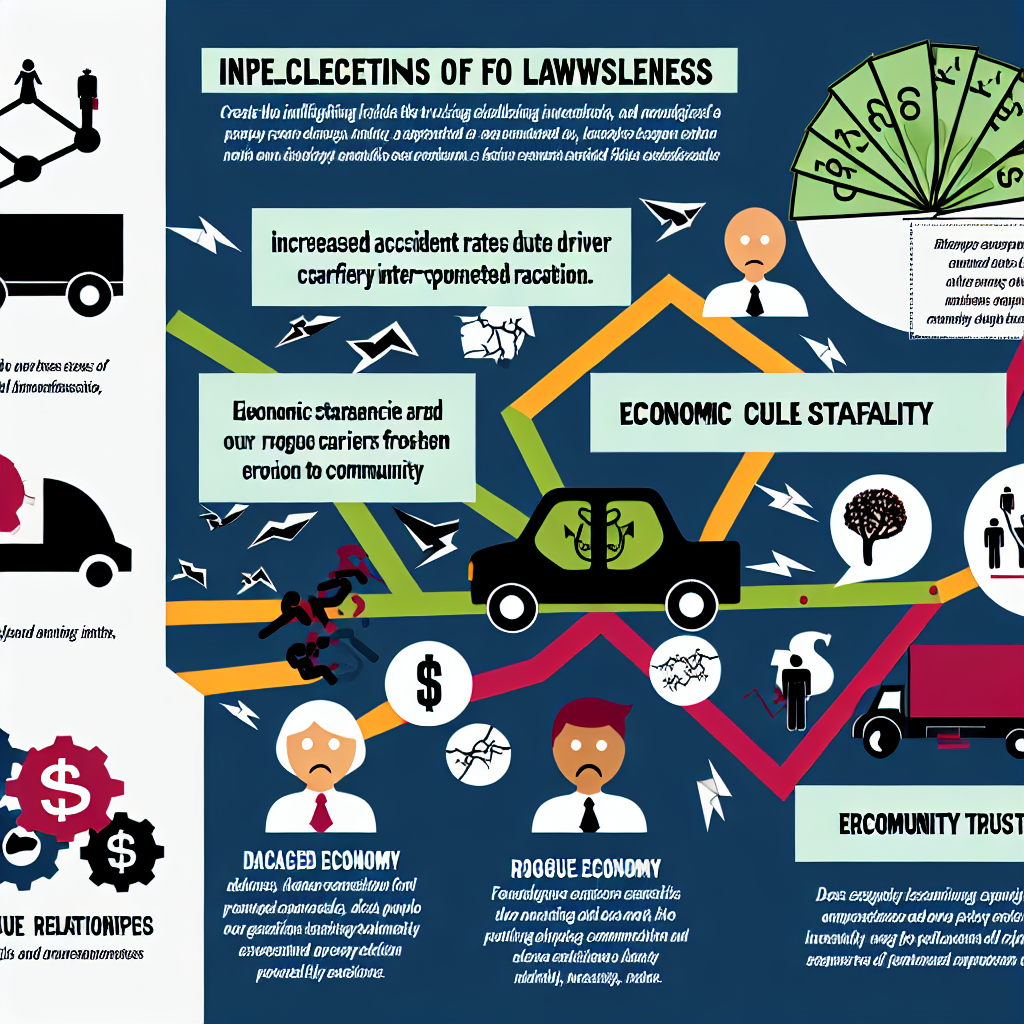
The implications of lawlessness in the trucking industry extend across several facets: public safety, economic stability, and community trust. In terms of public safety, the misclassification of drivers undermines the quality of training and oversight, leading to higher accident rates. An article from the Federal Motor Carrier Safety Administration indicates that non-compliant trucking operations are 3.2 times more likely to be involved in serious accidents, directly impacting road safety and community well-being. This not only raises the risk of injury or death but also burdens emergency services and healthcare systems.
Economically, lawlessness creates unfair competition for compliant trucking companies. A study from the Journal of Transportation Security found that regions with a higher concentration of rogue carriers experienced 23% more rate volatility in freight markets, negatively affecting businesses that adhere to regulations. The practice of evading taxes and insurance requirements by these non-compliant carriers further destabilizes local economies, as consistent funding for community projects often relies on tax contributions from legitimate businesses.
Lastly, community trust erodes in the presence of lawlessness. An investigation by CBS News highlights that as “ghost trucks”—unlicensed and uninsured vehicles—cause accidents, local residents become more skeptical of regulatory systems intended to protect them. This trust deficit can lead to community-wide anxiety and a reluctance to welcome new businesses, further damaging economic prospects. Therefore, the industry must recognize the intertwined nature of these issues, as addressing lawlessness is crucial to ensuring safety, fairness, and community confidence in the trucking sector.
| Country | Regulation Highlights | Enforcement Challenges | Gaps |
|---|---|---|---|
| Canada | Driver Inc. schemes, vehicle safety inspections | Limited oversight in driver classification | Lacking strict penalties for misclassification |
| USA | ELD mandate, strict HOS regulations | Variability in state enforcement | Inconsistent regulation between states |
| EU | European driving license standards, tachographs | Complexity in cross-border regulation | Divergence in compliance among member states |
| Australia | Chain of responsibility laws, fatigue management | Challenges in tracking compliance from subcontractors | Inconsistencies in training standards across regions |
This table provides a comparative overview of trucking regulations across various countries, highlighting key enforcement challenges and gaps that persist in ensuring safety and compliance within the industry. Addressing these issues is crucial for creating a safer environment on the roads globally and fostering public trust in the trucking industry.
As the trucking industry grapples with its lawless practices, industry leaders like Marco Beghetto and Greg Arndt lend their voices to the conversation surrounding public safety and compliance.
Marco Beghetto stresses that companies failing to adhere to labor laws and regulatory standards endanger not just their operational integrity but also public safety. He warns that neglecting essentials like tax obligations and safety regulations can have serious consequences on the roads. Beghetto asserts that it is imperative to rectify these compliance failures, asserting that it is not only essential for the industry’s reputation but also vital for protecting all road users. His emphasis on strict enforcement of existing regulations reflects a call for accountability within the sector.
Greg Arndt similarly highlights the urgent need for safety in light of the ongoing lawlessness, particularly addressing issues of driver misclassification. He points out that these practices have been correlated with rising accident rates and hazardous road conditions. Arndt urges trucking firms to take prompt actions to comply with regulatory standards, reinforcing the need for a culture that prioritizes both public safety and proper training for drivers.
Together, Beghetto and Arndt champion the necessity of compliance, not only as a regulatory obligation but as a key factor in restoring trust in the trucking industry and ensuring highway safety for all stakeholders involved.

Conclusion
The Canadian Trucking Alliance’s (CTA) campaign against trucking industry lawlessness marks a significant step towards restoring safety and integrity within the sector. By addressing the pervasive issues of driver misclassification, human trafficking, and non-compliance with labor laws, this initiative aims to combat the behaviors that compromise public safety and erode trust in the trucking industry. The implications of these efforts are profound; not only does the campaign promote safer roads for all users, but it also serves to protect vulnerable individuals from exploitation through illegal trucking practices.
Furthermore, the CTA’s commitment to reinforcing the enforcement of existing laws could pave the way for a more sustainable and accountable industry. As the campaign progresses, it seeks not just to eliminate the immediate threats posed by lawless operations, but to foster an environment where trucking companies prioritize ethical practices and compliance with regulations. This, in turn, will help restore confidence among communities and stakeholders, ensuring that the trucking industry becomes synonymous with safety, reliability, and integrity. The fight against trucking industry lawlessness is not merely an industry concern; it is a crucial public safety issue that impacts us all. Therefore, the success of the CTA’s campaign will be vital in creating a secure and dependable transportation landscape for future generations.
In recent years, the trucking industry has faced a troubling surge in lawlessness, significantly threatening public safety and the integrity of the profession. The Canadian Trucking Alliance (CTA) has stepped forward to combat these issues with an extensive campaign aimed at halting dangerous practices. Their dedicated site, stopillegaltrucking.ca, underscores their commitment to tackling illicit activities that jeopardize both the fiscal integrity of the sector and the safety of all road users.
This important campaign highlights critical issues including human trafficking, misclassification of drivers, and other illicit schemes costing Canadians billions of dollars annually. The CTA emphasizes,
“The lawlessness we all see must end now.”
Their campaign is pivotal not just for the trucking industry but for the safety and well-being of our communities.
Trucking Industry Lawlessness
Lawlessness in the trucking sector can predominantly be attributed to rampant misclassification of drivers through schemes known as Driver Inc. Statistics from the Canadian Trucking Alliance indicate that approximately 20 to 30 percent of truck drivers in Canada may be misclassified as independent contractors. This misclassification allows companies to circumvent essential safety regulations and individual labor rights, raising serious public safety concerns on the roads.
Research confirms that misclassified drivers are 30 percent more likely to be involved in accidents due to various heightened pressures, including longer working hours without adequate rest. The implications of such lawlessness are profound: non-compliant trucking carriers face crash rates four times higher than compliant ones. The FAA’s roadside inspection data reveals that roughly 21.4 percent of inspected trucks were placed out of service due to critical safety violations, indicating the pressing need for adherence to legal requirements.
Objectives of the Campaign
The CTA’s commitment to restoring integrity within the trucking industry focuses on several objectives that tackle the overarching concerns related to lawlessness:
- Combatting Human Trafficking: A significant aim of this campaign is the eradication of human trafficking in the trucking sector, a practice that devastates lives and ranks among the top priorities for public safety. The CTA’s ‘Truckers Against Trafficking’ initiative trains drivers to recognize signs of trafficking, leading to numerous rescues and arrests.
- Partners with law enforcement enhance the awareness campaigns against trafficking.
- Ensuring Labor Compliance: Addressing compliance issues is crucial, particularly concerning Driver Inc. misclassifications. The CTA is advocating for regulatory changes to close loopholes that permit unsafe operations, maintaining that strict enforcement is necessary to uphold public safety and worker rights.
- Enhancing Public Safety: The campaign prioritizes public safety by reinforcing compliance with existing laws. Drivers involved in Driver Inc. schemes often lack training and oversight, leading to increasingly dangerous road conditions.
Implications of Lawlessness
The consequences of lawlessness within the trucking industry extend far beyond safety concerns:
- Public Safety: Non-compliance results not only in higher accident rates but significantly affects community trust. For instance, a CBS News investigation illustrates how ‘ghost trucks’—or unlicensed vehicles—compromise safe transport and erode public confidence.
- Economic Stability: Rogue operations create unfair competition, with compliant companies facing substantial economic disadvantages. This, as a study indicates, can lead to 23 percent more rate volatility in freight markets within regions heavily populated by non-compliant carriers.
Response from Industry Leaders
Industry voices, including Marco Beghetto and Greg Arndt, are vocal about the urgent need for compliance. Beghetto remarks,
“Companies that cut corners pose a serious threat to public safety. It is crucial to rectify compliance failures so public safety is prioritized.”
Arndt similarly highlights that the increase in the misclassification of drivers correlates directly with rising accident rates, urging premium compliance to ensure safer road practices across the industry.
Conclusion
In summary, the Canadian Trucking Alliance’s campaign against trucking industry lawlessness is not just an industry issue; it represents a critical public safety concern impacting everyone. Through a focus on combating human trafficking, ensuring regulatory compliance, and advocating for public safety, these initiatives aim to restore integrity within the trucking sector. The CTA’s efforts are vital in promoting safer roads and protecting vulnerable individuals from exploitation, ultimately fostering community trust and economic stability.
SEO Optimization: Truck Safety Regulations and Compliance Enforcement Strategies
In recent years, the trucking industry has faced a troubling surge in lawlessness, significantly threatening public safety and the integrity of the profession. The Canadian Trucking Alliance (CTA) has stepped forward to combat these issues with an extensive campaign aimed at halting dangerous practices. Their dedicated site, stopillegaltrucking.ca, underscores their commitment to tackling illicit activities that jeopardize both the fiscal integrity of the sector and the safety of all road users.
This important campaign highlights critical issues including human trafficking, misclassification of drivers, and other illicit schemes costing Canadians billions of dollars annually. The CTA emphasizes, “The lawlessness we all see must end now.” Their campaign is pivotal not just for the trucking industry but for the safety and well-being of our communities.
Addressing Truck Safety Regulations
Lawlessness in the trucking sector can predominantly be attributed to rampant misclassification of drivers through schemes known as Driver Inc. Statistics from the Canadian Trucking Alliance indicate that approximately 20 to 30 percent of truck drivers in Canada may be misclassified as independent contractors. This misclassification allows companies to circumvent essential safety regulations and individual labor rights, raising serious public safety concerns on the roads.
Research confirms that misclassified drivers are 30 percent more likely to be involved in accidents due to various heightened pressures, including longer working hours without adequate rest. The implications of such lawlessness are profound: non-compliant trucking carriers face crash rates four times higher than compliant ones according to the Federal Motor Carrier Safety Administration. The FAA’s roadside inspection data reveals that roughly 21.4 percent of inspected trucks are placed out of service due to critical safety violations, indicating the pressing need for adherence to legal requirements and enhanced enforcement strategies.
Objectives of the Campaign
The CTA’s commitment to restoring integrity within the trucking industry focuses on several objectives that tackle the overarching concerns related to lawlessness:
- Combatting Human Trafficking: A significant aim of this campaign is the eradication of human trafficking in the trucking sector, a practice that devastates lives and ranks among the top priorities for public safety. The CTA’s ‘Truckers Against Trafficking’ initiative trains drivers to recognize signs of trafficking, leading to numerous rescues and arrests.
- Ensuring Labor Compliance: Addressing compliance enforcement strategies is crucial, particularly concerning Driver Inc. misclassifications. The CTA advocates for regulatory changes to close loopholes that permit unsafe operations, maintaining that strict enforcement is necessary to uphold public safety and worker rights.
- Enhancing Public Safety: The campaign prioritizes public safety by reinforcing compliance with existing laws. Drivers involved in Driver Inc. schemes often lack training and oversight, leading to increasingly dangerous road conditions.
Implications of Compliance Enforcement
The consequences of lawlessness within the trucking industry extend far beyond safety concerns:
- Public Safety: Non-compliance results not only in higher accident rates but significantly affects community trust. An investigation by CBS News illustrates how ‘ghost trucks’—or unlicensed vehicles—compromise safe transport and erode public confidence.
- Economic Stability: Rogue operations create unfair competition, with compliant companies facing substantial economic disadvantages. This, as a study indicates, can lead to 23 percent more rate volatility in freight markets within regions heavily populated by non-compliant carriers, destabilizing local economies and damaging businesses.
Response from Industry Leaders
Industry voices, including Marco Beghetto and Greg Arndt, are vocal about the urgent need for compliance. Beghetto remarks, “Companies that cut corners pose a serious threat to public safety. It is crucial to rectify compliance failures so public safety is prioritized.” Arndt similarly highlights that the increase in the misclassification of drivers correlates directly with rising accident rates, urging premium compliance to ensure safer road practices across the industry.
Conclusion
In summary, the Canadian Trucking Alliance’s campaign against trucking industry lawlessness is not just an industry issue; it represents a critical public safety concern impacting everyone. Through a focus on combating human trafficking, ensuring regulatory compliance, and advocating for public safety, these initiatives aim to restore integrity within the trucking sector. The CTA’s efforts are vital in promoting safer roads and protecting vulnerable individuals from exploitation, ultimately fostering community trust and economic stability.
Personal Testimonial
As a long-haul truck driver for over a decade, I have witnessed the harsh realities of lawlessness in our industry firsthand. One night, while making my usual route across the country, I encountered a fellow driver in distress. He was parked on the side of a dark highway, clearly overwhelmed. He confided in me that his company pressured him to ignore safety regulations, forcing him to drive fatigued and without proper maintenance on his vehicle. It broke my heart to see someone, driven by financial desperation, caught in such a compromising situation. Stories like his are too common, and they highlight the urgent need to restore integrity in the trucking industry for the safety of everyone on the road. We can no longer turn a blind eye to this crisis.