Choosing between commercial and passenger registration for trucks is a critical decision for fleet managers, procurement teams, and logistics professionals. The distinction affects legal compliance, insurance coverage, operational credibility, and tax implications. In this comprehensive guide, we will explore the myriad benefits of commercial registration, delve into the legal ramifications of each option, assess insurance considerations, and analyze the costs involved. By the end, you will have a clear understanding of which registration type best serves your operational needs and business goals.
Beyond the Plate: Why Commercial Registration Often Makes the Business Case for Trucks
The question at the heart of any owner-operator considering a single truck or a growing fleet is not merely what it costs to plate a vehicle, but what the classification unlocks or restricts in real, measurable terms. Is it better to register a truck commercially or as a passenger vehicle? The answer is rarely a simple tick of the accounting box; it is a living decision that changes what you can do with the truck, what risks you carry, and how cleanly your operations align with the rules that govern overland transport. The initial research makes this point with clarity: when a truck is used for business—whether delivering goods, moving freight, or providing paid transportation services—commercial registration is not optional, it is the lawful baseline that underwrites everything from compliance to credibility. The practical takeaway is straightforward, but the implications run deep. If revenue sits at the core of your use, the commercial path preserves legitimacy and enables a broad spectrum of protections and efficiencies that a passenger designation simply cannot match.
The most immediate distinction between commercial and passenger registration is the purpose and pattern of use. Passenger registration centers on private mobility: private errands, family road trips, and infrequent or incidental travel. It presumes that the vehicle’s primary function is personal conveyance, with the responsibility for primary financial risk carried by the owner in everyday life. But when a truck is employed to earn income—haul cargo, operate a shuttle, or compete in a regional delivery network—the vehicle ceases to be a private tool and becomes a business asset. This shift does not happen in a vacuum. It triggers a chain of regulatory expectations designed to ensure safety, accountability, and financial responsibility. In that chain, USDOT numbers and FMCSA rules become not merely bureaucratic hurdles but the foundation of a framework that makes operations predictable for customers, insurers, and the public.
One of the most powerful arguments for commercial registration is legal compliance. It is tempting to weigh upfront costs and administrative effort against a few immediate fees, but the long-term value lies in how the registration anchors you to a recognized standard for mobility and commerce. Vehicles used in interstate commerce, or those that carry a specified number of passengers or weight, typically fall under tighter federal oversight. The Federal Motor Carrier Safety Administration (FMCSA) has established thresholds—such as vehicle weight and passenger capacity—that help determine whether a vehicle must operate under a commercial regime. This is not simply about paperwork; it is about ensuring that the vehicle type, its use, and its operator meet uniform safety and accountability requirements. The USDOT number, in particular, is not a vanity credential but a practical identifier that links a fleet’s operations to safety records, maintenance histories, and regulatory audits. Without that link, many business arrangements in the trucking ecosystem simply cannot function with legitimacy or insurance support.
Insurance is another arena where commercial status matters profoundly. Commercial insurance products are designed with the realities of business use in mind: cargo exposure, third-party liability, driver and fleet risk, and the complexities of multiple drivers and routes. A truck registered as commercial typically gains access to policies that account for cargo theft, accident scenarios involving commercial liabilities, and the likelihood that a vehicle will be used across multiple sites or customers. For a business owner, this means not only protection against loss but also the ability to price services with confidence. Insurers need a clear risk profile that aligns with the vehicle’s roles, maintenance schedules, and the business’s operating practices. When a vehicle intended for commercial use is registered as a passenger vehicle, coverage may fail to respond in full when a claim arises, creating a costly gap that can expose the owner to financial risk. The difference between a policy built for business and a policy designed for private travel is not cosmetic; it is often a matter of robust coverage versus uncovered exposure.
Tax considerations, too, tilt in favor of the commercial path for many operators. Businesses can deduct a wide range of vehicle-related expenses—fuel, maintenance, depreciation, insurance, and even some administrative costs tied to fleet management. Those deductions can meaningfully reduce taxable income and improve the after-tax economics of running a truck-based operation. The nuance lies in how the vehicle is used and how the business structures its operations. A commercial classification aligns with the intent to generate revenue and the associated expense tracking that supports legitimate deductions. The reverse is true when a truck is used primarily for private purposes. In such cases, the tax advantages diminish or disappear, and the line between personal and business use must be drawn and documented with care to avoid triggering audits or penalties.
Beyond compliance, there is a practical dimension that often matters as much as the financial calculus—the ability to customize a vehicle for its work. The research highlights a notable advantage of commercial registration: it often permits modifications and enhancements that passenger-registered trucks may face restrictions on. Sun film, bull bars, specialized lighting, cargo securement systems, and other structural or aesthetic adjustments can be essential to durability, safety, and efficiency in heavy-duty use. For fleet operators who must tailor vehicles for rugged environments, long-haul routes, or high-usage schedules, the licensing framework that accompanies commercial status provides the space to deploy these modifications without running afoul of regulatory limits. The flexibility to adapt a vehicle to its operating context is not a frivolous preference; it translates into reduced downtime, improved driver comfort, and more reliable service for customers who depend on timely deliveries.
Cost considerations, particularly for local or regional operations, also tend to tilt in favor of commercial plates when viewed through a lifecycle lens. The straightforward, uniform registration regime that commercial plates offer can translate into lower upfront costs in some states, especially for operations contained within a single jurisdiction. By avoiding the complexities associated with apportioned registration—where fees and compliance requirements scale across multiple states—small to medium-sized enterprises can achieve cost predictability and administrative efficiency. This matters in cash-flow planning, where every dollar saved on registration can be reinvested into maintenance, personnel, or upgraded equipment that improves reliability and customer satisfaction. The research notes that for many regional operators, commercial registration delivers a compelling mix of cost-effectiveness and simplicity, enabling them to allocate resources toward core competencies rather than bureaucratic frictions.
Yet the decision is not purely a math problem. The risk of misclassification looms as a serious business hazard. If a vehicle is registered as passenger but is used for paid services—whether regulated passenger transport or freight—the owner may confront a spectrum of consequences. Insurance coverage could be denied or limited when a claim arises, leaving the owner financially exposed. Regulatory authorities may view non-compliance as illegal operation, with penalties that can include fines, vehicle seizures, or more stringent enforcement in the future. In practice, the line between private travel and business use can blur quickly in a world of hybrid models, where a truck might perform occasional paid tasks in addition to private transportation. The prudent approach is to treat commercial registration as the default for any business use, with explicit documentation of the vehicle’s purpose and the organization’s operating practices to prevent ambiguity during audits or investigations.
For operators plotting a path forward, the decision about registration is not a one-off choice but a strategic component of long-term planning. A single truck serving as a private vehicle with no income from its operation might feasibly remain passenger-registered. The calculus shifts as soon as the same vehicle is used to earn revenue, even intermittently, or as soon as it becomes a tool in a broader commercial strategy. A business owner weighing fleet expansion or the prospect of taking on contract work can gain clarity by modeling the financial implications under both scenarios, then testing those models against the realities of insurance, maintenance, and regulatory compliance. The differences extend into day-to-day operations as well: commercial fleets tend to implement more formal maintenance schedules, driver training programs, record-keeping practices, and safety monitoring. While these add layers of discipline—and cost—the payoff is a system designed to sustain growth, reduce risk, and deliver predictable service quality to customers who rely on dependable transport.
The chapter of this conversation that often matters most to readers is the real-world texture of enforcement and regulatory evolution. As noted in the initial research, the landscape has grown more stringent over time, with particular emphasis on larger fleets and interstate operations. The FMCSA has reinforced expectations around how records are kept, how driver credentials are managed, and how safety data is reported and audited. The message for anyone who intends to operate a truck for business purposes is to approach compliance as a continuous discipline, not a one-time hurdle. This is not merely about avoiding penalties; it is about building a business that can scale across routes, customers, and even regulatory environments. The aim is to create processes that keep the operation aligned with the spirit of the law while ensuring that the commercial vehicle’s performance remains robust and reliable. In short, compliance is not a cost center; it is an investment in the business’s credibility and its capacity to serve as a dependable partner to clients and suppliers alike.
To put these ideas in a practical frame, consider the broader market context and what it means for a company or an individual contemplating a truck’s future. The evolving dynamics of demand for freight and the shifting economics of transportation create a backdrop in which reliability, safety, and regulatory compliance are increasingly valued by customers and lenders. The availability of a USDOT number, the alignment with FMCSA standards, and the assurance of a properly insured asset can influence everything from contract eligibility to financing terms. For readers who want to explore market context and fleet trends beyond the immediate decision about registration, a deeper dive into current industry developments can illuminate how the value proposition of commercial status changes as markets evolve. For instance, insights into market trends in used truck sales growth can provide a compass for deciding whether to invest in upgrades or to scale operations with additional assets. See the discussion on market context here: current trends in used truck sales growth.
As a practical matter, the most reliable way to approach this decision is to start from use and scale, then work backward to the administrative steps. If the vehicle is to operate within a single state and move cargo or passengers as part of a business, commercial registration becomes the sensible baseline. If, on the other hand, the vehicle remains a private asset with no business ties, a passenger classification might be appropriate, provided there is rigorous discipline to avoid any paid use that could blur the line. Even here, scenarios such as occasional paid rides or ad-hoc freight tasks complicate the boundary, and a cautious approach would be to reclassify as commercial to maintain protection and avoid gaps in coverage. This is not a petty dispute about labels; it is a strategic stance about how the business will grow, what risks will be absorbed by whom, and how the vehicle will perform across routes, seasons, and customer expectations.
In weaving together the legal, financial, and operational strands, the chapter returns to a simple, actionable premise: if income is part of the truck’s life, treat it as commercial from the outset. The up-front costs of obtaining the USDOT number, aligning with FMCSA rules, and securing commercial insurance may appear daunting. Yet these elements cohere into a predictable operating environment that supports growth, reduces uncertainty, and reinforces trust with customers and partners. The alternative—operating under a passenger label while earning revenue—exposes the operation to mismatches between use and coverage, creates gaps in accountability, and places the enterprise on a fragile footing as regulations tighten and enforcement intensifies.
The broader implication for readers is clear. The decision to register a truck commercially or as a passenger is not a single moment in time; it is a foundation for how the business will function day to day, how it will grow, and how it will endure regulatory change. The practical benefits of commercial registration—legal compliance, insurance alignment, tax efficiency, credibility, and the freedom to customize vehicles for rugged work—form a coherent case that often outweighs the initial burden of the registration process. The path toward a long, sustainable trucking operation lies in embracing that framework and building practices that keep the operation safe, transparent, and responsive to customer needs. For state- and industry-specific guidance, consult official DMV and FMCSA resources to confirm thresholds, documentation, and reporting requirements that apply to your particular situation. External resource: https://www.dot.gov
At the Crossroads of Compliance: The Legal Consequences of Registering a Truck as Commercial versus Passenger
When a truck sits in the driveway, the decision about how it’s registered may feel like a bureaucratic sidebar to the real work of moving goods or people. Yet this choice anchors much more than annual license fees. It sets the legal terrain on which risk, liability, insurance, taxation, and daily operations play out. The distinction between commercial and passenger registration is not simply a matter of how you use the vehicle in a single week; it reflects a framework designed to manage who moves cargo, how safety is monitored, and who ultimately bears responsibility when something goes wrong. In a landscape where thousands of dollars can hinge on a single misclassification, understanding the legal implications becomes a practical necessity rather than theoretical trivia. The decision point is not merely about compliance for compliance’s sake; it is about aligning the vehicle’s status with how it will be used, how often it will be used, and what the operator intends to build over time. And that alignment matters because the consequences of misalignment can cascade through liability, insurance, and even criminal exposure in extreme cases. The path you choose will shape not only regulatory obligation but the credibility of your business, the protection you can obtain for yourself and your employees, and the financial architecture that supports long-term operations.
To set the stage, consider the fundamental operational threshold that often drives the choice: are you using the truck to earn money, to move goods for hire, or to provide a paid transport service? If so, the vehicle quickly enters a regime that many operators describe as a return to the basics of professional transportation. The commercial classification is designed to recognize a vehicle’s role as part of a business model—whether you run a single delivery route, a fleet growing toward logistics capacity, or a bespoke hauling operation. In that sense, the question isn’t only about legality; it is about whether the business structure, risk management, and tax planning are built on a foundation that mirrors the vehicle’s use. When you read regulatory materials, you’ll notice that the line between private transport and commerce is not drawn by sentiment but by weight, purpose, and the predictable demands of safety and accountability. For many operators, the decision reduces to a practical calculus: what will be licensed, insured, and audited, and how does that choice affect everyday decisions like routing, scheduling, and invoicing? A broader look at the industry blog can offer distilled perspectives, but the core framework remains rooted in the vehicle’s use and the obligations that attach to that use. See the industry discussion at mcgrathtrucks.com/blog/ for a practical frame of reference.
The weight of the GVWR (gross vehicle weight rating) and the passenger capacity of a truck sit at the heart of the legal distinction. In the United States, when a vehicle exceeds a threshold such as 10,000 pounds GVWR or is configured to carry more than 15 passengers, federal guidelines and state implementations push the vehicle into the commercial arena for interstate commerce. The Federal Motor Carrier Safety Administration (FMCSA) governs a broad swath of these rules for vehicles engaged in interstate movement. The implications extend well beyond the title you attach to the vehicle; they map into licensing, insurance, hours-of-service, safety inspections, and recordkeeping that regulators routinely audit. A truck used to haul freight or to provide for-hire transportation is expected to operate in a framework built for commercial risks, not personal convenience. The requirement for a USDOT number in interstate operations is a clear signal that the vehicle is entering a regulated domain where accountability trails the wheel as surely as the tires grip the pavement. These thresholds are practical guardrails that help ensure safety, accountability, and predictable systemic costs. The same logic informs the way states structure registration fees and taxes, with commercial vehicles often facing different schedules to reflect higher wear and tear on infrastructure and a greater likelihood of commercial activity. This is not about punishing enterprise; it is about aligning regulatory costs with the impact on roads and the greater risk profile associated with business use.
When a truck is registered as a passenger vehicle, the assumption is personal use: commuting, errands, family travel, and occasional private hauling. The policies behind passenger registration reflect a different risk calculus. Insurance products are tailored to private operation, focusing on personal liability and vehicle protection against non-commercial accidents. They are not built to cover the wide array of commercial risk scenarios that arise when a vehicle routinely carries cargo for hire, operates on tight schedules, or travels across state lines with a pay-per-mile model. If a truck registered as a passenger vehicle ends up being used for any form of paid service, the consequences can be severe. Insurance coverage can be invalidated, leaving the operator exposed to substantial financial exposure in the event of a claim. This is not a hypothetical risk. Insurers commonly review the vehicle’s use pattern when underwriting, and misrepresentation in the registration status can be treated as fraud or a material breach of policy terms. A misclassified vehicle thus walks into a liability trap where a single accident becomes a proving ground for whether the insurer will defend the claim or deny it.
The legal consequences of misclassification extend beyond insurance implications. The regulatory framework for commercial operation enforces hours-of-service regulations, mandatory safety inspections, and in many cases the need for a commercial driver’s license (CDL) for operators who handle specific vehicle classes or capacities. The hours-of-service rules are designed to prevent fatigue, a core factor in heavy-truck accidents. They are not a bureaucratic nuisance; they are safety thresholds that directly shape a fleet’s scheduling, maintenance planning, and driver management. When a vehicle crosses into commercial use, those rules become part of the daily operational discipline. Failure to comply can result in civil penalties, fines, and, in the worst cases, criminal charges if the noncompliance contributes to an accident and there is intentional disregard for the regulations. The specter of criminal liability, while relatively rare, is a reminder that this is not a purely administrative decision. It is a decision with tangible human and financial consequences.
The consequences don’t stop at penalties and criminal exposure. The business implications weave through the entire economic fabric of operating a truck. A commercial registration often unlocks access to more robust insurance products designed for liability, cargo coverage, and third-party exposure. Those products come with premium structures that reflect the higher risk profile of a freight operation, but they also deliver a more complete safety net when things go wrong. In contrast, passenger registration tends to align with lower premiums that assume private use. The trade-off, however, is stark: if the vehicle is used commercially in any meaningful way, the policy may be declared invalid, leaving the operator without recourse for a loss that could wipe out a small business in a single incident. In addition, tax treatment separates the two regimes. Businesses may deduct a broad spectrum of vehicle-related expenses—fuel, maintenance, depreciation, insurance, and even interest—against their business income. A passenger-registered truck used for business may not enjoy the same deductibility, or it may complicate accounting in ways that reduce the net financial benefit of the vehicle’s operation. The tax code is not designed to penalize legitimate business activity; it is designed to reflect real costs and incentives for different uses of capital and labor. The careful operator will weigh these tax effects alongside insurance and liability considerations as part of a coherent financial plan.
From a credibility standpoint, commercial registration can reinforce professional perception. Clients, suppliers, and regulatory authorities often interpret commercial status as a signal of formal business operations, compliance discipline, and financial legitimacy. That perception matters when a company is negotiating rates, securing a line of credit, or pursuing regulatory clearances for new routes or permit types. Conversely, mislabeling a vehicle as passenger when it is used for hire can undermine trust. The regulatory landscape is built to deter such misrepresentation because it undermines transparency in highway safety, taxation, and infrastructure funding. Even when a business operates on the edge of these thresholds, having a clearly defined registration status reduces ambiguity and makes audits simpler, the legal perimeter clearer, and the operational risk more manageable.
To see how the practical implications unfold across different operations, imagine a small business that begins with a single delivery truck. If the operator uses the truck to haul goods for hire on a regular basis, the commercial classification is likely the correct path. The operator will need a USDOT number if interstate movement occurs, will be subject to FMCSA regulations, and will need to secure commercial liability and cargo insurance. The driver’s licensing requirements may also shift, particularly if the vehicle classification triggers a CDL requirement for particular configurations or weights. In this scenario, the costs and administrative steps are real, but the benefits in safety, compliance, and long-term sustainability often justify the investment. The operator can build a robust compliance culture—inspections, recordkeeping, maintenance logs, and driver training—that reduces the chance of costly incidents and regulatory surprises. For a broader perspective on how the fleet and policy environment evolves over time, see resources linked through industry discussions at mcgrathtrucks.com/blog/. The point is not simply to follow rules; it is to embed a governance framework that aligns operational reality with regulatory expectations, reducing friction as the business scales.
The decision framework should also consider state versus federal governance. Interstate movement triggers federal oversight, but intrastate operations may still be subject to state registration rules, insurance requirements, and highway safety programs. The FMCSA framework clearly governs interstate commerce, but states retain significant authority over vehicle registration, fees, and local safety inspections for intrastate activities. Operators who plan to confine their activity within a single state must still verify that their chosen registration status is aligned with the expected use and that insurance coverage reflects the anticipated risk profile. Some states impose different registration tax structures for commercial vehicles, sometimes with higher fees intended to compensate for increased wear and tear or for the policy that commercial vehicles contribute more significantly to highway maintenance. The practical takeaway is straightforward: if your business model involves crossing borders, or if you foresee adding more trucks in the future, the commercial path will often be the most sustainable and legally sound choice. Even when intrastate operations dominate today, forward planning toward a commercial framework can avert costly changes later.
But the practical decision is rarely made in a vacuum. It is shaped by anticipated usage, revenue plans, and the risk appetite of the owner. If you own a single truck that you occasionally use to help a neighbor move furniture or to assist in a family project, and you do not charge for the service, a passenger registration could be appropriate. However, the moment you start charging for services, even sporadically, the line becomes murky. If your business model includes paid delivery, recurring hauling, or a plan to convert one-off jobs into a scalable revenue stream, the commercial registration becomes not only prudent but essential. The consequences of delaying the switch can be significant: retroactive penalties, retroactive insurance gaps, and the administrative overhead of aligning tax reporting, driver licensing, and safety compliance after the fact. The long view is that compliance is a cost of growth, not a barrier to growth. It is an investment that reduces risk and builds a sturdier platform for scaling.
The path to registration is procedural rather than mysterious, though it does require diligence. For interstate operations, you’ll need to obtain a USDOT number and ensure compliance with FMCSA rules. You’ll also need a commercial insurance policy that covers cargo, liability, and potentially other exposures like non-trucking liability or physical damage. Recordkeeping becomes a core discipline: driver logs, vehicle maintenance records, safety inspections, and incident reports all become part of a regulated portfolio that regulators may request during audits. In many cases, this system is not an impediment to business growth; it is a disciplined framework that improves operational reliability, improves driver accountability, and provides a structured path for risk management. Within this framework, small operators who adopt a commercial registration often discover benefits that are not immediately obvious at the start, such as streamlined access to certain financing options, more favorable terms from insurers when the risk is well-documented, and a clearer route to expanding a fleet without encountering a patchwork of ad hoc compliance measures.
The human side of this decision also matters. The shift from passenger to commercial is not merely a legal toggle; it signals how the business views safety culture, driver management, and contractor relationships. Drivers trained under a commercial regime are more likely to be aware of regulated hours, inspection routines, and the importance of maintaining log accuracy. This, in turn, reduces the likelihood of preventable accidents and helps preserve the company’s reputation with clients who rely on on-time delivery and cargo safety. The reputational dimension should not be underestimated. A business that demonstrates compliance, documentation, and a proven safety track record can negotiate more favorable terms with clients and lenders because risk is quantified and managed. In short, the legal distinction between commercial and passenger is intertwined with risk management, financial health, and strategic growth.
For readers seeking a compact, externally validated framework, the regulatory center of gravity remains FMCSA and USDOT governance for interstate business. However, the practical enforcement ecosystem also involves state DMV offices and local highway authorities where registration, taxes, and safety inspections interact. The bottom line is that registration is not just a label; it is a signal about how you will run your truck, what you will insure it for, and how regulators will scrutinize your operations in the event of an claim or an audit. The prudent operator will approach registration as a ongoing program rather than a one-time form submission. That mindset translates into better risk management, clearer financial planning, and a more resilient business model that can weather regulatory changes and market cycles. If you want to explore this dimension in more depth and see how practitioners frame these issues in real-world contexts, consult the industry discussion at mcgrathtrucks.com/blog/ and consider how the insights might apply to your own operation. If you are seeking a foundational authority for the legal framework that governs vehicle registration, the official guidelines from the Department of Transportation provide essential context and current requirements. For a comprehensive external reference, see https://www.transportation.gov/vehicle-registration-and-licensing.
Insurance at the Crossroads: When to Register a Truck as Commercial or Passenger
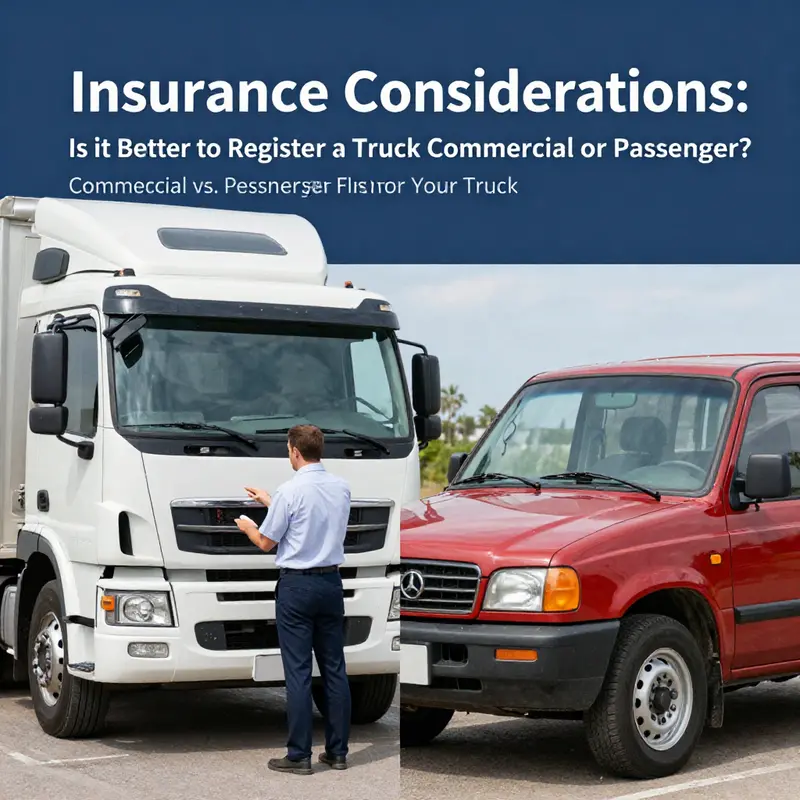
Choosing how to register a truck is more than a boilerplate paperwork decision. It is a decision that threads through risk, cost, and daily operations. The insurance lens makes this choice tangible: the registration status you pick shapes not only the price of coverage but also what the policy actually covers when a claim arises. In practice, the question comes down to how you intend to use the vehicle. If the truck functions as a business asset, transporting goods, people for hire, or supporting a service that earns revenue, commercial registration is typically the correct path. If the truck remains a personal workhorse, used only for private trips, occasional hauling, or family travel, passenger registration can be appropriate. Yet the line between personal and commercial use is not always perfectly clear, and the consequences of misclassification can be severe. Insurance is the safety net that reveals the true cost and risk of each path.
The premium differential between commercial and passenger registration is often the most visible difference. Commercial vehicles are treated as higher risk because they are used more intensively, over longer distances, and in contexts where cargo, passengers, and on-road operations introduce more variables. Insurers price this increased exposure into premiums. It is not simply a matter of adding a rider; it is about the overall risk profile of the vehicle and its use. In many cases, commercial registration accompanies coverage requirements that reflect that elevated risk. A basic liability policy may not suffice when a truck is used for hire or to transport freight. The total cost of ownership thus includes higher premiums, alongside the cost of specialized coverages that are often mandatory for commercial operations. Conversely, if the truck serves personal needs, insurance for a passenger vehicle can be less expensive because the usage is typically lower and less variable in terms of risk exposure.
But price is only part of the equation. Coverage options expand significantly when a vehicle is registered commercially. For a truck used in business, the insurer will commonly require or offer a package that goes beyond standard liability. Cargo insurance becomes a central component when goods are moved. This coverage protects against loss or damage to freight during transit. If the vehicle is operated by or for multiple drivers, hired auto liability insurance is often included or strongly recommended. This covers damages when the truck is used by someone else, such as subcontractors or temporary operators. Non-owned auto liability can provide protection when the employer’s vehicle is used by non-listed employees or agents. Uninsured/underinsured motorist coverage is frequently emphasized in commercial policies, given the higher risk landscape associated with commercial driving and the realities of shared roads. Higher liability limits are also common, frequently stepping up to one million dollars or more, depending on the nature of the operation and the potential exposure.
The distinction extends beyond coverage to legal and regulatory requirements. Interstate commerce, a category that includes many trucking operations, triggers specific obligations under federal rules. The Federal Motor Carrier Safety Administration (FMCSA) oversees safety and insurance requirements for carriers, with USDOT numbers acting as a key identifier for operators in interstate transport. In practice, vehicles used in interstate commerce that meet thresholds—such as heavy GVWR (for example, over 10,000 pounds) or passenger capacity limits (more than 15 passengers)—must have a valid USDOT number and be registered as commercial. This is not merely a formality. It is a foundation for compliance, and noncompliance can invite penalties, fines, or more serious enforcement actions. State regulations interplay with federal mandates, so the precise requirements can vary by jurisdiction and the nature of the business.
Understanding the legal frame helps explain why insurance and registration go hand in hand. Commercial operations face stricter oversight because they interact with more actors and more potential points of failure—cargo integrity, driver accountability, and the safety of the public on shared roads. Misrepresenting a vehicle’s use, or attempting to operate a commercially-oriented service under a personal policy, risks denial of claims, policy cancellation, and significant liability gaps. From a risk-management standpoint, keeping the use clearly aligned with the registration category protects not just the business finances but also the driver’s livelihood and client relationships. The practical takeaway is straightforward: if you plan to earn income using the truck—whether by delivering goods, moving freight, or providing transport services—commercial registration is the prudent, often necessary choice. If, on the other hand, the truck’s primary role is private transport and occasional hauling, a passenger registration can align with that footprint, provided you avoid using the vehicle for paid services that would otherwise trigger commercial coverage.
The financial calculus expands when you consider the tax and accounting implications. Commercial vehicle registration often opens doors to business deductions. Fuel, maintenance, depreciation, insurance, and even some regulatory costs are treated as business expenses that can reduce taxable income. This is not a loophole; it reflects the reality that a vehicle used for business purposes is a professional asset with a financial footprint that can be amortized. Tax advantages are a meaningful part of the decision, particularly for small businesses and fleets where the vehicle plays a central role in revenue generation. The flip side is that the price of entry is higher in several dimensions: higher premiums, more comprehensive maintenance accounting, and stricter recordkeeping. The burden of compliance—the documentation that proves miles driven for business, the logs, the logs, and more logs—becomes part of daily operations. Some operators find that the administrative overhead is an investment in credibility and reliability. A well-maintained commercial fleet reflects a serious business, which can be a strategic advantage when negotiating with clients, suppliers, or lenders.
Operational realities also shape the decision. For business use, the nature of the work—frequent trips, long-haul routes, or repeated client engagements—creates a predictable pattern of wear and tear, fuel expenses, and maintenance cycles. Insurance providers respond to that pattern with tailored programs. Cargo protection, for example, is not optional when goods move in the truck; it is a core component of the policy that addresses the risk of loss or damage to freight. Hired auto liability and non-owned auto coverage acknowledge that the operation is not a solo venture; it involves drivers who may operate the vehicle under contract, lease, or temporary assignments. Uninsured/underinsured motorist coverage is often recommended or required because commercial operations carry a higher chance of encountering uninsured motorists on congested corridors. Higher liability limits reflect the reality that a single incident in a commercial context can trigger claims far beyond the scope of a personal policy.
From a risk-management perspective, the difference in likelihood and severity of claims matters. Commercial operations tend to produce a broader and more complex claims history. The frequency of trips across varying road conditions, the responsibility for cargo, and the involvement of multiple drivers all contribute to a more nuanced risk profile. Each claim, whether it involves cargo damage, third-party liability, or driver-related incidents, can affect future premiums and policy terms. This is not merely about the past; it is about future insurability and the ability to sustain operations over time. In contrast, a passenger-regulated vehicle with limited use generally presents fewer opportunities for costly incidents. Fewer miles, shorter hauls, and less exposure to commercial-grade liability translate into a more straightforward claims trajectory and potentially more stable long-term pricing. The key is to recognize that one path does not inherently guarantee cost savings. It is the overall risk picture, driven by the intended use, that determines premium trajectories over time.
A practical way to navigate these dynamics is to treat the registration decision as part of a broader business design. If your plan is to build a one-truck operation or a fleet built around service delivery, the commercial path aligns with both regulatory expectations and insurance structures designed for that environment. If you anticipate a personal or hobbyist role for the truck, but still expect some paid activity, you’ll need to carefully map out how you can maintain separate use cases or isolate commercial activity within a distinct policy framework. The risk of “mixed use” under a single policy is that coverage gaps can emerge when a claim falls into a category outside the policy’s scope. This is not a theoretical concern; it is a practical constraint that can leave the owner exposed when it matters most.
For operators weighing the decision in real time, a simple practical step is to review the truck’s likely use against the thresholds used by federal and state authorities. Interstate operations typically cross into commercial territory once you exceed weight or passenger thresholds or when you transport goods for hire across state lines. The USDOT number becomes a practical marker in this decision tree. If your operation triggers interstate commerce rules, you are likely looking at commercial registration as the correct vehicle status. The same logic applies to intrastate operations that nonetheless involve significant freight movement or passenger services; in some territories, extra state permits or registration categories may apply, and those requirements can carry their own insurance implications. The bottom line is that accuracy in use helps ensure you meet legal duties, secure appropriate insurance, and avoid the double burden of penalties and coverage gaps later.
For those who want a concise, hands-on way to align insurance considerations with registration, a resourceful approach is to consider how the vehicle will be integrated into a broader set of operations. If you’re building a business around delivery, moving, or passenger transport services, you should plan for comprehensive commercial insurance packages. This typically includes not only the required liability but also cargo coverage, hired auto liability, non-owned auto protection, and higher liability limits. You should also maintain clear records of how the vehicle is used, the number of drivers, miles driven for business purposes, and routes that reflect the commercial activity. If your use is primarily personal, you can pursue passenger registration with the caveat that you must abstain from any paid use unless you upgrade to a commercial policy that properly reflects the activity. The cost-benefit calculus includes insurance premiums, potential tax advantages, regulatory compliance, and the operational security of having appropriate coverage for the real risks you face on the road.
As you review this decision, keep in mind that the driving force behind insurance pricing is risk exposure, and the most powerful way to manage that risk is to separate business and personal use with clear policies and documentation. If you are on the fence, a practical, business-minded approach is to treat the decision as a policy choice rather than a single premium calculation. Document the intended use, project miles and routes, identify drivers, and map out the kinds of cargo or passengers you intend to move. Then compare the total cost of ownership under each registration path, including insurance, maintenance, tax implications, and compliance obligations. In cases of doubt, consult with an insurance professional who understands the intersection of personal and commercial vehicle coverage. They can help you structure a policy that aligns with your real-world use while ensuring you remain compliant with FMCSA, USDOT, and state requirements.
For readers seeking a practical starting point that bridges theory with field-tested strategy, consider exploring guides in the broader industry literature that walk through how to align buying, selling, and vehicle use decisions with appropriate insurance considerations. A relevant resource in that space highlights how operators evaluate asset use, risk, and coverage across different registration categories. This kind of guidance helps translate the abstract concepts discussed here into concrete steps you can take when planning a fleet, negotiating with insurers, or budgeting for a new purchase. If you want to dig deeper into this practical side, the following guide offers a structured approach to make the decision less daunting: buy-sell trucks efficiently.
In summation, the insurance implications of commercial versus passenger registration are intimately tied to how the vehicle is used. For business and revenue-generating activity, commercial registration supports the necessary coverage, regulatory compliance, and risk management tools that protect both the business and its clients. For personal use, passenger registration can provide a leaner, more cost-effective framework, so long as the vehicle is not leveraged for paid services. The optimal choice is not a one-size-fits-all answer; it is the option that best aligns with your intended use, your risk appetite, and your readiness to meet the regulatory and insurance obligations that come with that choice. As you move forward, keep the larger picture in view: the truck’s registration category shapes not only your current costs but your long-term ability to operate legally, protect your assets, and grow your capabilities in a compliant, financially sustainable way.
External resources for further reading can provide additional perspectives and regulatory clarity. For authoritative, up-to-date guidelines on commercial vehicle insurance and registration, consult the National Association of Insurance Commissioners at https://www.naic.org/.
Weighing the Toll: A Deep Dive into Commercial vs Passenger Truck Registration Costs and Real-World Outcomes

Choosing how to register a truck is more than a legal checkbox; it is a strategic decision that shapes costs, risks, and daily operations in ways that echo through every invoice, maintenance bill, and insurance premium. For owners who grow into fleets or build service-oriented businesses, the choice to register as commercial or keep a vehicle as passenger can set the tone for cash flow, compliance, and even market credibility. The core of the decision rests on how the truck will be used—and how that use aligns with tax rules, insurance frameworks, and regulatory expectations. In this chapter, the cost implications are mapped against real-world practice, offering a cohesive lens to examine whether commercial or passenger registration is the prudent path for a given future. The analysis starts with the most immediate costs and defers to longer-term consequences, all while keeping the emphasis on usage patterns that ultimately determine the best fit for a truck’s life cycle and a business’s growth trajectory.
Commercial registration carries an expectation that the vehicle will serve a business purpose that earns revenue or supports paid transportation activities. From a practical standpoint, this often translates into higher annual fees and taxes, a consequence of the presumption that a commercial vehicle operates in a more demanding, higher-mileage environment. The wear and tear associated with daily service—loading and unloading, stop-and-go routes, longer highway runs, and the potential for heavier payloads—further justifies greater scrutiny from regulators and proportionate insurance assessments. Yet, the same framework that raises costs also opens doors to meaningful, readily permissible tax benefits. Depreciation, fuel expenses, routine maintenance tied to business use, and insurance costs can typically be deducted or expensed in ways that reduce taxable income and improve the overall economics of a fleet. These deductions are not mere accounting maneuvers; they reflect the reality that commercial vehicles are integral to business profitability, not decorative assets parked in a driveway.
On the other hand, passenger registration often comes with an appealing upfront price—lower fees and, in many cases, lower sales tax obligations. For a truck used mostly for personal tasks—commuting, weekend projects, or occasional hauling—the passenger classification aligns with the actual use and helps avoid the administrative burden that accompanies commercial operation. The virtue is simplicity: fewer regulatory hurdles, simpler record-keeping, and positions that feel less burdened by compliance overhead. But the moment a passenger-registered truck begins to function as a paid service—whether for ad hoc courier work, equipment transport for clients, or any form of compensated activity—the risk profile shifts dramatically. Insurers may limit or withdraw coverage, or apply exclusions that leave the vehicle owner exposed to liability and financial losses in the event of a claim. The line between personal and commercial use, when crossed, can trigger retroactive penalties and audit risk. It is not merely a theoretical risk; many jurisdictions treat commercial activity conducted with a vehicle registered as a passenger vehicle as a misclassification with real consequences, including fines, back taxes, and potential regulatory sanctions.
The regulatory backbone of this decision anchors it in two practical dimensions: the minimum standards that govern interstate commerce and the insurance landscape that underwrites day-to-day risk. For trucks engaged in interstate commerce, the Federal Motor Carrier Safety Administration (FMCSA) and the broader USDOT framework require certain thresholds to be met—weights, passenger capacities, and other operational metrics that determine whether a vehicle must carry a USDOT number or be treated as a commercial operation. When a vehicle crosses those thresholds, the paperwork becomes not just paperwork but a public record of accountability: insurance that matches the risk of the operation, logs that demonstrate compliance with hours-of-service rules, and the ability to participate in audits that accompany federal transportation activities. It is a regime designed to protect the public and to ensure that enterprises carrying goods or transporting people are financially prepared to cover the consequences of an accident, cargo loss, or third-party liability. The same regime, however, provides a predictable framework for cost planning. While the compliance costs rise with commercial use, the predictability of deductibles, insurance terms, and depreciation schedules can stabilize long-run budgeting for a business that relies on consistent service.
The decision process, therefore, must weigh not only current budgetary pressures but also the long arc of risk management and opportunity. A commercial registration is not simply a higher price tag; it is a permit to operate in a defined space where a vehicle is part of a revenue-generating workflow. In practice, this translates into a set of strategic advantages. First, legal compliance is clear and durable. A business that operates under a commercial registration reduces the risk of accidental noncompliance with weight and capacity thresholds, and it avoids the penalties associated with misclassification. Second, insurance products are designed with the business-use profile in mind. Policies crafted for commercial fleets address cargo liability, driver risk, and third-party exposure with frameworks that align with operational realities, such as fleet aging, maintenance cycles, and fleet-wide accident history. Third, tax treatment aligns with economic reality: the ability to deduct routine costs associated with business operations—fuel, maintenance, depreciation, and insurance—can materially improve the after-tax economics of a trucking operation. Finally, the extrinsic benefit of professional credibility matters in the real world. Clients, suppliers, and regulators alike respond to the signal that a vehicle is registered for business use, which can translate into smoother audits, easier contracting, and stronger vendor relationships.
The flip side, of course, is the visible cost of that clarity. Commercial registration brings higher ongoing fees, more intense tracking requirements, and a potentially more demanding maintenance regime. It also introduces liquidity considerations: the cash flow impact of higher insurance premiums and the obligation to maintain detailed records that satisfy audits. For a single owner-operator or a small fleet, these costs can be manageable, especially when balanced against the income stream generated by a legitimate commercial enterprise. Yet in contexts where demand is uncertain or scale remains small, the bugbear of increased fixed costs can loom large. The owner must consider whether revenue streams will fully offset those elevated costs and whether the insurance and compliance framework will remain affordable as the business grows or contracts.
Usage patterns provide the most actionable compass. If the truck is used predominantly for business, the commercial path emerges as the clear default. Deliveries, cargo transport, or services that charge customers for the vehicle’s use create a direct line from usage to classification. In such cases, the higher upfront and ongoing costs are not costs at all but rather investments in the vehicle’s ability to operate legally and competitively. The depreciation window, the ability to deduct operating expenses, and the enhanced insurance coverage cohere into a business model that tolerates higher fixed costs because the variable returns—revenues and tax savings—offset them. For fleets that operate in longer-haul or multi-stop patterns, the commercial framework also simplifies compliance as operations scale, providing a predictable structure to manage risk, maintenance, and regulatory reporting.
By contrast, when the truck’s primary identity is personal—owned and used by an individual outside the scope of a for-profit transport service—the passenger registration pathway can preserve financial simplicity and flexibility. The immediate savings are tangible: lower registration fees, potentially lower taxes at the outset, and a lighter compliance burden. The challenge arises when the vehicle’s use evolves. A shift toward regular business use, even if it begins modestly, can trigger retroactive consequences that are difficult to unwind. Insurance carriers may deem the vehicle as carrying higher risk if it regularly operates in a paid capacity, potentially excluding certain coverage or forcing a more expensive policy. The regulatory traps are also more likely to trigger if an inspection or audit reveals substantial commercial activity without the appropriate registration. The prospect of penalties grows as the use becomes more commercial in nature; in some cases, back taxes and fines can erase any perceived savings from choosing passenger status initially. This risk underscores a broader truth: misclassification is not a mere administrative slip; it is a meaningful exposure that affects coverage, liability, and the business’s legal standing.
What about the practical implications for planning and decision-making? The cost calculus favors a forward-looking, usage-driven approach. Begin by enumerating how the truck is expected to distribute its scenes of work: daily routes, average payloads, expected miles per year, and the likelihood of recurring client-based transport or cargo services. If the top-line expectation is steady or growing business activity, the commercial path is more likely to yield economic dividends through tax advantages and insurance that reflect business use. If, however, the vehicle is primarily employed for occasional personal tasks and shows only sporadic, non-remunerated use, passenger registration can be the sensible short-term choice. The critical caveat is honesty in measurement: if the line between personal and commercial use starts to blur, it is prudent to reassess the classification to avoid a mismatch that could invite penalties or coverage gaps.
A practical way to translate these considerations into actionable choices is to model the decision around real-world data rather than abstract cost figures. Study current trends in used-truck sales growth and the broader market dynamics that influence operating costs and asset values. The market context matters because it shapes the relative cost of maintaining a commercial fleet, the depreciation trajectory of a vehicle, and even the appetite of insurers to offer favorable terms for business-use fleets. Understanding these cycles helps a business appreciate not only the direct costs but also the potential future economics of reclassifying or staying with a particular registration status. For readers who want to explore market trajectories in more depth, a recent look at how used-truck demand is evolving can provide a valuable backdrop to the decision about registration. It’s not merely a sidebar but a lens through which the cost-benefit analysis of commercial versus passenger registration gains realism and urgency. See a synthesis of market trends here: current trends in used-truck sales growth.
The operational realities also dictate a careful regimen of due diligence. When contemplating commercial use, it becomes essential to file the appropriate federal and state documentation, secure commercial insurance, and maintain a robust record-keeping system. The USDOT number and compliance with FMCSA rules are not optional niceties; they are the scaffolding that supports legitimate operations across state lines or regional markets. The process is not passive: it requires ongoing diligence to comply with hours-of-service rules, vehicle maintenance standards, driver qualification requirements, and safety reporting. Legality matters not just for the avoidance of penalties but as a differentiator in the market. Clients and partners prefer to work with fleets that can demonstrate reliable compliance and the ability to deliver consistently within legal parameters. This professional credibility is a form of intangible value that can translate into more predictable contracts and better risk management outcomes.
Conversely, when personal use dominates, exportable cost savings can make passenger registration appealing. Yet the moment business use grows, the costs of staying in passenger status begin to accumulate in the form of higher risk exposure and potential retroactive charges. The decision, then, becomes a question of trajectory: Is the owner planning to grow a business around the vehicle? If the answer is yes, the commercial path offers a framework that aligns with growth, not just current expense control. If the answer is no or uncertain, it remains prudent to keep a close eye on usage and be prepared to switch classifications if the business case strengthens. This transition—when and how to move from passenger to commercial status—should be anticipated in the initial business planning, so the organization does not incur unnecessary disruption or penalties later on.
Recommendations flow from this logic. First, engage with the local DMV and, if possible, a qualified tax professional who understands the intersection of vehicle classification, depreciation rules, and the company’s tax posture. The regulatory landscape is jurisdiction-specific, with definitions of commercial and private use varying across states, and with federal guidelines that must be respected for interstate operations. Second, build a usage map that tracks how the truck is utilized over time, including mileage, payload, and whether any paid services are rendered. This map becomes the backbone of a decision framework that can be revisited quarterly or annually as the business evolves. Third, factor in the insurance dimension early. Talk to insurers who specialize in commercial fleets to understand how coverage changes with the switch in registration status and how claims scenarios differ between commercial and personal use. While the price tag is a consideration, the broader picture includes coverage scope, deductibles, and the reliability of claims handling in the event of damage or loss. Fourth, do not overlook the long-term asset implications. Depreciation schedules, potential tax credits, and the resale value of a truck are all influenced by its registration status and the nature of its use. A decision anchored purely in the present cost, without regard to future asset recovery, can distort the true economics of ownership.
The synthesis of these threads is straightforward: the most beneficial registration option is the one that aligns with how the truck is used and how the business intends to grow. If the vehicle is integral to a profit-making operation with predictable demand and the capacity to scale, commercial registration makes sense as a durable framework that protects legal operation, optimizes insurance, and captures meaningful tax advantages. If use remains personal or sporadic and the business is not yet established, passenger registration offers upfront simplicity and cost relief—but with the caveat that any significant shift toward paid service should trigger a re-evaluation. The criterion is not the current price of registration alone; it is the fit between usage, risk, and long-term business objectives.
As readers consider their own scenarios, the value lies in combining clear usage expectations with a disciplined approach to compliance and financial planning. The road to a sound decision about commercial versus passenger registration is not a single calculation but a narrative about how the vehicle serves the business—and how the business, in turn, supports the vehicle. A well-chosen registration path strengthens legal standing, stabilizes insurance costs, and clarifies tax outcomes, while a misalignment can cascade into penalties, gaps in coverage, and avoidable tax exposure. The most reliable outcome emerges when a business models its needs around concrete usage data, understands regulatory thresholds, and leverages professional guidance to navigate the complexities of state and federal requirements.
For further context on how market dynamics influence decisions about ownership and operation, consider the broader trends in used-truck markets and how they affect asset value, maintenance planning, and renewal cycles. Such macro insights can sharpen the practical decision in favor of a category that delivers sustainable benefits over the life of the vehicle. In short, the choice between commercial and passenger registration is a policy decision with real economic consequences, grounded in usage patterns and supported by disciplined planning. The best answer is not a universal rule, but a tailored determination driven by the truck’s role in the business, the regulatory environment, and the strategic direction of the owner.
External resource: https://www.fmcsa.dot.gov
Final thoughts
Deciding whether to register a truck as commercial or passenger weighs heavily on your business’s operational needs and compliance obligations. For trucking company owners, fleet managers, and logistics firms, understanding the benefits and risks associated with each registration type is crucial for sustainable operation and legal compliance. Commercial registration typically offers better insurance, legal standing, and tax advantages that become essential as vehicles are used for business purposes. Ultimately, selecting the right registration type aligns with your operational objectives, enhances your business image, and protects against potential liabilities.