Tow trucks play a pivotal role in the logistics and transportation sectors, particularly when it comes to recovering non-commercial disabled vehicles. As fleets and procurement teams prioritize operational efficiency and cost-effectiveness, understanding the underlying mechanisms that facilitate safe and efficient transport becomes paramount. This article will explore three critical aspects of tow trucks: their operational mechanisms that guarantee effective vehicle transportation, the stringent safety protocols that ensure the protection of vehicles and operators alike, and the economic impact such services have on businesses in the trucking and logistics sectors. By delving into these areas, decision-makers can appreciate the significance of employing the right towing solutions to enhance service delivery while ensuring vehicle preservation.
The Bed That Carries: How Flatbed Towing Safely Moves a Private Disabled Vehicle
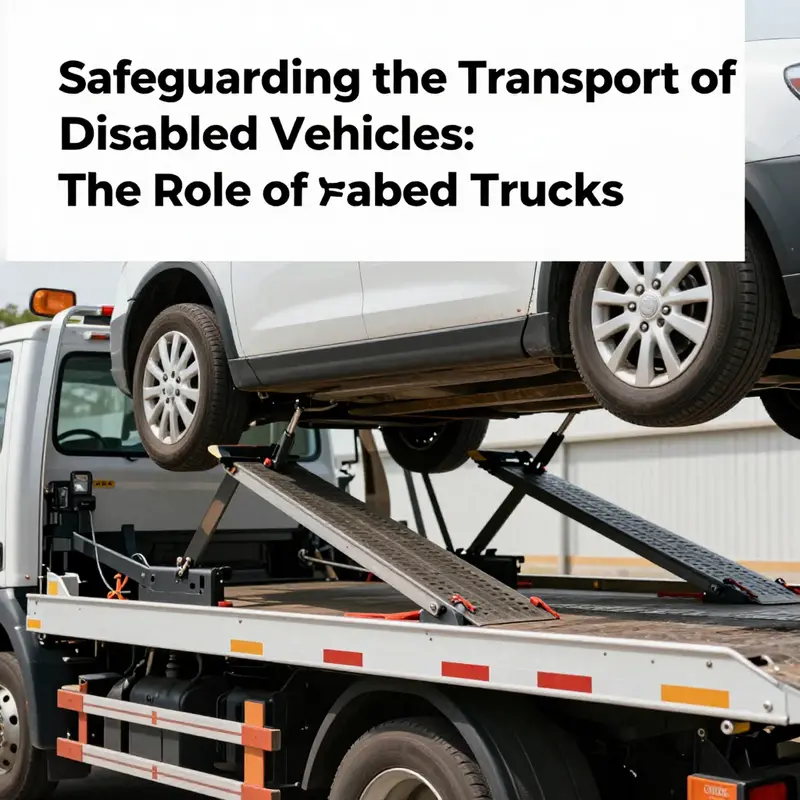
On a quiet street or a crowded highway shoulder, a tow truck arrives not as a loud disruptor but as a careful mechanic of mobility. The private vehicle that sits idle—whether it stalled on a routine drive, suffered a sudden breakdown, or ended up in an accident—enters a choreography designed to preserve its integrity. The work that follows is a blend of engineering, technique, and judgment, all aimed at lifting and transporting a car as if it were a fragile vessel rather than a mass of metal. The heart of this process is the flatbed tow truck, a design that prioritizes the vehicle’s safety by keeping every wheel off the ground during transit. It is here, on the hydraulically operated bed, that the decision to move a non-commercial disabled vehicle from point A to point B becomes less a display of force and more a study in controlled elevation and precise restraint.
The scene typically begins with a careful assessment. The operator surveys the vehicle’s condition, the terrain, and any hazards along the route. Tires that are flat or damaged, leaking fluids, or a car whose alignment is compromised can complicate loading. In these moments, the choice of a towing method is not a mere preference but a response to risk. A flatbed offers a clear advantage in almost all scenarios involving private passenger cars. It eliminates the drivetrain and suspension stress that could occur if the vehicle were to be towed on its wheels, especially for luxury models, low-clearance builds, or vehicles with sensitivity to drivetrain angles. The operator’s goal is to secure a path onto the bed with minimal movement and zero impact on critical components. That is the essence of why a hydraulic tilt-and-slide system dominates the practice of safe non-commercial vehicle transport.
The hydraulic tilt-and-slide mechanism is, in effect, the turning point of the entire operation. A flatbed truck uses a bed that can tilt upward toward the cab or tilt backward to form a ramp. The bed also slides on rails, allowing a controlled ramp to descend toward the road. The combined action makes it possible to drive the disabled vehicle (or to winch it, if driven) onto the bed with all four wheels off the ground. When the vehicle rests on the bed, the operator engages a series of tie-downs designed to anchor the car securely for the long hours of travel. The restraint system typically includes heavy-duty straps and anchors placed at structurally solid points of the vehicle frame. On many jobs, the operator will use wheel eyes or other attachment points that distribute the load across the chassis and prevent a shift that could produce dangerous bed movement. The goal is not merely to hold the car in place but to prevent any micro-motions that might propagate under rough pavement or sudden steering corrections.
The benefits of this method extend beyond the obvious protection it offers to the disabled vehicle. When four wheels never touch the road during transit, the stress transmitted to the tires, suspension, and drivetrain is dramatically reduced. For a private car that carries a legacy of delicate components—perhaps a high-end interior, unique suspension tuning, or a powertrain configuration that demands careful handling—the flatbed becomes more than a utility; it becomes a guardian of value. This is especially important during long-distance towing, where the vehicle travels for hours through varied road conditions. The bed’s quiet, steady platform movement minimizes jolts and sways, allowing the vehicle to be transported with a steadiness that rolling tow methods cannot match. Even in urban settings, where roads are uneven and traffic is unpredictable, the flatbed’s stability helps the operator navigate curb cuts, speed bumps, and narrow parking lanes with a level of composure that reduces the risk of incidental contact with surrounding traffic or infrastructure.
Loading a non-commercial disabled vehicle onto the bed is a procedure that demands precision, not brute force. The operator must ensure that the vehicle is aligned with the bed’s width and that the ramp angle remains within a safe range to avoid scraping or clashing with ground-level obstacles. If the car has uneven ground contact or if there is any protrusion that might snag on a ramp edge, adjustments are made, sometimes requiring the use of wheel chocks or temporary repositioning of the vehicle to ensure a clean approach. Entry into the bed is performed slowly, with the operator constantly monitoring the vehicle’s response to each incremental tilt. The moment the car is fully on the bed, the hydraulic system locks into position and the securing process begins. This sequence—load, level, secure—constitutes the core discipline of safe flatbed towing and defines the industry standard for the transport of non-commercial vehicles that require careful treatment.
The securing stage deserves particular attention because it translates the static safety of the bed into real-world stability once the vehicle is in transit. The most common practice is to use a set of high-tensile strap systems designed to hold the car in place without allowing motion in any direction. Tie-downs are attached to predetermined anchor points on the chassis or frame and are tightened with a controlled force that prevents slack yet avoids overtension that could damage the body panels or stress the suspension. The operator checks each strap for uniform tension and verifies that none of the anchor points are compromised by rust, corrosion, or previous impact. In some scenarios, additional devices—such as stabilizing chains, locking mechanisms, or soft padding—are employed to protect sensitive surfaces and to distribute a load more evenly across contact points. The careful arrangement of these restraints is not a matter of aesthetics; it is a critical determinant of whether the vehicle remains stationary during road vibrations, braking, or sudden lane changes.
Beyond the mechanics of lifting and securing, there is an art to the choreography that follows. The operator begins the ascent of the bed, or the descent of the ramp if the loading is performed in reverse, with a mindfulness born of experience. The operator anticipates how the bed’s motion will interact with the vehicle’s mass distribution. The center of gravity, weight distribution, and the interaction between the bed’s tilting motion and the vehicle’s own geometry all influence how smoothly loading proceeds. It is not enough to simply press a button and watch a platform glide into position; there is constant attention to the vehicle’s feedback through the tires, chassis, and even the cab’s frame if the owner’s door is ajar. The operator’s training emphasizes not only technical proficiency but also situational awareness: the ability to read a tense shoulder in the passenger seat, the way a hood latch might catch on a lip, or the way a wheel might settle as the bed angles. Such sensitivity minimizes surprises and reduces the likelihood of a new set of issues arising from the loading process itself.
When the car has been secured and the bed is level, the operator completes a final walkthrough. This involves walking the length of the vehicle to confirm that nothing has shifted and that all restraints are within their tested ranges. It also involves reviewing the route and the destination, considering weight distribution across axles, and planning for the road’s curvature and surface conditions. For drivers in the private sector, such attention is essential because the journey may traverse neighborhoods, school zones, or densely trafficked corridors where even modest adjustments by other vehicles can be consequential. The operator’s professional discipline—calm, methodical, and founded on a deep understanding of how force travels through a towed load—helps ensure that the transport is not an admission of failure but a measured, responsible act of recovery and continuity.
Integrated tow trucks, a design that treats the towing apparatus as part of a single, unified chassis, offer an alternative that is particularly well-suited to urban environments. In places where street geometry demands nimble handling, an integrated layout can provide superior maneuverability and stability. The integrated approach reduces the risk of asymmetrical load behavior that can occur when separate towing hardware is mounted to a conventional truck frame. For a vehicle that is worth preserving or that has a complex configuration, integration can translate into a smoother loading sequence, a more stable footprint on the road, and better control during the ascent and descent of the bed. While not every job calls for this configuration, its presence in the spectrum of industry options underscores the field’s ongoing commitment to adapting to varied scenarios without compromising safety or vehicle integrity.
The practice of flatbed towing is not merely a matter of mechanical know-how; it sits within a broader framework of standards that ensure safety and consistency across the industry. National guidelines emphasize safe towing practices, including the proper use of restraint systems, the regulatory requirements governing vehicle attachment points, and the safe operation of hydraulic systems under different load conditions. These standards are not decorative; they shape the daily decisions that operators make on the roadside. They guide how a vehicle is immobilized on the bed, how much tension should be applied to each strap, and how the bed should respond to the road’s undulations. Adherence to these standards is what allows a service to appear routine to the vehicle owner while maintaining a level of prudence and professionalism that makes recovery possible without adding risk to people or property.
To understand the practical implications of these mechanisms, consider the difference between carrying a luxury sedan with sensitive electronics and transporting a mid-sized family car that has a modest but stubborn transmission issue. In the former case, the concern is inline with preserving delicate electrical systems, steering racks, and suspension settings that respond to load and angle in nuanced ways. In the latter, the priority is to avoid jolts that could jostle fluids or trigger fault codes that complicate post-recovery diagnostics. Flatbed loading minimizes all these concerns by limiting drivetrain stress and by presenting a level platform for secure restraint. The result is a conveyance that maintains the car’s condition, reduces the chance of secondary damage, and offers the owner a sense that the recovery process has been executed with care rather than haste. The operator’s role in this sense blends technical competence with a philosophy of restraint—an understanding that the vehicle’s value lies not only in its functionality but in the care with which it is moved.
As an industry, the field continues to refine these mechanisms through thoughtful analysis and field-tested practice. The dialogue between technicians, safety inspectors, and regulatory bodies shapes a living body of knowledge that evolves with new vehicle architectures and advancing road conditions. The most robust flatbed operations cultivate a culture of continuous improvement: they document loading times, track restraint performance, and analyze outcomes in order to identify opportunities to reduce loading effort without compromising security. In this way, the bed that carries becomes more predictable over time, a platform that operators can rely on as they would a well-worn tool. The result is a service that is not merely a means of moving a car from point A to point B but a process that embodies responsibility, precision, and a commitment to preserving the private vehicle’s value and function for the owner who depends on it.
This consideration of mechanism and method extends into the day-to-day realities of road dispatch and customer communication. Clients seeking to recover a non-commercial disabled vehicle often need immediate, understandable explanations about what will happen and why. The flatbed approach offers a straightforward narrative: the vehicle will be loaded on a bed that keeps all wheels off the ground, secured with strong straps to minimize movement, and transported in a stable, level way to the chosen destination. The operator translates this narrative into action through a sequence of checks and balances, a choreography that is repeated across countless calls and routes. The customers, in turn, learn to value the quiet confidence that accompanies such an operation—the sense that the vehicle’s integrity is the primary concern, not the speed of the transaction or the appearance of efficiency at the expense of care. In this sense, the flatbed’s engineering becomes a language people hear without always recognizing the words, a language that speaks of careful stewardship and professional ethics even when the scene is ordinary—a roadside recovery, a stalled car on the curb, a private vehicle moving toward a repair shop or a new garage door.
The chapter’s grounding in practical mechanics—tilt, slide, secure—also invites reflection on the broader context in which these services operate. The standards invoked by the industry, while technical in nature, align with a broader commitment to public safety. Tow trucks maintain a crucial balance between rapid response and reliable, damage-free transport. The balance hinges on a set of shared expectations: that the operator has the training to interpret load dynamics, that the equipment is maintained so that hydraulic pressure is predictable, and that the vehicle is immobilized in a way that resists motion through corners, potholes, or sudden maneuvers. When one of these elements is weak, the risk of a secondary mishap increases; when all are aligned, the vehicle’s owners experience not only relief but reassurance that the incident involved skill and care rather than brute force.
The story of the flatbed’s mechanisms is incomplete without acknowledging the people who bring it to life. Every loading sequence is guided by a human hand, a trained eye, and a calm demeanor. The operator’s experience matters as much as the hardware: the way they read the road, the way they communicate with the vehicle owner, and the way they coordinate with support crews when multiple vehicles or unusual obstacles are involved. In complex sites—industrial parks with uneven surfaces, multi-story garages with tight turns, or accident scenes with shifting debris—the operator’s judgment becomes the crucial variable that determines whether the car arrives intact and on schedule. This human aspect does not diminish the importance of technology; it complements it. Mechanical systems can do extraordinary things, but they do so under the direction of people who understand the service’s moral and practical stakes. The result is a routine that appears routine only to the untrained eye. For those who know what to watch for—the way a bed moves, the tension of a strap, the angle of a ramp—what unfolds is a careful ceremony of moving a private vehicle with maximum respect for its value.
In closing the loop between mechanism and meaning, it is useful to situate this chapter within a broader conversation about the reliability of private transportation and the resilience of everyday mobility. A private car is, for most people, a core asset and a symbol of independence. When it becomes disabled, the service that recovers it must honor that trust. The flatbed towing mechanism, with its tilt-and-slide bed and carefully engineered restraint system, rises to that expectation by combining physics with prudence. It is not merely about lifting a load; it is about preserving a piece of someone’s daily life, a vehicle that often carries memories, routines, and practical utility. The engineering and operation behind this process quietly support the rhythms of modern life, enabling people to recover from setbacks, continue to work, and maintain their personal schedules with as little disruption as possible. It is a testament to the way a simple bed—designed to cradle and carry—can anchor a broader sense of continuity when the road throws a curveball.
For readers who want a broader, more analytic window into how these mechanisms are evaluated and standardized across the industry, a concise overview is available in the wider professional discourse. This resource offers a helpful synthesis of the standards, types, and industry performance that shape what operators do on the ground every day. If you would like a more immediate, practical touchstone during your reading or planning, you can consult mcgrathtrucks.com/blog/, which provides accessible context and commentary on the evolving landscape of heavy-duty vehicle recovery and the real-world considerations that accompany it. The goal is not to replace the expertise of trained operators but to illuminate the framework within which they work and the reasons they approach each job with a particular sequence and discipline.
Across the spectrum of private vehicle recovery, the flatbed remains the safest, most versatile option when the priority is to protect the vehicle’s integrity. The integrated configuration adds another layer of flexibility for urban work, where space is at a premium and precision matters. Yet regardless of the specific configuration, the underlying logic is shared: lift with a controlled, level bed; secure with robust restraints; transport with attention to road conditions and long-haul demands; and arrive with the vehicle’s condition preserved, ready for whatever comes next. This is the quiet architecture of safe tow work—the mechanics and mindset that sit behind every successful transfer and every satisfied owner who sees their car again as soon as the service is complete. The bed that carries is, in this sense, a bridge between breakdown and repair, between uncertainty and routine, and between a vehicle’s value and the practical steps it takes to protect it.
External resources provide further depth for readers who want to connect the concrete details of loading procedures with wider safety frameworks. For those seeking official guidance, see the National Highway Traffic Safety Administration’s standards on towing and recovery, which outline the safety and operational expectations that shape day-to-day practice in the field. This connection between on-the-ground technique and national guidelines helps situate a tow truck’s work within a larger matrix of safety, accountability, and public interest. The combination of precise mechanical design, disciplined operation, and standardized practice is what makes the flatbed system a reliable option for transporting non-commercial disabled vehicles, preserving value, and supporting the mobility of individuals who rely on their cars every day.
In summary, the mechanisms that enable a tow truck to carry a non-commercial disabled vehicle are a fusion of hydraulic ingenuity, secure restraint strategies, and trained human judgment. The flatbed’s tilt-and-slide platform turns a potentially disruptive event into a controlled process that protects the vehicle and reduces risk to everyone on the road. The integrated variants extend this reliability into complex urban environments, offering additional maneuverability without sacrificing safety. As the industry continues to refine these mechanisms through ongoing standards development and field experience, the bed remains a reliable, patient platform—an unassuming ally in the daily work of preserving mobility and maintaining access to the essential routines that cars support. And while the mechanics tell an important part of the story, the real narrative is one of trust—the trust owners place in the people who recover their vehicles, the trust roads place in well-trained drivers, and the trust society places in a system that makes sure a private car can be safely and respectfully moved from the moment it fails to the moment it is ready for the next mile.
External resources: NHTSA towing and recovery standards.
Between Ground and Guardrails: Safety Protocols for Tow Trucks Carrying Private Non-Commercial Disabled Vehicles
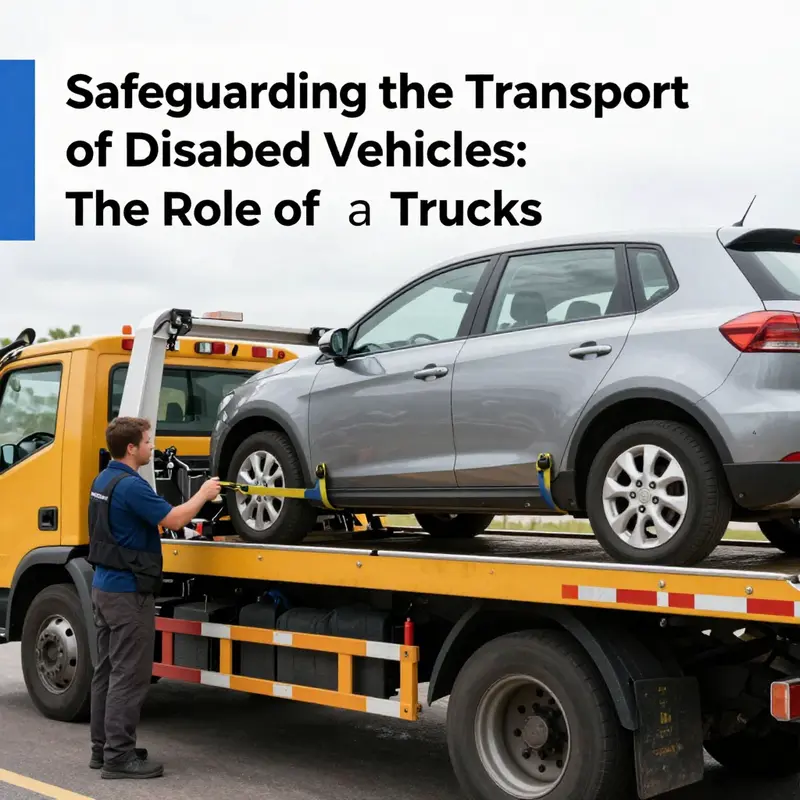
On a roadside cadence that feels almost routine to those who practice it, a tow truck arrives not to haul away a fleet, but to cradle a single private, non-commercial disabled vehicle and steer it toward a safe, protected journey. The scene is quiet in its urgency. The owner’s car rests on the shoulder, perhaps with its hazards blinking in a patient rhythm, while the driver eyes the horizon for traffic and the next mile marker. In this setting, the value of safety protocols does not shout; it speaks through the smoothness of the operation, the steadiness of the loading, and the confidence that the vehicle will emerge on the other end of the trip with no new damage to its body, its drivetrain, or its reputation. The core of this work rests on a combination of method, equipment, and discipline, all orchestrated to meet two parallel goals: preserve the private vehicle and protect everyone who shares the road. The equipment chosen in this scenario is almost always the flatbed variety, a platform designed to minimize dynamic contact between the charity of a car and the roughness of the road. A flatbed, with its hydraulically operated deck that tilts and slides, creates a ramp so the disabled car can be driven entirely onto the bed, leaving all four wheels suspended above ground. This may seem like an extravagant precaution, but it becomes particularly important for low-clearance, high-value, or all-wheel-drive cars, where even a slight scrape can translate into costly damage. The principle here is straightforward: if you can keep the vehicle off the road surface for the duration of transport, you reduce the vectors of potential harm. That is why, even in a routine tow, the bed’s stability matters as much as the chain’s bite or the strap’s tension. The driver, in concert with a trained crew member, moves through a sequence of checks and actions that are less about drama and more about predictable, repeatable safety. The language of that sequence reads like a protocol, but it is carried forward in the body—hands, eyes, and feet coordinating with every change of position. Before the bed lowers and the car is rolled onto the metal, the area is secured with caution but not with hesitation. Wheel chocks are positioned to prevent any unwanted rolling as the vehicle edges toward the deck. The operator lowers the deck to a comfortable loading angle and, as the disabled vehicle approaches, keeps communication clear with the driver inside the car. The car is steered gently onto the platform, guided onto the space that has been measured for width, length, and weight compatibility. The moment the wheels touch the steel, the focus shifts from entry to stabilization. The next stage is the careful restraint of the vehicle. Tie-down straps are anchored to strategic points on the car—typically the frame or designated suspension mounting areas—then threaded through the deck’s belt cradles and tightened evenly. The tension must be sufficient to resist a sudden dash of wind or the jostle of a bump but not so aggressive that it distorts axles or compresses panels. In many jurisdictions, including states with well-publicized safety norms, the securing of the disabled unit relies on primary restraints and secondary checks. The process is not merely procedural; it is a field judgment about how much pressure is necessary to counteract movement without inviting new damage. The dual aims—keep the car from shifting and preserve its integrity—guide the operator’s hands as surely as a map guides a traveler. Beyond the straps, safety chains form a second layer of protection. A fundamental rule in many places is the use of at least two safety chains connected from the disabled vehicle to the tow truck. This dual-chain system functions as a lifesaver in the event that one chain loosens or fails. The concept is elegant in its redundancy: if one path of restraint is compromised, a second path remains, catching the vehicle in transit and preventing it from detaching or colliding with other vehicles or barriers. It is a line of defense that translates the abstract risk of a detached vehicle into a tangible, reliable feature of the operation. In jurisdictions such as New York, the law codifies this practice, underscoring a rigid expectation for redundancy in the securement of a non-commercial unit. For operators, this is not a mere legal compliance; it is the ethical baseline that governs the relationship between a private vehicle and the wider traveling public. The presence of safety chains also signals a broader principle: the importance of using appropriate equipment for the job. The type of tow truck chosen for the operation—whether a wheel-lift model or an integrated, chassis-mounted system—reflects a careful judgment about risk, control, and the car’s condition. Wheel-lift tow trucks, widely seen in dense urban settings, rely on a telescoping arm to lift one set of wheels off the ground, creating a stable pickup or drop-off profile. They are efficient in certain environments, but their loading and unloading may take more time, and the contact with the car is more localized. Integrated or integral tow trucks, engineered with the towing mechanism built into the chassis, offer a different balance of strength and precision. Their design endows them with enhanced rigidity and a broader set of attachment points, enabling safer handling of vehicles that may have drivetrain or suspension damage or that require a higher degree of control during recovery. In the context of a private, non-commercial vehicle in distress, the choice of truck is a judgment call anchored in safety, vehicle condition, and the anticipated route. The operator weighs the car’s alignment, brake status, and potential for further damage against the day’s weather, traffic density, and the road’s grade. This is where the professional’s tacit knowledge comes to the fore. It is not enough to know the manual or the machine; the operator must also understand how a fender-to-deck interface behaves when the road surface is uneven or when a sudden gust of wind campaigns along the edge of a highway. Those subtleties are what separate a routine loading from a narrowly focused incident that escalates into a roadside risk. The procedure, then, extends beyond the initial capture of the vehicle. Once the car is secured on the bed, attention shifts to reliability, visibility, and communication. A modern tow operation relies on clear signaling, hazard lights activated to inform passing traffic, and the establishment of a stable corridor for other drivers to navigate around the truck. In areas with heavy traffic or limited shoulder space, additional traffic control measures may be employed—such as the use of cones and, where appropriate, temporary warning devices—to maintain a buffer between the moving vehicle and the highway’s fast lane. The operator’s mindful approach to scene management echoes a deeper principle: even when the job is ostensibly just moving a private car from point A to point B, the operation remains a demonstration of responsibility. Responsibility to the vehicle’s owner, who may be anxious about the car’s condition or the prospect of further damage. Responsibility to fellow motorists who share the road for the length of the trip. And responsibility to the broader regulations that govern commercial and non-commercial towing alike, ensuring a consistent standard that protects the public and the property being transported. To translate this into practice, the operator must not only execute the loading sequence but also be prepared to adapt if a variable arises. If the disabled vehicle shows signs of asymmetrical tire wear, or if the suspension appears suspect on one side due to a recent incident, the crew may choose to adjust anchor points or even swap to a different securement strategy. If the weather shifts or if a wind gust exerts unexpected lateral pressure, the crew must assess whether the current restraints remain appropriate or whether a temporary re-tensioning is required. The aim is to preserve the vehicle’s internal components as well as its exterior surfaces. It is common to check, double-check, and then check again, a quiet ritual that carries with it the confidence of a road-tested practice. The operator’s experience is reinforced by a practical discipline—one that blends theory with on-the-ground responses. This is where the professional may turn to supportive resources for deeper insights into standards and performance. For those who want to explore broader standards in the field, the industry’s literature and analysis provide an important backdrop. A comprehensive look at flatbed operations, for example, outlines how the platform’s capacity, the alignment of the deck, and the integrity of the winching equipment all contribute to a safeguarded transport. The analysis emphasizes not only the mechanical aspects but also the procedural sequences that govern securement, loading, and transit. The emphasis on safe practice is not merely about avoiding damage; it is about surfacing a culture of care that translates into measurable outcomes—fewer incidents, smoother departures from the roadside, and a more confident experience for vehicle owners who entrust their private property to a tow team. This is why the protocols described here—dual safety chains, appropriate load methods, correct tow truck selection, and meticulous loading discipline—do not exist in isolation. They are the pillars of a broader accountability framework that binds the operator, the owner, and the traveling public into a shared obligation: to move with intention, to secure with precision, and to arrive with as little disruption as possible. The road is a shared space, and even a single private vehicle, handled with care on a flatbed, becomes a testament to professional responsibility. In this light, the act of unloading at the destination is as carefully choreographed as the loading on the origin. The chain is discharged in the reverse order of its application, with the same attention to tension and alignment, so that nothing remains loose or unaccounted for. The vehicle is returned to its wheels, reconnected to its brake system in a controlled manner, and then released from the restraints as the deck is retracted and lowered. Only then does the private owner receive the assurance that the car’s journey has not been a dangerous experiment but a protected passage from breakage to repair. For readers seeking a deeper dive into the regulatory scaffolding that supports these practices, there is a recognized resource that outlines official standards and endorsements. The document highlights how tow-truck operations are structured to protect both private property and public safety, a reminder that the profession is a blend of craft and compliance. It is through this blend that the practice sustains trust and continuity across countless roadside recoveries. As the chapter moves toward its close, the emphasis remains on the human side of the operation—the calm, deliberate decisions that keep lives and property safe while a non-commercial disabled vehicle makes its quiet, measured journey. The operator’s hands are not simply moving metal; they are conducting a small ceremony of care and responsibility. The vehicle, so often treated as a mere asset, becomes a symbol of the trust placed in the tow operator to steward it home. And in a world where the road is unpredictable, the decision to prioritize redundancy, proper equipment, and method over speed becomes the insistence on a safer path forward. For those who wish to explore further context, a deeper look at industry practices can be found in resources that discuss standards and performance in flatbed towing, as well as practical guidance on securement and load management. The discussion also invites readers to consider the everyday rigor behind a routine roadside service—a rigor that quietly keeps the lanes safer for every driver who shares them. For additional reading on towing protocols and regulations, see the NY DMV Tow Truck Endorsement document cited in the broader regulatory context. To connect with ongoing industry perspectives and practical insights, readers can visit the following resource for a broader sense of how these practices are evolving in the field: McGrath Trucks blog. The chapter’s preoccupation with safety should not be mistaken for rigidity. Rather, it reflects a culture that prizes foresight, careful planning, and the humble acknowledgement that a private, non-commercial vehicle deserves the same care as any other valuable asset on the road. When those values are present, the act of transporting a private disabled vehicle becomes less a routine obligation and more a commitment—one that aligns with the broader goal of keeping roads safer, preserving property, and reinforcing the trust that underpins the entire towing profession. External resources offer further nuance and specifications that support these practices, including regulatory guidelines that shape how operations are conducted. For readers who want to review official standards directly, consult the following external resource: https://www.dmv.ny.gov/permits/tow-truck-endorsement.pdf.
Carriers of Mobility, Drivers of Economic Stability: The Hidden Economy of Tow Trucks Moving Non-Commercial Disabled Vehicles
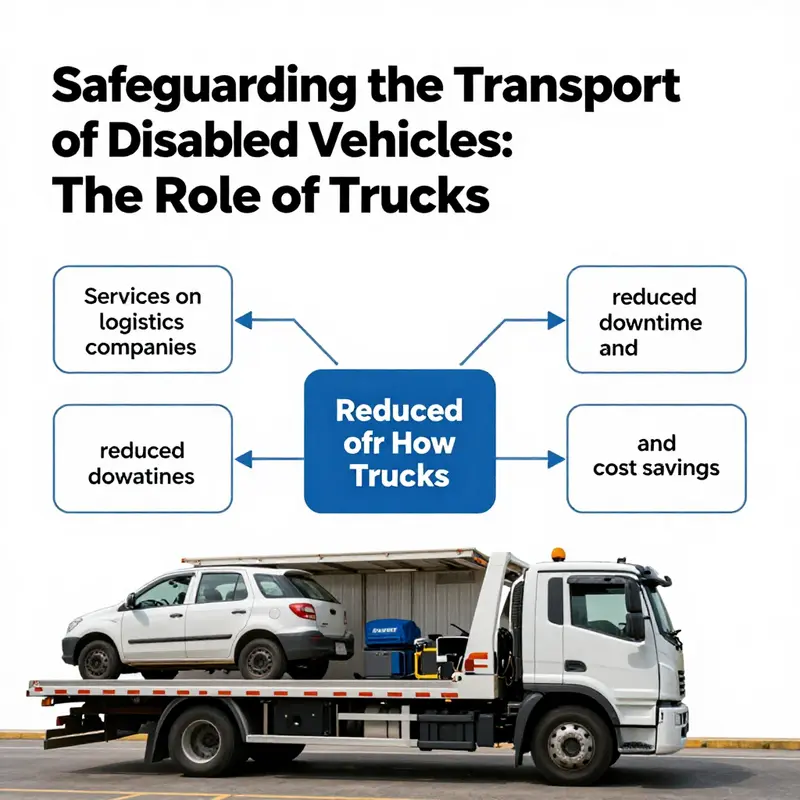
When a private vehicle falters on a city street, the immediate concern is safety and getting traffic moving again. Yet beyond the roadside hazard lies a more complex network of economic forces that few people consider. Tow trucks that transport non-commercial disabled vehicles—private cars, motorcycles, and small utility vehicles—play a surprisingly pivotal role in sustaining urban mobility and, by extension, local economies. They are not merely machines that relocate an immobile asset; they are nodes in a broader system that minimizes the economic ripple effects of breakdowns and minor incidents. This system rests on the deliberate design of tow solutions, the skill of operators, and the strategic choices cities and service providers make about equipment, response times, and risk. To understand the true economic impact, one must look at how these services interact with traffic flow, crash risk, repair cycles, and the daily rhythms of work and commerce.
A fundamental distinction shapes the economics of towing: the vehicle type being moved and the tool chosen to move it. For non-commercial vehicles, the emphasis is on preserving value and minimizing further damage. This is why many professionals in the field favor flatbed tow trucks, also known as roll-back or slide-bed models. The bed itself is hydraulically operated, tilting and sliding backward to form a ramp. Once aligned, the entire disabled vehicle can be driven onto the bed with all four wheels off the ground. This method disperses impact forces away from the chassis and drivetrain that can be vulnerable to stress during loading and unloading. The result is a transportation process that reduces the likelihood of collateral damage, which, in turn, limits the downstream costs tied to repair estimates, insurance adjustments, and rental car expenses for the owner.
The protective logic of flatbeds matters especially when the vehicle in question is high-value, low-clearance, or AWD/4WD. Luxury sedans, low-slung sports coupes, and certain compact crossovers require careful handling to avoid underbody scrapes, bumper misalignments, or suspension concerns that can compound the price tag of a breakdown. The mechanics of the bed, with its secure tie-down straps and a stable platform, provide a salve against these risks. Operators can immobilize and secure the vehicle with a level of control that is not always achievable with other tow configurations. In practical terms, this means fewer additional trips for damage assessment and fewer adjustments during transit. Fewer missteps translate into lower direct costs for owners and insurance providers and fewer days in the shop before the vehicle can exit the repair cycle and re-enter productive use.
Yet the choice of equipment is not solely about protecting the asset. It is also about optimizing time and energy—two scarce resources in any urban setting. Flatbeds may require more setup and a longer window for loading than other tow types, such as those that pull or lift from the wheels. The trade-off is deliberate. The extra minutes spent securing a vehicle on a flatbed yield outsized benefits in traffic safety and stability on the roadway, particularly in dense downtown corridors or on multi-lane highways where a misloaded car could swing into another vehicle or block essential lanes. In a world that prizes reliability, the promise of a safe, damage-free shipment becomes part of the service’s value proposition. It is not just about moving a car; it is about guaranteeing continuity for a commute, a shift at work, or a delivery window that is essential to a small business. This continuity is the intangible but crucial economic service that cost accounting alone cannot capture.
The economic footprint of towing, however, extends well beyond the immediate transaction. When a disabled private vehicle sits in a lane or on a shoulder, it becomes a bar to traffic flow. The longer it remains there, the greater the risk of secondary incidents, which can cascade into multi-vehicle pileups, emergency dispatch delays, and spillover congestion that affects downstream neighborhoods and business districts. Efficient towing shortens these disruptions. It keeps arterial routes clear, reduces idling time for nearby vehicles, and minimizes the wasted fuel that accrues when drivers are stuck in queues. Each minute shaved from the clearance time is, in effect, a tiny but cumulative saving for the local economy. It means more predictable delivery routes for commercial fleets, steadier peak-hour schedules for commuters, and less financial uncertainty for businesses that depend on reliable transportation links.
The broader literature on road safety and economic efficiency reinforces this intuition. A study focusing on injuries among commercial tow operators, while centered on a different subset of the industry, underscores the inherent risks of roadside operations. The takeaway is not to discourage towing activity but to emphasize the importance of well-trained personnel, appropriate equipment, and calibrated procedures. Safe and efficient towing reduces exposure for responders and bystanders, lowers the probability of ancillary accidents, and, by extension, reduces the societal costs associated with traffic interruptions. In practice, this translates into higher productivity and lower wasted time—benefits that radiate through to households and local businesses alike. A well-executed recovery operation stabilizes the incident scenario rather than amplifying it, which is another way of saying that the economic value of good towing can be quantified in saved time, reduced damage, and preserved mobility.
As the global market for tow services expands, the arithmetic of this value becomes more nuanced. Market research projects growth from roughly USD 1.57 billion in 2024 to about USD 2.28 billion by 2032. The trajectory signals rising demand for reliable towing infrastructure, including specialized services for non-commercial vehicles. Growth is not simply about more trucks on the road; it is about better services—faster response times, safer loading practices, and improved asset preservation. The investment logic for fleets and cities aligns around a few core themes: the need to deploy safer, more versatile equipment; the necessity of training that elevates safety and efficiency; and the strategic importance of maintaining a rapid, predictable recovery workflow that keeps commerce moving.
In this context, the design and deployment of flatbed or slide-bed tow trucks gain extra significance. These small-wrecker configurations are specifically valued for their maneuverability and stability in tight urban environments. Their ability to handle a wide range of vehicle types without exposing the asset to further harm makes them indispensable for non-commercial vehicles that may be subject to a variety of breakdown scenarios. They are not merely transportation devices; they are instruments of urban resilience. By enabling quick, secure transfers from the roadside to repair facilities or impound yards, these vehicles support a smoother exchange between breakdown management and repair ecosystems. A city’s repair network depends on a consistent cadence of vehicle recoveries, with minimal downtime and less risk of road-obstruction-related secondary incidents. In turn, repair shops gain more predictable inflows, and insurance processes can move at a steadier pace because the condition and history of the retrieved vehicle are more reliably documented.
From an operational standpoint, the economics of non-commercial vehicle towing are also shaped by the balance between fleet utilization and the cost of equipment. While a flatbed may carry a higher upfront price tag and require more meticulous handling, the reduced risk of damage during loading and transport translates into lower post-recovery repair costs. The net effect is a more favorable lifetime cost per tow when the vehicle being moved has a high resale value or is sensitive to cosmetic damage. For everyday commuters who experience a breakdown, the savings are not always immediately visible. Yet insurance premiums, rental car expenses, and out-of-pocket repair costs are all influenced by the integrity of the recovery process. In short, the choice of tow configuration becomes a decision about risk management as much as a choice about speed.
This is where technology and training enter the story. As the market expands, there is incentive to invest in safer loading procedures, better restraint systems, and improved platform control. Training standards that emphasize systemized load securing, proper strap tensioning, and ramp alignment reduce the likelihood of on-scene mishaps and later liability. These factors feed into a larger strategic narrative about urban mobility. If cities can harmonize incident response times with the predictable reliability of towing operations, the entire mobility network becomes more resilient. That resilience translates into fewer productive days lost to congestion, fewer days spent in the shop, and a smoother interface between personal mobility and commercial activity.
The economic ripple also touches the smaller players in the ecosystem. Auto repair shops, body shops, and parts suppliers experience steadier demand when breakdowns are resolved efficiently. Insurance providers benefit from clearer damage assessments and fewer supplementary claims tied to improper handling. Municipalities, too, have an interest, because streamlined towing reduces the probability of lane blockages and the need for traffic management interventions. In this sense, non-commercial vehicle towing is not a standalone service; it is a connective tissue that preserves the flow of people, goods, and services through densely populated areas. When mobility is stable, retailers can plan around predictable transit times, service industries can schedule deliveries with fewer delays, and households experience less disruption to daily routines. This layered impact—protecting asset value, preserving traffic continuity, and stabilizing repair cycles—constitutes the true economic contribution of a fleet tasked with moving non-commercial disabled vehicles.
A nuanced understanding of this contribution also requires looking at how the market for used equipment feeds into the system. The availability of reliable, safe, and capable second-hand flatbeds can influence the pace at which fleets modernize and expand. When fleets can acquire well-maintained assets at reasonable prices, they can increase service coverage without destabilizing their cost structures. This dynamic helps explain why professionals in the field keep a close eye on trends in used-truck sales growth. It is not merely a financial barometer but a signal of the broader health of the towing sector and its capacity to meet rising demand with durable, safe equipment. Current trends in used-truck sales growth offers a window into how equipment availability and depreciation schedules shape decision-making for operators who balance speed, safety, and asset preservation. These considerations matter as much to a family with a broken-down sedan as they do to a city planner coordinating strike-ready fleets for peak traffic conditions.
Beyond the mechanics and the markets lies a larger question: how should cities prepare for the continued expansion of non-commercial vehicle towing in a world that values sustainability and efficiency? The answer is not simply to pour more resources into more trucks. It is to design traffic systems and regulatory frameworks that recognize towing as a critical service with a measurable impact on road safety and economic productivity. Space on the curb, staging areas near high-incident corridors, and clear guidelines for response priorities in emergencies all influence how quickly and safely a vehicle can be recovered. In addition, training programs that emphasize risk reduction, especially for roadside work, contribute to a safer working environment for tow operators and reduce the social costs associated with roadside injuries. When these pieces come together, the towing operation becomes a cog in a well-oiled machine that keeps urban life moving with minimal friction. In effect, efficient tow services for non-commercial vehicles permit the daily economy to resume its tempo more quickly after disruptions, lessening the opportunity costs paid by workers, customers, and service providers alike.
The economic story, then, is not simply one of service delivery. It is about the coordination of a network—operators with equipment, cities with policies, repair facilities with customer demand, and insurers with claims processes. Each component adds a layer of value, and together they create a resilient mobility fabric. As the market for tow services grows and technology improves, this fabric becomes stronger. The investments in better platforms, more precise loading mechanisms, and safer towing practices reverberate through urban life. They support a faster return to work, quicker deliveries, and more reliable travel times. In practical terms, this means fewer hours wasted in traffic, less fuel burned idling, and less economic stress for families trying to meet essential obligations. In the end, the economic impact of tow trucks carrying non-commercial disabled vehicles is a measure of urban resilience—an indicator of how efficiently a city can absorb the friction of breakdowns and continue moving forward.
For readers seeking a broader sense of industry context, it is useful to consider how market dynamics for used equipment interact with service demand. As fleets grow and newer, safer configurations become more common, the availability and pricing of pre-owned units will shape adoption rates and service coverage. The link between equipment markets and service delivery is not accidental; it is a direct channel through which capital allocation translates into on-the-ground capability. When capital is allocated toward higher-quality flatbeds with advanced restraint systems and better load-monitoring features, operators can deliver safer recoveries more quickly, reducing both direct costs and societal costs associated with road disruption. This linkage helps explain why the tow truck sector is often a bellwether for broader trends in transportation and logistics, reflecting both the technical progress of equipment and the evolving needs of urban mobility systems.
In sum, the economic impact of tow trucks carrying non-commercial disabled vehicles extends far beyond the act of moving a car from one location to another. It encompasses the preservation of asset value, the reduction of traffic congestion and secondary incidents, the stabilization of repair and insurance processes, and the enhancement of urban resilience. The choice of a flatbed or slide-bed solution is a deliberate one, balancing the costs of equipment and time with the imperative of safe, damage-free transport. As markets evolve, the sector’s growth will likely hinge on how well operators integrate advanced loading techniques, risk-management practices, and fleet modernization with the needs of a city that seeks to maintain steady productivity and quality of life for its residents. The chapter you have read thus far is a reminder that even a routine roadside recovery carries economic significance, and the quiet economy of towing—often invisible to the daily flow of traffic—serves as a steady undercurrent supporting mobility, safety, and commerce alike.
External reference for further context: https://www.fortunebusinessinsights.com/tow-truck-market-102914
Final thoughts
The services provided by tow trucks for transporting non-commercial disabled vehicles highlight a crucial intersection of technology, safety, and economic viability in the trucking and logistics industries. From the innovative mechanisms that facilitate safe loading and transport to the rigorous safety protocols ensuring compliance and protection, these vehicles serve as essential assets. Furthermore, their economic impact cannot be overstated, leading to reduced operational costs and increased efficiency for companies that opt to leverage these services. As the industry continues to evolve, staying informed about these critical elements will empower fleet managers, logistics firms, and procurement teams to make educated decisions that enhance their operational capabilities.