The distinction between commercial and passenger vehicles has become increasingly blurred, particularly regarding pickup trucks. These versatile vehicles serve a dual purpose, excelling in various applications across multiple industries. For trucking company owners and fleet managers, understanding the classification of pickup trucks is crucial for compliance, management, and operational efficiency. Simultaneously, construction and mining procurement teams must recognize the suitability of pickups for their rigorous tasks. This article delves deeply into the unique attributes of pickup trucks, highlighting their role in commercial settings while also addressing their appeal as passenger vehicles. Each chapter will unfold a critical aspect of this discussion, from regulatory frameworks determining vehicle classifications to societal implications stemming from their widespread use.
The Dual Identity of Pickup Trucks: Navigating the Line Between Commercial Tool and Personal Vehicle
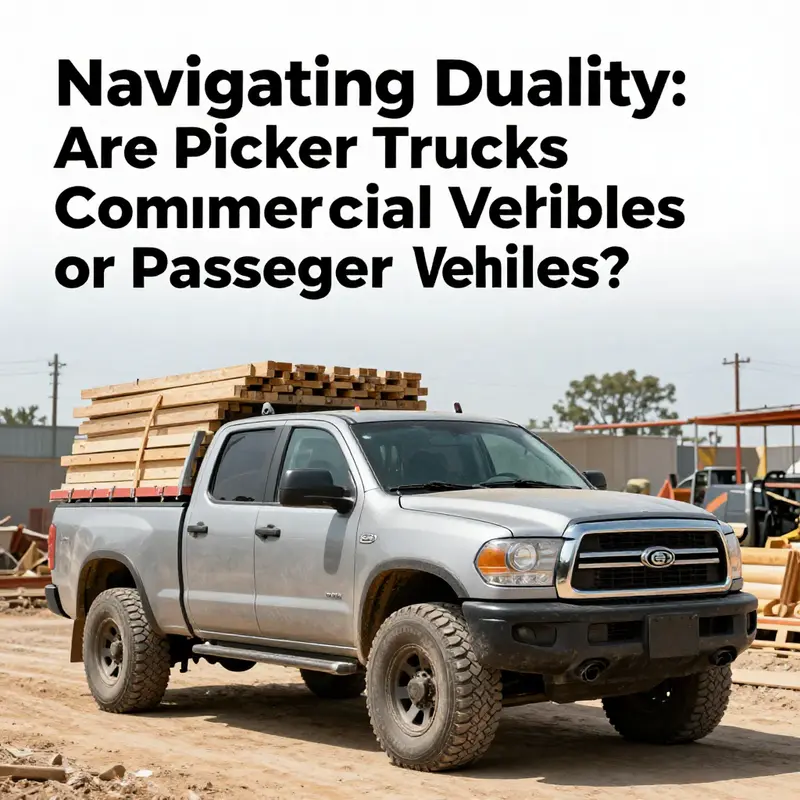
Pickup trucks occupy a curious middle ground in the world of vehicles. They are engineered with the robustness and capacity that tradition labels as commercial. Yet every day they also serve as the primary family car for many households, a practical means for road trips, weekend projects, and the kind of errands that require more space than a sedan can offer. This dual identity is less about a single label and more about how the vehicle is used in concrete terms. The tension between commercial utility and personal transport shapes decisions by buyers, regulators, insurers, and fleets alike. In practice, the same chassis that can haul lumber or lay out a contractor’s toolkit on a job site can also ferry a family across town or across the country. The bed, the payload rating, the towing capacity, and the rugged underpinnings are the same features that make pickups reliable workhorses and trustworthy everyday vehicles. The question then becomes not merely what the vehicle is, but how it is used, and how that usage is interpreted by systems of ownership, cost, and regulation.
On the commercial side, the appeal of pickup trucks is straightforward. Their open cargo bed gives direct access for loading tools, equipment, or materials without a trailer, and this capability is especially valuable for tradespeople, landscapers, utility workers, and service providers who must bring materials to often-unpredictable job sites. A robust frame and heavy-duty suspension contribute to durability under heavy loads and rough terrain, while modern pickups often feature integrated trailer hitches, advanced towing aids, and options that enhance stability and control when trailers are attached. For a small business that makes multiple trips in a day, the efficiency of loading and unloading can translate into real time savings and lower labor costs. In tight urban environments, the relative ease of maneuverability offered by many pickup designs—compact enough to fit into city jobsites while still offering ample payload—can be a practical advantage. The result is a vehicle that doubles as a mobile workspace, letting crews bring their supplies directly to the customer, reducing the need for a separate van or dedicated truck and simplifying logistics.
This practical versatility is echoed in market realities. Industry analyses have documented a notable shift in which pickup trucks no longer reside solely in the realm of personal transport. A sizable portion of buyers in the light-duty truck segment purchase for business needs, driving demand for configurations that emphasize load capacity, reliability, and ease of maintenance. In the United States, market data from recent years has highlighted how commercial buyers account for a meaningful share of light-duty truck sales, reflecting the growing use of pickups as cargo carriers and service platform tools in small and midsize enterprises. This trend is not simply about replacing older work trucks; it also reflects a broader view of the pickup as a flexible asset that can adapt to changing service patterns, seasonal workloads, and a shifting mix of on-site tasks that require both mobility and cargo capacity.
The regulatory landscape further contributes to the perception of pickups as commercial vehicles, particularly when used for business purposes. The classification that matters most often hinges on how the vehicle is used rather than how it is built. When a pickup is employed to haul tools, transport materials, or support a service call, it can fall under the same regulatory and tax treatments that apply to commercial assets. This has practical implications for depreciation, insurance, and even work-related deductions in some tax systems. Conversely, when the same truck is used predominantly for personal travel, family activities, or leisure trips, it is treated as a passenger vehicle for purposes of insurance coverage, licensing, and certain emissions or safety standards. The blurred lines between use and designation illustrate how a single vehicle can traverse multiple regulatory worlds over its lifetime, depending on the task at hand and the way ownership is structured.
Amid these considerations, the cadence of decision-making for buyers is shaped by both theory and real-world costs. Payload capacity and towing ability are not merely specifications; they are the currencies of efficiency for businesses that depend on dependable transport for equipment, materials, and personnel. A durable chassis and rugged suspension translate into longer service life in the field and, potentially, lower maintenance expenses over time. Integrated technology—such as trailer tow systems, rear-drive options, and drive modes tailored for difficult terrains—can enhance productivity by enabling work crews to operate more comfortably and effectively in challenging conditions. For owners contemplating a commercial purchase, the economics extend beyond upfront price. Tax incentives, such as depreciation allowances and expensing provisions, can meaningfully affect the total cost of ownership over the life of the vehicle. These financial levers are not just fiscal curiosities; they shape acquisition strategies for small and midsize businesses seeking capital efficiency.
Beyond the economics, the evolving landscape of propulsion adds a further layer to the discussion. Electric and hybrid options are expanding the horizons for pickups, aligning with corporate sustainability goals and regulatory pressures to curb emissions. Fuel economy, emissions profiles, and charging infrastructure become central to long-term strategic planning, especially for fleets that travel substantial daily distances or service areas with limited fueling options. The Alternative Fuels Data Center provides up-to-date information on fuel economy, emissions, and charging infrastructure for electric and hybrid pickups, offering a practical resource for decision-makers weighing electrified options alongside traditional internal combustion models. This broader spectrum of choices reflects a market that is no longer characterized by a single propulsion paradigm but by a continuum of configurations designed to fit a range of commercial and personal needs.
Even as the business uses push toward commercial practicality, many people choose pickups for passenger reasons. The interior space often rivals that of larger sedans and sport utility vehicles, with comfortable seating, modern infotainment, and a roomy feel that supports family trips and daily driving. The same bed that holds building supplies can be repurposed for camping gear, bikes, or outdoor equipment. The high driving position and rugged confidence on rough roads contribute to a sense of safety and capability that resonates with family buyers. In this light, the classification of a pickup as either commercial or passenger becomes a function of usage patterns, ownership structures, and the particular moments in which the vehicle is pressed into service for work or for leisure. It is not uncommon to see a vehicle performing double duty on any given week, with a contractor using the truck on weekdays and a family taking weekend trips on Saturdays and Sundays. The vehicle thus embodies both roles, borrowed from different chapters of daily life, and it embodies flexibility that few other classes of vehicle can claim.
To understand how these two worlds cohabit, consider the decision-making process of a typical business that relies on a pickup for daily operations. The business evaluates payload and towing capacities not as abstract ratings but as measures of the ability to move from one site to another with a loaded trailer, to bring the necessary tools to a job site, and to complete tasks without multiple trips. A truck that can haul longer lengths of material or heavier machinery reduces the number of trips, which in turn reduces labor costs and minimizes downtime. The choice between a two-wheel-drive or four-wheel-drive configuration becomes more than a matter of off-road capability; it becomes a question of reliability under various weather and road conditions that crews encounter. The presence of modern safety and driver-assistance features adds another layer, reducing the risk of accidents and enhancing the efficiency of teams that operate under time pressure. These practical considerations often align with the broader market data showing sustained demand for pickups as core assets in small business operations, rather than as luxury or niche vehicles.
Meanwhile, the personal use story remains compelling. Families appreciate the dependable performance and the sense of preparedness a pickup provides, especially when the weather turns, when a journey takes longer than expected, or when a spontaneous project arises at home. The ergonomics of the cabin, the comfort of the seats on longer drives, and the resourcefulness of having a cargo bed all converge to make the pickup an attractive option for everyday life. The vehicle becomes a symbol of versatility—a tool that can morph from a family car into a mobile workshop and back again with little friction. This adaptability is not inherently contradictory; it simply reflects the broader reality that people increasingly demand vehicles that can bridge multiple roles in a single ownership experience.
The dual identity also informs how information is presented to buyers. For commercial purchasers, emphasis tends to be placed on durability, payload, towing, and potential tax advantages. For personal buyers, emphasis shifts toward comfort, safety, modularity, and daily usability. Yet both audiences value reliability, low operating costs, and resale resilience. A robust powertrain, a well-designed cargo bed, and a chassis built to carry heavy loads all contribute to a vehicle that remains relevant across different lifecycles of ownership. When buyers consider electrification or hybridization, the calculus expands to include charging availability, duty cycles, and total cost of ownership over a longer horizon. The market’s attention to total life costs reflects an understanding that a pickup can be a long-term asset, a partner in growth for a business, and a trusted companion for families who value practicality and resilience in their daily transportation.
For readers who want a sense of how market dynamics are evolving and who are curious about how buyer needs are shifting, this overview of the dual use of pickups resonates with ongoing trends in the industry. To explore related insights on how buyers are approaching used-truck investments and which configurations are gaining traction, you can read about the current trends in used truck sales growth. This internal resource offers a snapshot of market sentiment and demand patterns that influence both commercial and personal purchasing decisions. current trends in used truck sales growth
The story of the pickup, then, is not a simple tale of classification but a narrative of versatility. The same vehicle that serves as a job-site ally can also serve as a home base for family life. The open-bed design, the payload-carrying capability, and the rugged durability make pickups uniquely suited to bridging two worlds that often rely on very different economic calculations. As policy, finance, and consumer behavior continue to evolve, the line between commercial tool and personal vehicle will remain a moving boundary—one that reflects how people work, how they travel, and how they choose to invest in assets that must wear many hats. In this sense, the pickup trucks that populate streets, job sites, and highways are not simply machines with a single purpose. They are adaptable platforms designed to absorb the demands of work and life alike, a steady reminder that the most practical vehicles are often those that can do more than one thing well.
External references and ongoing research continue to illuminate the ways in which pickup trucks navigate the practical realities of ownership. For a broader view of fuel economy, emissions, and charging infrastructure as these vehicles evolve, see the Alternative Fuels Data Center’s pickup trucks resource. This external resource provides current data that informs decisions about how to integrate electrified options into mixed-use fleets or family ownership without compromising reliability or affordability. https://www.afdc.energy.gov/vehicles/pickup_trucks
Beyond Bed and Cabin: The Dual Identity of Pickup Trucks as Passenger and Commercial Vehicles
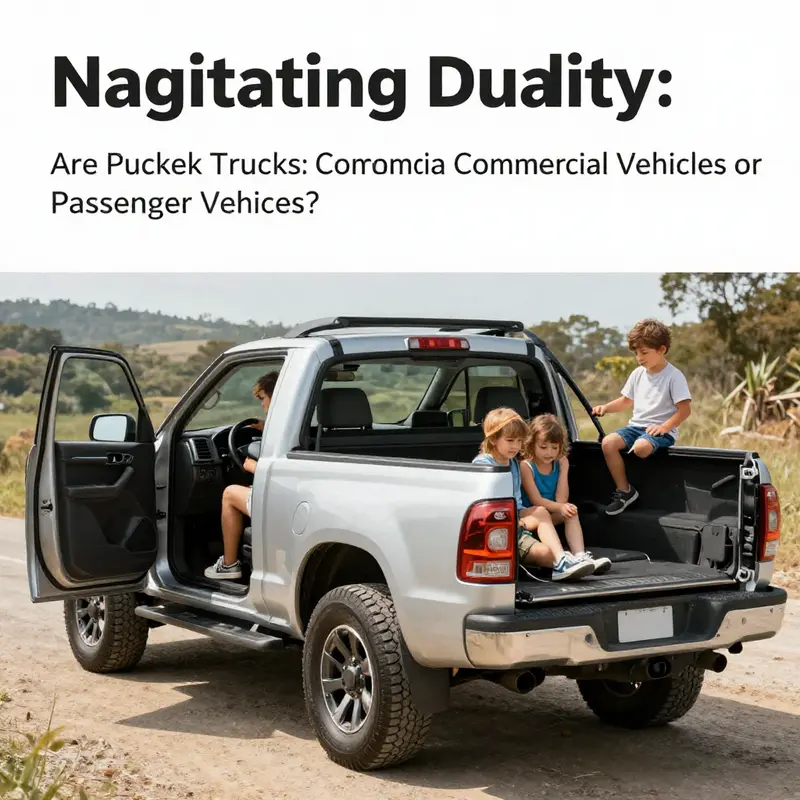
Pickup trucks inhabit a curious niche in the road landscape. They are not simply heavy-duty workhorses nor purely family haulers. Instead, they occupy a blended space where design intent, regulatory definitions, and everyday usage intersect. This dual identity matters because it shapes decisions people make about ownership, insurance, and how a vehicle is taxed or registered. The conversation around whether a pickup is a commercial vehicle or a passenger vehicle does not yield to a single, tidy label. It unfolds in the language we use about work and home life, in the way the vehicle is configured, and in the regulations that determine how it is treated by authorities and insurers. When a pickup is used primarily for family transport, vacations, or weekend adventures, it tends to be viewed through the lens of a passenger vehicle. When it is called into service to haul tools, equipment, or heavy loads for a business, the same physical machine can assume a different regulatory persona. In truth, the truck’s core design—an enclosed cabin with seating for people, paired with a robust cargo bed—creates a built-in versatility that invites both interpretations. The essential tension is not about capability alone but about purpose, context, and the rules that govern those uses. The same steel frame and torque-rich drivetrain that allow a pickup to tow a trailer or carry lumber also help it serve as a reliable family vehicle for daily trips and road trips alike. This is why the question of classification becomes less about the vehicle in isolation and more about the life it leads between home and job site. The broader public debate mirrors a practical reality: a machine designed to protect occupants and protect cargo can, in the right circumstances, perform double duty without failing to meet either identity. The result is a vehicle that refuses to be pigeonholed, and a policy conversation that must reckon with that ambiguity. In many ways, this ambiguity is the product of evolving consumer expectations and the way fleets are managed in both urban and rural settings. As consumer culture shifted toward larger, more capable pickups, the social perception of these vehicles broadened as well. People who grew up with smaller cars began to value the practicality of a roomy cab and a bed capable of carrying the week’s groceries, ladders, or weekend equipment. Others in trades and construction learned to see pickups as a portable composition of workshop and showroom—an adaptable toolkit on wheels. The result is a kind of friction between cultural norms and administrative categories, a friction that continues to shape how the public, insurers, and regulators think about what a pickup is supposed to be. The question is not merely theoretical. It touches how families plan their finances, how small businesses budget for vehicles, and how jurisdictions assess road use and safety responsibilities. When a pickup serves as the daily family car, its safety features, seating comfort, and ride quality assume heightened importance. People look for rear-seat space for children, easy access for loading cargo such as sports gear or camping equipment, and a cabin that can weather varying climates. The cargo bed, meanwhile, remains a powerful reminder of its functional identity—an open space that signals capability, even if the vehicle is occasionally used like a typical sedan or SUV for leisure and errands. This is why the most accurate description of a pickup’s role often lies somewhere in between the two extremes. It is a vehicle with a passenger cabin designed to carry people comfortably, and a bed that can be used for hauling. The combination of these features creates a practical flexibility that few other segments offer, a reason many buyers choose pickups precisely because their needs do not fit a single category. The overlap also invites questions about how the vehicle is classified in law and policy. In the United States, for instance, authorities like the National Highway Traffic Safety Administration—along with state and local agencies—tend to classify a pickup under the umbrella of passenger vehicles when considering design and typical use. The cabin’s ability to transport multiple occupants, the seat structure, and the vehicle’s overall safety profile align with the broad definition of passenger vehicles. Yet, countless scenarios show that the same truck can function as a work companion, a mobile toolbox, or a fleet asset. The practical implication is clear: the line between commercial and passenger use is often drawn not by the vehicle’s bones but by how it is employed. A contractor may label a pickup as a commercial asset for the sake of liability coverage, vehicle depreciation, and tax planning. A family, on the other hand, may register the same truck as a personal vehicle, enjoying insurance rates and road-use considerations that align with everyday living. In some regulatory frameworks, the distinction hinges on the primary use case rather than the physical configuration. If the vehicle is used predominantly to haul work-related goods, tools, or materials during business hours or on job sites, it slides toward the commercial end of the spectrum. If, in contrast, the vehicle is driven primarily for personal transport on evenings and weekends, it is treated as a passenger vehicle. This nuance—usage-based classification—recognizes that the same form can serve multiple purposes without compromising the safety features or structural integrity that define the vehicle. There is also a robust economic dimension to this discussion. Businesses acquire vehicles with an eye toward return on investment, total cost of ownership, and eligibility for depreciation or tax incentives. In some cases, fleets might register a pickup as a passenger vehicle solely to optimize insurance premiums or to simplify regulatory compliance when the vehicle spends more time in personal use than on job sites. Such decisions reflect practical realities rather than a purely theoretical framework. The long view reveals how the dual identity of pickups has shaped market dynamics. The demand for larger cabins, improved interior comfort, and advanced driver assistance technologies sits alongside the demand for higher payload, substantial towing capacity, and durable suspensions. Manufacturers have responded by offering configurations that cater to both worlds: extended cabs or crew cabs with ample seating, paired with bed dimensions and chassis strength that make payloads manageable and reliable for work-related tasks. The result is a vehicle that can serve as a family car on weekends and a capable service vehicle during the workweek. From a cultural perspective, the pickup’s dual identity is a marker of regional and lifestyle differences. In rural and suburban areas where outdoor activities or small-scale trades are common, the bed is a familiar tool that travels with everyday life. In urban environments where parking and fuel efficiency are emphasized, the same vehicle might be perceived first as a practical family car rather than a workhorse. This variation underscores the complexity of classification across different communities and regulatory landscapes. The practical upshot is that buyers should assess not only the vehicle’s physical capabilities but also how their use cases align with insurance requirements, tax considerations, and registration categories. It is not enough to know the bed can carry more than a couple of bikes; one must also understand how the vehicle will be taxed, insured, and inspected based on its primary function. In this sense, the pickup’s identity emerges from a dialogue among design, usage, and law. The bed and the cabin together create a device capable of bridging two worlds, and the line between them is continually negotiated in daily life and policy. For readers seeking a deeper dive into how classification frameworks interpret these crossovers, a broader discussion is available in the practical resources at McGrath Trucks blog. This resource offers reflections on how owners translate technology and layout into real-world usage, illustrating how the same vehicle can be both a work partner and a family companion. Beyond policy texts and fleet analytics, the human element remains central: a pickup is a tool that responds to the needs of its owner, whether those needs arise on a job site, at a weekend campsite, or along a family road trip. The public conversation benefits from acknowledging that a single vehicle can fulfill multiple missions without requiring a single, fixed label. It reminds us that regulation must adapt to the practical realities of modern mobility. The most stable path through this landscape is one that recognizes the dual potential of pickups and treats classification as a spectrum rather than a binary choice. In the end, the bed signals capability; the cabin signals companionship. The vehicle’s value arises when both signals are interpreted together, allowing owners to maximize safety, efficiency, and flexibility in a world where work and life increasingly intersect on the same set of wheels. For those seeking official clarity on how these distinctions are defined in policy, the National Highway Traffic Safety Administration provides authoritative guidance on vehicle classification and the roles these classifications play in safety regulation and enforcement: https://www.nhtsa.gov/vehicle-classification.
Code and Cargo: The Regulatory Logic That Divides Pickup Trucks into Commercial and Passenger Classifications
Pickup trucks occupy a curious niche in the world of regulation. They are designed with a robust chassis, a substantial payload bed, and a capability set that invites both practical work use and everyday personal transport. The regulatory answer to this duality is not simply a matter of who signs the title at the dealership. It is a tapestry woven from international trade codes, national tax rules, and safety standards. The result is a reality in which a single vehicle type can be understood and treated very differently depending on the angle from which regulators, policymakers, or fleets view it. To appreciate how a pickup earns its classification, one must trace the logic of the key frameworks that govern trade, tax, and road compliance across jurisdictions. These frameworks tend to converge on a few core attributes—open cargo space, chassis and frame design, payload capacity, and intended use—but they apply those attributes with enough nuance to create meaningful differences in practice. The World Customs Organization and its Harmonized System, along with United States and Canadian regulatory approaches, form a layered map that affects every step from import duties to fleet incentives and pollution standards. The practical upshot is that classification is rarely determined by a single factor. It is the interplay of physical design and how authorities expect the vehicle to be used that ultimately shapes its legal status on the road and in the ledger of global trade.
At the international level, the Harmonized System, with its Heading 8704, anchors a functional perspective on pickup trucks. The WCO emphasizes cargo-carrying characteristics over the supposed identity of the user. In short, the truck is a vehicle with an open rear cargo area and a design that makes it suitable for carrying goods. This emphasis on useable cargo space sustains a specific category for customs and tariffs. Even when a pickup serves primarily as a family vehicle or a daily commuter, its structural traits place it within a commercial vehicle framework for many import and export purposes. The distinction matters because duties, trade statistics, and regulatory scrutiny track differently for passenger versus commercial classifications. The HS approach thus ensures a consistent, predictable treatment for a class of vehicles that crosses borders in varied configurations, from basic two-seaters to crew cabs with heavy payloads. Outside observers might describe a pickup as a utility workhorse, yet the HS code treats it as a cargo-enabled machine whose trade fate rests on form as much as function. For anyone involved in cross-border movement, this design-first logic keeps the playing field relatively stable even as markets, models, and configurations evolve.
In the United States, the regulatory lens blends tax policy with road safety and environmental rules, and it weighs several factors that can shift a pickup’s classification in practice. The Gross Vehicle Weight Rating, or GVWR, serves as a primary threshold. Vehicles with a GVWR over 10,000 pounds are typically managed as commercial vehicles for tax and regulatory purposes, reflecting their emphasis on cargo transport capacity and commercial utility. Yet the boundary is not a blunt line. Many pickups with lighter GVWRs can still be treated in commercial contexts when their use is business oriented and when their payload capacities map onto commercial thresholds. Seating capacity, while important for certain regulatory outcomes, often interacts with how the vehicle is advertised, insured, and claimed as a business asset. The presence of a fully enclosed passenger compartment also matters for emissions and safety compliance, influencing how such a vehicle is authenticated for insurance and leasing programs. The practical consequences extend to tax treatment, depreciation schedules, and eligibility for incentives aimed at fleets or commercial operations. The result is a nuanced classification that rewards attention to the vehicle’s design and intended use, while acknowledging that many owners cross the line between personal and commercial use in day-to-day life. A contractor who drives a crew-cab pickup to job sites may see regulatory and tax advantages tied to business use, even as the same vehicle serves as the family daily driver on weekends.
Canada presents a parallel yet distinct regulatory landscape shaped by Transport Canada and related agencies. The Canadian framework also relies on vehicle type and design, pairing those physical attributes with conventional usage expectations to delineate between light-duty and heavy-duty commercial categories. The practical outcome is a spectrum where standard pickup trucks occupy the light-duty end yet can shoulder heavy-duty responsibilities through high payloads and robust chassis. The regulatory calculus affects not only registration and road taxes but also environmental compliance and eligibility for government programs designed to support fleets and efficiency initiatives. In essence, Canada mirrors the United States in recognizing that a pickup’s commercial status hinges on its structural capabilities and the scale of its payload, while still acknowledging a broad range of personal uses. The result is a framework that harmonizes with broader North American trucking norms but remains sensitive to domestic policy priorities and incentive programs that influence fleet composition and procurement choices.
The central insight across these regulatory schemes is that the classification of a pickup truck is anchored in its physical design as much as or more than the way it is used in a given week. The open cargo bed, the frame construction, and the payload potential are signals to regulators about the vehicle’s function in the economy. That signal is then matched with use cases, such as business hauling, contractor service, or personal transport, to determine the applicable rules for taxation, insurance, emissions, and safety. This does not eliminate ambiguity in everyday life. A homeowner who uses a pickup to move furniture, a small business that uses it for service calls, and a tradesperson who relies on it to haul tools may all encounter different regulatory implications depending on the jurisdiction and the specific circumstances of use. The classification framework, therefore, serves as a guide for policy consistency—balancing the need to regulate heavy vehicle behavior and emissions with the practical realities of how owners deploy their pickups across a wide spectrum of tasks.
From a market perspective, the regulatory distinction can influence purchasing decisions, financing, and resale dynamics. Fleet managers weigh GVWR, payload, and body configuration to align vehicle choices with tax depreciation rules and insurance considerations. Private buyers, while primarily motivated by comfort, safety, and reliability, still benefit from understanding how their daily use could tilt a vehicle toward one regulatory category or another, particularly in markets where incentives or registration costs differ between passenger and commercial classes. This is not merely about labels; it is about a system that translates physical attributes into economic and regulatory consequences. The possibility that a single chassis can perform double duty is precisely what has kept pickups uniquely versatile and widely adopted in both personal and professional lifeways. The market responds to this versatility with a wide array of configurations, engines, cab setups, and payload capacities, each aligning with different regulatory expectations and potential financial benefits.
The interconnection between these frameworks also reveals why cross-border buyers and multinational fleets approach pickups with particular diligence. The HS classification guides import duties and trade statistics in a way that can make a seemingly identical vehicle costlier or cheaper depending on the country of entry. The US and Canadian rules add nuance through GVWR thresholds, cabin configurations, and payload capabilities, shaping how vehicles are taxed, insured, and mandated to meet emissions and safety standards. In this sense, the regulation of pickup trucks is not a single axis but a lattice, where the same truck can traverse multiple pathways depending on its use, ownership structure, and geographic location. Understanding this lattice requires looking beyond a single rule and appreciating how an open cargo bed, a rugged frame, and a capable engine converge to position a pickup within the broad spectrum of commercial and passenger vehicles.
Those who are tasked with fleet management or cross-border trade benefit from staying attuned to evolving interpretations and policy shifts. For example, regulatory bodies may adjust thresholds or redefine eligibility for incentive programs as technology advances and environmental priorities shift. Market participants track these changes through industry analysis and policy updates, which in turn influence resale values, depreciation cycles, and the cost of compliance. As buyers and fleets respond to a complex regulatory environment, the balance between functionality and compliance becomes a central driver of how pickup trucks are acquired, operated, and monetized over their lifecycles. For readers seeking to connect these regulatory insights to real-world trends, consider how the market for used pickups responds to shifts in policy, pricing, and availability. Current trends in used truck sales growth offer a lens into how classification dynamics shape demand, pricing, and financing choices for both individual buyers and commercial buyers.
Beyond national borders, the global analytic frame remains anchored in the same design principles that drive HS codes and national rules. The harmonized approach provides a common language for goods movement, but the way that each jurisdiction applies that language reflects policy priorities, such as emissions targets, highway safety, and revenue generation. In practice, this means two pickups with the same bed dimensions and payload potential can be treated differently if they cross a border or if they are used primarily for business in one country versus personal transportation in another. The practical reality is that buyers and fleets must navigate not only the vehicle’s capabilities but also the tax and regulatory ecosystems that shape cost of ownership, compliance requirements, and eligibility for government programs intended to support efficient and safe transportation.
For readers who wish to explore the regulatory landscape further and gain a more global perspective, a deeper look at the Harmonized System can be illuminating. The official framework provides the foundational logic for how goods like pickups are categorized on the world stage. See the Harmonized System information to understand how different countries interpret the same vehicle features and how this feeds into tariffs, trade data, and policy design. External resources from the World Customs Organization outline the criteria and structure that underlie Heading 8704 and related categories, helping to explain why a pickup is treated as a cargo-bearing vehicle in many contexts regardless of daily use. This cross-cutting perspective reinforces the core message: the classification of pickup trucks is as much about the vehicle’s physical architecture as it is about the intentions of users, the economic calculus of ownership, and the regulatory ambitions of governments.
In sum, the regulatory frameworks that govern pickup trucks weave together design, use, and policy into a coherent yet complex picture. The HS prioritizes cargo-carrying design, the US framework adds weight-based and usage-based dimensions, and Canadian rules align with similar logic while incorporating their own programmatic levers. The resulting classification landscape underscores the dual life of pickups: built for work, and often pressed into personal service. Recognizing this duality helps explain why the same model can appear in a family driveway and on a job site with equal legitimacy, yet with different regulatory and financial implications. This nuanced understanding sets the stage for exploring practical strategies that buyers, fleets, and policymakers can use to navigate the evolving terrain of commercial versus passenger designations.
External resource: For a broader global perspective on classification, see the Harmonized System page on the World Customs Organization: https://www.wcoomd.org/en/topics/harmonized-system
Between Worksites and Waypoints: The Dual Identity of Pickups in a Market That Demands Versatility
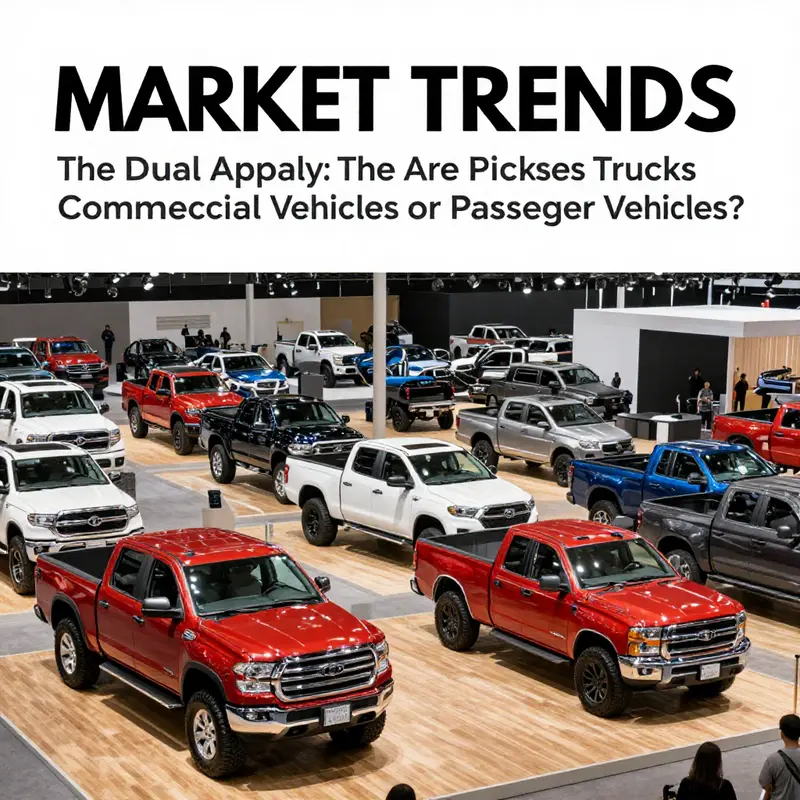
The question of whether pickup trucks are commercial vehicles or passenger vehicles is less a classification than a reflection of how people actually use them. In practice, these vehicles straddle two worlds at once: they serve the rugged demands of labor and transportation tasks while also functioning as everyday family cars, weekend haulers, and road-trip companions. The dual role is not a paradox so much as a design brief rewritten by evolving consumer expectations and expanding business needs. In a world where efficiency, resilience, and adaptability are prized, the pickup’s ability to morph from a tool on a job site to a trusted companion on a family vacation is precisely what keeps it relevant across both domains. This dual appeal sits at the heart of the ongoing debate about their classification, a debate that is increasingly informed by real-world use, rather than by traditional labels alone.
The market fundamentals reinforce this dual identity. The latest data from the industry suggests that the pickup segment is far from a niche phenomenon; it is a core pillar of modern light-truck demand. In January 2026, sales reached 49,000 units, marking a robust year-on-year increase of 22.5 percent. That surge is not a fluke but a signal of growing breadth in the customer base—from fleet operators and contractors to families seeking versatility and safety in a single vehicle. It is impossible to ignore how such numbers ripple through the broader supply chain, shaping factory production schedules, dealership inventories, and policy conversations about what qualifies as a commercial asset versus a personal transport option. The pattern implies a market where the same vehicle is counted in fleet tallies one week and in private-car registries the next, underscoring that the line between commercial and personal use is increasingly transactional rather than categorical.
From a longer horizon, the global pickup truck market is projected to expand substantially, reaching an estimated USD 386.95 billion by 2030 with a compound annual growth rate of about 6.2 percent. This projection dramatizes a broader shift: the vehicle that once symbolized only industrial might has become a cornerstone of everyday mobility and business logistics alike. The growth trajectory is driven by a blend of factors—improved fuel efficiency in newer models, ever stronger payload and towing capabilities, and a design language that prioritizes passenger comfort without sacrificing utility. The market, in other words, has learned to celebrate duality rather than resolve it into a single, pure category. The result is a vehicle platform that can be configured to meet specific work needs while remaining a viable option for personal use, thus expanding the addressable market for both commercial fleets and private buyers.
This dual appeal arises from what many analysts describe as the pickup’s defining attributes: expansive cabins that accommodate families, long cargo beds that maximize storage, and high towing and payload ratings that support demanding professional tasks. Full-size pickups, the most popular segment, epitomize the fusion of utility and comfort. A single truck can handle a construction crew’s material haul one day and, on the next, serve as a comfortable family vehicle for a weekend escape. The same vehicle offers the rugged durability needed on rough rural roads and the refined interior quality that makes long highway trips bearable for travelers who insist on modern infotainment and safety features. These capabilities are not merely appendages; they are the core reasons why fleets consider them viable tools and households choose them for daily life.
Yet the landscape is evolving in interesting ways. Midsize pickups have emerged as a compelling compromise between work-ready performance and everyday practicality. They deliver sufficient cargo room and respectable towing capabilities while offering better fuel economy and more agile urban handling. For small business owners and urban drivers, midsize pickups present a pragmatic option that reduces operating costs without sacrificing versatility. This is not merely a shift in preference but a recalibration of what a “work vehicle” can do when commuting, errands, and client visits are part of the weekly routine. The expansion into this size category illustrates how buyers are weighing total cost of ownership, lane-to-lane usability, and passenger comfort on equal footing with raw capability.
Modern developments reinforce the idea that pickups are moving beyond the old image of a rugged workhorse. The latest double-cab configurations illustrate a perfect fusion of utility, comfort, and technology. The cabin space has grown more refined, and the seating arrangements have become more firefighter-safe, more road-trip friendly, and more adaptable to varied passenger needs. A growing emphasis on safety technology—advanced driver-assistance systems, more sophisticated infotainment, and improved connectivity—makes these trucks attractive not only to operators who value payload and torque but also to families who demand safety and convenience in equal measure. As manufacturing networks expand—especially in China, which has become a major exporter of broader vehicle platforms—these trucks increasingly arrive on global shores with a higher baseline of features, quality control, and build consistency. The globalization of production supports faster delivery to a wider range of markets, which, in turn, contributes to the broader perception of pickups as viable across multiple use cases rather than being seen purely as commercial workhorses.
Embedded in this evolution is a practical truth about classification. The same vehicle can be driven by a contractor in the morning and by a parent on a school run in the afternoon. The way the vehicle is used—business purpose or personal transport—often governs regulatory treatment, insurance pricing, tax considerations, and maintenance priorities. Yet the distinctions matter less when the user benefits from both worlds simultaneously. In many regulatory regimes, the vehicle’s business use can qualify it for fleet rebates, depreciation schedules, or commercial insurance terms, while the same vehicle, when used for family travel and leisure, provides comfort, safety, and reliability that are hallmarks of passenger-oriented vehicles. The hybrid reality is that ownership logic—how a truck is financed, insured, and taxed—tends to reflect the owner’s most frequent use rather than a categorical label imposed by tradition. This is not to suggest there is no difference in policy or accounting; rather, it is to acknowledge that real-world use often drives those differences more than any single marketing category.
For the industry, this overlap has practical implications beyond classification. It shapes how fleets are assembled and how dealers market vehicles. It informs maintenance planning, residual values, and the way technicians approach service—treating a pickup’s payload requirements as part of its longevity profile, while not ignoring comfort and safety features that keep private owners satisfied over many miles. It also affects strategic decisions about where to place production and how to optimize supply chains. As competition intensifies, manufacturers are racing to deliver trucks that can endure the stress of a construction site yet reward owners with comfort on long highway journeys. The result is a generation of pickups whose versatility is less a selling point and more a baseline expectation.
All of this contributes to a broader narrative about the consumer landscape: demand now comes from a spectrum of users who value the same vehicle for different reasons. The market’s teachers—the operators who rely on a truck’s payload and towing for day-to-day revenue, and the households who prize space, comfort, and safety—are training the industry to build one platform that can be flexibly configured for many lives. The urban driver who needs efficiency and maneuverability in traffic does not have to choose between different vehicle categories; the same chassis can carry tools to a job site and passengers to a weekend event without requiring a different purchase. This synergy matters because it expands the potential customer base and reduces the risk of obsolescence. In a global market where buyers increasingly demand value and adaptability, the pickup’s dual identity becomes a strategic advantage rather than a paradox.
The evolving narrative is also shaped by information flows and consumer education. As buyers navigate the line between commercial and personal use, clear, accurate guidance about payload, towing capabilities, and ownership costs becomes essential. The conversation moves beyond the old binary to a more nuanced understanding of how these vehicles function in daily life. In particular, the market’s attention to total cost of ownership—fuel, maintenance, insurance, depreciation, and resale value—has grown more acute. Buyers evaluate a truck not just by its peak capabilities but by how those capabilities translate into tangible, year-round benefits across various life stages. For some families, that translates into a reliable tow vehicle for a boat or camper; for others, it means a sturdy, economical work companion that can bring materials to a neighborhood project while still offering a comfortable daily commute.
Within this context, one must acknowledge the importance of accessible information on trends and performance. The collective experience of fleets, dealers, and private buyers contributes to a shared understanding about what a modern pickup can and should do. The data points—such as the January 2026 sales surge and the global market projection—are more than numbers; they are a narrative about how work, transportation, and lifestyle intersect in a single, adaptable vehicle format. As manufacturers continue to refine the balance between rugged capability and refined passenger features, the pickup remains uniquely positioned to satisfy two worlds at once: the world of contractors and logistics managers who demand reliability and throughput, and the world of families and adventurers who seek space, safety, and comfort on every mile.
For readers interested in how these shifts are unfolding in real time, the latest indicators of demand and supply dynamics offer a practical lens. The ongoing interest in used-truck markets, for example, shows how buyers are weighing prior investments against new models’ efficiency gains and safety upgrades. This is not merely a market curiosity; it is a signal about how durable, adaptable platforms continue to anchor both business operations and personal mobility. The duality remains central to the pickup’s appeal. It is not that one category is right and the other wrong; it is that the vehicle has become a versatile asset that serves multiple needs across diverse environments. That versatility is the core reason pickup trucks endure as both indispensable tools on the job and trusted companions on the road.
To explore a practical angle on how this dual use plays out in ownership decisions and market behavior, readers can consider the broader discussion around current trends in used truck sales growth. This ongoing conversation provides a grounded perspective on how buyers value longevity, reliability, and adaptability when the vehicle must shoulder both professional duties and personal aspirations. current trends in used truck sales growth offers a window into buyer sentiment, fleet refresh cycles, and the evolving expectations of durability in a rapidly changing trucking ecosystem. External research and industry analysis, such as a comprehensive overview of safety and regulatory considerations, further illuminate how the classification question continues to interact with policy and practice. For additional context on regulatory and safety dimensions, see the National Highway Traffic Safety Administration’s overview at https://www.nhtsa.gov.
In sum, the pickup truck’s identity as commercial or passenger vehicle is less a fixed label than a dynamic equilibrium among use cases, ownership models, and regulatory frameworks. The vehicle’s ability to simultaneously meet the needs of tradespeople and families is what keeps it resilient in a world of shifting economics, evolving technology, and growing expectations for safety and comfort. As the market continues to expand and as manufacturers refine the balance between payload, efficiency, and interior experience, the pickup will likely endure as a flexible, durable, and highly valued asset—one that defies easy categorization and instead embodies the hybrid promise of modern mobility.
Between Worksites and Driveways: The Dual Identity of Pickup Trucks in Commerce and Daily Life
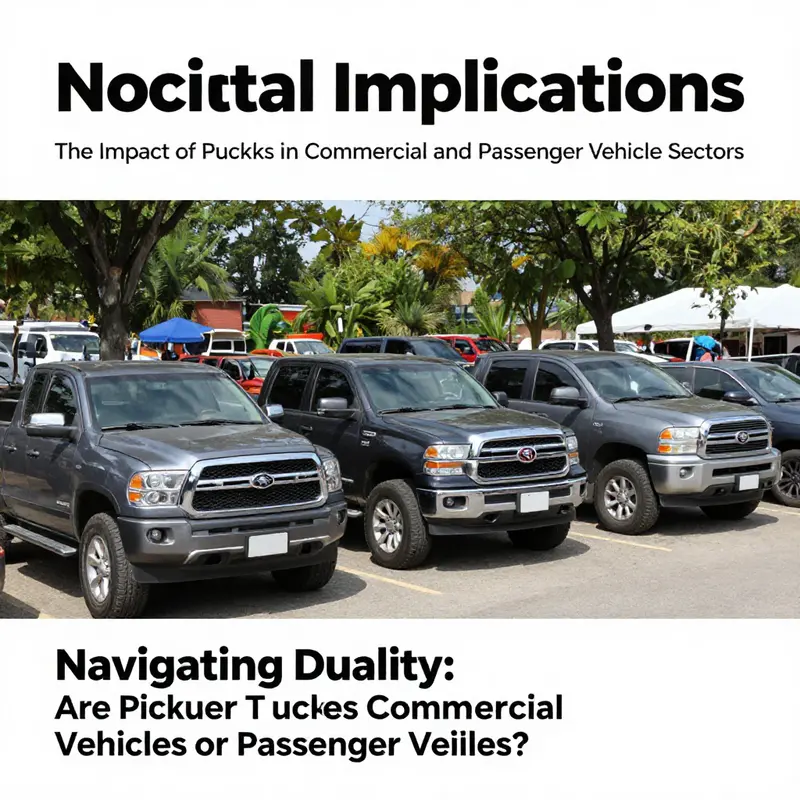
A pickup truck sits at a peculiar juncture, a vehicle that can convincingly wear two hats at once. On the job site, it sounds like a tool—a portable workshop with a bed that can swallow lumber, pipes, or a toolbox-well into the night. On the street or in the cul-de-sac, it becomes a family car, a reliable conveyance for car seats, groceries, road trips, and weekend projects. This dual identity isn’t just about usage; it speaks to a broader social structure where a single design feature—the open cargo bed—maps onto two distinct worlds: the commercial economy that moves goods, and the everyday life that sustains households. The debate about whether pickup trucks are primarily commercial or primarily passenger vehicles therefore cannot be settled by factory specs or marketing claims alone. It must be understood as a spectrum shaped by how people actually use them, by the regulatory frameworks that translate use into classification, and by the environmental and economic consequences that follow from those choices.
In the commercial sphere, the appeal of pickup trucks lies in utility. The open bed is the workhorse, able to accommodate bulky items that would be awkward or impossible to load into a closed van or SUV. Contractors value the combination of a robust frame, high payload and towing capacities, and the possibility of mounting racks, tool mounts, or generators. This practical versatility means a single vehicle can be pressed into service across a spectrum of industries—from construction and landscaping to farming and small-scale logistics. In this context, a pickup is not merely a mode of transport; it is a compact, adaptable platform that can be configured to meet shifting job-site needs. Yet this same versatility brings trade-offs. Payloads are heavy enough to tax fuel efficiency, and exposed cargo can be vulnerable to weather or theft when the bed is loaded with equipment. Maneuverability, while improved in recent generations, remains a concern in dense urban layouts where a long wheelbase and a broad silhouette test driver skills and parking availability. These practicalities are not merely technical details; they shape how fleets are organized, how scheduling is planned, and how costs are calculated at the end of a month or a project.
From the perspective of public policy and regulatory practice, the line between commercial and passenger use often hinges on intent and activity. If a pickup is used to haul tools, construction materials, or business-related equipment on a regular basis, many regulatory regimes classify it as a commercial vehicle for licensing, taxation, and safety standards. But the same vehicle, operated for personal errands or family trips, can be treated as a passenger vehicle with different tax considerations, insurance lines, and safety expectations. This dual-use reality invites a nuanced view of how the market for pickups evolves. It isn’t only about consumer preference; it’s about how households and small businesses interpret risk, assess cost of ownership, and seek value every time they visit a showroom or a rural supply store. The practical effect is a market that remains highly elastic: buyers can adapt a single model to a changing mix of tasks, from hauling a boat trailer one weekend to supporting a remodeling project the next, and back again.
The environmental dimension of this dual identity is equally meaningful. Heavier, larger vehicles like pickups and SUVs contribute more to emissions and fuel consumption than smaller cars, even as the industry makes strides in efficiency and, increasingly, electrification. The societal implications of this shift are not limited to carbon accounting; they ripple through air quality, urban health, and the balance of energy demand. When more households choose pickups for everyday use, the aggregate footprint can rise unless paired with advances in propulsion and weight reduction. This is why the conversation around pickup trucks sits at the intersection of consumer choice, corporate strategy, and environmental policy. It also makes electrification not merely an option but a potential recalibration point for how society weigh-values different vehicle categories. Advances in electrification are reshaping the commercial-vehicle landscape, a shift captured in electric trucks revolutionize the Canadian market. The potential benefits—lower tailpipe emissions, reduced greenhouse gas intensity, and quieter operation—are substantial, yet they demand investments in charging infrastructure, grid capacity, and maintenance ecosystems that can support fleets and households alike.
From a socio-economic standpoint, pickup trucks have become more than tools of productivity; they are symbols of mobility, independence, and regional economic flow. In many communities, they are the backbone of local trades and service sectors, enabling workers to reach remote jobsites, store heavy loads, or carry equipment necessary for their craft. This economic role has tangible consequences. It sustains jobs in repair, parts distribution, and service networks; it sustains communities where access to efficient transportation is a prerequisite for small-business resilience. At the same time, the popularity of larger, capable vehicles can exacerbate disparities in urban air quality and traffic dynamics, particularly in densely populated areas where tailpipe emissions and heat islands concentrate risk. Societal expectations also adapt around the durability and long-term ownership of pickup trucks. Consumers increasingly weigh not only the upfront price but also the total cost of ownership, resale value, and the social expectations tied to responsible vehicle choice. Investors, too, look at the environmental and governance aspects of these vehicles. The mid-size pickup market, in particular, has become a theater for innovation that spans performance, safety, and sustainability. In this sense, pickups are not only instruments of business; they are instruments of social values, signaling priorities about reliability, safety margins, and stewardship.
As the market diversifies, so does the social meaning of owning a pickup. Families may value the safety frame and roomy interiors for daily life, while small contractors prize the cargo bed’s capacity and the vehicle’s ruggedness. In many households, a pickup serves as both a family car and a work truck, a dual role that invites a broader discussion about how we measure vehicle success. It is not enough to quantify mileage, horsepower, or payload; we must also consider the vehicle’s role in shaping daily routines, family logistics, and local economies. The customer who chooses a pickup might be balancing a long commute, a summer landscaping business, a weekend DIY project, and a holiday road trip. In such cases, the vehicle acts as a hub for a complex set of needs, and its appeal lies in its adaptability rather than a single purpose. This adaptability is precisely what sustains its presence in both the commercial and passenger spheres and keeps it central to policy dialogues about transportation, climate, and equity.
The electrification narrative further complicates how we think about classification and use. Batteries, charging times, and driving range start to matter in places where daily tasks involve back-and-forth between a jobsite and a home, or between rural workyards and urban garages. The fiscal climate around fleets—where incentives, depreciation schedules, and maintenance costs influence buying decisions—can tip the balance toward or away from certain configurations. As fleets adopt electric variants, some of the ambiguities surrounding the commercial versus passenger classification may soften, particularly if the vehicle’s primary activity remains work-oriented. Yet the social core—that the same vehicle can support livelihoods while also serving as a flexible family conveyance—remains. In this sense, the pickup is less a rigid category and more a social artifact, reflecting a culture that prizes resilience, utility, and the ability to adapt to shifting demands and climates.
The environmental snapshot of this trend is instructive. Data consistently show that heavier vehicle segments contribute disproportionately to ambient emissions and fuel use. Yet there is a parallel story about potential co-benefits when the focus turns toward zero-emission options for both commercial and consumer use. Electric fleets hold promise for cleaner air in urban corridors and for reducing the health impacts of traffic in densely populated areas. A broader adoption of zero-emission options could unlock societal gains in air quality and climate benefits, particularly if cities and regions align policy incentives with the pace of technology and the sophistication of charging networks. This interplay between choice, policy, and technology underscores why the pickup’s social footprint matters beyond the price tag, the torque curve, or the payload rating. It becomes a lens through which we read regional development, environmental justice, and the evolving expectations of a population that values workability without compromising health and sustainability.
The storytelling around pickups as dual-purpose vehicles also invites a thoughtful approach to consumer education and industry communication. If buyers view a pickup primarily as a work tool, they may prioritize payload, towing, and durability. If they see it as a family vehicle, comfort, safety technology, and noise reduction take precedence. The most successful manufacturers and dealers will be those that acknowledge and bridge both worlds, offering configurations that feel credible in a job site and in a driveway. The language we use to describe these vehicles affects perceptions, influencing how people imagine their daily routines and how communities imagine their future infrastructure needs. In turn, this perception informs urban planning and the evolution of road networks, parking standards, and even the design of workplaces that rely on these vehicles for service delivery and logistics.
In sum, pickup trucks occupy a unique cultural and economic space—an instrument of productivity that also embosses everyday life with practicality, safety, and aspiration. They are the embodiment of a broader transportation paradox: the vehicle that is simultaneously a tool and a companion. The practical decisions made by families and small businesses, the regulatory criteria that classify ownership, the environmental outcomes of use, and the strategic pivots toward electrification all converge to define the truck’s societal role. Rather than choosing a single destiny for pickups, policy designers, manufacturers, and consumers should embrace their dual identity—supporting the jobs they enable, while advancing cleaner, smarter mobility that benefits neighborhoods and ecosystems alike. This balanced view helps explain why the pickup remains central to the conversation about whether vehicles in this segment are commercially oriented or primarily personal transports, and why the answer is best understood as a spectrum that reflects current needs, future ambitions, and the evolving architecture of safer, more sustainable transportation.
External resource: https://www.sciencedirect.com/science/article/pii/S235214652600012X
Final thoughts
In conclusion, the classification of pickup trucks as either commercial or passenger vehicles hinges on their use and context. For fleet managers and procurement teams, understanding these distinctions aids in optimizing operations and ensuring compliance with regulatory standards. The adaptability of pickup trucks continues to make them valuable assets in both commercial and passenger markets, reflecting their unique positioning within society. As trends evolve, being informed about their dual appeal will enable decision-makers to leverage these vehicles effectively. The future of pickup trucks undoubtedly promises continued significance across multiple sectors, driving both business operations and personal enjoyment.