
Light-duty commercial trucks play a pivotal role in modern business logistics, offering a blend of efficiency and adaptability for various sectors. With payload capacities typically ranging from 1,000 to 3,500 pounds, these vehicles are designed not just for transportation but as essential tools that assist in daily operations. The following chapters will explore the key features that define these trucks, delve into their applications across industries, and assess their economic impact on the businesses that utilize them. Understanding these elements is crucial for trucking company owners, fleet managers, procurement teams, and logistics firms aiming to maximize their operational potential.
Rugged Efficiency on Wheels: Demystifying Light-Duty Commercial Trucks and Their Everyday Impact
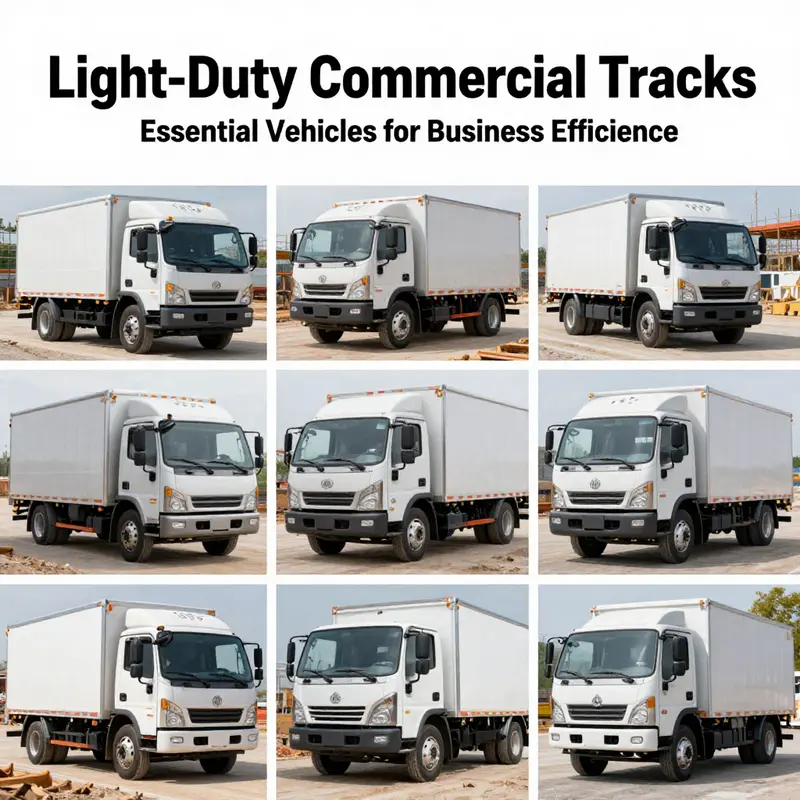
Rugged efficiency on wheels is not just about raw power or large dimensions. It is the practical balance of capability, maneuverability, and cost that makes light duty commercial trucks a cornerstone of small business logistics and service delivery. These vehicles sit at the intersection of utility and urban practicality, designed to carry meaningful payloads while still weaving through city streets, parking lots, and tight work sites with ease. They are characterized by a GVWR, the gross vehicle weight rating, that typically sits up to 6,000 pounds, a threshold that classifies them as light duty within standard automotive regulations. This weight limit is not a badge of fragility; rather, it reflects a design choice that prioritizes nimbleness, efficient fuel consumption, and straightforward maintenance. For many operators, a typical payload of 1,000 to 3,500 pounds translates into the ability to haul tools, materials, and equipment without the penalties that come with larger rigs. This makes these trucks especially attractive to contractors, landscapers, service technicians, and delivery personnel whose daily needs lie in reliability and predictable costs more than industrial scale. The open cargo bed associated with many configurations, whether in a pickup or a box setup, facilitates quick loading and unloading, a feature that saves time in busy workdays and reduces the risk of manual handling injuries. And because payload needs vary widely from job to job, the same chassis family often spans several configurations to meet specific operational demands. A flatbed can be ideal for transporting heavy or irregular items, a cargo van excels in interior protection and organized space for tools and parts, and a box truck can provide weatherproof, secure storage for delicate items. This configurational versatility is one of the defining strengths of light duty trucks; it allows a fleet to adapt rapidly to changing project scopes without investing in a second specialized vehicle. When the conversation shifts toward efficiency, it is common to hear about fuel economy, drivability, and modern safety features as core differentiators. In real-world terms, these trucks offer a blend of compact dimensions and practical power: not so small as to limit usefulness, not so large as to impede city work. Four wheel drive is frequently available as an option, offering improved traction for rough sites or slippery conditions, while the powertrains—gasoline and diesel variants among typical offerings—provide a spectrum of torque, efficiency, and maintenance profiles that fleet managers can align with their operations and local fuel economics. The result is a vehicle platform that can serve the same basic mission across diverse industries, yet be tailored to the unique constraints of a given job, vehicle lot, or customer requirement. The absence of a single, universal design is at once a constraint and a strength: it compels buyers to define priorities and tradeoffs clearly, and it enables suppliers and dealers to present a broader array of practical choices without forcing all users into one standard package. In this sense, light duty trucks are less about a rigid formula and more about a framework that can be tuned to fit a specific workflow as it evolves over time. Although many readers may first recall a pickup or a cargo van when the phrase light duty is invoked, it is the underlying principle of scalable utility that binds these vehicles to so many everyday business needs. Take an individual tradesperson who frequently transports a set of hand and power tools, spare parts, and a few bulky items to multiple worksites. A compact pickup with a long bed or a mid-size cargo van can handle that combination with a high degree of reliability, while a flatbed or a specialized box can extend the same footprint to accommodate heavy lift requirements and weather-protected storage. The same logic applies to delivery and service operations that need regular, predictable schedules. Light duty trucks are designed to be honest workhorses: not the fastest or the most luxurious vehicles on the road, but durable, straightforward, and capable of delivering the essentials with minimal fuss. The open bed or configurable cargo area is a practical feature for loading and unloading, while the vehicle’s size helps operators maneuver through dense urban environments where congestion and tight loading zones are the norm. In markets around the world, the appeal of light duty trucks is broadened by fuel choices and emissions strategies. Some operators prioritize gasoline for its familiarity, wider service networks, and lower upfront complexity. Others lean toward diesel for torque, durability, and long-range work plans. Increasingly, manufacturers are offering electrified or hybrid variants within the same light duty framework, a shift driven by regulatory pressures and customer demand for lower operating costs and quieter operation. The prospect of electrification in the light duty sector is not merely a future possibility; it is already reshaping how fleets think about routine tasks, maintenance cycles, and total cost of ownership. The quiet operation of electric powertrains, for instance, can reduce noise exposure on site and expand the hours a crew can work in certain areas. For fleets that travel short-to-moderate daily distances and return to base for charging, electric or hybrid options begin to make sense financially as well as environmentally. The shift toward electrification also intersects with the broader development of telematics and connected services that enable owners to monitor utilization, plan maintenance, and optimize routes with precision. Telematics brings a new layer of visibility to light duty operations. Fleet managers can track mileage, fuel consumption, and even driver behavior in near real time, and they can receive alerts for issues such as out-of-service codes or early wear in brake systems. This level of insight helps prevent breakdowns, improve safety, and extend the life of the vehicle, all while making daily logistics more predictable. In urban settings, where every minute counts and every mile costs money, this combination of practical payload capability, configurable cargo layouts, and intelligent monitoring becomes a decisive factor in choosing the right vehicle for a given business. The capacity to tailor a truck to a specific job—from a low-profile cargo van that slides easily into a downtown delivery slot to a robust flatbed that can haul bulky equipment to a remote site—means a company can optimize its fleet not just for today but for the anticipated next phase of its work. It is this adaptability, paired with the already favorable economics of light duty platforms, that keeps them at the core of many service-based industries. Of course, the choice does not come without considerations. Total cost of ownership includes more than the sticker price; it encompasses fuel, maintenance, insurance, taxes, and depreciation. Light duty trucks typically offer favorable fuel efficiency relative to larger, heavier commercial peers, which translates into lower ongoing costs no matter the sector. Yet maintenance needs can vary by configuration and propulsion type. Diesel variants tend to deliver longevity and high-torque performance in demanding conditions, but they can require more specialized service and parts expertise. Gasoline variants may present lower upfront costs and broader service networks, which can matter to operators with dispersed fleets or limited downtime for maintenance. As electrified options grow, charging infrastructure and battery life become new decision variables. Fleet managers must weigh the upfront premium of an electric or hybrid model against the long-term savings from lower fuel costs and potential incentives. They must also consider the reliability of charging infrastructure at their sites or along commonly traveled routes, the availability of spare parts, and the skill set of technicians who will service the vehicles over many years of operation. The broader ecosystem around light duty trucks—parts supply, service networks, and regulatory standards—plays a substantial role in shaping the total cost of ownership. Regulatory frameworks, in particular, influence which trims, powertrains, and safety features are standard or optional in different markets. The Federal Motor Carrier Safety Administration, for instance, provides classifications, safety regulations, and standards that help fleets align their choices with compliance requirements. While the day-to-day use of these vehicles is often pragmatic and hands-on, the decision process is inherently strategic, balancing immediate operational needs against the longer arc of a business’ growth and its evolving environmental commitments. In practice, a well-chosen light duty truck can become a reliable work companion for a team that moves quickly, serves customers efficiently, and maintains a conservative approach to risk and maintenance. It can be the vehicle that turns a rough day into a smooth one by enabling faster loading, easier access to site offices, and better control over delivery windows. The best choices reflect not just what a truck can carry, but what it can do for a crew’s workflow, the way it protects valuable equipment, and how it integrates with a fleet’s broader planning and reporting tools. For operators who want to understand how to navigate these options, it helps to think in terms of four practical considerations: payload fit, configurability, propulsion strategy, and after-sales support. Payload fit means aligning the vehicle’s GVWR and body configuration with the actual cargo profile. If daily loads are substantial, a longer bed or a larger cargo area can save trips and reduce handling. If loads are delicate or require weather protection, a van or box configuration might be preferable to a bare pickup. The right configuration reduces the number of trips, speeds up work, and minimizes wear on road surfaces and equipment. Configurability recognizes that needs change over time. A fleet may start with a basic package and add options such as a tool storage solution, ladder racks, or a secure cargo partition. It also means buying into a platform that can be adapted to future needs, such as electric propulsion or telematics upgrades, without forcing a wholesale replacement of the vehicle. Propulsion strategy is increasingly central. Gasoline remains common for its convenience and broad service networks, but diesel continues to offer torque and endurance in demanding settings. Electric and hybrid options are expanding the spectrum of choices, especially in regions where policies incentivize low emissions and where the total cost of ownership can be favorable over a multi-year horizon. The presence of electrified light duty trucks can reshape the economics of service fleets by reducing fuel spend and enabling quiet operation in sensitive urban zones. Finally, after-sales support matters as much as initial features. A robust warranty, accessible service centers, and responsive parts availability can shorten downtime and extend vehicle life. Fleet managers often assess dealer networks and the quality of maintenance programs when selecting a supplier. This is where the broader market picture matters, since fleets require predictable service intervals and rapid access to qualified technicians who understand the nuances of light duty systems, from brake components to electronic control modules. Beyond the operational math, light duty commercial trucks carry a cultural dimension. They symbolize a practical, service-facing approach to business. They are practical tools that empower small teams to execute complex logistics with a degree of efficiency that once required much larger, more expensive assets. They enable windowed deliveries in urban cores, short-haul work between sites, and the continuing adaptation of mobile service models in a world that increasingly values speed, reliability, and traceability. In this sense, understanding what light duty trucks are also means understanding how businesses intend to grow with them. The decision to invest in a light duty platform is a decision to invest in the ability to meet customers where they are, to keep tools organized, and to maintain a predictable schedule in the face of changing weather, traffic, and marketplaces. The ecosystem supporting these vehicles—ranging from safety technologies to telematics, from efficiency-focused powertrains to cargo configurations—reflects a broader trend in commercial transportation: the shift toward smarter, more adaptable, and more resilient fleets. As electrification gains momentum in the light duty segment, fleets have more options to reduce emissions while preserving the flexibility that makes these trucks so attractive in the first place. The conversation also ties into how fleets plan procurement, negotiate with dealers, and evaluate long-term return on investment. In turn, this demands a clear understanding of the total lifecycle of the vehicle: purchase price, incentives or tax benefits, fuel or energy costs, maintenance and repair, insurance, downtime, and eventual resale value. The bottom line is that light duty commercial trucks are not a single product category. They are a family of platforms designed to operate in the everyday economy—delivering materials, moving equipment, and enabling service calls with dependable cadence. They occupy the space where practicality meets performance, where the constraints of city streets meet the ambitions of growing businesses, and where the decision to adopt an electrified or conventional powertrain reflects deeper choices about sustainability and cost. For readers who want to explore how these concepts translate into real-world purchasing decisions and fleet planning, a current topic of discussion is how electrified light duty options are being integrated into existing operations. A growing body of industry commentary highlights the importance of matching charging opportunities with daily routes, scheduling downtime for charging without interrupting critical service windows, and evaluating the total cost of ownership across a multi-year horizon. This perspective is especially relevant to operations that require frequent, short trips between urban sites or campuses, where electric options can offer quiet operation, predictable maintenance, and potential incentives that improve long-term economics. Readers exploring this transition can benefit from recent analyses that connect the dots between vehicle capability, energy strategy, and fleet discipline. For a more in-depth look at how electrification is reshaping the Canadian market and what it means for daily service routes, you can read about electric trucks revolutionize the Canadian market. This resource offers practical context for fleets that are balancing payload needs with energy efficiency and infrastructure readiness, reinforcing the premise that light duty trucks are not only about what they carry but also about how efficiently they carry it. As with any significant equipment decision, the best path forward blends operational clarity with strategic foresight. Light duty commercial trucks simplify the journey by offering scalable options that align with a wide range of business models. They enable fast, reliable site access; they support organized, protected cargo storage; and they integrate with modern fleet management technologies that illuminate performance and prevent downtime. In short, these vehicles are a pragmatic answer to the daily demands of service-based economies, a dynamic blend of payload capability and urban agility, and a platform that continues to grow as technology and markets evolve. External regulatory and standards guidance continues to inform every choice, reminding operators that vehicle design, safety features, and driver training exist within a broader system of compliance and accountability. For regulatory context, see the Federal Motor Carrier Safety Administration guidance and standards, which provide authoritative detail on vehicle classifications, safety regulations, and expectations for operators and fleets: https://www.fmsa.dot.gov.
The Workhorse Within Reach: How Light-Duty Commercial Trucks Forge Everyday Utility Across Industries
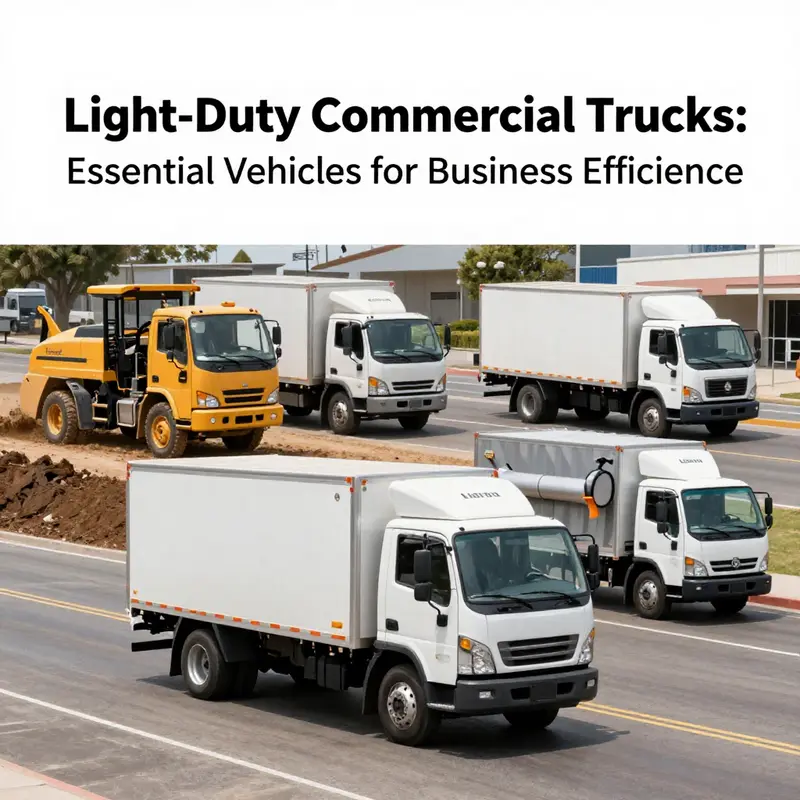
Light-duty commercial trucks sit at a practical crossroads where personal mobility and professional capability intersect. They are not oversized haulers or specialized industrial machines; they are compact, efficient, and surprisingly adaptable vehicles whose core job is to move people and goods with a level of reliability that small businesses, tradespeople, and service fleets depend on daily. In essence, they balance payload capacity, cargo space, and operating costs in a way that makes them a sensible choice for a broad spectrum of tasks. Their value emerges not from a single standout feature but from a carefully tuned blend of size, strength, and versatility that enables a technician to haul tools to a site, a delivery driver to relocate packages within a city block, or a maintenance crew to ferry crew and equipment to back-to-back work sites without sacrificing maneuverability on crowded streets. The result is a vehicle that can slip through narrow lanes and park in tight spaces, yet still carry enough cargo and passengers to keep a crew productive through a full shift.
Payload and cargo flexibility sit at the heart of this class. Light-duty trucks typically accommodate roughly 1,000 to 3,500 pounds of usable load—the practical range that aligns with the kinds of goods, materials, and equipment common to small-scale operations. That span matters in real-world terms: it translates into the ability to responsibly transport a toolbox, a ladder rack, piping or conduit, a bundle of lumber, or a set of maintenance parts without forcing a second trip or renting a larger vehicle. The open cargo bed that many of these trucks feature is designed to simplify loading and unloading, especially when delivery times are tight or access to a job site is constrained. An open bed also accommodates larger items that might not fit neatly in a closed cargo area, while bed liners and tie-downs help secure materials and protect the bed itself from wear. For crews that must travel with four or more people, the cab design becomes as important as the bed. Double cab and extended cab configurations offer seating for a small crew without sacrificing too much payload capacity, enabling a driver to keep a team bonded on the way to a site while still leaving enough room for tools and equipment. In this sense, the vehicle’s interior layout mirrors the job’s flow: it needs to accommodate people and gear in a way that minimizes downtime between assignments and reduces the fatigue that can come with long commutes between sites.
The urban environment—the arena where many light-duty trucks earn their keep—places specific demands on these vehicles. Traffic, curb space restrictions, and the need for precise handling in pedestrian-heavy neighborhoods all push manufacturers to optimize size and steering responsiveness. A compact footprint improves maneuverability and parking footprint, and that, in turn, lowers the day-to-day operating costs of fleets that must deliver on tight schedules. The ability to weave through congested streets, find accessible loading zones, and navigate narrow alleys makes a light-duty truck more than a cargo mule; it becomes a dependable daily partner that can reach a job site quickly, not just once but repeatedly throughout a workday. When you couple that practicality with the potential for efficient operation, you begin to see why these trucks form a central pillar of service fleets, construction teams, and delivery networks alike. They are not merely vehicles that move goods; they are vehicles that enable workflows, adjust to various tasks, and support teams that depend on reliable uptime.
From a mechanical perspective, these trucks come with a choice of powertrains that balance performance with efficiency. Gasoline engines offer straightforward reliability and driver familiarity, while diesel options bring notable torque and durability that can be advantageous when hauling heavier loads or navigating hilly terrains. The spectrum of drivetrains also includes four-wheel-drive configurations, which provide enhanced traction in rough or slippery conditions. This capability matters for crews who operate in off-road job sites, rural routes, or weather-affected landscapes where grip makes the difference between getting the load where it needs to be and getting stuck. The diverse powertrain landscape reflects the broader goal of light-duty trucks: to deliver steady, predictable performance under a range of daily demands rather than to maximize raw acceleration or top speed. Even as fuel efficiency has become a central consideration in fleet planning, the choices remain pragmatic. The emphasis is on dependable, real-world economy that translates into lower total cost of ownership—an enduring priority for small employers and service providers who must balance upfront purchase costs with ongoing operating expenses.
Inside the cab, technology and design converge to improve productivity and safety. The latest iterations of these trucks emphasize driver comfort, durable interiors, and user-friendly interfaces. Ergonomics plays a meaningful role when crews spend long hours on the road or at job sites, so seats, climate control, and noise attenuation all contribute to a more sustainable workday. At the same time, practical features such as smartphone integration, rugged storage solutions, and easily accessible controls reduce the friction of switching tasks on the move. From a safety perspective, stability control, traction aids, backup cameras, and forward-collision mitigation systems are increasingly common. These tools help drivers anticipate hazards, manage payload stability, and maintain steady progress through a workday that can present crowded urban conditions, uneven terrain, or shifting weather. The growing integration of driver-assistance technologies—without overwhelming the driver with complexity—embodies a broader industry trend: operators are asking for smarter machines that complement human judgment and extend the safe, efficient use of a vehicle across varied daily duties.
The applications of light-duty commercial trucks span multiple sectors, and their adaptability underpins their enduring appeal. In the construction and maintenance realm, they support crews that travel to sites with a full complement of tools, parts, and small equipment. The open bed makes it straightforward to haul ladders, piping, or bulk materials, while the cabin keeps crew members protected on the way there. In the delivery and logistics space, these trucks serve as the nimble backbone of last-mile networks. Their compact size makes it feasible to operate within dense city centers, while their payload envelope accommodates a steady stream of packages, perishable goods, or locally sourced inventory. In municipal settings, fleets employ light-duty trucks for shuttle services, light maintenance, and on-site projects where flexibility, reliability, and a relatively low footprint matter. Agriculture and rural enterprises also find use for these vehicles, especially in transports that require traveling across mixed terrain or moving smaller loads over shorter distances between fields, barns, and processing stations. Across these contexts, the common thread is clear: light-duty trucks combine practical capacity with cost-conscious design to meet specific, real-world needs. They are the kind of vehicle that isn’t celebrated for a single groundbreaking feature but is valued for what it enables—timely deliveries, efficient site logistics, and the ability to move people and materials in tandem.
A practical way to understand their role is to think about how a fleet manager or a small business owner makes decisions about daily operations. Total cost of ownership matters as much as purchase price. The economics of service life, maintenance intervals, fuel economy, and resale value all shape the long-term viability of a given vehicle in this category. Reliability is a critical factor because downtime translates directly into lost productivity. A truck that starts reliably, maintains a predictable range of fuel consumption, and requires reasonable maintenance intervals helps teams keep schedules intact. In many markets, these vehicles also offer strong resale value, a factor that improves the overall return on investment when fleets upgrade or reallocate assets. The choice is not simply about buying the cheapest tool; it is about selecting a vehicle that can absorb daily wear, deliver steady performance, and retain value as the business evolves. The ability to repurpose a truck for a different line of work, or upgrade to additional payload while keeping operating costs in check, makes light-duty options especially attractive to entrepreneurs who must balance ambition with cash flow.
If we trace the trajectory of these trucks from design to daily use, a thread emerges about adaptability. The bed, the cab, and the drivetrain are not isolated components; they are points along a continuum that reflects how work actually happens. A tool-heavy day might begin with loading ladders and bulk materials, continue with a route that requires precise navigation through dense urban corridors, and end with a site visit that demands quick turnover between jobs. In every phase, the vehicle must deliver the right mix of payload space, passenger comfort, and control in a compact footprint. This is an understated but powerful merit of light-duty trucks: they are engineered to be versatile enough to support a variety of duties with minimal friction. When a fleet is evaluating whether to add more of these vehicles, the conversation often returns to a practical calculus: will these trucks enable me to complete more tasks in less time while controlling operating costs? Will they fit within urban and rural workflows alike without demanding a costly maintenance regime? Will they hold up under the routine stresses of daily work and maintain their value as assets over time? The answers typically point toward the same conclusion: light-duty commercial trucks are uniquely positioned to enable a broad array of professional activities with efficiency and dependability, making them a core asset in many business models.
In this sense, the community surrounding light-duty trucks is less about a single set of specifications and more about the ongoing alignment of vehicle capability with evolving work patterns. Fleets adapt by selecting configurations that best fit their most common tasks: cab size that seats the crew, bed dimensions that accommodate the typical load, and drive systems that offer traction where it matters most. This adaptive approach is underscored by the maintenance and service ecosystems that support these vehicles. Widespread availability of parts, service networks that can accommodate routine repairs with minimal downtime, and the possibility to customize interiors for specialized workflows contribute to a practical, scalable solution for small- and mid-sized operations. In other words, light-duty trucks are not merely a transportation solution; they are a mobility platform that grows with a business, accommodating changes in market demand, service lines, and geographic footprint without forcing a wholesale vehicle replacement every few years.
For readers who want a succinct snapshot of how this class fits into broader market trends, the idea of versatility tied to cost efficiency remains central. Light-duty trucks are increasingly viewed not just as transportation but as a strategic asset in fleet planning. When a company analyzes a transition toward more reliable, fuel-efficient options, the calculus often leads to choosing vehicles that can perform a wide range of duties without overwhelming operating budgets. That versatility is especially valuable in environments where job sites can shift quickly, where a crew may add or drop tasks on short notice, or where a company expands into new lines of service with the same set of core tools and transport needs. In these circumstances, light-duty trucks emerge as practical engines of mobility, capable of supporting the day-to-day rhythms of multiple industries while preserving the flexibility necessary to respond to changing demands.
As you consider the path from concept to concrete fleet composition, it helps to keep in view one practical thread: these vehicles are not about prestige or extreme capability; they are about balanced performance, resilient design, and smart economics. They offer the right mix of cargo space and passenger ability in a format that many operators can afford and maintain with predictable costs. The everyday reliability of a light-duty truck can translate into meaningful gains in productivity and service levels, translating into more job sites reached, fewer late deliveries, and a smoother workflow across the entire operation. This thoughtful balance—between payload, maneuverability, fuel efficiency, and cost of ownership—defines what light-duty commercial trucks are for. They are the reliable, adaptable tools that empower a wide range of professionals to keep goods moving, services delivered, and teams coordinated in a world where timing and budget often determine success.
For readers seeking deeper context on how market dynamics shape vehicle choices over time, consider exploring industry discussions on current market trends and how used-truck markets respond to shifting demand. Learn more about market dynamics in the linked resource: Current trends in used-truck sales growth (https://mcgrathtrucks.com/current-trends-in-used-truck-sales-growth/). This kind of guidance helps to align acquisition decisions with broader cycles in price, supply, and maintenance considerations, ensuring that a light-duty truck purchase remains a sound strategic move across the life of a business.
External resource: https://www.fueleconomy.gov
Measuring Value: How Light-Duty Commercial Trucks Drive Business Efficiency and Profitability

Measuring Value: How Light-Duty Commercial Trucks Drive Business Efficiency and Profitability
Light-duty commercial trucks occupy a strategic position in many business models. They combine compact size with meaningful payload capacity, offering a unique blend of agility, operating economy, and flexibility. For service providers, contractors, and small fleet operators, these vehicles are more than rolling assets; they are operational tools that influence cash flow, pricing, labor efficiency, and customer satisfaction. Understanding what these trucks are worth to a business requires moving beyond the sticker price. It demands an analysis of lifecycle costs, revenue opportunities unlocked, and the less tangible benefits tied to speed, access, and brand reliability.
At the most basic level, the economic value of a light-duty commercial truck stems from its ability to move goods and people reliably at low cost. Compared with larger trucks, these vehicles typically consume less fuel, incur lower maintenance costs, and carry lighter financing burdens. That translates directly into predictable monthly expenses and a smaller capital outlay to begin operations. For many small and medium-sized enterprises, this lower threshold for entry is critical. It allows them to scale services quickly, test new routes or business lines, and avoid tying up capital in oversized assets.
Beyond purchase and fuel costs, efficiency gains occur in everyday operations. Light-duty trucks are designed for tight urban environments. Their footprint lets drivers navigate narrow streets, access curbside loading zones, and complete more stops per hour than larger trucks. Increased stops translate to more billable activity for the same labor cost. For companies whose revenue depends on the number of completed deliveries or service calls, that productivity boost can shift the balance from marginal profitability to stable earnings. Efficiency here is not an abstract advantage; it converts directly into revenue when routes are planned to exploit the truck’s strengths.
Versatility also contributes to value. These trucks often support modular configurations: bed racks, secure tool storage, refrigerated units, or extended cabs for crews. That adaptability lets a single vehicle type serve multiple roles across different jobs, maximizing utilization and reducing the need for specialized fleets. When equipment can be reconfigured between seasons or contracts, businesses avoid idle assets and lower total fleet ownership. The economic effect is greater asset turnover and higher return on capital.
The current market environment amplifies these advantages. Demand for light commercial vehicles in delivery and urban logistics continues to expand as e-commerce grows. Forecasts expect a substantial increase in delivery-focused light vehicles over the coming decade. That trend reflects both consumer expectations for faster deliveries and the economics of last-mile logistics. When businesses can meet delivery windows with smaller, more nimble trucks, they reduce per-package delivery costs and better manage labor scheduling. In many markets, this capability creates a competitive edge that translates into customer retention and pricing power.
Scalability is often underestimated when evaluating truck value. Small businesses frequently face volatile demand. A model that performs reliably under low-volume conditions but scales without prohibitive expense is invaluable. Owning light-duty trucks makes it easier to add capacity incrementally. Leasing and financing options are typically more accessible and flexible than for heavier commercial vehicles. That flexibility allows managers to align fleet size with seasonal fluctuations or growth without stranding capital.
Revenue diversification is another critical component. With the right configuration, light-duty trucks enable services beyond simple deliveries. Refrigerated variants enter cold-chain logistics. Crew-cab layouts support small team deployments. Bed-mounted equipment enables mobile maintenance and repair services. Each configuration extends addressable markets and allows businesses to bid on contracts they could otherwise not serve. The incremental revenue from these new opportunities often justifies modest investments in vehicle customization.
Long-term value is grounded in lifecycle cost management. These trucks tend to have lower scheduled maintenance costs and simpler drivetrains. With consistent preventive maintenance, many light-duty trucks achieve high mileage before major overhauls. That durability, combined with strong resale markets, supports total cost of ownership models that show favorable returns. Even in cases where specialized equipment increases maintenance complexity—such as refrigerated systems—entrants into niche markets can command higher margins that offset additional upkeep. For most standard applications, the balance between upfront costs and ongoing savings remains attractive.
Insurance and regulatory factors shape the economics as well. Insurance premiums for light-duty commercial trucks are often lower than for heavier commercial vehicles, reflecting reduced risk and simpler repair profiles. Additionally, licensing and permit requirements can be less onerous for lighter classes of vehicles. In urban areas where emissions restrictions or access regulations apply, the smaller footprint and cleaner engines of modern light-duty trucks can retain route access that larger vehicles lose. Maintaining regulatory compliance with a lighter asset profile reduces operational friction and prevents costly rerouting.
Financing terms also influence perceived value. Lower asset prices and stable residual values typically yield more favorable financing. Monthly payments become more predictable, which supports accurate cash flow planning. For businesses that frequently replace or rotate vehicles, that predictability makes fleet turnover a manageable strategy for keeping running costs down and maintaining modern equipment.
Used market stability further underpins fleet economics. Strong demand and limited supply in certain vehicle segments support residual values, making trade-ins and resale operations viable. For companies that adopt a replacement strategy tied to vehicle age or mileage, healthy resale markets recover a meaningful portion of the initial investment. This continuity in value also drives confidence in leasing, because residual value assumptions remain robust.
Operational metrics clarify the return on investment. Simple calculations show how efficiency improvements create value. Increased stops per hour raise revenue potential per driver shift. Reduced idle time and improved route planning lower fuel bills and labor costs. Lower maintenance frequency reduces downtime and repair expenditures. When these metrics are quantified and monitored, they translate into actionable decisions: whether to add vehicles, invest in telematics, or adopt alternative drivetrains. Management systems that track utilization, fuel consumption, and repair history make these decisions evidence-based and measurable.
Technology adds to the economic case. Telematics, route optimization software, and preventive maintenance alerts maximize the utility of each vehicle. They drive down hidden costs associated with inefficient routing, excessive idling, and reactive repairs. Investments in technology paired with light-duty trucks can produce outsized returns because the baseline operational costs are already low. Small fleet operators who embrace data can significantly outpace peers who rely on intuition alone.
Electrification and alternative powertrains deserve attention. While electric variants may carry higher upfront costs, they reduce fuel and maintenance expenses. For urban operations with predictable routes and access to charging, the total cost of ownership can become competitive quickly. Additionally, electric trucks can unlock access to low-emission zones and confer reputational benefits with customers seeking greener suppliers. As battery costs decline and charging infrastructure grows, the economic calculus will shift further in favor of electrified light-duty trucks.
There are caveats and trade-offs. Specialized models with complex systems require trained technicians and potentially higher repair costs. Payload and towing limits constrain applicability for some industries. In rural or heavy-duty applications, larger vehicles still hold advantages. Therefore, fleet decisions must align with job profiles, route characteristics, and long-term strategy. For many businesses, the optimal approach is a mixed fleet that leverages light-duty trucks where they shine and reserves heavier assets for tasks beyond their capabilities.
Risk management must also be part of the evaluation. Unexpected downtime, narrow resale markets for highly customized units, and evolving emissions regulations pose threats to projected returns. Mitigation strategies include standardized vehicle specifications, multi-use upfitting, and staggered replacement schedules. Standardization enhances flexibility, preserves residual value, and simplifies maintenance programs.
Ultimately, the value of a light-duty commercial truck is situational and multifaceted. It is measured in reduced per-stop costs, faster service turnarounds, and the ability to enter and profitably serve new markets. It is also captured in lower financing and insurance burdens, predictable maintenance schedules, and resilient resale prospects. For businesses that rely on speed, access, and cost control, these trucks are strategic assets that enable nimble growth and operational resilience.
One practical insight is that maximizing value requires active management. Tracking fleet utilization and maintenance data makes cost centers visible. Matching vehicle configuration to job requirements avoids under- or over-spec’ing. Exploring flexible financing and insurance options preserves cash. Finally, keeping an eye on market trends—especially in last-mile delivery and vehicle electrification—ensures fleets remain aligned with customer needs and regulatory shifts.
For readers interested in deeper technical background, a comprehensive overview of light-duty vehicle characteristics and engineering considerations is available through an authoritative external resource: https://www.sciencedirect.com/topics/engineering/light-duty-vehicle.
For broader market perspective and analysis related to fleet economics and used vehicle pricing dynamics, consider the article on navigating economic uncertainties in the North American trucking markets, which offers relevant insights for fleet decision-makers: https://mcgrathtrucks.com/navigating-economic-uncertainties-key-insights-from-the-canadian-and-us-trucking-markets/.
This integrated view reframes light-duty commercial trucks from simple conveyances to strategic instruments. When chosen and managed correctly, they reduce costs, expand service capabilities, and sharpen competitive advantage. Firms that quantify their operational gains, align specifications to work demands, and adapt to technological changes will find these vehicles to be high-yield investments in both the short and long term.
Final thoughts
In summary, light-duty commercial trucks are more than just vehicles; they are vital assets that enhance operational efficiency across various industries. Their unique features, including fuel efficiency and compact size, make them ideal for navigating urban environments while meeting the transportation needs of small to medium-sized businesses. As we’ve explored, these trucks serve a wide array of applications, reinforcing their indispensable role in the logistics chain. Understanding their economic impact allows stakeholders to make informed decisions that bolster business growth and sustainability. Embracing the capabilities of light-duty commercial trucks is essential for any enterprise looking to streamline operations and improve service delivery.