Understanding whether your truck qualifies as a commercial vehicle is crucial for trucking company owners, fleet managers, and logistics professionals. The classification directly impacts regulatory compliance, licensing requirements, and insurance implications. This article delves into the primary criteria for determining commercial vehicle status—focusing on the purpose of use, necessary licensing, and the associated regulations and insurance considerations. By unpacking these elements, stakeholders in the trucking and logistics sectors can make informed decisions and adhere to regulations to optimize their operations.
How Purpose of Use Decides Whether Your Truck Is a Commercial Vehicle
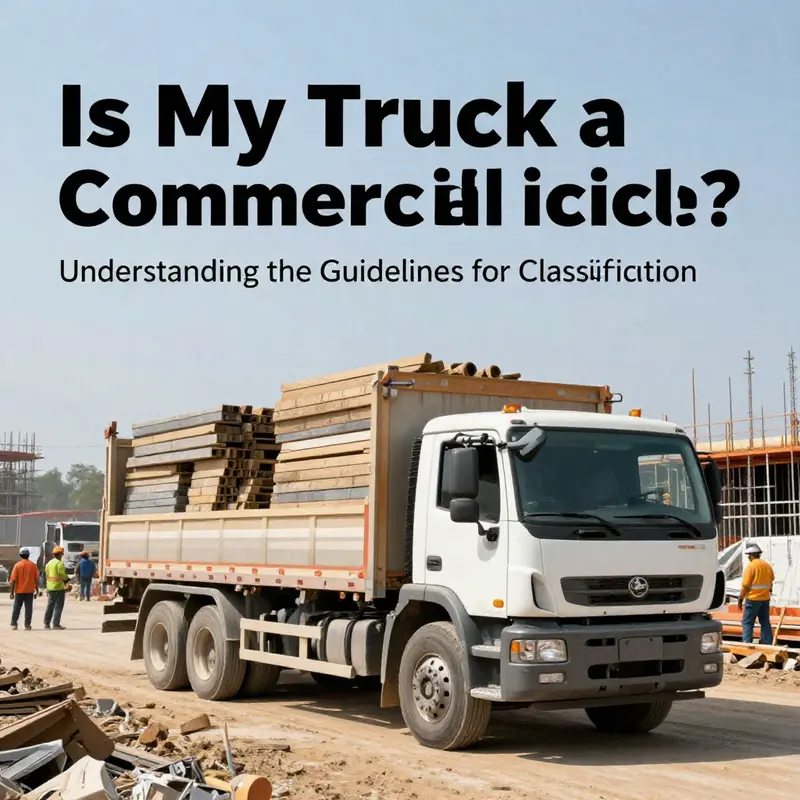
Purpose over Paint: Why What You Do With Your Truck Matters More Than What It Looks Like
Whether your truck is a commercial vehicle hinges on one central question: what do you use it for? Insurers, regulators, and licensing authorities focus first on purpose of use, not merely the truck’s size, brand, or bed length. A pickup used to move the family on weekends looks identical to one used to haul drywall across town, yet regulators often treat them differently because the activity changes the legal and insurance obligations. This chapter walks through the reasoning behind that focus, the practical tests authorities apply, and the choices you can make to stay compliant and protected.
Regulators and underwriters classify vehicles based on function. If your truck is used to carry goods or passengers as part of a business, it can be a commercial motor vehicle (CMV) regardless of ownership or appearance. That matters because CMV status triggers different insurance rules, registration categories, licensing requirements, and sometimes federal oversight. The distinction is not always binary. Many owners use trucks for both work and personal life. The key is primary intent. When business activity predominates, expect different obligations.
Think about daily habits. If your truck spends most weekdays carrying jobsite tools, deliveries, or equipment to customer locations, it demonstrates a business purpose. If it mostly supports commuting, groceries, and weekend recreation, it tilts toward personal use. Occasional trips for work can create gray areas. Insurers ask about frequency and regularity. Regulators look at the transportation’s role in commerce. A single trip hauling your friend’s business product for payment may be minor legally, but repeated trips that generate income point toward commercial classification.
Federal and state rules layer over that common-sense test. Under federal guidance, a CMV typically includes vehicles used in commerce to transport property or passengers and meeting specific criteria. These criteria include weight thresholds and passenger counts, and they also encompass vehicles carrying hazardous materials requiring placarding. One practical implication: a truck used for business that passes the federal weight threshold or transports regulated hazardous goods becomes subject to Federal Motor Carrier Safety Administration (FMCSA) rules. That introduces hours-of-service limits, driver qualifications, vehicle inspections, and record-keeping tied to safety in interstate commerce.
Beyond federal thresholds, insurers and state DMVs often set their own definitions. Insurers decide whether a personal auto policy or a commercial auto policy applies. A commercial policy typically covers higher liability limits, commercial property exposure, employees in the course of work, and risks related to business operations. If you use a personal policy while your truck is doing business, you risk denied claims or sublimits. This risk makes it essential to be honest with your insurer about how you use the vehicle.
Licensing follows suit. Many jurisdictions require a Commercial Driver’s License (CDL) when a vehicle exceeds a gross vehicle weight rating (GVWR) threshold. The exact number varies by country, but in the United States a common breakpoint is 10,001 pounds GVWR for CMV classification that can affect driver licensing and safety regulations. Additionally, passenger capacity and hazardous materials transport can trigger CDL requirements. If your business requires a CDL, securing the right license is not optional—it’s a legal requirement tied to safety standards and liability exposure.
The practical effect is simple. Use your truck to earn income or perform business tasks, and you must examine insurance, registration, and licensing carefully. Use it strictly for personal needs, and personal auto rules usually apply. But the world between those extremes is complex. Consider common scenarios and how purpose of use plays out.
A contractor who transports tools and materials daily typically has a commercial vehicle. The truck is integral to providing services. A delivery driver who works for a company and picks up goods for payment is clearly operating a CMV. A landscaper who hauls equipment and plants to various clients is in the same category. Each of these examples shows business use as the truck’s primary function.
Contrast that with a homeowner who occasionally helps a friend move or who hauls personal furniture. These acts do not usually convert the truck into a commercial vehicle. Recreational uses—camping, towing a boat, moving household goods during relocation—remain personal. But be cautious. If the homeowner starts charging neighbors for hauling services, even informally, the risk of commercial classification increases.
Mixed use is the most common reality. Many small-business owners use a single truck both for commuting and for business tasks. In these cases, insurers and regulators consider the proportion of use devoted to business. Documenting mileage, schedules, and business trips clarifies intent. Some owners maintain separate vehicles for work and personal use to avoid complexity. Others add commercial endorsements to their policies and adjust registration and plates accordingly.
How you claim deductions for taxes can also signal purpose. If you deduct business mileage or claim the truck as a business asset, tax filings reflect commercial use. This evidence can influence an insurer or regulator if classification is disputed. Keep clear, contemporaneous records. A mileage log, invoices, and job receipts create a factual trail that supports your chosen classification.
Employer-provided trucks add another layer. If your employer owns the vehicle and you operate it for business, the truck may be commercial under the employer’s coverage and registration. If you own the truck but use it for employer tasks, your employer’s policies and insurance expectations matter. Employers often require proof of commercial coverage or specific endorsements. Confirm who is responsible for insurance and whether your driving tasks require a CDL or other qualification.
Leasing and rental arrangements matter too. Rental trucks used for business may carry commercial coverage provided by the rental company, or you may need to purchase a business insurance add-on. Long-term leases that serve a company’s needs often classify the vehicle as a commercial asset. Read contracts and insurance terms carefully to avoid gaps.
Vehicle modifications and equipment also influence perception. Adding business signage, permanent ladder racks, commercial toolboxes, or specialized equipment signals commercial intent. Those alterations change how insurers underwrite the vehicle and how regulators view it. If your truck is visibly set up for business, expect different insurance premiums and registration requirements.
Misclassification carries real consequences. If an insurer discovers that a vehicle insured under a personal policy was primarily used for business, they may deny claims or cancel coverage. Regulators may issue fines for improper registration or license violations. If an accident causes injury and the vehicle lacks proper commercial coverage, liability exposure can be severe. That financial risk makes correct classification a matter of protection, not merely formality.
So what should truck owners do to determine classification and remain compliant? Start with honest documentation. Track mileage for business and personal use separately. Maintain receipts, contracts, and schedules. If business mileage crosses a significant portion of total miles, consider commercial registration and insurance. If you carry others for work, transport hazardous materials, or operate a truck with a GVWR above federal thresholds, assume federal CMV rules may apply.
Talk to your insurer before changing how you use the truck. Describe typical trips, average weekly business mileage, and any permanent modifications. Insurers can advise whether you need a commercial auto policy or endorsements that expand coverage. They can also explain how premiums will change. For many, the extra premium is the rational cost of avoiding catastrophic exposure.
Consult your DMV and, if applicable, FMCSA resources. State agencies interpret federal rules and apply additional requirements. The FMCSA provides guidance on when a vehicle is considered a CMV in interstate commerce. When in doubt, get confirmation in writing from the authority responsible for vehicle registration and driver licensing in your jurisdiction.
Tax advisors and accountants provide complementary input. They help determine whether claiming the truck as a business asset aligns with tax strategy and whether depreciation, expenses, and deductions justify certain classifications. Tax filings that show commercial use create a documented record that can corroborate insurance and registration choices.
One practical management technique is to create clear policies if multiple drivers use the truck. Employers should have written vehicle-use rules. Owner-operators should make written notes about the truck’s primary purpose. Simple steps, such as labeling business trips in a logbook and keeping a calendar of assignments, reduce ambiguity.
If you face a regulatory or insurance dispute, your records matter. Mileage logs, job orders, delivery manifests, and invoices demonstrate the truck’s operational role. Photographs of the truck in business settings, signed job receipts, and driver statements can also support your case. Conversely, a lack of documentation weakens the position of someone claiming personal use when the truck clearly serves business functions.
The final dimension is safety and responsibility. Vehicles used in commerce often travel more miles, carry heavier loads, and face higher exposure to risk. Commercial rules, inspections, and driving qualifications exist to reduce that risk. Treating a truck used for business the same as a family vehicle overlooks that reality. Complying with commercial requirements enhances safety and reduces legal exposure.
Practical steps to decide
First, inventory how the truck is used over a representative period. Track two or three months of activity to see patterns. Second, review your insurance declarations and contact your insurer with the facts you collected. Third, check state registration rules and the FMCSA definitions that apply to federal oversight. Fourth, document everything—mileage, trips, clients, and payments. Fifth, if you find the truck is commercial, pursue the proper registration, adjust your insurance, and secure necessary driver qualifications.
Being deliberate about purpose of use removes guesswork. It protects your finances and reputation. When your truck performs business functions regularly, treating it like a commercial vehicle is the responsible choice. When it remains a personal conveyance, keep clear boundaries. Mixed-use requires special care, but it can be managed with clear records, appropriate endorsements, and an understanding of where regulatory thresholds lie.
For owners seeking ongoing perspective about trucks, markets, and operational realities, a useful internal resource is the McGrath Trucks blog. It offers context about buying, selling, and maintaining trucks that can help you evaluate the implications of using a truck in business or recreation: https://mcgrathtrucks.com/blog/.
If you need authoritative regulatory guidance about when a vehicle qualifies as a commercial motor vehicle, consult the Federal Motor Carrier Safety Administration’s rules and definitions. They provide the source standards used for federal oversight and clarify how weight, passenger capacity, and hazardous materials affect CMV status: https://www.fmcsa.dot.gov/regulations/commercial-motor-vehicle
Licensing as the Gatekeeper: How Your Truck Becomes a Commercial Vehicle and Why It Matters
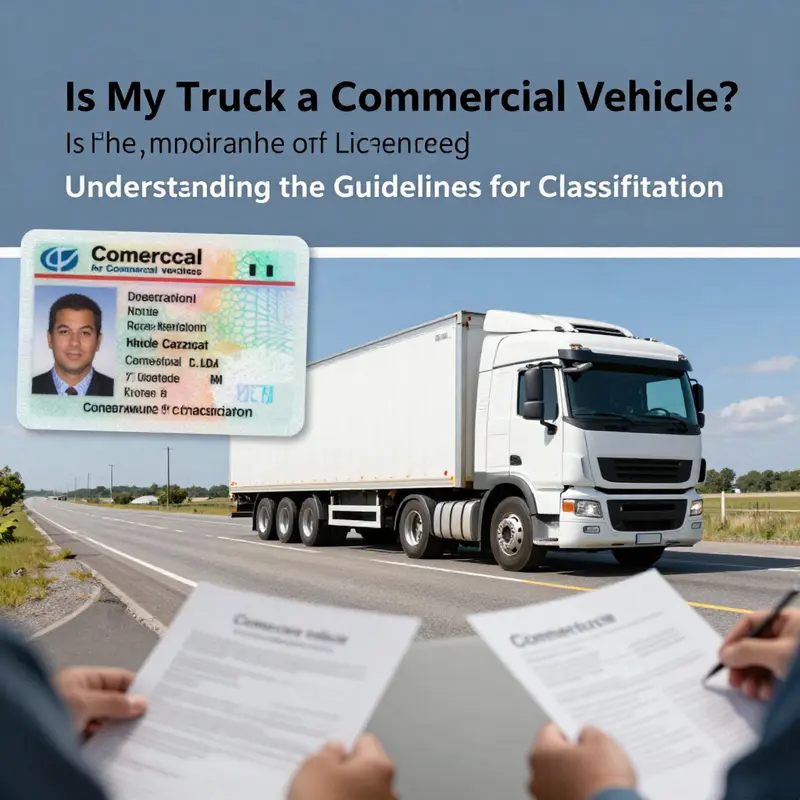
Determining whether your truck qualifies as a commercial vehicle hinges less on how big it is and more on how you use it. The question is not merely about the vehicle’s physical characteristics but about its primary purpose in the context of work, business, or income generation. This distinction—between personal use and business use—drives licensing requirements, regulatory oversight, insurance, and the responsibilities that come with operating a vehicle on public roads. The Cambridge Dictionary and the U.S. Department of Transportation lay the groundwork by defining commercial vehicles as those used for carrying goods or passengers as part of a business or trade, rather than for personal, non‑commercial purposes. That framing matters because it shifts the lens from how the truck looks to what role it serves in your daily operations. If your truck is essential to your livelihood, if it routinely moves products, tools, equipment, livestock, or people as part of a business activity, then it sits on the commercial side of the line. If, on the other hand, you primarily use the truck for personal errands, family trips, or recreational activities, it generally remains outside the commercial classification, even if the vehicle is a large pickup or a specialized work truck. This distinction is not merely academic. It governs licensing, regulatory compliance, and the costs of ownership in ways that affect every practical decision from filing taxes to renewing registrations. The simplest way to frame it is to ask: does the truck’s primary use contribute to earning income or supporting a business activity? If yes, licensing as a commercial vehicle follows; if no, it may stay in the personal-use category. But because laws vary by country, state, or province, the true test is to consult the official authority that governs vehicle classification where you operate. The classification you receive is the compass for everything that follows.
The practical consequences of that classification ripple through licensing and beyond. In many jurisdictions, operating a commercial vehicle triggers specialized licensing requirements, such as endorsements or a commercial driver’s license (CDL) that reflects the vehicle’s weight, configuration, and intended use. A driver with a CDL is not a luxury; it is a necessity for safely handling heavier vehicles, commercial routes, and potentially complex cargo arrangements. In some places, vehicle weight alone can determine whether a CDL or an equivalent license is required, while in others the separation hinges on whether the vehicle is carrying goods for a business or transporting passengers as part of a service. The logic is straightforward: commercial operations impose different risk profiles, and the licensing framework is designed to ensure that drivers possess the competencies to manage those risks. Beyond licensing, commercial vehicles participate in a regime of maintenance standards, fatigue management, and regulatory oversight that reflect the reality that these vehicles typically travel longer distances, carry heavier loads, and operate in environments where higher reliability and safety are paramount.
Where this gets nuanced is the way that weight, cargo type, and use interact. A heavy pickup that never hauls for a business may still be treated as a personal vehicle if no business activity drives its use. Conversely, a mid-size truck that regularly moves construction materials from one job site to another is a textbook example of a commercial vehicle, even if the total weight sits below the heaviest thresholds, because the vehicle’s use is inherently tied to a commercial operation. The reason the interplay matters is simple: licensing, insurance, and inspections adapt to reflect the vehicle’s purpose. If you’re operating commercially, you should expect to comply with stricter maintenance schedules, more frequent inspections, and potential insurance requirements that are tailored to business use, rather than to a private, non-commercial owner who drives infrequently and for leisure. In short, the classification is not a badge of honor or a badge of burden; it is a practical signal about what standards apply and what level of accountability you owe to other road users and to the authorities that oversee road safety and environmental stewardship.
To bring this into a clearer frame, consider the elements that authorities commonly assess when deciding a truck’s commercial status. First is the purpose of use: is the vehicle transporting goods or materials for work, or is it used to earn income as part of a business operation? Second is the cargo and its nature: are you moving commercially significant quantities of products, equipment, livestock, or hazardous materials? Third is the vehicle’s weight and configuration: does the GVWR (gross vehicle weight rating) or axle arrangement place it into a category that triggers commercial licensing or endorsements? Fourth is the destination and operation profile: are you traveling long distances, crossing jurisdictions, following hours‑of‑service rules, or staying within a local limit? These criteria are not rigid boxes but rather a framework that guides whether licensing should be sought, and if so, what kind. Acknowledging this framework helps you plan, rather than react, to regulatory demands. When your vehicle is used to support a business, the road becomes more than a route from A to B; it becomes a corridor of compliance.
Within this framework lies a practical truth that resonates with many truck owners: the decision to pursue a commercial license is ultimately a decision about risk, responsibility, and cost. Carrying goods for a business is not just about getting from point to point; it is about meeting a standard of operation that protects the driver, the public, and the value the business places on reliability and safety. Licensing underscores this commitment. It is the formal acknowledgment by a regulatory body that you have demonstrated the capability to operate a vehicle within the specific use case that your business demands. It also signals to insurers and customers that you are accountable to established norms for vehicle maintenance, driver qualification, and safe operation. In this light, licensing becomes less about minimizing paperwork and more about aligning your operational reality with the public rules that govern the roads. When you recognize licensing as the gatekeeper to legitimate commercial operation, you can approach the process with clarity and a plan rather than with guesswork or misplaced assumptions.
The practical effect of this understanding extends to everyday decisions around maintenance, insurance, and risk management. If your truck carries work assets or moves products as part of a business, you will likely encounter premiums that reflect the higher risk exposure of commercial use. You may be required to follow stricter maintenance intervals, perform inspections on a schedule set by regulatory bodies, and ensure that your vehicle meets emission and safety standards appropriate for a commercial fleet, even if your operation is small. All of these elements—license type, insurance coverage, inspection cadence, and environmental compliance—become part of a coherent operational plan when you classify your truck rightly from the start. The opposite approach—treating a commercial vehicle as if it were strictly for personal use—can lead to gaps in coverage, penalties for noncompliance, or unexpected costs when a jurisdiction reviews your vehicle’s use, license status, or safety readiness.
In this sense, licensing is not merely a bureaucratic hurdle. It is a structured framework that supports road safety, fair competition among businesses, and clarity for drivers who must navigate complex regulations across local, regional, and national borders. It matters to a small business when it negotiates rates with customers, to a contractor when it schedules job sites, and to a fleet operator who coordinates multiple vehicles with different roles. Whether you are a one‑truck operation or part of a larger fleet, the licensing question centers on your primary use and the obligations that follow. This understanding helps you move forward with confidence, knowing that your classification will align with the rules that govern the road and the expectations of the communities you serve.
A concrete example can help bring these ideas to life. In a global city with a robust licensing regime, a private owner who uses a pickup to haul a trailer full of tools for a weekend remodeling project may still be treated as a personal user if there is no regular business activity tied to that truck’s operation. On the other hand, a handyman who uses the same truck nearly every workday to deliver materials to job sites and to transport equipment between projects would typically need to align with commercial licensing channels. The key difference is not the vehicle’s appearance but the rhythm and purpose of its use. When you map your typical week or month against these criteria, you gain a practical picture of which doors should be opened and which doors should remain closed. The licensing decision is thus a practical outcome of careful assessment, not an abstract label attached to a vehicle’s trunk and tires.
For readers who want a touchstone for how this works in a specific regulatory environment, consider how a typical city or region approaches vehicle licensing and examination. In many places, authorities require annual or biennial inspections, with separate lines for commercial vehicles. The inspections verify general roadworthiness, brake performance, lighting, emissions, and safety features. Some jurisdictions require additional documentation for commercial classification, such as proof of business ownership, vehicle registration categories tied to commercial use, and proof of driver credentials for those operating the vehicle on behalf of a business. Others combine the licensing and annual inspection into a single process that explicitly differentiates between private and commercial variants of the same vehicle. The bottom line is that licensing is not an optional add‑on; it is the mechanism that regulates how your truck can be used on public roads when it serves a business purpose.
To keep this framework grounded, a note on the broader regulatory ecosystem helps. Commercial vehicle licensing interacts with insurance, environmental rules, and even labor regulations. In many jurisdictions, commercial use can trigger higher insurance premiums because the risk profile differs from personal use. It can also influence environmental regulations, especially for fleets handling heavy duties or operating in urban areas with congestion pricing, low‑emission zones, or mandatory idle‑time controls. Furthermore, hours‑of‑service rules that govern how long a driver can operate a vehicle in a given period might apply to commercial use, even for smaller fleets or single‑driver operations. These layers create a roadmap for the responsible owner who wants to avoid penalties, ensure safety, and maintain access to the roads.
For readers who want to enrich their understanding with practical, jurisdiction‑specific guidance, consulting the official authorities is essential. If you are operating in a jurisdiction where heavy vehicles are common, or where cross‑border work is part of the business, a clear map of licensing requirements will prevent costly mistakes. The process often begins with a conversation with your local licensing authority, followed by a review of your vehicle’s weight, configuration, and intended use. The goal is not to trap you in red tape but to ensure that you can operate your business reliably and safely without surprises.
The chapter that follows will connect these licensing concepts with the broader question of how to categorize your truck in a way that reflects both regulatory expectations and real‑world needs. It will guide you through a practical, step‑by‑step process to determine your vehicle’s status, what documentation you should gather, and how to align your licensing strategy with your business plans. Along the way, you will encounter insights drawn from industry discussions, practical road tests, and the realities that truck owners face when integrating a vehicle into a commercial workflow. If you want a concise, practice‑oriented read that complements this section, you can explore the blog’s guidance on practical considerations for buying, selling, or maintaining trucks in a way that respects licensing boundaries, and you can navigate to that resource here: the blog.
Beyond the theoretical framework, the licensing decision becomes a pragmatic capability. It tells you what you must know about your vehicle, what you must prove to regulators, and what you must insure to protect your business, your drivers, and your customers. It also communicates to lenders, insurers, and fleet managers what to expect when you describe your operation. In short, licensing is the hinge that links your truck’s everyday use with the rules that govern it. Recognizing this helps ensure that your vehicle remains compliant, roadworthy, and ready to perform the essential tasks that your work demands. As you move forward, the specifics of your jurisdiction will shape the precise steps, but the core logic remains consistent: identify use, align with licensing requirements, maintain compliance, and plan for the costs and responsibilities that come with commercial operation.
External reference for official guidance in specific jurisdictions is essential to avoid guesswork. For authoritative information about licensing, vehicle registration, and examination procedures in a well‑defined system, consult the relevant government department or transport authority. In particular, for Hong Kong’s licensing framework, you may review the Transport Department’s vehicle registration and examination resources and confirm the ongoing requirements for annual examinations, licensing, and verification for commercial vehicles. This information helps you verify local expectations, plan inspections, and stay compliant as your business evolves.
External resource: https://www.td.gov.hk/en/vehicle/vehicleregistrationexamination/index.html
Driving by the Rules: Navigating Regulations and Insurance for Commercial Vehicles
The question of whether your truck is a commercial vehicle often hinges less on its appearance and more on how you plan to use it. A pickup with a cap and a ladder rack might feel less like a business asset than a true work truck, yet if you depend on it to haul materials, transport goods for clients, or generate income through steady deployments, the vehicle can cross into the realm of commercial use. This distinction matters because it triggers a cascade of regulatory and insurance requirements designed to keep roads safe, infrastructure reliable, and financial risk manageable for everyone from single-vehicle operators to sprawling fleets. The journey from ownership to compliance begins with the federal framework that governs commercial motor vehicles (CMVs) on public highways, a framework that is as much about safe operation as it is about predictable, standardized behavior on the road. The Federal Size Regulations for CMVs, established through the U.S. Department of Transportation’s Federal Highway Administration, set the boundaries within which most commercial operations must operate. They define the limits of what is permissible in terms of length, width, height, and weight for vehicles traveling public corridors. Beyond the numbers themselves, these rules create a shared language that trucks, insurers, regulators, and shippers use to coordinate on routes, loading practices, and maintenance standards. While the details can feel technical, they ultimately map to everyday decisions about how you use your truck for work and what kind of coverage you need to protect your livelihood.
When operators talk about a vehicle’s dimensions, the familiar questions often fall away from personal preference and become road-reality checks. The classic image of a long, sleek tractor-trailer rolling down the interstate is not a mere marketing trope; it is a concrete set of parameters designed to protect roadways and ensure compatibility with bridges, tunnels, ramps, and weigh stations. A typical single trailer tops out at 53 feet in length, while a combination vehicle—the classic tractor pulling a trailer—tends to be limited to about 75 feet in overall length. These numbers may seem granular, but they frame the physics of traffic flow, sightlines, braking distances, and geometric interactions with other vehicles. Width and height also play a crucial role; standard practice has settled around widths that fit within the usable lane width and the clearance envelopes of bridges, overpasses, and facilities. The height dimension, while not always part of every state’s policing toolkit, still matters for compliance with clearance limits and for the safe stacking of loads.
Crucially, the federal rules do not exist in isolation. They are complemented by specifications on axle spacing and weight distribution that reflect how load translates into stress on tires, axles, suspensions, and the pavement beneath. The gross vehicle weight or, more precisely, the gross vehicle weight rating (GVWR) is central to this calculus. A vehicle that exceeds federal weight limits or that operates with misaligned or misregistered axles can become a magnet for fines, impoundment, and, in some jurisdictions, access restrictions to certain routes or states. Insurers look at these same dimensions not as mere numbers but as signals of risk. Operating within the prescribed limits is a fundamental risk-management practice. A vehicle that violates size or weight rules introduces a higher probability of accidents, mechanical stress failures, and road damage, all of which translate into higher premiums or even coverage denial. In other words, the same data that keeps your truck legal also helps your insurer price your risk accurately.
The federal framework is also built on a principle of preemption. State laws can set additional rules, but they cannot straightforwardly make the federal limits more restrictive for CMVs on public highways. States may, however, impose extra requirements for particular operations or materials—such as hazardous goods, specialized equipment, or certain commercial activities—beyond the basic interstate scope. That means a truck operating across state lines with a standard cargo may navigate a relatively uniform federal baseline, whereas more specialized tasks can activate a more complex tapestry of rules. Operators who move in this gray area—between simple local deliveries and long-haul logistics—often find themselves negotiating not just a single set of requirements but a layered set of expectations from different jurisdictions. The practical impact is clear: if you are asking your vehicle to perform work that earns money, you are also asking it to comply with a suite of standards that will shape every aspect of how you drive, load, maintain, and insure that vehicle.
From the insurer’s perspective, compliance is not simply about ticking a box. It is about predictable, mitigated risk. Insurance underwriters assess CMV risk through a lens that looks for adherence to the rules, diligence in maintenance, and disciplined operations. A vehicle that consistently matches federal dimensions and weight limits signals stable performance expectations and reduced likelihood of unexpected failures on the road. Conversely, a truck that operates outside legal envelopes raises red flags about potential overloads, tire blowouts, brake failures, and structural fatigue. Such deviations can trigger higher premiums or, in some cases, the denial of coverage or the need for specialized policies with tighter terms, higher deductibles, or more stringent conditions. In claims scenarios, insurers frequently audit compliance records, maintenance logs, and weigh-station attestations. Violations can void coverage or lead to claim denials, especially if noncompliance contributed to an incident. In short, meticulous adherence to federal size and weight standards is not only a regulatory obligation but a fundamental pillar of financial risk management for anyone who runs a business vehicle.
For operators who want to thread this needle successfully, the practical path begins with a clear determination of whether their truck’s primary use qualifies as commercial. If money changes hands as a result of the vehicle’s operation, or if the vehicle is used to haul goods, materials, or passengers in connection with a business, it is highly likely to be treated as a commercial vehicle for regulatory and insurance purposes. On the flip side, if the vehicle exists primarily for personal transport, leisure activities, or non-business use, it may fall outside the commercial category even if it is physically large. This distinction is not about the truck’s size but about its mission statement: what it is being used to accomplish in the real world. The moment work or income becomes a central objective, the regulatory clock typically starts ticking, and the insurance equation shifts accordingly. The implication for owners and operators is not to guess, but to verify, document, and align every dimension of use with the formal standards.
A practical step in this verification is engaging with the licensing framework. In many countries, including the United States, operating a commercial vehicle at a certain weight threshold or for specific kinds of work may require a Commercial Driver’s License (CDL) or similar credentials. The licensing regime is designed to match the vehicle’s capabilities with the operator’s training and safety responsibilities. While the precise requirements vary by jurisdiction, the underlying logic is the same: a heavier, more capable vehicle paired with professional operation deserves an additional layer of credentialing and accountability. This pairing of vehicle specifications, driver qualifications, and regulatory compliance creates a coherent system that helps safeguard public safety while enabling efficient commerce.
From a fleet-management perspective, the interplay between regulation and insurance becomes a continuous feedback loop. Managers and operators who keep a close eye on compliance metrics—load planning that respects axle limits, route planning that avoids restricted corridors, maintenance schedules that prevent premature wear on critical components—are also laying the groundwork for sustainable insurance costs and smoother claim handling. It is worth noting that enforcement can be active in the field. Regulatory agencies conduct inspections that examine vehicle dimensions, weight distribution, maintenance records, and driver credentials. A single violation can escalate into a cascading sequence of operational consequences: a stop at a weigh station, a citation, a temporary hold on a route, and a need to demonstrate corrective actions before resuming travel. The cumulative impact is not just monetary; it can affect schedules, customer relationships, and overall business continuity. For operators who want to minimize disruption, the objective is not to chase perfection in every possible scenario but to build robust systems that maintain compliance under typical conditions and have clear, auditable records when exceptions occur.
The content of the federal size regulations, while technical-adjacent, translates into everyday business decisions. A truck’s configuration, the weight of its payload, and the spacing of its axles inform not only how many pallets fit on a trailer or how many pieces of equipment can be staged in a given trailer bay, but also how much risk the vehicle introduces into a driver’s daily route. Insurers, in turn, use those same signals to determine premiums and policy terms. They are looking for consistency between the declared capabilities of the vehicle and the actual operations on the road. A mismatch—such as a vehicle advertised as a standard CMV operating with an overloaded payload or a noncompliant modification—can trigger premium adjustments or coverage exclusions. That is why many carriers require proof of compliance audits, routine maintenance documentation, and routine inspections as part of the underwriting and claims process. The absence of such documentation can complicate the claims workflow, potentially leading to coverage gaps precisely when a loss occurs.
If you are navigating these complexities, a reliable way to approach the process is through a holistic view of your operational profile. Consider your typical routes, the kinds of loads you carry, and the regulatory implications of those loads. Do you haul hazardous materials that demand extra routing restrictions or training? Do you routinely cross state lines where certain states impose additional regulations or licensing requirements for specific operations? Do you operate with a crew or as a sole proprietor, and how does that influence your hours of service, rest requirements, and maintenance scheduling? These questions do not have one-size-fits-all answers, but they do guide a disciplined approach to compliance. In practice, that means maintaining clear records, investing in driver training, and keeping vehicles tuned to the standards that make the most difference in safety and reliability.
An accessible way to anchor this exploration is to view regulation not as a bureaucratic hurdle but as a framework that clarifies expectations for everyone involved—from the driver behind the wheel to the underwriter assessing risk to the shipper waiting at the dock. When a business aligns its use-case with the regulatory baseline and proves it through documentation, it creates a predictable operating envelope. In turn, insurers can price risk with greater confidence, customers enjoy more reliable service, and regulators observe a road system that supports commerce without compromising safety. For operators, that alignment reduces friction, lowers the probability of expensive surprises, and supports a long-term strategy of fleet stability and growth. It is the practical synthesis of safety, efficiency, and financial prudence.
For readers seeking a concise starting point on how regulation translates into day-to-day management, consider a quick read at the broader industry discussion found in the McGrath Trucks Blog. It offers practical reflections on how operators translate regulation into everyday operational choices without getting bogged down in legalese. You can explore that resource here: McGrath Trucks Blog.
Ultimately, the question—is my truck a commercial vehicle?—becomes less about the sticker on the door and more about a lifecycle of use, compliance, and risk management. If the vehicle is part of a business model that earns money through hauling, transporting, or passenger services, the regulatory and insurance infrastructure is not optional—it is the spine that supports safe, reliable, and financially sustainable operations. Acknowledging and embracing that framework is not a concession to red tape; it is a strategic choice that helps you protect people on the road, safeguard your assets, and preserve the continuity of your business. As the chapter on classification in the opening sections of this article suggested, accurate classification sets the stage for everything that follows—from licensing, to insurance terms, to maintenance discipline, to the ability to scale a trucking operation in a way that is resilient to market fluctuations and regulatory shifts. The more clearly you can articulate the commercial use case of your vehicle, the more effectively you can align with the corresponding standards, and the more prepared you will be to navigate future changes in the regulatory or insurance landscape. External realities—such as crossing state lines, moving hazardous loads, or expanding a small fleet into a larger operation—will continue to push this alignment into the foreground. The path to smooth operation lies in structured processes: accurate use definitions, robust record-keeping, consistent maintenance, and proactive engagement with licensing and insurance providers. As regulations evolve, those who maintain disciplined, documented practices will likely enjoy more predictable outcomes and fewer disruptions to daily operations.
External resource: https://www.fhwa.dot.gov/regs/size.cfm
Final thoughts
In conclusion, determining whether your truck qualifies as a commercial vehicle is fundamental for business operations, compliance, and risk management. The primary consideration is the vehicle’s purpose of use, whether for transporting goods or materials as part of business activities. Additionally, ensuring proper licensing and understanding the specific regulations and insurance implications are critical factors that affect operational legality and safety. By recognizing these elements, trucking organizations and fleet managers can ensure their vehicles are classified accurately, leading to improved operational efficiency and minimized liabilities.