
In the rigorous domain of commercial trucking, maintaining safety and regulatory compliance is paramount. This necessitates a clear understanding of the various inspection frequencies that these vehicles undergo. From mandatory Pre-Trip Inspections conducted by drivers daily to roadside checks performed by governmental authorities, each layer of inspection plays a critical role in safeguarding road safety. Furthermore, internal inspections conducted by fleet managers ensure that vehicles are well-maintained and compliant with federal regulations. This article delves into the particulars of how often commercial trucks are inspected, highlighting the significance of each type of inspection to enhance operational integrity and fleet reliability.
Before Every Mile: The Quiet Cadence of Daily Pre-Trip Checks and How It Shapes Truck Safety and Inspections
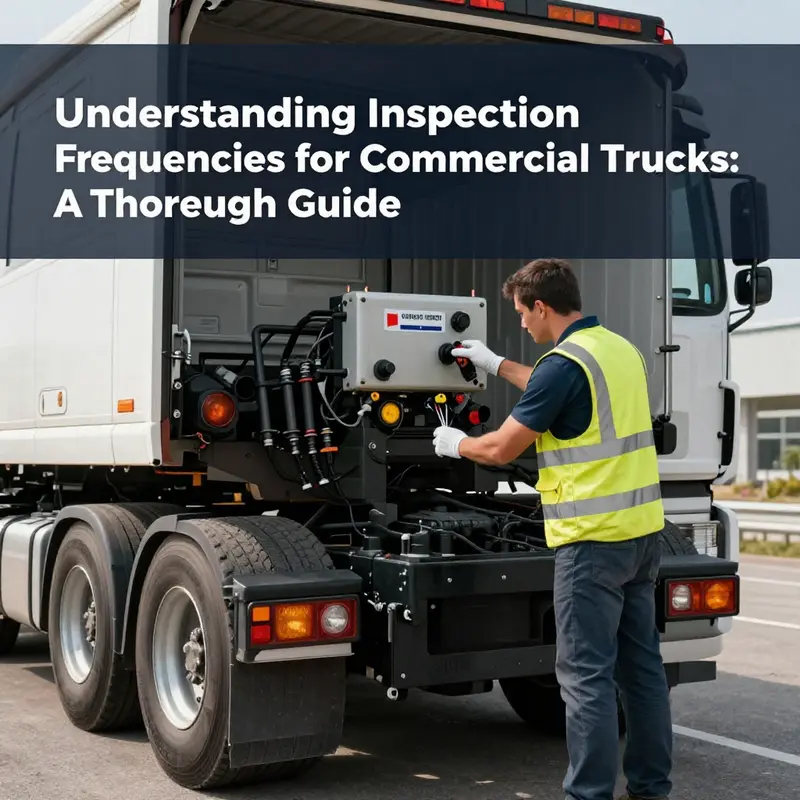
Every commercial truck begins each journey with a ritual that rarely makes the spotlight yet governs whether the miles ahead will be smooth or marred by breakdowns or violations. The daily pre-trip inspection, or PTI, is not a mere formality. It is the bedrock of safety and compliance that underpins the entire system of inspections that trucks encounter on the road. In practice, this routine occurs before every shift, every trip, every day the vehicle is in service. It is the moment when a driver surveys tires, brakes, lights, steering, and the many other systems that keep a heavy vehicle moving with predictable control. The requirement is clear: perform a thorough PTI before each shift. This is not a suggestion but a regulatory duty. The purpose is simple and uncompromising: identify issues before they have a chance to cause an incident or a roadside stop that could escalate into a formal inspection. The daily cadence of this practice is what keeps safety at the forefront in a system designed to move goods across vast distances and around unpredictable road conditions.
The authority for these inspections rests with the Federal Motor Carrier Safety Administration, or FMCSA. The agency regulates the behavior of commercial operators through a complex set of rules designed to balance safety with the realities of freight transportation. Within the framework that governs pre-trip inspections, the FMCSA specifies that drivers must conduct a thorough check of the vehicle before each duty period. The emphasis is not on a cosmetic glance but on a detailed appraisal of the vehicle’s condition. The driver looks for signs of abnormal wear, potential failures, and any condition that could compromise the vehicle’s ability to operate safely. When done properly, the PTI becomes a snapshot of readiness, a confirmation that the truck is roadworthy for the next leg of its journey. This daily obligation anchors the safety culture of the industry and sets a standard that ripples through fleets, trainers, and the technicians who support them.
What exactly does a PTI require, and how does it translate into safer roads? The inspection centers on critical components that govern stopping power, control, and visibility. Brakes are examined for wear and proper function, a task that cannot be delegated to a quick glance. Tire condition and pressure are checked to prevent tire failures that can lead to catastrophic tire blowouts at speed. The lighting system must be fully functional because dawn, dusk, rain, and fog all tax visibility in different ways. Steering and suspension are evaluated for looseness or unusual handling that could signal a developing issue. Fluid levels and leaks are scrutinized—oil, coolant, brake fluid, and other vital fluids must be within recommended ranges to prevent overheating, loss of braking capability, or sudden engine trouble. Emergency equipment is reviewed for accessibility and compliance, ensuring that a driver can respond to emergencies with the proper tools and lighting. If any item fails the daily check, the obligation is clear: address it before leaving the yard. The stakes aren’t abstract. They are tangible safeguards against on-road failures that could threaten lives and disrupt supply chains.
The insistence on daily PTIs is not merely about catching problems; it is about maintaining a predictable safety rhythm that fleets and regulators rely upon. The routine habit of a PTI reduces the likelihood that issues will go unnoticed until they become larger, more expensive, or more dangerous problems on the highway. It creates a daily discipline for drivers and maintenance staff alike, a shared expectation that safety checks are not optional add-ons but essential components of operations. The rhythm also has a practical side: it standardizes the way problems are identified and reported, which helps maintenance teams triage issues efficiently. When a driver notes a flaw—say a tire with low tread or a brake fluid leak—it triggers a chain of actions that could include postponing a trip, routing around the issue, or scheduling a more thorough inspection in a shop. That process preserves not just the safety of the driver and other road users but the integrity of the fleet’s schedule and the company’s reputation for reliability.
A practical question often arises about how these daily checks interface with the inspections that happen on the road. Roadside inspections, conducted by federal and state authorities, are a separate but related part of the safety ecosystem. Roadside stops can occur at weigh stations or enforcement checkpoints and are designed to verify compliance with permit, log, and equipment standards. Data from FMCSA indicates that a substantial minority of commercial vehicles are selected for a more thorough roadside inspection during these stops. The selection process is not random in the sense of pure chance; it reflects risk assessment that considers factors such as vehicle history, carrier safety performance, and observed operating conditions. In many areas, the likelihood that a vehicle will undergo a full inspection at a roadside stop is higher for carriers that have a history of safety violations or technical problems. The result is a system that rewards proactive maintenance and thorough PTIs with better odds of staying out of formal enforcement trouble, while it penalizes neglect with increased scrutiny.
The numbers behind roadside inspections reveal a nuanced landscape. FMCSA data show that roughly one in every twenty-five commercial vehicles stopped at the roadside receives a full inspection. That percentage is not fixed; it shifts with geography, enforcement intensity, and the carrier’s historical performance. In regions where roadside enforcement is more active or where there have been recent safety concerns, the rate may be higher. Conversely, in areas with lighter enforcement or with fleets that demonstrate consistent compliance, the incidence of full inspections can be lower. The variability matters to fleets because it influences how they approach maintenance cadences, driver training, and the allocation of inspection resources. For high-mileage operations and urgent freight, fleets may emphasize more frequent internal checks and more conservative post-trip procedures to reduce the risk of a roadside inspection turning into a more costly or time-consuming event.
Internal fleet practices reinforce the daily PTI and roadside realities in a complementary way. Many fleets implement periodic maintenance inspections that occur at fixed mileage intervals rather than simply after the vehicle has operated for a certain number of days. The typical window for these internal maintenance checks ranges from about 10,000 to 25,000 miles, depending on the vehicle’s duty cycle, age, and manufacturer recommendations. Long-haul fleets that cover substantial mileage may adopt even more frequent cycles to curb the probability of a component failure during a run. The goal of periodic maintenance is to identify wear or degradation before a potential failure becomes evident during a PTI or a roadside encounter. In that sense, the daily PTI and the periodic maintenance inspections work in tandem: the former serves as a daily safety filter, while the latter ensures that longer-term wear and aging do not go unchecked. Fleet managers understand this synergy and coordinate schedules to minimize downtime while maximizing reliability.
An important layer in this safety architecture is the Compliance, Safety, Accountability program, or CSA. CSA does not inspect vehicles in the sense of verifying physical condition; instead, it tracks carrier performance across a range of safety metrics. The CSA program uses data from inspections, crash history, and other safety indicators to generate a safety profile for each carrier. A carrier with a poor safety record can become a focal point for more frequent inspections, audits, and even remedial action. The CSA framework creates a feedback loop: strong safety performance reduces the likelihood of intensively scrutinized inspections, while weak performance can lead to more frequent checks and closer oversight. In practice, the daily PTI, routine maintenance, and CSA-driven oversight together create a comprehensive safety net. They reward consistent caretaking of the equipment, careful driver behavior, and disciplined adherence to regulatory standards while signaling the need for corrective action when data indicate risk.
Beyond the mechanical and regulatory layers lies a culture that connects the daily ritual to broader outcomes. The daily PTI is an entry point for safety conversations, driver training, and the gradual improvement of operational practices. Even small, repeated checks train drivers to notice subtle changes in handling, braking response, or lighting that could indicate a developing problem. This attentive habit helps reduce the chance that fatigue or distraction leads to overlooked issues. For fleets, the ongoing discipline translates into fewer unplanned outages, less downtime, and a more predictable service level for customers. The financial implications are not incidental: effective PTIs and preventive maintenance lower repair costs, extend asset life, and improve resale value by maintaining higher overall vehicle condition. The cumulative effect over thousands of miles and hundreds of trips is a measurable improvement in safety outcomes and a lower total cost of ownership over the vehicle’s life cycle.
The hierarchy of inspections—daily PTIs, periodic maintenance, roadside checks, and CSA-driven audits—may appear complex, but it unfolds into a coherent operations model when viewed from the driver’s cab to the fleet’s planning desk. The driver faces pressures common to the industry: tight schedules, variable weather, and the constant push to maximize miles per shift. Yet the daily PTI demands a pause, a deliberate check that can avert costly delays and dangerous incidents. This tension between efficiency and safety is not a zero-sum game. When done consistently, PTIs reduce emergency repairs, prevent breakdowns on busy highways, and make the overall operation more reliable. The driver-operator, who is often the first line of defense, gains confidence knowing the vehicle has been carefully evaluated before every leg. The maintenance staff benefits too, as the PTI findings feed into shop work orders and service planning, ensuring that attention to wear and failure is timely and properly prioritized. The result is a resiliency built not from luck but from a disciplined approach to safety that starts with a daily routine.
For readers who want to connect this topic to broader industry discussions and real-world experiences, there is value in following ongoing conversations about safety culture, maintenance strategies, and regulatory updates. The narrative around inspections is not static; it evolves with new technologies, changes in enforcement priorities, and shifting economic conditions. A broader view helps fleets calibrate their own practices to balance risk, cost, and performance. If you are exploring related topics, the wider industry conversation often appears in the general trucking discourse on widely read industry blogs and resources. For a deeper look at industry perspectives and ongoing coverage, the McGrath Trucks blog offers a range of insights that contextualize how daily safety routines intersect with market dynamics and fleet management. McGrath Trucks blog.
The daily pre-trip inspection is more than a checklist; it is a philosophy of care that extends through every mile traveled and every inspection that follows. It embodies a safety-first discipline that aligns driver skill with managerial planning and regulator expectations. In the end, the question of how often trucks are inspected is answered not by a single number but by a system in which timing, diligence, and habit converge to maintain road safety, protect people, and keep commerce moving. The PTI may occur quietly and away from the glare of headlines, but it is the quiet engine of a larger, visible safety regime that touches every aspect of the trucking ecosystem. A well-executed PTI reduces risk today and preserves reliability for tomorrow, a practical outcome that reminds us why the daily routine matters just as much as the decisions made at the level of policy and enforcement.
External resource: https://www.fmcsa.dot.gov/regulations/pre-trip-inspection
Chapter 2: Roadside Checks and the Clock: What Shapes How Often Commercial Trucks Are Inspected
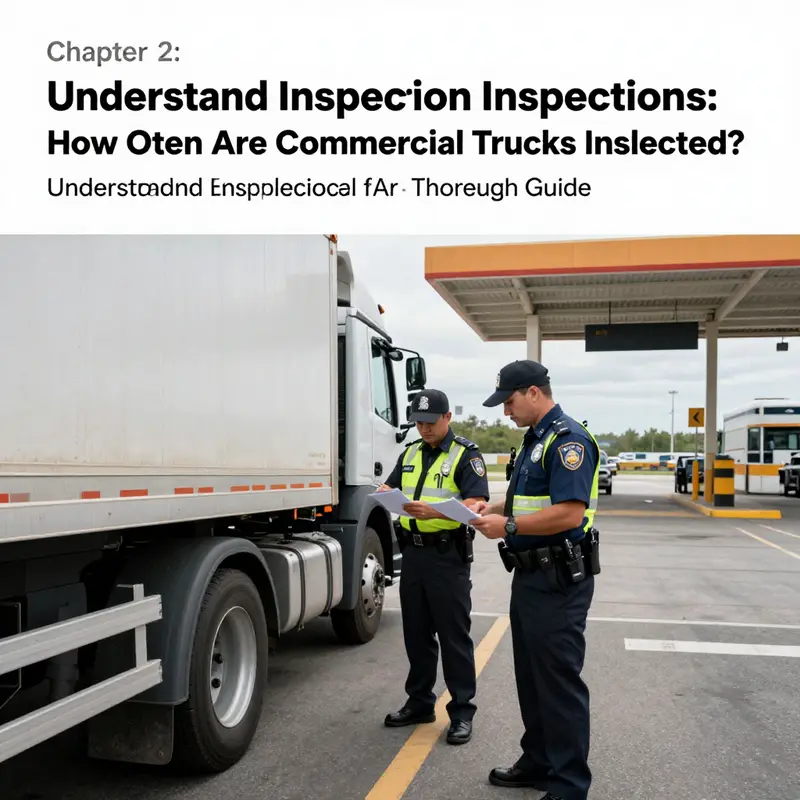
Roadside inspections are a lens into how the trucking industry balances safety with efficiency. They occur at weigh stations, enforcement checkpoints, and along highways where inspectors partner with drivers to assess compliance, catch violations, and identify opportunities for improvement. The frequency is not uniform and is shaped by the interplay of several factors. Among these, the driver’s history and the carrier’s safety record stand out as decisive influences. A driver with a spotless record and a fleet with a clean CSA score may experience inspections less frequently than a fleet with a history of safety violations or one operating in high-risk corridors. The system uses risk-based targeting to allocate inspection resources where they are most needed, a practical approach that aims to maximize safety outcomes without overwhelming compliant operators. The frequency story becomes clearer when we unpack the different inspection programs that guide roadside activity. Level I inspections are the backbone of roadside checks. They are the most comprehensive, conducted by trained state or federal inspectors. A Level I inspection typically unfolds over 60 to 90 minutes and covers a broad range of safety facets, from the braking system to cargo securement and the driver’s logs. This is not a cursory glance; it is a thorough examination designed to capture latent or manifest safety issues. The inspector checks critical components: brakes, tires, lights, and steering, but also looks at cargo securing methods and the driver’s logbook through the lens of hours of service compliance. The breadth of the Level I inspection underscores why inspectors use risk indicators to decide who to pull in for a closer look. A carrier with a history of violations or a driver with a pattern of noncompliance may become a target for more frequent checks under risk-based programs. The Comprehensive Safety Analysis 2010, CSA 2010, is the framework that underpins this targeting approach. CSA 2010 compiles safety data across a carrier’s operations and uses it to identify high-risk entities. When a company’s CSA profile raises flags, inspectors may schedule more frequent checks, conduct audits, or extend scrutiny in a roadside setting. The targeting is not punitive in intent; it is a proactive mechanism to catch trouble before it escalates and to encourage continuous improvement across the fleet. The frequency asymmetry that arises from CSA 2010 becomes a practical reality on the road: safer operators tend to keep a gentler inspection cadence, while riskier operators encounter more frequent roadside attention. The inspection environment extends beyond Level I. Specialized programs focus on particular safety topics, reflecting ongoing policy priorities and evolving regulatory emphasis. One notable program is the Pre-trip Inspection Program, or PITI, which hones in on the thoroughness and consistency of pre trip checks. PITI reinforces the habit that begins each day in the cab and is a reminder that good practice in pre trip inspection is not just about passing a single roadside check but about continuous safety discipline inside the fleet. Then there is the Electronic Logging Device, or ELD, compliance initiative. The mandatory adoption of ELDs in December 2017 shifted some inspection focus toward log accuracy and hours of service compliance. Since the ELD mandate, data show that a meaningful share of roadside inspections now includes an ELD check. These checks are not merely about device functionality; they center on whether drivers have accurate records of duty status and whether the data support a safe and legal operation. The integration of ELD checks into the inspection portfolio illustrates how safety policy evolves with technology and how enforcement strategies adapt to keep pace with operational realities. While the specific share of inspections that involve ELD checks has risen over time, the fundamental principle remains consistent: inspections are a tool to verify that the vehicle and the driver operate within regulatory boundaries and safety norms. The frequency dimension also reflects maintenance practices that fleets implement between inspections. Internal maintenance routines—periodic maintenance inspections—are typically scheduled every 10,000 to 25,000 miles, a cadence determined by the vehicle’s use, the manufacturer’s recommendations, and the fleet’s operating profile. Fleets with high-mileage or long-haul operations may opt for more frequent checks to reduce the risk of roadside disruptions, breakdowns, or safety failures. These internal checks complement the regulatory inspections by catching issues before they become safety or compliance problems. The aim is to keep the vehicle in a state that is conducive to safe operation and regulatory conformity. The CSA framework and the maintenance cadence together weave a continuous improvement loop. They translate into practical outcomes: safer operation, fewer violations, smoother onboarding for new drivers, and more predictable risk profiles for insurers and regulators. The frequency of roadside inspections, then, is not simply a matter of chance. It is a reflection of the cumulative effect of safety history, the operating environment, and the ongoing commitment to maintenance and compliance. The reality is nuanced. A carrier with a clean safety record and a well-documented compliance program can still encounter roadside checks with regularity because enforcement priorities must account for regional variation and periodic concerns about specific safety topics. In some regions and at particular times, inspectors may be more vigilant, aligning with public safety campaigns or with observed patterns in hours of service compliance. The result is a pattern that looks inconsistent at a glance but makes sense when viewed through the lens of risk management. The data point that often surfaces in discussions of frequency is the approximate ratio of roadside inspections to the total population of commercial vehicles on the road. Some FMCSA analyses indicate that a small fraction, on the order of about one in twenty-five trucks, is selected for a full roadside inspection during a stop. This relative rate is subject to regional variation and to fluctuations in enforcement intensity, which can be influenced by carrier history and the local safety landscape. It is not a fixed annual quota for any given truck, but a snapshot of a system that prioritizes risk-based targeting, immediate safety concerns, and the practicalities of enforcement resources. For a driver or fleet manager, this means the cadence of inspections is as much about the surrounding operational context as about any prescriptive timetable. And while the average truck may not be inspected on a set annual schedule, the experience of fleets with clean records shows a cadence that tends toward longer stretches between comprehensive roadside checks. The ballpark figure of once every three to five years surfaces in some analyses as an approximate average for trucks with impeccable safety records. This statistic should not be interpreted as a promise of complacency but rather as an indicator of how safety history and operational discipline shape enforcement reality. In practice, high risk carriers and those operating in high-risk corridors will see more frequent inspections. Carriers flagged for safety concerns may experience audits that extend beyond the roadside, including on-site investigations or more intensive data reviews through the CSA program. The broader narrative is one of ongoing vigilance and continuous improvement rather than episodic compliance. The daily pre trip inspection anchors the process in the cab, while the Level I inspection anchors it on the roadside. The pre trip checklist is a practical habit that every driver must maintain to minimize on-road risk. The Level I inspection is the rigorous verification that ensures the vehicle, its cargo, and the driver are aligned with safety expectations. The programmatic landscape—CSA 2010, PITI, ELD compliance—illustrates how policy evolves in response to technological advances, safety data, and evolving operating realities. This evolution does not erase the day-to-day realities of drivers and fleets. It simply reframes them: frequency becomes a function of risk, maintenance becomes a routine, and inspections become a shared responsibility across the industry. For readers seeking practical guidance beyond the theory, the road map is straightforward. Maintain a rigorous pre trip inspection every day and document findings consistently. Treat maintenance as a performance metric, not a cost center, and align your internal inspection cadence with manufacturer guidance and the operating profile of your fleet. Emphasize data integrity in logs and maintenance records; ensure the driver’s logs faithfully reflect hours of service and duty status. Build a culture of safety that views inspections not as a hurdle but as a tool that reveals opportunities to improve vehicle performance, driver well-being, and customer reliability. If you want to explore a broader perspective on how fleets are applying these insights in daily practice, the McGrath Trucks blog offers practical perspectives from industry peers that can complement formal guidelines. McGrath Trucks blog. As you map out maintenance schedules and driver training plans, remember that inspections exist to protect lives, safeguard equipment, and support a resilient, compliant trucking operation. The core idea is that frequency is not a random phenomenon but a function of ongoing safety discipline, strategic risk management, and the evolving regulatory landscape. For those who want to drill into the official framework and procedural details, the FMCSA Safety Inspections resource provides the authoritative reference on what happens during roadside checks, why inspectors focus on specific areas, and how these inspections tie into the broader safety accountability system. In short, roadside inspections are a living part of the safety ecosystem, shaped by history, technology, and the daily choices of drivers and fleets. They are not a one-off event but a continuous cycle of preparation, verification, and improvement that keeps the nation’s highways safer for everyone. For further formal guidance on procedures and frequencies, consult the general safety inspections resource from FMCSA. FMCSA Safety Inspections.
Under the Hood of Compliance: How Internal Maintenance Inspections Shape Safety, Downtime, and Roadside Inspection Frequency
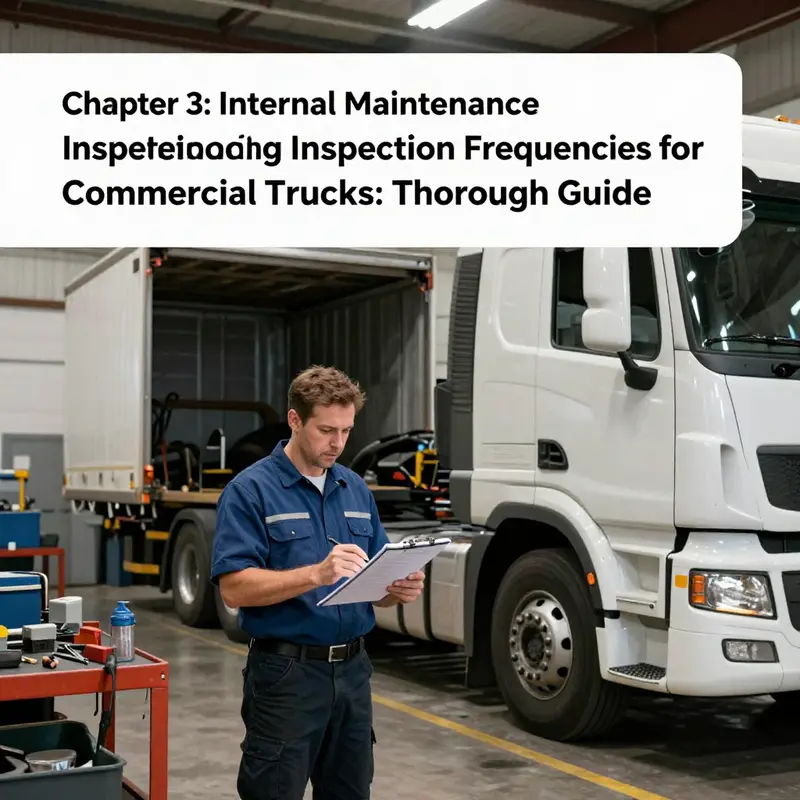
When a fleet climbs into the driver’s seat each morning, the work begins long before the engine turns over. The vehicle inspection narrative starts with a routine that is simple in concept but far-reaching in consequence: a disciplined, thorough check of every critical system before and after each trip. This is not merely a loyalty to procedural ticky-tack; it is the frontline against breakdowns, the shield against roadside violations, and the quiet engine that influences how often a vehicle will be scrutinized by inspectors who roam the highway. In this chapter, we explore how internal maintenance inspections—the meticulous, fleet-wide practice conducted by carriers and drivers alike—shape safety outcomes, operational reliability, and, ultimately, the frequency and intensity of external reviews from government agencies. The freight world moves on timelines and margins, but the integrity of the vehicle, kept in good repair through routine checks, can compress the distance between a smooth, profitable operation and a costly disruption that ripples through every link in the supply chain. The relationship between internal maintenance and roadside inspection cadence is not a single cause-and-effect line; it is a network of interactions among people, processes, data, and the regulatory framework that governs every mile driven on public roads.
The pre-trip inspection, or PTI, is the most recognizable ritual in the routine—an every-day ritual that drivers perform before they roll. This daily ritual is mandated by federal regulation and designed to be a capable early warning system. But the deeper value of internal inspections lies not in compliance alone, but in the culture they create within a fleet. When a company treats maintenance as an integral, ongoing safety practice rather than a weekly checkbox, it signals to drivers, to customers, and to regulators that the organization prioritizes prevention over reaction. The chapter you are reading should be viewed as a window into how this culture translates into real-world outcomes. It is through a continuous, disciplined internal inspection process that a fleet reduces the likelihood of unplanned downtime, minimizes the risk of roadside violations, and, in turn, stabilizes the carrier’s safety profile as captured by the CSA program. TheCSA, or Compliance, Safety, Accountability framework, ties together a carrier’s safety performance with its regulatory scrutiny. When maintenance records are accurate, timely, and complete, the system reads as an organized, non-accident history rather than a series of gaps and red flags. The practical implication is subtle but powerful: fleets that maintain this discipline tend to experience steadier downtimes, fewer out-of-service conditions, and a more predictable maintenance budget because issues are caught early and scheduled for repair rather than discovered in a pressure-filled roadside encounter.
The operational logic behind internal inspections blends human judgment with data-driven discipline. A proficient program starts with training that elevates drivers from simply performing checks to understanding why each component matters. The brakes are not just a line item on a checklist; they are the life-safety system that governs control and stopping distance. The tires are more than tread depth and inflation numbers; they represent the vehicle’s contact with the road, load stability, heat management, and fuel efficiency. The lights are not decorative; they communicate intent and ensure visibility for other road users and for enforcement officers who rely on those signals when deciding whether a vehicle complies with safe operation standards. This is not a sterile inventory of parts but a continuous risk assessment that translates into trip-level decisions about maintenance windows, repair priorities, and even route planning. A well-trained driver can identify subtle changes in steering feel, brake response, or suspension behavior that presage a more serious problem, and the company that fosters this awareness reduces the probability of a late-night breakdown or a failed inspection parked on the shoulder.
In the broader ecosystem, internal inspections are the earliest and most controllable point of contact with the regulatory landscape. The FMCSA’s safety management system architecture requires carriers to track performance through CSA scores and to maintain a documented, auditable safety program. The message is clear: good inspections reduce risk and demonstrate reliability. When a fleet logs every PTI and post-trip inspection with clear notes, the data become a narrative of proactive safety rather than a reactive record of failures. This distinction matters. A robust internal inspection process creates a feedback loop that feeds maintenance planning, ensures that parts are available when needed, and aligns labor and procurement resources to address issues promptly. The result is a fleet that not only runs smoothly but also tells a consistent story to regulators, customers, and insurers about its commitment to safety.
The actual cadence of internal inspections extends beyond the daily PTI. Many fleets structure a formal periodic maintenance program that specifies more thorough checks at defined intervals—often every 10,000 to 25,000 miles, depending on usage, vehicle configuration, and manufacturer recommendations. These periodic inspections serve as a deeper diagnostic, complementing the daily PTI by focusing on subsystem health that may not surface in a routine pre-trip glance. Brakes, tires, steering, suspension, and fluid levels emerge as a composite picture of vehicle health when examined systematically over time rather than at a single point in a day. The automotive science behind this approach is straightforward: the more data points you collect over time, the more accurately you can identify patterns that precede actual failures. In turn, you can schedule maintenance before a problem becomes acute, reducing the risk of road calls and unscheduled downtime that disrupts operations and erodes margins.
A crucial element of internal inspections is recordkeeping. The chain of custody for inspection data matters as much as the inspection itself. When drivers or maintenance teams maintain precise records—dates, mileage, component condition, corrective actions—these records become a living history of the vehicle’s reliability. They are indispensable during audits, when a regulator or a client asks for proof of safety practices, and they provide the data foundation for continuous improvement. Accurate records allow for trend analysis: are certain components failing prematurely in a specific model, a particular route, or under certain climate conditions? Are certain operators more prone to missed maintenance windows? Answering these questions requires a disciplined documentation culture that treats every entry as part of an auditable safety system rather than as administrative clutter. In turn, the carrier’s CSA profile benefits, because regulators interpret these records as evidence of a controlled safety program rather than a patchwork of compliance attempts.
The human factor remains central. A fleet’s safety performance hinges on how well managers translate policy into practice. Training is not a one-off event but a continuous process that keeps drivers up to date on inspection criteria, uses modern diagnostic tools, and reinforces the rationale behind each check. In an ideal arrangement, drivers do not merely “pass” a pre-trip inspection; they actively contribute to the vehicle’s safety story by reporting anomalies, documenting microscopic changes, and requesting repairs when necessary. This sense of ownership reduces the risk of latent issues slipping through the cracks and fosters a culture where maintenance is understood as a shared responsibility—one that includes drivers, maintenance technicians, dispatch teams, and leadership. Such a culture is not merely about preventing penalties; it is about sustaining a reputation for reliability that translates into continuous business advantages, from better insurance terms to more favorable service agreements and customer trust.
From a practical standpoint, internal maintenance inspections are most effective when they are integrated with digital tools and standardized workflows. The traditional paper logbook is increasingly replaced or augmented by computerized maintenance management systems (CMMS) that guide technicians through checklists, store images and notes, track repairs, and generate maintenance schedules aligned with manufacturer recommendations and legal obligations. Digital tooling can flag overdue items, forecast when a part will need replacement, and produce compliance reports that satisfy both internal governance and external scrutiny. The advantage is not merely convenience; it is a more reliable, auditable evidence trail that stands up to inspection scrutiny and supports decision-making under pressure. Even in fleets that rely heavily on human judgment, the strategic integration of digital records can reduce ambiguity and speed up response times when issues are detected. In this sense, technology acts as an amplifier for the capability of the people who perform the checks, ensuring that good practice is consistently applied across all shifts, all vehicles, and all routes.
The cadence of inspections, internal and external, interacts with the safety rating and the likelihood of roadside inspections in nuanced ways. When internal inspections are thorough and consistently documented, regulators view the fleet as a well-managed operator with a lower risk of noncompliance. This perception does not guarantee exemption from roadside checks, but it does influence the intensity and frequency with which a fleet is scrutinized. A carrier with a solid history of proactive maintenance reduces the probability that a roadside stop will uncover a major defect and result in out-of-service actions. Even when inspectors do conduct checks, the probability that issues are detected early and addressed promptly increases, which can shorten the length of any required downtime and improve the continuity of service. Moreover, the vendor and customer ecosystem around maintenance—parts suppliers, service networks, and fleet managers—responds more positively to a fleet that demonstrates consistent safety practices, which can translate into better terms and resilience against disruption.
Safety, compliance, and efficiency converge in the way internal inspections shape risk management. A proactive maintenance program creates predictability—predictable maintenance costs, predictable downtime, and predictable delivery timelines. It also creates resilience. A fleet that consistently identifies and remediate issues before they become failures can operate through the wear and tear of long-haul cycles and extreme weather with less surprise. It is this resilience that ultimately informs the broader discussion of how often trucks should be inspected or re-inspected in a roadside context. While the regulatory framework sets minimum standards and inspection frequencies on the surface, the reality for most operators is that internal inspections determine the practical interval for any escalation. A well-documented, high-integrity internal program means fewer trips off the road for essential repairs and less risk of delayed shipments because a breakdown halted operations. In other words, internal inspections do not simply support compliance; they actively shape the operational tempo by influencing maintenance scheduling, repair logistics, and the timing of service interventions.
There is also a human story embedded in the cadence of inspections. Drivers who see that maintenance teams value their observations are more likely to report anomalies promptly, which in turn fosters a trusting relationship between drivers and maintenance personnel. This trust is essential to maintaining a spirit of safety and reliability, especially when new routes, changing cargo types, or seasonal shifts introduce novel wear patterns. When drivers feel empowered to flag issues and see tangible responses—repairs scheduled, parts sourced, and expectations communicated—their engagement grows. That engagement translates into more accurate pre-trip reports, higher quality post-trip feedback, and a continuous loop of improvement that strengthens the carrier’s overall risk profile. In practice, this means that a fleet’s internal inspection culture becomes a determinant of how easily it can adapt to evolving safety standards and how readily it can meet client expectations for reliable service.
The narrative above does not exist in a vacuum. It sits within a regulatory and market environment that rewards safety performance with a stronger value proposition for customers, insurers, and regulators alike. For customers, a fleet that can demonstrate a consistent track record of well-maintained equipment translates into lower risk and improved on-time performance. For insurers, a lower claim history and a well-documented maintenance program can yield more favorable premiums and coverage terms. For regulators, the ability to show a controlled, auditable maintenance process reduces the likelihood of safety violations and can influence inspection priorities in a way that rewards compliance without compromising throughput. The interdependence of internal maintenance and external inspection practices highlights how the daily discipline of checks—when supported by training, data, and a culture of safety—extends far beyond the truck cab and into the economics of freight movement.
If you are looking for a concise pathway to enhance your internal inspection program, consider starting with three practical pillars: training that emphasizes the rationale behind each check, data-driven workflows that capture consistent, high-quality records, and a maintenance calendar that aligns with manufacturer guidance and real-world usage patterns. Training should refresh drivers on what to look for and why, without turning the PTI into a perfunctory ritual. Data-driven workflows should simplify recordkeeping while elevating accuracy, providing a clear evidence trail for audits and inspections. The maintenance calendar should reflect actual vehicle use, climate exposure, and historical failure modes, so that inspections focus on the components most at risk given a fleet’s particular operating profile. In this sense, the internal inspection program becomes a living system that evolves with the fleet rather than a static compliance formality.
A fleet that embraces these principles can translate daily, sometimes granular checks into broader safety gains and operational efficiency. The humble pre-trip inspection is the birthplace of this transformation, and the more the organization treats it as part of a comprehensive, data-informed safety program, the more durable and scalable its safety outcomes become. As with any complex system, success rests on consistency, accountability, and continuous learning. When drivers, technicians, dispatchers, and managers align around shared safety standards and transparent records, the overall risk posture improves. And when risk is managed proactively, the external cadence of roadside inspections becomes less a punitive exaction and more a predictable part of a system designed to keep the roads safer while keeping goods moving.
For readers seeking concrete steps and further guidance on federal requirements and best practices for conducting internal maintenance inspections, the FMCSA Vehicle Inspection Guidelines provide authoritative direction and framing for a compliant, effective program. As you consider elevating your fleet’s internal inspection regime, you may also find value in resources from industry knowledge hubs that translate regulatory language into practical workflows and measurable outcomes. To explore a practical example of how fleets translate inspection discipline into performance, you can turn to industry insights and community perspectives at the McGrath Trucks blog, which offers accessible discussions on fleet maintenance strategy and market trends. mcgrathtrucks.com/blog/
External reference: For a comprehensive regulatory framework and official guidance on vehicle inspections, see the FMCSA Vehicle Inspection Guidelines: https://www.fmcsa.dot.gov/safety/compliance/vehicle-inspection
Final thoughts
In summary, understanding the diverse inspection frequencies for commercial trucks is vital for ensuring safety and compliance within the trucking industry. The daily Pre-Trip Inspections serve as the first line of defense, while roadside inspections and internal maintenance checks reinforce a continuous commitment to vehicle safety and regulatory adherence. By adhering to these scheduled inspections, trucking companies and fleet managers can mitigate risks, enhance operational efficiency, and maintain a solid reputation within the industry. Investing in rigorous inspection protocols is not just about compliance; it is about fostering a culture of safety that benefits all road users.