
The commercial trucking industry is a cornerstone of logistics, warehousing, and freight movement, making the cost of semi-trucks a critical consideration for owners and procurement teams. Trucking company owners and fleet managers must carefully evaluate the investment necessary to purchase or lease semi-trucks, whether new or used. In this context, understanding the varying prices from different manufacturers, the factors influencing these costs, regional pricing disparities, and financing options available will equip companies to make informed financial decisions. This article provides a thorough examination of the pricing landscape for commercial semi trucks, analyzing new entries from leading manufacturers such as Tesla, the diverse used truck market, and critical factors affecting pricing. Finally, the article will consider how regional variations can impact overall costs and examine financing strategies to aid in the acquisition of these essential vehicles.
The Price of Power: Decoding New and Used Commercial Semi Truck Costs in 2026
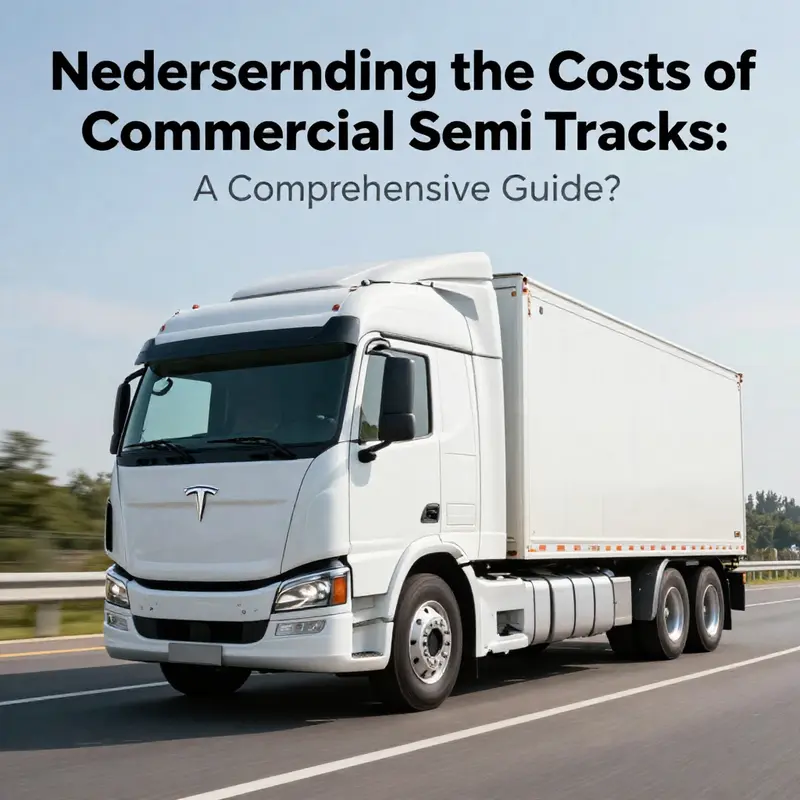
Pricing a commercial semi truck in 2026 reads like a map with many routes and few uniform mile markers. The price you see is not a single number but a function of powertrain choice, range, cab configuration, age, and the market it’s sold in. At the heart of the new, especially in the electric segment, lies a straightforward but consequential split: a premium is paid for range, efficiency, and the promise of lower operating costs, while many buyers weigh that premium against the upfront cash they must deploy. When fleets look at a leading electric heavy-duty model on the market today, the sticker price sits around two familiar bookmarks. A standard-range electric semi comes in near $250,000, and a long-range variant nudges up to about $290,000. These figures exclude shipping or delivery fees and reflect current production costs as of early 2026. They also align with voucher and incentive programs in major markets, where buyers may see modest help offsetting the upfront hit. A limited “Founders Series” edition once appeared at around $200,000, but that version appears to be allocated or no longer available. Behind these numbers lies a broad ecosystem of incentives, pilot programs, and production economics that make the exact price a moving target rather than a fixed tag.
For many fleets, the electric price stands in contrast to the price ranges seen in other new heavy-duty trucks. Across global markets, base diesel tractors in certain configurations can be listed in a wide, lower band—from roughly $31,000 up to $55,000. These quotes often reflect stripped-down base units, regional tax structures, and the absence of optional equipment or specialized drivetrain choices. They illustrate how price is not universal but highly conditional on a truck’s intended role, the cab and sleeper layout, drivetrain configuration, and the regulatory or tax environment in which the truck is sold. In practice, a fleet buyer weighing a new diesel chassis may be shopping for a different tier of capability than a buyer eyeing an electric long-haul solution, and the price gap can be a meaningful part of that strategic calculation. The message is not simply about a higher price for one technology; it is about a price for a particular bundle of capability, warranty coverage, and energy economics that the market is only beginning to standardize.
The used-truck market adds another layer of variability, typically presenting a spread of roughly $20,000 to well over $80,000 for a single unit, depending on mileage, condition, and engine type. A high-mileage highway tractor from a few years back can look attractive on the face of the price, yet the true cost of ownership may tilt toward the mid-to-high end of the range once maintenance history, major component life, and anticipated repairs are considered. Buyers are advised to conduct thorough inspections, review service logs, and confirm the status of critical systems such as the engine, transmission, and any hybrid or electric propulsion components, if applicable. The variance in used prices reflects not only mechanical wear but evolving demand for specific configurations, sleeper versus day cab needs, and the market’s appetite for updated telemetry and fleet-management features. In practice, the decision to buy used versus new hinges on a careful assessment of downtime, reliability expectations, and the long tail of maintenance costs.
Price is only the surface. The deeper question is what the money buys in terms of performance, reliability, and total cost of ownership. A two-hundred-thousand-dollar-initial-outlay for a baseline electric semi might be tempered by lower energy costs per mile, longer service intervals, and potential uptime advantages from regenerative braking and modular powertrain designs. On the diesel side, while the upfront outlay may be lower in some markets, fuel costs, maintenance intervals, and emissions-related compliance obligations can tighten the total cost of ownership over the vehicle’s life. The decision often rests on a fleet’s route structure, charging or fueling access, and the availability of incentives designed to accelerate adoption of cleaner technologies. In addition, the logistical considerations around charging infrastructure—the number and location of charging bays, the speed of charging, and the compatibility of the vehicle with existing depot layouts—play a decisive role in shaping the practicality and true cost of ownership of a modern semi truck.
Incentives and policy programs can tilt the economics in meaningful ways. Voucher programs, tax rebates, and environmental credits can reduce the effective price of new electric trucks for fleets that qualify. These programs not only lower the upfront cost but also influence the payback period by improving operating costs and resale value. The practical impact for buyers is that the decision process extends beyond the sticker price to include eligibility, paperwork, and timing—factors that can shorten or extend the time needed to achieve a favorable return on investment. The broader context is a market that is still calibrating around the economics of energy, maintenance, and depreciation. As new models arrive and older options mature, the price picture can shift in response to technology improvements, battery costs, and evolving standards.
The pricing landscape also reflects a dynamic between premium features and practical needs. There is a growing consensus that the value proposition for an electric semi is strongest when a fleet operates in cancellation-proof duty cycles, with predictable routes, reliable charging, and controlled downtime. Fleets with long-haul routes and access to fast-charging corridors may justify the premium more readily, while regional haulers with shorter, stop-and-go routes might find diesel or lower-range electric configurations more attractive, at least until charging infrastructure scales further. This adaptability underscores why price transparency remains elusive in practice; buyers are often negotiating not just a price, but a package—range guarantees, service plans, maintenance covenants, and performance assurances that collectively define the ownership experience.
To illustrate how buyers weigh the data, consider a practical approach to evaluating options. Start with the mission profile: what routes will the truck run, what is the typical payload, and how often will the vehicle be idle at terminals or depots? Then map energy or fuel costs against expected downtime and maintenance. If charging is readily available at or near the home terminal, an electric option with a higher upfront price can still win over time due to lower energy costs and reduced maintenance. If charging is sparse or unreliable, the same option may become economically less attractive unless supported by strong incentives or uptime guarantees. Finally, examine resale implications. A vehicle that retains value well—whether due to build quality, battery longevity, or fleet-friendly telematics—can tip the scale toward a higher upfront price, because the total cost of ownership improves when the residual value is strong.
For readers seeking a broader sense of how pricing is moving in the used-truck market, you can explore a discussion on current trends in used truck sales growth. That resource provides context for how depreciation, demand, and cultural shifts in the industry influence price negotiations and the availability of well-maintained used units. current trends in used truck sales growth
As pricing continues to evolve, the real takeaway for buyers is clarity about needs, not just numbers on a page. The market’s range—from entry-level diesel chassis to top-tier electric powertrains—reflects a broad spectrum of use cases. Fleet managers should stay attuned to policy shifts, incentives, and the ongoing improvements in battery tech and charging infrastructure. The prudent buyer blends a clear understanding of the vehicle’s role with a disciplined approach to evaluating total cost of ownership, not just the initial price tag. In this evolving landscape, the chapter on new and used commercial semi trucks must stay anchored in the realities of cost, capability, and the practicalities of operation. External resources that track pricing developments and policy changes can help fleets align procurement choices with longer-term business goals. For a current snapshot of pricing dynamics and validation across sources, industry observers point to ongoing reports and updates from independent outlets and market researchers.
External resource: https://electrek.co/2026/02/11/tesla-semi-pricing-revealed-250k-290k/
From Mileage to Market Value: What Used Semi Trucks Cost in 2026

The used market for commercial semi trucks in 2026 presents a wide, variegated landscape. Prices swing because buyers weigh a cargo of variables that can change the perceived value of a single vehicle the moment it leaves the yard. The range is broad enough to require careful comparison, yet the threads that shape these numbers are predictable enough to guide a confident purchase. In practical terms, a typical used long-haul tractor—think well-known configurations like modern freight-haulers with sleeper cabs—often falls somewhere between forty thousand and a hundred twenty thousand dollars. That band captures a lot of real-world variation: the truck’s age, its mileage, its engine and transmission pairing, and the cab’s amenities. It also reflects regional market quirks that tilt prices up or down depending on local demand and supply pressures. The year of manufacture matters less on its own than the confluence of mileage, maintenance history, and emissions equipment. As a buyer, you quickly learn that the difference between a clean, well-maintained 2019 model with under five hundred thousand miles and an older unit with higher usage can be the difference between a solid bargain and a strained budget. The 2018–2020 cohort with mileage under the five-hundred-thousand-mile mark typically trades in the sixty-thousand to ninety-thousand-dollar zone. It is not unusual to see these trucks priced closer to the lower end if theysit in regions with abundant supply or if recent service records are spotty. In contrast, a well-documented, low-mileage unit with a sleeper cab, updated electronics, and a clean maintenance history can edge toward the upper half of the spectrum, even near the hundred-thousand-dollar mark. Those numbers are not mere anecdotes; they reflect the market’s current appreciation for reliability and efficiency in a post-emissions era that still rewards modern fuel systems and emission-compliant hardware. When you widen the lens to include older models or trucks with higher mileage, the price leans toward the forty-thousand-dollar range. These units often attract buyers who are comfortable with a higher level of mechanical risk, or who intend to invest in significant refurbishment as a path to a tailored uptime guarantee. In many cases, that perceived bargain comes with a caveat: the cost and effort of bringing an older or higher-mileage truck up to today’s performance and emissions standards can substantially affect the total cost of ownership. The engine and transmission pairings also steer prices. Trucks equipped with efficient, emissions-compliant powertrains and automatic transmissions usually command a premium because they promise smoother maintenance cycles, lower downtime, and improved resale value. Buyers frequently report a preference for engines known for durability and fuel efficiency, with post-2021 emissions configurations in particular attracting premium pricing in markets conscious of regulatory alignment and depreciation cycles. The cab configuration is another price lever. Sleeper cabs, enhanced climate control, more advanced navigation systems, and premium bedding can push a unit higher in the price ladder. The incremental value of these features matters not just for driver comfort but for the vehicle’s resale trajectory; a well-appointed cab tends to preserve value better as fleets cycle through upgrades and trade-in programs. The regional dimension is a practical reality that returns year after year. The Midwest and Southern states often offer lower prices than the coastal corridors, where dense freight lanes and higher demand compress available supply into tighter markets. Logistics ecosystems on the East and West coasts frequently push asking prices up, reflecting longer hauls, more active bidding, and a broader pool of buyers who are refining their fleets around quicker return-to-operation timelines. The overall market stability observed in early 2026 aligns with broader industry reports that emphasize consistent demand for trucks meeting newer emissions standards. A recent industry review highlighted that buyers are prioritizing models with post-2021 emissions configurations, reflecting both regulatory alignment and longer-term depreciation expectations. This preference injects a degree of price firmness into the used segment, especially for higher-specification rigs with full maintenance documentation. For anyone entering the market, the path to a solid deal is as much about diligence as it is about price. A used truck is rarely a pure value play; it is an investment in uptime, reliability, and known maintenance history. Prospective buyers should plan for a thorough inspection that includes the engine’s compression test, transmission and clutch wear, and a review of fault codes stored in the vehicle’s telematics or onboard computer. A clean service history, with receipts for major components and regular preventative maintenance, is more valuable than any single mile-per-mile cost assessment. The sleeper’s comfort features not only affect driver satisfaction but also influence future resale. If a vehicle has bunk upgrades, climate controls, and navigation improvements that reduce driver fatigue and downtime, those factors translate into a more favorable price trajectory at trade time. The buyer’s due diligence also extends beyond the truck itself to the surrounding market context. Fleet operators and independent buyers alike should monitor supply trends in their region and the tides of regional demand. The Midwest and Southern markets often offer more aggressive pricing, driven by higher used-truck inventories and a larger pool of refurbishing options. In contrast, the East and West coasts can show higher price points owing to greater demand and premium pricing for post-2021 compliance. It is worth noting that the current market’s price stability does not imply a single, static price. Rather, it reflects a balance between supply influx and demand for newer, more efficient rigs. For buyers seeking guidance on how these dynamics are evolving, a look at recent price stability insights can be helpful. Used Truck Prices Stability Key Insights 2025 offers a pivotal perspective on how transaction data from late 2024 through 2025 translated into 2026 pricing behaviors and helped fleets gauge whether a given price point is likely to hold or shift with the next cycle of trade-ins. While such resources are informative, the everyday decision still rests on hands-on evaluation: inspecting the undercarriage, validating service times with the maintenance shop, and confirming that the document trail—from vehicle history reports to repair invoices—tells a consistent story. The numbers themselves deserve a careful reading. A used long-haul tractor typically sits between forty and one-hundred-twenty thousand dollars, but the spread is a map of choices. If you are prioritizing uptime and predictable maintenance costs, you will gravitate toward models with robust service histories, credible mileage, and a configuration that aligns with the intended routes. If your strategy emphasizes upfront price and refurbishment potential, you may venture toward older units, guided by a clear plan for parts availability and a realistic budget for mechanical refreshes. In every case, buyers should engage reputable dealers or established platforms that provide transparent listings, verifiable mileage, and access to maintenance records. The acquisition process benefits from a careful comparison of similar units—same brand family, similar mileage, comparable engine configurations—so that price differentials can be attributed to meaningful differences rather than hidden conditions. The nuance of used-truck pricing is what makes this market both challenging and rewarding. It rewards those who bring a disciplined eye to the search, who parse the fine print in maintenance logs, and who align their purchase with a realistic plan for uptime and total cost of ownership. To stay grounded in reality, the reader may wish to consult industry-specific resources that track pricing movements, rather than relying solely on single-listing bargains. External data sources that monitor transaction activity across major brands and configurations can shed light on whether a price is a genuine bargain or a signal of hidden risk. For ongoing readers and practitioners, this chapter’s context sits within a broader ecosystem of buying and selling strategies, from dealer-backed procurement programs to independent auctions and online marketplaces. The market’s current cadence supports steady opportunities for qualified buyers who do their homework, verify history, and choose configurations and cab setups that harmonize with their operation’s minimum downtime and maximum reliability. In sum, the used semi truck market in 2026 rewards due diligence and strategic alignment; it does not reward haste or assumptions. The rider of better deals is a patient, informed buyer who uses the full spectrum of data—mileage, age, engine choices, cab features, and regional demand—to determine when a price is right, and when it’s worth waiting for a more favorable cycle. External resource: Truck Equipment Magazine provides a timely synthesis of pricing trends and market health for used semi trucks in the first quarter of 2026, offering a practical benchmark for those evaluating prospective purchases. https://www.truckequipment.com/market-reports/used-semi-truck-pricing-trends-q1-2026
Pricing on the Move: Reading the True Cost of a Commercial Semi Truck in a Shifting Market
The sticker price of a commercial semi tractor is only the surface. Fleets and owner-operators alike must parse a menu of variables that shape what a truck will cost upfront and over its life. Budget, timing of purchase, and the intended duty cycle determine not just the price tag but the economics that follow every mile. In early 2026, observers noted a split in the market: electric drive trains commanded higher upfront prices, while conventional diesels and refurbished units offered more approachable entry costs. The result is a dual-track landscape where the headline price can be misleading because the true cost of ownership blends purchase price with fuel, maintenance, downtime, and end-of-life value. Across fleets, the question is how a given configuration aligns with operating needs and the financial levers available to the buyer. A careful buyer considers not only the vehicle’s price but the cash flows it generates or consumes over time, including financing terms, tax implications, and potential incentives that may alter the after-tax economics of a given purchase.
New versus used trucks form the most immediate axis of cost. A brand-new unit, especially one with an advanced drivetrain, carries a higher upfront price but often comes with warranties, factory support, and the latest safety and efficiency features. These advantages can translate into lower maintenance costs early on, reduced downtime, and stronger resale value. By contrast, a used or refurbished semi can deliver a lower entry price and quicker ROI if sourced wisely, but buyers must navigate mileage, wear, and hidden repair risk. The decision hinges on how aggressively a fleet will use the asset and its appetite for ongoing maintenance risk versus capital constraints.
The market’s pricing structure reflects not only age but propulsion system and configuration. Electric options, priced in the mid to high six figures, attract attention for potential operating cost savings. A standard-range unit around $250,000 and a long-range version near $290,000 (as of early 2026) are typical headlines before shipping and delivery. Higher upfront cost stems from larger battery packs, charging capabilities, and integrated software. For fleets with high-mileage lanes and reliable charging access, electric trucks can offer long-term savings when modeled against local electricity costs and incentives.
Traditional diesel heavy-duty tractors show a wider price spread in new markets, from roughly $31,000 to $55,000 depending on wheel configuration, cab size, and regional specs. Lead times, dealer incentives, and optional equipment can nudge the figure by thousands. The range reflects configuration, safety packages, and standard features. Buyers can lower the entry price by scaling down cab or drivetrain, while premium options push toward the upper end. The takeaway is that price alone tells only part of the story; the right fit depends on use, road time, and available capital for charging or fueling infrastructure.
The used market adds nuance. A seller’s market for older trucks can offer bargains, with prices often from $20,000 to $80,000 or more, depending on mileage, condition, and engine type. As mileage climbs, maintenance needs rise, and buyers should plan for more frequent component replacements and inspections of brakes, suspension, and alignment. Diligence is essential to avoid costly surprises. The practical message: buying used trades depreciation risk for greater potential variability in future maintenance costs, which must be included in the total cost of ownership and resale value models.
Beyond sticker price, origin and manufacturing ecosystem color the cost proposition. In North America and Europe, premium pricing tied to engineering, safety, and reliability can bolster resale value and reduce downtime, improving lifecycle economics. Suppliers from other hubs can offer compelling value through aggressive pricing and customization, especially for non-traditional configurations. The key for B2B buyers is to assess total cost of ownership, including fuel or electricity, maintenance, parts availability, service coverage, and regional support. The sourcing decision should reflect risk tolerance and geographic footprint, not just upfront price.
The buying process itself matters. Financing, insurance, tax treatment, and incentives can tilt the financial picture. Modeling scenarios with and without incentives, and considering depreciation and resale, often shows that the cheapest upfront option isn’t necessarily the most economical over the asset’s life. A holistic approach, combining cautious upfront assessment with a robust total-cost-of-ownership model, helps fleets navigate maintenance intervals, parts availability, and downtime realities. Ongoing policy shifts and currency dynamics can alter relative attractiveness, so periodic re-evaluation is prudent for year-forward planning.
For readers seeking context on policy, market structure, and technology adoption, a broad reference is available through industry discussions on electric trucks and market adoption. Those who want to explore current listings can review major platforms that show a range of configurations and price points. External resources aside, disciplined cost modeling, thorough inspections for used equipment, and a clear understanding of how a vehicle supports the fleet’s mission remain the practical path forward. In sum, the price of a commercial semi is not a single number but a negotiation among upfront exposure, future savings, and strategic risk management aligned with long-term goals.
null

null
Financing the Heavy-Duty Investment: How Much a Commercial Semi Truck Really Costs—and How to Secure It

A commercial semi truck is more than a machine; it is a strategic asset that anchors a fleet’s capacity, reliability, and profitability. Financing this class of purchase requires balancing the sticker price with the realities of cash flow, credit access, and long-run operating costs. Prices for new and used units span a broad spectrum, and while the exact number depends on make, model, age, and configuration, the underlying truth remains constant: the initial outlay is substantial, and the financial planning must extend far beyond the moment of sale. In today’s market, buyers encounter a continuum of price points. A brand-new conventional semi generally sits in a price band around 120,000 to 150,000 dollars, a figure that reflects a mix of heavy-duty durability, emissions standards, and drivetrain options. Used trucks, offering lower upfront risk and different maintenance profiles, typically range from about 60,000 to 100,000 dollars, with mileage, year, and overall condition driving the variance. Within this spectrum, there are outliers that illustrate the breadth of choice. Some manufacturers and configurations in certain markets have been observed at markedly lower levels, as low as the mid-thirty-thousand to fifty-thousand range, underscoring how regional pricing and option sets can reshape the entry point. At the opposite end, electric and high-performance variants can command substantially higher stickers, with long-range or specialty capability versions reaching well beyond the mid-six-figure mark in some cases. Even those numbers don’t tell the full story, because the price you see on the lot is only the first chapter of the total cost of ownership. The ongoing costs—insurance, fuel or electricity, maintenance and repair, taxes, and required permits—shape the real financial picture and influence the feasibility of any financing plan. Those operating expenses are often more predictable than the price fluctuations of a loan, and they must be weighed against expected revenue from hauling work, contract terms, and the stability of the customer base. This is why savvy buyers approach financing as a holistic exercise rather than a single transaction, one that harmonizes capital outlay with cash flow timing and the fleet’s long-term reliability goals.
To bridge the sizable upfront investment, several financing routes are commonly pursued. Bank loans remain the most widely used option, offering a straightforward pathway to ownership with terms tailored to creditworthiness, down payment, and the lender’s risk assessment. The interest rates on these loans can vary dramatically, spanning from roughly 6 percent to 35 percent or more, depending on the borrower’s credit history, the loan term, the collateral offered, and the lender’s appetite for risk. Those wide spreads reflect the reality that a semi tractor is an instrument with substantial value but also significant risk if the anticipated revenue streams do not materialize. A key strategic move is to compare multiple bank offers, not just for the stated rate but for the all-in cost including fees, prepayment penalties, and maintenance of the loan during the term. Paired with the typical requirement for a down payment, which helps reduce risk for the lender and can improve the loan’s terms for the borrower, bank financing can be a solid backbone for fleets that plan to own rather than lease.
Beyond conventional bank lines, the Small Business Administration’s loan programs offer another viable route for smaller operators and independent owner-operators who may confront tighter lending standards. SBA loans are designed to support small businesses with more favorable terms and potentially lower effective rates, reflecting the public policy intent behind these programs. The key advantage for many buyers is the combination of extended repayment horizons and stricter but achievable credit criteria, which can translate into lower monthly payments and improved cash flow in the early years of operation. As with any financing, the caveats apply: eligibility, documentation, and the need to demonstrate viable business plans and repayment capacity. SBA-backed arrangements can be a powerful tool for operators who want to scale gradually or who are integrating new equipment into a broader growth strategy.
Industry-specific financing further tailors debt to the realities of the transport business. For operators serving particular niches—such as temperature-controlled freight, food distribution, or high-mileage regional runs—lenders can offer products that reflect the unique asset usage and regulatory requirements of that segment. These programs may consider factors like vehicle uptime, maintenance history, and the expected lifecycle of the equipment, and they often come with flexible repayment structures that align with the rhythms of freight volumes and payment cycles from customers. In practice, that means a financing package can be crafted to accept extended idle periods with seasonal variability, while still delivering predictable debt service that keeps the business solvent between peaks. This sector-specific lens underscores the importance of talking directly with lenders who understand the daily cadence of trucking, rather than applying a one-size-fits-all financing template.
Speaking to cash flow, one of the most practical tools for sustaining operations during the financing cycle is to plan for the gap between delivering a load and receiving payment. Shippers commonly pay on terms that can range from 30 to 90 days, and that lag can stress a fleet’s ability to cover fuel, wages, and routine maintenance if revenue lags loan repayments. To bridge this, many operators utilize receivables financing, also known as factoring, which converts outstanding invoices into immediate cash flow. This approach is not a loan in the traditional sense but a form of working capital relief that helps keep the tires on the road without waiting for every carrier payment to clear. Line of credit access is another common liquidity tool, offering a flexible cushion to absorb sudden maintenance costs or opportunities to bid on high-margin lanes when they arise. The interplay of these liquidity tools with debt service creates a more resilient financial position, enabling operators to pursue additional freight capacity without courting cash crunches.
Of course, every financing choice should be weighed against the broader cost of ownership. The sticker price is only a starting line; the true cost is driven by depreciation, insurance premiums, fuel costs, maintenance cycles, and potential downtime. Electric alternatives add another layer of complexity, as electricity pricing, battery longevity, and charging infrastructure compatibility can materially affect operating costs and schedule reliability. With that in mind, buyers benefit from a careful, scenario-driven assessment that compares multiple financing structures, keeps stress tests in mind for slower freight markets, and prioritizes terms that preserve upside in good years while limiting downside in lean periods. A practical way to approach this is to assemble a few representative operating scenarios—one that emphasizes maximum utilization, another that highlights steady regional runs, and a third that incorporates maintenance contingencies—and then map the after-tax impact of each financing choice over the truck’s expected lifecycle.
For readers seeking broader context and practical strategies, the understanding of financing options and market pricing can be augmented by visiting resources such as the McGrath Trucks blog, which compiles industry insights and real-world buyer experiences. McGrath Trucks blog offers a perspective that complements the structured financial options discussed here and can help buyers compare market realities with their own budgets and risk tolerances. The emphasis on real-world pricing, depreciation narratives, and day-to-day fleet management aligns well with the objective of turning a high-cost purchase into a sustainable business asset.
In sum, financing a commercial semi truck is not a single decision but a coordinated strategy that blends price realities with credit access and cash-flow discipline. The market presents a spectrum of price points—from cheaper used units to premium new or electric models—and each price point invites a distinct financing approach. Bank loans, SBA-backed programs, and industry-specific lending offer pathways to ownership, while liquidity tools like factoring and lines of credit help stabilize operations in the face of delayed payments. The most resilient financing plan treats the truck not as a standalone purchase but as a vehicle for predictable revenue, safeguarded by multi-faceted funding that mirrors the cyclical nature of freight. For those who want to dive deeper into the mechanics of financing and the evolving pricing landscape, external resources provide detailed rate information and loan structures that can sharpen decision-making. A well-constructed plan will not only answer the question of “how much” the truck costs but also “how to pay for it in a way that sustains growth and profitability over time.”
External resource: Bankrate – Commercial Truck Loans
Final thoughts
In navigating the costs associated with commercial semi trucks, stakeholders must weigh various factors, whether opting for new electric models from manufacturers like Tesla or exploring the active used market for substantial savings. Key considerations include regional pricing variances and the implications of financial arrangements that can support business strategies. Ultimately, a thorough understanding of these elements will enable trucking company owners, fleet managers, and procurement teams to optimize their investments, ensuring they procure vehicles that align with both operational needs and budget constraints.