
Understanding Truck Trailer Commercial Lengths
In the intricate world of logistics and freight management, grasping the concept of truck trailer commercial length is pivotal. For trucking company owners and fleet managers, understanding these dimensions is not just a matter of compliance, but also a strategic advantage. The commercial lengths of truck trailers can significantly influence payload capacities, routing efficiency, and regulatory compliance. Realizing the implications of these lengths can help stakeholders make informed decisions that impact operational costs and overall profitability. As the trucking industry continues to evolve, adapting to changes in trailer designs and regulations is essential for maintaining competitiveness. Whether you’re part of a logistics firm or the procurement team for a construction enterprise, knowing how long a truck trailer commercial can streamline your operations, enhance your fleet management, and optimize your delivery systems. Learn more about current trends in used truck sales and stay ahead in the game.
Common Truck Trailer Lengths
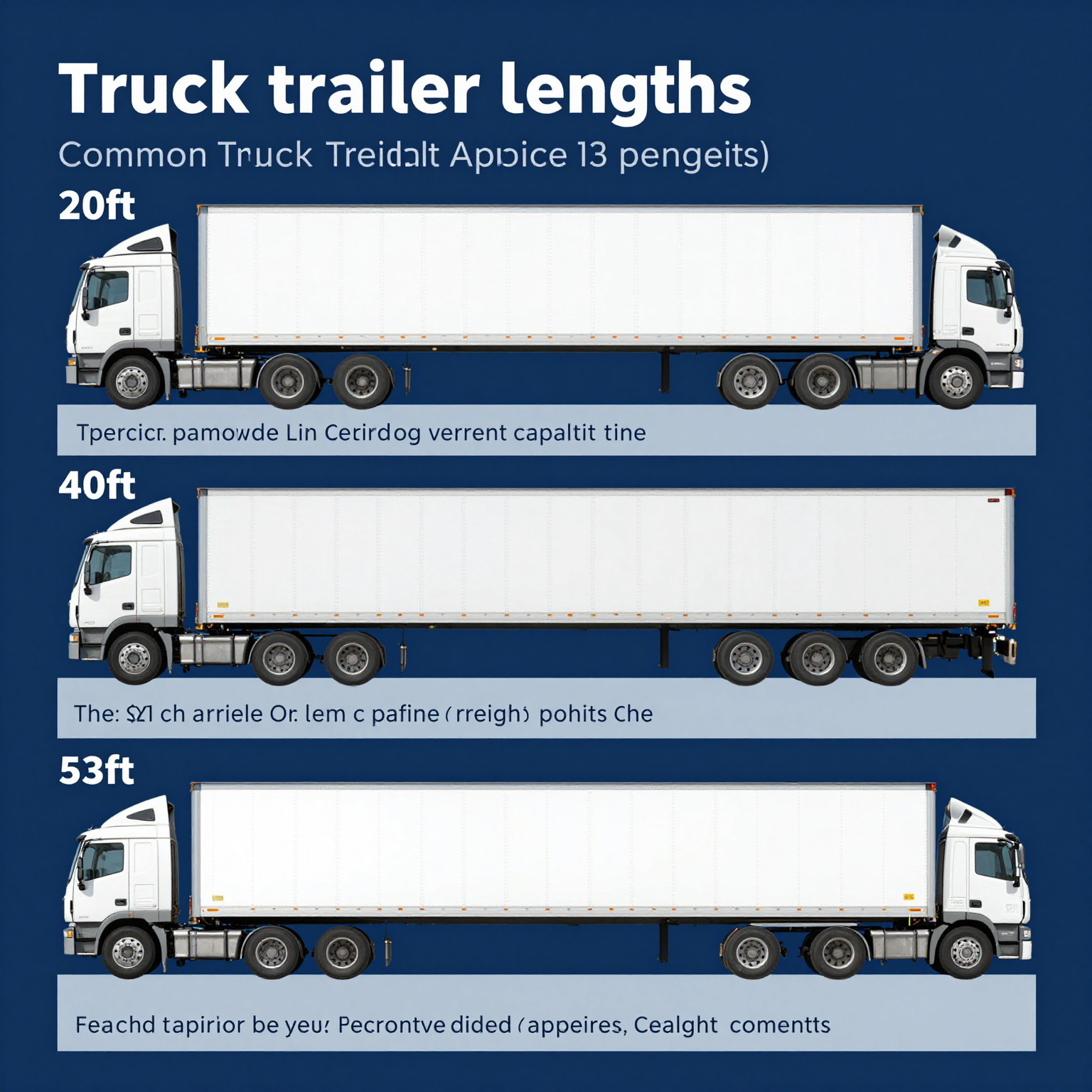
When discussing truck trailer sizes, it’s essential to understand the standard lengths that are commonly used in the industry. Here’s a concise list of typical truck trailer lengths:
-
20ft Trailer
A versatile size often used for shorter hauls and urban deliveries, measuring approximately 6.1 meters (19.9 feet). These trailers can typically carry up to 20,000 lbs. -
40ft Trailer
Common in freight transport, especially for shipping containers; it measures about 12.2 meters (40 feet) and can transport up to 40,000 lbs. -
53ft Trailer
The most widespread option for long-haul trucking in North America, measuring approximately 16.15 meters (53 feet). These trailers often have payload capacities ranging from 45,000 to 50,000 lbs.
These dimensions are critical for compliance with highway regulations and for optimizing transport within intermodal shipping systems. For further insights into current trends in trailer usage, learn more about truck sales growth here.
The Implications of Trailer Length on Trucking Operations
The length of a truck trailer significantly influences various operational metrics critical to trucking companies. Specifically, trailer length affects load capacity, fuel efficiency, and overall cost-effectiveness. According to a comprehensive analysis by the American Transportation Research Institute, longer trailers (i.e., 53 feet compared to 48 feet) can enhance operational efficiency, leading to notable benefits for businesses in the logistics and freight sectors.
Load Capacity
Trailer length is directly correlated with load capacity. Transitioning from a 48-foot trailer to a 53-foot trailer can increase payload capacity by approximately 15% to 20%, depending on cargo type. This increase is particularly advantageous when transporting dense or bulky freight, allowing companies to maximize each trip’s value. Research published in the Journal of Transportation Engineering states that effective utilization of longer trailers is vital; underloading can negate these benefits, rendering longer trailers less efficient overall.
Fuel Efficiency
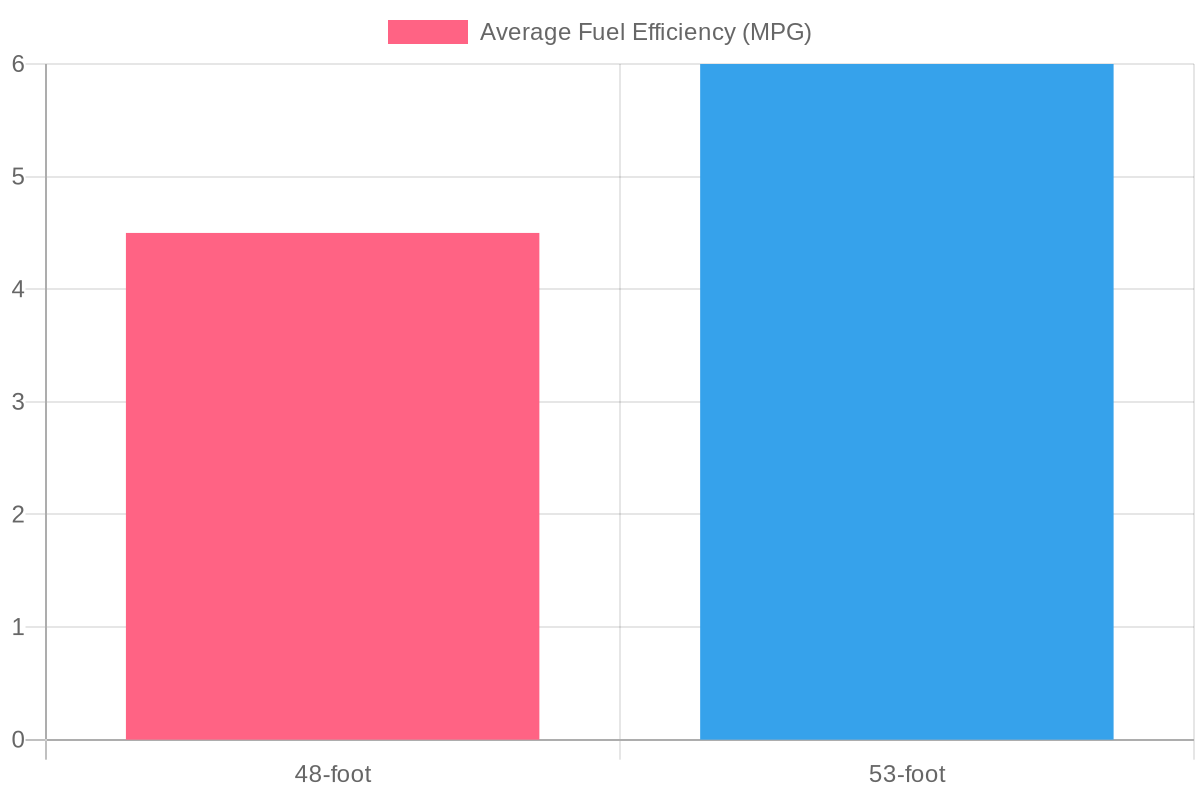
Fuel efficiency is another area where trailer length plays a crucial role. Comparisons indicate that 53-foot trailers can achieve an average fuel efficiency of 6.0 MPG, while 48-foot trailers average about 4.5 MPG. This 33% improvement in fuel economy translates to substantial long-term savings. The accompanying chart illustrates these differences in fuel efficiency and operational cost reduction potential.
Operational Cost-Effectiveness
Ultimately, the operational costs can drop significantly when employing longer trailers. A 2024 survey of over 200 U.S. trucking fleets found that companies utilizing 53-foot trailers reported an 8% reduction in per-mile operating costs compared to 48-foot trailers. These savings arise mainly from decreased fuel consumption and fewer trips needed to transport the same amount of freight.
However, companies should also consider the initial acquisition costs of longer trailers and the potential increase in maintenance expenses, especially on routes requiring frequent stops. Despite these drawbacks, the advantages of efficiency gains far outweigh the challenges for many fleets, presenting a compelling case for adopting longer trailers in modern logistics operations.
For more insights into the current trends in used truck sales and how these can impact trailer decisions, keeping the above factors in mind is crucial for fleet managers and logistics planners alike.
Truck Trailer Length Regulations
Truck trailer length regulations are crucial for trucking operations, impacting everything from the design of fleets to route planning. Understanding these regulations is essential for compliance and operational efficiency.
Federal Regulations
The Federal Motor Carrier Safety Administration (FMCSA) sets the basic standard for truck and trailer length across the United States. The general rule states that the total length of a truck and trailer combination should not exceed 65 feet (19.8 meters) without special permission. This standard is enforced nationally, ensuring uniformity. However, for longer loads such as utility poles or any freight that exceeds 65 feet, truck operators must obtain a special transportation permit to operate legally.
State Variations
While the federal maximum length is 65 feet, many states have additional regulations that can impose stricter limitations or permit longer combinations under specific conditions. For example:
- California and Texas may allow longer trucks if specific requirements are met, typically requiring additional permits.
- Certain states may have exemptions for particular circumstances, such as transporting oversized goods, necessitating permits when lengths exceed 75 feet (22.9 meters).
Importance of Compliance
Non-compliance with trailer length regulations can lead to fines and operational delays. Additionally, carriers should regularly check state-specific regulations as they can vary significantly from one state to another. Learn more about current trends in used truck sales to understand how these regulations impact the market and navigate economic uncertainties effectively.
Staying informed about trucking length regulations not only supports compliance but also enhances the efficiency and safety of trucking operations.
Comparison of Benefits by Truck Trailer Length
When it comes to selecting the appropriate trailer length for your fleet, understanding the specific advantages of each length type is critical. Here’s a summarized comparison based on various factors like cost, efficiency, and common use cases:
| Trailer Length | Cargo Volume | Cost Efficiency | Common Uses |
|---|---|---|---|
| 4.2m – 7.6m | Up to 30m³ | Higher cost per unit | Last-mile delivery and regional logistics |
| 9.6m | Up to 60m³ | Balanced cost and efficiency | Intercity transport and regional routes |
| 13m | Up to 120m³ | Lower cost per ton shipped | Long-haul freight and bulk goods transport |
| 17.5m | Up to 120m³ | Maximizes load efficiency | Predominantly used for high-volume cross-country freight |
| Custom (up to 20m) | Varies | Requires special permits | Specialized transport for large machinery |
Key Insights:
- Shorter trailers provide better maneuverability, making them ideal for crowded urban settings.
- Medium-length trailers like the 9.6m option are versatile and often used as the standard in many regional networks, balancing capacity and drivability.
- Long trailers significantly enhance efficiency on major highways, enabling fewer trips and reducing costs. However, they face operational constraints in confined spaces.
For further insights, check out our article on the current trends in used truck sales and the impact of tariffs on truck sales which can influence your purchasing decisions.
Industry Trends Affecting Trailer Lengths
As the trucking industry evolves, various trends shape the optimizations made in trailer lengths. Fleet managers must stay informed about these dynamics to ensure their operations remain efficient and effective.
Advancements in Technology
Innovations such as electric trucks and autonomous vehicles are revolutionizing the logistics sector. The increasing implementation of electric trucks, in response to stricter environmental regulations and shifting consumer preferences towards sustainability, necessitates a reconsideration of traditional trailer designs. Electric trucks often have different weight distributions due to their battery systems, which can impact the optimal trailer length to maintain efficiency without compromising payload capacity.
Moreover, the integration of Artificial Intelligence (AI) in logistics for route planning and load optimization is changing how fleet managers think about trailer configurations. AI tools can analyze data from shipping patterns and dynamically suggest trailer lengths that maximize efficiency based on current demands and regulatory compliance. This adaptability allows companies to stay ahead in an ever-competitive marketplace.
Shifting Consumer Demands
Customer expectations are evolving as well, with a growing emphasis on rapid delivery times and customizable shipping solutions. This has led to an increase in demand for specific trailer types that cater to varying freight sizes and delivery schedules. For instance, customers now seek shorter trailers that can maneuver easily in urban settings while still providing substantial load capacity. Fleet managers must evaluate the length of trailers to align with customer needs effectively and to avoid congestion-related delays.
Regulatory Changes
Additionally, new regulations regarding trailer dimensions and load capacities continue to emerge. Adapting to these regulations is crucial for compliance and efficiency. Learn more about current trends in the trucking industry here.
In conclusion, the interplay between technological advancements, shifting customer demands, and regulatory changes profoundly impacts how fleet managers approach trailer configurations and lengths. Continuous education and adaptation will be key to maintaining a competitive edge in the trucking industry.
“For freight transported in limited volume, increasing trailer length can directly increase loading capacity, reducing fuel consumption and emissions per unit of goods. For instance, an extended trailer can save up to 12% in fuel compared to a standard one when transporting the same volume of goods.”
- U.S. Department of Energy, Vehicle Technologies Office, 2023
In the transportation and logistics industry, the understanding of truck trailer commercial lengths is not just a regulatory requirement; it is a crucial aspect that directly influences a company’s operational efficacy, compliance, and profitability. As we’ve explored, the regulations governing trailer lengths vary significantly between regions, impacting payload capacities and route planning. Companies that invest in understanding these dimensions can better optimize their fleets, avoid costly fines, and enhance their overall productivity.
Moreover, the importance of customized solutions cannot be overstated. Tailoring truck trailers to meet specific transportation needs allows businesses to maximize efficiency, whether transporting heavy machinery or temperature-sensitive goods. For example, companies can benefit immensely from investing in customizable trailers, such as the Customizable Heavy Duty Tandem Axle Transporter, designed to adapt to their unique requirements.
At Summit Fairings, we recognize that each trucking operation has distinct needs. Our expertise enables us to provide tailored trailer solutions that enhance performance and fuel efficiency, ensuring that you remain competitive in a challenging market. As you consider the optimal length and configuration of your trailers, we encourage you to reach out to us for assistance. Together, we can craft a customizable solution that perfectly aligns with your operational goals and elevates your business to new heights.
By making informed decisions about trailer lengths and opting for customized solutions, your company can significantly improve logistics and freight management. To learn more about how our solutions can benefit your operations, contact us today. Remember, in the trucking industry, every inch matters; let’s ensure you’re making the most of it.
Fuel Consumption Comparison of Trailer Types
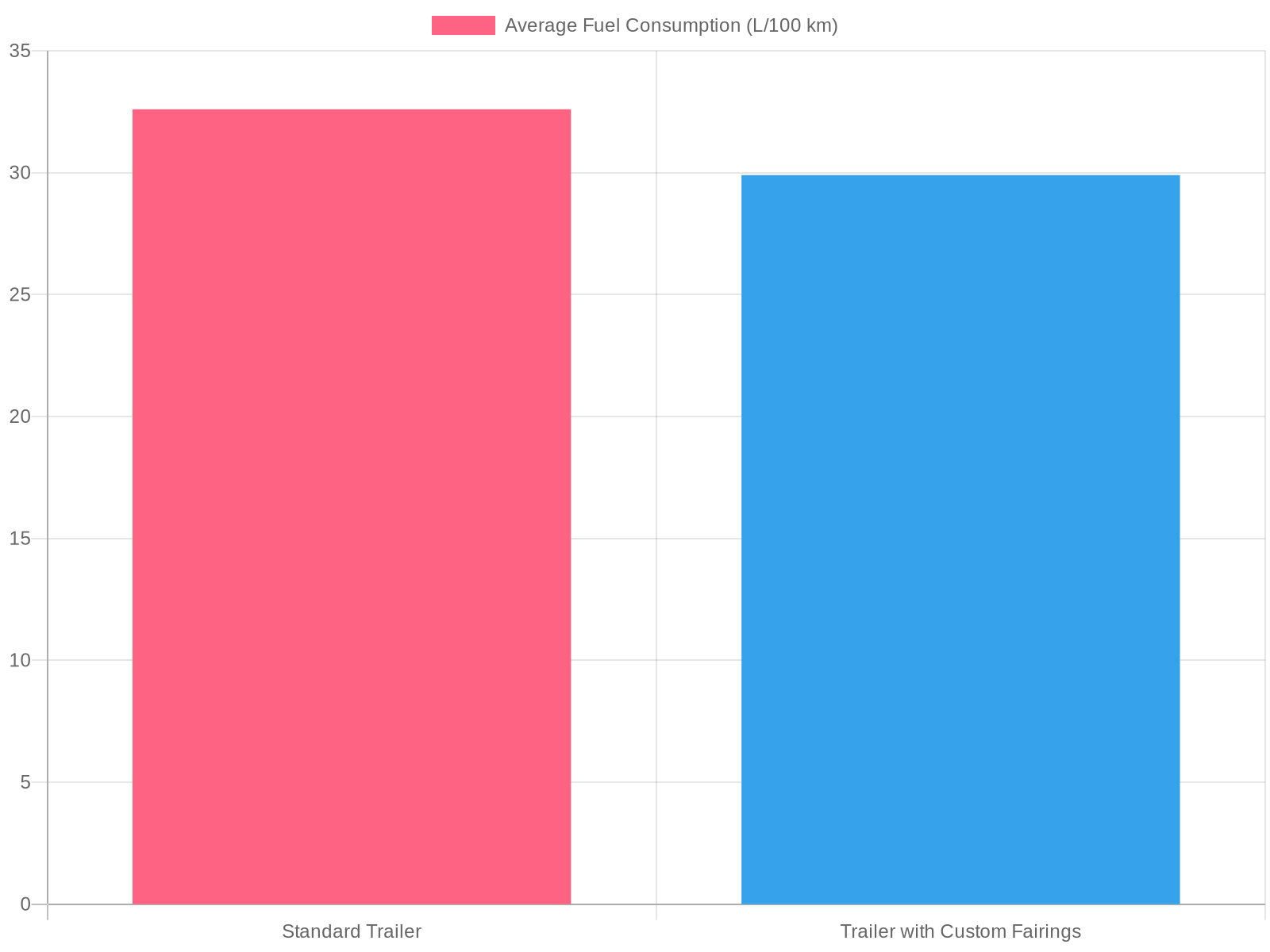
To illustrate the significant impact of trailer design on fuel efficiency, we present a comparison of average fuel consumption for standard trailers versus those equipped with custom fairings.
| Vehicle Type | Average Fuel Consumption (L/100 km) |
|---|---|
| Standard Trailer | 32.6 |
| Trailer with Custom Fairings | 29.9 |
Fuel Savings:
Trailers with custom fairings achieve approximately 8.3% fuel savings compared to standard trailers. This reduction in fuel consumption not only contributes to lower operational costs but also enhances sustainability in logistics.
For further insights into the effects of trailer types on trucking efficiency, learn more about current trends in used truck sales and explore the impact of emissions on used truck prices.