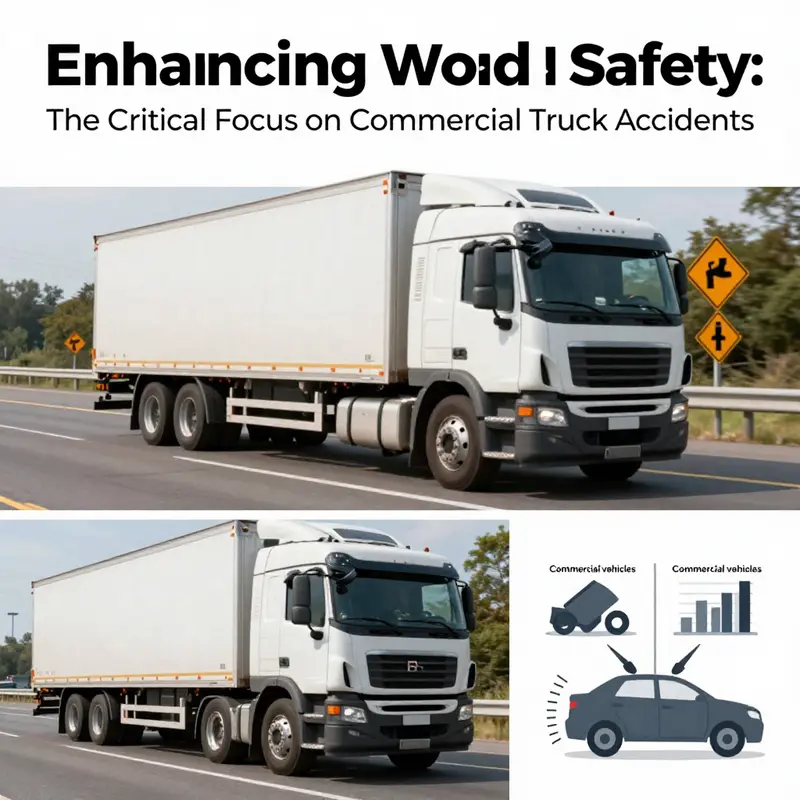
The prevalence of commercial truck accidents is a pressing concern due to their substantial impact on public safety, the economy, and infrastructure. With large trucks involved in 12% of all traffic fatalities despite representing only 4% of registered vehicles, the urgency to focus on safety measures within this segment is undeniable. This article succinctly evaluates the reasons behind prioritizing solutions for commercial truck accidents, elucidating key statistics, causative risk factors, safety improvements, and the regulatory environment influencing trucking operations. Each subsequent chapter aims to provide a detailed discourse on these elements, forming a cohesive understanding of why strategic focus is essential for mitigating risks and enhancing safety across the industry.
Targeted Safety at Scale: Why Zeroing In on Commercial Truck Crashes Elevates Road Safety
A focused pursuit of safety in commercial trucking is not a narrowing of vision but a sharpening of it. By directing attention to the crashes that involve large trucks, policymakers, service providers, and communities gain leverage where it matters most. The data are clear enough to demand action: in recent years, big rigs accounted for a meaningful share of roadway fatalities relative to their presence on the road. In the United States, FMCSA reports show large trucks were involved in roughly 12 percent of traffic fatalities in 2022, while they represented about 4 percent of registered vehicles. That disproportion signals that broad road-safety programs may miss what truly pushes risk up in the highway environment. When safety efforts are tuned to the realities of commercial trucking—its schedules, its equipment, its regulatory framework, and its labor practices—the potential for measurable improvements expands dramatically. The objective is not to stigmatize a single driver or vehicle, but to design systemic protections that shrink risk across fleets, corridors, and communities.
The operational realities of trucking amplify risk in ways that are not always obvious in aggregate traffic data. Long-haul driving relies on extended periods behind the wheel, demanding schedules, and the constant pressure to meet delivery commitments. Fatigue becomes a shared risk factor across fleets, dispatchers, and maintenance teams. Digital tools, like electronic logging devices, have begun to change the risk calculus by reducing hours-of-service violations and promoting disciplined rest patterns. Yet technology alone does not eliminate danger. It is the way organizations embed safety into daily practice—the alignment of incentives, training, and accountability—that translates data into safer road behavior. When a company’s culture treats safety as a non-negotiable standard rather than a hurdle to efficiency, the benefits compound across drivers, maintenance crews, and dispatch personnel. For readers seeking a practical lens on how industry practice translates into safety outcomes, the McGrath Trucks blog offers a broad view of safety practices and market dynamics. McGrath Trucks blog.
To understand why focusing on accidents matters, it helps to unpack the mechanisms that lead to a crash. The narrative is rarely a single mistake; it is a confluence of human factors, mechanical conditions, regulatory requirements, and systemic pressures. Human error remains central, but it reveals itself through a web of contributing elements: fatigue from long hours, distraction inside the cab, and speeding in response to time pressures. In addition, maintenance lapses can convert a momentary fault into a highway hazard, while cargo-loading errors create instability that only becomes evident in a fast-moving vehicle. Regulatory compliance shapes these outcomes as well, because hours-of-service rules, vehicle inspections, and cargo securement standards define the operating boundaries within which drivers and carriers must function. When researchers and practitioners emphasize root causes—rather than merely cataloging crashes—they unlock a path to targeted prevention. This shift makes it possible to tailor training, inspection protocols, and enforcement efforts to the precise pathways through which harm occurs, rather than applying one-size-fits-all remedies.
Distraction and speeding emerge as some of the most stubborn contributors to large-truck crashes. In-cab distractions can arise from dispatch communications, navigation devices, and routine interactions with freight handling teams. Speed compounds both the likelihood and the severity of a crash, particularly on grades, in construction zones, or at complex interchanges. Effective responses blend enforcement with education and engineering: tighter penalties for violations tied to safety outcomes, real-time warning technologies, and training that translates general safety concepts into actionable decisions on the road. But enforcement cannot stand alone. It must be paired with data-driven insights that reveal where risk clusters—by route, by time of day, or by weather and traffic conditions—are most pronounced. Telematics, route analytics, and crash investigations together illuminate these patterns, enabling operators to adjust shift patterns, modify maintenance schedules, and implement targeted refresher programs for drivers. The overarching aim is not punishment but habit formation: safer routines that endure across shifts and across fleets, elevating safety as a core performance metric.
The broader social and economic rationale for concentrating on commercial truck crashes is straightforward and consequential. The scale and force of these vehicles mean that a single collision can trigger road closures, traffic disruptions, and cascading damages to infrastructure. These incidents ripple through local economies, affecting supply chains, healthcare systems, and municipal budgets. As the body of evidence grows, so does the case for investing in prevention technologies that work in concert with one another. Electronic logging devices, beyond their primary purpose of compliance, contribute to a safer operating environment when integrated with collision avoidance systems and automatic braking technology. A data-centric approach also strengthens accountability: when investigators trace crashes to their root causes, the resulting analyses offer a clear view of liability—whether it lies with the driver, the carrier, the vehicle manufacturer, or a third party such as a cargo handler. This clarity supports fair compensation for victims and encourages responsible behavior across the industry, creating a feedback loop that reinforces safer practice even in high-pressure settings. In this regard, the Federal Motor Carrier Safety Administration’s ongoing data and policy work provides essential guardrails and benchmarks for all stakeholders.
From the perspective of risk management and public policy, focusing on commercial truck crashes makes safety more tangible and more achievable. It converts abstract risk into concrete interventions—training curricula tailored to hazard perception, stricter load-securement standards, and more resilient maintenance protocols that prevent minor faults from escalating into catastrophes. It also reframes the safety conversation as a shared responsibility among drivers, carriers, regulators, insurers, and the communities that share the highways. The investigation and reporting practices that accompany crashes are not merely procedural steps; they are critical mechanisms that translate experience into practical safeguards. When a crash is analyzed with an eye toward root causes, the resulting insights can be generalized to different fleets, routes, and weather scenarios, enabling proactive risk management rather than reactive cleanup. In this sense, the focus on commercial trucking acts as a force multiplier for road safety across the broader transportation system.
Ultimately, the rationale for this focused approach rests on the combination of risk exposure and potential payoff. The road network carries enormous social and economic value, but it also bears a heavy safety burden when the largest moving objects interact with densely populated areas. Targeted safety programs that address fatigue, load stability, driver training, and enforcement can produce tangible reductions in crash frequency and severity. At the same time, they create a more predictable operating environment for everyone who shares the road—workers, families, pedestrians, and other motorists. The FMCSA’s data, standards, and safety communications anchor this work in an evidence-based framework, guiding how resources are allocated and how policies are refined in light of new findings. This is not a niche concern; it is a practical deployment of safety science at scale. For readers seeking authoritative context and ongoing updates on crash trends and regulatory standards, the FMCSA site remains a central reference point: https://www.fmcsa.dot.gov.
Charting Truck Crash Trends for Safer Highways
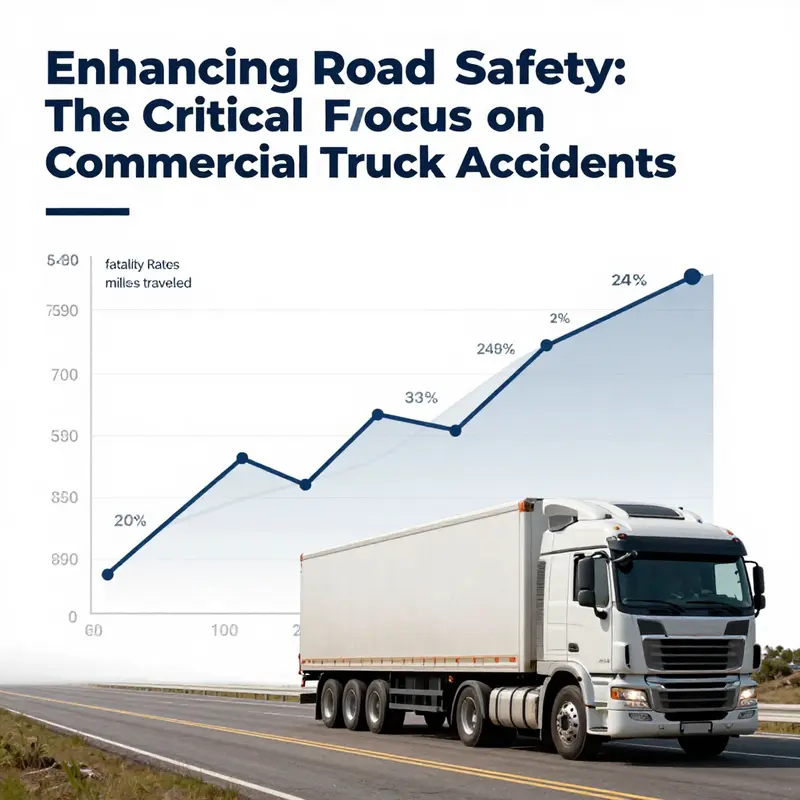
Understanding commercial truck accident statistics is not just about numbers; it is a strategic tool that informs safety standards, fleet operations, and policy priorities across the transportation system. When fleets, regulators, and researchers align around solid trends, they can move from reactive responses to proactive risk management. The most important patterns emerge when comparing crash data to exposure, severity, and fleet characteristics. For example, large trucks account for a disproportionate share of fatal crashes relative to their presence on the road, signaling where targeted interventions yield the greatest safety gains. This translates into prioritizing hours-of-service oversight, maintenance and brake-system reliability, load securement, and safer highway operations.
Trend analysis turns data into a practical plan: identify which risk factors most reliably predict incidents, monitor the effectiveness of safety investments, and adjust governance and training accordingly. Technologies such as telematics, electronic logging devices, and onboard safety alerts are only useful if interpreted and acted upon by drivers and managers. Well-governed data supports safer driving choices, better maintenance scheduling, and evidence-based policy changes that reduce crashes, injuries, and economic disruption.
The landscape is evolving: newer electric commercial vehicles bring advanced safety features, while fatigue, tight schedules, and load complexity continue to shape risk. The challenge is not merely to deploy technology, but to ensure people translate tools into safer behavior and reliable operations. Finally, clear, actionable trend insights help stakeholders—from drivers to policymakers—prioritize investments that deliver measurable safety benefits and safer roads.
The Weight of the Road: How Focusing on Commercial Truck Crashes Elevates Safety, Policy, and Practice
The decision to concentrate research and policy efforts on commercial truck crashes is not a narrow concession to a stubborn problem; it is a strategic posture designed to drive meaningful safety gains across roads, fleets, and communities. Large trucks account for a small share of traffic, yet their impact on safety outcomes is outsized, and the reasons are structural. According to the FMCSA, large trucks were involved in about 12% of all traffic fatalities in 2022, despite representing roughly 4% of registered vehicles. This disproportion matters because the weight and length of these vehicles magnify the consequences of even minor misjudgments or small failures. When a truck collides with a car, the kinetic energy involved is several times higher than in typical passenger-vehicle crashes, and the resulting harm cascades through families, workplaces, and emergency responders who must cope with the aftermath. For policymakers and practitioners, the lesson is clear: progress in highway safety hinges on understanding and reducing risk within the specific ecosystem of commercial trucking. This is not merely about counting crashes; it is about diagnosing why they occur and then designing interventions that fit the realities of long-haul operations, tight delivery windows, and rigorous compliance regimes. The effectiveness of this focus comes from the alignment of data, policy, and practice toward high-risk conditions that thread through the professionalization of the industry and the daily lives of drivers and maintenance staff. In practice, this means looking beyond generic road-safety narratives to the particular levers that drive safety in trucking—tire pressures and brake linings, load securement and weight distribution, fatigue management and rest opportunities, and the systems that oversee hours-of-service, vehicle inspection, and maintenance cycles. The result is a safety strategy that is measurable, scalable, and adaptable to evolving trucking realities, from shifts in demand to advances in vehicle technology and fleet management tools. One crucial piece is the emergence of electronic logging devices (ELDs) and other data-driven controls that help align driver behavior with safety standards. When fleets adopt robust ELD programs and use the resulting data to target risk, hours-of-service compliance improves, fatigue becomes more manageable, and the likelihood of a fatigue-related performance lapse declines. But the impact is not merely about compliance numbers; it translates into fewer high-risk moments on the road—fewer late-night runs that stretch driver alertness too thin, fewer trips completed while the vehicle is at the edge of a safe braking margin, and fewer urgent maneuvers that come from delayed maintenance or unexpected mechanical stress. Systemic improvements emerge from recognizing that risk factors in trucking are not isolated incidents but parts of operational systems that include loading practices, route planning, maintenance schedules, and real-time monitoring. Among the most consequential risk factors are driver fatigue, distracted driving, improper loading, and vehicle maintenance issues. Fatigue is not only a matter of long hours; it is the cumulative effect of irregular schedules, insufficient rest periods, and the pressures of tight dispatch windows. When fatigue erodes reaction time and judgment, even ordinary road situations can escalate into dangerous events. Distracted driving in trucking is multifaceted: drivers may wrestle with navigation screens, communications devices, or in-cab information systems while still trying to perform complex maneuvers at highway speeds. The result is a higher probability of late braking, lane deviations, or missed signs that signal changing conditions ahead. Improper loading is a more subtle but equally dangerous problem. Cargo that is not properly secured or is misdistributed can shift during transit, changing vehicle dynamics and stability. The consequences can be sudden: a rollover, jackknife, or a loss of control that leaves other road users exposed to unpredictable movements. Vehicle maintenance represents the backbone of roadside safety. Regular checks for brakes, tires, lights, and steering systems are not glamorous tasks, but they prevent failures that could cascade into critical incidents. Spare parts, inspection routines, and preventive maintenance protocols form a protective threshold. When maintenance lags, a small defect can become a catastrophic failure, particularly under heavy payloads or extreme operating conditions. Taken together, these risk factors illuminate why focusing on commercial truck accidents yields outsized safety dividends. They point to concrete targets for policy and industry practice—hours-of-service enforcement with teeth, rigorous inspection regimes for at-risk fleets, and robust maintenance and loading standards that align with the realities of long-haul life. The narrative also emphasizes the value of data-driven safety programs. By analyzing crash data alongside fleet operation metrics, researchers can identify which combinations of factors most reliably predict crashes and, crucially, which interventions produce tangible reductions in incident rates. The implementation of data-informed safety protocols in the trucking sector—such as targeted enforcement, driver training focusing on fatigue and distraction, and enhanced load-securement guidelines—demonstrates how focused inquiry translates into safer roads without imposing unnecessary burdens on compliant operators. This is where the broader aim of the article—why it works—intersects with the practicalities of trucking life. The focus on a high-risk segment allows investigators to measure the impact of targeted interventions with greater confidence, because the baseline risk is higher and the signals are clearer. It also helps policymakers justify specific investments in infrastructure, training, and technology that support safer operations, such as better rest areas for long-haul drivers, more effective fatigue-management programs, and better funding for maintenance inspections. In the end, the chapter of safety within commercial trucking is not about blaming drivers or fleets. It is about understanding the ecosystem and aligning incentives so that safety is embedded in every phase of operation—from loading docks and depots to on-the-road execution and post-matrol maintenance. By treating risk as an operational feature—one that can be measured, managed, and improved—stakeholders can reduce human and financial costs, fortify public safety, and sustain the backbone of commerce that relies on these vehicles every day. For readers seeking a deeper dive into the data behind these claims, the National Highway Traffic Safety Administration’s commercial vehicle safety analysis offers a comprehensive view of the most common causes of commercial truck crashes in the United States: https://www.nhtsa.gov/risky-driving/commercial-vehicle-safety. Additionally, industry analyses of fleet trends, including current trends in used truck sales growth, can illuminate how market dynamics shape the opportunities and constraints for safer trucking practices. See more here: current trends in used truck sales growth.
Climbing Toward Safer Highways: Why Focused Safety Improvements Work for Commercial Truck Accidents
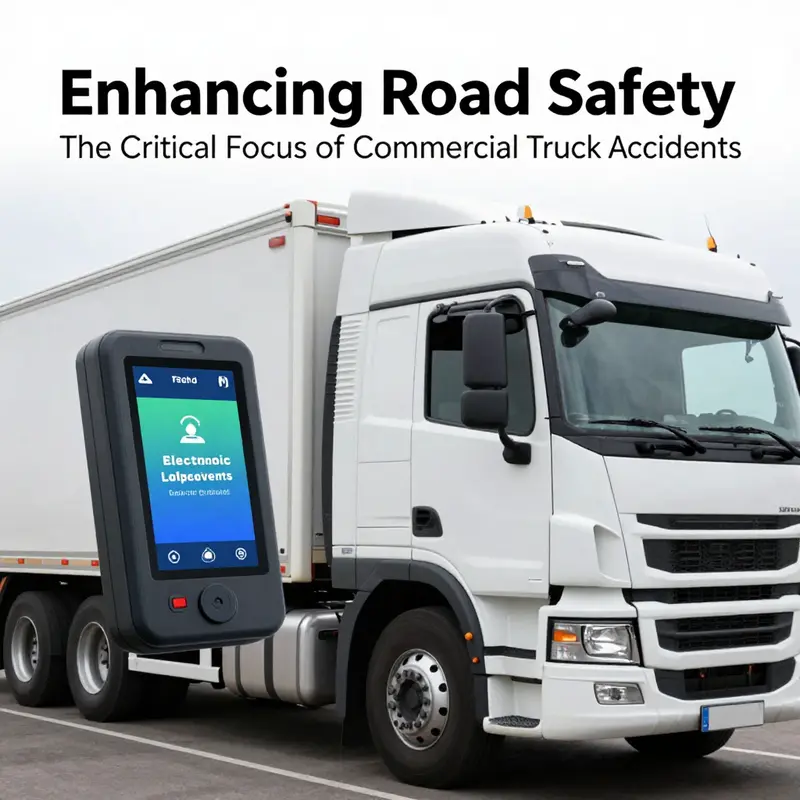
When we seek to reduce commercial truck crashes, the most effective path is not a single gadget or policy, but a disciplined, layered approach to safety. The focus on commercial trucking safety matters because these vehicles, by their weight and geometry, carry outsized risk when things go wrong. Across the United States, large trucks account for a disproportionate share of fatal crashes relative to their presence on the road. In 2022, trucks represented roughly 12% of traffic fatalities while comprising only about 4% of registered vehicles. Those numbers underscore a fundamental reality: the costs of trucking accidents are magnified by size, momentum, and the complexity of operations. The challenge, then, is not merely to react to crashes after they occur but to shape the conditions that prevent them. This is where the progressive logic of safety improvements comes into play, a logic that sees prevention as a continuous journey rather than a one-off commitment. The journey begins with recognizing that high-risk driving is not caused by a single failure but by the interaction of several factors. Long-haul schedules, regulatory constraints, and the commercial imperative to meet tight delivery timelines create a pressure cooker for fatigue, distraction, and mechanical vulnerability. The result is a spectrum of risk—from driver fatigue and improper loading to maintenance lapses—that calls for coordinated, evidence-based interventions. In this light, focusing on safety improvements in trucking is not a niche concern but a strategic public-safety priority with broad economic and social benefits. A key element of this strategy is to adopt practical, data-informed measures that can be scaled across fleets of different sizes and operating models. When an industry segment bears a large share of risk, the payoffs from targeted risk-reduction programs can be substantial, measurable, and durable. The logic is straightforward: identify, prioritize, and strengthen the points in the system where risk converges, and the entire safety profile improves over time. A useful way to frame this work is through the lens of continuous improvement, where every safety initiative is assessed for effectiveness and refined based on real-world results. The National Highway Traffic Safety Administration (NHTSA) highlights this exact pathway in its emphasis on integrating strong safety management practices, cultivating a proactive safety culture, and pursuing ongoing operational enhancements. The message is clear: safety is not a static checklist but a living system that grows more robust as organizations advance along a tested ladder of safety maturity. For readers seeking a concise articulation of these ideas, practical discussions in industry blogs—such as the McGrath Trucks Blog—offer accessible examples of how theory translates into day-to-day practices. McGrath Trucks Blog serves as a touchstone for fleet operators exploring how to move from compliance to culture, from basic procedures to systematic improvement. The focus on truck safety, therefore, is not merely about reducing accidents; it is about building organizational capacity that transforms risk into responsible action. At the core of this approach are three interlocking pillars: safety management systems, a proactive safety culture, and a commitment to continuous operational improvements. Each pillar reinforces the others, creating a cumulatively stronger safety posture that reduces the probability of crashes and mitigates their consequences when incidents do occur. Strong safety management systems establish the framework for accountability and consistency. They define who is responsible for what, how safety performance is measured, and how data is used to drive decisions. A robust system does not rely on heroic acts from a single driver or supervisor; it integrates safety into every decision, from route planning and scheduling to maintenance routines and incident investigations. A proactive safety culture, meanwhile, makes safety a shared value rather than a compliance obligation. When leadership models safe behaviors, when frontline workers feel empowered to speak up about risk, and when investigations focus on learning rather than blame, organizations begin to close the gap between policy and practice. A culture oriented toward safety recognizes that fatigue management, distraction control, and rigorous maintenance are not expensive add-ons but essential elements of reliable service and sustained performance. The third pillar—continuous operational improvements—ensures that the system remains dynamic. Safety is never finished; it evolves as new data, technologies, and field experiences become available. In trucking, this means regularly updating training curricula, refining inspection protocols, and leveraging data analytics to identify emerging risk patterns. The convergence of these three elements yields tangible outcomes. For instance, when a fleet implements a Safety Management System with formal procedures for fatigue risk management, performance dashboards, and routine audits, the organization moves beyond passive compliance toward a culture of active risk reduction. This progression aligns with the Safety Ladder concept, which posits that as organizations ascend through levels of safety maturity—from basic adherence to comprehensive culture and continuous improvement—the likelihood of accidents decreases. The evidence supporting this ladder approach is compelling, and it resonates with the core findings of NHTSA’s chapter on safety improvements for commercial trucking. The emphasis is not on one silver bullet but on a suite of coordinated, evidence-based interventions that address root causes in a systematic way. Driver fatigue, distracted driving, and maintenance lapses emerge repeatedly as the most actionable targets. Fatigue arises from long hours, insufficient rest, and fragmented sleep quality, compounded by demanding delivery windows. Interventions here include more precise scheduling that respects rest requirements, smarter routing that avoids back-to-back long hauls, and technology-enabled monitoring that identifies signs of fatigue without punitive overreach. Distracted driving is another critical front. In-cab distractions, from handheld devices to non-driving tasks, erode situational awareness and reaction times. Effective countermeasures combine policy with practice: coaching and training that reinforce safe driving behaviors, vehicle design considerations that minimize unnecessary interruptions, and in-vehicle reminders or alert systems that help drivers stay focused during high-demand segments of the route. Maintenance is the third pillar where prevention translates directly into fewer failures on the road. Regular, proactive maintenance schedules that are documented, audited, and tied to performance metrics reduce the incidence of mechanical problems that can lead to loss of control, brake failures, or tire blowouts. When maintenance becomes a measurable, data-driven process rather than a reactive step, the vehicle’s reliability improves and the chance of a catastrophic event declines. The evidence from NHTSA’s Safety Improvements—Why It Works underscores that these improvements work best when they are integrated into a mature safety program. The core idea is not simply to impose more rules, but to enable fleets to learn, adapt, and refine their operations continually. In other words, the focus shifts from compliance for its own sake to safety as a core organizational capability. This is where the practical value of the Safety Ladder becomes apparent. Companies that commit to climbing this ladder report reductions in accident risk that are not just theoretical but observable in their loss histories, insurance profiles, and operational efficiency. The ladder framework also helps explain why a combined approach—policy, culture, and continuous improvement—outperforms isolated efforts. A policy without culture can become a paper exercise; culture without capable processes can fail under pressure. But when both are aligned, with continuous feedback loops and data-informed decision-making, the safety system becomes resilient enough to withstand the pressures of heavy demand and dynamic road conditions. The evolution of safety in trucking, therefore, is less about chasing a single breakthrough and more about institutionalizing a coherent, learning-oriented ecosystem. Practically, fleets move forward by building the three pillars in tandem: invest in a strong safety management framework, cultivate leadership and frontline ownership of safety, and harness ongoing operational reviews to test, learn, and improve. The goal is measurable reductions in risk that translate into fewer incidents, safer communities, and a healthier bottom line. For readers who want a digestible entry point into these ideas, exploring industry writings can illuminate how the theory translates into day-to-day practice. The McGrath Trucks Blog presents accessible discussions of these themes, offering real-world reflections that complement the research findings cited here. In summarizing the broader message, safety improvements work because they are rooted in evidence, embraced across organizational levels, and continuously refined through data and experience. When fleets adopt strong safety management, foster a proactive safety culture, and pursue ongoing operational improvements, the likelihood of accidents declines. This is not a quick fix but a durable strategy that aligns safety with performance, reliability, and cost efficiency. As a result, the trucking sector can move toward safer highways without sacrificing operational viability, and communities can benefit from lower risk on the roads that connect supply chains, farms, factories, and neighborhoods. For readers seeking more detailed, evidence-based information on these safety improvements, the NHTSA publication offers a comprehensive guide to the practices that work in commercial trucking. See the external resource for further depth: https://www.nhtsa.gov/vehicle-safety/commercial-trucking/safety-improvements-why-it-works
null
null
Final thoughts
In summary, the concentrated focus on commercial truck accidents is essential for enhancing public safety, reducing economic losses, and improving operational standards within the industry. The insights drawn from accident statistics, identification of risk factors, implementation of safety improvements, and acknowledgment of policy implications collectively underscore a multifaceted approach needed to tackle this critical issue. Stakeholders in trucking, logistics, and procurement roles must prioritize these areas to develop comprehensive strategies that not only ensure compliance but also foster a safety-centric culture that benefits all road users.