As businesses increasingly rely on specialized vehicles for their operations, a deep understanding of commercially rated trucks becomes imperative. These trucks are not just vehicles; they are vital components that can determine the efficiency and success of logistics, construction, and mining enterprises. Positioned to handle demanding tasks, commercially rated trucks are designed with specific attributes that cater to rigorous industrial requirements. This article explores their key characteristics, commercial usage, regulatory standards, and the latest technological advancements that influence their performance. By delving into these facets, trucking company owners, fleet managers, and procurement teams can make informed decisions that drive operational excellence.
The Backbone of Business Mobility: What Truly Defines a Commercially Rated Truck
A commercially rated truck is more than a larger vehicle with an engine and wheels. It is a purpose-built instrument of commerce, engineered to perform day after day in environments where uptime matters, payloads are heavy, and the margin for error is slim. In the abstract, the term signals a category aligned with business operations, not leisure or personal transport. In practice, it signals a philosophy of durability, predictability, and regulatory alignment that shapes how a fleet is designed, how maintenance is scheduled, and how operators plan every mile. When a business buys a truck for logistics, construction, or service delivery, it is choosing not merely a mode of conveyance but a system that integrates power, chassis, safety, and data to deliver reliable throughput. Understanding that ecosystem requires looking at the core characteristics that distinguish commercially rated trucks from everyday passenger vehicles and light-duty work trucks, and then tracing how those characteristics translate into value for a fleet, a driver, and the enterprise as a whole.
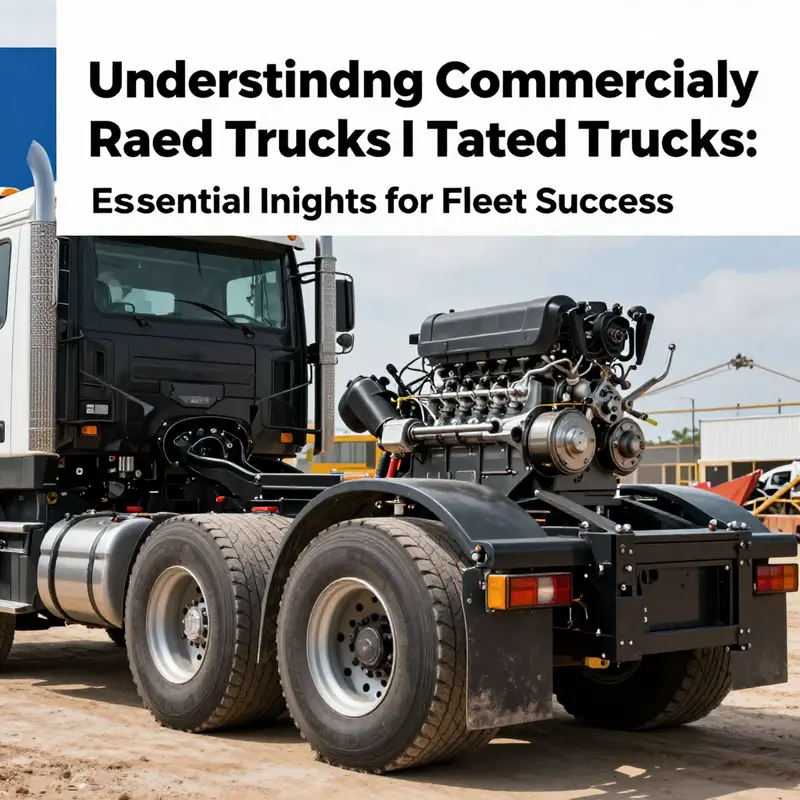
At the heart of a commercially rated truck lies its build quality. These machines are crafted with heavier-duty materials, reinforced frames, and components that can endure long hours, heavy payloads, and tough working conditions. The goal is not flashy acceleration or city driving comfort but the ability to sustain high utilization without significant downtime. The frame takes the brunt of heavy loads and rough terrain, the suspension is tuned to maintain stability under load, and the drivetrain is designed to deliver torque and endurance rather than the most delicate high-speed performance. This robustness is the backbone of reliability, and it underwrites every other characteristic that follows. In fleet planning terms, this translates into lower time lost to repairs and a predictable maintenance horizon, both of which reduce the total cost of ownership over the vehicle’s lifetime.
Payload capacity is another defining feature. Commercially rated trucks are configured to carry substantial cargo, often far beyond the capability of standard passenger-focused vehicles or light-duty trucks. The payload is not a mere number on a spec sheet; it dictates brake sizing, suspension geometry, tire choice, and even the layout of the cargo area. A higher payload capacity means fewer trips, which can improve route efficiency and reduce per-unit transport costs. It also means manufacturers design interfaces that help drivers manage weight distribution safely, reducing the risk of tire failure or stability issues when the load shifts during cornering or braking. In practice, fleets measure capacity not only in pounds but in the implications for route planning, fuel economy, and scheduling. A truck that can move 15,000 pounds of material in a single trip changes the calculus of a construction site, a distribution center, or a long-haul operation.
The powertrain and drivetrain are indispensable in this conversation. Commercially rated trucks typically employ robust engines—often diesel in many regions—paired with transmissions and axles designed for sustained torque and predictable performance under heavy load. The emphasis is on durability, fuel efficiency over long distances, and consistent torque delivery even when the truck is pulling a heavy trailer uphill or navigating rugged terrain. This is not about chasing peak horsepower; it is about delivering reliable, controllable power across thousands of hours and miles. The choice of powertrain interacts with emissions considerations, maintenance costs, and fuel economy, forming a nexus where performance meets economics. In fleet operations, a reliable powertrain also means fewer unexpected maintenance events, which translates into cleaner schedules, better driver morale, and a steadier cash flow.
The chassis and suspension systems of a commercially rated truck are more than structural components; they are active partners in safety and performance. Reinforced suspensions, heavy-duty brakes, and upgraded steering systems are engineered to keep the vehicle controllable under load, to absorb the punishment of rough job sites, and to maintain stable braking performance as weight increases. This is crucial because heavy loads magnify the consequences of misjudgments in speed or terrain. A well-designed chassis helps ensure that traction, steering precision, and braking response remain within safe margins, even when the payload shifts or the road surface becomes unpredictable. The result is a vehicle that behaves like a tool rather than a fragile machine, allowing operators to concentrate on the task at hand rather than worrying about the truck’s handling.
Regulatory compliance is inseparable from the concept of a commercially rated truck. These vehicles must adhere to a web of federal, state, and local rules covering safety, emissions, and operational standards. In the United States, the FMCSA framework governs many of these aspects, including driver hours of service, vehicle inspections, and maintenance records. The regulatory overlay shapes how fleets schedule inspections, how drivers perform pre-trip checks, and how data is captured and reported. Even the designation as a commercial motor vehicle, or CMV, hinges on criteria such as gross vehicle weight rating, or GVWR, and the vehicle’s intended use. In practical terms, this means a commercially rated truck is built and operated with a level of discipline designed to minimize risk and maximize safety for both the operator and the public. Adherence to these standards protects the business through better compliance, fewer penalties, and stronger eligibility for insurance and financing.
The concept of a CMV is not just about weight. It also encompasses the intended use and the operational footprint. A vehicle with a GVWR above 10,001 pounds, or one used to transport a large number of passengers for compensation, enters CMV territory. This designation matters because it triggers specific maintenance, inspection, and driver qualifications that are essential to safe operations. For fleets, this provides a framework for uniformity: a defined baseline of safety, maintenance rigor, and accountability that makes it easier to meet regulatory expectations and to scale operations as demand grows.
In the age of data, many commercially rated trucks are integrated with fleet management systems that bring telematics, GPS tracking, diagnostics, and route optimization into the same cockpit. Real-time monitoring of fuel usage, engine performance, brake wear, and tire conditions becomes routine, enabling fleet operators to anticipate failures before they occur and to optimize service intervals. This data-driven approach reduces downtime, extends the life of critical components, and supports safer operation. It also enables more precise budgeting. Knowing how a truck behaves under load—how fuel efficiency changes with terrain, how maintenance events cluster in a given cycle—helps managers calculate total cost of ownership with greater confidence and plan purchases and retirements in step with actual wear patterns.
From a business perspective, the lifecycle economics of a commercially rated truck are compelling. The initial purchase price is only one part of the equation. These vehicles are designed to endure higher utilization than consumer-grade equipment, which means lower downtime and more predictable service costs when properly supported by a manufacturer network and a local service ecosystem. Long-term efficiency comes from a combination of durable engineering, intelligent maintenance scheduling, and the support structures that enable timely repairs and availability. A fleet that invests in diagnostics, proactive maintenance, and data-based routing often experiences a reduction in unexpected downtime and an overall lowering of operating costs, even if the upfront price tag is higher. The financial logic is straightforward: higher initial investments in rugged build quality and system integration pay back through reliability, predictable performance, and a lower risk profile over years of operation.
The design philosophy extends beyond hardware into the way these vehicles are used. A truck built for commercial work is typically paired with a trained, experienced driver workforce and a culture of safety and compliance. The driver’s role becomes a blend of operator, troubleshoot, and data auditor. The vehicle’s systems provide feedback that helps the driver optimize not only speed and economy but also load distribution, braking points, and adherence to hours-of-service rules. In turn, this reduces the likelihood of fatigue-related errors and creates a work environment where performance is monitored, but operators are empowered to make decisions in real time based on reliable, actionable data.
When considering how a commercially rated truck fits into a broader fleet strategy, it’s important to connect the dots between the physical vehicle, the regulatory framework, and the business goals. The vehicle is a node in a network that includes routes, customers, warehouses, maintenance facilities, and data platforms. Its capabilities influence how routes are designed, how schedules are arranged, and how demand is segmented across regions and markets. The result is a system in which each component reinforces the others: a durable chassis supports heavy payloads; a powerful but efficient powertrain sustains long hauls; robust brakes and suspension protect cargo and drivers; compliance programs ensure legal operation; and telematics knit everything together into a coherent, measurable operation. In practical terms, this means a business can forecast capacity with greater precision, negotiate contracts with a clearer understanding of service levels, and optimize inventory and delivery timing in ways that improve customer satisfaction while preserving margins.
The broader market dynamics also shape decisions about which commercially rated trucks to deploy. Markets for used equipment, for instance, reveal trends in how long fleets keep trucks in service, how depreciation unfolds, and how the total cost of ownership curves over time. An understanding of these dynamics helps a buyer decide when to purchase new versus used, and how to balance the risk and reward of different configurations. The reputation of maintenance networks and the availability of spare parts also play a critical role. Long-term availability of service, accessories, and skilled technicians ensures that even the most rugged vehicle can stay on the road with predictable downtime. In turn, buyers and fleets can plan capital expenditure more effectively, align procurement cycles with peak demand periods, and avoid surprises that would otherwise derail a multi-year operation. For readers keen to explore these market patterns, the broader discussion on current trends in used truck sales growth offers a helpful lens into how buyers weigh condition, mileage, and uptime when considering a purchase: Current trends in used truck sales growth.
The chapter on the anatomy of a commercially rated truck would be incomplete without acknowledging the regulatory and industry-wide knowledge base that informs every practical decision. The FMCSA website serves as a touchstone for the standards that govern safety, inspection, and vehicle operation. While vendors and fleet managers may debate specific interpretations of rules, the core objective remains to minimize risk while maintaining operational efficiency. In this sense, the truck is not simply a machine but a disciplined system whose success depends on clear procedures, timely maintenance, and continuous training. That disciplined approach translates into fewer violations, safer highways, and a more sustainable business model over the long term. The vehicle, the driver, and the regulatory framework are partners in a shared goal: to move goods reliably and safely, with a predictable cost profile that supports ongoing growth and competitiveness.
In sum, a commercially rated truck embodies a convergence of strength, capability, and compliance. It is designed to deliver high payloads with stable, predictable performance; built to endure the rigors of continuous service across demanding environments; equipped with systems that monitor health and optimize operations; and operated within a regulatory framework that incentivizes safety, accountability, and reliability. For a business, this is not merely a choice about a single asset; it is a strategic decision that shapes productivity, service levels, capital planning, and risk management for years to come. The value of such a vehicle rests not only in how much it can carry or how far it can go, but in the confidence it provides to every stakeholder in the logistics chain—from fleet managers and drivers to customers who rely on timely and intact deliveries. And as markets evolve, fleets will continue to rely on the same core truths: build for durability, equip for data-driven decision making, and operate within a framework that rewards safety and reliability. For readers seeking a broader context on how these dynamics translate into procurement choices and fleet strategies, consider exploring the linked discussion on market trends and channel dynamics, which offers practical insights into how these vehicles perform within different business models. For authoritative information on commercial motor vehicles and their classification, visit the FMCSA site: https://www.fmcsa.dot.gov.
The Economic Engine on Wheels: Understanding What a Commercially Rated Truck Really Is and Why It Matters
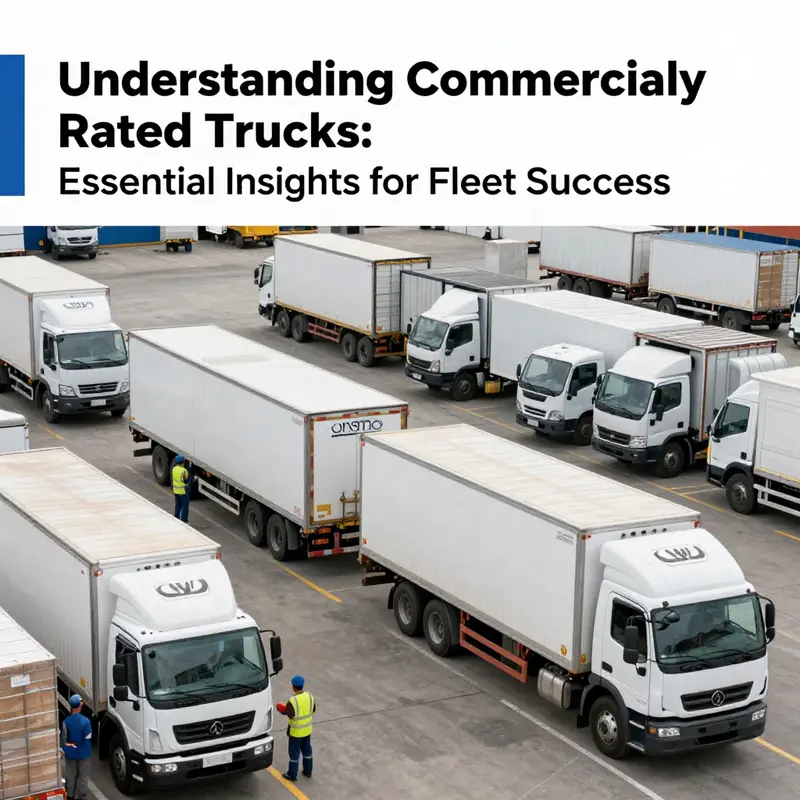
A commercially rated truck is more than a larger version of a passenger vehicle. It is a purpose-built instrument of business, engineered to sustain heavy daily work and to endure conditions that would test ordinary cars. In its essence, a commercially rated truck combines structural integrity, propulsion power, and regulatory compliance into a single, dependable machine that can move goods, equipment, or materials from one point to another with predictable performance. The chapter that follows does not merely define the vehicle; it situates it within the broader fabric of commerce, industry, and policy, showing how such trucks support production lines, distribution networks, and the daily rhythms of economies both large and small.
At the core of a commercially rated truck is durability. These vehicles are built with reinforced frames and heavy-duty suspensions designed to withstand repeated heavy loads, frequent starts and stops at job sites, and the rougher roads that often accompany industrial work. The engine and drivetrain are tuned for stability and torque, enabling the truck to haul substantial payloads or tow large trailers without sacrificing control. This combination of ruggedness and reliability matters because commercial operations rely on near-constant availability. When a fleet experiences fewer unscheduled maintenance events, it can stay on schedule, meet delivery promises, and reduce the cost of downtime across many jobs. For fleet managers, the calculus extends beyond raw strength to include predictable maintenance cycles, parts availability, and technician familiarity with heavy-duty platforms.
Payload capacity sits at the heart of the business case for a commercially rated truck. These vehicles are designed to carry significant cargo or to shuttle heavy equipment between job sites. The payload determines how many trips a given route requires, how long a daily schedule can be stretched, and, in turn, how many people and resources must be deployed to complete a job. The economics of payload is not simply about moving more mass; it is about optimizing every mile and every stop. When a truck can haul more per trip without sacrificing safety or roadworthiness, a company can reduce the total number of trips, lower fuel use per unit of cargo, and improve overall route efficiency. This is why specifications such as gross vehicle weight rating (GVWR) and axle setup often govern fleet choices more than headline horsepower alone.
Safety and regulatory compliance form the third pillar of a commercially rated truck’s design. Vehicles intended for commercial use must meet a battery of standards related to safety systems, braking performance under load, and emissions. The requirement to comply with safety and emissions rules is not merely a bureaucratic hurdle; it is a practical framework that protects workers, the public, and the bottom line. A truck that adheres to these standards reduces the risk of costly recalls, warranty claims, and downtime that might arise from noncompliance. Within this context, telematics and data-driven maintenance become essential tools. Real-time monitoring of braking efficiency, tire condition, load distribution, and fuel usage helps fleets anticipate issues before they become failures. The modern commercially rated truck is increasingly a data-generating asset as much as a mechanical one, and the data helps convert maintenance from reactive repair into proactive lifecycle management.
The audience for commercially rated trucks comprises a broad spectrum: logistics operators who move goods through complex networks; construction firms that must transport heavy equipment and materials to active sites; delivery services that depend on timely, scalable fleets; and freight carriers that span regions and even cross-border corridors. Each sector imposes its own demands on a vehicle’s configuration. A refrigerated truck, for example, emphasizes thermal integrity and insulation alongside its payload capacity, while a dump truck is optimized for tipping forces and chassis strength. Yet beneath these sectoral distinctions lie shared priorities: reliability, predictable total cost of ownership, and the ability to operate within a network that values on-time performance and safe handling under load.
This shared baseline is where the economic significance of commercially rated trucks becomes clear. The freight transportation sector, which is heavily reliant on these trucks, moves a substantial portion of the economy’s goods. The U.S. Department of Transportation has highlighted how freight movement by truck underpins the majority of weight-based goods transportation in the country, serving as the backbone of supply chains that stretch from manufacturers to retailers and, ultimately, to consumers. In practical terms, this means a large share of economic activity is contingent on trucks that can handle heavy duty workloads day after day, across varying terrains and weather conditions. For a business reading the landscape, such vehicles are not mere tools; they are capital that enable production lines to stay continuous, warehouses to be stocked on schedule, and consumers to receive products with reliability.
The link between trucks and GDP becomes visible when one follows the chain from factory floor to storefront. A fleet that can reliably move goods at scale reduces inventory carrying costs and enhances production planning. It enables seasonal ramps in demand to be met without excessive backlogs. It also supports international trade flows, where the timely movement of components and finished goods is critical to managing lead times and maintaining competitive pricing. In aggregate, the fleet of commercially rated trucks contributes to job creation, not only through direct driving and maintenance roles but also by enabling logistics, warehousing, and retail operations to function. This cumulative impact is a reminder that the vehicle itself is part of a broader system whose efficiency depends on the reliability and capacity of mix-and-match fleets that can adapt to changing demands.
Advancements in technology are steadily reshaping what commercially rated trucks can do and how cost-efficient they are to operate. A growing emphasis on fuel efficiency means fleets now track miles per gallon with greater precision and use route optimization tools to minimize wasted fuel. Telematics platforms provide visibility into utilization patterns, idling time, brake wear, and engine health, creating a feedback loop that drives smarter procurement and maintenance scheduling. The shift toward more sustainable powertrains—whether through improved diesel efficiency, alternative fuels, or electric drivetrains—speaks to a broader trend: fleets are increasingly evaluated not just on the payload they carry, but on how they carry it with lower environmental impact and at a lower per-ton-mile cost.
The sustainability trajectory matters for several reasons. First, fuel and maintenance costs are a major portion of a fleet’s operating expenses. Even modest gains in efficiency can yield significant savings over time, particularly for fleets with high annual mileage. Second, regulatory landscapes around emissions are evolving, often tightening requirements for older equipment and higher-mileage operations. Third, customers and governments alike are prioritizing supply chain resilience and carbon accountability, which translates into incentives for equipment that can demonstrably reduce emissions and improve efficiency. While many fleets still rely on traditional heavy-duty powertrains, the transition toward cleaner technologies is increasingly framed not as a disruption but as an opportunity to retool operations for long-term cost predictability and strategic positioning in a shifting marketplace.
Beyond powertrains and payload, the design philosophy of commercially rated trucks emphasizes modularity and adaptability. The same truck chassis may be configured for multiple roles through different bodies—box/shop van bodies, flatbeds, tankers, or refrigerated modules—without sacrificing fundamental strength or safety. This modular approach reduces the capital burden for businesses, enabling a single platform to serve several lines of work. It also allows fleets to react quickly to changing demand patterns, such as a surge in last-mile delivery during peak seasons or the need to relocate equipment after a project ends. In a world where demand volatility is common, the ability to reconfigure a fleet rather than replace it is a meaningful financial resilience strategy.
The commercial landscape surrounding these trucks includes a robust ecosystem of equipment dealers, maintenance providers, and service networks. Dealers who understand the balance between upfront cost, long-term reliability, and service access can guide customers toward configurations that minimize total cost of ownership. Maintenance networks that offer flexible scheduling, predictable pricing, and quick parts supply reduce downtime and help fleets stay on track. In this ecosystem, the value of a commercially rated truck rests not only on its engineering but also on the quality of support surrounding it. The experience of owning and operating such a vehicle becomes a function of not just the machine but the network that keeps it in service.
In considering the broader economic role of commercially rated trucks, one can also reflect on the dynamics of the used-truck market. The depreciation patterns, availability of underutilized equipment, and pricing signals from buyers and sellers influence decisions on new versus used purchases. Industry observers often track how changes in demand, financing terms, and regulatory requirements affect the resale value and age profile of fleets. For readers seeking current sentiment and data in this space, a useful reference point is the exploration of current trends in used truck sales growth, which offers practical insight into how fleets weather cycles of expansion and contraction while maintaining service levels. See the discussion at current trends in used truck sales growth for a snapshot of that segment’s dynamics and how buyers weigh depreciation against expected reliability.
This chapter would be incomplete without acknowledging the regulatory and policy context that shapes every commercially rated truck’s lifecycle. Standards on safety, emissions, and weight limits influence what fleets can purchase, how they operate, and how they service their fleets over time. Regulators push toward safer roads and cleaner air, while customers demand predictable delivery timelines and minimal environmental impact. The most enduring operators treat regulatory requirements as a baseline from which they optimize performance and cost efficiency. As such, the economics of modern commercial trucking emerge from a careful balance of capability, resilience, and compliance that together determine how trucking contributes to the broader economy.
To connect this discussion to the wider industry conversation, it is helpful to keep in view the broader shifts in trucking markets across North America. The landscape is shaped by fuel prices, credit conditions for fleets, and evolving trade patterns that influence demand for long-haul versus regional routes. Understanding these macro forces helps explain why the importance of a commercially rated truck extends beyond individual purchases and into strategic planning for fleets seeking to maintain capacity, reduce risk, and invest in technologies that preserve competitiveness over the long term. The story of the commercially rated truck is thus a story about how modern economies coordinate the movement of goods, manage risk in uncertain times, and pursue improvements in efficiency that translate into lower costs for businesses and lower prices for consumers.
For readers who want to explore the policy and industry context in greater depth, the American Trucking Associations offer a comprehensive overview of standards, market trends, and strategic priorities for the trucking sector. This external resource provides a broader frame for the questions raised in this chapter and can help connect fleet decisions to national regulatory priorities and industry best practices. https://www.trucking.org
Under the Rule of the Road: How Regulatory Standards Define a Commercially Rated Truck
Under the Rule of the Road: How Regulatory Standards Define a Commercially Rated Truck
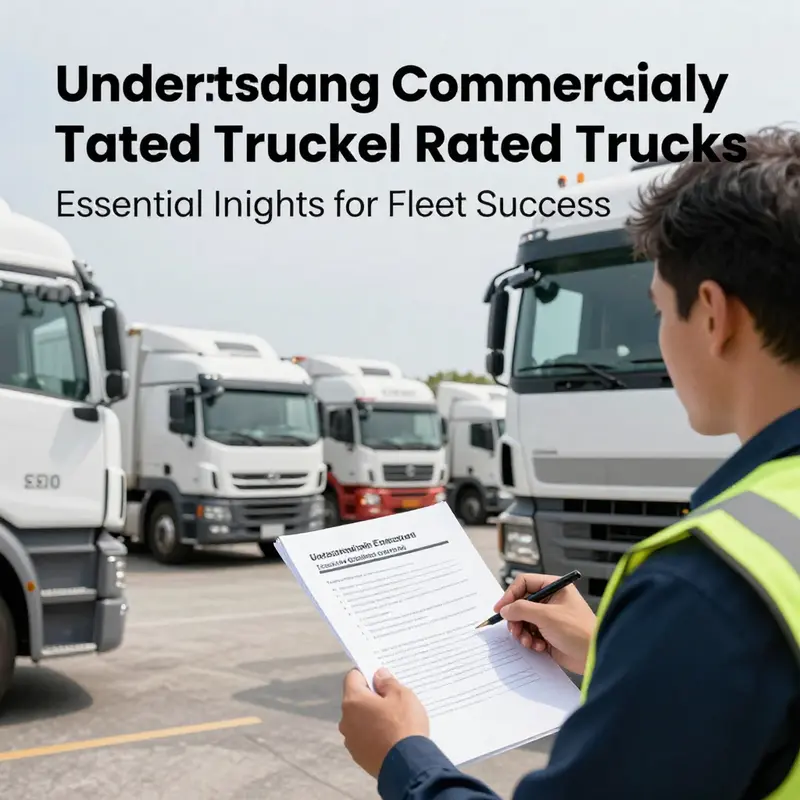
A commercially rated truck exists at the intersection of engineering intent and legal requirement. It is designed for business operations, with durability, safety, and accountability built in as core objectives. Regulatory standards shape its safety features, emissions footprint, payload capacity, and the administrative tasks of registration and inspection. Understanding these standards helps buyers distinguish true commercial capability from merely larger private vehicles.
In the United States, the Federal Motor Carrier Safety Administration (FMCSA) sets the framework that distinguishes commercial use from private use. A common threshold is a Gross Vehicle Weight Rating (GVWR) of 10,001 pounds or more, which places a vehicle into the commercial category for regulatory purposes. Additional rules apply to vehicles designed to transport 16 or more passengers, or to those transporting hazardous materials requiring placards. The FMCSA also oversees safety standards and inspection regimes that affect day-to-day operation, as well as programs like IRP and IFTA that coordinate registration and fuel tax reporting across jurisdictions.
In Europe, regulatory thinking emphasizes safety, environmental performance, and operational accountability. For example, the United Kingdom’s DVSA governs commercial vehicle use with weight-based classification and regular MOT testing, alongside emissions requirements that encourage cleaner powertrains and ongoing roadworthiness. Although the vocabulary differs, the underlying intent is the same: commercial operation triggers higher scrutiny and stricter conformity requirements to protect drivers and the public.
Vehicle design and construction respond to these regulatory requirements with emphasis on durability and control. Reinforced frames, heavy-duty suspensions, reliable braking systems, and control technologies such as electronic stability control support safe operation under heavy loads and challenging road conditions. Emissions standards influence engine design, fuel efficiency, and the feasibility of future upgrades, while weigh- and payload-management rules ensure that the truck can perform its duties without compromising safety or infrastructure.
The practical implications extend beyond the shop floor. Registration, tax regimes, regular inspections, and compliance certifications affect total ownership costs, resale value, and the permissible operating envelope of a vehicle across routes and duties. For fleet managers, the question is not only whether a truck meets current rules, but how its lifecycle will align with evolving standards, retrofit options, and market expectations for reliability and sustainability.
In closing, a truly commercially rated truck embodies a balance of capability, compliance, and lifecycle economics. It is engineered to meet the demands of commercial work, aligned with regulatory requirements that govern who may operate it and how, and supported by a framework that facilitates predictable performance and responsible stewardship of the road network.
External sources offer deeper dives into regulatory guidance and practical compliance considerations, such as the FMCSA information hub and the UK DVSA framework.
Powering Progress: How Technology Redefines the Commercially Rated Truck
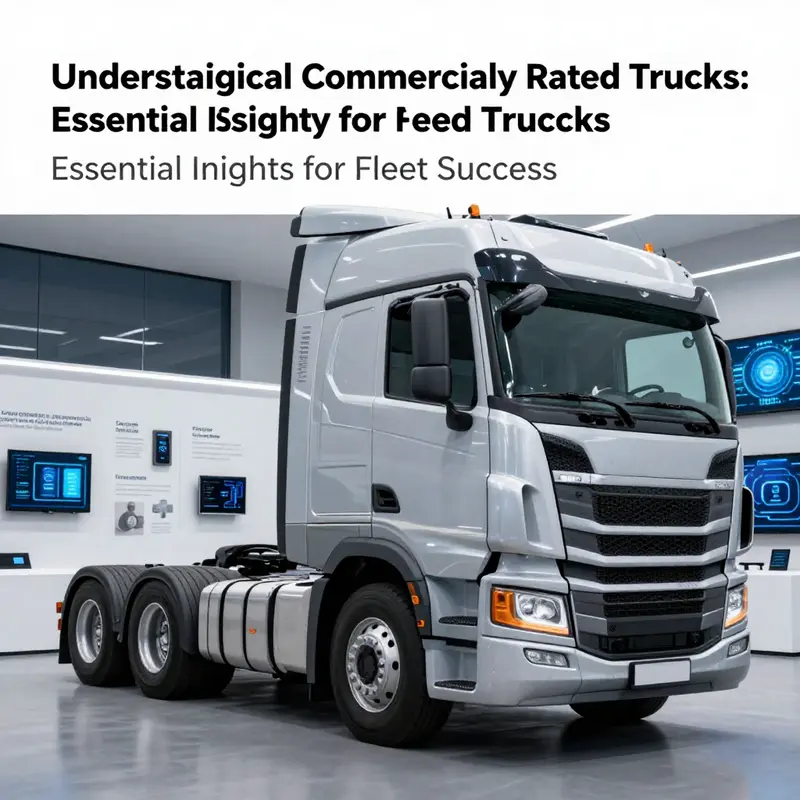
The commercially rated truck has long stood as a workhorse built to endure. Its essence rests on durability, payload capacity, and the ability to perform reliably in harsh environments—from dusty construction sites to congested urban corridors and busy freight routes. Yet in recent years, a quiet revolution has layered it with technologies that transform every mile into measurable value. ADAS features have moved from optional add-ons to standard safety. Lane departure warnings, automatic emergency braking, and adaptive cruise control help reduce risk and fatigue on long hauls. Telematics provides real-time visibility into performance, fuel use, and driver behavior, enabling smarter routing, maintenance, and coaching. The data-driven approach helps fleets minimize downtime and optimize schedules. The most transformative developments are in energy and propulsion. Electric-drive technologies are becoming a practical backbone for regional and urban operations, offering zero tailpipe emissions, lower operating costs, and quieter operation. Hydrogen fuel cells offer range extensions for longer legs where refueling is quick enough. Together, these powertrain options create a family of choices tailored to routes and duty cycles. Economics also shift with electrification: fewer maintenance tasks and predictable energy costs can lower total cost of ownership. The surrounding ecosystem—maintenance networks, parts availability, and regulatory standards—further amplifies value by enabling remote monitoring, proactive maintenance, and smarter dispatch. The regulatory environment continues to adapt to ADAS, telematics, and alternative fuels, driving safety and reliability. In practice, adoption requires changes in operations, training, and culture, with drivers, maintenance teams, and fleet managers all playing coordinated roles toward reliability and sustainability. As fleets experiment with new powertrains and data-enabled workflows, the commercially rated truck remains a backbone of commerce, but one that talks, learns, and adapts to keep goods moving efficiently. For further reading on industry trends, you can explore recent analyses from major transportation outlets and thought leadership in electrification and fleet optimization.
Final thoughts
The landscape of commercially rated trucks is characterized by their essential role in various industries, supporting logistical operations and economic growth. Understanding the defining features, regulatory frameworks, and technological advancements associated with these vehicles equips decision-makers with the knowledge necessary to optimize their fleet management strategies. As the demands of commercial transportation evolve, staying informed and adaptable will ensure that businesses not only meet industry standards but also flourish in a competitive marketplace. Investing in the right trucks can propel efficiency and productivity, ultimately contributing to the company’s bottom line.