The sides of commercial trucks are adorned with critical information and designs that serve various essential purposes. For trucking company owners, fleet managers, and logistics professionals, understanding these features is vital for optimizing operations, reinforcing branding, ensuring safety compliance, and meeting industry regulations. This article will explore the distinct characteristics that adorn commercial trucks—ranging from functional design elements and brand identification to safety markers, customization for specialized use, and manufacturing compliance. Each chapter will provide insights that collectively illuminate the importance of what commercial trucks articulate on their sides, enabling businesses to make informed decisions regarding their fleets.
Side Speak: How Commercial Trucks Communicate Through Design, Safety, and Branding on Their Sides
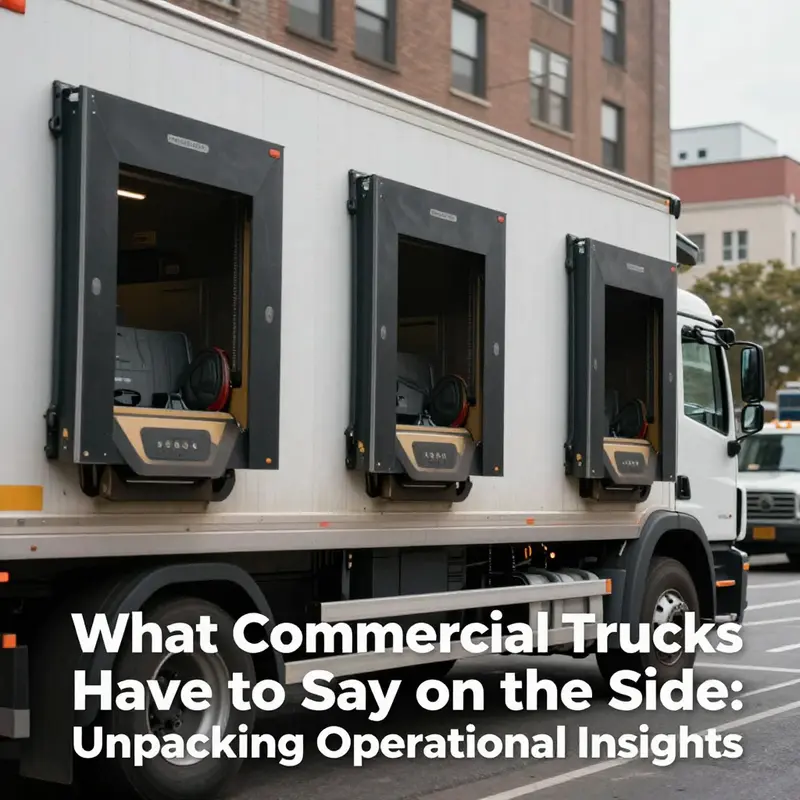
The side of a commercial truck is more than a surface; it is a moving manifesto that communicates at a glance what the vehicle is, where it’s going, and how it should be handled. In the hectic rhythm of urban corridors, loading docks, and highway ramps, the side panels serve as a continuous, practical dialogue between machine and street. Their design is not arbitrary but a calculated response to space constraints, safety demands, and the fast pace of logistics. The side becomes a canvas that speaks in multiple dialects at once: it whispers capacity and purpose through stenciled data, it brands and identifies through color and shape, and it signals regulatory compliance through symbols that regulators and inspectors expect to see. In short, the side of a truck narrates the story of its function, its operator, and its jurisdiction all at once.
Functionally, the sides are engineered for utility. Side-opening or side-access features are more than conveniences; they are architectural decisions that reshape how goods move through tight spaces. In a crowded dock, the rear door may be blocked by other vehicles or by warehouse bays, but a well-designed side access can unlock rapid, level loading without maneuvering the entire truck into a vulnerable alignment. Side doors reduce the risk of pedestrian collisions and trailer strikes during peak activity. The layout also facilitates operational speed when unloading in narrow alleys or urban delivery zones where turning radii are constrained. This functional language on the side communicates efficiency and safety in a way that is immediately legible to drivers, dock workers, and supervisors who must coordinate complex, time-sensitive tasks under pressure.
Alongside these functional features, the sides carry a steady stream of safety markings. Load capacity limits are not just numbers; they are a clear, visible cap on what the truck can bear at any given moment. Hazard warnings adjacent to payloads serve as constant reminders to handlers and firefighters about the nature of the cargo and the precautions needed during transfer. Reflective strips, arranged in strategic patterns along the side, are deliberate design choices that boost visibility across a spectrum of lighting conditions. These markings form a safety grammar that others on the road learn to read quickly, reducing the chance of accidents in low-light situations or inclement weather. The side language, in this sense, acts as a guardian, translating complex regulatory requirements into instantly recognizable cues that support safer behavior around the vehicle.
Branding and identification occupy a central place in the side’s narrative. The company logo, name, and contact information are not merely decorative; they serve marketing, service, and regulatory functions for a fleet. A distinctive mark on the side makes a truck instantly recognizable in a crowded landscape, aiding customer recognition and recall. Fleet identification numbers on the panels help dispatchers track vehicles across diverse routes and shifts, enabling smoother maintenance planning and route optimization. In many fleets, the side becomes a mobile billboard that carries the brand’s promise while also delivering practical details that customers use to reach the right contact at the right time. For readers curious about how branding interacts with market dynamics and resale value, see Current trends in used truck sales growth. This link points to a broader conversation about how fleet identity and appearance influence buyer perception and asset valuation in the used-truck market. The side’s branding, therefore, is not a cosmetic afterthought but part of a strategic asset that travels with the vehicle everywhere.
Beyond logos, the sides often carry operational information that supports ongoing maintenance and efficiency. Some trucks display maintenance schedules, tire pressure specifications, or service reminders in conspicuous locations along the side panels. These details help operators keep the vehicle in peak condition, extending service life and reducing unexpected downtime. In the era of telematics, more trucks may feature digital or hybrid displays that convey real-time metrics—though this practice is still evolving in the industry. Even when digital screens are absent, the visible references to service intervals and tire pressures create a shared knowledge layer among drivers, mechanics, and fleet managers. The side thus becomes a living reference point, a place where routine checks and best practices are reinforced through everyday visibility rather than requiring separate, separate documents.
The sides also play a critical role in regulatory compliance. The markings and labels are not cosmetic; they are required by law and inspected during roadside stops and at border crossings. The presence of compliance symbols—ranging from emissions certifications to vehicle identification numbers and country-specific marks—helps inspectors verify that the vehicle meets the applicable standards before it is allowed to operate. In many markets, these features carry dual purposes: they reassure regulators of safe operation and reassure customers of lawful, professional practice. For example, in global contexts, trucks may bear indicators of origin such as CE marks, emission labels, and, where relevant, right-hand-drive configurations to accommodate export markets. While buyers and operators rely on these markings for risk management, they also leverage them to plan cross-border operations, warranty coverage, and service contracts.
Customization and specialized use are other dimensions of the side’s language. In industries requiring strict environmental control, refrigeration unit labels on sides communicate cold chain integrity, ensuring that product temperatures are monitored and maintained. Hazardous materials signage remains a persistent and legally necessary feature for vehicles transporting dangerous goods, signaling the need for specific handling and emergency response procedures. Liftgate indicators guide delivery workflows and prevent mishandling during loading and unloading. Custom paint schemes or decals can demarcate municipal, utility, or emergency-service functions, making a vehicle instantly identifiable at a distance. These features reveal how the side becomes a flexible interface, adapting to a company’s changing operational needs without requiring a wholesale redesign of the truck itself.
Another layer concerns sourcing and manufacturing indicators that appear on sides, particularly in global markets. In many parts of the world, trucks sourced from international manufacturers wear visible traces of origin and compliance. Deployers or buyers in Europe and other regions look for CE certification marks and Euro VI emissions labels as assurances of adherence to international standards. Right-hand-drive configurations may also be indicated on the side to signal compatibility with specific road networks and regulatory environments. These markers help buyers assess compatibility with their operations, inventory, and maintenance ecosystems. They also reveal the global nature of truck production and the travel of fleets across borders, reminding us that the side narrative is not simply local but has implications for global supply chains and cross-border fleet management.
The language on the side continues to evolve as technology advances. Real-time data displays and telematics-driven labels may someday share dynamic information with nearby dock employees or passing motorists, communicating load status or route changes in a legible, machine-readable way. Even in the present, the combination of stenciled data, reflective strips, and branded graphics yields a layered message about the vehicle’s purpose, condition, and owner. The interplay between traditional markings and emerging digital cues hints at a future where the side of the truck performs dual roles: a robust, recognizable brand instrument and a responsive, data-enabled touchpoint in the logistics ecosystem. To readers who track the economics of fleets, such as how branding and visibility influence asset value and resale, the side’s evolving language underscores the importance of thoughtful, standards-aligned design choices that endure beyond the immediate use case.
In connecting these threads, the side speaks across stakeholders—drivers, dispatchers, regulators, customers, and the public. It carries a practical lexicon that serves daily operations, a safety grammar that mitigates risk, a branding dialect that builds trust, and a regulatory script that keeps the vehicle compliant. The beauty of this language is its redundancy and clarity: the same markings perform multiple jobs, ensuring safety and efficiency while strengthening brand and governance. This is why fleets invest in consistent color schemes, legible typography, and standardized placements for warnings, weights, and contact information. It is not just about being compliant or attractive; it is about creating a legible, predictable surface that can be interpreted quickly by anyone who encounters the vehicle, whether in a busy city street, at a distant border crossing, or during a routine maintenance check. As the industry continues to explore new materials, printing techniques, and digital overlays, the side will keep speaking—clear, concise, and practical wisdom born from decades of regulatory experience and operational necessity. The side’s language, in short, is a practical manifesto of how modern commercial trucking functions, communicates, and evolves without requiring a single spoken word.
External resource: https://www.fmcsa.dot.gov/
Branding and Identification on Commercial Trucks: What the Sides Tell the Story

The side of a commercial truck is more than a panel of metal. It is a moving message board that blends utility with identity, a place where a company’s voice, its standards, and its obligations all converge in plain sight. In many ways, the side panels function like a well-designed storefront: they must be legible from a distance, convey meaning quickly, and reinforce trust with customers and regulators at a glance. When you drive past a fleet, what you see on the side—logos, color schemes, numbers, and symbols—speaks about origin, ownership, and responsibility even before the cab doors swing open. The language spoken there is not only branding; it is a coordinated system that aligns the vehicle’s purpose with its place in a broader safety and logistics network. The side becomes a storyboard of the truck’s life on the road, telling a story that blends design, regulation, and practical fleet management into a single, readable surface.
At the heart of this conversation is branding in its most immediate form. Manufacturer branding is the baseline. The logo and the model name are not ornaments; they anchor the vehicle in a lineage of engineering, performance expectations, and service history. A bold emblem on a front door or a long panel along the side announces the maker’s reputation at a distance, enabling operators and customers to identify the vehicle’s origin without a closer look under the hood. This identification matters beyond aesthetics. It influences perceived reliability, facilitates quick customer recognition in busy urban streets, and supports fleet management efforts where confidence in a vehicle’s pedigree reduces procurement risk. The branding on the side carries with it the promise of established standards, and in many fleets that promise translates into lower anxiety when equipment rolls into a customer’s facility or onto a job site.
Yet the branding on a truck is rarely a solitary mark. In fleet operation, the side panels carry company identification that goes beyond the manufacturer’s badge. The corporate name, the fleet’s color scheme, and the distinctive graphics work together to create a recognizable silhouette on the highway. A company color palette—often reinforced by a consistent stripe or block pattern—acts like an anchor in the visual noise of the road. When drivers, dispatchers, and partners see a specific color rhythm across dozens or hundreds of trucks, the fleet becomes instantly legible as a single entity, a living brand on wheels. This is not merely marketing; it is a practical asset. Distinctive livery aids routing, improves on-site accountability, and enhances safety by reducing the chance that a vehicle will be mistaken for another in a crowded dock yard or congested street. The long, uninterrupted side panels of many modern trucks offer ample space for this identities to breathe—letters large enough to be seen from blocks away, color blocks that hold even in dim light, and secondary graphics that can convey service specialization without overwhelming the eye.
The side of a truck also serves functional communication that consumers and regulators rely on. Regulatory markings are not decorative. They provide critical information about the vehicle’s identity, its compliance status, and its operating limits. VINs, weight ratings, and certification marks typically appear along the lower edge of the cab or near the driver’s door. These elements must withstand weather, washing, and the daily hustle of road life, so they are styled to endure while remaining legible. Reflective strips and high-contrast numbers are common features, especially on urban or night routes where visibility is a safety priority. The deliberate placement of these markings ensures that, even in moments of hurried inspection, the vehicle communicates essential data clearly. Weight ratings and load limits inform loaders and shippers about what can be carried, while VINs are the keys to fleet records, maintenance histories, and regulatory checks. This practical layer of information is a reminder that the side of a truck is a living document of its compliance and stewardship.
Within this landscape of marks and messages, customization and specialization add another layer of meaning. Some trucks carry refrigeration unit labels to indicate cold chain capabilities, a crucial cue for warehouses and pharmaceutical shippers that depend on temperature-controlled logistics. Others bear hazard symbols or HAZMAT indicators when their cargo requires extra caution. The presence of liftgate indicators or signage for delivery services subtly communicates the truck’s operating role and the equipment that supports it. In municipal or utility fleets, the side may showcase distinctive paint schemes and insignia signifying public service rather than private transport. These signs do more than brand a vehicle; they set expectations for how the truck will be used, how it will be loaded and unloaded, and what safety and regulatory practices are in force. The side thus becomes a canvas that accommodates both the practical realities of the job and the symbolic language of the organization’s mission.
The sources of these markings extend beyond the immediate realm of branding into the global context of manufacturing and compliance. In international markets, you will often find indicators of origin and conformity, including emissions labels and certification marks. For many trucks sourced from diverse manufacturing ecosystems, the side panels carry visible proofs of conformity that help buyers assess whether a vehicle meets local regulations and environmental standards before it enters service. The presence of right-hand-drive configurations, CE certification marks, and other compliance cues can be especially relevant for export markets, where fleets adapt to different road rules and regulatory expectations. These marks, while they might appear technical or bureaucratic at first glance, are part of the same narrative arc as the branding and fleet identification on the side. They reassure buyers and operators that the vehicle they’re purchasing or deploying adheres to defined safety, environmental, and performance benchmarks.
All these messages must coexist without diminishing readability or overloading the eye. The art of side branding lies in balancing the informative, regulatory, and promotional elements into a coherent field. Good design uses hierarchy and contrast: a prominent manufacturer logo anchored by a company name and a bold color scheme, supported by a quieter line of regulatory data and, where necessary, safety icons. This balance makes the side readable at highway speed, under rain, at dawn, or in artificial dock lighting. It also supports maintenance and fleet management workflows. A clear VIN plate near the door makes it easier for technicians to cross-reference records during inspections, and a well-placed weight rating helps ensure that proper load management is practiced in the field. When a fleet invests in thoughtful side design, it reduces miscommunication and supports a smoother, safer operation across the supply chain.
The practical consequences of this design philosophy extend to the ethics of communication as well. A truck that communicates clearly is a safer truck. Reflective surfaces, high-contrast lettering, and conspicuous hazard symbols reduce the chances of misunderstandings about the vehicle’s capabilities or its cargo. The side becomes a transparent narrative of responsibility: a fleet that treats its branding as a commitment to reliability and safety rather than mere appearance signals its readiness to meet customers’ expectations. In urban settings, where space is tight and pedestrians and cyclists share the road, this clarity matters even more. A well-branded side with clear regulatory markings can reduce the cognitive load on passersby and drivers alike, enabling quicker recognition of who operates the vehicle and what it carries. The net effect is a fleet that communicates efficiency, safety, and accountability without shouting.
In the end, the side of a commercial truck is a strategic canvas where identity, compliance, and utility converge. It tells the story of a vehicle’s origin, its operator, and the standards it upholds. It announces who is responsible for the load, where it’s headed, and how it will be handled along the way. It reassures customers and regulators that the truck is not just a piece of equipment but a packaged commitment to service, safety, and reliability. For practitioners in fleet management, the lesson is straightforward: design the side not only to brand but to inform, to guide, and to protect. The most successful executions reflect a harmony between the look that invites trust and the data that keeps operations transparent and compliant.
For readers who want to explore how branding translates into real-world fleet practices, the broader conversation is available in related discussions within industry blogs. See the mcgrathtrucks.com/blog/ hub for reflections on how fleets approach branding, identity, and market positioning in practical terms. This resource provides deeper context on how color, typography, and layout choices function across different vehicle types and service profiles, reinforcing the idea that the side of a truck is a living document that travels with the vehicle.
External resources can offer additional perspectives on the regulatory and safety dimensions that intersect with branding. For readers seeking formal guidance on labeling, reflectivity, and compliance, see the official site that outlines global standards and practice in vehicle presentation and safety (external resource): https://www.daimertruck.com/en/.
Side Signals and Safety Codes: How Commercial Trucks Speak in Letters, Numbers, and Reflective Stripes
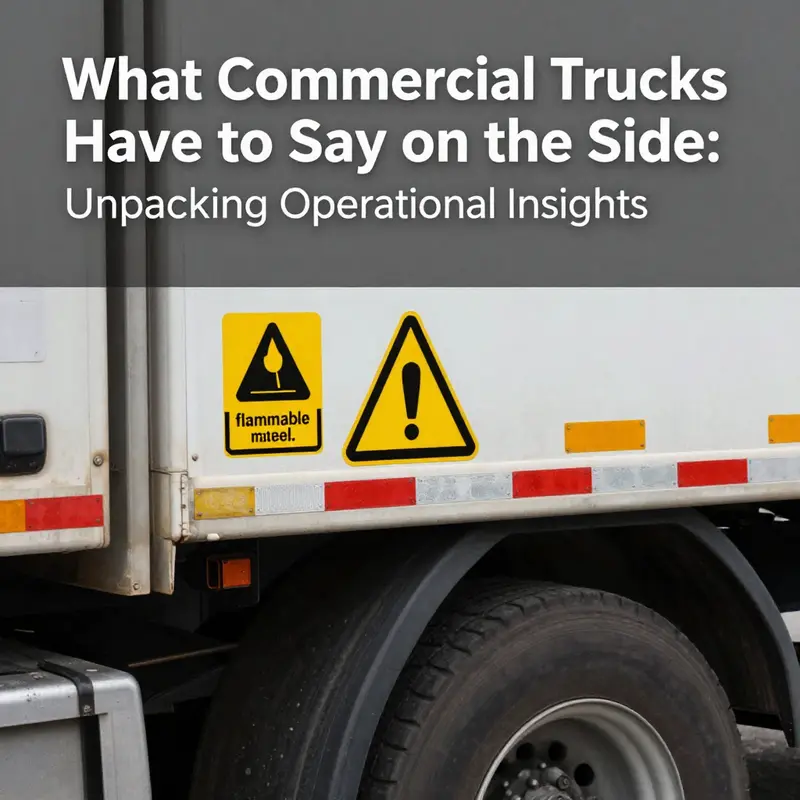
The sides of commercial trucks carry more than branding; they are working surfaces that translate regulation, safety, and operation into a visible language.
When a driver rolls into a yard or a highway shoulder, the panels along the sides are not decorative shells but a compact system of instructions and identifiers. In urban delivery zones and sprawling distribution hubs alike, the side of a truck acts as a mobile compliance board, a quick-reference guide for inspectors, responders, and fellow road users, as well as a billboard for the company that owns the fleet. To glimpse how this language works, it helps to understand the core information that must be displayed, the way those displays are shaped by safety priorities, and how manufacturers and operators use side markings to navigate the regulatory landscape without losing focus on efficiency and reliability.
At the heart of what is written on the sides of trucks is a set of critical identifiers. A Vehicle Identification Number, or VIN, appears in a location that remains legible even after years of repainting and chassis work. The VIN is more than a serial code; it is a bridge to history, a way for inspectors to trace a vehicle’s lineage, its maintenance record, and its compliance with the rules that apply to it. Alongside the VIN, the manufacturer’s name and the model designation offer a quick confirmatory signal for fleet managers during maintenance planning and for authorities during roadside checks. These markings are not optional embellishments; they anchor the vehicle to regulatory databases and service networks, ensuring that a given truck can be traced in an instant when a discrepancy arises.
The GVWR, or gross vehicle weight rating, is another line drawn in plain sight on the side panels. It communicates the maximum safe weight the vehicle is designed to carry, including the combination of payload and fuel. A clear GVWR helps drivers avoid overloading, which can degrade handling, braking performance, and tire life, and it assists enforcement personnel in determining whether a load complies with applicable limits on a given route or jurisdiction. The same visibility strip often carries the registration number, another critical piece of the regulatory puzzle. Visible registration helps authorities confirm that the vehicle is properly registered for the road and is not operating under a lapse or suspension that could jeopardize safety or liability.
Hazardous materials placards, when required, punctuate the side with color-coded symbols and standardized text that communicate risk. In the field, responders rely on these signs to quickly assess what is inside the container, what mitigation steps may be necessary, and what equipment to deploy in an emergency. Even when a truck is not carrying hazardous materials at a given moment, the presence or absence of placards, the color codes, and the placement of corresponding stickers tell a trained observer a lot about the nature of the operation and the potential hazards in transit. The placards can act as a constant reminder to the crew about the evolving plan for the load and the need to stay vigilant for changes in the route or the cargo manifest.
Reflective strips and conspicuity markings along the sides are more than aesthetic choices. They are safety features designed to improve visibility in low light and adverse weather, reducing the likelihood that other drivers will misjudge a truck’s size, speed, or trajectory. The side markings are calibrated to meet regulatory conspicuity requirements, which are intended to help drivers anticipate and respond in time, especially when a truck is traveling at night or on poorly lit stretches of road. These elements work in concert with lighting, signaling devices, and driver behavior to create a margin of safety around a vehicle that is inherently large and slow to maneuver.
Beyond these universal identifiers, the sides of trucks also reveal the evolving story of manufacturing origin and regulatory compliance that travels with the vehicle across borders. In global markets where a truck might be built in one country and operated in another, the side is a passport of sorts. The presence of marks such as CE certification or notes about emissions standards signals to buyers and operators that the vehicle has been evaluated against widely recognized benchmarks. Even configurations that reflect right-hand-drive layouts for export markets indicate that the vehicle is prepared for particular regulatory frameworks or logistics ecosystems. Such markings help fleet managers make informed decisions about maintenance schedules, spare parts compatibility, and insurance classifications in unfamiliar geographies.
The side does not merely list what is regulated; it also serves as a canvas for customization that aligns the machine with specialized uses. In municipal service fleets, for example, the side may bear distinctive color schemes and service identifiers that differentiate departments and functions at a glance. In hazardous or refrigerated transport, additional indicators inform the crew and customers alike about the presence of specialized equipment, like a refrigeration unit or an approved platform for loading and unloading at specific docks. These features, while practical, also carry a language of safety and trust. A customer who sees the right symbols can feel confident that the job will be handled with the appropriate care and that the vehicle meets the logistical requirements of the task at hand.
The display of information on the side is not a static design choice but a response to a complex regulatory ecosystem. The aim is to balance the need for quick recognition with the obligation to provide precise, verifiable information. This balance becomes particularly important when the vehicle moves through high-stakes environments—loading zones with restricted rear access, dockyards with narrow alleys, or transit routes with tight weight restrictions. In such settings, the additional side features—whether a side-access door, a liftgate indicator, or a visibly displayed load rating—are there to simplify decisions for operators and to reduce the potential for human error during critical moments of loading and unloading.
At the regulatory core, fatigue and driver safety influence how information is presented as well. The FMCSA, in the United States, has established hours-of-service rules intended to prevent fatigue and the dangerous outcomes it can cause. While the tail of the story is about driver rest and scheduling, the side language complements this regulatory framework by facilitating safer and more efficient operations. When a driver can quickly reference weight limits, load types, and HazMat considerations through clear side markings, the likelihood of mistakes that contribute to fatigue-related risk is reduced. The side becomes a support tool that reduces cognitive load in demanding situations, allowing the driver to focus on prudent loading practices, route selection, and timely rest breaks.
The practical implications for fleet operators extend to inspections and safety audits. During routine checks, inspectors will scan the sides for VINs, GVWRs, and registration numbers to verify that vehicles meet regulatory requirements and have current documentation. Any misalignment between the specifications on the side and the vehicle’s actual configuration can trigger corrective actions before a problem escalates. In emergency response scenarios, responders rely on a vehicle’s visible side information to determine weaponized or dangerous cargo, the safest approach to shutting down the system, and the precise identification of the vehicle for communication with the appropriate authorities. The legibility and accuracy of side information thus contribute to faster, more effective emergency response and better overall safety outcomes.
The chapter’s themes also loop back to the broader questions fleets face in a changing market landscape. Compliance is not a one-off checkbox but an ongoing discipline that intersects with maintenance, parts supply, and risk management. When economic pressures drive tighter schedules and leaner staffing, the clarity of side markings becomes even more consequential. As a fleet operator navigates market volatility and shifting regulatory expectations, the need for standardized, durable, and legible side information grows. It helps ensure that vehicles can be inspected quickly without delays, that drivers can act decisively in complex loading environments, and that customers receive consistent service with the confidence that safety and compliance are never compromised for speed.
For readers who want to explore the broader context of how freight operations adapt to changing regulatory and market conditions, this chapter invites readers to consider how fleets balance safety and efficiency in real-world shipping scenarios. As always, the language on the side remains a practical guide for inspectors, drivers, and customers alike, reminding us that safety, regulation, and dependable operation belong to the same plan.
On the Side: How Customization and Specialized Roles Speak Through Commercial Truck Bodies
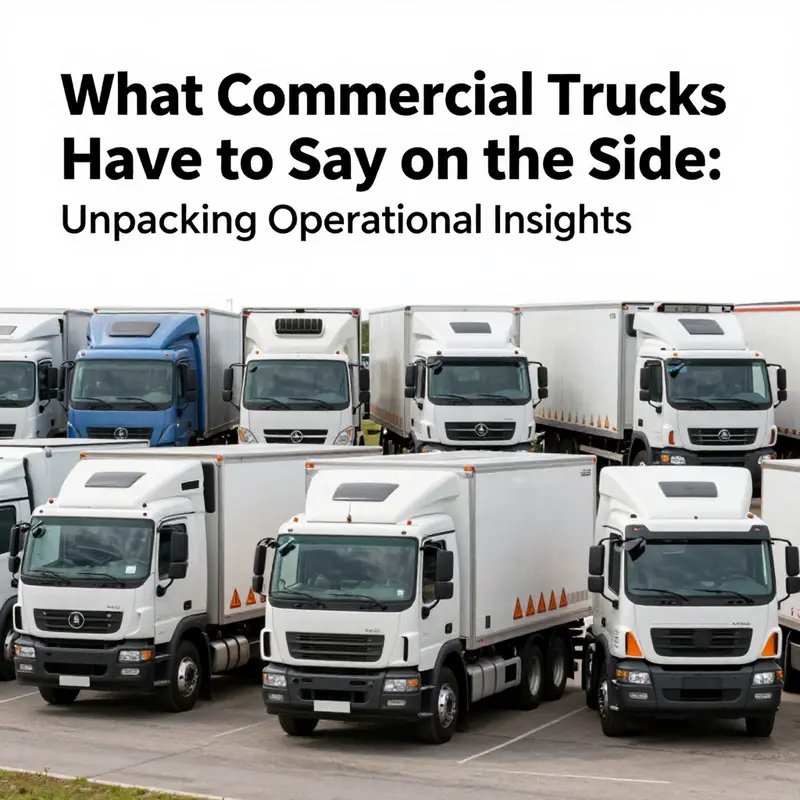
The sides of commercial trucks are not just surfaces to splash logos or reflectors. They are purpose-built canvases that convey a language of function, safety, and service. From the curbside glow of reflective material to the careful placement of cargo identifiers, the messages painted or affixed along the side panels tell a story about what the vehicle carries, where it operates, and how the fleet behind it wants to be seen by customers, regulators, and road users. The side is where a truck’s role becomes legible at a glance, even in motion, and that legibility is essential in a world of tight schedules, urban constraints, and complex compliance regimes.
Functional design and operational logic shape what the side says in real, practical terms. Side-opening or side-access configurations, increasingly common in urban logistics and dock environments, are more than clever engineering. They enable loading and unloading without relying on rear access, which can be impractical in crowded streets or constrained loading bays. When a truck can present a side panel or door to a loading crew, it reduces dwell time and minimizes maneuvering space needed near the vehicle. This is not merely about speed; it is about safety and efficiency. A side-loading approach helps keep pedestrians and other vehicles out of the path of a high-risk maneuver while keeping the operation aligned with the flow of a busy warehouse corridor. The side becomes a staging area as much as a transport corridor, and the design language around that side—hinge locations, panel strength, and seal integrity—speaks to the reliability the fleet promises its partners.
Branding and identification sit in parallel with function on the sides of trucks. The exterior becomes a rolling advertisement and a rolling business card at the same time. Clear company names, service identifiers, and contact information are not just marketing signals; they support quick recognition by customers in the field, by dispatchers at a distance, and by regulators auditing a vehicle’s paperwork in transit. The side panel is where a uniform color scheme and logo system filter down into a fleet-wide visual lexicon, helping a business project consistency whether a truck is arriving at a small shop or threading through a metropolitan corridor. The impact is subtle but real: cohesive side messaging strengthens trust and project credibility the moment a truck rolls into view.
Safety and regulatory markings form the other essential layer of side messaging. Reflective strips, hazard symbols, weight limits, and VIN numbers are typically placed for readability from the street and at the dock. These markings are not decorative. They communicate critical information to other road users and to first responders in the event of an incident. The side is where a vehicle voice spells out its own risk profile, showing, in effect, the terms of entry for anyone who must interact with it after hours or under pressure. When a fleet operates hazardous materials, the side may carry UN numbers and specific placards; when the loads are food-grade, the side might emphasize temperature ranges or certifications. In all cases, the side’s language is crafted to maintain safety without sacrificing clarity.
This language grows sharper as fleets pursue customization and specialized use. The side of a truck is a dynamic canvas that reflects the cargo and the mission. Refrigerated trailers, or reefers, carry labels about temperature control and insulation integrity. Hazmat vehicles wear reinforced tanks and safety systems, with signage designed to reduce the chance of misstep or miscommunication during handling. Garbage collection trucks point to compactors and lift mechanisms, signaling the crew and the public about the kind of access and operation being performed. Concrete mixers display rotating drums and procedural warnings, while municipal and emergency service vehicles showcase distinctive color schemes and mission identifiers that instantly identify the vehicle’s role on a crowded street. Each specialized body brings its own set of side features that tell a precise story about what the truck is built to do, and how it should be treated by others in the vicinity.
The customization story extends beyond cargo type into the broader ecosystem of fleet management and regulatory compliance. The side of a truck often includes indicators that reveal its origin and conformity to international standards, especially in global markets. In the EU and France, signs of sourcing and compliance accompany the standard branding; CE marks, Euro VI emission labels, and even right-hand-drive configurations can appear on the side or near the cab as part of the vehicle’s visible identity. These markings reassure buyers, operators, and inspectors that the vehicle adheres to recognized standards, a crucial factor in cross-border trade and fleet procurement. The side, in this sense, becomes a portable declaration of compliance, a compact dossier that travels with the truck and speaks to the level of diligence embedded in the manufacturing and sourcing processes.
Technology also chips away at the boundaries between branding, safety, and operation. Telematics antennas and real-time monitoring devices are increasingly integrated in a way that keeps the side clean and legible. Some fleets leverage magnetic or reversible panels to update service indicators, cargo types, or regulatory notices as needs change. QR codes and service listings can be appended to the side for quick maintenance access or to connect customers with after-sales information. The upshot is a side that communicates not just the present cargo but a culture of ongoing care, traceability, and responsive service. As data-driven maintenance and predictive analytics become more common, the side of the truck evolves from a static message to a living signal that can reflect the vehicle’s current status and anticipated service needs.
Another facet of side messaging concerns public perception and client expectations. The side is often the first thing a customer sees when a truck arrives for a delivery or a pickup. A well-executed side design communicates reliability, reach, and local familiarity. It can express environmental commitments through chosen color palettes, reflectivity, and visible emissions labels, signaling to stakeholders that the fleet takes safety and sustainability seriously. In that sense, the side acts as a bridge between the company’s brand promise and the day-to-day realities of logistics work. The vehicle becomes a mobile ambassador for the business, and its side language reinforces the premise that the fleet is capable, accountable, and approachable.
The chapter of a truck’s life painted on its sides does not exist in isolation. It interacts with the interior design of the cab and cargo space, the door and lifting mechanisms, and the fleet’s broader digital ecosystem. When a truck is integrated into a smart logistics network, its side signage can echo its digital identity. For instance, a truck assigned to a temperature-controlled route might display batch-specific codes near the door to support quick, on-site verification by warehouse staff. The same approach applies to safety and compliance: vehicle markings align with the tasks the vehicle is configured to perform, enabling faster routine checks and fewer operational bottlenecks at the point of use.
As the industry continues to evolve toward electrification and more modular, fleet-wide branding strategies, the side messaging will reflect those shifts. The language may grow more nuanced, balancing traditional regulatory symbols with forward-looking indicators of sustainability and technology readiness. In the near term, the side still speaks in clear, practical terms: it tells you what the vehicle is carrying, where it’s headed, how it should be handled, and who is responsible for it. It tells stories about the people who operate it, the teams that maintain it, and the customers who await its arrival. And it does so with a coherence that makes the roadside, the loading dock, and the fleet itself feel connected to a larger purpose.
To glimpse how the conversation is evolving, consider the growing emphasis on electrified fleets. The side becomes a stage for new charging indicators, energy usage badges, and maintenance codes that reflect longer-term ownership and environmental goals. The design language around the side may shift toward simpler, cleaner lines that accommodate sensor arrays and battery enclosures while preserving legibility for drivers and technicians. The message is still there—the cargo, the route, the safety requirements—but now the medium includes an explicit nod to a future in which the vehicle itself is part of a broader, smarter network. For those following the trajectory of fleet modernization, the side of the truck offers a telling, tangible clue about where the industry is headed.
As a living document of a vehicle’s function and purpose, the side communicates more than information. It communicates trust. It signals that the fleet is organized, compliant, and attentive to the needs of both customers and the broader public. It tells you who the company is, what it can do, and how it does it. The next time you pass a loading dock or watch a delivery unfold on a city street, take note of the surface language: the signs, the colors, the symbols, and the subtle hierarchies that guide your eye along the side. In that moment you glimpse not just a truck but a carefully choreographed system in action—one where customization, specialization, and safety all converge to keep goods moving and people safe.
For readers curious about how current trends in electrification and fleet modernization are reshaping side messaging, a broader industry perspective is available here: Electric trucks revolutionize the Canadian market. The linked resource illustrates how a changing powertrain can influence branding, signage, and service signals across a fleet. https://mcgrathtrucks.com/electric-trucks-revolutionize-canadian-market/
External reference: https://www.brit Britannica.com/transportation/truck
What the Sides Reveal: Reading Sourcing, Compliance, and Manufacturing in Modern Commercial Trucks
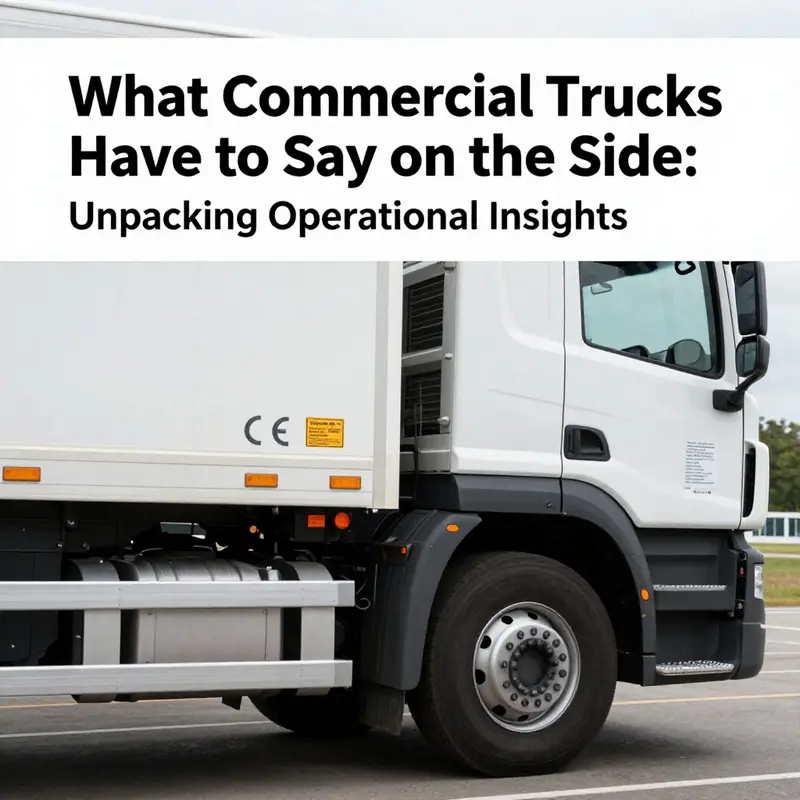
The side of a commercial truck is more than a surface for branding or a last-minute canvas for signage. It is a structured record, a portable ledger that reveals how a vehicle came to be, the standards it must meet, and the ecosystem that keeps fleets compliant once it leaves the factory. In fleets that must operate across borders, in tight urban corridors, or through demanding climates, what sits on the side of a truck is a visible inventory of decisions about sourcing, manufacturing discipline, and regulatory alignment. It is where branding meets accountability, where safety markings meet performance guarantees, and where the story of a vehicle’s journey from raw material to roadworthy asset is written in clear lines and carefully placed labels. Reading the side panels, in other words, is a way to read a fleet’s playbook without ever stepping inside the cab or peering behind the cargo bed.
The most telling details begin with the manufacturing network itself. A 2026 strategic guide to tank truck sourcing describes a modern assembly mindset in which steel processing, welding, and coating are not dispersed across outsourced suppliers but clustered within tightly integrated regional hubs. In countries that dominate global construction and heavy-vehicle output, these hubs concentrate the key capabilities needed to transform raw steel into a complete, road-legal product. In practice, clusters in major industrial provinces enable manufacturers to manage the sequence from CNC cutting to final coating in a single, continuous stream. The payoff is tangible: lead times shrink—by as much as thirty percent in some cases—and the opportunity for rapid iteration and tighter quality control grows with each step in the chain. When a panel is formed, welded, and finished in near-adjacent facilities, the chance for misalignment, inconsistent welds, or uneven coating diminishes. What emerges on the side is a system that can be audited not just for appearance, but for traceability, material composition, and emission performance. The side bears the imprint of that integrated approach, a quiet but sturdy reminder that the vehicle’s exterior is the frontier where manufacturing discipline meets field reliability.
But the side’s message is not limited to how things are made. It also communicates a comprehensive compliance story that spans legal, technical, and market-specific realms. Consider the way manufacturers coordinate export-readiness with international standards. Across regions, OEMs and their suppliers must demonstrate material provenance, weld integrity, and emission levels through documentation that travels with the vehicle. This means certificates of material composition, test reports for weld joints, and records that attest to the emission controls installed on the truck’s propulsion and exhaust system. The side becomes a practical carrier of this documentation—visible in the form of markings, labels, and placards that regulators and customers are trained to read. In addition to basic identification, the side conveys evidence of conformity to global standards, such as inspections that align with EU type-approval frameworks or equivalent regional processes. The result is a vehicle that can move with fewer hold-ups at borders and in ports, because the evidence of compliance is already on display where it must be verified.
The supply chain geography behind these visible marks matters just as much as the marks themselves. The sourcing landscape is increasingly defined by proximity to major ports and the ability to sustain convergence between steel mills, welding shops, and coating facilities. Proximity to gateways like coastal hubs accelerates customs clearance and strengthens the reliability of cross-border shipments. In effect, the side of the truck reflects a geography of logistics—an implicit map of where the vehicle spent its early days in the plant, where the critical structural work was completed, and how close those operations were to the point of export. The influence of regional infrastructure cannot be overstated: the side’s clean, consistent labeling is built on a backbone of screening, testing, and certification that must survive international scrutiny. It is this alignment that reassures buyers that the vehicle not only meets current standards but remains adaptable to evolving regulatory expectations, whether for off-road capability, urban distribution constraints, or new environmental rules.
From the buyer’s perspective, the side’s declarations translate into a framework for due diligence. A reliable sourcing decision today extends beyond price and delivery speed to incorporate the supplier’s capacity to maintain ongoing compliance and to prove it. ISO certifications, export licenses, and third-party audit reports are no longer optional accessories; they are core components of a contract’s value. The modern purchaser asks for the evidence that a supplier’s quality assurance systems are robust enough to withstand a recurrence of recalls or a shifting regulatory landscape. The side panels support that scrutiny by offering visible anchors—standardized markings, regulatory symbols, and serial identifiers—that correspond to hard data in a supplier’s dossier. This is particularly crucial as the industry moves deeper into electrification and modular configurations for urban fleets. Battery safety standards, such as established safety tests and certification protocols, become part of the visible compliance narrative. In freeway-lrequent stretches or congested city streets, fleets expect not only performance but predictable risk management, and the vehicle’s exterior is the first place regulators and fleet managers look for guarantees.
The content of those guarantees grows more nuanced as markets diverge. Export markets often require homologation that ensures off-road performance or specific chassis configurations to accommodate localized regulations. In practice, this means that the side may carry notations about chassis adaptation, right-hand-drive configuration, or the exact emission framework the truck adheres to in a given jurisdiction. The page of paint and decals doubles as a dossier: it tells suppliers that the vehicle has cleared essential checks, and it tells customers that the manufacturer has built a disciplined, auditable process around the product. In regions with multiple regulatory ecosystems, this attention to conformity becomes a differentiator. It is not simply about meeting current rules; it is about establishing a foundation for ongoing compliance, with the confidence that a fleet can operate in new markets without expensive rework or uncertain approvals.
The side’s content also reflects the design choices that come with specialized use cases. A vehicle intended for urban distribution may feature side-opening access panels or refrigerant labeling, while a long-haul unit may bear specific identifiers for tank integrity or weight-bearing limits. The side becomes a compact atlas of the vehicle’s intended function, where the configuration decisions—the placement of a side door, the presence of a liftgate indicator, the labeling for a refrigeration unit—reveal how the manufacturer balanced efficiency, safety, and regulatory compliance during design. These features are not cosmetic; they emerge from the same integrated production logic that brings lead times down and quality up. In the same breath, they demonstrate how a fleet operator can plan maintenance, inspections, and regulatory reporting around a consistent visual language on the side of every truck in the same model line.
The regional narratives in sourcing also illuminate how regulatory expectations are met without sacrificing speed or flexibility. For example, in hubs where export-oriented facilities abound, suppliers design processes that generate export-ready documentation in parallel with production milestones. This parallelism reduces bottlenecks at customs and ensures that the vehicle’s side labeling remains consistently legible while the truck moves through the supply chain. It is a quiet victory of systems thinking: compliance is embedded in every stage of manufacture, not tacked on at the end. The side, in this sense, becomes a proof point for a supplier’s capability to harmonize technical performance with the administrative rigors of cross-border commerce. The practical effect for buyers is clarity—less guesswork about whether a vehicle can travel from factory floors to distant markets with the right approvals already in place.
As the industry continues to evolve toward electrification and smarter fleet configurations, the idea of what the side communicates will expand as well. The rise of battery-powered refrigerated vans and insulated urban distribution solutions places new emphasis on battery safety standards, energy efficiency directives, and recycling protocols. Suppliers will need to demonstrate ongoing compliance with evolving battery-related regulations, including testing and certification across the full lifecycle of the vehicle. In this context, the side becomes a dynamic certificate of ongoing compliance, not a one-time stamp. The reader can glimpse this ongoing narrative in the side’s layered information—labels reflecting emissions credentials, documents showing life-cycle management commitments, and symbols indicating end-of-life recycling plans. All of this reinforces the central point: modern commercial trucks speak through their sides, not just with brand messaging, but with a careful, auditable record of how they were built, how they are kept compliant, and how they will continue to meet the demands of today’s and tomorrow’s regulatory landscapes.
To those who seek deeper context, the side’s story is supported by a broader body of industry insight. A practitioner-focused external resource lays out how sourcing decisions intertwine with supplier performance, risk management, and compliance governance across global markets. It emphasizes that proper sourcing affects fleet legality, recall risk, and brand reputation—precisely the kinds of outcomes that matter when a fleet operator must deploy vehicles across borders and through diverse regulatory environments. For readers who want a comprehensive view beyond the visuals on the side, exploring that external resource can offer a richer framework for evaluating supplier capabilities and for mapping a vehicle’s side-to-side traceability to a fleet’s risk profile. For a broader view of fleet topics, you can visit the McGrath Trucks blog.
External resource: https://www.sourcinginsight.com/2026/01/27/strategic-sourcing-tank-trucks-global-buyers-guide/
Final thoughts
The intricate details showcased on the sides of commercial trucks tell a comprehensive story about functionality, branding, safety, and compliance. Understanding these elements empowers trucking company owners, fleet managers, and logistics professionals to enhance operational efficiency and adherence to regulations. Investing in the right truck features is not just a matter of operational necessity but also integral to brand representation and safety compliance.