The commercial vehicle industry is a fundamental element of logistics, transportation, and construction sectors, serving as the backbone of the global economy. With a diverse array of vehicles, including trucks, buses, and specialized transport units, this industry supports myriad operations across numerous sectors. As trucking company owners, fleet managers, construction procurement teams, and logistics firms look to streamline operations, understanding the various facets of this industry becomes imperative. This comprehensive examination delves into the commercial vehicle industry, exploring its structure, manufacturing techniques, economic impact, and the trends influencing its evolution. Each chapter will offer insights integral to optimizing the use of commercial trucks and shaping strategies for future growth.
The Moving Backbone: Defining the Commercial Vehicle Industry and Its Global Reach
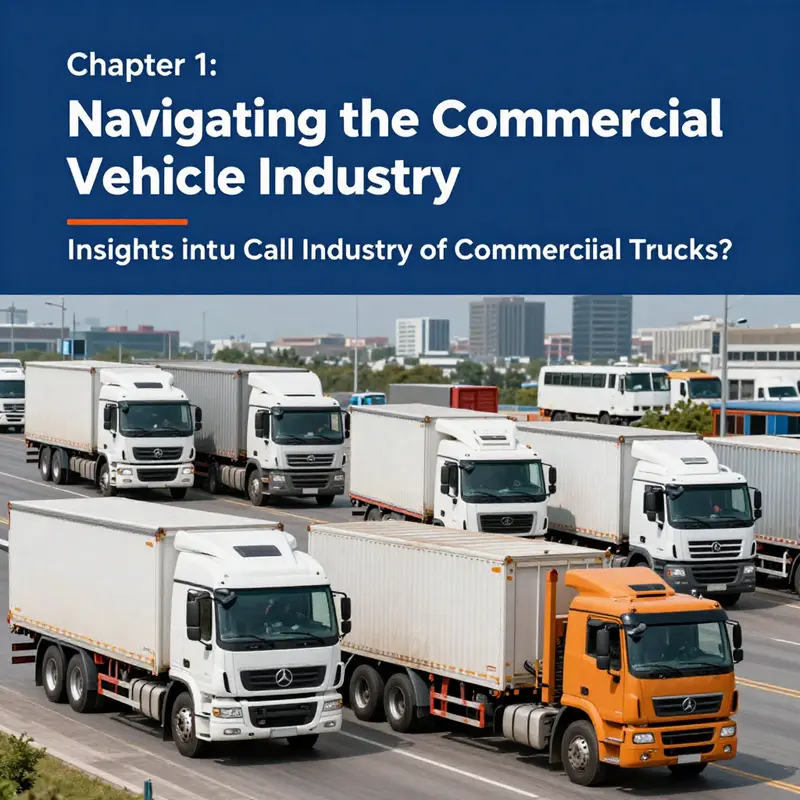
The moving backbone of commerce is not a single machine but a vast, interconnected system that carries goods across towns, provinces, countries, and oceans. When people ask what you call the industry of commercial trucks, the simplest labels are the commercial vehicle industry or the trucking industry. Both terms point to a broader ecosystem than the steel and tires on the road. They invite a view of design studios, manufacturing plants, service depots, routing software, fuel networks, and the people who drive, maintain, and manage fleets. The distinction matters because language shapes perception. In policy debates, in boardrooms, in the newsroom, the choice of label signals whether the focus is on the machines themselves, on the people who operate them, or on the flow of work that keeps markets moving.
Within that umbrella, vehicles form the core. Tractor-trailers haul the majority of long-haul freight; delivery vans reach last-mile shelves; dump trucks shift earth and rock in construction projects; and a family of specialized freight carriers handles liquids, refrigerated goods, or heavy and awkward loads. The assortment reflects the diversity of trade needs. Together with buses in some deployments, these vehicles constitute a fleet that underwrites a broad spectrum of activities from manufacturing to retail. Yet vehicles do not stand alone. They rely on a network of maintenance facilities, fueling and charging infrastructure, and sophisticated transportation management systems that optimize routes, track status, and balance capacity with demand. The result is a living system that responds to weather, road conditions, and even the cadence of consumer behavior.
Regulations and services anchor this system. Safety standards govern driver performance, vehicle design, and maintenance intervals. Environmental rules push fleets toward cleaner powertrains and lower emissions. Compliance becomes a service in its own right, delivered by training programs, certification bodies, and fleet management providers who translate policy into practice. Even with heavy rules, the industry remains agile, adopting new processes, adopting telematics, and deploying fleets that can be scaled up or down with demand. The interplay between policy, technology, and market demand shapes not only what is built but also how it is used in daily operations.
The role of the commercial vehicle industry in the global economy is both practical and structural. It is practical because goods must move from producers to warehouses to stores, and the efficiency of that movement directly affects prices and availability. It is structural because the network of roads, ports, depots, and cross-border corridors relies on reliable trucking as the backbone of distribution. The industry supports construction by supplying equipment and materials, supports energy demand by moving fuels, and supports consumer markets by delivering essentials. In this way, naming the sector as a single industry becomes less a semantic choice and more a map of how modern life operates. The same label implies a chain that starts with design and ends with the curbside delivery that consumers see every day, a chain that includes maintenance techs, fuel suppliers, software developers, and policy analysts all contributing to a common mission: to move goods efficiently and safely.
Language itself varies by region and audience, offering clues about emphasis. In North America, the term trucking industry is common and carries an operator and logistics connotation, highlighting the crews that navigate highways, the owners who manage fleets, and the contractors who service routes. In Europe and other markets, the term commercial vehicle sector or commercial road transport is often used, underscoring a broader view that includes urban buses, school transports, and special purpose vehicles within a regulated framework. A different but related word, haulage, remains in use in some markets and tends to emphasize the act of moving freight as a service rather than the vehicle category. These linguistic choices matter because they shape expectations about policy, investment, and public perception. They also remind us that the industry is not monolithic but a mosaic of subcultures, each with its own priorities, from climate considerations to driver welfare to digitalization.
Technology threads through every layer of the industry. Improvements in automation promise to reduce labor intensity and increase safety, while telematics connect each vehicle to a management system that diagnoses performance, schedules maintenance, and guides drivers with real time data. Alternative power is reshaping the fleet landscape as well. Electric trucks, hydrogen fuel cells, and newer battery chemistry bring quieter operation, lower tailpipe emissions, and new charging or fueling logistics that fleets must accommodate. The shift to cleaner power is not a single decision but a portfolio of strategies, balancing capital costs, range requirements, and the availability of charging or refueling infrastructure along key routes. In parallel, software platforms that optimize routing, load planning, and maintenance forecasting help fleets squeeze more value from every asset. The tools are not fashionable gadgets but essential elements of the industrial system that makes the vehicle category part of a larger digital transformation.
Market dynamics add another layer of complexity. The health of the industry depends on economic cycles, fuel prices, tariff policy, and demand from consumer and industrial sectors. When volumes rise, fleets invest in newer vehicles, upgrade safety systems, and expand capacity; when volumes soften, they rely on more flexible use of the assets they own or on refurbished equipment that keeps operating within budget. The used truck market, in particular, serves as a barometer of fleet activity and risk tolerance for buyers and sellers alike. For readers following market signals, the trajectory of used truck prices and availability provides insight into fleet confidence and financing conditions. See the current trends in used truck sales growth for a concrete example of how buyers and sellers respond to shifting risk and opportunity. Current trends in used truck sales growth.
Alongside cycles, geopolitics and policy play decisive roles. Tariffs on heavy trucks or components can ripple through price, inventory, and lead times, influencing how fleets plan replacements and how dealers price appealing opportunities. At the same time, cross-border movement of goods remains a cornerstone for many fleets, with rules about weight, axle loads, and hours of service shaping the practicalities of day to day operations. In this sense, the naming of the industry carries a pragmatic edge: it reflects not a static portrait but an ongoing negotiation among stakeholders who depend on stable freight flows and predictable maintenance costs. The sector continues to evolve as it absorbs not only new hardware but also the new disciplines of data governance, cybersecurity, and sustainable procurement that increasingly matter in a world of complex logistics networks.
Looking forward, the industry is poised to become more sustainable, more data driven, and more integrated with adjacent transport modes. The move toward electrified fleets and hydrogen prototypes is matched by a push to reduce idle times, optimize driver hours, and minimize waste throughout the supply chain. These aims require collaboration across manufacturers, trucking companies, shippers, regulators, and infrastructure providers. They also demand a shared vocabulary that clarifies who does what and how value is created. In that sense, naming the sector matters less as a label and more as a frame for collaboration. When policymakers speak of the commercial vehicle industry, they signal a commitment to roads and rails, ports and depots, engineers and operators working in tandem to keep trade flowing and communities supplied. When financiers and fleet owners talk about the trucking industry, they signal a focus on risk, return, and the capital decisions that keep fleets on the road year after year.
To end this chapter with a practical sense of how the topic fits into the broader article, it helps to view the industry as a living ecosystem rather than a static category. The vehicles are the most visible part, but maintenance networks, fuel infrastructure, and data platforms ensure reliability and efficiency across miles of highway and through the daily routines of drivers and dispatchers. The industry is defined not only by the trucks themselves but by the system surrounding them: the people who design, repair, and regulate; the firms that finance, insure, and operate; and the communities that depend on predictable movement of goods. That is why the label you choose matters. It frames expectations about technology adoption, environmental impact, skill development, and the scale of investment required to keep the wheels turning. More than a semantic distinction, the phrase you apply to this sector maps a way of thinking about how goods travel, how economies grow, and how cities stay fed, clothed, and powered.
For a broader scholarly overview, see the ScienceDirect topic on commercial vehicle: https://www.sciencedirect.com/topics/engineering/commercial-vehicle
Naming the Backbone of Transport: Defining the Commercial Truck Industry and Its Global Reach
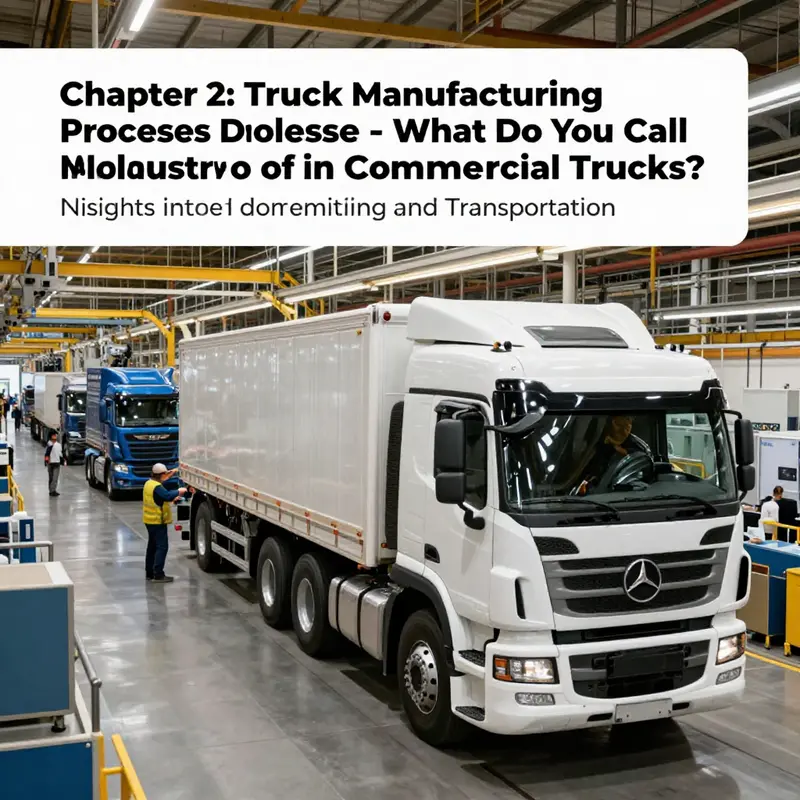
The question “what do you call the industry of commercial trucks?” sounds simple, but it opens a broader conversation about a complex, interconnected ecosystem that powers economies and moves goods across continents. In professional discourse, two umbrella labels recur with frequency: the commercial vehicle industry and the truck manufacturing industry. Each carries a slightly different emphasis. The term commercial vehicle industry foregrounds the wide range of machines designed for both freight and passenger transport in commercial contexts. It signals a family of vehicles that includes heavy and light trucks, delivery vans, buses, and specialized work vehicles that perform essential tasks in cities, farms, and construction sites. The phrase truck manufacturing industry, by contrast, leans toward the people, processes, and places that bring these machines from concept to concrete, roadworthy reality. It highlights the design rooms, engineering labs, supplier networks, assembly lines, and after-sales ecosystems that sustain the life cycle of commercial vehicles. Neither label captures every nuance, and both are needed to describe the breadth of what makes this sector function. The choice of term often reveals what the speaker values most: the market’s breadth, its machinery, or its movement and service networks. Yet the real power of either label lies in how it frames the industry’s core purpose—enabling commerce by moving goods and people reliably, safely, and efficiently.
In practice, the commercial truck industry sits at a crossroads of several powerful forces. At its heart are the engineers who translate payload requirements, fuel choices, safety standards, and total cost of ownership into tangible machines. These are the vehicles that fleets rely on to keep supply chains intact, from regional distributors to global manufacturers. But a truck is not a solitary product; it emerges from a web of collaborators. The chassis maker, the body builder, the upfitter who installs specialized equipment, and the myriad suppliers of engines, transmissions, axles, brakes, tires, and electronics all contribute to a single mission: to create a vehicle that can endure long hours, harsh conditions, and heavy loads while delivering predictable performance. The distribution network—dealers, distributors, service centers—ensures that fleets can acquire, finance, and maintain these machines with minimal downtime. This interconnected system makes the industry less about a single product and more about a continuum of capability that begins with a concept and ends with miles of service.
Within this continuum, the scope of what counts as a “truck” expands beyond the iconic heavy-duty silhouette. Freight trucks, delivery vans, and the various mid-weight and light-weight platforms populate a spectrum that also includes buses—city transit, coaches, and school buses—that rely on the same underlying discipline of safety, durability, and efficiency. Specialized service vehicles, from dump trucks and tankers to refrigerated units and municipal maintenance fleets, illustrate how the industry tailors its core competencies to serve particular sectors. In this broader sense, the industry is less about isolated products and more about the ability to engineer solutions that meet diverse operating environments. It is a field that marries core mechanical know-how with clever systems integration: chassis and powertrain choices, aerodynamics, weight distribution, payload optimization, climate control, telematics, and compliance with evolving regulatory standards. The vocabulary of the field reflects this diversity: heavy-duty, medium-duty, light-duty trucks; among buses, city, coach, and school variants; and among specialized vehicles, the kinds of bodies that convert a platform into a fleet asset. It is a reminder that “truck” is both a noun and a component of a larger logistical equation.
A crucial feature of the industry is its post-sale ecosystem. The moment a vehicle leaves the factory floor, it enters a service loop that keeps it productive. Parts availability, technician training, and digital maintenance records help fleets extend the life of their assets. Service networks must operate with a level of coordination that rivals manufacturing efficiency because downtime translates into lost revenue and disrupted supply chains. This service dimension is why the industry has a robust, multi-layered employment base: design engineers, industrial and mechanical technicians, field sales teams, parts specialists, fleet analysts, and regulatory compliance professionals all contribute to keeping the wheels turning. The sense of purpose is reinforced by standards and trade associations that guide best practices, help harmonize safety and environmental requirements, and provide a forum for ongoing industry dialogue. In this regard, the work truck ecosystem is not merely a market for machines; it is a community with shared expectations about durability, reliability, and responsibility.
From a policy and standards perspective, the industry operates within a framework that seeks to balance performance with safety and environmental stewardship. Governments, insurers, and industry bodies push for solutions that reduce total energy consumption, curb emissions, and improve road safety. These pressures drive innovation in propulsion systems, aerodynamics, and electronics, while also shaping maintenance protocols and lifecycle economics. The transition to cleaner powertrains—whether through electrification, hybridization, or alternative fuels—adds another layer of complexity. It is not just about replacing engines; it is about reimagining infrastructure, charging and fueling networks, and the training regimes that equip technicians to work with new technologies. The industry must manage this transformation while continuing to meet the immediate demands of fleets that require dependable performance today. In this sense, the naming question becomes part of a larger narrative about how the industry reconciles tradition with rapid change.
A steady stream of industry intelligence travels through associations, trade publications, and market analyses. An authoritative viewpoint often cited in professional circles is that the work truck ecosystem—encompassing manufacturers, distributors, upfitters, and service providers—forms the backbone of the commercial vehicle sector. The Work Truck Association, for instance, represents thousands of companies involved in the diverse ecosystem that makes up the commercial vehicle sphere. This collective voice emphasizes not only the scale of the market but also the complexity of the value chain that supports it. The association’s network, which spans from large OEMs to repair shops, underscores how integral the ecosystem is to logistics, construction, agriculture, retail, and manufacturing. The implications are practical as well: standards, education, and advocacy efforts help align disparate players toward common goals such as safety, reliability, and efficiency. For readers who want to explore these dimensions in more depth, the association’s materials and data offer a window into how many firms participate in the overall industry and how market dynamics shift over time. This perspective helps readers appreciate that the industry is more than a collection of vehicles; it is a coordinated system that aligns design philosophy, production realities, and service imperatives.
Relating these considerations back to the everyday language used by professionals strengthens the case for adopting a holistic view of the industry. When people ask what you call the industry of commercial trucks, the best answer acknowledges both the breadth of the product class and the sophistication of the supply chain that sustains it. It is a sector defined by collaboration across disciplines—mechanical design, materials science, software and electronics integration, logistics, finance, and regulatory compliance. It is the confluence of engineering excellence and practical business discipline, where a truck is a capital asset rather than a simple machine. The terminology that professionals favor—whether they refer to the commercial vehicle industry or the truck manufacturing industry—signals not just a label but a shared understanding of what it takes to move entire economies. The reference to a “work truck ecosystem” captures the social and economic fabric of the field, highlighting how fleets, operators, and service networks depend on a reliable flow of goods and people.
As the industry evolves, one small but telling indicator of its health is the breadth of its knowledge resources and the speed with which best practices disseminate across channels. Market signals, labor trends, and technology roadmaps flow through conferences, journals, and online communities, informing designers and operators about trade-offs between cost, durability, and efficiency. The internal link to current trends in used truck sales growth serves as a practical reminder that the health of the broader ecosystem is reflected in the used-truck market as well. That market acts as a proxy for the depreciation curves, maintenance costs, and residual values that fleets weigh when evaluating total cost of ownership. It also reflects how quickly fleets adopt new technologies and how resilient the demand for mobility remains in the face of macroeconomic shifts. In other words, the language we choose—whether we talk about the industry in generic terms or focus on the specifics of manufacturing, service, or the auction and resale markets—should be guided by a clear sense of the ecosystem’s anatomy and its strategic priorities. For readers navigating this space, understanding the naming conventions is more than semantic accuracy; it is a compass pointing toward the right questions about investment, capability, and future readiness.
In weaving together these threads, it becomes evident that the most precise way to describe the industry is to acknowledge its role as a facilitator of commerce and infrastructure. It is a field that spans ideation and series production, yet also encompasses the maintenance, financing, and end-of-life phases that keep the fleet alive. The labels we use—the commercial vehicle industry, the truck manufacturing industry, or the broader work truck ecosystem—each cast light on different facets of a single, dynamic enterprise. Recognizing this helps readers appreciate how deeply embedded the industry is in everyday life, from the pallets in a warehouse to the roads that connect distant markets. It also clarifies why this sector attracts such a wide cast of players, from designers drafting the next generation of powertrains to technicians solving a simple service issue that could save a driver’s shift and a business’s bottom line. The story of commercial trucks is therefore a story of collaboration, resilience, and continuous adaptation—an ongoing enterprise that keeps moving even as the landscape shifts beneath it.
External reference: NTEA – The Work Truck Association offers a detailed portrayal of how a broad network of manufacturers, distributors, and service providers sustains the work truck industry. For further reading on industry standards, member activities, and the ecosystem as a whole, you can visit https://www.ntea.org. Internal link for further context on market trends: current trends in used truck sales growth.
Naming the Industry and Its Economic Footprint
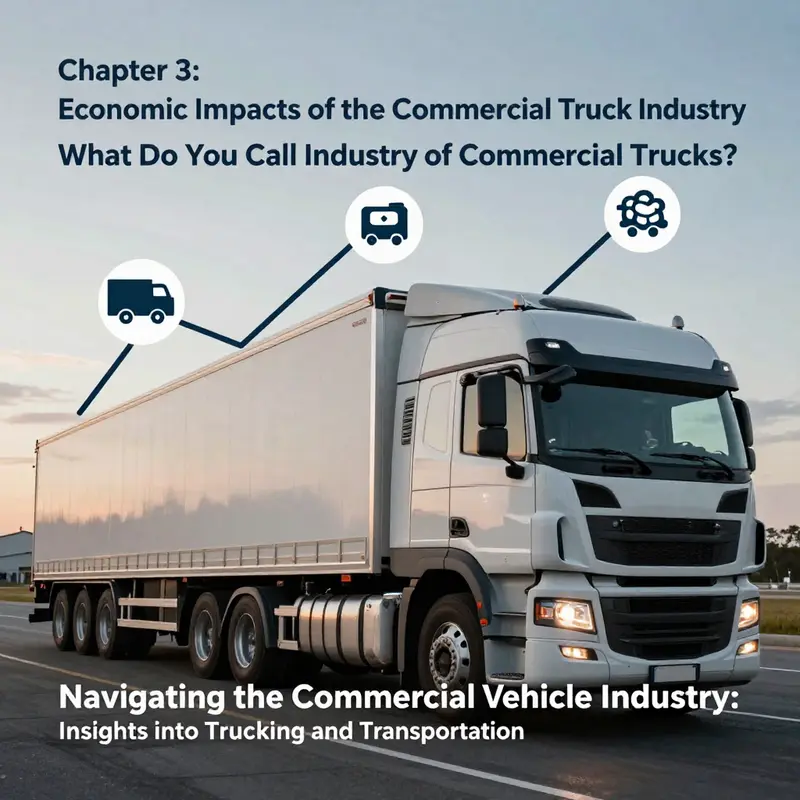
Naming the industry is more than a labeling exercise; it shapes how policy makers, investors, and the public imagine the road to prosperity. Different terms highlight different priorities: commercial trucking emphasizes freight movement; truck and fleet industry underscores the networks of owners and service providers; and the broad term commercial vehicle sector includes buses and specialized vehicles. Together these labels help stakeholders align expectations around jobs, capital, and infrastructure needs. The economic footprint becomes visible when we count miles driven, loads moved, and the investment in maintenance and equipment across fleets of all sizes.
In the United States and Europe the sector generates hundreds of billions in revenue and supports millions of jobs. The health of manufacturing, logistics, and retail depends on reliable truck networks, which respond to fuel prices, tariffs, and incentives for electrification and digitalization. Naming affects policy design; a broad term can encourage inclusive programs for emissions and workforce development, while a narrow term can favor specific incentives. The chapter that follows examines how the chosen name frames risk, opportunity, and the pace of change.
Ultimately the naming choice matters because it shapes how the public and decision makers think about the sectors role in growth, resilience, and sustainability. The language we use can influence investment horizons, risk assessment, and the timing of infrastructure upgrades. As the industry continues to evolve, the label may shift, but the underlying economic impulse remains a steady movement of goods, people, and services on the open road.
Naming the Moving Economy: Reframing the Commercial Vehicle Industry for an Electrified and Automated Era
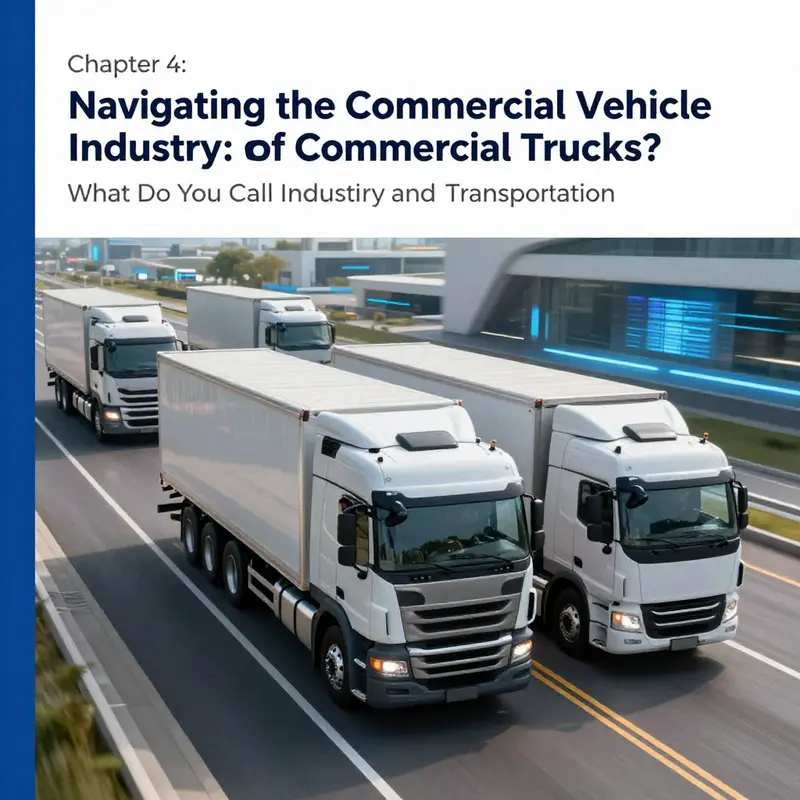
The question of what to call the industry that moves goods and people by road is more than a matter of vocabulary. It is a reflection of how societies organize, regulate, and optimize the physical flow of commerce. In most trade and policy circles, this sprawling sector is labeled the commercial vehicle (CV) industry, a designation that captures its core function—vehicles designed for commercial transport. Yet the phrase itself is evolving as quickly as the machines that populate it. The commercial vehicle industry is not a single product line or a simple segment of manufacturing; it is a vast ecosystem that spans design studios and factory floors, distribution networks, service and maintenance channels, and a wide array of vehicle types that together underpin modern logistics, urban mobility, and public transit. Light-, medium-, and heavy-duty trucks sit alongside buses and a growing range of specialized vehicles built to perform precise tasks—garbage collection, tankering, refrigerated transport, and even niche construction roles. Taken as a whole, the CV industry denotes a sector that supports everything from long-haul freight corridors to neighborhood delivery routes, from mass transit to last-mile services, and from resilient infrastructure build-outs to rapid urbanization. The naming matters because it orients policy, investment, and strategy. It signals priorities: energy efficiency, safety standards, digital capability, and the ability to integrate with broader logistics platforms and city planning initiatives. When stakeholders speak of the CV industry, they are not just identifying a market; they are acknowledging a framework for regulatory alignment, capital expenditure, technology adoption, and professional practice that touches fleets, workshops, drivers, engineers, and policymakers in a single, interconnected loop.
The scope of the commercial vehicle industry is both broad and intimate. Broad, because it covers a spectrum of vehicle classes and applications—from the highways that cradle cross-border trade to the urban streets where parcel fleets and public buses service daily rhythms. Intimate, because at the heart of every vehicle is a human and a process: drivers who navigate traffic, technicians who diagnose faults, fleet managers who balance uptime and cost, and engineers who translate regulations and customer needs into safer, more efficient machines. In practical terms, the CV industry is the design, production, distribution, and maintenance of vehicles designed for the commercial transport of goods and passengers. It includes light trucks for local delivery and service work, medium and heavy-duty trucks for regional and national freight, buses that move millions of riders, and a growing constellation of specialized vehicles that handle waste, liquids, perishables, and other complex tasks. This ecosystem also embraces the invisible but essential support structures—parts supply, maintenance networks, driver training programs, and the digital platforms that optimize routes, track performance, and foresee maintenance needs.
As analyses point out, the CV industry is in a phase of meaningful transformation. The trajectory is shaped by regulatory regimes aimed at reducing emissions and improving safety, alongside market dynamics that favor efficiency, reliability, and digital connectivity. The 2025 outlook underscored a mixed recovery across regions: some markets rebounding quickly on the back of renewed manufacturing and trade, while others contended with inflationary pressures, shifting demand patterns, and tariff considerations. These macro currents are not just background noise; they recalibrate investment priorities, determine which technology paths gain traction, and influence the pace at which fleets migrate from older, fossil-fuel configurations to cleaner, smarter alternatives.
Electrification has become the most visible thread in the CV narrative. In urban delivery and short-haul logistics, battery-electric trucks are rapidly becoming a practical choice due to lower operating costs and reduced local emissions. The economics of electrification hinge on more than the price of the vehicle; it depends on the ability to charge at scale, at times that minimize downtime, and at locations that support a continuous, reliable service. Technological developments in high-capacity charging systems and energy management are addressing fundamental bottlenecks. The notion of megawatt-level charging capacity, used to describe rapid replenishment of electric fleets, is not just a laboratory concept but a growing operational reality in many city-center and suburban logistics hubs. When a fleet can charge quickly and return to service with minimal downtime, the economics of electrification begin to resemble, or even surpass, those of traditional diesel operations in total cost of ownership terms. The shift is not simply about replacing engines; it is about reimagining the entire energy and infrastructure architecture around moving goods.
This electrified dimension intersects with another powerful trend: autonomy and smarter, connected vehicles. The CV sector is increasingly experimenting with, and gradually deploying, autonomous driving capabilities and connected platforms that tie vehicles into broader logistic ecosystems. Autonomous concepts—whether they take the form of unmanned delivery approaches or autonomous routing for long-haul corridors—promise to reshape utilization patterns, safety regimes, and maintenance needs. Even as full-scale autonomy remains uneven across markets, the footprint of automation is expanding in the CV landscape. Fleets are adopting decision-support tools, telemetry systems, predictive maintenance, and real-time data sharing that enable more precise scheduling, safer operations, and better utilization of capacity. In parallel, the push toward digitalization and interoperability is linking vehicle systems to warehouse management, traffic infrastructure, and consumer-facing delivery platforms. The goal is a more tightly coupled, end-to-end logistics chain in which the vehicle is not a standalone asset but an integrated node in a dynamic, data-driven network.
A closer look at regional shifts illuminates the global pivot toward high-end, intelligent, and green development. In China, for example, the CV industry is moving away from policy-led spurts of growth toward market-driven momentum that rewards performance, efficiency, and sustainability. The emphasis on intelligent design, energy efficiency, and international expansion reflects a broader global pattern: the industry is retooling to compete on total value, not just price, and to meet the demands of a digitized logistics economy. The 2025 industry show dedicated to commercial vehicles highlighted how digitalization and energy performance are co-evolving with production capabilities and export strategies. This is not simply a national trend but a signal of how markets around the world are recalibrating expectations for reliability, uptime, and environmental responsibility. Across regions, the message is consistent: the CV industry will be judged by how well it can combine efficiency with resilience, how quickly it can reduce emissions without compromising service levels, and how effectively it can integrate with partners across the supply chain.
The social and economic implications of this transition are profound. For fleets, the shift toward electrification and automation changes the calculus of maintenance, fueling, and operational risk. Electric propulsion reduces local emissions and often lowers maintenance costs by removing much of the wear associated with internal combustion engines. Yet it also introduces new complexities—batteries, charging infrastructure, energy management, and charging logistics demand new competencies and investment in training and facility design. For policymakers, the CV industry offers a laboratory for modernizing urban mobility, improving air quality, and shaping new taxation and incentive structures that reflect the true cost of mobility. For workers, the transformation presents opportunities and challenges: new skill requirements, a need for upskilling in electrical systems and data analytics, and evolving safety practices as vehicles become smarter and more connected. The industry’s language matters here as well, because terminology frames policy debates, guides workforce development, and communicates the scale of change to communities, investors, and customers.
Language also shapes how businesses position themselves in a crowded marketplace. If the CV industry is seen merely as a collection of trucks and buses, it risks underplaying the breadth of services and capabilities that modern fleets must deliver. By adopting a more expansive frame—one that emphasizes mobility ecosystems, energy strategy, data-enabled operations, and safety-first design—stakeholders can better align their investments with future demand. This broader perspective also helps fleets plan for multi-modal integration, where road transport connects with rail, waterways, and urban logistics networks to optimize throughput and minimize carbon footprints. In practice, that means more attention to standards, interfaces, and collaborative platforms that enable different actors—manufacturers, fleet operators, service providers, and municipal authorities—to work together with clarity and trust.
A practical takeaway for readers who are trying to understand the current state and future of the industry is to view electrification and automation not as isolated shifts but as interdependent forces. A neighborhood delivery truck that can route itself around congestion, learn from traffic patterns, and dock at energy-efficient charging stations embodies how the CV ecosystem is evolving. The vehicle becomes part of a larger, intelligent system that improves reliability, reduces emissions, and increases uptime. It is this convergence—between the vehicle, the energy supply, the digital brain, and the end-user—that will define the next era of the commercial vehicle industry. And as new business models emerge—from centralized fleet-as-a-service concepts to on-demand urban freight platforms—the language surrounding the industry will continue to shift to reflect a more integrated, service-oriented view of road transport.
For readers seeking a regional lens on how electrification is reshaping operations in North America, a useful touchpoint is a recent discussion on electric trucks and their market effects. One practical exploration can be found in this piece electric trucks revolutionize the Canadian market, which examines how fleet operators adapt decision-making, financing, and maintenance cycles to support rapid charging, optimized routes, and predictable downtime in urban and suburban contexts. That narrative complements the broader themes here by showing how the same forces—cost control, reliability, and environmental responsibility—play out in a concrete, local setting. It also demonstrates how the industry’s language shifts when technology and policy intersect with everyday business choices, from fleet procurement to driver training and service planning.
Looking ahead, the CV industry seems poised to continue its expansion into smarter, cleaner, and more interconnected operations. The essential challenge will be balancing rapid adoption of new technologies with the realities of capital investment, workforce development, and global supply dynamics. As regions recover at different speeds, the focus will intensify on building resilient, scalable systems that can withstand economic volatility while delivering consistent service quality. The naming of the industry will, in turn, reflect this maturation. It will increasingly emphasize the integration of movement, energy, and intelligence—the idea that commercial vehicles are not merely machines but nodes in a living, data-driven logistics network. In this sense, the term commercial vehicle industry remains apt, yet it will broaden in scope and nuance as electrification, autonomy, and digital platforms become foundational to how goods and people move through modern economies.
For readers who want to see the macro picture alongside the micro implications, a broader, quantitative reference is the global statistics on commercial vehicles. See the Statista report for a comprehensive snapshot of how the market has evolved across regions, vehicle categories, and time frames: https://www.statista.com/statistics/1398477/commercial-vehicles-worldwide/.
Final thoughts
The commercial vehicle industry, particularly the trucking segment, plays a critical role in supporting global trade and economy. Understanding its intricacies—from manufacturing processes to economic impacts and emerging trends—empowers stakeholders, including trucking company owners and fleet managers, to make informed decisions. As the industry continues to evolve with technological innovations and sustainable practices, staying abreast of these changes will be essential for maintaining competitiveness and operational efficiency. This comprehensive understanding is essential for navigating the future landscape of the commercial vehicle industry.