The configuration of commercial trucks in Australia, specifically their right-hand drive design, is a fundamental aspect that influences various sectors, including logistics, construction, mining, and fleet management. With Australia adhering to left-side driving and having the driver’s seat positioned on the right, the implications of this system are far-reaching. This article delves into the intricacies of right-hand drive vehicles, examining its configuration, the operational implications it has for commercial trucking, and how this driving pattern impacts road navigation. The insights presented will help trucking company owners, fleet managers, and procurement teams precisely navigate the Australian trucking landscape.
Why Australian Commercial Trucks Are Right‑Hand Drive — Design, Safety, and Everyday Impacts
Why Australian Commercial Trucks Are Right‑Hand Drive — Design, Safety, and Everyday Impacts
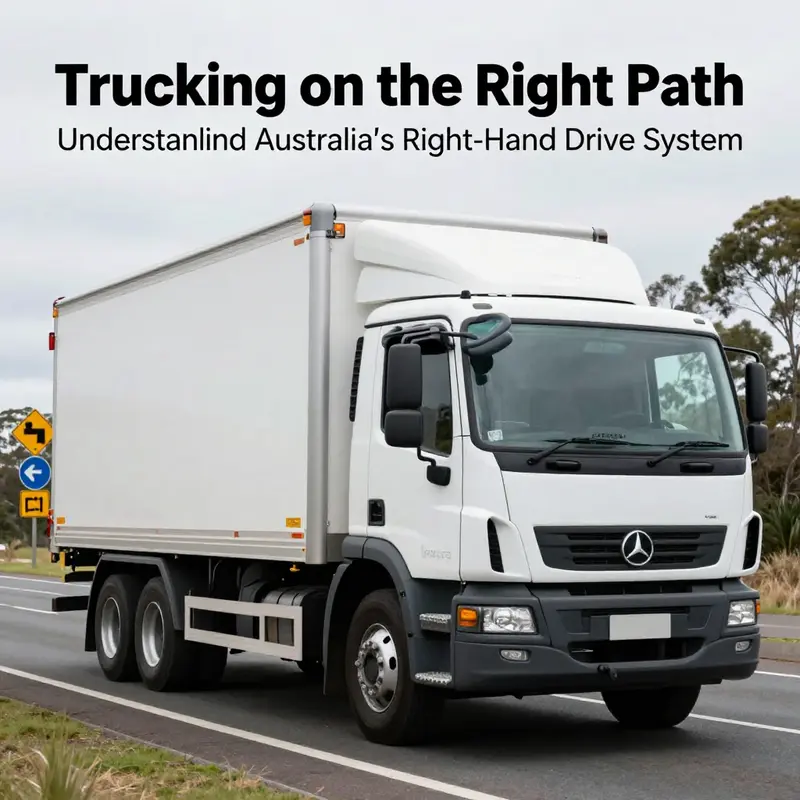
In Australia, commercial trucks are configured with right‑hand drive. The steering wheel sits on the right. Vehicles travel on the left side of the road. That foundational fact shapes nearly every detail of truck design and operation. From cab layout to mirror placement, from loading practices to driver training, the RHD configuration is a practical response to a consistent traffic system. This chapter explains the reasons behind right‑hand drive, the design choices it drives, and the practical effects for fleet managers, drivers, and businesses that rely on freight transport.
The choice of right‑hand drive is not arbitrary. It aligns with the country’s left‑side driving convention. When a vehicle travels on the left side, placing the driver on the right improves visibility of the road centre line. Drivers can better judge distances to oncoming traffic. That visibility matters most when overtaking, turning, and negotiating narrow stretches of road. For heavy vehicles, where stopping distances are longer, that split second of improved sight line can mean safer decisions.
Cab design in RHD trucks adapts to that core need. Controls, instrument clusters, and sightlines are arranged to keep the driver focused on the road centre and vehicles ahead. Mirrors are calibrated for a right‑side seating position. Wide fender mirrors and long‑arm side mirrors reduce blind spots on the nearside. Modern trucks add camera systems and sensor arrays to supplement those mirror views. But the basic principle remains unchanged: the driver sits on the right to align human vision with the left‑hand flow of traffic.
Another practical reason for RHD relates to curbside operations in urban and suburban environments. In cities, delivery trucks often park alongside the left curb. With the driver sitting on the right, they can step out directly to the footpath or kerbside. That reduces exposure to moving traffic while loading or unloading. It improves safety for drivers and delivery personnel. It also streamlines short deliveries in congested streets, where quick entry and exit from the cabin make operations smoother.
The same curbside advantage extends to dock and construction sites. When parked along the left side of a street, drivers can open the cabin door and access loading equipment or communicate with ground crew without stepping into live lanes. For multi‑stop delivery routes, that arrangement reduces time on the road. Over a fleet, small time savings per stop become substantial productivity gains.
Vehicle types influence how that RHD layout is implemented. Australia features both cab‑over‑engine (COE) designs and conventional ‘long nose’ trucks. In cab‑over models, the cab sits above the engine for a shorter overall length. Right‑hand drive cab‑overs provide an unobstructed forward view. In conventional models, the engine sits ahead of the cabin. Even so, the steering and instrument layout still favour a right‑side driver for the same visibility benefits. Both configurations then integrate mirrors, blind‑spot detection, and camera systems with RHD ergonomics in mind.
Safety standards and road regulations also reflect RHD norms. Signage, lane markings, and intersections are designed for left‑side traffic. Road rules expect drivers to initiate overtaking from the right-hand lane positions, and to merge appropriately within that context. For heavy vehicles, compliance with these norms includes mandatory checks, licensing requirements, and vehicle inspections, all calibrated to right‑hand operation. Driver licensing emphasizes lane discipline and managing the unique sightlines RHD creates.
Blind spots remain a concern for large trucks regardless of steering side. However, their shape and placement change with right‑hand drive. The primary blind spot on the nearside can be smaller because the driver is closer to the kerb. Conversely, the offside blind spot can be larger. To address that, many Australian trucks include a combination of mirror placements and electronic aids. These adaptations improve lateral awareness when changing lanes or completing wide turns.
Turning behaviour differs in measurable ways. When a truck performs a right turn onto a side road, the right‑hand driver has a direct view of the kerb and immediate surroundings. For left turns, the driver must rely more on mirrors and camera systems to gauge the offside. Over time, drivers build habits and routines to compensate. Training programs emphasize checking specific mirror zones and using technology to confirm clearance on tight turns.
The loading and unloading process also reflects RHD practicality. Trucks that load from the curb can position the driver to supervise operations from within the cab. That placement helps when coordinating with loaders or when operating tail lifts. It reduces the time drivers spend outside the truck in traffic lanes. For urban delivery fleets making many stops daily, these workflow efficiencies add up. They also reduce exposure to roadside hazards, improving occupational safety across fleets.
Operational planning takes RHD into account, too. Route optimization systems and telematics often include lane and curbside considerations. Planners work with knowledge of where drivers exit the cab and how they access goods. For tight urban routes, choosing vehicles with the appropriate cab configuration is essential. Similarly, yard layouts at depots factor in driver door access and the direction trucks will park. Small design decisions at the depot level can reduce turnaround times and improve safety.
Maintenance and repair procedures reflect the right‑hand layout. Technicians and service manuals for Australian trucks assume controls and components will be arranged for RHD. Parts such as steering columns, pedal assemblies, and dashboard assemblies are assembled accordingly. When importing vehicles, buyers need to confirm the steering configuration. Right‑hand drive conversions do exist, but they are costly and complex. Converting a truck from left‑hand drive to right‑hand drive involves more than moving the wheel. It touches steering, pedal linkages, wiring, safety systems, and crash structure. For most operators, buying a vehicle already built for right‑hand operation is more practical.
Licensing and training integrate the realities of RHD. Driver instruction emphasizes eye movement and mirror checks specific to right‑side seating. Emergency procedures, reversing drills, and on‑road practice are designed for the sightlines drivers will encounter. Licensing exams test those skills within the correct traffic context. Employers who operate mixed fleets ensure drivers understand any differences between cab layouts and vehicle types. Familiarity with cab ergonomics reduces fatigue and improves decision‑making on the road.
Driver comfort and ergonomics are also important. Right‑hand drive arrangements determine the placement of controls. Pedal spacing, seat adjustments, and armrests are tailored to the driver position. Manufacturers design cabins to minimize reach and reduce awkward movements. Modern truck cabs include adjustable seating, lumbar support, and controls that fall naturally to the operator. These ergonomic choices can reduce long‑haul fatigue and help drivers maintain attention over extended shifts.
There are commercial implications beyond ergonomics. Right‑hand drive configuration affects resale values and the market for used trucks. A truck built for left‑hand traffic has limited appeal in Australia unless converted. The local market therefore values RHD trucks more highly. When purchasing internationally, fleet managers must account for conversion costs or shipping RHD models across borders. For those who buy and sell trucks frequently, understanding RHD market dynamics is crucial. If you are weighing options, resources that compare selling channels can help. For example, the discussion on dealer sales and auctions — choosing your truck provides practical guidance on how to approach buying and selling used trucks in markets like Australia.
Technology adoption also pairs with RHD design. Advanced driver assistance systems (ADAS) and autonomous driving features must be calibrated for right‑side seating. Lane‑keep assistance, adaptive cruise control, and collision mitigation systems use cameras and sensors aligned to an RHD viewpoint. Software maps and navigation systems present left‑side instructions by default. When manufacturers roll out updates, software considers the national driving convention first.
Cross‑border and international logistics sometimes complicate the picture. Trucks moving between countries with different driving sides require special handling. In some cases, freight is transferred between vehicles at borders. In others, drivers adapt to differing rules. For Australian operators involved in international supply chains, ensuring the right mainland configuration for domestic routes is a priority. Exported vehicles destined for left‑side countries usually match Australia’s steering setup. Exports planned for right‑side countries need conversion or reconfiguration before sale.
Operational safety is a recurring theme. Right‑hand drive reduces the need for drivers to lean across the cabin when checking the nearside. That small ergonomic advantage cuts down on repetitive movement. It also means drivers can step out onto the footpath more safely. For accident investigations, sightline analysis often shows how driver placement influenced events. In many incidents, the driver’s seating position and mirror usage are key factors. Designing vehicles that support correct sightlines is therefore a major focus of road safety programs.
Environmental and urban planning trends are influencing truck design around the world. In Australia, where urban centres are growing denser, efficient curbside access is increasingly important. Right‑hand drive supports this requirement. As cities adapt and loading zones change, truck designers respond with narrower cabins, improved visibility, and low‑entry steps. These changes keep the RHD advantage while meeting tighter urban demands.
Finally, cultural familiarity matters. Australian drivers train from the earliest stages to think in terms of left‑hand traffic and right‑hand seating. That familiarity reduces cognitive load. When a driver climbs into a right‑hand truck, operations feel intuitive. Consistency across vehicle types — from passenger cars to heavy commercial trucks — strengthens overall road safety. The predictability of other road users also helps. Pedestrians, cyclists, and drivers all orient to the same side of the road. This shared expectation supports smoother interactions and fewer misunderstandings.
Across the board, right‑hand drive in Australian commercial trucks is a practical adaptation to a left‑side driving environment. It improves visibility and curbside access. It steers design choices for cab layout, mirrors, and safety systems. It shapes maintenance, licensing, and fleet economics. For anyone involved in buying, operating, or designing trucks in Australia, understanding RHD is essential. It is not merely a matter of which side the wheel sits on. It is a core feature that touches safety, efficiency, and everyday operations.
For more detailed guidance on vehicle configurations and road safety standards in Australia, consult the official material from the Australian Government’s Department of Infrastructure, Transport, Regional Development and Cities: https://www.infrastructure.gov.au
Right-Hand Steering in a Left-Side-Driving Nation: Implications for Australia’s Commercial Trucking Fleet
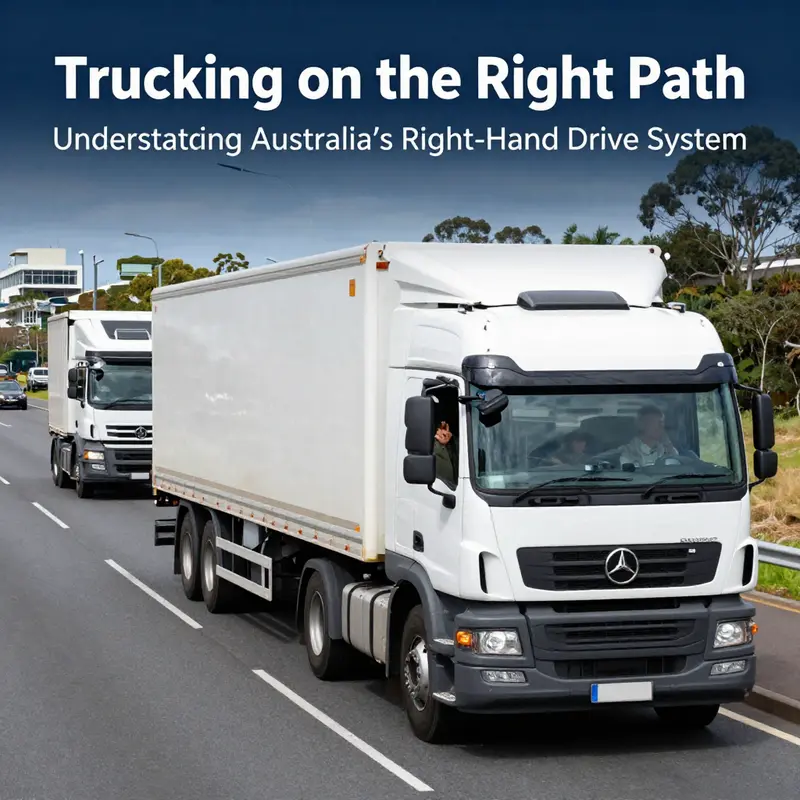
Australia’s road system is built around left-side driving with the driver’s seat on the right. In practice, this means most large trucks and freight vehicles on Australian roads are right-hand drive (RHD). Yet, the research materials for this chapter frame the topic with an important caveat: while the prevailing national convention supports certain layouts and safety expectations, right-hand steering trucks are not unheard of in specialized contexts. Some fleets encounter them as imports or as part of second-hand markets, particularly vehicles originating from jurisdictions where RHD is standard. The tension between these realities—dominant local practice and the niche presence of right-hand steering trucks—shapes decisions across acquisition, operation, maintenance, and compliance. As fleet operators navigate this terrain, they face questions about visibility, habit, and long-term cost that ripple through every day on the job, from the narrow urban streets of sprawling suburbs to the lengthy corridors of regional freight corridors that define Australia’s logistics backbone. The framework for understanding these implications rests on three pillars: safety and visibility, the alignment of driving habits with local road design, and the practicalities of maintenance, warranty, and regulatory compliance. At the center of this frame lies a simple but consequential question: when a business contemplates a right-hand steering truck in an environment designed for left-side driving, what are the real tradeoffs, and how should these tradeoffs be managed to safeguard safety and financial viability? The official transport guidelines provided by the Australian government offer a baseline of regulatory expectations and safety requirements that all fleets must respect, regardless of a vehicle’s steering side. This grounding is essential because even the most carefully chosen import may be rendered impractical if it cannot meet the letter and spirit of those rules. The balance between risk and reward, then, rests on discipline in procurement, rigorous assessment of local driving practices, and disciplined attention to installation, configuration, and ongoing maintenance. It is in this balance that the practical realities of right-hand steering trucks in Australia take shape, and it is through that lens that the broader narrative about the future of commercial trucking in the country must be understood. The discussion that follows weaves together observed challenges, strategic responses, and market dynamics, while anchoring the analysis in the authoritativeness of transport standards and the lived experience of fleet managers on the ground. For readers who want to anchor theory to practice, the chapter also points toward an external resource that offers a technical synthesis of right-hand steering, a resource useful for anyone assessing the practical feasibility of this layout in a modern freight operation. In the end, the aim is not to dispute the established preference for vehicle configurations that align with local norms but to illuminate how a deliberate, evidence-based approach to right-hand steering can either mitigate risk or compound it, depending on how a fleet approaches design, training, and compliance. In a country whose geography, weather, and road networks demand robust safety performance, the choice of steering configuration intersects with route planning, driver development, and the economics of wear and maintenance in ways that are both visible and consequential on the road every day. Within this context, the question of whether to prioritize a right-hand steering option becomes a strategic issue rather than a purely mechanical one, and it is this strategic dimension that the rest of the chapter seeks to unpack. The discussion also nods to the import market dynamics that influence how fleets are assembled and renewed. If a fleet manager considers a right-hand steering truck because it promises a favorable purchase price or because a particular unit arrived with compelling specifications, that decision triggers a cascade of implications—from warranty coverage and parts availability to matching telematics platforms and service networks. The risk posture of such decisions, therefore, should be calibrated against a baseline of safety outcomes, regulatory compliance, and total cost of ownership, rather than a focus on initial price alone. In this sense, the narrative is not merely about steering wheels; it is about the alignment of vehicle configuration with the road design, driver proficiency, and the broader ecosystem that supports safe and reliable freight movement across Australia. For those who wish to cross-check the regulatory framework that governs these considerations, the official transport guidelines provide an essential reference point. They remind us that safety standards and compliance rules are not optional addenda but foundational elements that can determine whether a vehicle remains a revenue asset or becomes a liability. Beyond regulatory compliance, the practical realities of operating right-hand steering trucks demand deliberate attention to driver training, route selection, and adaptation of fleet procedures. In urban contexts, visibility issues become more acute. The vehicle’s right-hand driver position can heighten blind spots along the curb lane, complicate lane choice at narrow street intersections, and influence the timing and sequencing of passes at junctions or roundabouts. The cognitive load on drivers—already substantial in high-demand freight jobs—can increase when the vehicle’s geometry diverges from what a driver has become accustomed to during training and tenure. To mitigate these risks, fleets often implement targeted training that emphasizes the specific visibility advantages and blind spots associated with right-hand steering in a left-side traffic system. This training is complemented by enhanced mirror configurations, sensor layouts where permitted, and standardized checklists that normalize the approach to left-turn, straight-run, and right-turn sequences. Even when a unit is well-equipped, the act of maintenance introduces its own set of questions. The installation of aftermarket accessories, peripheral sensors, or technology modules can, if done without strict adherence to manufacturer specifications, affect steering geometry, electrical circuits, or air and hydraulic systems. In some cases, this can void portions of the original warranty or raise questions about compatibility with safety systems that are designed around a particular steering and cab layout. The literature highlights this risk explicitly, underscoring that improper installations or non-original equipment can trigger warranty voids. For fleet managers, this is not merely a warranty concern but one with financial and operational implications: added downtime, more complex service loops, or higher costs for parts and specialized technicians who understand the vehicle’s unique geometry. These practicalities point toward a cautious strategy: when a right-hand steering configuration is considered, it is prudent to pursue configurations, equipment, and aftermarket additions that are aligned with established specifications and that can be supported by a network of technicians with proven experience in that layout. As with any capital-intensive asset, the decision to deploy right-hand steering trucks should be anchored in a broader evaluation of total cost of ownership. This evaluation should account for depreciation, maintenance, spare parts availability, and the potential premium payable for imported units that do not enjoy the same scale of service support as locally sourced equipment. It should also consider the long-tail implications of policy shifts, changes in import duties, and fluctuations in used-truck markets. The dynamics of the used-truck market, in particular, can affect the financial calculus of any decision to pursue right-hand steering units. If right-hand steering trucks are rarer in the local context, they may carry a steeper resale risk or require longer lead times for servicing and parts. Conversely, a well-supported, properly configured unit can deliver reliability and operational flexibility that justify the premium, especially in specialized roles or markets where a right-hand layout might, with the right safeguards, offer legitimate operational advantages. These considerations bring into focus a broader strategic question for fleet leaders: given the country’s typical road design and the expectations tied to driver training and risk management, should a fleet prioritize left-hand drive configurations that align with local practice, or pursue the niche where right-hand steering vehicles may be deployed with robust controls and expert support? The literature suggests that, for many Australian freight operators, the prudent path is to prioritize configurations that conform to local standards and the driving environment. This approach reduces the probability of misalignment between vehicle behavior and road design, while also simplifying driver onboarding and ongoing skill development. It also helps to minimize maintenance complexity and ensures that warranties and service agreements remain straightforward. Adopting this stance does not close the door on exploring right-hand steering as a niche segment, but it does place that exploration within a rigorous framework: the vehicle must be demonstrably safe, compliant, and supportable within the region’s road network and regulatory regime. The practical implication is that fleets considering right-hand steering trucks should design a decision process that weighs not only the purchase price but also the long-term reliability, the ease of obtaining parts, the availability of qualified technicians, and the ability to operate within a well-defined risk management plan. In other words, the choice is not purely about steering orientation; it is about how that orientation interacts with the road environment, the training and readiness of drivers, and the business’s capacity to sustain operations without proliferating risk. The interconnectedness of these factors becomes especially apparent when a fleet looks at the broader market context. The used-truck market, for example, contains a mosaic of configurations, ages, and histories, and the demand dynamics for right-hand steering units can diverge markedly from those of locally sourced, right-hand drive vehicles. This divergence contributes to a premium or discount that is not solely a function of age or mileage but also of the ease with which the vehicle can be supported on Australian roads. Fleet teams inclined toward accuracy and risk control may find that the stability of a well-supported, locally compliant configuration offers greater predictability in daily operations than a more price-attractive but less certain import. To illustrate a practical decision framework, consider a route and cargo mix that features frequent urban operations, tight alleys, and multi-turn deliveries in dense city centers, interspersed with highway legs. In such a scenario, the ability to predict how a truck behaves at intersections, around pedestrian zones, and at curbside loading docks is critical. If a right-hand steering layout adds measurable uncertainty to these moments, operators will likely choose to avoid the risk, especially when a large portion of trips is time-sensitive. On the other hand, a cross-country hauler with predictable route geometry and a well-supported maintenance network may tolerate a rarer right-hand steering unit if it yields benefits in specific contexts, such as particular cargo types or scheduling constraints where a foreign-built unit already integrates with a preferred telematics or fleet-management platform. The central message, then, is pragmatic: the implications of right-hand steering for Australian commercial trucks hinge on a careful balancing of safety, regulatory compliance, maintenance practicality, and economic viability. The decision is not made in a vacuum; it is made in a network of policies, training programs, service access points, and market dynamics that together determine the total cost of ownership and the risk profile of a given fleet. For readers who wish to connect the detailed market dynamics with real-world practice, an internal anchor is available in the form of a related discussion on current trends in used-truck sales growth. This resource provides grounding for how market conditions shape decision-making around imports, residual values, and the viability of niche configurations within Australia’s freight landscape. The link is embedded here for convenience and continuity of the narrative: Current trends in used truck sales growth. In sum, the chapter’s assessment of right-hand steering within Australia’s commercial trucking context emphasizes that while the dominant paradigm remains left-side driving with the driver on the right, there exists a legitimate, carefully managed space for right-hand steering trucks as niche imports or specialized units. The safety and operational performance of these vehicles depend on a deliberate and comprehensive approach to driver training, route design, sensor and mirror configurations, and a strict adherence to manufacturer specifications and regulatory requirements. The practical takeaway for fleet managers is clear: when contemplating right-hand steering in an Australian setting, proceed with disciplined due diligence, ensuring that every decision aligns with safety goals, legal compliance, and the long-term health of the fleet’s operations. The goal is not to force a single orientation onto every vehicle but to ensure that the orientation chosen, and the way it is managed, supports safe, predictable, and economical freight movement across the country. For those seeking a deeper technical overview of right-hand steering systems, the following external resource offers a comprehensive guide to technical specifications, types, and pragmatic uses: https://www.righthandsteering.com.au/guide
Left on the Right Lane: How Right-Hand Drive Trucks Define Australia’s Freight Landscape
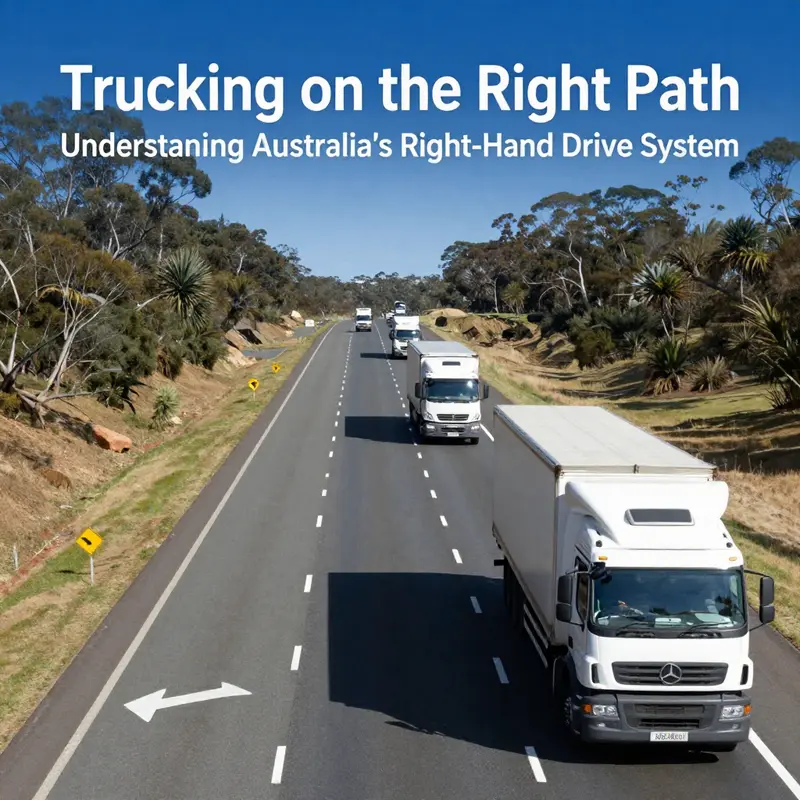
Driving on the left side of the road is a defining rule of Australia’s traffic system, a rule that frames every decision a commercial fleet makes, from the cab layout of a truck to the route aload plan follows through a city’s arteries. The driver sits on the right, steering a vehicle that moves with the nation’s traffic pattern, and the country’s roads are built around that orientation. This configuration is not a mere detail of vehicle design; it is the backbone of how freight moves, how fleets staff themselves, and how infrastructure is planned and deployed. The consensus—supported by official Australian government transport guidelines and the lived experience of thousands of truck drivers and logistics managers—remains clear: Australia operates with right-hand drive trucks and left-side traffic. In practice, this means fleets standardize around a steering wheel on the right-hand side, with mirrors, pedals, and instrument layouts tuned to the reality of driving on the left. For someone evaluating the question “are commercial trucks in Australia left or right?”, the answer is straightforward in principle and profound in effect: trucks are right-hand drive, and they navigate left-side traffic every day. Yet the straightforwardness ends there, because the implications ripple through design, training, routing, and the interplay between global fleets and Australia’s unique road network.
From the moment a truck is built, the alignment of driver position, sightlines, and control locations reflects a commitment to left-side road usage. In Australia, the driver’s seat is on the right, which positions the cab’s primary vantage point toward the center of the road rather than toward oncoming traffic. The consequence is a predictable, standardized visibility envelope that reduces the cognitive load for drivers who operate in a system where most vehicles also drive on the left. Visibility is central to safety in any large vehicle, but it is especially critical for heavy trucks that must contend with tight urban geometries, changing road surfaces, and the complexities of loading docks and industrial access points. In practical terms, the right-hand drive cab aligns with the native flow of traffic, enabling better judgment about where the truck sits in relation to the center line, the curb, and opposing traffic at intersections and roundabouts. This alignment is not just about comfort; it is about risk management. Drivers trained to view the world from the right-hand seat have a consistent reference frame for lane positions, turning radii, and the spatial relationships that govern safe passing and merging maneuvers.
Yet there is more to the story than where the seat is placed. The design of mirrors, the location of the steering wheel, and the arrangement of controls are all calibrated to optimize operation within a left-side traffic system. The primary mirrors are sized and angled to maximize rearward and side visibility at the truck’s typical operating speeds, with blind-spot awareness embedded in the training protocols that fleets deploy. In urban corridors, where deliveries demand precise placement at loading docks or along narrow streets, the right-hand cockpit can offer a vantage that improves judgment about curb proximity and the alignment of the vehicle’s front corners with the edge of the roadway. This is not a claim about superiority in any absolute sense, but about alignment with the local traffic pattern. When a driver approaches a right-angle turn or navigates a roundabout, the standard configuration helps ensure that decisions are based on familiar sightlines rather than on ad hoc adaptations to a different driving convention.
The matter of vehicle manufacture is inseparable from the question of driving orientation. In Australia, fleet managers value standardization, which supports predictable maintenance schedules, consistent spare parts inventories, and uniform training materials across a national network of operators. While the detailed and sometimes contested literature on truck configurations may mention discussions about left- or right-hand drive in different markets, the practical effect in Australia is clear: the trucks are designed around a right-hand drive cockpit. This standardization reduces the likelihood that a driver would face a crossover hazard or a misinterpretation of a vehicle’s position simply because the vehicle was imported with a different steering arrangement. It also helps ensure that a vehicle entering service in Melbourne or Perth behaves consistently with one that has been operating in Brisbane or Adelaide for years. The result is a fleet in which every truck—whether procured domestically or imported and subsequently calibrated for Australian roads—operates within a shared framework of spatial awareness and control layout.
That said, the global nature of freight means fleets occasionally grapple with the question of imported or converted equipment. International trucking companies that bring in vehicles from right-hand-drive markets adjacent to Australia often face a tension: maintain a uniform RHD configuration, or attempt a cost-saving conversion to left-hand drive to match the destination country’s road rules. The majority of Australia’s regulatory and safety framework reinforces the preference for vehicles that fit the local standard, reducing the risk of misalignment between driver expectations and vehicle behavior. Even when fleets import used trucks from markets with different conventions, the operational practice tends to involve keeping the RHD layout where possible, or performing targeted conversions only when they are essential for compliance and safe operation. In these decisions, safety, training, and long-term total cost of ownership guide the analysis more than a single cost impulse.
The implications of left-side driving on commercial trucks extend to the very way routes are planned and executed. Urban networks in Australian cities are built around the premise that vehicles travel on the left. This affects the geometry of intersections, the spacing of traffic signals, and the design of turn lanes that accommodate heavy vehicles with longer wheelbases and wider turning radii. For fleets, this means route optimization is tuned for a left-side flow, with an emphasis on reducing the need for complex maneuvers in dense urban cores. It also translates into scheduling practices that consider entry times into congested corridors, the time required to execute precise dock turns, and the need for buffer space at high-risk locations such as narrow alleys or tight loading zones. Fleet managers who leverage routing software are mindful of the fact that the vehicle’s physical footprint and the driver’s seat orientation influence how the truck negotiates bottlenecks, pivots into curbside spaces, and exits a loading area toward the next leg of its journey.
The human element remains central to the conversation. Training programs for professional drivers emphasize mastery of left-side traffic dynamics within a right-hand drive cab. The focus is not simply on the mechanics of steering but on the cognitive habits that keep every move predictable for other road users. This includes a deliberate emphasis on blind-spot awareness, particularly for the truck’s near-side blind spots that can be challenging to monitor when the vehicle is aligned to a curb or a loading dock. Mirror adjustment, side-scan procedures, and the disciplined use of corridor cameras are all components of modern training regimes. In many fleets, this training lifetime extends beyond the initial induction period, reinforcing procedures for hazard recognition, correct use of signals, and the sequencing of gear shifts and braking in a way that minimizes abrupt vehicle behavior. The predictability that flows from such training is not just a driver benefit; it is a safety benefit for pedestrians, cyclists, and other motorists who share Australia’s streets with heavy freight vehicles.
The perception of safety in a left-side traffic system is also shaped by the broader ecosystem of infrastructure. Road signs, lane markings, and signal timing are designed with the left-side driving pattern in mind. This means that a heavy truck’s guidance cues—such as the position of a lane line in a roundabout or the approach to a merging ramp—are predictable to an observer who understands the right-hand drive orientation. For managers overseeing interstate freight, these patterns matter. They influence how fleets staff long-haul routes, how they manage fatigue across time zones, and how they coordinate with maintenance hubs that service a national network of depots and rest areas. The net effect is a transportation system that works when the vehicles, the drivers, and the road users all share an aligned mental map of where the truck sits in the traffic flow and how it will move through the road network.
Another dimension to consider is the strategic impact on fleet design and the decision to standardize equipment across an operator’s national footprint. In a country as large as Australia, fleets aim to minimize complexity by maintaining consistent cab configurations, control placements, and maintenance practices across regions. This standardization improves parts availability and reduces training time for new drivers who may relocate from one state to another. It also gives fleet managers a common language for performance metrics, safety audits, and incident reviews. If a truck incident occurs in a busy port corridor or a congested urban street, the response—whether it involves incident command, rerouting, or rescheduling—benefits from the shared frame of reference created by the standard RHD cab and left-side traffic pattern.
From a procurement and manufacturing perspective, the Australian market’s preference for right-hand drive trucks has a cascading effect on suppliers and service networks. Dealers and service centers calibrate their workshops around the same core configurations, stocking parts that fit the RHD steering and instrument clusters. This reduces service lead times, improves repair quality, and supports safer return-to-service after maintenance. It also contributes to a more consistent fleet resale market, where buyers and sellers evaluate vehicles through comparable lenses. Even as the global market develops new propulsion systems, automation, and alternative drivetrains, the fundamental orientation of Australia’s road system anchors a durable standard for the trucks that navigate it. In practice, that means a degree of resilience against the friction that can arise when fleets attempt to adapt equipment to a different traffic pattern, whether the adaptation is intentional or inadvertent.
It is not unusual for readers of this chapter to encounter cautionary notes about the possibility of misalignment between a country’s traffic rules and the vehicle’s steering orientation. The official guidance from national authorities remains clear and widely cited: Australia’s roads favor left-side driving with right-hand drive vehicles. The literature sometimes appears to diverge on the specifics of vehicle configuration, particularly in discussions of import and conversion policies. When such discrepancies surface, the prudent approach is to anchor decisions in the tested, real-world practice: trucks in Australia are designed to accommodate left-side traffic, with the driver’s seat on the right and a control layout that aligns with the flow of traffic. This alignment underpins safer, more predictable operations across the country’s freight ecosystem.
For readers seeking a broader perspective on how fleets adapt to local conventions while maintaining global efficiency, the general resource pool offers many case studies. The McGrath Trucks blog, for example, features discussions on fleet optimization, maintenance strategies, and how market dynamics shape buying and selling decisions in the trucking sector. To explore those broader conversations, readers can visit the industry hub at the McGrath Trucks blog. the McGrath Trucks blog. This internal resource provides useful context for managers weighing the tradeoffs between standardization and fleet customization, especially in a market where local driving conventions are non-negotiable.
The practical takeaway from this chapter is straightforward in its intent: when considering whether commercial trucks in Australia are left or right, the authoritative answer is that they are right-hand drive, and they operate within a left-side traffic framework. This combination yields observable benefits in driver training, vehicle design, route planning, and safety outcomes. It is a configuration borne of necessity and reinforced by policy, infrastructure design, and the daily realities of moving goods through a country whose geography demands both long-haul endurance and urban precision. While this discussion foregrounds the consistency of the Australian approach, it also invites reflection on the broader implications for fleet managers who must align equipment, training, and routing with a system that emphasizes predictability and safety. In that alignment lies the confidence that commercial trucking in Australia can continue to move efficiently, even as freight demands evolve, volumes grow, and the road network becomes increasingly complex.
External reference for further context on left-side driving: https://www.remitly.com/au/blog/how-to-adjust-to-driving-on-the-left-side-in-australia
Final thoughts
Understanding the right-hand drive system in Australian commercial trucks is essential for ensuring safety and efficiency. Trucking company owners, fleet managers, and logistics teams must be aware of how this configuration affects vehicle handling, road navigation, and compliance with local driving laws. By adapting their operations to these unique characteristics, stakeholders in the trucking industry can enhance safety, streamline logistics, and improve overall performance in a market governed by specific driving standards.