
San Francisco presents unique challenges for commercial truck operators, particularly concerning parking regulations in residential areas. Given the city’s stringent rules prohibiting extended parking of commercial vehicles in most neighborhoods, it is vital for trucking company owners, fleet managers, and logistics professionals to understand these laws. This comprehension is crucial not only for compliance but also for optimizing operational efficiency. The following chapters delve deeply into the complexities of residential parking regulations, the permitting processes available, the impact of these regulations on traffic patterns, and suitable designated parking facilities. Each section is aimed at providing stakeholders with actionable insights tailored to navigate the intricate landscape of commercial operations within the city.
Street Sides, City Rules: Navigating San Francisco’s Residential Parking Laws for Commercial Trucks
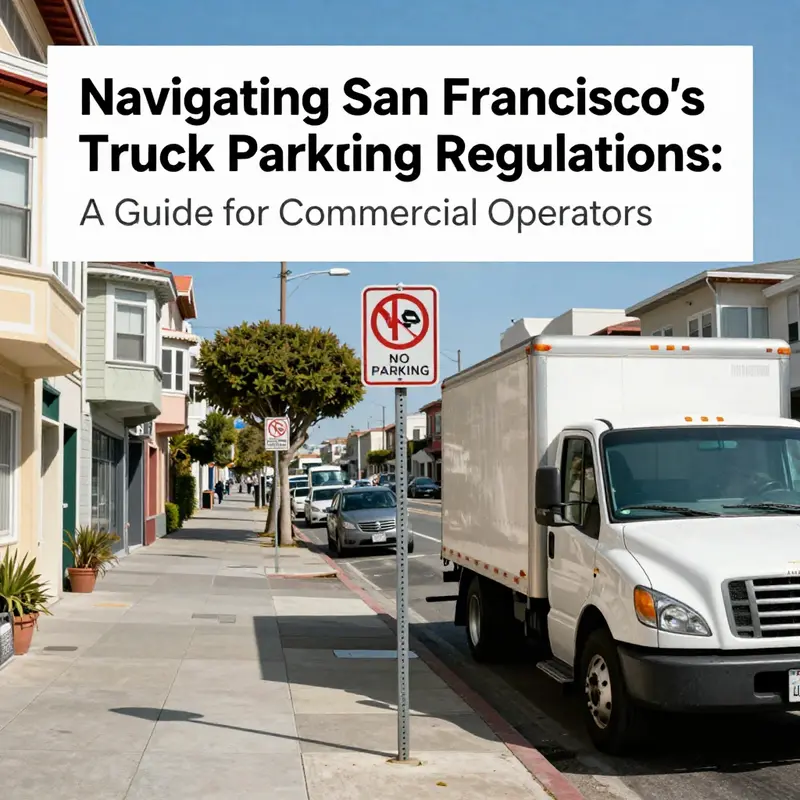
In the dense mosaic of San Francisco, where hills rise and streets narrow, the presence of large commercial trucks on residential blocks is both a practical necessity and a persistent policy challenge. Residents value quiet streets, safe sidewalks, and predictable curbside activity, and city planners respond by drawing strict lines around where big vehicles may linger. The result is a carefully balanced framework that seeks to accommodate commerce and service without eroding neighborhood livability. This balance rests on a core premise: commercial trucks cannot simply park where they wish in most residential areas. The city’s zoning rules, reinforced by specific parking standards, are designed to keep streets navigable for everyday residents, emergency vehicles, school buses, and the steady stream of pedestrians who define San Francisco’s urban character. The practical effect is clear in the daily experience of drivers who must plan routes and stopping points with an eye toward regulatory compliance as much as toward delivery deadlines or unloading needs.
The legal backbone of this approach sits in the San Francisco Municipal Code, particularly sections within the residential district provisions that govern parking by large vehicles. The city does not treat a freight vehicle the same as a passenger car when it comes to curb space. The rule most drivers encounter on residential streets is straightforward in its aim: do not park a commercial truck, tractor-trailer, or other large vehicle on a public street in a residential district for more than a short, defined period without permission. In practice, this has translated into a two-hour guideline commonly cited in enforcement discussions, though the exact wording rests in the official code and related administrative interpretations. The underlying rationale is safety and street health—large vehicles occupy space that is limited, may obstruct sightlines, and can impede the flow of traffic and pedestrians.
Of course, the city is not simply trying to deter parking; it also acknowledges that some operations require longer presence on-street in residential areas. For those cases, the Municipal Code provides a path forward: a special permit issued by the Department of Parking and Traffic (DPT). These permits are not a routine offering; they are reserved for specific operational needs that demonstrate justifiable and time-bound requirements. The permit mechanism functions as a controlled relief valve, ensuring that essential services—think deliveries to nearby businesses, emergency response support, or temporary loading during a community event—can occur without compromising neighborhood character. The permit process, while potentially burdensome, is designed to prevent ad hoc on-street parking that could otherwise become a chronic disruption. In sum, the default position is clear: long-term or overnight commercial truck parking in residential areas is generally not allowed, and any deviation from this rule must be anchored in a formal permit.
The two-hour limitation, while commonly referenced, is only part of the picture. Residential districts also impose explicit restrictions on overnight parking by commercial vehicles unless an authorized permit governs the arrangement. This aligns with broader city goals around noise, lighting, and late-night activity, all of which can interfere with the peace and safety that residents expect after dusk. The overnight prohibition is not simply punitive; it reflects a practical acknowledgment that darkness can magnify the risks associated with large parking vehicles in tight urban streets. Again, the permit mechanism stands as the official avenue to extend vehicle presence beyond typical daytime loading windows, and the rarity of such permits underscores the city’s preference for off-street or designated facilities whenever possible.
In daily practice, drivers often encounter time-restricted zones that permit only short-term loading or unloading, typically in a window short enough to prevent prolonged curb occupation. The most common interpretation is that these zones allow brief, work-related activity—loading or unloading a shipment—without turning the street into a long-term depot. The intent is not to interrupt commerce but to ensure that commercial activity on residential streets remains transient and predictable. When a truck operator contemplates parking on a residential block, the first questions are simple: Is the street within a residential district? Does the sign indicate a no-parking or loading zone? Would the activity require more time than the allowed limit? And crucially, can a permit be obtained to extend the necessary duration? The practical answer, grounded in the law and city practice, is that most residential parking scenarios do not permit long-term commercial vehicle parking without explicit authorization.
Beyond the letter of the code, the city has also considered the broader neighborhood impact. The 2025 Cruising for Parking study adds a useful dimension to this discussion. It suggests that while parking scarcity exists in some parts of the city, scarcity alone does not automatically translate into rampant cruising that cripples residential life or traffic flow. Rather, drivers often adjust by seeking more distant spaces when space is tight, which in turn reduces street-level friction in the most affected blocks. Yet the study stops short of suggesting that enforcement can be relaxed; it instead reinforces the idea that a well-enforced, predictable regime helps manage demand without creating unnecessary detours or wasted travel. In other words, the city’s approach to residential truck parking is not simply about restricting space; it is about shaping behavior in a way that preserves livability while allowing essential services to operate.
For commercial operators, the operational implications are real and concrete. The general prohibition on residential on-street parking means that long-term on-street parking is off the table in most neighborhoods. The recommended practice is to utilize designated commercial truck parking facilities, typically located near industrial corridors or areas with compatible land use. While the availability and exact locations of such facilities can vary over time, the guiding principle remains stable: plan ahead, and when possible, park off-street in a facility designed for heavy vehicle use. This approach protects neighborhoods from the kind of chronic curb occupation that can degrade safety and livability, and it creates a reliable baseline for city enforcement actions that rely on clear rules and predictable patterns.
The landscape of permissible options is not purely theoretical. There are practical, on-the-ground steps that operators can take to align with the rules and minimize risk. First, understand the permit process and the thresholds that require one. Even if a permit is unlikely to be granted for routine operations, documenting a recurring need can facilitate a temporary or emergency authorization when unusual circumstances arise. Second, identify off-street repositories of commercial space that can accommodate the vehicle during peak loading times or overnight periods. These facilities, situated near industrial corridors, offer a way to keep curbside residential streets clear while maintaining service commitments to customers. Third, cultivate a disciplined approach to loading and unloading. Short, planned stints in loading zones, where allowed, help minimize the time a vehicle spends on the curb. The goal is to preserve the character of residential neighborhoods while ensuring that essential supply chains remain functional.
It is worth repeating that the official stance is not simply an abstract legal stance; it is a set of actionable guidelines designed to reduce risk for residents, drivers, and the city alike. The regulations, while sometimes perceived as obstacles, reflect a broader commitment to balancing commercial vitality with neighborhood quality of life. This balancing act becomes particularly relevant in a city where street space is a finite resource and where the cumulative impact of even small parking decisions can ripple through traffic patterns, noise levels, and neighborly relations. The rules also reflect a broader principle common to many urban centers: when in doubt, off-street options and formal permits provide the cleanest path to continuing service without compromising the living fabric of the neighborhood.
For readers who want to connect these regulatory realities with the broader trucking industry context, it can be helpful to consider how market dynamics intersect with compliance. A useful entry point for this is the current trends in used-truck-sales-growth discussion, which tracks how demand, pricing, and fleet planning shape daily operational choices. This broader market lens helps explain why some operators may be tempted to push the envelope in search of shorter routes or faster deliveries, and why the city’s zoning framework remains essential for maintaining orderly alignments between supply chains and neighborhood life. See the broader market discussion here: current trends in used-truck-sales-growth. The link offers a longitudinal view of how fleet decisions, equipment availability, and regulatory constraints converge in real-world decision making, even as local ordinances remain the primary guardrails that govern curb space in residential districts.
To close the loop, consider the practical takeaway for anyone who drives or manages a fleet in San Francisco: residential street parking for large commercial vehicles is not a default option. It is a highly regulated space, reserved for brief, well-documented activity, and only in extraordinary cases, with the proper authorization, can a permit extend that presence. The strongest, most reliable path is to rely on off-street facilities designed for heavy vehicles and to work within the permit framework when a temporary or emergency need arises. This structure preserves neighborhood livability while quietly supporting the essential services that keep the city functioning. At a minimum, operators should stay informed about the exact wording of the municipal code sections that govern on-street parking in residential districts—most notably the provisions that limit parking duration, prohibit overnight stops without approval, and require permits for any extended presence. The official code remains the definitive guide, and the city’s public-facing materials reinforce the practical reality that compliance is the sensible default. For readers seeking the precise statutory language, the San Francisco Municipal Code page on these provisions is the definitive source: https://sfcitycodes.com/sfmc/12.08.030.
External resource: https://sfcitycodes.com/sfmc/12.08.030
Permitting the Park: Navigating San Francisco’s Restricted Path for Commercial Truck Parking in Residential Neighborhoods
When a city built on hills and dense blocks meets the practical needs of freight and delivery, the question of where a commercial truck can legally park in a residential neighborhood becomes a lens on urban governance itself. In San Francisco, the short answer is not simple: the default stance is a firm prohibition on commercial truck parking in most residential districts, especially for long durations or overnight stays. The city’s zoning and traffic regulations are designed to preserve neighborhood livability, minimize visual and physical encroachment, and reduce street clutter that can complicate everyday life for residents who share narrow streets, curbside spaces, and quiet corners with commercial fleets. That said, there is a formal pathway for rare exceptions—a permitting process that, while stringent and tightly scoped, exists to address truly temporary and necessary operational needs. Understanding this pathway is essential for anyone who operates a fleet and plans to work within San Francisco’s residential fabric without triggering enforcement actions or undermining neighborhood trust. The journey through this process is not a quick permit sprint; it is a multi-department, tightly regulated review that weighs the needs of a business against the character and safety of a community. It is a process built on communication, documentation, and a careful demonstration that temporary parking will not degrade the local environment or impede the daily rhythms of the neighborhood.
The starting point is the clear general prohibition. Residential districts in San Francisco are not designed to accommodate routine or long-term commercial vehicle parking. When a vehicle is parked on a residential street for an extended period, it can become a source of visual blight, ignore turn restrictions and loading zones, and contribute to congestion by occupying space that neighbors might need for parking, drop-offs, or emergency access. The city recognizes these tensions and responds with a framework meant to preserve what residents value: quiet streets, accessible sidewalks, and predictable daily patterns. The implication for operators is straightforward but consequential: before considering any parking plan in a residential zone, one must research and respect the rules that apply in that specific zone and prepare for a formal review if an exception is even plausibly warranted.
The permitting pathway is intentionally rigorous. It is designed not to enable routine practice but to resolve situations where a business has a genuine, temporary need that cannot be met in other locations. The review involves several city departments, each contributing a layer of scrutiny to ensure the proposal aligns with public safety, neighborhood impact, and land-use planning principles. The San Francisco Department of Transportation (SFMTA) leads the procedural framework around street use and curb space, but the Planning Department contributes the land-use and community impact lens, while the San Francisco Police Department adds safety and enforcement considerations. This triad of review is not a formality; it is a deliberate, time-consuming process that aims to prevent a permutation of residential parking from becoming a de facto industrial corridor. As a result, even a well-documented need may be met with a cautious, conditional response, or with a firm denial if the proposal is seen as incompatible with the surrounding area’s character or safety profile.
Eligibility hinges on a tight set of criteria. Applicants must convincingly show that the parking is temporary and that the need is essential to business operations, not a convenience or a workaround for logistical planning. The demonstration must also establish that the proposed arrangement will not adversely affect the community. This means providing a clear, practical plan for how long the vehicle will be parked, when it will arrive and depart, and how it will be managed to minimize disruption. Documentation is the currency of this process. Expect to assemble a package that outlines the nature of the business, the specific site or street segment involved, the anticipated duration of the parking, and a robust plan for neighbor notification and complaint management. A map or site plan showing the exact location, the footprint of the vehicle, and any adjacent driveways or access points is often essential. The more precise and transparent the submission, the better the odds of a constructive review. Yet even with meticulous preparation, the likelihood of approval remains limited. Permits, when granted, tend to be narrowly tailored—rarely covering long-term or recurring use. They may be issued for very short terms, verified through periodic reviews, or conditioned on specific time windows that reduce ongoing neighborhood impact. Operators should prepare for the possibility that a permit, if it arrives at all, will come with strict constraints on duration, frequency, and permitted hours.
The procedural steps are as important as the criteria themselves. A prospective applicant typically begins with a formal inquiry or pre-application consultation, which helps align expectations and clarifies which departments will participate in the review. The subsequent application requires comprehensive documentation, including evidence of temporary necessity and a plan showing that the proposed parking will not degrade safety or community well-being. The reviewers will cross-check the proposal against several policy and regulatory standards—zoning designations, street parking capacity, traffic safety considerations, and the potential for cumulative effects if multiple types of curb use are requested across a neighborhood. Because the project involves a shared public space, the process emphasizes transparency with residents: notice requirements, opportunities for public comment, and a clear mechanism for handling complaints during the permit’s life. The department’s decision is not final in isolation. It is subject to an interdepartmental assessment, sometimes including a site visit or a supplemental information request. The outcome can be a permit with conditions, a denial, or a request to modify the proposal to align better with community priorities. The complexity of the review explains why permits are rarely granted for long-term or routine use. It also underscores the value of exploring alternatives that satisfy business needs while preserving neighborhood integrity.
The documentation requirements, in practice, demand both rigor and clarity. Applicants should be prepared to demonstrate, with specificity, the temporary nature of the parking arrangement. This entails detailing the exact dates and time frames when the truck will be on the street, the planned duration of the stay, and the schedule for removal. The business necessity must be anchored in operational realities: a one-off relocation to accommodate a delivery surge, a temporary setback in access to a primary facility, or a short-term solution during a building renovation—all framed as exceptions rather than a new norm. Equally important is a robust community impact plan. This means outlining how noise, odors, lighting, and dust will be controlled; how delivery schedules will be spread to minimize peak-time congestion; and how residents will be informed of the truck’s presence and asked to report issues promptly. The plan should also include contingency measures for unplanned events, ensuring that the community has a predictable path to resolution if concerns arise.
Despite the thoroughness of the process, permits remain rare. When granted, they tend to be highly conditional, with explicit limits on duration, frequency, and location. They may be tied to a particular project or site, with a clear sunset clause and a schedule for renewal decisions. This design preserves the city’s ability to reassess impact as neighborhood dynamics change, and it keeps the door open for future requests only if the community impact remains manageable. The rarity of approvals is not just a bureaucratic quirk; it reflects a fundamental policy choice: to protect residential neighborhoods from becoming extended staging areas for commercial operations. In practice, operators often find that the most reliable path to meeting legitimate business needs lies not in arguing for a blanket permit but in locating parking closer to industrial zones and designated commercial parking facilities where the controls and security align with business and city requirements.
The discussion of permitting is incomplete without acknowledging practical alternatives. In San Francisco, several feasible options sit outside the residential street equation. The city encourages and, in many cases, requires using designated commercial truck parking facilities, typically located near industrial corridors. These facilities provide the safety, security, and operational efficiency required by modern fleets while keeping curb space available for residents and visitors in residential neighborhoods. In addition to dedicated lots, some businesses explore co-located solutions near business districts with appropriate zoning. For operators, the calculus involves weighing proximity and transit time against the certainty of space, the cost of parking, and the reliability of access. In other words, the decision to park in a residential area is not simply about space; it is about predictable access, community acceptance, and long-term feasibility. The city’s stance, reinforced by the permitting framework, is that the preferred long-term strategy is to align operations with non-residential parking ecosystems designed to support deliveries and freight without compromising neighborhood livability.
That said, understanding the process is invaluable for anyone evaluating location strategies. Even when a certificate of permission appears elusive, the very act of pursuing a permit can clarify whether a temporary need could be accommodated with minimal community disruption. It can also identify the exact data that would be required to support a future application, should circumstances change. The process serves a dual purpose: it enforces rules and, when handled thoughtfully, can reveal a transparent way to align business operations with urban policy. In the arc of urban logistics, this is often the most constructive outcome—an explicit, mutual understanding between a business seeking to operate and a city intent on preserving neighborhood character.
For readers seeking deeper guidance on how to approach formal procedures, the Planning Department’s official site provides the most current, authoritative information on application procedures, required documentation, and restrictions. It is a critical resource for anyone contemplating a permit in San Francisco’s residential districts. The process, though exacting, is not secret; it is codified, public, and intentionally thorough to balance the competing priorities at play in a dense, dynamic city. In the broader narrative of how commercial trucks navigate urban space, the permitting pathway reveals more than a set of rules. It exposes a philosophy about how cities manage growth, how communities exercise voice in development, and how fleets adapt to a landscape where space is a finite resource and safety is paramount.
As operators weigh their options, many find that the most reliable route to operational continuity lies in leveraging established commercial parking networks rather than bending residential rules to fit an urgent schedule. These networks are designed to offer predictable access, proximity to freight corridors, and compliance with local regulations, reducing the risk of confrontation with enforcement and the city’s long-term planning goals. Yet the knowledge of the permit pathway remains important. It keeps companies informed about the potential for exception scenarios and ensures that if a temporary need arises, it can be pursued in the most responsible manner possible. For readers who want to explore more about policy implications and fleet management considerations in this space, the following resource can provide additional context and practical perspectives: the McGrath Trucks blog. You can read more there for policy-focused discussions and real-world scenarios that intersect with urban parking rules. McGrath Trucks blog.
The broader takeaway from San Francisco’s permitting landscape is not simply a warning about the difficulty of residential parking for commercial fleets. It is a reminder of how cities regulate space, how communities participate in land-use decisions, and how operators can plan more resilient, compliant, and community-conscious operations. The city’s approach to permit reviews emphasizes transparency, accountability, and a careful balance of interests. It invites operators to design parking strategies that respect the fabric of neighborhoods while still enabling the mobility and service expectations that modern economies rely on. In practice, that balance rarely looks like a single policy win; it looks like a continuum of planning, documentation, dialogue with residents, and the readiness to adjust plans as conditions change.
Finally, while the permitting process is a road rarely traveled for long-term use, it remains an important part of the overall picture of whether commercial trucks can legally park in San Francisco’s residential spaces. The answer is nuanced: it can be possible in tightly controlled, temporary circumstances under strict conditions and fastidious oversight, but the default, safe, and policy-aligned choice is to use designated commercial parking facilities rather than residential streets. For readers who want the most authoritative, up-to-date procedural guidance, consult the official San Francisco Planning Department resources and the city’s regulatory framework. You will find the regulatory context, application mechanics, and the rationale behind the restrictions clearly outlined there. And for those who want a practical, experience-based perspective on policy implications and fleet optimization in difficult urban environments, the public-facing commentary in industry blogs and related resources can provide a helpful complement to the formal regulatory text. For official planning guidance and updates, visit the San Francisco Planning Department at https://sfplanning.org.
External resource: https://sfplanning.org.
Red Zones, Reroutes, and Regulated Racks: The Traffic Impacts of San Francisco’s Commercial Truck Parking Rules
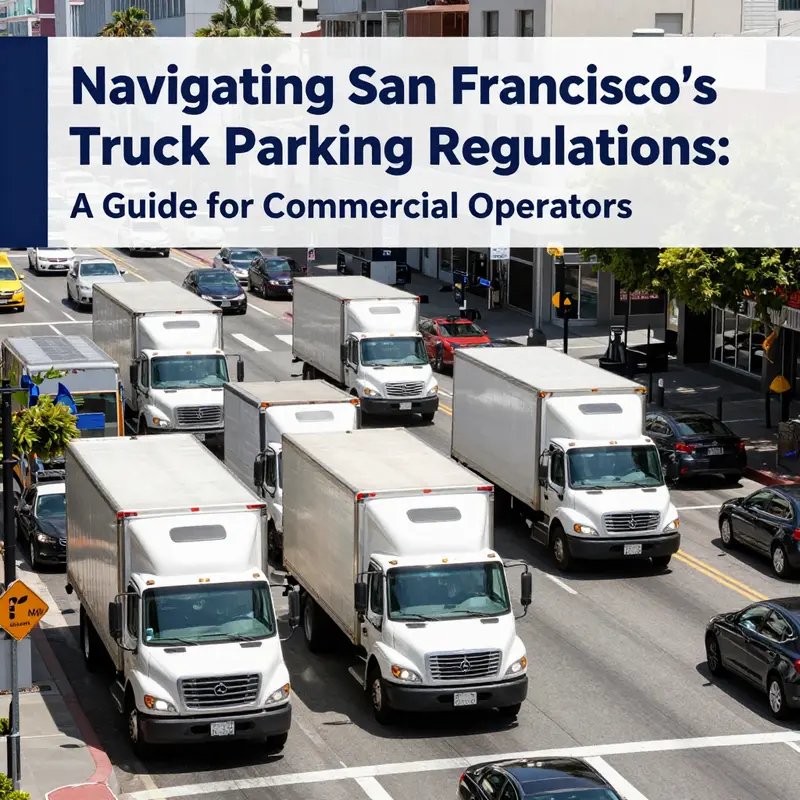
The city’s streets are a living map of competing demands. Residents crave quiet blocks, pedestrians seek safe sidewalks, and businesses rely on timely delivery of goods. In this delicate balancing act, San Francisco’s approach to commercial truck parking serves as a case study in how urban zoning, enforcement, and logistics intersect to shape traffic patterns. The core rule is explicit: in most residential areas, commercial trucks cannot park for extended periods or overnight. This is not a loosely observed norm but a formal constraint rooted in the city’s parking framework. The San Francisco Municipal Code, with its careful delineation of when and where large vehicles may linger, reflects a prioritization of livability and safety alongside the realities of goods movement. The practical upshot is that fleets must operate with a higher degree of planning and precision than before. Trucks must stay out of residential streets except within specific permits or designated time windows, and even then, the window is often limited to short-term loading or unloading. Such rules are enforced through signage, curb markings, and the work of city parking staff, all aimed at keeping residential blocks accessible and safe while avoiding the bottlenecks that arise when a curb becomes a de facto parking lot for commercial vehicles.
This regulatory framework is not merely a set of prohibitions; it is a logistical map that guides where trucks may wait, how long they can wait, and what kind of permits might be necessary to do legitimate work in a crowded city. In practice, this means that a delivery truck cannot simply pull onto a quiet residential street and wait for a customer or a dock to free up. It means that a lot of the city’s truck activity must be channeled toward designated facilities or industrial zones, where loading docks and security measures align with fleet operations. The distinction between residential and non-residential spaces matters not only for curb space but for safety and reliability in the downstream flow of urban traffic. When trucks are parked in residential areas, the risk is not merely a nuisance; it is a potential obstruction to through traffic, an impediment to emergency vehicles, and a point of conflict for pedestrians and cyclists navigating narrow streets.
The regulatory design aims to minimize these risks by forcing trucks to operate within a predictable set of locations and timeframes. In San Francisco, the Department of Parking and Traffic (DPT) manages permits that allow certain commercial activities to occur within the city’s zoning constraints. These permits are valuable, but they are also limited. They are typically reserved for businesses with documented, ongoing needs that justify temporary curtailment of the general ban on residential parking. For most fleets, the default expectation is clear: residential blocks stay off-limits for parking, and trucks must either use time-limited loading zones or relocate to nonresidential spaces where parking is expressly permitted.
The enforcement landscape accompanies this framework. No Parking signs, curb markings, and posted time limits together create a predictable environment for residents. For commercial operators, the rules are less about inconvenience and more about maintaining public space for everyday life. When a vehicle is unable to comply, it is required to display warning devices if it becomes disabled in a way that could pose a hazard to other drivers. The emphasis on visible warning signals is part of a broader safety strategy that acknowledges the real-world consequences of the city’s parking rules: a disabled truck on a busy block can quickly become a hazard, forcing other drivers to make abrupt maneuvers in close quarters.
Yet even as these rules are designed to protect livability and safety, they inevitably affect how traffic behaves on a lane-by-lane basis. The broad citywide effect is filtered through a few key dynamics. First, restriction in residential zones reduces the incidence of slow-moving platoons formed by idling commercial vehicles blocking curb lanes. When trucks cannot linger in the most congested or quiet blocks, the normal course of traffic is less disrupted by loading activity and by the kinds of temporary stands that often reduce throughput for other travelers. Second, the enforcement of time windows or loading-only periods can push some activity to off-peak hours, which gradually reshapes the daily travel pattern of fleets. In other words, when the curb is off-limits for long-term parking, fleets may adjust their schedules to align with the city’s loading windows, creating minor shifts in peak traffic loads rather than dramatic spikes in congestion.
A portion of the literature on parking and urban mobility has focused on the phenomenon commonly described as cruising for parking. The 2025 Cruising for Parking study, which examines how drivers search for spots, suggests that the scarcity of parking—whether in residential streets or commercial districts—does not automatically translate into excessive cruising or worsening congestion. In fact, the study notes that drivers often adjust their behavior in ways that reduce idle time or even avoid driving altogether when parking spaces appear unavailable. This insight helps to explain why the impact of commercial truck parking rules on citywide traffic is not a simple cause-and-effect equation. The enforcement of parking bans in residential zones may create short-term detours or longer trips to designated facilities, but it does not necessarily ignite a citywide surge in traffic. The system, when designed with accurate signals and predictable enforcement, tends to self-regulate as drivers weigh perceived availability against travel costs.
Empirical work drawing on San Francisco’s SFpark program corroborates a nuanced picture. SFpark, an ambitious payoff of dynamic pricing and smart signaling for on-street parking, showed that the time spent searching for parking could be reduced by roughly a third when the system operated effectively. While SFpark’s primary focus is on on-street parking for passenger vehicles, the underlying principle—structured information, timely signaling, and responsive enforcement—translates to commercial parking as well. When fleet operators can reliably anticipate where trucks can legally park and for how long, there is less incentive to circle endlessly in search of scarce curb space. In cities that implement similar data- and rule-driven approaches, the friction of parking scarcity appears to be moderated. The upshot is that well-designed regulations can suppress the negative externalities of truck parking without significantly inflating total travel demand.
Despite these observations, the restriction on residential parking does impose a form of friction that fleets must accommodate. Small and mid-sized operators often face a higher relative cost for compliance because the permit processes can be lengthy and the available slots limited. In San Francisco, the permit system is designed to ensure that those with legitimate operational needs can access curb space in a controlled way, but it does not guarantee universal access. For most operators, the practical implication is a more deliberate approach to deliveries and to routing. Planning becomes crucial: deliveries are scheduled to align with the permitted windows, routes are optimized to minimize deadheading, and parking is reserved in advance at designated facilities near industrial zones where loading infrastructure is readily available. The fact that these facilities exist in areas like SoMa, Hunters Point, or the Richmond District is not a sign of inefficiency but a reflection of urban logistics adapting to a dense, mixed-use fabric. In place of a sprawling, universal curb parking supply for commercial trucks, the city offers a more targeted architecture that channels activity toward spaces designed to absorb it without compromising residential life.
A useful way to think about the policy’s impact is through the lens of demand elasticity. When the curb is not available, trucks must either wait at a proper facility or time their moves to non-residential windows. This is not a punitive regime; it is a transparency-driven regime. The predictable nature of the rules means operators can build schedules, allocate drivers, and coordinate with customers in a way that reduces the likelihood of last-minute detours. The result is a city that remains functional for delivery and service while preserving the quiet, safe neighborhoods that residents expect. The policy also nudges the broader logistics ecosystem toward more robust, zone-based planning. If a district experiences regular deliveries, it may develop a more formalized partnership with nearby industrial zones to ensure a steady, compliant flow of trucks without compromising the daily rhythm of the streets. In this sense, the traffic implications of San Francisco’s truck parking regulations are not merely about where a vehicle sits for an hour; they are about how a city organizes the choreography of movement in a place where space is at a premium.
From a fleet-management perspective, the practical implications are clear. Operators must measure the cost of compliance against the benefits of timely deliveries. The city’s zoning rules and permit structures provide a framework within which fleets can plan, but they also demand discipline. Pre-trip planning becomes essential: determining which loads require a permit, identifying the earliest possible loading windows, and coordinating with customers to ensure that deliveries occur within authorized periods. The policy also encourages fleets to expand their use of nonresidential parking facilities that are expressly designed for commercial vehicles. These facilities, located in or near industrial corridors, reduce the friction on residential streets and provide a safe, secure alternative for parking between runs. The peripatetic nature of urban freight moves—often malleable to time constraints, road conditions, and dock availability—benefits from predictable, well-signed spaces that can be clearly distinguished from passenger-vehicle zones. In this light, the restrictions are not merely constraints but a form of infrastructure: a lattice that, if understood and respected, can make urban freight more efficient and safer for everyone.
The broader public-interest dimension also deserves attention. The policy’s aim is not simply to reduce nuisance or to curb congestion; it is to protect vulnerable road users and preserve the character of residential neighborhoods. By limiting long-term parking on residential streets, the city helps keep curb space accessible for residents, street-cleaning schedules, and the everyday cadence of neighborhood life. The enforcement strategy, which includes warnings and the use of display devices for disabled commercial vehicles, underscores the emphasis on safety and predictable travel conditions. When a truck cannot comply with curb-space rules, the responsible course is to move to a permitted location where it can perform its duties without obstructing traffic or creating hazards. In this sense, the regulations contribute to a safer, more efficient, and more predictable cityscape, even as they impose additional steps for fleets to plan and execute their operations.
For readers seeking a deeper dive into the regulatory texts that anchor these changes, the broader regulatory environment in neighboring jurisdictions can offer comparative insight. In the context of nearby urban settings, official codes provide a complementary perspective on how cities grapple with the same core challenge: how to enable essential goods movement while maintaining the livability and safety of densely populated neighborhoods. To connect with that regulatory backbone, readers can consult the formal regulatory text here: City of South San Francisco Vehicle and Traffic Code 11-40-220.
Those navigating the day-to-day realities of urban trucking in San Francisco can also benefit from industry narratives that translate policy into practice. For broader industry context and analysis on how policy interacts with fleet operations, practitioners often turn to trade insights and commentary available in professional blogs. A thoughtful synthesis can be found in the McGrath Trucks blog, which explores the connection between regulatory design, fleet planning, and the economics of urban freight. See the discussion at McGrath Trucks blog for a community-informed perspective that complements the regulatory narrative presented here.
In sum, San Francisco’s commercial truck parking rules in residential areas are a deliberate policy choice. They aim to protect the everyday life of neighborhoods while recognizing the indispensable role of trucks in urban economies. The traffic implications are complex but manageable. Through permit systems, clear signage, and the strategic use of designated parking facilities, the city seeks to reduce curb-side congestion and enhance safety. While there will inevitably be friction for fleets—more planning, tighter scheduling, and a reliance on nonresidential spaces—the overarching pattern is one of a city that treats parking regulation as a form of urban design. The end goal is a balance: a street network that remains navigable for all users, where essential goods can move efficiently without compromising the quality of life that makes neighborhoods livable.
From Street Restrictions to Purpose-Built Parking: Mapping San Francisco’s Designated Commercial Truck Parking
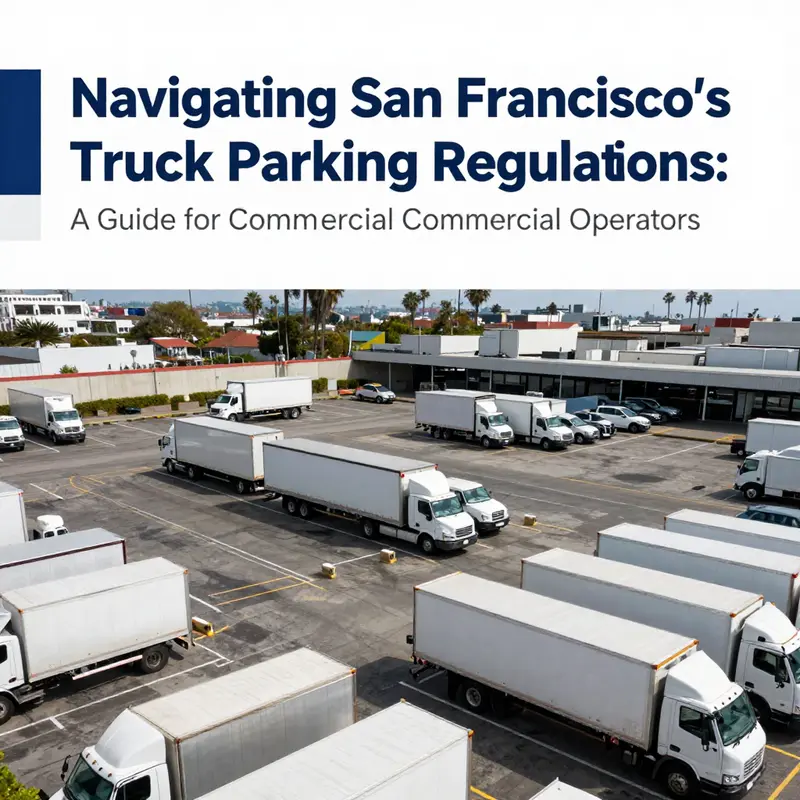
In San Francisco, the tug of war between urban livability and the demands of freight mobility is played out at the curb. The city’s approach to commercial truck parking in residential neighborhoods rests on a simple principle: protect the quiet, safe, and human scale of the living streets that define communities. This means that in most residential zones, trucks cannot park for extended periods or overnight. The framework behind this stance is codified in the San Francisco Municipal Code, which governs where a delivery vehicle, moving van, or freight carrying truck may pause, wait, or dwell. For drivers and fleet managers, the practical implication is clear: the overnight layover or long-term parking you might have assumed feasible on a quiet block will not commute under standard rules. The city’s intent is not to hamstring commerce but to prevent curbside bottlenecks, preserve pedestrian comfort, and avoid turning residential streets into makeshift loading docks. The enforcement of these provisions tends to be strict enough that a long-term residential curbside stay is rarely contemplated as permissible without a formal permit or a narrowly defined time window.\n\nWithin this regulatory landscape, the SF Department of Parking and Traffic (DPT) remains the gatekeeper for any exceptions or flexibility. Permits for commercial vehicle parking are issued, but they are not issued lightly. They are typically reserved for established businesses that can demonstrate a genuine need, such as regular, scheduled deliveries in areas where on-street parking is otherwise scarce, or for specific operations where loading or unloading can be choreographed to minimize disruption. Even with a permit, the rules are precise: time-limited loading zones exist to accommodate short-term activity, and any indication of long-term occupation of a residential block tends to trigger scrutiny, and often a revocation of privilege. These controls reflect a broader urban planning philosophy: curb space is a scarce and valuable resource that must be allocated to balance the needs of residents, commuters, and the daily rhythms of commerce.\n\nThe conversation about parking in San Francisco has not been static, and recent studies have added texture to the debate. The city’s 2025 Cruising for Parking analysis acknowledges that parking scarcity exists, especially in dense neighborhoods and near transit corridors. Yet the study also notes an interesting behavioral thread: when space is tight, drivers often adjust by accepting farther spots or by timing trips to off-peak hours. The implication is not that scarcity creates gridlock, but that it reinforces the value of clear rules and consistent enforcement. In practical terms for commercial operators, this means that the easiest path is not to probe the margins of legality but to align with the city’s expectations through designated facilities. The research emphasizes that enforcement, while potentially inconvenient, serves a larger goal—sustaining community livability while keeping freight moving in a predictable, compliant manner.\n\nFor truck operators working within or near San Francisco, the most reliable path to legal parking begins with an awareness of where designated facilities exist and how they fit into daily operations. The city itself has a limited number of spaces that are explicitly carved out for commercial parking, reflecting the constraints of a densely built and topographically diverse region. The overarching strategy is straightforward: rely on facilities that are designed to accommodate trucks, rather than attempting to repurpose residential blocks as temporary truck stops. This alignment is not simply about compliance; it is about efficiency and reliability. When a driver knows where a designated space is located, and when a fleet manager can foresee the cost and time implications of using that space, planning becomes smoother and risk is reduced. In this sense, the issue of whether a truck can park in a residential street becomes a question of logistics, not just law.\n\nAmong the limited but real options for designated truck parking in the broader Bay Area, two facilities stand out for their proximity to San Francisco and their practical utility for drivers seeking secure, lawful spaces. The first is a secure storage and parking facility located just outside the city limits in Richmond. This option is not within San Francisco’s municipal boundaries, yet its location makes it a practical choice for drivers who need long-term or overnight parking with a level of security and predictable access that residential streets simply cannot offer. The facility is described in industry resources as a reliable option for commercial truck parking near the Bay Area, providing secure storage and a manageable point of contact for scheduling and access. It represents the archetype of the off-street, fenced, monitored parking solution that many operators hope to find as the city continues to balance enforcement with accessibility. While not a within-city solution, the Richmond location serves an important role by relieving demand pressure on residential blocks and offering a legitimate alternative for fleets with routes that surface through the East Bay or into the broader Peninsula region.\n\nThe second option is closer to a traditional urban hub in terms of traveler convenience but remains outside the core city itself. A federally designated hotel property near San Francisco International Airport has been identified as a convenient, short-term parking option for truck operators who require a secure space with easy access to air connections or rail links. The property offers 24-hour front-desk support and on-site parking, and it benefits from proximity to transit options, including a nearby rail stop that can connect drivers to regional networks. For drivers who need to stage a vehicle for a quick layover before an early-morning load or who prefer a place to rest close to a major air gateway, this kind of arrangement can be preferable to attempting to park on a residential street. The hotel-like setting underscores an essential point: designated truck parking does not demand a luxury experience, but it does require predictable security, accessible access points, and a reasonable proximity to the routes that drivers must serve.\n\nTo help drivers navigate this patchwork of rules and spaces, industry practitioners and policymakers emphasize a practical toolkit that centers on official guidance and reputable listing sources. The San Francisco Municipal Transportation Agency (SFMTA) remains the primary public authority for updates on parking regulations, enforcement practices, and permit processes. Keeping channels open with the SFMTA and the local traffic engineer can prevent missteps, such as assuming a space is permissible during a permitted window or misreading a time-restricted zone. In addition, there are digital tools that many operators find indispensable. Truck-focused parking apps offer real-time data on space availability, pricing, and restrictions, helping fleets align their routes and layovers with current conditions on the curb. Platforms like Truckstop, TruckParking.com, and Samsara are cited as resources drivers consult to minimize deadheading and time spent seeking lawful spaces. These apps reduce the uncertainty that comes with urban parking and give drivers the confidence to plan ahead rather than improvise in response to a sudden no-parking sign.\n\nThe broader conclusion from analyses of San Francisco’s parking regime is not that the city is unfriendly to freight—but that it deliberately channels commercial parking toward spaces designed to accommodate the scale and security demands of trucks. The rules around residential parking are not arbitrary; they reflect a careful attempt to balance the quality of life in neighborhoods with the reality that freight movement is integral to the economy. The result is a parking ecosystem where on-street space is reserved for residents and for limited, time-bounded loading, while off-street facilities provide a predictable alternative for longer stays, higher-security needs, and more complex scheduling. In this framework, the ideal workflow for a truck operator becomes clear: secure access to a designated facility when overnight or extended parking is needed, verify the current rules before arrival, and use trusted information channels to confirm that a given space remains compliant and available.\n\nWithin this context, a careful look at the two principal types of designated spaces illustrates the practical realities of urban freight today. The Richmond facility represents the longer-range, strategic option. Its appeal lies in stability and security, which are often at a premium for fleets operating in a crowded metropolitan region. Long-term parking arrangements reduce the risk of missed deliveries caused by last-minute searches for curb space and lessen the likelihood of tickets or towing actions that can disrupt a driver’s day and a carrier’s schedule. The trade-offs include distance from San Francisco’s core and the added time and fuel costs that can accompany a longer return leg into the city. Yet for a fleet that runs anchored routes into and out of the East Bay or the North Bay, the Richmond option becomes a practical and cost-efficient staging point.\n\nThe airport-adjacent option emphasizes flexibility and rapid access. Short-term parking near major transit nodes can be particularly attractive for drivers who need to consolidate operations quickly, pick up or drop off loads near air or rail-connected hubs, or coordinate a tight schedule that requires a fast turnaround. While not all drivers will find this option suitable for every shift, the flexibility it provides can be a strategic fit for certain routes and shifts, especially those that involve cross-town trips that hinge on reliable access to a loading zone near the city’s transit backbone.\n\nOne of the most powerful takeaways for operators is the importance of keeping pace with regulatory changes and the evolving map of designated facilities. Parking rules are not static; they shift with enforcement priorities, land use decisions, and the city’s broader traffic management objectives. Moreover, the availability of designated spaces can become constrained as demand intensifies or as nearby development alters the curb configuration. In other words, the existence of a designated facility today does not guarantee universal access tomorrow. Operators must therefore build flexibility into their planning, maintain current information about facility access, and cultivate relationships with the managers of the spaces they rely on. The combination of regulatory clarity, reliable parking options, and well-timed logistics can translate into smoother operations, fewer interruptions, and a reduced risk of penalties that can erode margins.\n\nFrom a fleet-management perspective, this landscape shapes how companies think about route design and asset utilization. If a firm knows that on-street parking in residential blocks is likely to be restricted, it can route more trips through designated facilities, converting what might have been an improvisational stop into a formal, pre-approved stop with predictable timing. It also encourages a more deliberate approach to overnight parking. Rather than staking out a curb on a quiet street and hoping for leniency, operators can reserve space in a designated facility with clear access controls and security features. Such spaces may come with cost implications, but they also offer reliability, which in a freight operation can translate into less risk for fees, tow-away penalties, or delays that ripple through the supply chain.\n\nThe practical recommendation for drivers, then, is straightforward. Before pulling into any neighborhood on a routine or non-routine basis, verify the current parking rules and seek out the designated facilities described in regulatory guidance and industry recommendations. If a long-term stop is necessary, prepare to access a permit or arrange a space through a recognized facility rather than attempting to park on a residential block. When a short layover is needed, prioritize time-limited loading zones as allowed and plan for a swift turnover that minimizes disruption to residents while adhering to the city’s expectations. In addition, stay connected with credible data sources about space availability, such as the truck parking apps that offer real-time guidance. These practices reduce the friction associated with urban parking and align operational realities with the city’s policy framework.\n\nTo tie this discussion back to broader industry dynamics, consider how designating dedicated spaces fits into a wider narrative about the trucking economy. A fleet that can reliably access secure off-street parking reduces the risk of ticketing and impoundments, which in turn supports more predictable maintenance windows, fuel budgeting, and driver rest schedules. This, in turn, enhances driver well-being and retention, which are increasingly recognized as core components of efficiency in the modern freight landscape. The city’s stance on residential parking is strict, rule-based, and enforceable, and it interacts with market pressures to shape a workable compromise: keep essential freight moving while preserving the character and livability of residential districts. The outcome is not a single perfect solution but a mosaic of rules, facilities, and best practices that, when used judiciously, can help trucks navigate a dense urban environment without compromising community quality of life.\n\nFor readers interested in how these dynamics relate to the broader trucking ecosystem, a deeper dive into industry perspectives on market shifts and equipment strategies can provide useful context. See the discussion on current trends in used-truck sales growth. This lens helps explain why designated parking facilities matter: as fleets optimize asset utilization, predictable parking becomes part of the cost model and the service reliability that customers expect.\n\nIn sum, the question of whether commercial trucks can park in San Francisco’s residential neighborhoods is not a simple yes or no. It is a question about how the urban form, regulatory regime, and market realities converge to shape a pragmatic parking ecosystem. The answer rests in recognizing the city’s emphasis on livability, the limited but meaningful array of designated parking facilities, and the practical tools that drivers can use to stay compliant and productive. By aligning operations with these realities, fleets can maintain reliable service while honoring the curb space that residents rely on daily. The journey from street restrictions to purpose-built parking is an ongoing process that reflects the city’s commitment to balancing vibrant urban life with the essential movement of goods.
Final thoughts
Understanding the parking restrictions for commercial trucks in San Francisco’s residential areas is essential for compliance and operational efficiency. The city’s strict regulations aim to enhance community livability, preventing congestion while promoting smoother traffic flows. By engaging with the permitting process and utilizing designated parking facilities, trucking operators can navigate these challenges effectively. It’s clear that awareness of the governed parking rules not only aids in legal compliance but also contributes positively to the overall logistics ecosystem. This guidance is imperative for all stakeholders involved, ensuring that business operations can continue seamlessly within the city’s framework.