The commercial trucking industry is a vital component of the U.S. economy, transporting goods across the nation. However, it is also plagued by a significant number of accidents each year, raising concerns about safety and operational efficiency. This article delves into the prevalence of accidents involving commercial truck drivers, highlighting that approximately 500,000 truck accidents occur annually in the United States. The analysis will explore the various influencing factors that contribute to these accidents, from driver behavior to external challenges. Furthermore, it will discuss safety measures and regulations designed to mitigate these risks and provide insights through a comparative analysis of accident rates between commercial truck drivers and other categories of drivers. Through this comprehensive examination, trucking company owners, fleet managers, procurement teams, and logistics firms will gain a deeper understanding of the accident landscape within the industry, empowering them to implement strategies to enhance safety and operational effectiveness.
null
null
A Preface to Truck Safety: Driver Behavior, Vehicle Health, and Systemic Pressures
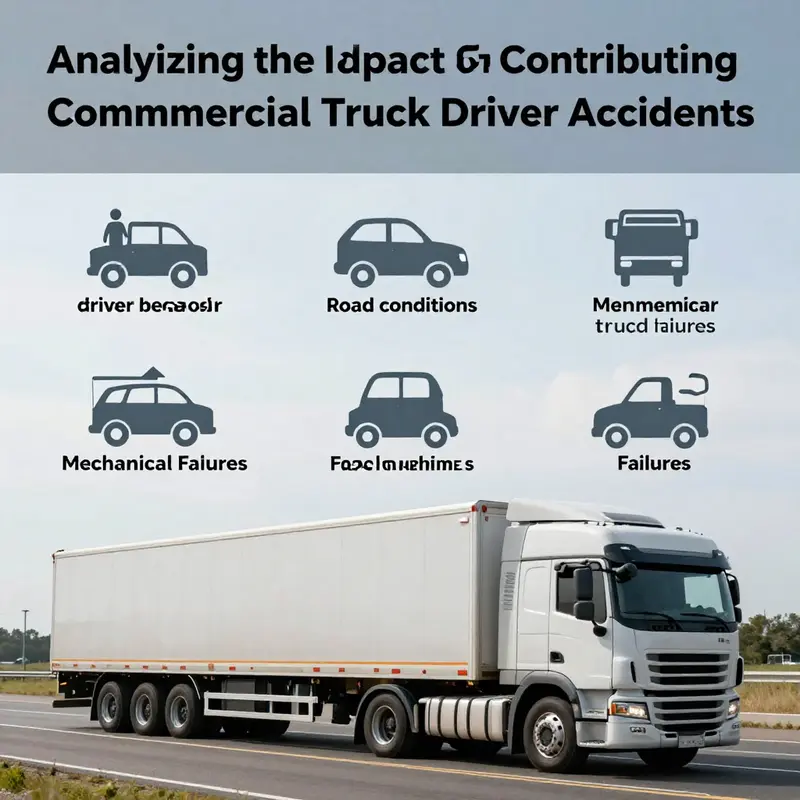
This chapter surveys how driver behavior, vehicle condition, and organizational pressures shape crash risk in the trucking industry. It describes how fatigue, stress, and inattention interact with equipment failures, loading practices, weather, and road design to influence safety on real roads. The discussion emphasizes that no single factor explains crashes; instead, risk emerges from the interaction of human, mechanical, environmental, and systemic dimensions. It highlights that driver fatigue and speeding contribute significantly to crash risk, and that vehicle maintenance and load securement play critical roles in stability and braking performance. Environmental conditions and temporal factors such as nighttime driving increase risk, while organizational culture and incentives can amplify unsafe practices if safety is deprioritized. The chapter closes with practical implications for policy makers, fleet managers, and drivers, arguing for a holistic prevention framework that combines effective training, rigorous maintenance, disciplined fatigue management, proper load securement, and safety-centered performance metrics. It notes that academic studies, including MDPI and other sources, support a multi-layered approach to reducing crashes and improving overall road safety in the trucking sector.
Guardrails on the Highway: How Safety Rules Shape Commercial Truck Accident Outcomes
The roadways carry a fraction of the fleet that moves the economy, yet the consequences of crashes involving commercial trucks reverberate far beyond a single collision. When the nation contends with roughly 500,000 truck accidents each year, the question that leadership and fleets continuously ask is not only how many incidents occur, but how many of them might be prevented by choosing safety as a first principle. This chapter follows that thread, weaving together the scale of the problem with the regulatory architecture that seeks to lower risk, reduce fatigue, curb dangerous driving behaviors, and keep mechanical faults from becoming fatal. It is a narrative about guardrails, not accidents—the steady, measurable ways that rules, training, and monitoring shape behavior on the highway and, by extension, the likelihood of a crash.
From the outset, the statistics anchor the discussion. The sheer volume of annual truck crashes signals that risk is not confined to a few outliers but is distributed across fleets, routes, and duty cycles. The numbers also illuminate a troubling pattern: research indicates that more than 90 percent of traffic accidents are linked to unsafe driving behaviors. This framing matters because it frames safety as something that can be influenced by human factors as much as by vehicle design or road conditions. If two-thirds of incidents hinge on driver actions, then the impact of policy, training, and monitoring becomes not just a regulatory obligation but a practical path to safer roads. Within that landscape, the FMCSA’s regulatory toolkit emerges as a mapped route toward reducing the friction points that commonly precipitate a crash: fatigue, distraction, improper load handling, and insufficient maintenance.
A central pillar of that toolkit is Hours of Service regulation, designed to prevent fatigue from turning a long haul into a high-risk proposition. The rule set imposes clear limits: a driver may operate a commercial motor vehicle for up to 11 hours after 10 consecutive hours off duty, with a mandatory 30–minute break after eight hours of driving, and a weekly cap that tightens further depending on the seven- or eight-day work window. These limits acknowledge what fatigue research has long suggested: performance degradation compounds with time behind the wheel, especially in the absence of restorative rest. Fatigue is not a single moment of sleepiness; it is a cumulative condition that reduces reaction times, impairs judgment, and erodes the capacity to manage complex driving tasks such as counter-steering, lane maintenance, and speed regulation in dynamic traffic. By enforcing rest periods and predictable work cycles, the regulation seeks to align driving with human circadian rhythms and the practicalities of long-haul operations.
The requirement for regular, systemic maintenance of commercial vehicles is another essential line of defense against crashes. The FMCSA’s vehicle maintenance framework champions pre-trip inspections and ongoing maintenance schedules that help identify mechanical failures before they become roadside emergencies. A pre-trip inspection is not a perfunctory ritual but a diagnostic routine that looks for brake wear, tire integrity, lighting, steering components, and suspension health. When fleets implement rigorous inspection protocols, they reduce the probability that a latent fault—say, a tire with uneven wear or a brake line with a slow leak—will fail at highway speeds or in adverse weather. The preventive ethos is reinforced by the scheduling of periodic maintenance, a disciplined calendar that ensures fluid checks, brake service, wheel alignment, and electronic system diagnostics stay current. Although a single defect may not predict a catastrophe, the aggregation of multiple, overlooked issues can compromise control, extend stopping distances, and amplify the consequences of bad weather or evasive maneuvers on busy interstates.
Electronic Logging Devices (ELDs) stand as a modern nerve center for accountability and safety discipline. By providing an accurate, tamper-resistant ledger of driving time, ELDs reduce the temptation to dichotomize compliance from performance. When hours-of-service compliance is traceable in real time, fleets and drivers alike develop better expectations about rest and workload balance. The practical effect is twofold: reduced risk from fatigue and better visibility into patterns that have historically preceded fatigue-related incidents, such as back-to-back long runs, late-night driving, or routes with frequent urban stops that disrupt regular rest cycles. It is a subtle yet powerful shift—moving from a reliance on memory and manual logs to data-driven oversight that can flag risky patterns early and nudge behavior toward safer norms.
The safety net extends to driver fitness and training, a domain that the FMCSA treats as foundational rather than optional. The licensing framework ensures that only qualified individuals operate large commercial trucks. Medical examinations screen for conditions that could impair performance or sudden health events, and background checks screen for disqualifying offenses that correlate with higher risk on the road. Specialized training becomes critical when drivers handle hazardous materials or operate particular vehicle configurations. In practice, this emphasis on competency translates into more predictable driving performance, especially when confronted with the unexpected—the split-second decision to merge in heavy traffic, the skillful sway to stabilize a trailer during a wind gust, or the calm, methodical action required when braking on an icy ramp.
Regulatory compliance also encompasses how incidents are investigated and how sanctions are applied when violations are found. The FMCSA’s framework ensures accountability, not merely compliance theater. When accidents occur, investigations aim to pinpoint whether regulation breaches contributed to the outcome, whether fatigue was a factor, whether maintenance lapses occurred, or whether a driver’s qualification or medical status played a role. The result is a feedback loop: regulatory findings can trigger corrective actions, changes in operating practices, or more stringent monitoring for specific carriers. This ongoing cycle of inspection, enforcement, and remediation is the industry’s mechanism for translating safety policy into everyday practice. The role of enforcement should not be romanticized as punitive; rather, it functions as a disciplined approach to align incentives—flawless maintenance, transparent hours, and ongoing training—with safer road behavior.
The data landscape cited in contemporary research intensifies the argument for these safety measures. The vast scale of trucking accidents underscores the urgency, while the observed prevalence of risky driving behaviors points to specific intervention points. Speeding, aggressive following, improper lane changes, and other high-risk behaviors contribute disproportionately to crashes. In digital tachograph studies and other data-driven analyses, substantial portions of the driver workforce exhibit behaviors that raise risk, signaling not only the existence of the problem but also the opportunity for targeted reforms. The FMCSA’s rule set, including real-time monitoring and post-accident analyses, provides a structured approach to translating this risk information into practical changes across fleets of different sizes and operating conditions.
A nuanced element of the safety equation is the role of substance use and testing programs. The literature notes that random drug screening and related programs are under evaluation for their impact on fatal accidents. While the data are not yet definitive about the precise magnitude of risk reduction attributable to testing, the underlying rationale is clear: reducing impairment through screening and intervention can disrupt a pathway to poor judgment and delayed reaction times. The emphasis on screening is part of a broader safety culture that seeks to deter impairment, support early intervention, and reinforce the expectation that safety comes first in every mile driven. The challenge remains translating generalized risk reduction into measurable outcomes, especially given the many variables that influence accident risk on any given trip—from weather and traffic to cargo type and route complexity.
Against this backdrop, how do we connect policy with practice? The answer lies in the integration of regulation, training, and continuous improvement across the fleet landscape. The regulatory rules provide guardrails, but the daily effect hinges on how fleets operationalize them. A company that invests in robust driver training, accurate maintenance records, and reliable data systems creates an environment where safety is prioritized and tightly monitored. Drivers in such environments tend to internalize a safety-first mindset, not because they fear penalties, but because they experience the practical benefits of safe practices—the smoother flow of a trip, fewer delays due to mechanical issues, and the confidence that comes with predictability on the road. When fatigue is managed, when maintenance is proactive, and when drivers are well prepared for the specifics of each load and route, the odds shift toward fewer dangerous events and shorter, less severe incidents rather than catastrophic crashes.
The regulatory architecture is inherently dynamic, reflecting evolving understandings of risk and the changing landscape of trucking operations. It is not a static set of rules but a living framework that adapts to new technologies, new driver training paradigms, and new data-driven insights about what actually reduces risk. In this sense, the FMCSA’s measures act as a compass for the industry, guiding carrier decisions on scheduling, maintenance, and workforce development. For fleets, the implication is that compliance, when approached as a holistic safety strategy rather than a paperwork burden, becomes a differentiator in an increasingly competitive environment. For drivers, it translates into clearer expectations, better rest, and more predictable work rhythms that support sustained attention and safer driving over long careers on the road.
When observers ask whether commercial truck drivers get into more accidents than other drivers, the best answer centers on risk and context. The industry has a higher risk profile due to vehicle size, load dynamics, and the sheer exposure of long-haul driving. Yet the same safety framework that identifies these risks also provides a practical path to reducing them. By enforcing deliberate rest cycles, mandating rigorous maintenance, leveraging real-time data through ELDs, ensuring driver fitness and training, and applying disciplined incident investigations, regulators and industry players actively shape the conditions under which driving occurs. The aim is not to eliminate all risk—risk is intrinsic to transportation—but to align the conditions of driving with capabilities, to shorten the odds of disproportionate harm, and to ensure that the consequences of a rare error do not escalate into a tragedy on the highway.
For readers who want to explore industry context further, there is value in stepping back and noticing how these guardrails interact with business realities. Fleets vary in scale, routes, and cargo, yet the safety framework remains a common language that unites disparate operations around a shared objective: safer roads and safer drivers. Where a small regional carrier may favor tighter scheduling control and meticulous maintenance logs, a national fleet may rely on advanced telematics and data analytics to spot fatigue indicators and maintenance needs long before a fault becomes visible. In either case, the principle endures: safety is a continuous investment, not a one-time compliance checkpoint. And while the data on active drivers is complex and sometimes incomplete, the momentum behind these measures is anchored in a simple truth—when drivers are rested, trained, and supported by vigilant maintenance and data-informed oversight, the road becomes a safer place for everyone who shares it.
To readers seeking broader perspectives on how these themes play out in practice, the ongoing dialogue within the trucking community and among policymakers offers practical insights and evolving best practices. For industry perspectives, see mcgrathtrucks.com/blog/. It is through such exchange that the nuanced lessons gathered from thousands of miles of operation—lessons about fatigue, distraction, and the value of proactive maintenance—take root in real-world decision making. And for those who want to anchor their understanding in official statistics and regulatory tracking, the FMCSA Crash Data portal remains a critical resource, offering up-to-date, data-driven insights into crash trends and the effectiveness of safety interventions. The road ahead will continue to test these safeguards, but the trajectory is clear: safety-focused regulation, complemented by disciplined operation and continuous improvement, is the most reliable path to lowering accident risk in commercial trucking.
External reference: For official statistics and regulatory data, consult the FMCSA Crash Data portal as a foundational resource to understand crash trends and the impact of safety measures over time.
External link: FMCSA Crash Data
Steering the Statistics: How Much Do Commercial Truck Drivers Alter the Landscape of Road Risk Compared to Other Drivers?
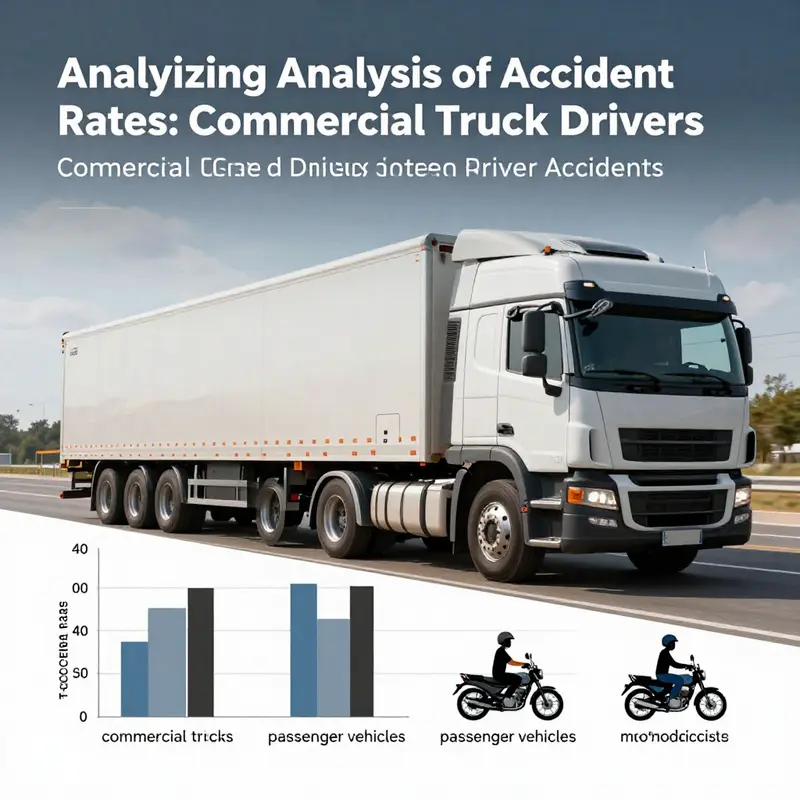
The question of whether commercial truck drivers get into a disproportionately high number of accidents sits at the intersection of exposure, behavior, and vehicle dynamics. When you tally the miles driven, the sheer scale of the operation becomes evident. The industry moves vast volumes of goods daily, and with that scale comes a substantial aggregate risk. Official data from the United States points to roughly half a million truck-related crashes every year. That figure is not a trivial footnote; it is a reminder that, in a country where freight movement relies heavily on heavy vehicles, a large denominator of risk accompanies a large fleet and long hours. It is essential to interpret this figure not as a singular indictment of drivers but as a reflection of exposure. The more you drive, the more opportunities there are for misjudgment, fatigue, or simple mistakes to translate into a crash. This is not to say truck drivers are inherently reckless; rather, the environment in which long-haul and heavy-truck operations unfold amplifies risks that are present in any high-mrequency driving context.
What makes the analysis more nuanced is the role of human factors. Across the broader traffic landscape, research consistently links the majority of crashes to unsafe driving behaviors. In a comprehensive examination that drew on nearly a year of digital tachograph data, roughly four in ten truck drivers exhibited substantially dangerous driving patterns. Speeding emerged as a particularly potent risk driver, but the spectrum of dangerous behavior extended beyond a single metric. The variance in extremely dangerous behaviors among truckers—between roughly 15% and a third of the cohort—highlighted how behavioral heterogeneity within the same job category can sharply shape accident risk. This pattern resonates with a broader body of evidence suggesting that human factors remain the dominant force behind many crashes, even in contexts where vehicle size, mass, and momentum confer some protection on occupants.
That protective paradox—where the very characteristics that make trucks powerful on the road may cushion occupants in a crash, yet simultaneously contribute to more opportunities for severe outcomes—frames a core tension in assessing risk. Truck cabins are engineered to withstand impacts, and the sheer mass of these vehicles does offer a certain premium of protection to drivers inside. Yet, this physical resilience does not translate into a lower likelihood of involvement in crashes. The exposure, the maneuvering demands of large vehicles, and the high miles traveled converge to keep accident numbers robust. In comparative terms, the injury patterns in truck crashes tend to differ from those of smaller vehicles. EU-OSHA research highlights that truck drivers experience a higher incidence of minor injuries relative to other road users, while non-truck drivers are more prone to serious or fatal injuries. The distinction is instructive: the vehicle’s design may mitigate the severity of some outcomes for truck occupants, but that does not reduce the underlying risk of being involved in a crash.
Within this landscape, age and the distribution of local versus long-haul operations shape the severity profile in nuanced ways. Among younger light- and medium-truck drivers who operate in local settings, the Fatalities and Serious Injuries (FROI) rates can be higher than those observed in heavier, long-haul cohorts. This observation suggests that age-related factors—perhaps driving experience, decision-making under urban pressure, or differing supervision and rest patterns—interact with the local driving environment to elevate risk for certain subgroups. It also points to the importance of tailoring safety strategies to the age and assignment mix in a given fleet or region. If a carrier’s local operations disproportionately employ younger drivers, a cluster of elevated risk could emerge even if the overall fleet is composed of experienced professionals.
The picture grows more complex when one shifts from exposure to outcomes. The fatality rate among truck drivers and driver-sales workers, measured in fatalities per 100,000 workers, is well above the occupational average for many other lines of work. The figure—nearly 28 fatalities per 100,000 workers—maps onto a domain where fatal risk is not evenly distributed and where the consequences of a crash can be devastating for individuals and their families. This occupational risk accentuates the imperative for targeted interventions that go beyond generic safety messaging. It calls for a combination of robust training, evidence-based policy shifts, and enhanced on-road monitoring that can adapt to the realities of trucking work—long hours, variable terrain, and the everyday demands of meeting delivery schedules.
A crucial thread in the ongoing discussion about risk and safety is the moderating influence of driving behavior itself. In the truck-driver literature, behavioral factors not only explain a substantial share of crashes but also serve as a potential lever for risk reduction. The same 11-month tachograph study that highlighted prevalent dangerous patterns also identified a paradoxical moderating effect: when truck drivers demonstrated positive driving behavior, their accident involvement tended to decline. This protective effect, however, did not extend to all professional drivers. Taxi drivers, for example, did not exhibit the same buffering effect. Instead, even with positive behavior patterns, taxi drivers remained at elevated risk, suggesting that environmental and operational context—urban density, passenger turnover, time pressure—can erode the gains from good driving discipline. For trucking, the implication is clear: cultivating positive driving behavior—speed restraint, safe following distances, consistent signaling, fatigue-conscious trip planning—can meaningfully reduce risk, but this benefit is contingent on the broader operating environment not negating those gains.
The occupational risk narrative for truck drivers is not simply a tale of high accident counts. It is also a call to understand the structure of the risk, including the ways in which exposure, vehicle design, and human factors intersect. The high fatality rate underscores the severity of the stakes and the need for robust safety architectures that address both behavior and system design. Training programs, continuous monitoring, and feedback loops that translate real-world driving into actionable improvements are essential. They must be paired with policy instruments that incentivize safer operations and remove incentives that encourage risky shortcuts. Random drug screening is one area where policy makers and industry stakeholders have sought to understand its impact on safety outcomes. While the evidence base for broad, population-wide effects remains mixed, ongoing evaluation of such interventions is a vital component of a comprehensive approach to reducing fatal crashes among commercial drivers.
Embedding these insights within a broader safety ecosystem involves more than addressing individual drivers. Fleet management practices—the way driving assignments are scheduled, how rest is integrated into shift patterns, how maintenance and tire performance are monitored—form a connective tissue that links human behavior, vehicle condition, and roadway risk. In long-haul operations, fatigue management becomes a central pillar. The relationship between sleep, circadian disruption, and alertness is well established in transportation research, and trucking fleets are uniquely positioned to implement fatigue-appropriate scheduling, rest breaks, and route planning that minimizes circadian misalignment. When drivers are afforded predictable rest and realistic delivery windows, the temptation to push limits in pursuit of time-sensitive deadlines is tempered by the practical relief of knowing there is a structured boundary around risk-enhancing behaviors.
The comparative analysis that underpins this chapter’s framing emphasizes differences as much as similarities. While truck drivers operate within a distinct risk profile, the data simultaneously reveal that many risk factors are shared with other drivers: excessive speed, aggressive lane changes, and driver distraction contribute to a broad spectrum of crashes across vehicle types. What distinguishes the trucking segment is magnitude and context. The sheer scale of exposure, the variability of shifting schedules, the diversity of operating environments—from wide-open highways to congested urban corridors—and the frequent necessity of managing large, heavy vehicles in mixed traffic all converge to shape a unique risk landscape. When viewed through this lens, it becomes clearer why the trucking sector, despite its protective vehicle characteristics, remains a focal point for road-safety policy and industry-led safety initiatives.
To understand the broader trajectory of these findings within the trucking ecosystem, consider that the safety conversation is not static. It is continually reframed by new data streams, from advanced driver-assistance systems to real-time telematics and more granular analyses of driving behavior over time. The evolving evidence base makes a compelling case for combining behavioral interventions with technology-enabled monitoring and feedback. For instance, personalized coaching triggered by detected risky patterns can translate tachograph or telematics data into concrete behavior changes, potentially lowering accident involvement. Yet, such strategies must be implemented with attention to privacy, worker morale, and the practical realities of fleet operations. A balanced approach—one that respects drivers’ need for autonomy and rest while maintaining rigorous safety expectations—offers the most promising path to reducing the frequency and severity of truck crashes over the long term.
In the end, the question of whether commercial truck drivers get in very many accidents is best answered by acknowledging both the scale of exposure and the power of behavior and system-level safeguards to mitigate risk. The numbers are large, and the consequences can be grave. Yet within this landscape, a structured safety program that aligns training, monitoring, fatigue management, and fair enforcement with opportunities for positive driving behavior can meaningfully bend the risk curve. The comparative perspective reminds us that while truck drivers face distinctive challenges, the road safety imperative is universal: minimize unsafe behavior, maximize protective design and scheduling, and continuously evaluate the effectiveness of interventions in reducing both crashes and their consequences. For readers seeking a broader context on how market dynamics intersect with safety and risk in trucking, see Navigating economic uncertainties in the Canadian and US trucking markets. This connection underscores that safety cannot be pursued in a vacuum; it must be embedded in the operational realities and economic pressures that shape day-to-day decision-making on the road. Navigating economic uncertainties in the Canadian and US trucking markets.
The chapter’s synthesis points toward an integrated safety strategy: continuous data-informed coaching, fatigue-aware scheduling, robust maintenance and vehicle-monitoring systems, and policies that reward safe driving while clearly addressing high-risk conditions. As regulators refine crash data collection and as fleets deploy more sophisticated analytics, the capacity to tailor interventions to specific driver subgroups and operating contexts grows. The ultimate measure of success will be a sustained reduction in both the frequency and the severity of crashes involving heavy trucks, paired with improved outcomes for those in all road-user categories. The goal is not to demonize a single driver demographic but to understand the dynamics of risk across the transportation system and to deploy targeted, evidence-based practices that translate to safer roads for everyone. For researchers and practitioners alike, the takeaway is clear: the road to safer trucking lies in stitching together exposure-aware analysis, behavioral insight, and system-level safeguards that support drivers in making safer choices every mile of the way.
External reference: The evidence base cited in this chapter aligns with recent work on how positive driving behavior can reduce accident involvement among truck drivers, while also highlighting the limits of this protective effect under certain operating conditions. See the external resource for a deeper methodological context: https://doi.org/10.1186/s44147-024-00403-z
Final thoughts
In conclusion, the analysis of commercial truck driver accidents reveals a critical need for ongoing safety initiatives and regulatory compliance. With approximately 500,000 accidents occurring annually, understanding the frequency, contributing factors, and effective safety measures is paramount for trucking company owners, fleet managers, and logistics teams. By implementing robust safety protocols and remaining vigilant against unsafe driving behaviors, stakeholders in the trucking industry can work towards reducing accident rates and enhancing overall public safety. The findings stress the importance of prioritizing safety measures, continuous training, and regulatory adherence to safeguard both drivers and the public.