In today’s competitive trucking industry, understanding vehicle history is vital for managing costs, ensuring safety, and maintaining compliance. As commercial trucking operations expand, the need for reliable data on vehicles becomes paramount. CarFax, a leader in vehicle history reports primarily known for consumer vehicles, offers insights into commercial trucks as well. This overview will delve into how CarFax reports apply to the commercial trucking sector, the significance of vehicle history in managing fleets, guidance on accessing these reports, and a comparison with other services available. Through the upcoming chapters, trucking company owners, fleet managers, procurement teams, and logistics professionals will gain a comprehensive understanding of vehicle history reports and their utility in making informed business decisions.
Beyond the VIN: How a CarFax-Style History Report Illuminates the Road of Commercial Trucks
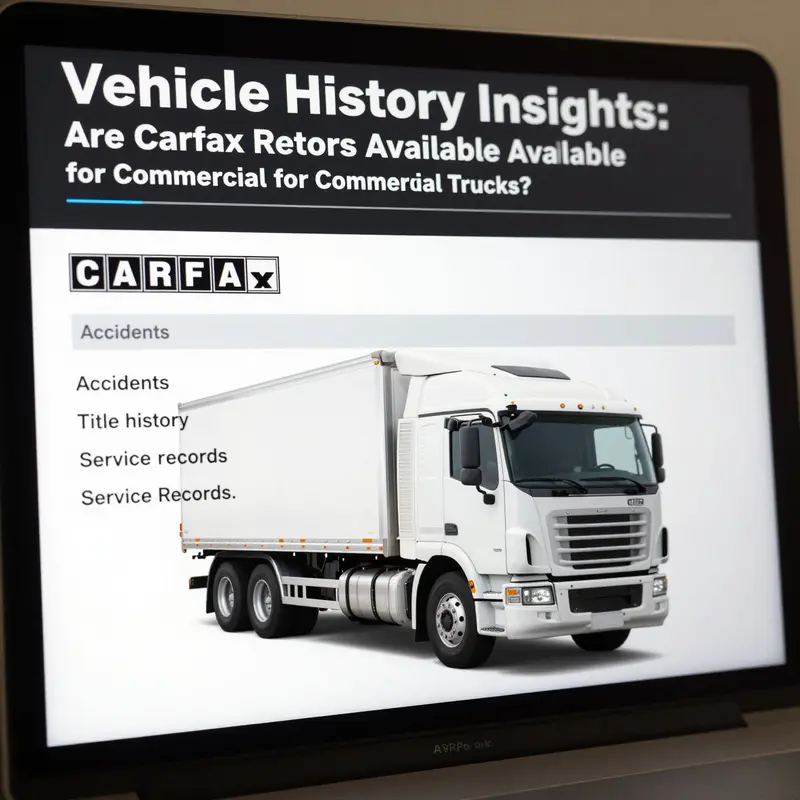
When buyers and sellers of commercial trucks ask, is there a CarFax for these workhorses, the answer is increasingly yes. The idea is not to replace due diligence with a single document, but to add a trusted layer of visibility that formerly required piecing together data from scattered sources. CarFAX-style history reports for commercial trucks have evolved to capture the same fundamental benefits that consumer buyers prize—clarity about what happened to a truck, when, and under what conditions—while adapting the data fields to reflect the realities of heavy-duty use, fleet operation, and transport regulations. In commercial trucking, where reliability translates directly into uptime, maintenance budgets, and cargo safety, a robust history report can tilt a decision from educated guesswork toward confident choice. The practical value of these reports becomes most evident when a fleet manager or a small operator is weighing a used truck purchase, a late-model vocational vehicle, or a traded-in asset that must justify a fresh capex outlay.
At its core, a commercial-truck history report aggregates information from an immense network of data sources and then organizes it into a coherent narrative about a specific vehicle. The scale matters. CarFAX-style platforms draw on billions of records accumulated over years, from thousands of data sources across North America. In the case of commercial trucks, those data sources aren’t limited to consumer-vehicle channels; they extend to fleet maintenance logs, service shops that regularly service commercial equipment, trucking authorities, insurance providers, auctions, repair facilities, and title agencies. The result is a history that can reveal not only what happened on the road, but how a truck has been cared for, how it was used, and how it compares with its stated condition. For buyers, this translates into a more precise assessment of risk and a more accurate projection of future performance.
One of the most critical advantages of these reports is the clarity they provide on accidents and damage. In a commercial context, the severity and location of a reported incident can influence a truck’s resale value, future insurability, and mechanical prognosis. A report will typically note whether airbags deployed, the level of structural damage, and the point of impact if such information is reported. This is not just about who was to blame in an incident; it is about what the truck endured and how that endurance affected its chassis, frame, suspension, and drivetrain. For fleets that rely on uptime, understanding the full implications of a past collision or a reported frame issue is essential to estimating repair costs and scheduling preventive maintenance that avoids repeated downtime.
In addition to accident data, a CARFAX-style report for a commercial truck often flags flood or fire damage, which is a crucial warning in regions prone to extreme weather events or rust-prone terrains. The flood history, when present, can indicate deeper issues with corrosion, electrical systems, or engine reliability. For operators, such disclosures help prevent overestimating a truck’s remaining useful life based on cosmetic appearance or opaque ownership narratives. The emphasis on damage history becomes particularly relevant for trucks with heavy-duty duties such as construction, logging, or long-haul transport where exposure to harsh environments is common.
Ownership history is another pillar of these reports. A commercial vehicle’s ownership trail can reveal whether the truck spent years with a single owner, moved through rental or fleet lease programs, or traveled across borders in multifleet configurations. The count of previous owners, together with usage codes if available, supports a more nuanced appraisal of wear patterns and maintenance regimes. For example, a truck that spent most of its life in a one-operator, well-documented fleet with regular maintenance can present a different risk profile than a similar model that changed hands several times and logged sporadic service events. In this light, ownership history becomes a proxy for predictability: a stable stewardship history is often a signal of reliability and steady maintenance practices.
Odometer readings, tracked over time, are an indispensable feature. In the used-truck market, mileage often stands alongside engine hours and load cycles as a major determinant of remaining life. A well-constructed report will show mileage data points across time, highlighting any anomalies, gaps, or rapid changes that warrant closer inspection. For commercial trucks, where engine hours and speed profiles matter as much as miles, the ability to interpret odometer data in the context of operating conditions helps buyers estimate future maintenance cycles, parts replacement, and potential retirement timelines. This facet of the report aligns with the broader trend in fleet management toward data-driven total cost of ownership analyses, where accurate mileage is foundational to forecasting fuel efficiency, tire wear, and maintenance budgets.
Title information rounds out the core concerns of any vehicle purchase. A clear title history—whether the truck has been salvaged, junked, or declared a lemon—provides a shield against unknowable risks. In commercial settings, salvage titles can have significant implications for insurance, financing, and operational acceptance by customers and authorities. A comprehensive report will alert buyers to any title branding that could affect resale value or loan eligibility, allowing them to address or disclose such conditions early in the negotiation. For fleet operators, this level of transparency reduces post-purchase friction with insurers and lessens the likelihood of price concessions during the life of the asset.
Beyond the big-ticket items, service history stands out as a powerful predictor of a truck’s reliability. Routine maintenance entries, documented repairs, and major component work offer a visible narrative of how the vehicle has been cared for. For a vehicle that endures long-haul routes or demanding vocational duties, a track record of timely oil changes, air-filter replacements, brake work, transmission service, and cooling-system maintenance translates into lower risk of unexpected breakdowns. The report’s service history, when interpreted alongside mileage and ownership patterns, creates an evidence-based view of remaining life and scheduled maintenance needs. It also helps buyers verify that the seller’s claims about recent service work align with what the data shows, reducing the chance of misrepresentation during negotiations.
Another layer of data, state emissions and inspections, helps situate a commercial truck within regulatory compliance. In many jurisdictions, heavy-duty vehicles must meet emissions standards and periodic inspection requirements. A history that captures regulatory checks can inform decisions about upcoming compliance costs and potential retrofits. For fleets that operate across borders or in markets with stringent environmental rules, this information can be decisive in selecting models and determining retrofit timelines that minimize penalties and downtime.
What makes these reports especially compelling is their breadth and depth. A single, well-structured history can synthesize information that might otherwise require contacting multiple sources, ordering separate checks, or sending teams to verify records on the ground. For buyers, this translates into faster, more confident decision-making. For sellers, it provides a transparent platform to showcase a vehicle’s stewardship and maintenance history, potentially shortening the sales cycle and allowing for pricier, more accurate valuations. For fleet managers, the cumulative effect of consistent reporting across assets creates a clearer picture of fleet health, risk exposure, and cost trends over time.
The scale of the data behind these reports matters too. Trusted history services report access to tens of billions of records from hundreds of thousands of data conduits. In North America alone, this breadth helps reduce blind spots that are common in smaller markets or in vehicles that have traveled widely through different owners and operators. The reliability of the insights grows with the volume and diversity of data, enabling more precise soundings of a truck’s condition at purchase and better risk assessment for leasing or financing decisions. Importantly, this is not a one-and-done exercise. Savvy buyers integrate history reports with independent inspections, maintenance audits, and a review of the seller’s disclosed records to form a comprehensive view of value and risk.
From a user experience perspective, the platforms that provide these reports have evolved to meet the needs of busy professionals. The online interface allows for VIN-based searches, field filters that align with vocational needs (such as weight class, engine type, or emission category), and the ability to compare multiple listings side by side. The mobile app complements this by enabling field personnel to access critical information on inspection trips, at auctions, or during negotiations with sellers. This combination of depth and accessibility makes it practical to incorporate history checks into routine buying workflows, rather than treating them as an afterthought or a luxury check. In real-world terms, this means a purchasing decision can be informed by a credible, centralized history in a way that doesn’t disrupt the pace of deal-making.
Yet it is important to acknowledge that even the most comprehensive report has limitations. Data gaps can occur when a truck operates in regions with limited reporting or when certain maintenance events aren’t logged by a facility that feeds the history database. Some private sellers or small operators may not participate in formal reporting ecosystems, which can leave portions of a truck’s past unrecorded. This is why the history report should be viewed as a highly valuable component of due diligence rather than a stand-alone guarantee of condition. For high-stakes purchases, buyers often supplement the report with a professional inspection, a review of repair receipts, and a cross-check of odometer readings against maintenance logs and telematics data. In addition, users should remain mindful of the timing of updates. New incidents or recently completed maintenance may not appear immediately in a report, so scheduling a fresh pull near the end of negotiations can help close the gap between expectation and reality.
The decision to rely on a CarFAX-style history for commercial trucks also intersects with broader market dynamics. As the used-truck market experiences waves of price shifts driven by macroeconomic conditions, fuel prices, and regulatory changes, buyers are increasingly seeking solid anchors of information to defend price expectations and financing terms. A vehicle’s documented history becomes a crucial input when calculating residual values and depreciation curves, particularly for fleets that optimize for total cost of ownership rather than sticker price alone. In markets where demand for reliable, well-documented assets is high, trucks with transparent histories can command more favorable terms or a quicker sale, even when other attributes are similar to competing listings. The trend toward data-driven procurement underscores why history reports are not just a safety net but a strategic instrument in purchase planning. To explore how these market dynamics are shaping used-truck purchasing, you can follow discussions on current market trends in used truck sales growth, which contextualize the role of transparent histories within broader market shifts. current trends in used truck sales growth
In practice, the path to leveraging a commercial-truck history report starts with a simple step: obtain the VIN and access the report through a reputable provider. Interpreting the data requires a disciplined eye for consistency and a readiness to pursue corroborating documentation. The red flags are clear enough: inconsistent odometer readings, a history of frequent insurance claims without corresponding repairs, repeated incidents in the same region indicating ongoing risk, or title issues that suggest unresolved liens or salvage branding. When such indicators appear, buyers can either negotiate price adjustments, request additional disclosures, or walk away from the deal. The value of the report multiplies when used in tandem with other due diligence activities, such as an independent mechanical inspection of the drivetrain, transmission, suspension, and brake systems, as well as a review of vehicle service records from the shop that did the recent work. In regulated environments or in heavy-duty service applications, it may also be prudent to verify that the truck’s emissions and inspection history aligns with the jurisdiction where it will operate most of the time, as compliance can affect both operating permissions and future retrofit costs.
Ultimately, the question of whether there is a CarFax for commercial trucks invites a broader reflection on how information flows through the used-truck ecosystem. The answer is not merely yes, but yes with nuance. These reports provide a disciplined, evidence-based lens through which to view past events, ownership, maintenance, and regulatory status. They are most powerful when used as part of a holistic due diligence toolkit that includes physical inspection, reference checks with maintenance facilities, and a considered appraisal of expected lifecycle costs. For buyers, this approach reduces the uncertainty that often accompanies a used purchase. For sellers, it creates a transparent narrative that can accelerate negotiations and justify pricing aligned with verified history. For the industry at large, it signals a maturation of data-enabled decision-making, a move toward accountability in asset trading, and a standard for documenting the lived history of a vehicle that carries the loads of commerce every day.
External resource: https://www.carfax.com
Reading the Past: The Essential Role of Vehicle History in Commercial Truck Decisions
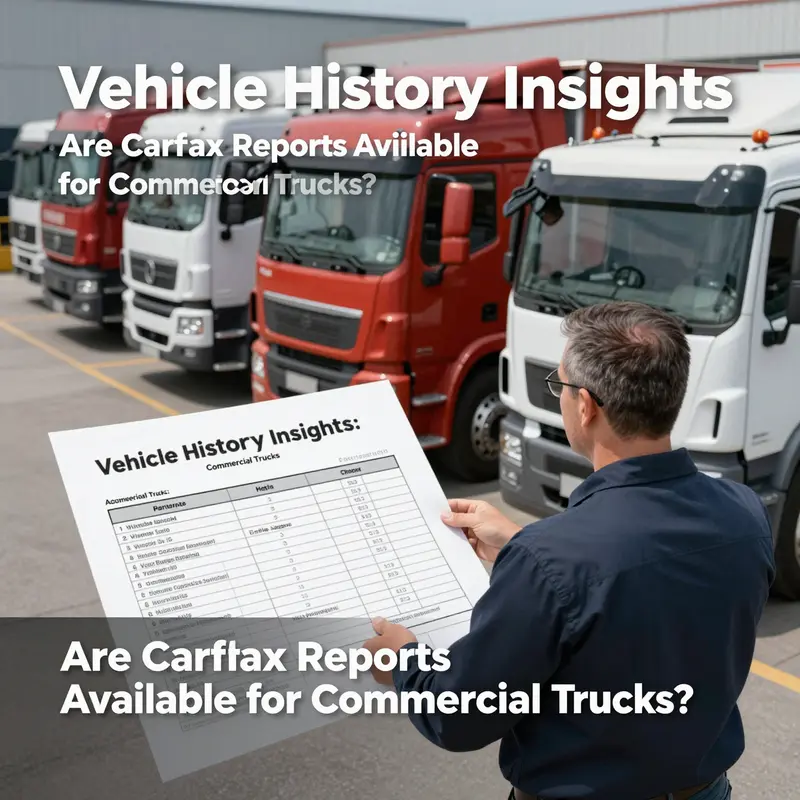
Every fleet manager knows that a used commercial truck is more than a price tag. It is a complex bundle of performance, reliability, safety, and ongoing cost. In practice, the past of a vehicle matters just as much as its present condition. A thorough vehicle history, compiled from public records and service data, helps separate promising opportunities from expensive gambles. While consumer buyers often rely on widely known history reports, commercial buyers should expect a history that captures the realities of work, not just weekend errands. Because the stakes are higher in fleets—from downtime costs to safety compliance—the past becomes a guiding force in every acquisition, every disposal, and every maintenance decision. A comprehensive history report is not a luxury; it is a risk management tool that translates the truck’s life into predictable performance for the business that depends on it.
The core value of any vehicle history report is transparency. It aggregates critical data that would otherwise require piecing together from disparate sources: accidents and their outcomes, lien or title issues, odometer readings and potential rollbacks, and service records from various garages and maintenance shops. For a commercial truck, these data points are not academic; they translate into real-world impacts on safety, uptime, and total cost of ownership. A single, significant collision may leave a frame weakened even after cosmetic repairs. In heavy-duty work, that hidden fragility can become a safety concern under load, during high-speed operation, or in adverse weather. A history that flags such repercussions gives the buyer a chance to factor in structural risk into the purchasing equation and to plan for targeted inspections or repairs before the first mile is logged.
Beyond safety, a vehicle’s history speaks to reliability and maintenance discipline. A truck that has logged regular, manufacturer-recommended service is more likely to keep running consistently through a demanding schedule. Reports that document the timing and scope of major repairs, belt changes, oil and filter intervals, brake service, and suspension work offer insight into the vehicle’s care. This is especially important for trucks that have served in strenuous roles—long-haul distribution, construction support, or high-turnover urban routes. Those workloads accelerate wear on tires, brakes, and drivetrain components. A robust maintenance record can indicate that the truck’s operator recognized emerging issues and addressed them promptly, rather than allowing minor faults to fester into costly failures. In fleet terms, that translates into higher predictability of maintenance costs and fewer unexpected downtime events that disrupt delivery windows and service schedules.
Another dimension that history reveals is usage pattern. A history that shows high mileage concentrated in a few years may reflect heavy use, which is common in long-haul operations. That kind of use tends to stress the braking system, tires, and suspension, and it may imply faster depreciation and shorter remaining service life than a similarly aged, light-use vehicle. Conversely, a truck that appears to have accumulated miles more slowly—perhaps in a light-duty urban or regional role—could offer more life left in key wear components. Understanding the intended and actual use helps fleet managers calibrate acquisition expectations. It also supports smarter cost forecasting: preventive maintenance schedules aligned with miles or hours, tire life projections, and more accurate resale value assumptions at the end of the vehicle’s current lifecycle.
Odometer accuracy, too, is a crucial part of the narrative. A precise odometer reading anchors price and condition, but misgivings about mileage can muddy a deal. History reports that flag odometer inconsistencies or tampering are red flags that deserve deeper scrutiny. In trucks, where high miles can signal a long service life or, alternatively, hidden wear, the difference is in the context. A report that correlates mileage with documented service intervals and repair events provides a clearer picture of how the vehicle has aged. This kind of cross-checking—with maintenance invoices, tire and brake wear measurements, and CV joints or driveline service histories—helps confirm whether the odometer truthfully reflects wear, or if a discount should be applied for uncertain provenance.
Red flags in a vehicle history can take many forms. Flood or fire damage is one of the most insidious because it can degrade electrical systems and interior components long after the surface looks pristine. Such damage might not be apparent in a casual inspection, yet it can precipitate costly electrical failures or accelerated corrosion. A well-constructed history will document these events so buyers can plan for diagnostic work or decide that a particular unit does not fit their risk tolerance. Similarly, title issues or liens, if unresolved, can clog the transfer process or create financial exposure for a new owner. A transparent history allows a buyer to structure the transaction in a way that mitigates these risks—whether through price adjustment, seller concessions, or escrow arrangements that protect lien statuses until title clears.
For fleet buyers, the truthfulness of a history report also interacts with the broader market context. In markets where used trucks are changing hands rapidly, a compact history can provide a competitive edge. It enables a buyer to move quickly with confidence, secure favorable financing terms, and negotiate more effectively. The financial calculus becomes more accurate when the history is plugged into total cost of ownership models. Downtime avoidance, preventive maintenance alignment, and residual value estimates all hinge on the reliability of the vehicle’s documented past. In practice, a history report becomes part of a standardized due diligence ritual that informs procurement strategy, asset allocation, and lifecycle planning for the fleet.
Interpreting a history report is a skill in itself. Data is only as useful as the questions it helps answer. Does the vehicle’s record imply a past that matches the seller’s explanation of condition? Do the maintenance intervals suggest proactive care or reactive fixes? Are there patterns—such as recurring brake or suspension issues—that indicate a design flaw or a pattern of hard use that could anticipate future failures? These are not academic queries; they feed into risk-adjusted pricing, maintenance planning, and the development of a reliable operating budget. They also guide whether to conduct further inspections, request independent mechanical assessments, or bring in a third-party specialist for a more exhaustive audit of critical systems. In essence, the history informs every negotiation point, from price and financing terms to warranty considerations and post-purchase service commitments.
Maintaining transparency across a fleet reduces the friction that often accompanies used-truck transactions. When a seller presents a clear, verified history, the buyer can proceed with greater confidence, knowing the fallback options if issues emerge. When a buyer discovers gaps or discrepancies, there is an opportunity to renegotiate or walk away before signing a binding agreement. In either case, the outcome is more predictable. For fleet operators who depend on reliable uptime, the predictability afforded by a complete vehicle history is a strategic asset. It aligns procurement with operations, and it aligns maintenance with the realities of day-to-day logistics.
To tie the narrative back to practical steps, fleet managers should integrate history checks into their standard due diligence workflow. Before committing to purchase, request the history report and verify it against ongoing maintenance records. Cross-check odometer readings with maintenance miles, examine brake and tire wear indicators in relation to reported service events, and review any notes on body or frame repairs. When the data line up, proceed with a deeper mechanical evaluation to confirm that the truck’s current condition reflects the reported history rather than masking latent problems. When discrepancies exist, document them, reprice accordingly, and decide whether the risk is acceptable within the organization’s tolerance for downtime and repair costs.
For readers tracking the market dynamics of used commercial trucks, consider how history relates to broader shifts in the industry. Market intelligence suggests that a well-documented past becomes increasingly valuable as demand tightens and prices rise. A unit with a clean, verifiable history signals lower risk, quicker financing, and superior resale value. Conversely, a vehicle with unclear or troubling history can become a money pit if hidden issues surface after purchase. The difference comes down to due diligence—the disciplined collection and interpretation of data that informs price, risk, and performance across the fleet. If you want to explore how these market dynamics are evolving, you can follow updated discussions on current trends in used-truck sales growth. current trends in used-truck sales growth.
In closing, a robust vehicle history is more than a checklist. It is a lens through which the true cost and reliability of a commercial truck are revealed. It shapes safety decisions, maintenance planning, and financial forecasting. It invites a disciplined approach to buying, selling, and operating in a way that aligns with safety standards, regulatory expectations, and the practical realities of heavy-duty work. When fleet leaders insist on transparency, the past becomes a strategic asset that supports safer operations, steadier uptime, and stronger return on investment. For anyone responsible for moving goods and meeting service commitments, history is not just a recommendation—it is a practice that preserves value and reduces risk across the life of the asset.
External resource note: official guidance on vehicle history, safety recalls, and defect information is published by the National Highway Traffic Safety Administration. For authoritative information, consult their vehicle history and safety materials at https://www.nhtsa.gov/vehicle-history.
Unlocking Truck History: How to Access CarFax Reports for Commercial Vehicles
When fleets, dealers, and owner-operators search for a used commercial truck, the history behind the steel and tires often tells a more important story than the latest spec sheet. This is where a comprehensive vehicle history report comes in. While many buyers associate history checks with passenger cars, the same principles apply to commercial trucks, and the data often arrives from a broader mix of sources because commercial vehicles travel longer routes, log higher mileages, and encounter a wider variety of maintenance regimes. The central question isn’t just whether a history report exists for a truck, but how to access it in a way that yields actionable insight. The answer is a straightforward process, with results that can illuminate risk, value, and the reliability of a vehicle long after it leaves the seller’s lot. In practice, the goal is to separate the likely from the unlikely, the routine wear from the red flags that could signal hidden problems. As with any major purchase in the trucking world, a history report is a powerful starting point, not the final verdict.
Access to a reliable truck history begins with the basics: identifying the vehicle that matters. For commercial trucks, the VIN—the 17-character alphanumeric code that uniquely identifies a vehicle in the United States—remains the primary key to history. If the VIN is not readily available, some reports can be initiated with a license plate number and the state of registration. Either path requires careful verification of the information you present. A single misread digit can route you to an entirely different vehicle with an unrelated history, and in the trucking market, where vehicles often share close design families, precision matters. With the VIN or plate in hand, the next step is to visit the history provider’s platform. The typical home page offers a search bar designed to accept either the VIN or the plate-plus-state combination. The process is intentionally simple, but the payoff is substantial: a consolidated field report that aggregates data from state DMVs, insurers, repair shops, auctions, and other participants in the vehicle lifecycle.
The value of a truck history report lies in its breadth. You will see entries that cover accident history, title status, odometer readings, ownership changes, and maintenance events. Each category deserves careful reading because the devil is often in the details. Accident history is more than a tally of crashes. It includes the severity of damage, sometimes expressed in categories such as Moderate Damage, Severe Damage, or Total Loss. Understanding what happened to the truck can frame expectations about frame integrity, suspension wear, or hidden cosmetic issues that could affect performance down the line. Title status is another critical area. A vehicle with a salvage or branded title usually carries a different risk profile than one with a clean title. For fleets, branded titles can reflect past structural repairs, flood damage, or other events that may influence resale value or insurability. Odometer readings, too, deserve attention. Mileage records help detectives of wear and mileage fraud, highlighting any inconsistencies that may suggest odometer tampering. In the heavy-duty sector, accurate mileage is essential for predicting maintenance intervals, warranty eligibility, and potential downtime costs.
Ownership and registration history adds another layer of context. A long chain of owners, particularly in rapid succession or across multiple states, can signal use patterns that are important to know. In combination with the maintenance and repair history, these data points sketch a practical map of how the truck was cared for and how it was utilized. Service records from participating shops can provide tangible proof of regular maintenance, including engine work, transmission servicing, or brake replacements. For buyers who value uptime, recurring service events adjacent to high-mileage thresholds can be a warning sign or, alternatively, a comfort that the vehicle has had the right checkups at the right times. Lien information, too, matters. An outstanding loan or lien can complicate ownership transfers, affect the transaction timeline, and influence post-purchase financial risk. When all these elements converge in a single report, the picture formed extends beyond the present condition to the likely future reliability and the potential cost of ownership.
Yet history reports are not exhaustive, and that limitation is worth acknowledging up front. The source network that feeds these reports is broad, but not omniscient. Not every incident is reported, particularly if it occurred in a jurisdiction with inconsistent reporting, or if it involved minor damage that did not trigger a formal claim. Some repair activity remains private between fleets and service providers, or between lenders and insured parties. Because of these gaps, a history report is a vital datapoint, but it should be supplemented by a comprehensive physical inspection. For heavy and heavily used commercial trucks, a pre-purchase inspection (PPI) conducted by a qualified mechanic is advisable. A thorough road test, a check of critical systems under load, and a careful review of the engine, transmission, brakes, and suspension can reveal issues a history report cannot fully capture. The combination of documentary history and hands-on assessment provides the deepest confidence about a truck’s condition.
When you approach a history report with a buyer’s mindset, you are looking for signals that align with the vehicle’s stated story. A clean odometer history that shows steady, reasonable mileage progression is comforting, but not sufficient in itself. Parallel data—maintenance entries in line with the odometer, a consistent ownership timeline, and repairs that match the described usage—strengthen credibility. Conversely, red flags deserve a measured response. A pattern of title issues, repeated insurance claims for similar damage, or large gaps in maintenance history can indicate latent problems. In the commercial truck world, where downtime translates into lost revenue, the cost of ambiguous or incomplete history can quickly outweigh the price advantage of a lower upfront bid. In practice, buyers combine the data from a history report with market signals and strategic risk assessment. Market signals might include regional utilization patterns, the expected maintenance costs for similar models, and the current supply/demand dynamics for that truck type. A broader view can help determine whether the reported risk is one you should mitigate now or price into the offer.
To illustrate how this plays out, consider a hypothetical buyer evaluating a mid-range regional-haul tractor recently listed by a seller. The VIN returns a report with no major accidents and a clean title, but it reveals a series of service events focused on the braking system and a recent replacement of a high-mileage component with an updated specification. The odometer history shows a consistent ascent, with occasional storage of miles during off-season periods, consistent with regional lines that see the truck idle in yards for weeks at a time. The ownership history indicates two previous owners, both fleets, with registration in neighboring states that share similar regulatory climates. The report also flags a modest lien that would need clearance before transfer. This composite picture suggests a truck with solid service discipline and predictable wear patterns, tempered by a financial encumbrance that would require negotiation. The buyer, armed with this knowledge, enters the inspection with a focused checklist: verify the service entries against shop receipts, confirm the braking system repairs with the mechanic, test the truck under load, and confirm the lien status with the lienholder. With the report as a roadmap, the inspection becomes a targeted validation exercise rather than a guesswork exercise, increasing the probability that the investment will pay off over the vehicle’s remaining life on the road.
The practical steps to access a CarFax-style history for commercial trucks are straightforward, but the real value lies in how you interpret what you see. Gather the VIN or plate-state data, navigate to the history provider’s search tool, and request the full report. Expect a structured document that organizes information into sections on accidents, titles, mileage, ownership, service, and liens. Read each section with an eye for coherence: do the miles align with service events? Do title statuses align with any reported incidents? Do the maintenance entries reflect the expected wear for the reported mileage and usage profile? If something feels off, note it for deeper investigation during the PPI or with the seller’s documentation. Remember, the report is a piece of the decision-making puzzle, not the entire puzzle. The best-informed decisions arise when the report is integrated with a careful inspection and an informed understanding of market conditions.
As you weigh the history, it can be helpful to consider how this data interacts with broader market dynamics. Market conditions for used commercial trucks continue to evolve, and price signals often reflect more than rough depreciation. A well-documented history can preserve value even in turbulent times, because buyers gain assurance that the truck has been managed responsibly and is likely to deliver uptime. Conversely, a weak history can dampen a vehicle’s appeal, creating hesitation even when the price is competitive. Buyers and sellers alike benefit from a disciplined, data-driven approach: treat the history as a diagnostic tool, not as a final verdict, and corroborate every major datapoint with tangible records and an in-person inspection.
For readers who want a broader sense of how market signals relate to history-aware decision making, consider cross-referencing market insights such as trends in used-truck prices and stability indicators for 2025. This kind of context helps you calibrate your offer and forecast TCO (total cost of ownership) more accurately. It also underscores why a solid history is not merely a box to check but a practical lens through which to view risk and reliability. In the end, the most prudent path is a composite approach: obtain the history, perform a meticulous inspection, verify the lien and title status, and then negotiate with a clear sense of the truck’s residual value and expected maintenance costs. That disciplined sequence—history, inspection, verification, and market-aware pricing—gives buyers and fleets a reliable framework for converting a potential purchase into long-term uptime and predictable performance on the road.
Internal link reference for broader context: exploring updated market signals can complement the history data when assessing value and risk. See the related insights here: used-truck-prices-stability-key-insights-2025.
External resource for authoritative data: for the most authoritative source on history reporting and to view the official provider’s offering, visit CarFax’s platform at https://www.carfax.com.
CarFax and Its Rivals in Commercial Truck Histories: Navigating Data, Trust, and Fleet Decisions
In the world of commercial trucking, a single document can tilt a decision from prudent to risky, from affordable to prohibitive. That document is the vehicle history report, a record that travels far beyond the glossy condition photos and the surface gloss of a used truck. For buyers who operate fleets, lease programs, or regional hauls, the history report is not a nicety; it is a gatekeeper. It can illuminate past accidents, title quirks, odometer integrity, and service patterns that hint at how the truck will perform in the next mile of work. When fleets evaluate a candidate truck, they are really evaluating risk, uptime, and total cost of ownership. A history report helps quantify those components before capital is committed and before a driver is assigned to a vehicle that could become a recurring maintenance headache. In this context, the availability of a comprehensive history on commercial trucks becomes as important as the engine’s hours on the odometer or the truck’s current fuel economy rating. It is here that CarFax and its peers enter the conversation about truth-telling data and how much of it is realistically accessible to buyers who must make decisions under pressure and on budget.
CarFax’s reach into the commercial segment is notable. It offers detailed history reports for commercial trucks that extend beyond the consumer-vehicle focus the brand is best known for. These reports aggregate data from a wide array of sources to paint a picture of a vehicle’s past: accidents and their severity, airbag deployments, flood exposure, title history—whether a truck has been salvage, rebuilt, or branded as a lemon—and, crucially for fleets, odometer readings and service records. The breadth of information is not a mere curiosity; it is a practical map for negotiating price, anticipating maintenance, and planning for lifecycle replacement. In numbers, CarFax touts a database eclipsing hundreds of millions of records across tens of thousands of reporting sources, with the value lying not only in the quantity of data but in its cross-linking: a single VIN can reveal a trail from a body shop in one state to a DMV record in another, then back to a dealership service note. For commercial buyers and sellers, that trail matters because it translates into a measurable estimate of risk and a clearer view of value.
What makes a history report truly useful for heavy-duty applications is not just its depth, but its reliability. CarFax’s ecosystem is built on contributions from a network that includes state DMVs, insurance carriers, repair facilities, and other industry partners. The result is a map that can reveal where a truck has been and what kinds of events it has weathered. For fleet operators, this can translate into meaningful decisions: whether a truck with a documented flood event has recovered properly, whether a salvage title has circulated through the market with a clean bill of health, or whether a pattern of service timestamps a potential recurring issue that could affect downtime. The value lies in the pattern—the consistency of documentation, the frequency of service intervals, and the alignment between reported maintenance and the truck’s stated condition. In practical terms, this means a fleet buyer can weigh a vehicle’s price against the risk implied by its history, rather than relying solely on current cosmetic appearance or a single test drive.
But no single report or provider exists in a vacuum, and the landscape for commercial truck history reports includes meaningful alternatives. AutoCheck and VINCheck are often cited as credible options that also assemble data from multiple sources. AutoCheck, with its emphasis on multiple-vehicle histories and scoring systems, offers an approach that some buyers find helpful when comparing several trucks at once. VINCheck, drawing on the National Motor Vehicle Title Information System and related data streams, provides another layer of visibility that can corroborate or question findings in a primary report. For a fleet buyer weighing options, the question is not only which report is the most comprehensive in isolation, but which combination of reports yields the most dependable, cross-checked view of a vehicle’s past. In practice, many buyers use CarFax as the backbone of due diligence and supplement it with AutoCheck or VINCheck when evaluating multiple candidates. The convergence of insights from different providers can uncover discrepancies that deserve closer inspection, such as mismatched odometer readings, conflicting repair notes, or title actions that require further verification with the DMV or the lending institution.
The strength of CarFax in this arena rests on breadth and consistency of reporting. Its capability to reveal accidents and damage severity, to flag airbag deployments, and to identify flood exposure makes a difference when a fleet needs to decide whether a unit will meet uptime targets in hazardous weather or in flood-prone regions. The inclusion of title history—salvage or lemon status—adds another layer of protection against purchase of a vehicle that could become a regulatory or resale risk. Service records are particularly valuable for commercial operations. A truck that demonstrates regular maintenance in the report can become a more reliable asset than one with sporadic or missing service entries, even if the latter appears to be superficially similar in age and mileage. In markets where used-truck pricing is sensitive to perceived risk, the differences CarFax can illuminate undercut speculation and help fleets strike more accurate deals. The reputation CarFax has earned within both consumer and professional circles—anchored in strong data accuracy and broad data source coverage—further reinforces its position as a go-to reference point for commercial buyers who must make informed decisions quickly.
Yet there are practical caveats to the usage of history reports that deserve attention. Some users have noted limitations, such as occasional gaps in website functionality or user experience challenges that can complicate the process of cross-comparing several vehicles within a short window. These issues can slow down a buying decision, especially when a fleet is racing to meet a procurement deadline or needs to assemble a dataset across multiple VINs for a side-by-side comparison. In the commercial context, where decisions also hinge on uptime warranties, financing terms, and residual values, any friction in obtaining and interpreting a robust history picture can matter as much as the data itself.
What does this mean in practice for someone evaluating a used commercial truck? The answer lies in how history data is interpreted and integrated into a broader due-diligence routine. A history report should be read as part of a larger evidence packet—one that includes maintenance invoices, service reminders, recall status, and verification from the DMV or the manufacturer’s dealer network where possible. The presence of a documented accident, or a history of repeated maintenance, may not automatically preclude purchase, but it should prompt a deeper look into the mechanical condition, miles at the time of the event, and the truck’s current reliability. A disciplined buyer will verify odometer readings against the truck’s maintenance and inspection records, confirm the status of any salvage or rebuilt titles with the relevant authority, and assess how past issues could translate into future maintenance costs or downtime. A well-constructed buying strategy uses history reports to set expectations for spend, uptime, and resale value, rather than using them as a singular decision point.
For those who want to anchor market context while interpreting a history report, current industry trends offer meaningful guidance. The broader used-truck market continues to respond to macroeconomic shifts, supply chain dynamics, and regulatory developments that influence how fleets value risk. Readers who track these trends often find it useful to connect the dots between report data and market realities—such as how pricing and availability are moving in response to demand from sectors like infrastructure, manufacturing, or cross-border freight flows. A helpful way to stay attuned is to consider market signals alongside a single history report. As one navigates this landscape, a concrete step is to consult a source that summarizes ongoing shifts in used-truck pricing and availability, offering a market backdrop against which the nuances of a truck’s history can be weighed. For example, readers can explore articles that discuss current trends in used truck sales growth to contextualize the data points in a history report. Current trends in used truck sales growth provides a backdrop for how demand and depreciation pressures can shape the perceived value of a truck with a given history.
Ultimately, the best approach to commercial truck histories is to combine the strengths of multiple sources while maintaining a critical eye toward data quality and relevance to the asset in question. CarFax remains a leading option because its breadth and depth can illuminate many risk factors that fleets care about. It is still prudent to corroborate with other data streams and to rely on professional inspection when possible. The official Vehicle History Report remains the most relevant and authoritative link for those who want an official, citable source of information on a vehicle’s past, and it can be a foundational step in a broader due-diligence framework for fleet acquisition and resale decisions. For those seeking the official resource directly, the report and its related data are accessible through the provider’s primary site, which serves as a cornerstone for understanding a truck’s journey before it enters a fleet’s lineup.
In the end, the question “is there a car fax for commercial trucks?” has a nuanced answer. Yes, there are comprehensive history reports tailored to commercial equipment, and CarFax sits at or near the top of the field in terms of data coverage and historical insight. The value of these reports comes not from a single data point, but from the story they collectively tell—a narrative about reliability, risk, and the true cost of ownership across the life of a heavy-duty asset. Fleet buyers who treat history reporting as an essential part of due diligence—interpreting findings in the context of maintenance history, current mechanical condition, and market conditions—stand a better chance of selecting trucks that meet uptime targets and deliver predictable lifecycle costs. The landscape is competitive, and while CarFax leads in data breadth, the most robust approach for commercial trucks is to use a combined view that triangulates multiple sources, plus a rigorous physical inspection, to arrive at a decision that aligns with a fleet’s operational priorities and financial objectives.
External resource: https://www.carfax.com
Final thoughts
Vehicle history reports, such as those provided by CarFax, play a crucial role in the management of commercial trucks within any fleet. By evaluating accidents, ownership changes, and maintenance records, trucking companies can make informed decisions that boost efficiency and reduce risks. The importance of knowing the full history of a vehicle cannot be overstated, as it impacts purchasing decisions and operational integrity. Accessing these reports is now simpler than ever, while understanding the differences in services helps fleet managers choose wisely. Embracing the insights from vehicle history reports will empower your operations, ensuring effective risk management and supporting your business objectives.