
In the realm of commercial trucking, the significance of robust insurance solutions cannot be overstated. A-rated commercial truck insurance serves as a cornerstone for fleet operators, offering not only financial protection but also enhanced safety protocols tailored for their specific operational realities. This article delves into the multifaceted benefits of A-rated commercial truck insurance, examining its economic impacts and the cutting-edge technological innovations that accompany it. Each chapter builds upon the last, offering a comprehensive view that underscores how this insurance can elevate your business, ensure compliance, and enhance overall fleet safety.
A-Rated Assurance: How Superior Truck Insurance Builds Credibility, Coverage Breadth, and Long-Term Growth
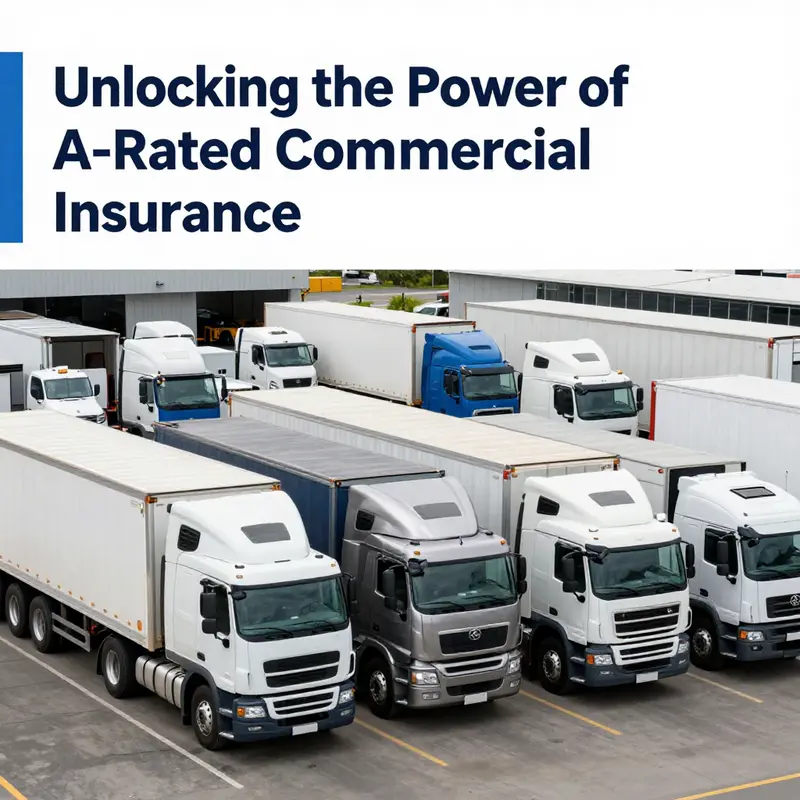
A-rated commercial truck insurance sits at the center of a fleet operator’s risk management framework the way a sturdy, well-maintained chassis anchors a long-haul route. It is not merely a line item in the expense column; it is a strategic lever that shapes credibility, coverage, and capability. When a carrier, broker, or shipper evaluates a fleet, the rating attached to the insurer signals a story of resilience, steadiness, and predictable claims handling. An A rating, granted by a recognized rating agency, is more than a badge; it is a formal endorsement of financial strength, claims-paying ability, and sustained performance under pressure. For operators who manage dozens or hundreds of vehicles, that endorsement translates into practical advantages every quarter, every dispatch, and every negotiation at the table with customers and lenders. The effect is a smoother path to growth, backed by the confidence that comes with assured risk transfer and reliable support when misfortune strikes.
The tangible benefits begin with credibility. In industries where every contract is tethered to risk allocation, insurance becomes a proxy for operational discipline. An A-rated insurer signals to shippers and brokers that the fleet is backed by a company with substantial financial wherewithal, sound governance, and the resources to defend claims promptly. This credibility matters most when the market tightens, when carriers face tighter capacities, and when the reputational stakes rise with safety incidents. In such moments, having an A-rated insurer can shorten negotiations, expand options, and ease the path to favorable terms. It is not that the insurer alone determines success; rather, the rating is a credential that reduces friction and aligns a fleet with the risk tolerances of larger customers who insist on robust risk transfer and dependable coverage.
But credibility is only the opening act. A-rated insurers typically offer a broader and more customizable suite of coverages, designed to mirror the real-world risks of modern trucking. Beyond standard liability, many fleets need cargo protection for diverse loads, physical damage coverage for owned and even non-owned equipment, and specific protection for non-owned trailer fleets or outsourced operations. Some operators also face exposure to specialized risks such as the transport of hazardous materials, or the unique perils associated with refrigerated or expedited services. The ability to tailor coverage to these scenarios matters because it shifts the financial exposure from an unpredictable, out-of-pocket event to a defined insurance settlement. When the coverage aligns with the business model, operators avoid the costly, ad hoc fixes that can erode margins during a year of intense freight activity. In practice, a well-structured policy under an A-rated carrier provides a safety net that absorbs the shocks, allowing a fleet to maintain service levels even when the unexpected occurs.
A critical and often overlooked advantage lies in the risk management infrastructure that accompanies A-rated insurers. These providers typically bring a holistic portfolio of tools and services designed to prevent losses before they occur and to manage them efficiently when they do. Driver safety programs, compliance monitoring, and real-time telematics integration are common features. Driver training programs may range from defensive driving modules to fatigue management and incident analysis—resources that translate into measurable reductions in accident frequency and severity. Compliance monitoring helps fleets stay ahead of regulatory changes, reducing the risk of fines, downtime, and cascading disruptions to service. Telematics-enabled data feeds can illuminate driving patterns, idling times, speed profiles, and asset utilization. When integrated with a carrier’s underwriting and claims teams, this data informs proactive fleet improvement plans. The result is a cycle of ongoing improvement: better driving practices lower claims costs, which, in turn, stabilize or reduce premiums over time. In the trucking industry, that virtuous loop is a competitive differentiator, particularly for operators seeking to scale without sacrificing safety or financial discipline.
From a strategic standpoint, the combination of credibility, coverage breadth, and robust risk management translates into a meaningful increase in negotiating power. Large shippers and logistics providers often require proof that carriers possess high-quality insurance and strong risk controls before they will commit to long-term contracts or favorable freight terms. An A-rated insurer becomes a credential in negotiations, signaling that the fleet can shoulder risk responsibly and can fulfill service commitments even under adverse conditions. In practice, this can translate into better lift capacity, more favorable payment terms, or priority consideration when capacity is tight. It is important to note that this advantage is not a license to raise rates arbitrarily. Instead, it is a signal to partners that the operator is serious about reliability, safety, and accountability—qualities that align with the expectations of customers who depend on timely, damage-free deliveries.
The financial dimension of A-rated insurance is both direct and strategic. While premium costs are a necessary consideration, the long-range impact includes premium stability, predictability, and the potential for meaningful savings through optimized risk management. Fleet operators often report material cost optimizations when they align their safety initiatives, fleet maintenance, and driver training with the underwriting framework. A disciplined approach to risk reduction—driven by the insurer’s safety programs and analytics—can translate into lower loss ratios, more favorable claim handling, and, over time, lower unit costs per mile. In practical terms, that means more predictable cash flows, easier budgeting, and the ability to price services with greater confidence in profit margins. It also supports investment decisions that fuel growth—whether that is upgrading equipment, expanding routes, or hiring drivers to meet rising demand—without being held hostage to volatile insurance costs.
For operators seeking a path to sustained growth, the decision to partner with an A-rated insurer should be grounded in how well the insurer’s capabilities align with the fleet’s strategy. A strong rating is a signal to invest in the right risk controls, rather than a reason to defer safety initiatives in the face of premium pressure. The best insurers view risk management as a shared responsibility and a driver of value creation. They work with fleets to design training curricula, implement predictive maintenance programs, and adopt data-driven routing and utilization practices that reduce exposure. The objective is not simply to transfer risk; it is to reduce risk in a way that improves reliability, lowers total cost of ownership for equipment, and expands the operational envelope for growth. When these elements converge, A-rated coverage becomes a platform for competitiveness rather than a compliance obligation.
This integrated approach, in which a credible insurer partners with the fleet’s leadership to align safety, operations, and financial planning, yields benefits that extend beyond the balance sheet. It helps attract and retain high-quality drivers who seek employers with stable benefits and clear, well-managed risk profiles. It supports maintenance and equipment replacement programs that are bankable and scalable. And it enhances the fleet’s reputation in an industry where reputational capital often translates into market share. The realization of these benefits, however, depends on a thoughtful, ongoing relationship with the insurer—one that emphasizes transparency, data sharing, and continuous improvement rather than short-term pricing expediency.
For readers seeking practical context and examples of how fleets navigate uncertainty while maintaining reliability, a useful reference is provided in industry discussions on the McGrath Trucks blog. You can explore insights on how operators approach market volatility and risk management strategies at Navigating Economic Uncertainties in Canadian and U.S. Trucking Markets. Navigating Economic Uncertainties in Canadian and U.S. Trucking Markets.
The overarching message is clear: A-rated insurance is more than a risk transfer instrument. When used as a strategic resource, it becomes a foundation for credibility, coverage resilience, and disciplined growth. Operators who integrate safety programs with insurance solutions are not merely protecting profits against losses; they are building a platform from which to expand capacity, win contracts, and invest in the future with greater confidence. As the market for trucking services continues to evolve—driven by regulatory shifts, shifting freight patterns, and new technologies—the value of a high-quality insurer with a proven track record becomes even more pronounced. In that sense, choosing an A-rated provider is a forward-looking decision, one that acknowledges that risk management is a driver of value, not merely a cost to be managed.
From a practical standpoint, fleet executives should approach the selection process with a clear view of how risk control, coverage alignment, and financial stability interact with the company’s growth plan. First, they should verify the insurer’s rating and the robustness of its claims-handling capabilities, recognizing that the rating is a signal of capacity to support the fleet through complex claims scenarios. Second, they should map the coverage breadth to their operational footprint—owning equipment, leasing, or operating non-owned trailers—and ensure there is seamless protection across those configurations. Third, they should assess the risk management tools offered by the insurer, particularly how driver safety initiatives and telematics analytics integrate with existing operational workflows. Finally, they should test the insurer’s willingness to partner in strategic initiatives, such as route optimization, compliance training, or maintenance scheduling, recognizing that such collaboration can unlock premium efficiencies and fortify the business against disruption.
In this regard, the value proposition of an A-rated insurer is not a static attribute—it is a dynamic capability. The best-fit relationships emerge when the insurer treats risk as co-created value. The fleet wins by reducing vulnerability, improving service levels, and preserving capital for growth. The carrier wins by stabilizing risk exposure, improving loss experience, and securing long-term business relationships with customers who demand dependability and safety. The entire ecosystem benefits when insurers invest in preventive resources that keep trucks moving and incidents to a minimum. In the end, A-rated insurance becomes not just protection but a cornerstone of operational excellence, a strategic partner in the ongoing pursuit of efficiency, resilience, and scalable growth.
External perspective on insurer strength and rating practices can offer additional insight into how these relationships function across the industry. For those seeking a broader understanding of how insurer ratings are formed and what they imply for risk transfer, an external resource provides useful context: https://www.nirvanainsurance.com/why-nirvana/
Beyond Premiums: The Broad Economic Canvas of A-Rated Commercial Truck Insurance
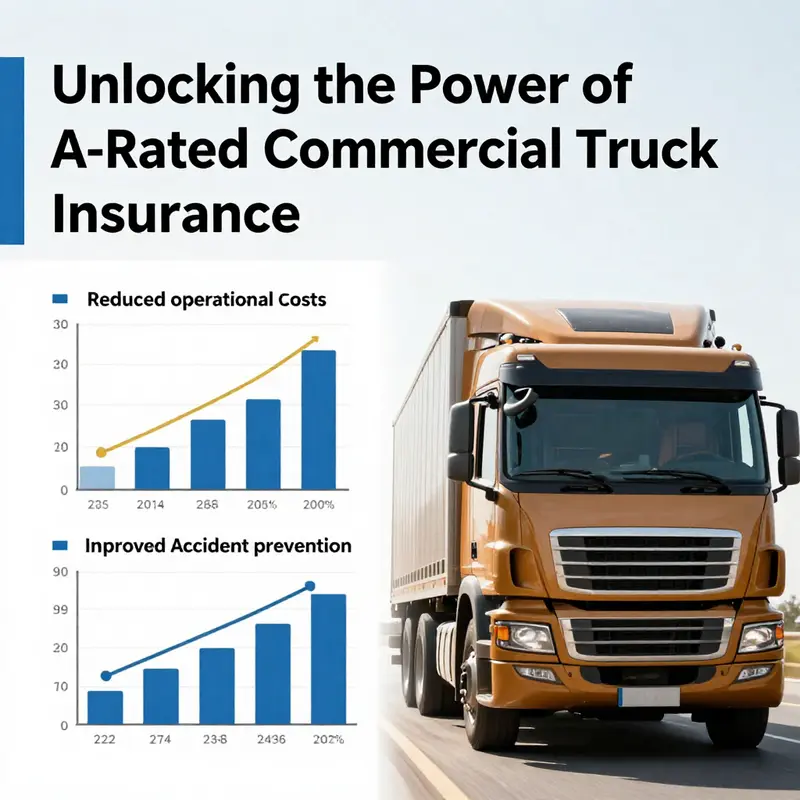
When fleet managers and owners think about insurance, they often focus on the price tag that appears on the quote or the deductible attached to a claim. Yet the influence of A-rated commercial truck insurance extends far beyond the moment a premium is set. The rating, awarded by reputable credit and claims agencies based on financial strength and underwriting performance, acts as a signal. It signals a balance of risk, stability, and reliability that ripples through every corner of a trucking operation and, by extension, the broader economy of freight. The concept of an A-rating, while technical in tone, translates into real-world consequences for cash flow, financing, service levels, and the velocity with which a fleet can respond to market opportunities or disruptions. In this sense, the economic impacts of A-rated coverage are not ancillary; they are foundational to how a trucking business behaves in a highly competitive, capital-intensive, and increasingly regulated sector.
To understand the economic logic at play, consider what an A rating communicates to a lender, a shipper, a broker, or a government regulator. An A rating embodies financial stability, disciplined underwriting, and the capacity to meet policyholder obligations even during economic stress. This is not merely about the insurer’s ability to pay a claim. It is about the predictability that the insurer brings to a driver’s schedule, a fleet’s maintenance planning, and a company’s overall risk posture. When a carrier carries such a rating, it signals to capital markets and commercial partners that it has staying power, which in turn reduces the perceived risk of doing business with that carrier. This perception matters more than any one policy form because it shapes long-term business plans, access to credit, and the willingness of lenders to provide favorable terms for vehicle financing, lines of credit, or equipment leasing. The downstream effect is a smoother path for growth or recovery after a setback.
The most immediate and tangible impact of an A-rated insurer is often cost efficiency. While price competition exists in insurance markets—driven by risk models, loss histories, and the availability of capital—higher-rated carriers tend to command lower premiums. Why? Because insurers with strong creditworthiness are seen as less likely to accumulate large unpaid claims, and therefore they assume a smaller average risk burden per policyholder over time. This is not mere good fortune; it is embedded in the risk pricing framework used by sophisticated carriers that manage large pools of trucking risks. The premium differential between an A-rated insurer and a lower-rated competitor can accumulate over a fleet’s lifetime, translating into thousands of dollars saved annually for mid-size and large fleets. For operators with razor-thin margins, even modest premium reductions can free up capital for equipment maintenance, driver training, or additional safety programs that further reduce risk. In practice, lower premiums don’t just reduce outflow; they improve the quality of the cash flow cycle. A company can allocate reserves to preventive maintenance, fleet upgrades, or driver incentive programs that directly address the root causes of losses. In a sector where downtime costs can eclipses days of revenue, the effect of lower fixed costs on operating leverage is substantial.
Beyond the apparent price advantage, the A-rating framework also shapes how insurers view risk across a fleet’s lifecycle. A-rated carriers often combine stronger financial buffers with more robust risk management programs, including safety initiatives, telematics, and proactive maintenance scheduling. This combination tends to yield broader coverage options and more favorable endorsements. In plain terms, fleets operating under an A-rated insurer often gain access to higher liability limits, protective endorsements, and tailored coverages that align more closely with the actual risk profile of their operations. Higher liability limits can be particularly meaningful in the trucking sector, where exposure grows with vehicle size, cargo value, and the complexity of routes. Rather than facing a one-size-fits-all policy, fleet managers can secure fewer gaps in protection, reducing the chance of costly out-of-pocket expenditures should an incident occur. The ability to secure comprehensive coverage without navigating excessive underwriting friction is itself a form of economic stability, because it supports predictable risk budgeting and reduces the bargaining power of the insurer to deny or narrowly tailor coverage after a loss.
Insurance stability also has a direct effect on a carrier’s creditworthiness in the eyes of lenders and partners. When a fleet is backed by an A-rated insurer, it usually signals higher operational discipline and stronger risk controls. Lenders interpret this as a proxy for reliability, translating into favorable financing terms, lower collateral requirements, or longer tenor on equipment loans. Partners, including shippers and brokers, interpret this reliability as reduced counterparty risk. The net effect is easier access to working capital, more favorable payment terms, and an enhanced ability to bid for large or time-sensitive contracts. In a market where contract awards, carrier selection, and freight rates hinge on reliability and on-time performance, the reputational lift from an A-rated insurer matters. It helps fleets negotiate better terms with suppliers, secure favorable payables structures, and maintain a sustainable cost base that supports growth without sacrificing service quality.
Another axis of advantage flows from the broader protection that A-rated insurers typically offer. Because such insurers tend to maintain capital strength and disciplined risk management, they can provide more comprehensive policy language and a wider set of endorsements. This breadth translates into coverage that better matches the realities of modern trucking. For example, higher liability limits, cargo coverage adjustments for specialized freight, or expanded coverage for non-trucking operations that may occur during a roadside incident. The practical outcome is a reduced need for interim risk financing or self-insured reserves to bridge gaps between a claim and settlement. When a fleet can count on an insurer to provide robust protection from the outset, it makes it easier to plan for contingencies, such as temporary substitutions for out-of-service vehicles, rapid replacement of equipment, or the ability to weather seasonal volatility in freight volumes. In sum, comprehensive coverage offered by an A-rated insurer translates into more resilient logistics operations and less exposure to sudden cash outlays during disruptions.
Claims processing and customer service are frequently the most visible channels through which the stability of an insurer affects a fleet’s economics. A-rated insurers are often characterized by stronger financial resilience that supports faster claims resolution and more consistent service levels. When a vehicle is involved in an incident, the speed and reliability with which the insurer handles the claim have a tangible impact on cash flow and the fleet’s operation continuity. Faster settlements reduce downtime, minimize the back-and-forth over technical details, and shorten the interval during which the fleet is financially exposed and operationally constrained. For a fleet operating under tight delivery windows and multistage logistics networks, even a few hours of downtime can cascade into missed commitments and penalties. The economic value of reliable claims processing extends beyond the immediate incident; it shapes the reliability of the entire service line, influence customer satisfaction, and strengthens the fleet’s overall value proposition to clients and partners who must rely on consistent, predictable throughput.
On a macro level, the stability offered by A-rated insurers contributes to supply chain resilience. A transportation system thrives when its risk-transfer mechanisms are predictable and scalable. When carriers can count on insurers with proven financial strength, they experience less volatility in their cost structures and more confidence in their capacity to weather economic shocks. This stability feeds into planning across the freight ecosystem: shippers can schedule production around more predictable delivery times, brokers can manage capacity with lower risk of abrupt premium spikes, and policymakers can model infrastructure and freight flow with a more dependable set of risk cushions in place. In times of demand surges or unexpected disruptions, the presence of financially solid insurers reduces the likelihood of dramatic insurance capacity withdrawals, which can otherwise squeeze capacity availability and escalate costs for the entire industry. In turn, this stabilizing effect supports not only individual carriers but also the efficiency and reliability of the supply chain as a whole, contributing to lower disruption risk and more predictable costs for manufacturers, retailers, and end customers alike.
The broader economic implications extend into market competition and innovation. An environment in which A-rated insurers compete aggressively to offer value-added services—such as advanced safety programs, driver training, real-time risk feedback, and data-driven risk pricing—tends to push the entire market toward better risk management. The result is a healthier insurance ecosystem where carriers, shippers, and brokers all benefit from the data and insight created by a high-capital, high-capability insurer. Fleets can leverage these innovations to tailor safety investments to real-world risk, achieving meaningful reductions in loss frequency and severity. When loss trends improve, premiums can tighten not merely because of lower claims costs but because of the improved risk profile that accompanies proactive safety behavior. The dynamic creates a virtuous cycle: stronger ratings enable better pricing and coverage; better coverage and risk management enable more stable operations; stable operations attract investment and growth; investment and growth further improve the fleet’s risk profile, which feeds back into stronger underwriting strength. All of this helps explain why A-rated insurance matters beyond the monthly bill and into the strategic positioning of a trucking business within a highly competitive logistics landscape.
A critical but often understated dimension of the economic impact is the role of safety beyond compliance. Modern fleets invest more in safety technology, training, and maintenance because these investments are rewarded not only by fewer accidents but also by the way insurers calibrate pricing and coverage around safety performance. When fleets demonstrate strong safety records, supported by telematics and preventive maintenance, their risk profile improves in the eyes of insurers. This improvement can translate into a positive feedback loop: safer fleets attract more favorable terms, which frees up capital to fund more safety improvements, which in turn further reduces losses and strengthens the carrier’s standing in the market. While this is, in part, a matter of improved accident statistics, it also reflects the quality of operational discipline across the organization. Safety, therefore, becomes a strategic investment rather than a compliance expense. The economic logic is straightforward: effective safety programs reduce the likelihood of costly losses, while the financial strength of the insurer ensures that when incidents do occur, the claims process remains predictable and efficient.
The implications for different fleet sizes vary but align with a common thread: certainty. Small fleets operate with fewer margin buffers and tighter cash flow, so the presence of an A-rated insurer can be particularly consequential. These operators often face higher per-vehicle risk per mile due to scale, but they also stand to gain disproportionately from premium savings and enhanced access to capital. A-rated coverage can help small fleets plan for growth with a clearer cost structure, enabling more aggressive yet prudent expansion strategies. Larger fleets, with more complex operations and broader route networks, benefit from the breadth of coverage and the ability to customize policy language to fit diverse scenarios. In all cases, the underlying message is that the rating itself—when aligned with disciplined risk management—contributes to more predictable, stable costs and a more reliable platform for growth.
From a policy perspective, the connection between A-rated coverage and macroeconomic stability has nuanced but meaningful implications. Insurance markets that present stable capacity and sensible pricing contribute to the efficiency of freight markets, particularly in sectors that are sensitive to fuel costs, driver wages, and capital expenditure. When insurance costs remain predictable, carriers can plan longer-term investments in equipment, infrastructure, and talent. They can commit to maintenance cycles, adopt higher-quality tires and braking systems, and invest in ergonomic and safety-friendly cab designs without fear of sudden, destabilizing premium spikes. The net effect is a freight system that is better prepared to absorb shocks—whether those shocks arise from macroeconomic cycles, regulatory changes, or supply chain disruptions—without triggering cascading financial stress across the transportation network. The economy benefits when logistics costs stabilize, because manufacturers and retailers can plan production and inventory more reliably, reducing finished-goods costs and improving consumer outcomes.
The competitive landscape for insurers themselves also evolves under the influence of high-rated carriers. Healthy competition among A-rated insurers tends to drive innovation, pushing providers to develop value-added services that go beyond the traditional policy construct. This includes stronger risk analytics, more responsive claims handling, and integrated safety programs that tie directly to premium adjustments. In some markets, this competition translates into more favorable renewal dynamics for policyholders and better risk management tools embedded in the policy framework. For fleet operators, the implication is clear: alignment with a financially sound insurer is not just a risk transfer mechanism but a strategic partnership. The insurer’s own investment in technology, data, and analytical capabilities becomes a resource for the fleet, helping leaders optimize routes, refine maintenance schedules, and calibrate safety investments to measurable outcomes. As this ecosystem matures, the entire trucking market benefits from a more reliable demand-supply balance for insurance, reduced volatility in premium rates, and greater confidence among lenders and customers that the essential risk transfer infrastructure can absorb shocks and sustain service quality.
An essential caveat in this analysis concerns the broader informational environment. Rating agencies, regulatory bodies, and market participants continually reassess risk models in response to evolving accident trends, changes in vehicle technology, and the dynamics of the driver labor market. While an A rating represents a high level of financial strength and underwriting discipline, it is not a guarantee against losses or market fluctuations. Carriers and insurers must remain vigilant, updating analytics, stress-testing models, and adjusting coverage terms to reflect new realities. The interplay between rating signals and real-world performance thus remains dynamic. Fleet operators would do well to interpret an A rating as a robust indicator of reliability and risk management capacity, while also maintaining an ongoing process of monitoring performance indicators, market signals, and the insurer’s evolving capabilities. In practice, this means building a culture of compliance, continuous improvement, and transparent collaboration with the insurer to ensure that coverage remains aligned with the fleet’s risk profile and strategic objectives.
For industry stakeholders seeking to place these insights into a practical frame, it helps to anchor the discussion in a few concrete takeaways. First, the cost benefit of an A-rated insurer often manifests through lower premiums and better coverage terms, but the real value lies in the predictability and reliability of protection. Second, access to capital becomes easier for fleets connected to stable insurers, enabling smarter financing decisions that support growth without sacrificing risk controls. Third, comprehensive coverage and efficient claims processing reduce downtime and keep operations flowing despite incidents, which translates into tangible revenue preservation and improved contractual performance. Fourth, a stable insurance environment supports broader supply chain efficiency, reducing the risk of disruption for manufacturers, retailers, and consumers alike. Finally, the competitive dynamics among A-rated insurers foster innovation that makes safety investments more effective and ROI-driven, aligning fleet success with the health of the broader freight ecosystem.
In weaving together these strands, one can see why A-rated commercial truck insurance is not merely a cost category within a budget. It is a cornerstone of strategic finance, risk management, and operational continuity that shapes how a fleet navigates a world of shifting freight volumes, evolving safety expectations, and a regulatory landscape that rewards prudent risk taking. As fleets grow and routes become more complex, the stability and sophistication that come with A-rated insurance help ensure that the essential arteries of commerce—the trucks that move goods from factory to storefront—keep beating with dependable regularity. This, in turn, supports not only the viability of individual businesses but also the efficiency and resilience of the entire logistics chain that modern economies depend on.
For further reading on the financial implications of insurance ratings in the trucking industry, see: A.M. Best’s 2023 Report on Insurance Financial Strength Ratings.
For readers seeking practical context about how these dynamics unfold in real-world markets while navigating broader economic uncertainties, see navigating economic uncertainties in trucking markets.
null
null
Final thoughts
A-rated commercial truck insurance represents a vital investment for trucking company owners, fleet managers, and logistics firms. By understanding its multiple benefits, economic advantages, and the role of emerging technologies, stakeholders can drive their operations toward improved safety and efficiency. With the capacity to save up to 20% on operational costs through enhanced safety measures, such insurance not only secures assets but also creates a safer working environment for drivers and the public alike. Now is the time to reassess your coverage to ensure you’re maximizing these advantages to protect your investment and future-proof your operations.