
Introduction
In the rapidly evolving landscape of the trucking industry, self-driving commercial semi trucks emerge as a transformative force, revolutionizing logistics and freight transportation. As this innovative technology takes center stage, key players such as Aurora and Waabi are leading the charge, introducing solutions designed to alleviate long-standing challenges. With an aging workforce and escalating operational costs, the integration of autonomous trucking systems becomes not just advantageous but essential for staying competitive. Various companies are now harnessing advanced truck technology that promises to enhance efficiency, safety, and overall operational efficacy in what is seen as a new era of freight transport.
The implications of these advancements extend beyond mere cost-saving; they signal a significant shift towards automated logistics that can reshape entire supply chains. For trucking company owners and fleet managers, recognizing the potential of self-driving technology is vital in navigating these changes effectively. With an expected proliferation of tens of thousands of driverless trucks on highways in the coming years, it becomes imperative for stakeholders to consider the leadership dynamics in this sector. As companies like Uber Freight and emerging contenders vie for dominance in the market, a thorough understanding of leadership strategies will be essential for enterprises aiming to thrive in a landscape characterized by fierce competition and rapid technological advances.
Understanding who stands at the forefront of these developments will provide critical insights into how leadership shapes the future of logistics. Learn more about current trends in the trucking industry and the importance of strategic decisions as the autonomous trucking sector continues to expand.
The Evolution of Self-Driving Technology in Trucking
The development of self-driving technology for commercial trucks has come a long way since its inception, transitioning from a futuristic concept into a burgeoning industry poised for widespread adoption. This section delves into the historical milestones, significant technological advancements, regulatory considerations, and market readiness surrounding self-driving trucks.
Historical Milestones
- 1970s – Early Research: The journey began with initial research funded by governmental and academic institutions, focusing on automated vehicle technology.
- 1980s – Autonomous Vehicle Prototypes: In the 1980s, projects such as the Carnegie Mellon University Project got on the radar, producing prototypes that could navigate simple courses autonomously.
- 2000s – DARPA Challenges: With the advent of the DARPA Grand Challenge in 2004, several teams showcased their self-driving vehicles, pushing the technological envelope. However, trucking remained largely untouched by these developments.
- 2014 – Freightliner Inspiration Truck: Freightliner’s Inspiration Truck became the first autonomous truck to receive a highway pilot license. This milestone paved the way for integrating automation in long-haul trucking.
- 2016 – Uber’s Acquisition of Otto: Uber acquired Otto, marking a significant step in the commercial interest in self-driving technology for trucks, aiming to revolutionize freight logistics.
- 2020 – Scale of Testing: Companies like Waymo and Aurora began extensive testing on public roads, signaling that self-driving trucks were becoming closer to market readiness.
- 2023 – Real-World Deployment: Aurora and other companies are now conducting limited real-world operations, overcoming challenges often encountered in mixed traffic situations, including highway driving and urban environments.
Technological Advancements
- AI and Machine Learning: Advances in AI have enabled vehicles to analyze real-time data from their environment, improving decision-making and reaction times.
- Sensor Technology: Today’s autonomous trucks are equipped with advanced sensors, including LIDAR, cameras, and radar systems, allowing them to detect obstacles and navigate complex environments.
- V2X Communication: Vehicle-to-Everything (V2X) technology facilitates communication between trucks and their environments (e.g., traffic signals, other vehicles), enhancing safety and efficiency.
- Safety Features: Increasing incorporation of safety features such as automatic braking systems and lane-keeping assistance has made self-driving tech more viable for commercial use.
- Cloud Computing: Cloud infrastructure supports enormous data processing needs, enabling adaptive learning of driving patterns and road conditions across fleets of vehicles.
Regulatory Considerations
- Evolving Laws and Standards: Regulatory frameworks are being developed to ensure the safe integration of autonomous trucks, with updated guidelines in place for testing and operational deployment.
- State-Level Regulations: Different states in the U.S. have enacted various regulations regarding self-driving trucks, creating a patchwork that can complicate nationwide operations. For example, California recently faced lawsuits regarding self-driving truck regulations enforced without adequate oversight.
- Federal Interest: The federal government is progressively engaged in discussions to establish a cohesive regulatory landscape to facilitate the deployment of self-driving trucks and ensure public safety.
Market Readiness
- Industry Interest: Trucking companies are eager to adopt self-driving technology to alleviate driver shortages, reduce logistical costs, and improve delivery speeds.
- Pilot Programs: Many autonomous trucking companies operate ongoing pilot programs in collaboration with logistics firms to refine technology and demonstrate reliability.
- Cost-Benefit Analysis: Driving efficiency through automation could substantially reduce shipping costs in the long-term, making the case for investment in autonomous technology compelling for fleet managers and procurement teams.
- Public Perception: While fear and skepticism remain, increased awareness and understanding of the technology are fostering acceptance among consumers and businesses alike.
By understanding the journey of self-driving technology in trucking, stakeholders can better position themselves amidst the ongoing shift in the logistics landscape. As companies like Aurora continue to lead the way with significant advancements, the potential for autonomous trucks to reshape industry dynamics is becoming increasingly tangible.
Comparison of Leading Companies in Self-Driving Semi Trucks
| Company | Level of Automation | Current Market Status | Future Plans |
|---|---|---|---|
| Tesla | Level 2 (Supplemented) | Active since December 2022, in service with clients like PepsiCo and Walmart. | Plans to increase production and expand fleet operations. Source |
| Daimler | Level 4 (Fully Autonomous in Limited Conditions) | Working on self-driving trucks with testing on public roads, collaborating with Torc Robotics. | Aims to deploy fully driverless applications in the near future. Source |
| Aurora | Level 4 | Conducting pilot programs with Uber Freight, operational routes in Texas. | Expected to launch fully autonomous operations by end of 2024. Source |
| Embark | Level 4 | Operating autonomous freight routes from LA to Phoenix, has completed runs without disengagements. | Continuing deployment of autonomous trucks; focus on service expansion. Source |
| TuSimple | Level 4 | Initially facing challenges, conducting autonomous truck tests and deliveries, but facing setbacks leading to workforce reduction. | Focus on operational sustainability and potential partnerships. Source |
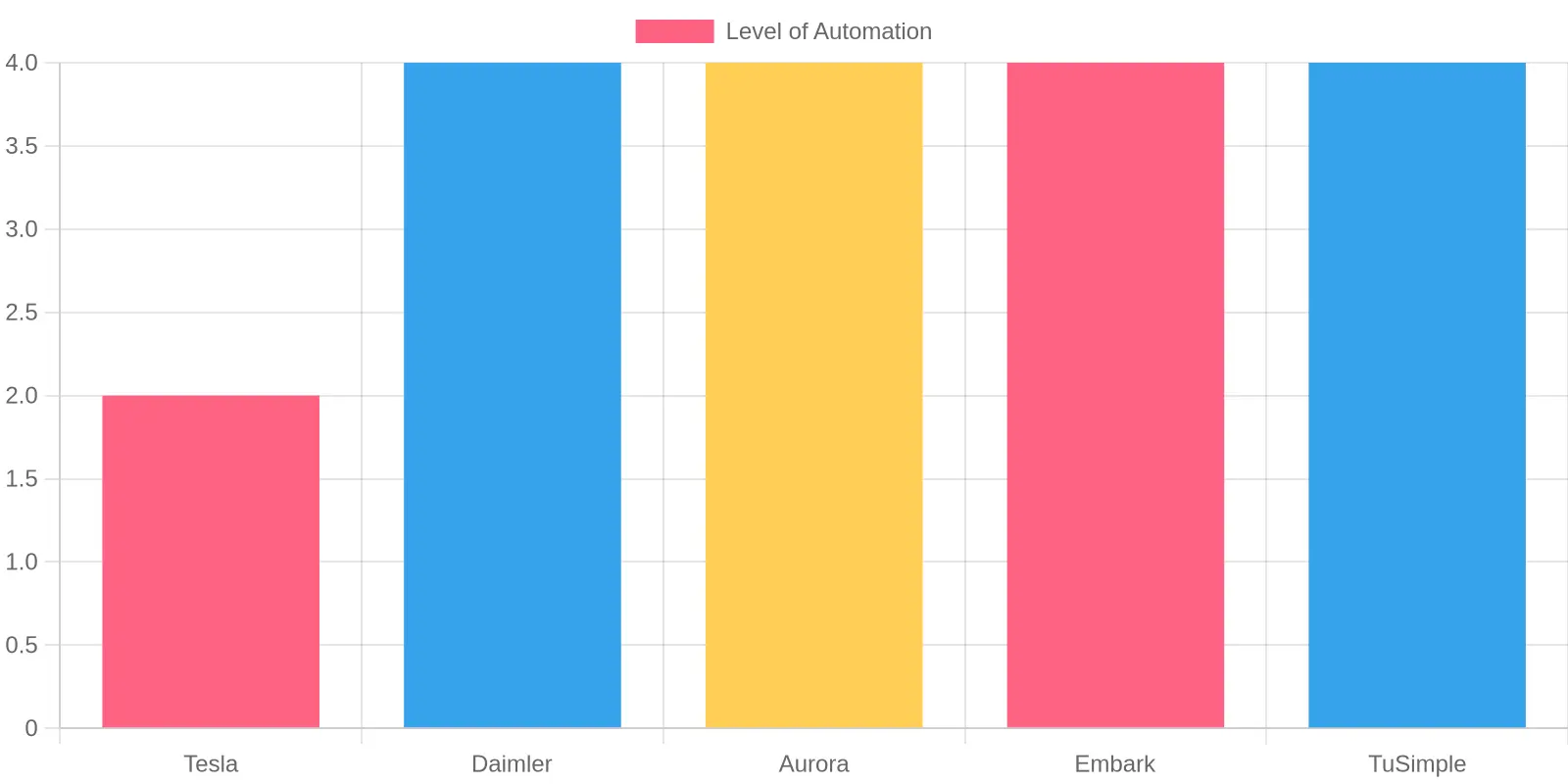
Automation Levels of Trucking Companies
This table provides an up-to-date comparison of the key players in the self-driving semi truck market, highlighting their levels of automation, current market statuses, and future plans. The development in this sector indicates diverse approaches and varied timelines for commercial deployment, making it crucial for trucking company owners and fleet managers to stay informed. Learn more about current trends in the trucking industry and understand the impact of tariffs on heavy trucks.
The Importance of Autonomous Technology for Trucking Efficiency
The trucking industry is on the brink of a revolutionary transformation, largely fueled by advancements in autonomous technology. This shift is not merely a novelty; it presents tangible benefits that enhance operational efficiency, reduce costs, and boost safety. By automating driving functions, companies can expect a significant decrease in delivery times and potential reductions in fuel consumption. For instance, a recent delivery by TuSimple, a leader in autonomous trucking, showcased a remarkably efficient run, completing a route 10 hours faster than traditional human-driven trucking. This instance underscores the efficiency gains autonomous vehicles can deliver, given their ability to operate over long distances with minimal pauses.
Economically, the manner in which autonomous technology affects the bottom line is profound. A study highlights that implementing autonomous trucks can reduce operational costs by as much as 20% over the long haul. This decrease stems from reduced labor costs, minimized fuel consumption due to optimized driving patterns, and lowered accident rates, which inherently reduce insurance and repair costs. Furthermore, autonomous trucks can contribute to significantly improved fuel efficiency and sustainability by optimizing their routes based on real-time traffic data and driving conditions. Reports suggest that as of 2023, only 8% of the U.S. trucking fleet utilizes alternative fuels, indicating an emerging opportunity for widespread adoption of eco-friendly, autonomous technologies that align with sustainability goals.
Safety is another critical factor driving the adoption of autonomous trucking. According to the National Highway Traffic Safety Administration (NHTSA), approximately 94% of crashes are caused by human error. By embracing autonomous technologies, the industry stands to drastically reduce these statistics. Innovations in sensor technology and artificial intelligence enable autonomous trucks to detect objects up to 1,000 meters away, allowing for quicker reactions to potential hazards. Enhanced safety features not only protect the convoy but also other road users, fostering a positive reputation for the industry.
The implications of autonomous technology for trucking are far-reaching and set to reshape the logistics and transportation landscape. Businesses that adapt to these technological innovations will likely enhance their competitive edge, leading to better service delivery and customer satisfaction. For trucking company owners and fleet managers, the time is ripe to explore these advancements and integrate them into fleet operations for future growth. To learn more about current trends in the trucking industry, read more about it here. Moreover, understanding how changing regulations may affect your operations is crucial; for insights on navigating these changes, check this article.
Market Statistics on Self-Driving Truck Adoption
The landscape of the trucking industry is undergoing a significant transformation with the introduction of self-driving trucks. As of 2023, the projected adoption rates and the factors influencing these rates illustrate a promising yet cautious trajectory for autonomous vehicles in commercial transportation.
Adoption Rates Forecast
Recent trends indicate that self-driving trucks are expected to see progressive adoption over the next several years. The following table summarizes projected adoption rates from 2023 to 2030:
| Year | Projected Adoption Rate (%) | Comments |
|---|---|---|
| 2023 | 0.5 | Initial deployments in select areas |
| 2024 | 2.5 | Growth in technology and regulatory acceptance |
| 2025 | 10.0 | Increasing investments from tech companies |
| 2026 | 20.0 | Major logistics companies starting pilots |
| 2027 | 35.0 | Wider operational capabilities in urban areas |
| 2028 | 50.0 | Significant market penetration and adoption |
| 2029 | 75.0 | Broader acceptance and additional regulations |
| 2030 | 90.0 | Standard in logistics and freight transportation |
Drivers of Adoption
Several factors are contributing to the increasing rate of adoption of self-driving trucks:
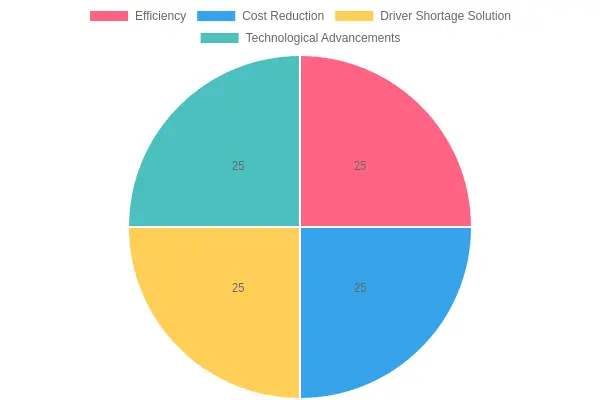
- Efficiency: Self-driving trucks operate continuously without the need for mandated rest breaks. This capacity allows for accelerated delivery times, making logistics operations more efficient.
- Cost Reduction: The implementation of autonomous trucks can significantly cut operating costs, enabling logistics companies to enhance their profit margins.
- Addressing Driver Shortages: The ongoing shortage of qualified truck drivers is a pressing issue in the industry. Autonomous trucks offer a solution to this problem, providing a potential alternative to fulfill transportation needs.
- Technological Advancements: Continuous advancements in automation and AI technologies make self-driving trucks increasingly viable. The integration of sophisticated systems paves the way for greater functionality in logistics operations.
Perception and Concerns
Despite the optimistic forecasts, concerns remain regarding the readiness of self-driving trucks for full-scale implementation. According to various industry experts, there are fears surrounding the decision-making capabilities of these vehicles in critical situations. In a recent study, it was revealed that while 66% of drivers expressed apprehension towards self-driving vehicles, 25% remained undecided. This tension highlights the need for ongoing technological development and regulatory considerations as the industry moves forward.
Graphical Data Representations
Projected Adoption Rate
Below is a line graph displaying the projected adoption rate of self-driving trucks over the years:

Reasons for Adoption of Self-Driving Trucks
Additionally, a pie chart reveals the primary reasons for the adoption of self-driving trucks among logistics firms:
Conclusion
As self-driving trucks start making their way into commercial use, the convergence of technology, efficiency, cost benefits, and solutions to labor shortages is likely to accelerate their adoption. While some apprehension exists regarding their full operational capabilities, ongoing advancements indicate that the industry is poised for transformation. For trucking company owners, fleet managers, and logistics firms, staying abreast of these developments will be crucial to maintaining competitive advantage in the evolving marketplace.
For more insights about current trends in the trucking market, learn more here.
Furthermore, understanding how tariffs affect truck prices can be beneficial, read more about it.
Analysis of Major Players in the Self-Driving Semi Truck Market
The self-driving semi-truck market has seen significant advancements, with several companies emerging as leaders in this evolving sector. This analysis delves into the top companies that have made their mark in this field, exploring their technologies, market strategies, and competitive advantages.
1. TuSimple
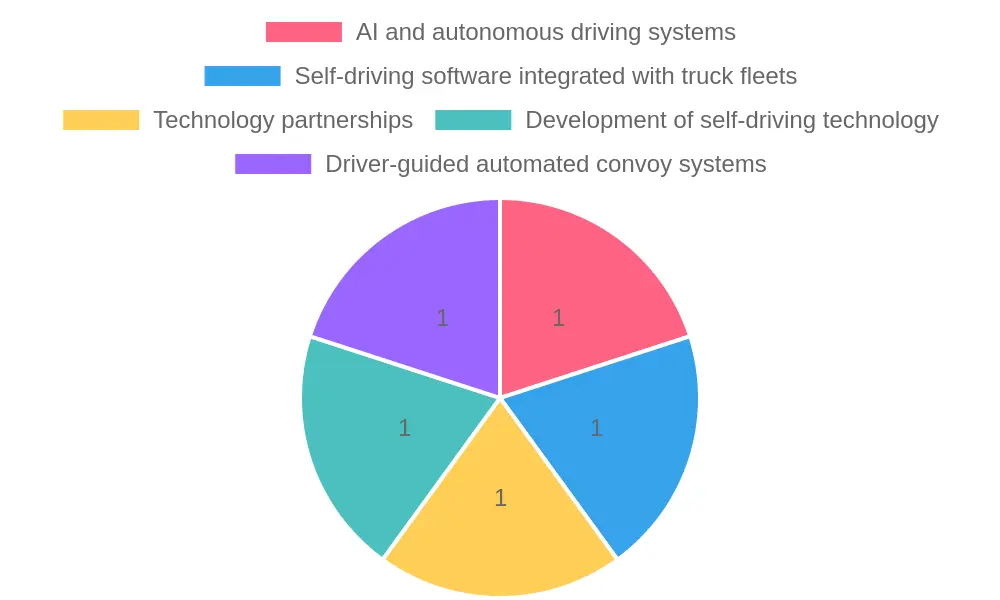
Core Technology: AI and autonomous driving systems.
Market Strategy: TuSimple focuses on selling self-driving trucks to fleet operators and has successfully completed fully autonomous freight runs. The company has formed partnerships with major logistics companies, such as UPS and FedEx, emphasizing the safety, scalability, and efficiency of their trucks.
2. Embark
Core Technology: Self-driving software integrated with existing truck models.
Market Strategy: Embark gained attention for retrofitting existing trucks with autonomous technology. However, recent layoffs indicate a potential winding down of operations, suggesting they may be refining their focus or facing financial challenges.
3. Aurora
Core Technology: Technology partnerships, notably with Toyota.
Market Strategy: Aurora focuses on deploying its technology on high-volume freight routes, such as the Dallas to Houston corridor. The company has made substantial investments in research and development to ensure robust solutions for the trucking industry.
4. Torc Robotics
Core Technology: Development of self-driving technology.
Market Strategy: As an independent subsidiary of Daimler Truck, Torc Robotics aims to commercialize autonomous trucking solutions while ensuring stringent safety measures are met through collaborations with companies like Foretellix on safety validation systems.
5. Locomation
Core Technology: Driver-guided automated convoy systems.
Market Strategy: Locomation’s innovative technology allows for a leading truck to be piloted by a driver while following trucks operate autonomously. This dual-truck system seeks to enhance the safety and efficiency of semi-autonomous truck operations.
Comparative Overview of Core Technologies
Here is a pie chart illustrating the core technologies utilized by various players in the self-driving semi truck market:
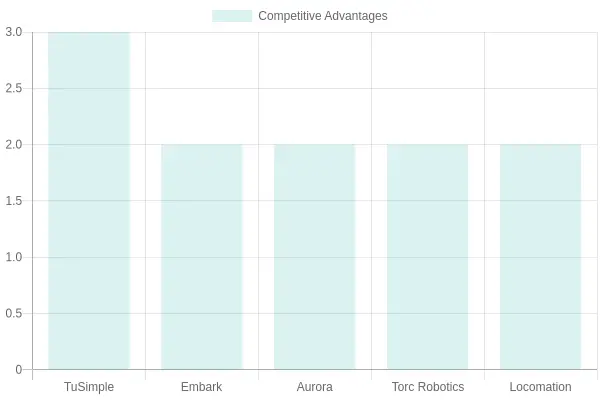
Comparative Overview of Competitive Advantages
To further understand how these companies stack up against each other, see the following table outlining their competitive advantages:
| Company | Competitive Advantages | Source |
|---|---|---|
| TuSimple | – Completed fully autonomous freight runs – Partnerships with major logistics companies like UPS and FedEx – Focus on safe, scalable, and fuel-efficient trucks |
Fortune Business Insights |
| Embark | – Specializes in retrofitting existing truck models with autonomous technology – Established collaborations for enhancing technology |
Robotics and Automation News |
| Aurora | – Significant investments in R&D for autonomous technology – Focus on routes with high freight volumes (e.g., Dallas to Houston) |
Persistence Market Research |
| Torc Robotics | – Collaborates with Foretellix for safety-driven validation systems – Focused on developing autonomous solutions specifically for trucking |
Next MSC |
| Locomation | – Sequential autonomous vehicle technology – Previous innovation in fleet safety and efficiency |
TT News |
Here is a bar chart summarizing the competitive advantages of these companies in the autonomous trucking sector:
Conclusion
As the self-driving semi truck market continues to evolve, companies like TuSimple, Aurora, Torc Robotics, and Locomation are at the forefront of this transformation. Their innovative technologies and strategic approaches are not only reshaping the future of logistics and freight movement but also highlighting the growing role of automation in the transportation sector. The insights from this analysis can guide trucking company owners and fleet managers in understanding the competitive landscape and making informed decisions regarding investments in self-driving technology.
For further insight into current trends in used truck sales, learn more here and explore the potential impacts of current tariffs on trucking operations here.
“The future of autonomous trucking is not just about replacing human drivers but enhancing logistics efficiency and addressing supply chain challenges. We can expect more than 10 million autonomous trucks on the roads by 2030, but the focus will remain on collaboration between humans and machines to maximize the benefits of this technology.”
– Industry Expert, Lintech
In discussions about who is taking the lead in self-driving commercial semi trucks, it’s clear that industry leaders are investing heavily in this technology. For instance, a prominent report indicates that autonomous trucking could revolutionize logistics and freight brokerage, making the supply chain more effective while addressing pressing challenges such as driver shortages and high operational costs.
Autonomous trucking stands at the intersection of innovation and necessity, driven by advancements in machine learning, sensor technology, and artificial intelligence. Major manufacturers are actively developing semi-autonomous models, piloting them in real-world situations, and gaining crucial data to refine their designs. To delve deeper into the implications of this technological shift, here’s how trends in used truck sales are evolving.
Furthermore, as autonomous technologies mature, the impact on employment and operational procedures will unfold, highlighting the essential collaborative future of human drivers and autonomous systems in the trucking industry.
For more insights on market dynamics and their impact, check out this article on the impact of 25% tariffs on heavy trucks.
Conclusion
The evolution of self-driving commercial semi trucks is an ongoing narrative that is reshaping the future of the trucking industry. As technology continues to develop and companies like Embark Trucks, TuSimple, and Kodiak Robotics lead the charge, the landscape of logistics and freight transportation is poised for transformational change.
Key Takeaways:
-
Industry Leaders: Companies such as Embark, TuSimple, and Uber are at the forefront, pushing the boundaries of autonomous vehicle capabilities. Their significant milestones-such as autonomous lanes and the first driverless road tests-signal a robust commitment to innovation and safety in truck transportation
learn more about these advancements. -
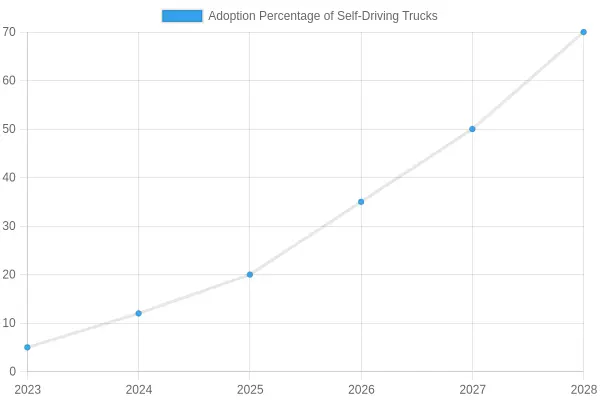
Impact on the Trucking Industry: The integration of autonomous trucks is expected to address current labor shortages, enhance safety by reducing human error, and increase operational efficiency. Reports indicate that the projected adoption of self-driving technology in the commercial truck fleet is anticipated to grow tremendously in the coming years-from 5% in 2023 to up to 70% by 2028 (refer to the graph below).
- Call to Action: For trucking company owners, fleet managers, and stakeholders in logistics and freight brokerage, the time to adapt to these advancements is now. Staying informed about the evolving landscape of self-driving technology will not only be crucial for maintaining a competitive edge but also for ensuring sustainable growth in an increasingly automated industry. Continuous updates on trends and disruptions in the trucking sector can be accessed through resources such as current trends in used truck sales and navigating economic uncertainties.
Embracing this evolution is vital as self-driving technology develops rapidly. Trucking companies are encouraged to actively engage with these innovations, ensuring they harness the full potential of what lies ahead.
As we witness the transformation of the trucking industry, let us not forget that innovation is fueled by an outlook set on progress and adaptability. Prepare today to thrive in the automated world of tomorrow.
As self-driving truck technology continues to evolve, many trucking company owners and fleet managers have questions about its implications, operational efficiencies, and safety. Below are some frequently asked questions regarding self-driving commercial semi-trucks, along with concise answers to address common concerns.
1. What are self-driving trucks?
Self-driving trucks, also known as autonomous trucks, are vehicles equipped with technology that enables them to operate without human intervention. These trucks utilize various sensors, cameras, and advanced algorithms to navigate roads, make decisions, and transport goods efficiently.
2. Who are the leaders in self-driving truck technology?
Several companies are leading the charge in self-driving truck development, including:
- Waymo: Initially developed by Google, Waymo has been testing autonomous trucks extensively.
- Tesla: Known for its electric vehicles, Tesla is also working on autonomous driving technology for its truck line.
- Aurora: This tech company focuses on self-driving systems and has partnerships with several trucking fleets.
- TuSimple: Specializes in self-driving technology specifically for long-haul trucking.
3. What are the benefits of using self-driving trucks?
Self-driving trucks offer numerous advantages, such as:
- Cost Efficiency: They can significantly reduce labor costs.
- Increased Productivity: Autonomous trucks can operate for longer hours, minimizing downtime during transportation.
- Safety: By utilizing advanced sensors and algorithms, self-driving trucks can potentially reduce accidents caused by human error.
- Fuel Efficiency: Studies suggest that autonomous driving can improve fuel efficiency, possibly cutting costs by at least 15%.
4. Are self-driving trucks safe?
Current data suggests that self-driving trucks are designed with safety as a priority. They include:
- Advanced safety features like sensors and cameras to prevent accidents.
- Continuous monitoring of road conditions and immediate response capabilities.
However, public confidence is still being established, with ongoing research and testing necessary to validate their safety across varied conditions.
5. What is the current state of self-driving truck deployment?
Self-driving trucks are being tested on major highways in states like Texas, Florida, and Arizona, where conditions are conducive to automation. Companies such as Uber and Waymo are conducting trial deliveries to assess operational viability. You can learn more about these emerging trends in the trucking industry in our article on current trends in used truck sales growth.
6. What are the regulatory challenges facing self-driving trucks?
The introduction of self-driving trucks is subject to regulatory scrutiny. Current challenges include:
- Federal and state regulations that may restrict autonomous vehicle operations.
- Ongoing discussions about job displacement and the implications for traditional truck drivers.
- Establishing safety standards for testing and operational deployment.
7. How do self-driving trucks impact labor in the trucking industry?
While self-driving trucks could enhance operational efficiencies, they also raise concerns about job security for traditional drivers. Predictions vary, but some studies suggest that autonomous trucks could significantly reduce the demand for human truck drivers, potentially eliminating thousands of jobs. For insights into economic impacts and employment trends in the trucking sector, navigate economic uncertainties through our latest research.
8. How long will it take for self-driving trucks to become mainstream?
While predictions vary, industry experts suggest that widespread use of self-driving trucks could be realized within the next decade, particularly for long-haul routes. Technological advancements and regulatory acceptance will play crucial roles in this timeline.
9. What are the environmental implications of self-driving trucks?
Self-driving trucks can contribute to reduced greenhouse gas emissions due to:
- More efficient driving patterns that enhance fuel economy.
- Potential integration with electric vehicle technology further reducing harmful emissions. Companies are also exploring the impact of emissions on used truck prices and how these technologies can interact in the market.
10. Will self-driving trucks be able to handle all types of freight?
Self-driving technology is currently more suited for long-haul transport where conditions are more predictable. Challenges remain for urban deliveries that require complex navigation and interaction with traffic. However, ongoing advancements are addressing these limitations.
In conclusion, as self-driving trucks continue to make strides in technology and deployment, the trucking industry will need to adapt to the changes they bring. Addressing these FAQs can provide clarity and foster informed decision-making among trucking company leaders and fleet managers.
By delving deeper into the impacts of emerging technologies on trucking, stakeholders can stay ahead of the curve. For insight on how tariffs impact truck sales, read more here.
The future of trucking is not just about efficiency; it’s about innovating in a responsible way.