
Introduction
Becoming a commercial truck driver is more than just a career choice; it’s a pivotal role that significantly impacts the logistics industry and the economy as a whole. With the demand for goods transportation skyrocketing, commercial truck drivers serve as the backbone of the supply chain, ensuring that products reach their destinations efficiently and safely. The significance of this profession extends beyond individual employment; it plays a crucial part in sustaining various sectors, from retail to construction. As fleets grow and the industry evolves, understanding how to navigate the path to becoming a commercial truck driver has never been more essential. By empowering a skilled workforce, the logistics industry can meet increasing demands while also adapting to innovations, such as electric trucks and modern technologies, that are transforming transportation dynamics. For those considering this path, insights into the training, certifications, and opportunities available will be invaluable in building a successful career in trucking.
Qualifications to Become a Commercial Truck Driver
To ensure a successful career in trucking, aspiring drivers must meet several key qualifications to become a commercial truck driver. These qualifications encompass educational requirements, licensing, and certifications.
-
Educational Requirements:
-
A high school diploma or equivalent is often required.
-
Although no formal college degree is necessary, many employers favor candidates with postsecondary training, particularly programs offered by vocational schools or community colleges. These programs generally last several weeks to a few months and cover topics like vehicle operation and safety regulations.
-
To learn more about the educational background for truck drivers, check the U.S. Bureau of Labor Statistics.
-
Licensing:
-
A Commercial Driver’s License (CDL) is mandatory, which involves passing a series of written tests, skills tests, and meeting specific medical certification standards as outlined by the Federal Motor Carrier Safety Administration (FMCSA).
-
Key Certifications:
-
Completion of a certified commercial driver training program. Graduates usually receive a certificate, which can aid in employment.
-
Additional endorsements may be required depending on the types of vehicles you intend to operate, such as hazardous materials (HAZMAT) endorsements.
By fulfilling these qualifications, drivers can embark on a career that is pivotal to the logistics and transportation industries.
Overview of Truck Driver Training Programs
As the demand for qualified commercial truck drivers continues to grow, formal training has become a crucial step for aspiring drivers. Various institutions offer specialized truck driver training programs designed to equip students with the necessary skills and knowledge required for a successful career in trucking.
Types of Training Programs
-
Class A CDL Programs
These programs are designed for drivers who wish to operate large tractor-trailers. The training typically includes both classroom instruction and hands-on driving experience, ensuring students master essential skills such as vehicle handling, road safety, and federal regulations. -
Class B CDL Programs
Tailored for those looking to drive vehicles such as delivery trucks and buses, Class B programs provide a comprehensive understanding of the specific responsibilities associated with these vehicles. Students learn about vehicle inspection, cargo handling, and safe driving practices. -
Online and Hybrid Training
With the rise of technology, many institutions now offer online or hybrid formats for theory coursework. These programs allow for flexible learning while still requiring hands-on practice to develop driving skills. -
Simulator Training
Some advanced programs incorporate truck simulators, which provide realistic driving scenarios without the risks associated with on-road training. These simulators can significantly enhance a student’s ability to respond to emergencies and improve hazard perception skills
Institutions Offering Training
Several respected institutions provide comprehensive training for truck drivers:
- Mountain Transport Institute (MTI): Recognized as a leading school in North America, providing a blend of classroom and hands-on training. Learn more about MTI.
- Luma: This organization focuses on assessing and improving the effectiveness of training programs using solid evaluation methods, as highlighted in their white paper. Read more about Luma’s assessment program.
The Importance of Formal Training
Undergoing formal training not only prepares drivers for the technical aspects of operating a commercial vehicle but also emphasizes safety, compliance with regulations, and professional responsibility. A well-structured training program can lead to better job placements, safer driving records, and ultimately, higher earning potential. As the industry continues to evolve, investing in robust training programs remains vital for future truck drivers and employers alike.
Comparing Trucking Schools: An Informative Table
When considering how to become a commercial truck driver, selecting the right trucking school is crucial for success. Below is a comparison table of various trucking schools based on key criteria such as cost, duration, accreditation, and job placement rates.
| School | Location | Cost (USD) | Duration (Weeks) | Accreditation | Job Placement Rate (%) | Source |
|---|---|---|---|---|---|---|
| HDS Truck Driving Institute | Tucson, Arizona, USA | $7,995 | 6 | ACCSC, Arizona Department of Transportation | 95%+ | HDS Truck Driving Institute |
| Universal Technical Institute (UTI) – CDL Program | Multiple U.S. Locations | $10,000-$14,000 | 8-12 | ABET, ACCSC | ~90% | UTI Official Site |
| PrimeMover Truck Driving School | Multiple U.S. Locations | $8,500-$11,000 | 8 | Not accredited (state-approved) | ~85% | PrimeMover |
| Western States Truck Driving School | Phoenix, Arizona | $7,500 | 6 | ACCSC | ~92% | Western States |
| Average (BLS Data – 2023) | National U.S. Average | $8,000 | 8 | Varies by school | ~88% | U.S. Bureau of Labor Statistics |
Note: Job placement rates are based on school-reported data and may vary by year and region. BLS data reflects national trends in truck driver employment and training outcomes.
This table should help you make an informed decision when selecting trucking schools that fit your needs and career goals. For additional insights, feel free to explore our blog concerning the trucking industry.

Job Demand for Commercial Truck Drivers
The demand for commercial truck drivers is on the rise, fueled by various economic factors and trends within the logistics and transportation industries. According to the U.S. Bureau of Labor Statistics, employment of commercial truck drivers is projected to grow by 6% from 2022 to 2032. This growth aligns with the average for all occupations and highlights the sustained demand for goods transportation across the country. Despite technological advancements and automation in some areas of the trucking industry, the need for skilled drivers remains crucial. The complexity of last-mile delivery, adherence to safety regulations, and the increasing volume of freight underscore this necessity (Bureau of Labor Statistics).
Furthermore, the American Trucking Associations reported a shortage of approximately 80,000 truck drivers in the U.S. as of October 2023, attributing this gap to an aging workforce, high turnover rates, and challenges in recruiting new drivers. The organization predicts that this shortage could expand to about 160,000 drivers by 2030 if not addressed. In response to this growing demand, many trucking companies are increasing wages and enhancing benefits to attract qualified candidates (American Trucking Associations).
Key Trends:
- Aging Workforce: A significant portion of truck drivers is nearing retirement age, with many drivers aged between 36-55 making up almost 80% of the workforce.
- Increased Wages: Median annual pay for truck drivers exceeds $70,000, with many companies offering bonuses and improved working conditions to fill vacancies (U.S. News & World Report).
- Digital Platforms: Approximately 59% of individual drivers are utilizing online platforms to find freight loads, indicating a shift towards digital solutions in the industry.
In summary, the trucking industry is poised for continued growth, driven by the expanding need for logistical support and the crucial role of commercial truck drivers.
Safety Regulations and Compliance
Staying compliant with safety regulations for truck drivers is imperative for ensuring both driver safety and overall public safety on the roads. The following are essential regulations enforced by key governing bodies such as the Department of Transportation (DOT) and the Federal Motor Carrier Safety Administration (FMCSA).
Key Compliance Standards:
- Commercial Driver’s License (CDL): Every truck driver must possess a valid CDL, which confirms their ability to operate commercial vehicles safely. The application process involves meeting stringent criteria to ensure qualification.
- Medical Examinations: Drivers are required to pass periodic medical examinations to evaluate their physical fitness and ability to handle the demands of driving.
- Hours-of-Service Rules: To mitigate fatigue-related incidents, truck drivers must adhere to specific hours-of-service (HOS) regulations. These rules restrict the number of consecutive hours spent driving and mandate sufficient rest periods.
- Vehicle Inspections: Regular vehicle inspections and maintenance are crucial. Drivers must ensure their trucks meet safety standards before taking to the road, helping to prevent mechanical failures that could lead to accidents.
- English Proficiency: Effective communication is vital. Regulations require that drivers demonstrate proficiency in English, enabling them to understand traffic signs, respond to official inquiries, and complete essential documentation accurately.
Recent measures, such as tightening regulations concerning nonresident CDLs and enforcing English proficiency requirements, underscore the emphasis on improving highway safety. For further insights on driving regulations, visit the DOT’s commercial vehicle safety page.
Pay Scales for Commercial Truck Drivers by State
Understanding the pay scales for commercial truck drivers is crucial for both drivers and fleet managers. The following chart illustrates the average hourly wages of commercial truck drivers across various states in 2023, with significant differences reflecting regional demand and cost of living.
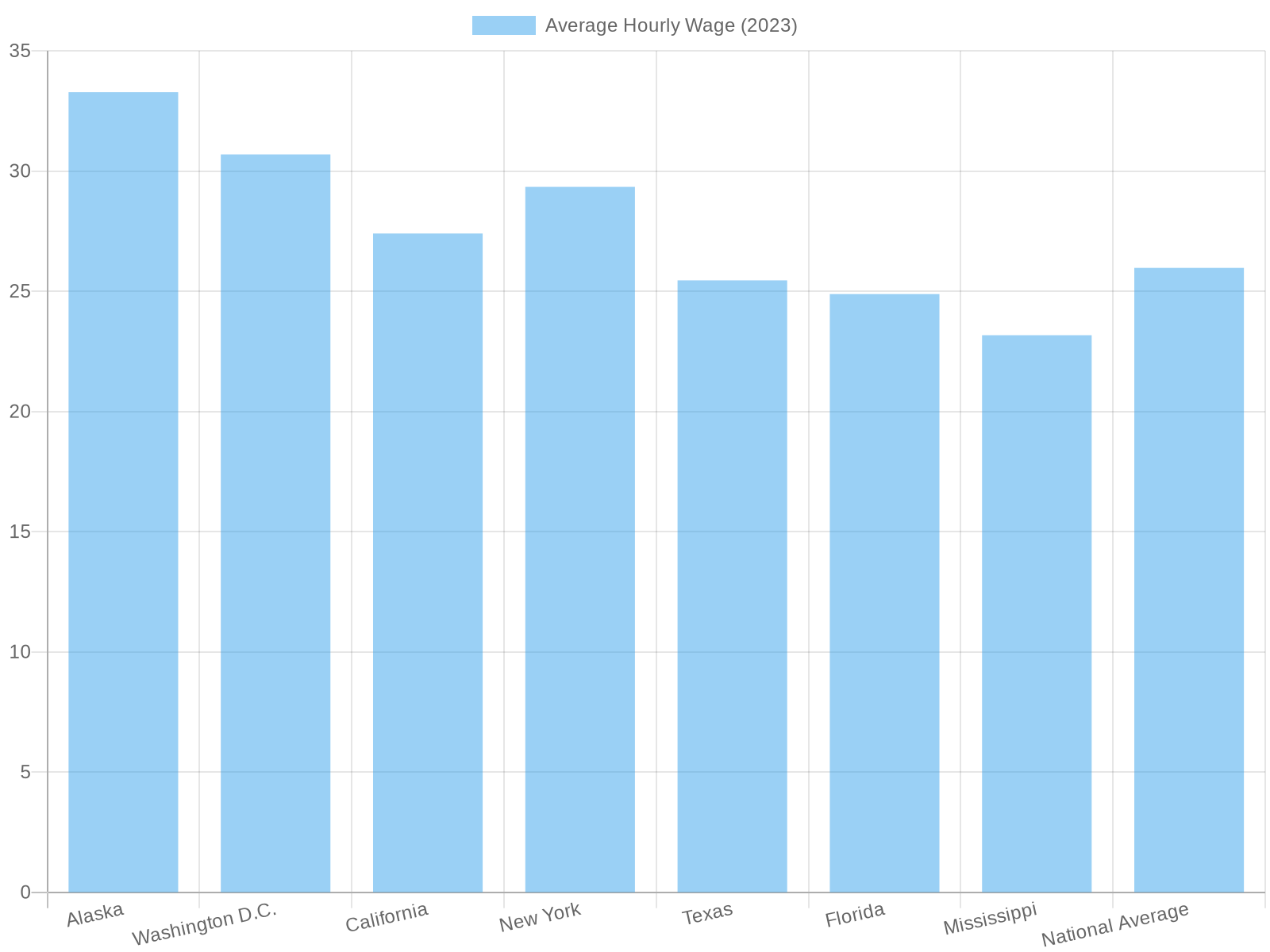
Source: U.S. Bureau of Labor Statistics, Occupational Employment and Wages, May 2023
Average Hourly Wages by State (2023)
| State | Average Hourly Wage ($) |
|---|---|
| Alaska | $33.28 |
| Washington D.C. | $30.69 |
| California | $27.40 |
| New York | $29.34 |
| Texas | $25.45 |
| Florida | $24.88 |
| Mississippi | $23.17 |
| National Average | $25.97 |
This data provides insights into the earning potential for truck drivers depending on where they operate. Fleet managers can use this information to attract talent with competitive salaries tailored to the local market conditions.
In conclusion, the journey to becoming a commercial truck driver is not merely about operating a vehicle; it is a pivotal role that fortifies the logistics industry. With the continuous demand for goods and services, truck drivers are essential in maintaining the supply chain, ensuring products reach their destinations efficiently. Opportunities abound in this field, as drivers can expect a stable income averaging over $10,000 per month, reflecting a robust job market that shows no signs of slowing down. Beyond traditional driving roles, individuals pursuing this career can transition into positions within logistics management or technical support, particularly as the industry embraces new technologies like automation and smart logistics. The potential for career growth, alongside competitive salaries and job stability, makes becoming a commercial truck driver a valuable and rewarding endeavor for those interested in making a significant impact in logistics. For more insights about evolving opportunities in this sector, explore our blog.
Elevate Your Business with Summit Fairings
As a trucking company owner or a fleet manager, you’re constantly seeking ways to enhance efficiency and maximize profits. That’s where Summit Fairings comes into play. Our lightweight, aerodynamically designed fairings can significantly improve your fleet’s fuel efficiency, reducing operating costs and enhancing overall performance. By investing in Summit Fairings, you not only lower your environmental impact but also ensure that your trucks stay at the forefront of innovation in transportation.
Don’t let your competitors get ahead – explore our range of Summit Fairings today to find the perfect fit for your fleet and experience the difference in efficiency and cost-effectiveness!