
The classification of 26ft box trucks as commercial vehicles is pivotal for industries dependent on logistics and transportation. These trucks, designed primarily for the movement of goods, embody a unique blend of capacity, functionality, and compliance with industry standards. In this comprehensive examination, we will delve into five critical chapters that illuminate the multifaceted aspects of 26ft box trucks in commercial applications: the context of usage, their design and purpose, the industry standards that define them, the economic implications of their classification, and the regulatory considerations governing their operation. Each chapter will contribute to a deeper understanding of why these trucks are essential for trucking companies, fleet managers, and various logistics enterprises.
Sizing Up the Mission: Why a 26-Foot Box Truck Is Qualifed as a Commercial Vehicle in Modern Freight
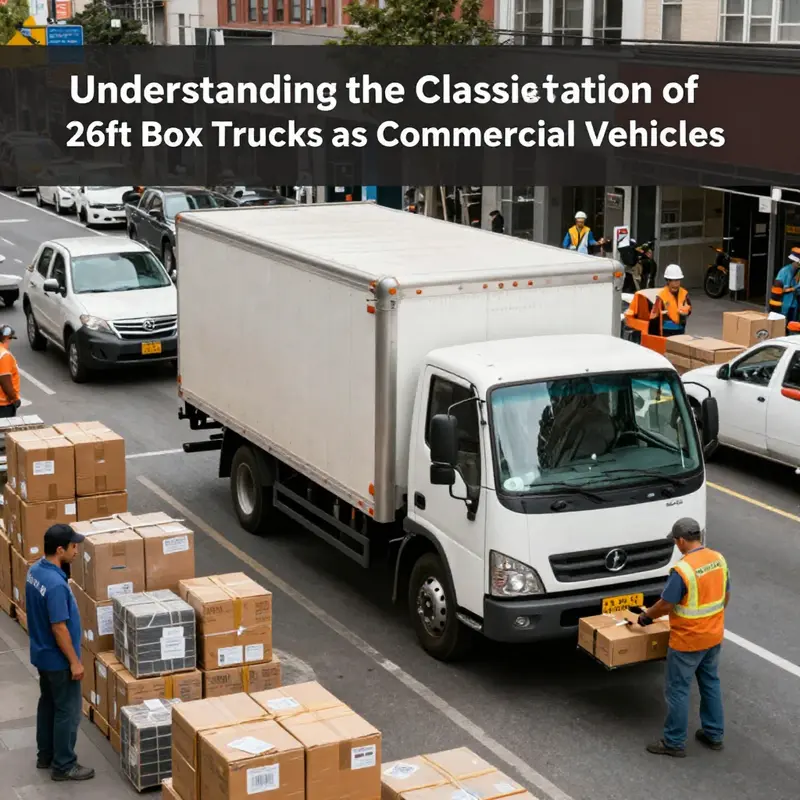
A 26-foot box truck sits at a crucial intersection in the world of freight and logistics. It is not a passenger vehicle, nor merely a private-use van; it is purpose-built to move goods from one point to another with reliability and efficiency that business operations depend upon every day. The question of whether this size of vehicle counts as a commercial vehicle often hinges on function as much as form. When fleets configure their assets for local deliveries, regional distribution, or moving services, the 26-foot box truck becomes a workhorse whose stewardship of cargo—its protection, timing, and security—underpins the broader economic cycle. In practical terms, the designation rests on how the vehicle is used and what it is designed to accomplish. A chassis and body assembled to carry a substantial, enclosed load, a design that emphasizes cargo integrity, weatherproofing, and interior versatility, signals a commercial purpose. The vehicle’s role in the supply chain—carrying goods for business, not just people for personal transport—defines its core identity in the fleet landscape. In the United States, within the logistics ecosystem, the 26-foot box truck is recognized as a standard mid-sized commercial vehicle. It sits alongside larger 53-foot trailers as part of a family of equipment that optimizes distinct segments of the freight process. The classification does not hinge on a single specification or a particular model; it hinges on function. The result is a category that aligns with fleets performing industrial, distribution, and service-oriented tasks that require secure, predictable, and adaptable transit for commercial cargo. The notion is reinforced by how industry observers describe its usage: urban and regional logistics often demand a balance of payload capacity, maneuverability, and reliability. The 26-foot box truck offers a practical answer to the tension between city streets and the need to move sizable quantities of goods. The enclosed cargo area, with its fully sealed design, becomes a flexible canvas for various cargo configurations, from high-value electronics to durable consumer goods, from furniture to appliances. Its weather protection and security features safeguard sensitive shipments against the elements and theft, a factor that matters as goods travel through multiple hands and facilities along a typical route. In this sense, the license to operate as a commercial vehicle arises not simply from the vehicle’s size but from its operational purpose. The chamber of commerce and fleet managers alike recognize that a box truck of this length is well suited to the “last mile” and “middle mile” tasks that keep urban markets supplied and households served. The same chassis, configured for local deliveries or short regional runs, can be adapted for a range of specialized duties, from temperature-controlled transport to rapid loading and unloading with lift-gate mechanisms. The ability to tailor the interior to a company’s needs—without sacrificing structural integrity—positions the 26-foot box as a versatile asset rather than a one-size-fits-all utility. The practical implications of this classification extend beyond mere labeling. Insurance products, regulatory compliance, and licensing for commercial use shift with the vehicle’s designation. Fleet operators plan differently when the vehicle is treated as a commercial asset, budgeting for maintenance cycles, driver training, route optimization, and customer-service expectations that accompany business-grade logistics. The vehicle’s size, weight, and loading capacity influence what roads it can navigate, what permits may be required, and how it integrates with a company’s broader fleet mix. The 26-foot box truck’s standing as a commercial vehicle is a reflection of both its physical design and its operational envelope. It is built to withstand the rigors of daily cargo handling, repeated stops, and the demands of a busy schedule. The cargo area is typically reinforced with a robust frame and an interior layout that can support heavy loads while maintaining access to the cargo. The enclosure protects goods from weather and theft, which is essential when shipments include items sensitive to temperature fluctuations or physical damage. In many fleets, the box design also supports modular customization: partitions, shelving, and tie-downs can be configured to secure a wide range of cargo types, from furniture to electronics, from dry goods to perishable items when the appropriate equipment is added. The flexibility of this platform helps explain why it has become a standard in local delivery ecosystems. E-commerce growth, urbanization, and the rise of regional distribution centers all contribute to a demand for dependable, midsized vehicles that can operate efficiently within city environments and still deliver meaningful payloads. The 26-foot box truck is particularly well suited to this middle ground, offering enough cargo space to move substantial quantities of goods without the parking and clearance challenges often associated with larger trucks. This balance between capability and maneuverability makes it a practical choice for fleets seeking to optimize route density, driver productivity, and service levels. The concept of customization extends beyond the cargo area. Drivetrain configurations—including options for two-wheel-drive and four-wheel-drive layouts, as well as the possibility of more advanced configurations in some markets—allow operators to match performance with payload and terrain. Wheelbase and suspension choices enable fleets to tailor handling characteristics to the routes they run, whether urban arterial corridors with frequent stops or suburban corridors that require steadier highway performance. The result is a vehicle that can be tuned to deliver steady, predictable performance in the service of a commercial mission. The chapter’s exploration of usage context makes clear that the box truck’s value to a business rests on more than capacity. It is the combination of a protected, configurable cargo area; a chassis built to endure repetitive loading cycles; and a drivetrain and suspension tuned for the demands of real-world routes. This combination supports a broad range of commercial activities, from quick-turnaround local deliveries to mid-range freight tasks and specialized transportation needs. It also aligns with the broader narrative of how modern fleets are evolving to meet shifting market pressures, including labor dynamics, fuel efficiency considerations, and the need to minimize downtime through reliable, modular equipment. For readers who want to explore how this integration of design and use translates into practical policy and planning implications, consider examining how fleets are navigating economic uncertainties in trucking markets. This perspective helps illuminate the strategic considerations behind asset choice, maintenance scheduling, and route planning that accompany the decision to designate a 26-foot box truck as a commercial vehicle. Navigating economic uncertainties in trucking markets.
In the same vein, those responsible for long-term asset optimization recognize that the box truck’s role extends into the future of logistics. It is compatible with refrigerated installations for perishable cargo, lift gates to ease loading and unloading in constrained spaces, and anti-rust coatings that extend life in challenging environments. The interior can be customized to align with specific operations, whether that means simple shelving for dry goods or more elaborate configurations for delicate shipments. The performance envelope—a diesel-powered drivetrain with the option of 4×2 or 6×4 configurations and a choice of wheelbases and suspensions—gives fleets a tool that can be matched to route profiles, payload expectations, and maintenance plans. The ongoing emphasis on durability and compliance underscores a practical reality: commercial operations demand vehicles that can withstand the rigors of daily use while meeting evolving emissions and safety standards. In today’s markets, that means a truck that is not only capable but also compliant with the environmental and safety expectations of the jurisdictions in which it operates. When viewed through the lens of fleet operations, the 26-foot box truck emerges as a reliable anchor—an asset that can be deployed across diverse tasks while delivering predictable performance, protecting cargo, and supporting efficient service models. It is, in short, a core instrument in the orchestration of modern commercial logistics, a vehicle with a defined mission, built to meet the demands of a busy economy, and adaptable enough to respond to the changing rhythms of urban and regional commerce. External resource: Alibaba listing for 26 ft Box Truck
Between City Streets and Supply Chains: The Design and Purpose of the 26-Foot Box Truck in Commercial Use
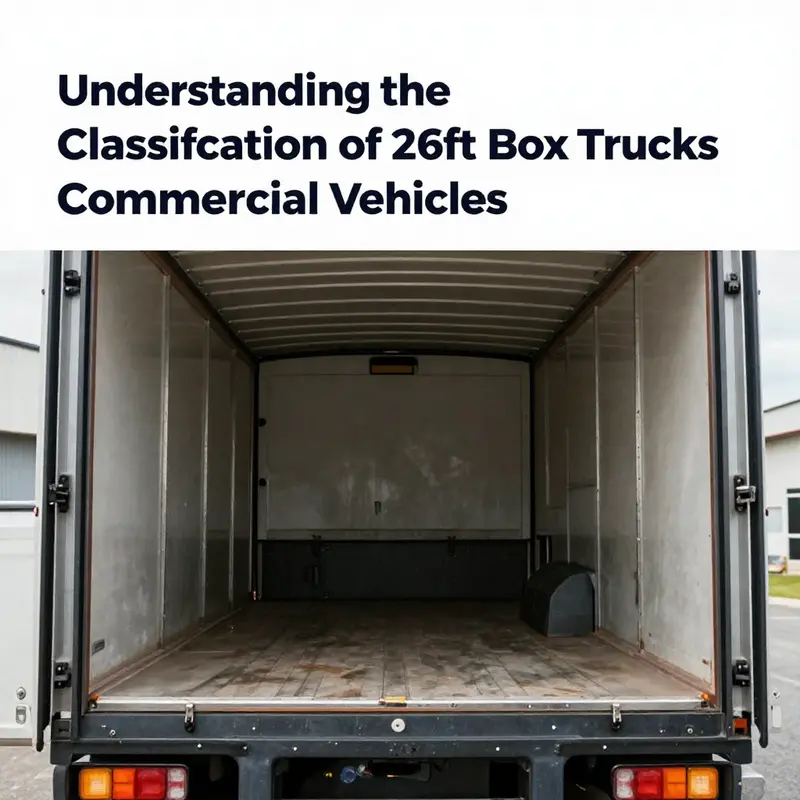
When fleets plan a rhythm of door-to-dock deliveries that keeps shops stocked and production lines humming, the 26-foot box truck stands out as a deliberate balance of capacity, agility, and reliability. This size is not a mere social marker on the road; it is a carefully engineered tool for commerce. In urban cores and regional corridors alike, these box trucks are chosen because they can carry substantial goods while still maneuvering through traffic and parking constraints that larger tractors and trailers cannot easily surmount. The payload capacity associated with these chassis—typically in the range of about 1 to 10 tons—gives fleets the flexibility to move a diverse mix of products, from consumer packaged goods to construction materials, without resorting to the much larger and less nimble freight equipment. The result is a vehicle that functions as a mobile distribution center, an extension of a business’s logistics network, and a visible sign of a company’s capability to serve customers quickly and efficiently. It is precisely this blend of volume and urban practicality that anchors its classification as a commercial vehicle, a label grounded in function rather than merely in form. The chapter that follows looks beyond the silhouette to explore why the 26-foot box truck is designed the way it is and how that design serves the everyday demands of commerce.
The core design philosophy centers on an optimized triad: cargo capacity, maneuverability, and operational efficiency. From the outset, builders configure the box with a reinforced steel frame to handle heavy and repeated loads without compromising safety or durability. This structural backbone is essential when the vehicle routinely goes from a loading dock to a busy street and back, often under conditions that test suspension and chassis endurance. The cab-and-chassis configuration is deliberate too. By separating the cab from the cargo area, manufacturers enable extensive customization that lets fleets tailor the vehicle to very specific operations. Some fleets opt for refrigerated bodies to maintain product integrity for perishables; others choose stake bodies for loose goods or secure van-style bodies for sensitive shipments. There are even configurations that deploy wing-mounted side panels to improve access to cargo without sacrificing exterior dimensions. Such versatility is not a luxury; it is a necessity for fleets that must serve manufacturers, retailers, service providers, and logistics hubs with equal reliability.
The practical implications of this design extend into daily operations. A box truck’s enclosed cargo compartment protects goods from weather, theft, and damage, reducing claims and returns. But the enclosure also imposes considerations about loading and unloading. Here the hydraulic liftgate emerges as a transformative feature. In many fleets, a liftgate rated at around 2.5 tons becomes a daily workhorse, capable of lifting heavy pallets with a single operator. This reduces manual handling, curtails the risk of musculoskeletal injuries, and accelerates the cadence of deliveries to restaurants, warehouses, and retailers where multiple stops are the norm. The liftgate’s presence reshapes route planning; it allows smaller crews to manage more frequent deliveries without the physical strain of manual lifting, a factor that can translate into faster service, lower injury risk, and improved driver retention. The liftgate exemplifies how a seemingly modest feature can ripple across a fleet’s efficiency, maintenance costs, and overall service level.
Alongside these functional elements, drive configurations speak to the truck’s mission on varied terrains and in different geographies. Many manufacturers offer multiple drive types, including two-wheel-drive and four-wheel-drive possibilities, to adapt the vehicle to the realities of urban streets, intercity roads, and even off-proad access in certain industrial sites. The choice of drive type influences handling, traction, and fuel economy, traits fleets weigh carefully when designing a fleet that must deliver in all-weather conditions and across a spectrum of locations. The broad appeal of these configurations lies in the capacity to tailor the vehicle to site-specific needs: tight city blocks, restricted loading zones, uneven surfaces at job sites, or lengthy routes between distribution centers. In practice, this means a 26-foot box truck can function as a fleet’s agile workhorse, capable of thriving in city cores one day and performing robust distribution runs the next.
The global supply chain that underpins these vehicles adds another layer of consideration for fleets and buyers. China has emerged as a dominant manufacturing hub, driven by cost efficiencies and advanced engineering standards that support both scale and customization. Within this ecosystem, certain regions specialize in different aspects of the build. Provinces known for chassis production contribute to the vehicle’s strength and durability, while others focus on high-volume bodywork and specialized customization that can create refrigerated bodies, specialized cargo enclosures, or other industry-specific solutions. This geographic specialization allows buyers to select from a broad spectrum of options while preserving consistency in chassis integrity, emissions compliance, and after-sales support. Emissions regulations are a meaningful driver here. The ability to produce chassis and bodies that meet stringent Euro V/VI standards expands the export potential of these mid-sized commercial vehicles and aligns with the evolving regulatory landscapes in many markets. As global logistics networks expand, the capacity to harmonize performance, compliance, and customization becomes a strategic advantage for fleets seeking to scale operations without sacrificing reliability.
The narrative of origin extends beyond the factory floor and into the provinces that shape the supply chain. Hubei, a region with deep ties to chassis production, stands out for engineering that emphasizes compliance and durability. Provinces like Shandong and Hebei specialize in high-volume production and customized bodywork, respectively, offering buyers a broad spectrum of choices in terms of price, performance, and after-sales support. The regional specialization reflects a mature ecosystem capable of delivering complete solutions—from a robust frame to a tailored cargo body—designed to meet the diverse demands of manufacturing, agriculture, food service, and e-commerce fulfillment. For buyers and operators, this means a reliable path from order to upfit, with predictable support and parts availability that minimize downtime and keep fleets on the road.
In discussing whether a 26-foot box truck qualifies as a commercial vehicle, it is essential to anchor the conversation in function as much as in form. The vehicle’s core purpose—carrying goods for business—remains the defining criterion, regardless of the chassis or the exact body style. Its role in the logistics ecosystem is to bridge the gap between production and consumption, serving as a compact, versatile conduit that makes last-mile delivery feasible, day after day. The vehicle’s ability to operate in dense urban environments, deliver to a mix of retail and industrial customers, and adapt to specialized cargo needs underscores why it sits squarely in the commercial domain. This is not a case of a one-size-fits-all truck but a modular platform that can be tuned to the precise rhythms of a company’s supply chain.
As readers seek deeper procurement insights, the practical implications of these design choices come into sharper focus. Fleets that rely on a 26-foot box truck often prioritize reliability, ease of maintenance, and total cost of ownership. The chassis may be chosen for strength and durability, while the bodywork is selected to optimize the specific type of cargo—whether perishables, building materials, or retail merchandise. The liftgate’s presence, the chosen drive configuration, and the upfit options all converge to shape a vehicle that accomplishes more work per shift with less effort from the crew. In this light, the 26-foot box truck becomes less a generic vehicle and more a strategic ally in a company’s operating model. For broader industry trends and fleet optimization strategies, see the McGrath Trucks blog.
To round out the purchasing lens, prospective buyers often consult supplier listings to compare specifications, pricing, and availability. A widely cited reference highlights the liftgate-equipped variant as a practical option for many service and distribution operations, illustrating how such configurations can align with food service, retail, and manufacturing supply chains. This external context helps frame what a buyer might expect in terms of upfit options, service intervals, and long-term maintenance considerations. For readers who want a concrete example of how a liftgate-augmented box truck is positioned in the market, an external listing provides a tangible touchstone for understanding feature sets, load capacities, and accessory compatibility. External resource: Alibaba listing for a box truck with a liftgate.
In sum, the 26-foot box truck embodies a deliberate synthesis of payload, maneuverability, and adaptability. It is engineered to navigate the innumerable stops and varying terrains of modern logistics, while its design choices—reinforced framing, cab-and-chassis upfit, and liftgate integration—translate into real-world gains in safety, speed, and reliability. The vehicle’s regional and global supply chain dynamics further reinforce its suitability for commercial use, enabling fleets to customize equipment to meet local requirements and international standards alike. The result is a versatile, scalable platform that remains a cornerstone of efficient, responsive supply chains, capable of evolving with the needs of diverse industries and markets.
Under the Standard Bearers: How Industry Rules Seal the 26-Foot Box Truck’s Commercial Identity
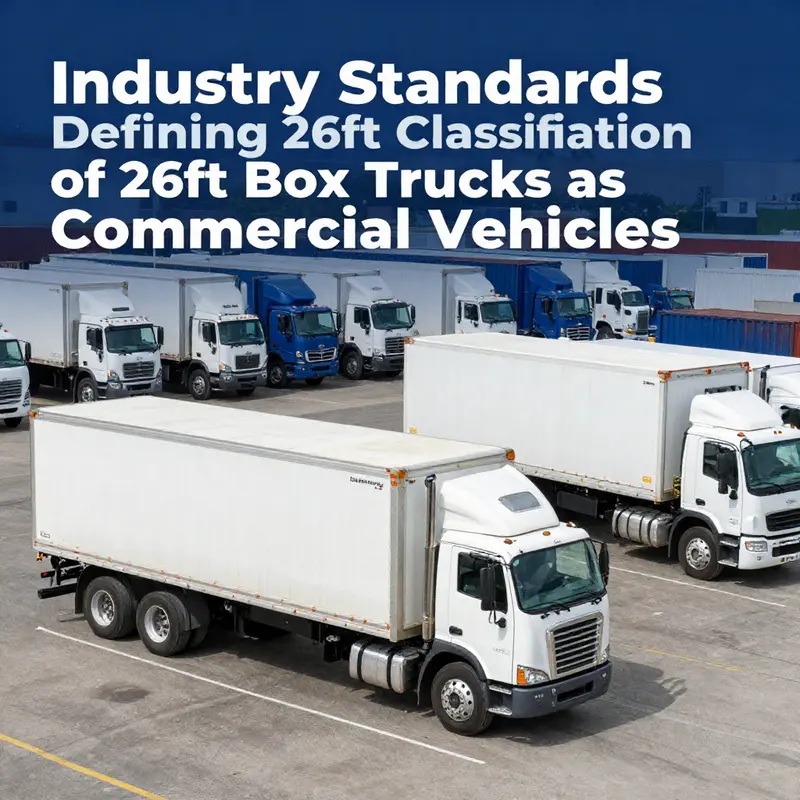
When people ask whether a 26-foot box truck counts as a commercial vehicle, the answer rests less on the cab’s shape and more on the work it performs and the rules that govern that work. This middle-sized box, with its enclosed cargo area and reinforced chassis, is purpose-built for moving goods, supplying stores, delivering freight, or supporting relocation and industrial operations. It is not a passenger carrier. The vehicle’s design, payload capacity, and operational role make it a tool of commerce, and that is precisely what industry and regulators recognize. Across the United States and well beyond, the 26-foot box truck sits at the intersection of practical mobility and formal standards, a vehicle whose identity is defined by function as much as by form. The result is a clear, shared expectation: it is a commercial vehicle, treated as such in fleets, in law, and in everyday logistics planning.
In the United States, the regulatory frame is anchored by the Federal Motor Carrier Safety Administration (FMCSA). The FMCSA classifies commercial vehicles by gross vehicle weight rating (GVWR), a measure that equals or exceeds a threshold that makes a vehicle subject to federal oversight. A typical 26-foot box truck falls into the medium-duty category, with GVWRs commonly ranging from 14,001 pounds to 26,000 pounds. That range is not arbitrary; it aligns with the kinds of responsibilities these trucks shoulder—freight handling, multi-stop deliveries, and the rigors of urban and suburban routes. Vehicles in this category are subject to driver qualification standards, hours-of-service regulations, regular vehicle inspections, and mandatory record-keeping. These rules exist to ensure that operators are prepared, that the vehicle is safe and roadworthy, and that there is accountability for the use of the vehicle on daily schedules. The GVWR-based framework is pragmatic because it scales with weight, capability, and risk, providing a uniform basis for enforcing safety, performance, and accountability across varied operations.
Safety standards issued by the National Highway Traffic Safety Administration (NHTSA) complement the GVWR framework. NHTSA sets federal motor vehicle safety standards (FMVSS) that apply to all commercial vehicles, including 26-foot box trucks. These standards address structural integrity, braking systems, lighting, and crashworthiness. They are not mere guidelines; they are legally binding requirements that influence how a vehicle is engineered, tested, and maintained. The emphasis on crashworthiness, for instance, reflects the realities of city distribution—a world with frequent stop-and-go traffic, tight maneuvers, and close-proximity loading areas. In practice, this means that a 26-foot box truck is designed with reinforced frames, robust suspension, and dependable braking systems, all oriented toward predictable performance in demanding environments.
The international dimension adds another layer to the story of classification. In the European Union, Directive 2007/46/EC, along with UNECE-ratified regulations, governs the design, construction, and certification of commercial vehicles. These standards extend to emission controls, with Euro VI regulations pushing diesel powertrains toward reduced real-world emissions, advanced after-treatment systems, and more stringent verification processes. For fleets operating across borders, or in markets with European supply chains, compliance with such standards helps ensure compatibility with infrastructure, driver training, and regulatory expectations. In China, the MIIT’s GB standards—such as GB 1589-2016—address vehicle dimensions, mass limits, and axle loads. The GB framework ensures that 26-foot box trucks meet consistent size and weight criteria, facilitating safe operations on roads designed for mixed-heavy traffic and varying road geometries. Taken together, these international standards confirm a shared, cross-border understanding: mid-sized box trucks are not mere transport tools; they are regulated assets that must conform to predictable performance benchmarks and emissions expectations.
Beyond regulatory boundaries, industry-specific standards add another layer of clarity. The International Organization for Standardization (ISO) offers guidelines related to cargo containment and interior layout, ensuring that goods are secured, protected, and moved safely inside the cargo area. Standards like ISO 3833 contribute to the classification framework by providing a system for comparing vehicle types and capacities, while other ISO guidelines address broader considerations of packaging and internal logistics. The Society of Automotive Engineers (SAE) contributes technical benchmarks for chassis durability, suspension performance, and drivetrain efficiency—factors that matter most in fleets that accumulate high mileages and encounter a variety of loading scenarios. These standards do not dictate every detail of a vehicle’s operation, but they establish a common language for design, testing, and fleet deployment that aligns manufacturers, regulators, and operators around shared expectations.
The convergence of these regulatory and industry standards yields a robust, practical conclusion: the 26-foot box truck is a commercial vehicle by design and by use. Its size and payload capacity place it squarely in a category that serves last-mile delivery, regional distribution, and specialized cargo transport. The vehicle’s role in local deliveries, city logistics, and even industrial supply chains is not incidental; it is the reason for its engineered strength and regulatory attention. The research materials emphasize this point by noting the vehicle’s use in industrial performance, local delivery, small-batch transport, and city logistics. That overlap between application and regulation is what makes the 26-foot box truck a standard participant in commercial fleets.
Fleets make decisions about which trucks to deploy based on a blend of cost, capability, and regulatory compliance. When managers weigh the appeal of mid-sized box trucks, they consider GVWR ranges alongside maintenance regimes, driver training needs, and the requirements of hours-of-service compliance. They also assess how the vehicle fits into urban routes and loading docks, where turning radius, payload, and braking performance translate into real-world efficiency. The standards framework informs these decisions. It signals that a mid-sized box truck can reliably perform a wide range of commercial tasks while meeting safety and emissions expectations. This alignment between regulation and operation helps fleets standardize procurement, training, and maintenance programs, which in turn supports smoother scheduling, better utilization of drivers, and more predictable maintenance costs.
The practical implications of this standard-driven identity extend into the market narrative around used and new equipment. Fleet managers consider a vehicle’s compliance history, its demonstrated performance under typical urban cycles, and its ability to meet evolving emissions and safety rules. Market analyses—and the kind of market insight captured in discussions of used-truck sales growth—often reveal a preference for vehicles that are already certified to meet regulatory expectations. The chapter’s research highlights the relevance of standardization in shaping demand, depreciation, and resale value. For readers curious about how market dynamics unfold in response to these standards, recent industry observations point to the continued importance of conformity, durability, and predictable performance in mid-sized commercial trucks. current trends in used-truck sales growth offers a window into how fleets weigh the trade-offs between new, compliant purchases and well-maintained, compliant used equipment.
All of these strands—regulatory weight, safety performance, international alignment, industry guidelines, and market realities—cohere into a single conclusion: a 26-foot box truck is defined as a commercial vehicle not merely by its physical footprint but by the suite of rules it is expected to meet and by the operational world it serves. The vehicle’s function—local delivery, regional distribution, or industrial support—maps onto a regulatory and standards ecosystem designed to ensure safety, reliability, and efficiency on crowded roads, loading docks, and bustling warehouses. In an ecosystem that prizes predictability, the 26-foot box truck earns its commercial designation through the formula of design intent, regulatory oversight, and practical use. The conversation about whether this vehicle qualifies is less a question of adjectives and more of governance, engineering, and the realities fleets face every day on the job.
External resource: https://www.fmcsa.dot.gov
The Economic Weight of Commercial Identity: How Classifying a 26-Foot Box Truck Reshapes Costs, Compliance, and the Flow of Deliveries
The act of labeling a 26-foot box truck as a commercial vehicle does more than change the paperwork a driver carries or the lane a truck travels. It seeds a network of economic consequences that ripple through insurance costs, regulatory obligations, and the broader infrastructure that makes daily commerce possible. This chapter takes that thread and follows it from the storefront where a local mover hangs a sign to the highway where the fleet that underpins regional distribution keeps goods moving. It is not merely a technical distinction; it is a defining economic signal that shapes how small businesses operate, how markets price services, and how communities fund the roads that carry payloads day and night. In the freight and moving industries, the 26-foot box truck sits as a standard mid-sized commercial vehicle. Its design—an enclosed cargo area, reinforced frame, and adaptable chassis—renders it ideal for city deliveries, short-haul moves, and steady regional distribution. Yet that very versatility is tethered to a commercial identity that triggers a suite of costs and obligations that differ substantially from those faced by private passenger vehicles. As the research notes, this classification directly affects operational costs, licensing requirements, and the overall efficiency of supply chains. The consequence is a business climate in which the economics of owning and operating such a truck are as much about governance and risk management as they are about payload capacity and route optimization. The implications unfold across three interlocking domains: insurance, regulatory compliance, and infrastructure funding. Each domain, in its own way, modulates the price of doing business with a 26-foot box truck and frames the strategic choices a fleet manager or sole proprietor must make to stay competitive while remaining compliant. In the first domain, insurance premiums, the commercial designation functions as a gatekeeper to a distinct risk taxonomy. Commercial vehicle coverage is designed to underwrite business exposures that go beyond personal auto policies. For someone who relies on a 26-foot box truck to haul goods, schedule deliveries, or support a moving operation, the insurance landscape changes in both breadth and depth. The premiums tend to be higher, reflecting the greater liability, cargo exposure, and the intensity of use typical of commercial driving. An individual who previously used a personal vehicle for occasional deliveries may discover that the shift to a commercial policy carries a meaningful premium uplift. The consequence is not simply a higher line item on an expense ledger; it is a constraint that can limit scale. Small operators and independent contractors, who often operate on thinner margins, may encounter a ceiling on growth if insurance costs outpace revenue growth or if underwriting standards tighten in response to market risk. Yet with that higher cost comes a reinforcement of risk management, since commercial policies frequently require robust safety programs, incident reporting, and fleet maintenance regimes. Maintaining a trustworthy risk profile can, over time, translate into more favorable terms or coverage denial at the margins of risk appetite. The difference between a private auto and a commercial policy thus becomes a strategic decision, shaping whether a business can responsibly expand its delivery network, hire additional drivers, or venture into more ambitious service areas. The second domain—regulatory compliance—compels a different kind of cost structure. The commercial vehicle classification triggers stricter federal and state expectations around maintenance, driver qualifications, and hours of service. While the exact regulatory framework can vary by jurisdiction, the overarching pattern is consistent: vehicles used for business purposes are held to higher standards, and the people operating them are subject to more formal credentials and operational controls. For operators, this means labor investment in training a driver pool that understands not only route optimization but also safety management, cargo handling, and regulatory reporting. It means implementing record-keeping practices that capture maintenance schedules, driver logs, pre-trip inspections, and compliance audits. It means investing in vehicle inspections and a proactive maintenance program to minimize downtime and at-risk status on the road. Each piece of compliance carries a direct cost—time, labor, and sometimes capital investments in monitoring systems. In aggregate, these costs can influence how services are priced. A moving company that must allocate resources to training and documentation is better positioned to deliver reliability and predictable service, but its pricing must reflect the overhead attached to staying compliant and audit-ready. The third domain—infrastructure funding—elsewhere in the economy often functions in ways that are less visible to the daily operator but equally consequential. Commercial vehicle classification feeds into fuel taxes, registration fees, and other charges that collectively support road maintenance, bridge repairs, and highway improvements. In a transportation network that relies on mid-sized fleets for first- and middle-mile tasks, this revenue stream helps maintain the arteries that receive, process, and deliver cargo. The logic is straightforward: vehicles that move goods on a regular basis contribute to wear and demand more robust infrastructure. The receipts that arise from licensing and fuel taxation underwrite the very corridors essential to meet the distribution needs of local businesses and regional manufacturers. This relationship between vehicle class, user fees, and public investment plays a critical role in long-term economic stability. When roads are well-funded and maintained, deliveries become more predictable, fuel efficiency can improve through improved traffic flow, and maintenance setbacks that halt service are less likely to derail schedules. The broader economy benefits from that stability, as supply chains experience fewer interruptions and customers enjoy steadier service levels. The research’s emphasis on the 26-foot box truck as a standard, mid-sized commercial vehicle invites a practical reflection on how this status shapes market behavior. In the U.S. logistics landscape, these trucks fill a niche that sits between large, long-haul trailers and smaller, personal-use vehicles. Their capacity and operating profile are well aligned with local delivery, regional distribution, and moving services. That alignment, however, is bound to the costs and responsibilities that come with commercial use. The longer-term effects are seen in how winners in the market price services and attract customers who value reliability and speed alongside predictable cost structures. Operators who can navigate insurance costs, regulatory requirements, and the fees that fund infrastructure often gain a competitive edge in terms of service continuity and risk management. This economic calculus inevitably influences business decisions about fleet size, maintenance schedules, driver training programs, and the pace at which a company expands into additional service areas. The chapter’s core argument is not that the commercial label is a pennant to wave, but that it functions as a practical instrument shaping the economics of operation. The 26-foot box truck becomes more than a carriage for cargo; it becomes a business asset whose value is defined by the costs and benefits of compliance, protection, and connectivity to a road system designed to sustain commerce. For a deeper sense of how market dynamics influence asset utilization and pricing in the broader trucking ecosystem, readers may consult the wider discussion of evolving market trends in the industry’s published analyses, such as the piece on Current Trends in Used Truck Sales Growth. This internal resource helps contextualize how aging fleets, replacement cycles, and the availability of mid-sized commercial vehicles interplay with the cost structures described here. While the specifics of a chapter’s scenario may vary by region and operator, the overarching pattern remains clear: once a vehicle is classified as a commercial asset, its economic life is reframed by a constellation of costs and obligations that, when managed effectively, can support a resilient, reliable service network. The interdependencies between insurance, compliance, and infrastructure funding reinforce a shared economic logic. Each cost category informs the others, guiding decisions about fleet composition, driver training investments, and the timing of replacements or upgrades. In practice, this means that a small moving company or a local delivery outfit can optimize profitability not merely by reducing fuel usage or increasing load factor, but by aligning its compliance practices with cost-conscious risk management, thereby reducing downtime and enhancing predictability for customers. The chapter’s takeaway centers on recognizing that the label commercial is not merely bureaucratic; it is a driver of economic discipline across the operational lifecycle of the 26-foot box truck. As businesses plan, bid, and deliver, they do so within a framework that rewards consistent maintenance, prudent insurance choices, and disciplined adherence to regulatory standards. The integrity of the supply chain rests on that discipline, and the health of the mid-sized commercial vehicle segment depends on the capacity of operators to balance these pressures with the flexibility needed to serve evolving customer demands. In other words, the economics of classifying a 26-foot box truck as a commercial vehicle extend beyond the truck’s chassis and cargo hold. They shape the cadence of work, the affordability of service, and ultimately the reliability customers expect when they schedule a move, a delivery, or a regional shipment. External resource: https://www.truckequipment.com/technical-overview-box-truck-26ft-specifications/.
Regulatory Compass for 26-Foot Box Trucks: Navigating Compliance in the Commercial Transport Landscape
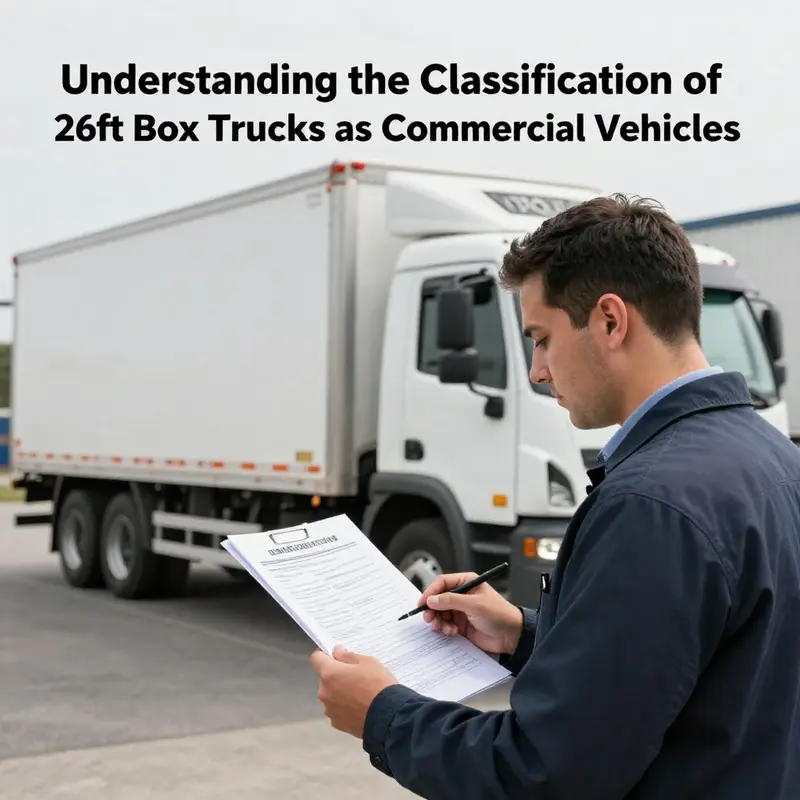
Regulatory frameworks around 26-foot box trucks operate as a coordinated system designed to safeguard road safety while enabling efficient commerce. While the vehicle’s size and enclosed cargo area make it a versatile tool for moving goods, they also place it within a carefully defined regime of federal, state, and local rules that operators must understand and apply consistently. At the center of this framework is the Federal Motor Carrier Safety Administration, the DOT agency responsible for setting baseline standards that cover the vast majority of commercial operations in the United States. Among the most fundamental measurements is the gross vehicle weight rating, or GVWR, which for a typical 26-foot box truck sits near 26,000 pounds. This threshold keeps the vehicle classified as a standard commercial truck rather than a large truck that would trigger tighter oversight, more extensive maintenance demands, and stricter inspection regimes. The consequence of operating at or near that cutoff is not merely a label but a strategic cost and risk calculation: it affects licensing requirements, insurance premiums, permitted routes, and the degree of regulatory scrutiny a fleet will face on a daily basis. Pushing the GVWR higher changes the regulatory playing field entirely, potentially mandating different drivers’ qualifications, more frequent inspections, and even specialized permits in certain corridors, which in turn influences fleet configuration and route design. Beyond weight, the external dimensions of a 26-foot box truck are subject to a lattice of rules. States and localities set limits on length, width, and height to preserve highway geometry and to reduce the likelihood of compromised clearances on bridges, tunnels, or passing lanes. For a typical mid-size box truck, that means staying within the common operating envelopes for urban and suburban routes while ensuring that any tail overhang or cargo projection remains within permitted bounds. Fleet managers who operate in multi-state networks routinely verify the vehicle profile before departure and use pre-trip planning tools to confirm that the planned path remains compliant across jurisdictions. The practical effect is a discipline of route selection and cargo configuration, where payload planning is married to legal geometry, and where the fastest route is never pursued at the expense of a legal and safe profile. A second pillar is the periodic technical inspection regime, designed to verify that safety-critical systems are performing as intended. The maintenance schedule, typically derived from both vehicle manufacturer recommendations and regulatory expectations, emphasizes brakes, steering, lighting, tires, and suspension, but also extends to other critical systems such as emissions controls and electrical wiring. In the field, this translates into a disciplined maintenance culture: firms create rolling inspection calendars, track parts life cycles, and ensure that technicians record proof of inspection and the state of repair at the time of inspection. For a box truck with repeated start‑stop operations, the risk of brake fade, worn tires, or malfunctioning lights systematically escalates if maintenance is neglected. The value of consistent inspections then becomes clear in daily operations: fewer roadside delays, more reliable service, and enhanced safety for the driver and the public. The regulatory risk landscape grows more intricate when interstate movement or hazardous materials come into play. If a 26-foot box truck crosses state lines or handles regulated cargo, operators must contend with the Hazardous Materials Transportation Act and related rules that govern packaging, labeling, and transport procedures. Hazmat work frequently requires additional CDL endorsements, specialized training, and meticulous shipment documentation. Even when hazmat is not an everyday concern, knowing the HMTA framework helps managers design contingency plans, select routes that minimize exposure to risk, and ensure that drivers can respond appropriately to emergencies, spills, or regulatory inquiries. The broader lesson is that regulatory obligations are not obstinate constraints but a security blanket that protects people, property, and the integrity of the supply chain. The driver remains the linchpin of compliance. Commercial operations typically require a Commercial Driver’s License, or CDL, and ongoing training that matches the truck class, payload, and route diversity. Hours-of-service rules prevent driver fatigue and are a living reminder that time management, rest, and safe performance are inseparable. Medical certification and drug-and-alcohol testing form the backbone of the professional standard expected of commercial drivers, signaling a commitment to safety and reliability. The daily implications are concrete: schedules must accommodate rest, routes must factor in potential congestion and delay, and the entire operation must be audit-ready so that regulators or customers can verify that the workforce meets the accepted standards. The nuance is not merely legal compliance but the creation of a predictable operating rhythm that underpins service reliability and reputation. An integrated approach to compliance becomes a strategic asset rather than a mere expense. When a fleet harmonizes GVWR, dimensional constraints, inspection cadence, hazmat readiness, and driver qualifications, the company reduces the likelihood of costly fines, prevents disruptions from roadside stops, and creates a dependable service profile for customers who depend on timely deliveries. This alignment also influences how a fleet evolves over time. As technology advances—improved safety sensors, telematics, or more efficient route planning—the regulatory framework adapts in response, but the core aim remains constant: safeguard road safety while enabling efficient commerce. Operators who stay engaged with regulatory developments can anticipate changes and align capital expenditure, personnel training, and route networks accordingly. They are better prepared to evaluate whether adding a 26-foot box truck to a regional distribution system strengthens the overall asset mix or creates new points of vulnerability that require mitigation through policy, procedures, and technology. Practically, translating regulation into daily practice hinges on four interconnected habits: plan, document, train, and review. Plan payloads to stay within GVWR, plan routes to satisfy dimension rules, schedule maintenance and inspections with a fixed cadence, and train drivers not only in vehicle operation but in regulatory literacy, including how to interpret a bill of lading, what a DOT inspection entails, and how to respond to inspections with calm efficiency. Documentation is the quiet backbone of compliance: keep medical certificates current, maintain appropriate CDL endorsements for the routes, archive vehicle inspection reports, and preserve shipment records, especially for hazmat or regulated goods. When these practices are codified into digital workflows, they travel with the truck every mile, making it easy to verify compliance during audits or roadside checks and to defend the reasoning behind route choices when questions arise from customers or regulators. The value of such discipline is measured not only in compliance scores but in the operational resilience it affords a fleet when demand spikes, when new routes emerge, or when regulatory interpretations shift. To ground this discussion in a broader context while preserving operational practicality, readers can turn to the company’s information hub for expanded perspectives on fleet optimization and regulatory considerations. See the McGrath Trucks blog for extended perspectives on fleet optimization and regulatory considerations, offering deeper, real-world reflections that complement the regulatory framework depicted here. McGrath Trucks blog Finally, the federal regulatory backbone remains the essential anchor for any operator evaluating the fit of a 26-foot box truck within a commercial operation. The U.S. Department of Transportation’s Federal Motor Carrier Safety Administration page provides official, current guidance on weight, size, and safety standards, as well as the rules governing commercial driver qualifications and inspections. This resource is indispensable for building a compliant baseline and for planning proactive governance that reduces risk and enhances the reliability of service. For authoritative guidance on these rules, consult the official external reference: https://www.fmcsa.dot.gov/regulations
Final thoughts
Understanding the classification of 26ft box trucks as commercial vehicles reveals critical insights for industries reliant on effective logistics and transportation. This exploration has underscored their significant role in local and regional delivery systems, bolstered by their compliant design tailored for heavy loads and fleet needs. The economic impact of their classification highlights their relevance in minimizing operational costs while maximizing efficiency. Furthermore, awareness of the regulatory framework guiding their use is essential for maintaining compliance and operational integrity. As industries evolve, so too does the importance of recognizing the fundamental role these trucks play in the broader commercial transport ecosystem.