Changing the oil on commercial trucks is a critical yet time-consuming task that can vary significantly depending on various factors. Understanding how long this process takes is essential for trucking company owners, fleet managers, and procurement teams in construction and mining enterprises. The time an oil change takes is not only an operational consideration but also impacts overall maintenance scheduling and cost efficiency. This article will explore the estimated time frames for oil changes, the importance of regular maintenance, the influence of engine type, the challenges posed by truck accessibility, and the advantages of adopting efficient oil change practices. Each chapter will provide valuable insights to help you optimize your maintenance operations effectively.
Oil Change Timelines for Commercial Trucks: Time, Tools, and the Real-World Factors
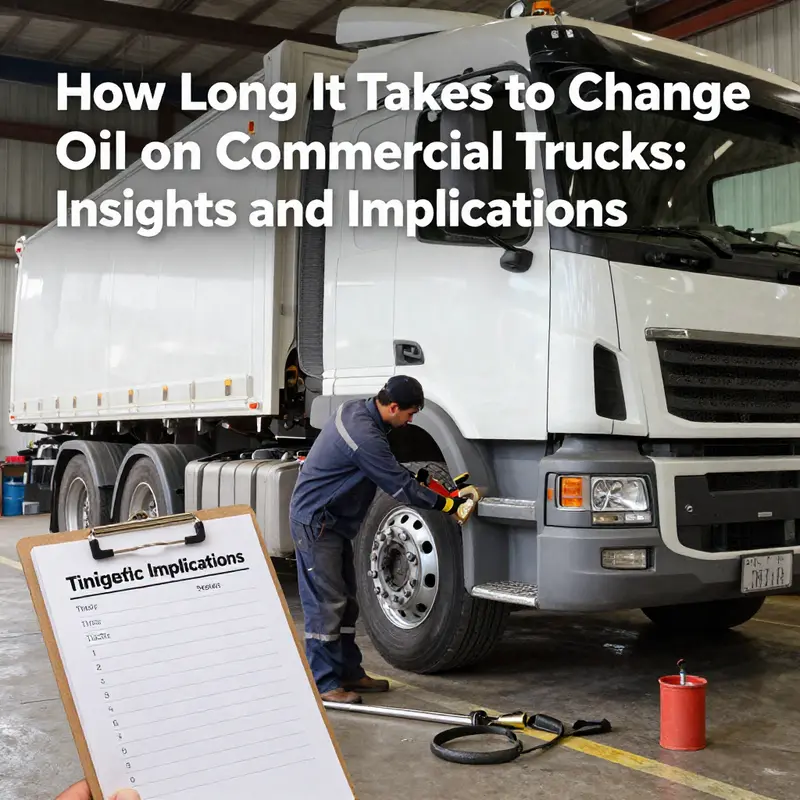
When a fleet manager estimates downtime, an oil change on a commercial truck often sits in a taller column of logistics than one might expect. The task, which to a casual observer might seem routine, is in practice a carefully timed sequence of steps that scales with engine size, accessibility, and the conditions under which the work is performed. In the best-managed shops, an oil change for a typical long-haul truck with a straightforward engine can unfold in a rhythm that keeps downtime predictable. Yet even in that scenario, the duration is inherently longer than the familiar 20 to 40 minutes many drivers associate with a passenger car. Across the industry, the range commonly cited for a commercial truck oil change is roughly two to four hours when the job proceeds under standard, well-equipped shop conditions. That band reflects a spectrum of realities: engine displacement measured in dozens of liters, the volume of oil involved, the number and type of filters, the state of engine cleanliness, and the operational tempo of the shop.
The most fundamental driver of time is the engine itself. Large diesel engines found in heavy-duty tractors operate on oil capacities that dwarf those in light vehicles. It is not unusual for these engines to hold anywhere from 15 to 30 gallons of oil, and in some configurations even more. Draining that amount is not a matter of a few seconds; it requires a controlled process to allow the old oil to empty completely, particularly when the sump is deeper in the block or the drain is located in a position that is less than ideal for rapid draining. In practice, this means the drain phase can extend beyond the quick drain you might imagine from a passenger car. If the oil pump and the oil passages were perfectly clean, the process would still demand time for gravity-assisted drainage, line clearance, and a moment of caution to avoid splashes that could compromise the seal or contaminate the new oil. In a well-organized shop, the drain step is designed to flow smoothly into the next phase, but it remains a non-insignificant portion of the total. That is why even the most optimized operations acknowledge that the bulk of the duration sits in the drain and fill cycle, not merely in the simple act of unthreading a plug and removing a cartridge or drum filter.
Another foundational factor is the environment in which the oil change takes place. A professional shop with a lift, a clean, well-lit workspace, and the right receptacles and filtering equipment can shave minutes off every step compared with a roadside or field-site alteration. Lifts raise the truck to give technicians unobstructed access to the oil pan, the drain plug, and the filters. When space is constrained or the crew must navigate a cramped engine compartment, technicians often need to reposition equipment or work from unusual angles, which adds time and raises the risk of minor delays. In fleets that schedule maintenance within windows, the shop’s layout and workflow become part of the overall timing equation. The same operation performed in a roadside environment would typically elongate. Heat, weather, and operational pressure also influence the cadence. In extreme heat, for instance, some lubricants may expand slightly or the task may require extra cooling periods for seals and gaskets after the oil is drained, adding minutes to the expected interval. Conversely, in a controlled shop setting on a cooler day, the process proceeds with less interruption, though the time savings are modest in the grand scheme of a four-hour job.
Oil type and filter complexity further shape the clock. Synthetic or semi-synthetic lubricants are common in modern fleets, and while their chemistry does not alter the mechanical steps of draining and refilling, the presence of multiple filters can change the amount of time required. Some trucks rely on more than one filter—dual-element setups, or filters with larger housings designed to cope with extended intervals or heavy use. Each filter takes additional minutes to loosen, replace, and inspect for proper seating and leaks after installation. In other cases, engines incorporate secondary filtration stages or additional drain plugs for different oil circuit sections; these features add to the total task time. The challenge may not be just removing the old element but ensuring the new filter is installed correctly and that the seal surfaces are clean, which can require a careful wipe-down of the mating surfaces and a pass with a torque wrench to confirm the correct tightness. In all, the filter count and the complexity of the filtering system can meaningfully lengthen the job by several minutes to half an hour, depending on the truck’s configuration.
The condition of the engine and the oil system prior to the change also plays a decisive role. A clean engine with regular maintenance history will typically present a straightforward service. If the engine has significant sludge buildup, the drain plug is corroded, or the oil pan includes a stubborn drain bolt, technicians must proceed with additional precautions. Removing a stubborn drain bolt can require penetrating oils, heat, or slightly more force, all of which introduce extra minutes and, if not handled carefully, the risk of damage. In addition, pre-warming the engine to facilitate drainage is common practice for larger, higher-mileage engines, especially when the vehicle has been idle for several hours. Pre-warming can improve drainage efficiency but adds a short, predictable time cost. It is rare to find a scenario where pre-warming does not offer a net gain in reduced friction and easier draining, but it is still a strategic choice that affects the total duration.
Experience is another significant lever. A veteran technician who regularly services a given fleet or engine family quickly recognizes where time savings can be found. They know the precise sequence of steps, anticipate common hard-to-reach plugs, and can bring the right tools before starting. They also know when to perform supplementary checks—such as inspecting for leaks around the filter housing or testing the drain for proper drainage after the plug is removed—without derailing the flow. A less experienced technician may take longer, not only in performing the mechanical steps but also in double-checking alignment, cleaning, and re-sealing, which can add meaningful minutes to the total. Because fleets frequently rely on technicians with varied levels of experience, the operating assumption in many shops is a base range that reflects a proficient technician while acknowledging that some days will be longer due to human factors.
One of the practical implications for fleet management is the discipline of scheduling. Oil changes are often bundled with other routine maintenance activities. Technicians will perform a broader inspection of belts, hoses, fluid levels, and coolant conditions, and they may test for leaks or perform a quick diagnostic check while the truck is on the rack. When multiple services are conducted within the same maintenance window, the overall downtime for the vehicle is longer than the oil change alone. The extended windows give fleets the flexibility to keep drivers moving while still meeting maintenance commitments. The ability to combine tasks and plan around continuity of service is what separates high-performing fleets from those that contend with unpredictable downtime.
To translate these dynamics into practical guidance for managers and operators, consider a typical scenario. A standard diesel-powered long-haul tractor with a straightforward oil drain and a single-in-one-filter arrangement in a well-equipped shop. In this case, the oil change can realistically land in the 2 to 3-hour range, assuming no surprises in the drain or filter removal. If the shop adds a full inspection, checks for leaks, and a new filter, the time creeps toward the upper end of the band, perhaps approaching four hours on a busy day or with an engine that has not seen service in some time. If the truck’s engine is older, or if there are complications with accessibility—say, a tight engine compartment or a high-mounted filter—the time can easily stretch beyond four hours. Conversely, an engine with wide-open access, a single simple filter, and an efficient technician may dip below the two-hour mark, though this is more the exception than the rule for commercial fleets.
For readers seeking reliable guidance on performing the task safely and efficiently, the approach is to anchor both steps in official, model-specific guidance. Manufacturer service manuals for the truck and its engine are the most trustworthy source of instructions, torque specifications, and any special procedures. These manuals provide the baseline standard and any model-specific caveats that a general guide might not cover. To place this guidance in a broader context, fleets should consult a wide range of resources, including industry discussions, maintenance best practices, and fleet management tools that help forecast downtime and optimize maintenance windows. For those who want to explore more about fleet maintenance trends and practical approaches to keeping trucks on the road, a good starting point is the mcgrathtrucks blog, which gathers practical insights and fleet-focused perspectives at mcgrathtrucks.com/blog/. This internal resource can help maintenance teams compare approaches, reflect on what has worked in similar operations, and plan more accurate downtime estimates for future oil changes. And while planning, it is important to reference official, model-specific manuals when in doubt about procedures or torque values. Those manuals are the authority behind the steps and safety considerations that keep both the vehicle and the maintenance crew out of harm’s way.
In sum, the timing of a commercial truck oil change is not a fixed number but a projection built from size, design, and context. The practical expectation for a standard oil change performed by a skilled technician in a capable shop sits between two and four hours. It is a range shaped by engine size, filter configuration, pre-change engine condition, and the efficiency of the maintenance environment. Fleet managers who schedule maintenance with these factors in mind will see fewer surprises and will be better positioned to minimize downtime while maximizing reliability and engine life. The chapters that follow can build on this foundation by exploring how to plan maintenance windows around routes, how to layer routine checks with oil changes to deliver comprehensive service without sacrificing availability, and how to leverage data from maintenance histories to predict when a truck will need attention before a problem becomes urgent. For now, the essential takeaway is that an oil change for a commercial truck is a sizable service with real implications for uptime. A thoughtful blend of equipment, experienced hands, and structured planning is what transforms a potentially disruptive event into a predictable, manageable maintenance activity that keeps fleets moving forward.
External resource: official truck service manuals offer model-specific guidance and torque specifications that help ensure proper procedure and safety. https://www.freightliner.com/owners/service-and-maintenance/truck-service-manuals
Timing the Turnover: How Long an Oil Change Takes on a Commercial Truck and Why Regular Maintenance Wins

Oil changes on commercial trucks are often treated as routine, almost routine enough to be scheduled like clockwork. But the truth is that the time needed to complete one can vary widely, and that variation rests on a few practical realities: the size of the vehicle, the design of the engine, how accessible the drain plug and filter are, and whether the work is performed as part of a broader maintenance window that includes other checks. When fleets plan downtime, they weigh not only the duration of the oil change itself but also the downstream benefits that come with a clean engine, fresh filters, and a thorough inspection. In that light, the comment that an oil change takes about 1.5 to 3 hours is more than a rough estimate; it’s a reflection of a process that can be streamlined but never truly rushed when the goal is longevity, reliability, and predictable performance on the road. A standard diesel-powered long-haul tractor with a straightforward oil path and open access to the pan and filter often lands closer to the lower end of the spectrum, around 1.5 to 2 hours. In contrast, larger, older, or tightly packaged engines, or units requiring specialty procedures—such as high-pressure oil systems or uncommon filter configurations—can easily stretch toward three hours or beyond. When the service includes a full inspection, a new filter, a check of fluid levels, and a careful wipe-down of the work area, the clock naturally ticks a bit longer, sometimes pushing the total toward the upper end or a tad past it. The time spent is not merely a function of removing old oil and putting in new; it is also the window during which technicians diagnose potential issues, verify seals, and confirm that the system remains sealed and capable of carrying heat and contaminants away from the engine.
That nuance matters because commercial fleets operate under different constraints than consumer vehicles. A single downtime period can have cascading impacts on dispatch, delivery windows, and driver availability. For fleets that run in predictable cycles, oil changes are scheduled within maintenance windows that may include a suite of other services, from filter changes and fluid top-offs to belt inspections and cooling system checks. The total downtime for a fleet maintenance event is therefore often more than the sum of its parts: while the oil change itself might take 90 minutes to two hours, the surrounding checks and the coordination with a service bay, diagnostic scans, and the potential for aftercare work can extend the overall time away from the road. In a well-run operation, this is anticipated and planned for; the maintenance window becomes a controlled environment rather than an unexpected interruption. And behind the planning is a straightforward premise: keeping the engine properly lubricated under heavy loads reduces wear, guards against heat buildup, and helps ensure that the truck returns to work with minimal surprises.
The mechanics of timing a change are tied to the heart of the engine’s life. Diesel engines, which dominate long-haul and heavy-duty applications, generate higher soot loads and operate under harsher thermal cycles than light-duty units. That means oil oxidation and viscosity loss progress more quickly in many conditions, especially when subjected to frequent starts in stop-and-go traffic, extreme temperatures, or dusty environments. The interval guidelines from most manufacturers—typically 10,000 to 15,000 miles or six to twelve months, whichever comes first—reflect a balance between tolerating the harsher duty cycle and acknowledging that the quality of the oil itself, along with the engine’s design and the vehicle’s operating conditions, determines how long the oil will perform its lubricating and cooling work effectively. Some operators who run in extreme heat or extremely dusty terrain push closer to the lower end of that range, while fleets using premium synthetic formulas may push toward the upper end, particularly if the oil change is paired with a robust oil analysis program that regularly monitors contamination, additives, and acidity. The key takeaway is not a fixed number but a framework: the oil’s ability to perform its essential job depends on usage and protection, and that relationship evolves with the truck’s workload, the environmental conditions, and the oil chemistry chosen by the fleet.
There is also a practical decision layer that fleets face when planning oil changes. The choice of oil and the frequency of changes should align with the engine’s design and the manufacturer’s specifications, but they must also account for the realities of live operation. A fleet that operates in cold northern winters or in desert conditions with high ambient temperatures has different needs than one that sees mild weather and steady highway miles. The presence of synthetic oil, which can offer improved oxidation resistance and better high-temperature performance, can extend drain intervals in some cases, yet this is not a universal rule. Oil quality interacts with engine design, fuel type, driving patterns, and maintenance history. For that reason, many operators adopt a policy that relies on a blend of mileage-based and time-based triggers, augmented by periodic oil analysis. The analysis can reveal moments when oil degradation accelerates, such as unusual shear, contamination, or coolant ingress, and it becomes a practical guide for adjusting intervals without compromising protection. In other words, timing is not a rote ritual but a data-informed practice that respects the engine’s life cycle as a living system.
From the technician’s perspective, the actual change is a straightforward procedure, but it requires discipline and attention to detail. The drain process must be clean and complete, and the filter changes must be performed with the correct torque and sealing surfaces to prevent leaks. After the new oil and filter are installed, the system is filled to the recommended level, and the oil is circulated through the engine to check for any leaks, unusual noises, or indicators on the dashboard. A thorough oil change is almost always accompanied by a quick but comprehensive inspection: belts, hoses, air intake systems, coolant level, and residue around the oil pan where leaks might hide. The aim is not just to replace oil but to confirm that nothing else in the system has aged out of serviceability. For a fleet, this broader approach translates into improved reliability and a reduced risk of unscheduled downtime, because a scheduled maintenance event is an opportunity to catch problems before they manifest as failures on the road. It also means that the team can track maintenance coverage with precision, knowing that a complete service record supports the vehicle’s resale value, warranty compliance, and overall life-cycle cost analysis. A discreet but valuable benefit emerges here: predictable maintenance windows enhance scheduling efficiency, which in turn improves on-time performance and customer satisfaction.
For operators who consider doing oil changes themselves, the calculus changes markedly. A DIY approach on a commercial truck demands space to accommodate a vehicle of substantial size, the proper lifting or jacking equipment, and specialized tools to manage a heavy oil drain and a large filter. Used oil must be disposed of properly, often in quantities that exceed the smaller-scale volumes typical of passenger vehicles, which adds an element of environmental responsibility and logistics. Technical familiarity with the particular engine model is essential, because different engines can feature divergent oil paths, filter configurations, and high-pressure systems that require particular procedures. The scale of the task, the safety considerations, and the potential for missing a leak or an accessory inspection argue in favor of professional service centers for most fleets. Even when a fleet has in-house capabilities, coordinating maintenance with a trusted service partner can provide diagnostic support, OEM-recommended procedures, and access to tools that keep the operation aligned with manufacturer guidance. A well-structured maintenance program recognizes oil changes as a cornerstone activity rather than a one-off task, and it treats the service visit as part of a holistic approach to engine health.
The examination of timing intersects with the broader philosophy of fleet management. Oil changes are not merely a cost to be minimized; they are a safeguard against unplanned downtime and the cascading expenses those outages create. A truck that returns to service with clean oil, a fresh filter, and verified fluid levels tends to operate more efficiently, with reduced energy losses from friction and heat. This efficiency translates into measurable savings: lower fuel consumption, fewer repairs, and steadier dispatch performance. It also contributes to safety, because stable lubrication under heavy loads reduces the risk of bearing wear or sudden failures that could endanger drivers and others on the road. For fleet operators, the discipline of a regular oil change schedule, integrated into a comprehensive maintenance program, becomes a central pillar of risk management. It aligns with the broader objective of keeping assets productive, extending their service life, and preserving the operational integrity of the fleet.
To readers who want to keep a finger on the pulse of maintenance strategy, a couple of practical anchors can help. First, consult the manufacturer’s service manual for your exact truck model and engine type, since there is no universal interval that fits every configuration. Second, adopt a maintenance cadence that blends mileage and time while allowing room for adjustment based on real-world usage and the results of oil analysis. Third, consider linking oil changes to a broader inspection protocol that includes leak checks and a review of critical components, so the service visit serves as a proactive health check rather than a reactive repair. Finally, maintain a culture of documentation. A clear service history supports ongoing operations, informs future decisions, and helps fleet managers anticipate when a change is due before a window closes and a schedule tightens. As you chart maintenance for your fleet, you may find resources and perspectives worth revisiting in the industry commentary and fleet-management communities—for example, the insights shared on the McGrath Trucks blog can provide practical perspectives on operational planning and service scheduling that align with the realities described here. McGrath Trucks Blog
For further assurance beyond the practicalities of timing and process, industry guidance emphasizes that regular engine oil changes are a line of defense against wear and degradation under heavy-duty use. They are not optional extras but essential safeguards that keep powertrains reliable in demanding service. Documents and expert analyses in the field stress that neglecting timely oil changes can lead to reduced fuel efficiency, increased downtime, and the risk of costly repairs or catastrophic engine damage. These consequences are not theoretical; they translate directly into higher operating costs and greater safety risks for fleets and the drivers who rely on them. The emphasis is on consistent, disciplined maintenance as an investment in uptime and performance, rather than a cost to be trimmed during lean periods. To explore the broader engineering and operational rationale behind this stance, external industry commentary notes how a well-maintained engine is better poised to meet the rigors of heavy transport through lifecycle wear management, contamination control, and thermal regulation. See the discussion on the importance of timely engine oil changes for commercial trucks in reputable industry sources to understand the long-term value of a steady maintenance cadence.
External resource: https://www Bendix.com/articles/brakes/why-regular-engine-oil-changes-are-critical-for-commercial-trucks
When Time Depends on the Engine: How Oil-Change Durations Vary Across Commercial Truck Types
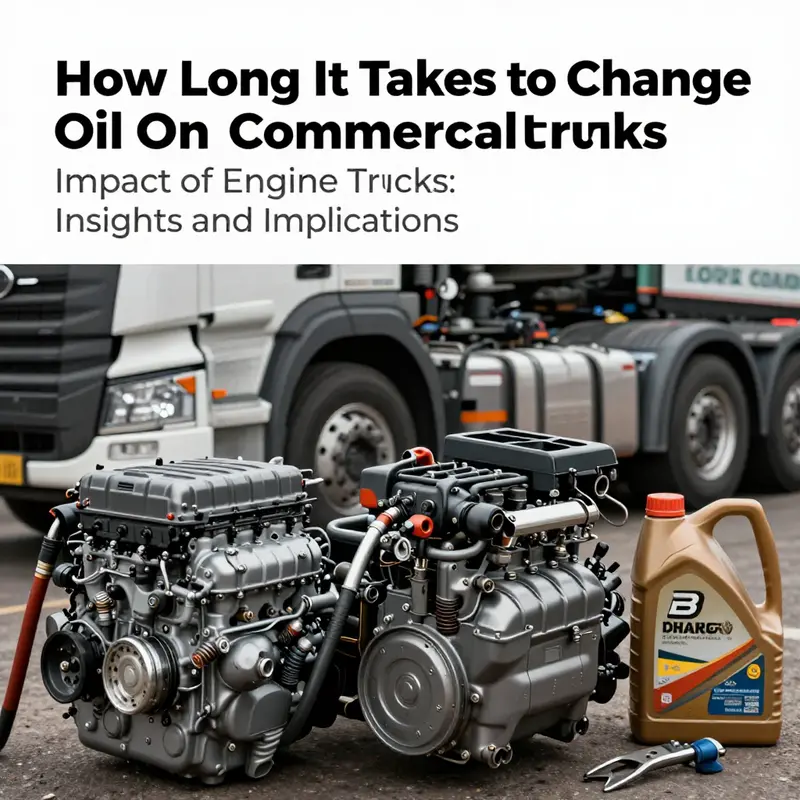
The clock starts not when you say go, but when the technician breaks the seal on the oil system and begins the first practical step: draining what has collected in the pan over tens of thousands of miles and countless combustion cycles. On the surface, an oil change seems straightforward—drain, replace, fill, and move on. Yet in the world of commercial trucking, the time required to perform this routine service is a moving target. It shifts with the size and complexity of the engine, the layout of the engine bay, and the way the shop stacks maintenance tasks during a single downtime window. This is not simply a matter of swapping old oil for new; it is a measured procedure whose duration mirrors the engine type and the surrounding hardware that supports it. When fleets plan downtime, they are balancing the certainty of a completed service with the realities of access, tools, and the potential for ancillary inspections that follow a careful oil change.\n\nBegin with the common denominator that every technician contends with: the engine’s oil capacity and how easily the drain and fill points can be reached. A mid-range, conventional diesel in a medium-duty truck often presents a relatively accessible setup. For these vehicles, an oil change performed by a skilled technician in a well-equipped shop can run roughly from forty-five minutes to about an hour and a half. In a shop that has standardized procedures, a trained team can often streamline the drain, the filter replacement if included, and the re-fill with a rhythm that minimizes delays, especially when the oil is a straightforward viscosity and the filters are mounted in familiar, easy-to-access locations. What makes the difference here is the absence of bottlenecks—clear access to the drain plug, a single oil filter, and a straightforward route for draining the old oil and pulling a new fill with the right grade and quantity.\n\nBut trucks are not all built the same, and the variety of engine configurations is the source of most of the time variance. When the engine grows larger, or when its older design includes components tucked into tight pockets or behind other parts, the clock starts to run longer. Heavy-duty trucks with large-displacement diesel engines, sometimes paired with complex oil-cooling systems and multiple filtration points, demand more time. In many cases, two hours becomes a practical baseline for a routine change, while two to three hours isn’t unusual for a full procedure that includes access challenges, confirmation checks, and potential preventive tasks. In fleets where the oil system uses more than a single filter, operations personnel often encounter a planning challenge: each additional filter can require disassembly of surrounding components, which increases the time required to remove and reinstall, along with the need to verify that the seals and gaskets are clean and intact. The difference between a quick drain and a thorough, no-leak reassembly can hinge on whether the filter sits in a straightforward location or behind a support bracket, or whether it requires removing a panel, a shield, or even some ancillary plumbing to gain access. In these cases, what begins as a 60–90 minute job can easily stretch toward the three-hour mark.\n\nEngine type also guides handling procedures that extend beyond simply draining and filling the crankcase. Some modern engines employ high-pressure oil systems, which demand careful purging, pre-lubrication checks, and precise priming of the lubrication circuit. The steps required to ensure there is no air trapped in the lines can add meaningful minutes, particularly when the technician must verify that the oil pressure comes up cleanly after a fresh fill. The choice of oil—synthetic versus conventional, or a high-performance blend—can influence the procedure in subtle but real ways. Synthetic formulas, while offering superior stability and flow at temperature, sometimes require pre-warming or controlled handling to avoid thermal shock to seals or to achieve optimal viscosity during startup. While the oil itself does not take longer to drain, the surrounding workflow to accommodate additives, compatibility checks, or specific fill sequences can stretch the overall time.\n\nThe age and condition of the vehicle make a difference as well. An older rig may arrive with corroded drain plugs, seized filters, or accumulated grime around mounting points. The effort to coax a stubborn bolt free or to scrub a stubborn mounting surface before reinstalling hardware can transform a routine 60-minute change into a longer process. The maintenance history becomes a factor—if the truck has not had regular service, the technician may also spend time inspecting and addressing minor leaks, rusted threads, or degraded seals. All of these elements feed into the broader question fleets ask themselves when planning downtime: how much time should we allocate to ensure not only a complete oil change but also a dependable check of the engine’s health?\n\nAmid these realities, the broader maintenance strategy matters. The guidance embedded in manufacturer service manuals remains the most reliable compass for accurate time estimates. These manuals provide step-by-step procedures, torque specs for drain plugs and filters, and instructions for the sequence of tasks that minimize rework. In practice, fleets often schedule oil changes within maintenance windows that encompass several services. A changeover may coincide with coolant checks, fluid level audits, air filter inspection, and a basic leak inspection, especially in fleets that emphasize preventive maintenance. When these additional tasks are performed, the overall downtime grows, but the value is measured in peace of mind: the assurance that the truck is not only carrying fresh oil but also protected from leaks and misaligned components until the next service interval.\n\nGiven these dynamics, it is valuable to conceptualize the oil-change time as a distribution rather than a fixed moment. For a standard medium-duty diesel, expect a window that can be comfortably completed in less than two hours when conditions are ideal and the shop staff operates with efficiency. For larger, more complex engines in heavier trucks, two hours is a reasonable lower bound, with two to three hours or more not uncommon when access is guarded by tight spaces, multiple filters, or auxiliary systems that require disassembly. The variability underscores a practical truth for operators and maintenance planners: always consult the manufacturer’s service manual for exact times tailored to the specific model and engine type. That manual is the authoritative map that aligns expectations with the realities of a given truck, reducing the guesswork as downtime planning becomes part of the fleet’s operations.\n\nThis approach to time management in the shop has broader implications for fleet productivity. When maintenance windows are predictable, dispatch operations can optimize routes and loads around service intervals. The choice to perform a standard oil change in a shop setting, rather than on the roadside or during a short layover, translates into better inspection outcomes and more consistent uptime. In turn, this informs fleet economics, because the cost of downtime is weighed against the long-term benefits of engine longevity and fuel efficiency achieved through clean oil and thorough inspections. For readers seeking further insight into maintenance planning and upkeep strategies, the following resource offers a comprehensive perspective on routine service topics and their impact on overall operations: McGrath Trucks blog.\n\nFor those who want to broaden their understanding of the oil-change workflow beyond the chapter’s immediate scope, an external resource on diesel maintenance provides a detailed overview of oil handling, filter considerations, and the nuances of different oil types and their interaction with engine design. This reference helps readers connect the practical timing discussed here with broader industry practices and guidelines: https://dieselnet.com/tech/maintenance/oil.php.
Accessibility Under the Hood: How Access Shapes Time in Commercial Truck Oil Changes
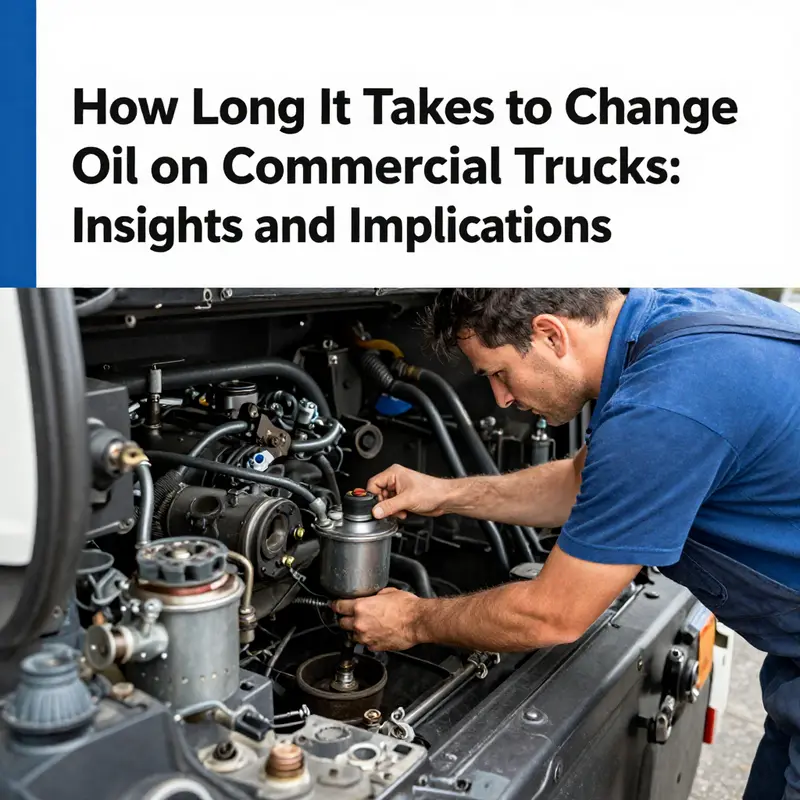
Oil changes are more than a routine flip of a cap and drain plug; they are a timed judgment of access, space, and the practical realities of operating at scale. In the world of commercial trucking, the clock rarely runs on a single, simple timeline. Fleet managers expect predictability, drivers expect reliability, and technicians balance safety with efficiency. The time it takes to change oil on a commercial truck is not a fixed number but a spectrum, shaped by the truck’s design, the engine layout, and the confinement of the engine bay. On paper, a clean, straightforward oil change can look fast, but in the field, accessibility often becomes the quiet, invisible hand steering the pace of the work. The nuance matters because downtime translates directly into cost, and even a half-hour deviation can ripple through a maintenance window that fleets depend on to keep their operations rolling.
At the heart of every oil-change timing question is accessibility. Modern heavy-duty engines sit behind a maze of components that must be navigated with care. Tight engine compartments, closely spaced exhaust manifolds, turbochargers, and the frame rails can block straightforward access to the oil drain plug and the filter housing. In some trucks, the drain plug sits deep within the engine bay or behind a cluster of cables and hoses; in others, the filter is tucked away toward the back or beneath a piping route that requires a precise sequence to remove without spill or damage. When space is at a premium, even a trained technician will pause to plan the approach, selecting tools with the right reach and leverage. The decision to lift or jacks up the vehicle, extend a wrench, or temporarily relocate a nearby component is not about luxury; it’s about creating enough clearance to drain the old oil completely, and to reinstall the filter without cross-threading or dropping residue onto bare skin or the shop floor. Those choices directly affect how quickly the job progresses, and they also raise the risk of setbacks if not executed with discipline and proper safety.
The numbers people rely on can look contradictory because they reflect different circumstances. In a well-equipped shop with generous space and accessible drainage points, a professional can complete a standard oil change in the range of roughly 30 to 60 minutes. That interval captures the drain, filter removal and installation, fresh oil fill, and a quick post-change check of fluid levels and leaks. It assumes a clean bay, unobstructed access, and oil capacities typical of many heavy-duty diesel engines. But the reality for many fleets is more complex. Accessibility challenges can stretch the process beyond that window, extending the time to well over an hour and, in some cases, approaching the upper end of a three-hour maintenance window. The difference isn’t just about the oil’s viscosity or the engine’s size; it’s about how much effort is required to reach and maneuver around critical components without causing collateral damage. Thick, hot oil can resist complete drainage, particularly after the engine has run recently; stubborn drains or difficult filters can require longer socket extensions, extra leverage, or even repositioning the vehicle to gain better leverage. When you factor in these variables, the time becomes a function of both mechanical design and procedural discipline.
The engine type and its oiling needs further color the timing story. Diesel engines, especially the larger, long-haul variants, carry substantial oil capacities. A drain that empties tens of quarts is a different operation from a smaller gasoline engine in a light-duty truck. The volume matters not only for the refill but for the rate at which old oil can be removed and replaced without leaving stale pockets in the crankcase. In some cases, the system includes secondary filters or oil-cooler lines that require draining or disconnecting in the process. Each additional step adds a moment of decision and a potential pause while ensuring the system remains clean and leak-free. If the engine has been subjected to high temperatures over a stretch of miles, the used oil may be unusually thick, resisting rapid flow. In those moments, the simplest timing assumption—“just drain and refill”—gives way to considerations about ensuring a complete purge so the new oil can perform as intended from the start of the next cycle.
The practical takeaway for fleets is clear: accessibility is the primary driver of variation in oil-change duration. The design of the engine compartment, the layout of the oil drain and filter, and the tools available in the shop all condense into a single question before the wrench ever touches metal. Do I have enough space to move around safely? Can I reach the drain plug without contorting, or will I need to reposition or lift the vehicle? Is the filter accessible without removing a dozen sensors or nearby hoses? These aren’t theoretical concerns; they are daily realities that shape schedules, technician assignments, and the cost of downtime. Because accessibility is so pivotal, many fleet operators invest in systems and training that reduce the friction of a difficult undercarriage. Lift systems, oil drain pans with built-in funnels, and extended-length wrenches designed for heavy-duty applications allow technicians to reach stubborn points more quickly and with less strain. A deliberate approach to workspace organization, such as staging tools and fluids in a way that minimizes movement, also pays off in a shorter, smoother oil-change workflow. The synergy of proper tools and trained hands matters as much as the engine’s internal cleanliness.
One of the virtues of a well-run maintenance program is the alignment of oil changes with a fleet’s broader service windows. Operators recognize that downtime isn’t an isolated event; it’s part of a schedule that includes inspections, filter changes, and fluid checks for transmission, coolant, and hydraulics. In this light, the 30–60-minute benchmark for a straightforward oil change is a target, not a guarantee. If a shop is juggling multiple tasks in a constrained bay, the total downtime can stretch. If the truck has limited workspace around the front axle, or if the oil drain requires a longer reach, every extra minute must be accounted for in the planning. In contrast, a truck with easier access can routinely pass through the maintenance bay with minimal delay, and technicians can complete the oil change and still have time for a quick system scan for leaks or abnormal noises. The art of reducing downtime lies in anticipating these variability factors and designing a workflow that accommodates the most challenging scenarios without compromising safety or the thoroughness of the maintenance check.
For technicians and fleet managers, the rule of thumb is to follow the manufacturer’s service manual for the specific model and engine type. It’s the blueprint that outlines the correct drain procedures, specified oil capacity, and the recommended filters and seals. While experience informs the pace, it is the manual that anchors a maintenance program in safety and reliability. To support broader fleet maintenance strategies, many operators look to the ongoing discussions and practical insights found in industry literature and fleet-focused resources. For readers seeking a broader perspective on how to balance cost, uptime, and equipment availability, the McGrath Trucks blog offers practical context and discussion about maintenance planning in a fleet setting. You can read more at McGrath Trucks’ blog. McGrath Trucks blog.
Ultimately, the word on the clock for a commercial truck oil change is a composite: it reflects accessibility, engine design, tool readiness, and the discipline of the technician. While the broad range can be framed by a practical expectation—start with around 30 to 60 minutes for a straightforward job and be prepared for longer if access is constrained—the real-time experience hinges on the layout you’re dealing with and the care required to avoid mistakes. Fleet managers who codify these realities into their maintenance windows protect against unreliable downtimes and help ensure that critical equipment remains in service when it matters most. They also reinforce a truth that underpins every successful maintenance program: thoroughness and safety are not luxuries but prerequisites that, in turn, keep the clock from ticking in unplanned ways. For those who want to expand their understanding of how these factors unfold in real-world settings, the linked resources provide a broader lens on maintenance strategy and the decision-making that underpins scheduling and repair throughput. For a practical, hands-on look at oil-change procedures outside of the fleet context, you can explore a detailed step-by-step guide here: https://www.autoblog.com/2026/02/23/how-to-change-your-own-oil-step-by-step-guide-to-saving-money/.
Timing the Turnover: Mastering Oil-Change Duration to Keep Your Fleet Rolling

Changing the oil on a commercial truck is more than a routine chore; it is a strategic operation that keeps engines healthy, uptime high, and operating costs predictable. The duration of a typical oil-change service falls in a broad window from about 1.5 hours to 3 hours, yet that span masks a complex mix of variables. A straightforward diesel powered, well maintained long haul tractor with easy access to the oil pan and filter may glide through the process in roughly 1.5 to 2 hours. In contrast, larger, older models, models with particularly cramped engine compartments, or units that require specialty tools or procedures such as high pressure oil systems found on some modern engines, can easily push the time toward and beyond the 3 hour mark. If the shop also changes the oil filter, checks for leaks, cleans the area, and runs a quick diagnostic sweep, the clock ticks a bit longer still. The precise timing, therefore, comes down to both the machine and the people tending it, plus whether other maintenance tasks ride along with the oil change during the same service window.
Yet the clock is not a mere measurement of labor hours. It is a proxy for the fleet’s operating rhythm. The most efficient fleets treat oil changes as part of a carefully choreographed schedule, aligning them with routine maintenance windows that may already include inspections, lubrication of other components, and fluid level checks. In those environments, downtime is minimized without compromising the thoroughness of the service. The goal is not to rush the oil change, but to orchestrate the work so that the truck returns to service with its vital fluids fresh, its seals intact, and its monitoring systems ready to flag anomalies before they become failures. This perspective dovetails with the broader need to balance reliability with productivity in a high demand, asset-intensive industry.
Beyond the service bay, the time cost of oil changes intertwines with the fleet’s maintenance philosophy. Traditional interval guidelines—often expressed in miles or months—do not always reflect the realities of harsh routes, variable temperatures, or the specific oil technology used. The industry has moved toward more nuanced strategies, particularly with the advent of high-performance synthetic oils that resist breakdown and maintain viscosity under heavy heat. The more aggressive the operating conditions, the more sense it makes to shorten the reliance on a fixed mileage band and station the oil-change program around actual oil condition and engine demands. In practice, many fleets adopt a condition-based maintenance mindset, using onboard diagnostics and data analytics to decide when a change is truly warranted rather than adhering rigidly to calendar or mileage thresholds. This shift toward data-driven timing can reduce unnecessary interventions while guaranteeing oil life is not compromised.
Understanding the duration of an oil change also requires a lens on what the service accomplishes. The oil itself is the first line of defense against metal wear, thermal stress, and sludge formation. Clean oil carries additives that cushion tight tolerances and lubricate moving parts, while an old or contaminated supply can accelerate wear, reduce fuel efficiency, and compromise reliability. The standard interval for many commercial trucks spans from roughly 15,000 to 30,000 miles, but this range is shaped by engine design, oil type, and driving conditions. Fleets relying on high-performance synthetic oils may stretch intervals further, thanks to superior thermal stability and resistance to oxidation. The decision about when to change the oil is therefore as much about engine health as it is about the practicalities of the service bay. When managers connect the maintenance cadence to engine behavior, they begin to treat oil changes as a dynamic, value-driven activity rather than a fixed overhead.
Efficient oil-change practices yield a cascade of benefits that resonate through the fleet’s bottom line. First, downtime is reduced when maintenance is planned with precision. A well-prepared technician, equipped with the right tools and a clearly defined workflow, can execute the service efficiently while maintaining quality. This efficiency translates into more available hours for revenue-generating trips and fewer delays caused by unexpected outages. Second, timely oil changes prevent costly engine wear and the cascade of failures that follow. The upstream investment in a reliable oil-change program pays for itself through reduced repair bills, fewer warranty issues, and better resale value as engines remain in healthier condition for longer. Third, and perhaps most tangibly for operators, clean oil supports better fuel economy. When friction is minimized, the engine works more efficiently, and industry data points to improvements in fuel efficiency of about 2 to 3 percent under well-maintained conditions. That improvement may seem modest, but it stacks up quickly across a fleet and over a year’s operations, translating into meaningful savings on fuel, maintenance, and downtime alike.
To realize these gains, many fleets implement a suite of practices designed to maximize efficiency without sacrificing thoroughness. The first pillar is the judicious use of technology to monitor oil condition. Onboard diagnostics and oil-condition monitoring programs allow for condition-based maintenance, which can prevent unnecessary oil changes while ensuring oil is replaced when it is truly needed. This approach helps strike the balance between safety, reliability, and cost control, especially for fleets that run high-mileage routes or operate in extreme climates where oil degradation accelerates. It also reduces the risk of performing an oil change when it is not strictly required, freeing up maintenance capacity for other critical tasks.
Another cornerstone is the practical, hands-on discipline that keeps the service efficient. Tools like oil-filter wrenches and drain pans streamline the job, while clear labeling and reuse of containers for used oil support clean waste handling and environmental compliance. Efficient waste management is not only a regulatory obligation; it also reflects a company’s commitment to stewardship and sustainability goals that increasingly influence fleet value and public perception. A clean work environment reduces the risk of cross-contamination between fluids and speeds the service, especially on busy days when multiple trucks are lined up in the maintenance yard.
The management layer of efficiency often involves pre-job planning. When maintenance windows are scheduled with visibility into the broader servicing load, technicians can allocate the right amount of time for each truck based on its configuration. A truck with better access to the drain plug and filter may ride through the oil change in a shorter interval, while a vehicle with a more complex setup benefits from a more deliberate, organized process. This planning also supports safety. A smooth workflow minimizes the risk of spills, slips, and injuries, which in turn reduces rework and delays. The interplay between planning, tool readiness, and diagnostic insight creates a virtuous cycle: better planning lowers per-truck time, but does not compromise the quality of the service—and the quality is what sustains uptime and reliability over the long haul.
For readers seeking a broader frame of reference on maintenance strategies that align with efficient oil changes, additional context is available in industry resources and practical guides. In particular, fleets seeking a deeper dive into maintenance planning and broader fleet-management strategies may benefit from exploring a reputable industry blog, which offers perspectives on scheduling, route planning, and maintenance integration. See mcgrathtrucks.com/blog/ for insights that complement the technical discussion of oil-change timing with real-world fleet experiences. The integration of such knowledge helps maintenance teams think beyond a single service and toward a holistic approach to uptime and cost control.
In the end, the timing of an oil change on a commercial truck is a function of both physics and process. The physical side—engine design, oil chemistry, and component accessibility—sets the ceiling on how long the service should take in the best cases. The process side—planning, measurement, and disciplined execution—defines how close a fleet gets to that ceiling while maintaining safety and quality. When fleets invest in condition-based maintenance, data-driven scheduling, and a well-equipped shop floor, the benefits accrue in the form of shorter service windows, longer engine life, improved fuel economy, and a cleaner environmental footprint. As the industry continues to embrace advanced oils and smarter maintenance, the strategic timing of oil changes will remain a pivotal lever for keeping trucks on the road, reducing unplanned downtime, and sustaining the efficiency that modern freight operations depend on. For those who want to extend the conversation beyond the bay, the U.S. Department of Energy’s Alternative Fuels Data Center provides authoritative information on commercial vehicle maintenance and best practices: https://afdc.energy.gov
Final thoughts
Efficient oil change practices are essential to minimizing downtime and maintaining optimal performance in commercial trucks. By understanding the variables that affect oil change duration, such as truck type, engine specifications, and accessibility, fleet managers and procurement teams can make more informed decisions regarding maintenance scheduling. Incorporating regular oil changes into comprehensive maintenance plans further ensures long-term vehicle reliability and cost efficiency. Ultimately, staying proactive in these practices will benefit not only the operational timeline but also contribute to the overall success of your fleet.