The emergence of food trucks has revolutionized the culinary landscape, offering a unique blend of mobility and gastronomic creativity. What lies beneath this trend is a robust framework of regulations and standards that categorize food trucks as commercial kitchens. Catering to fleet owners, procurement teams, and logistics agencies, this article dives deep into various aspects of food trucks, shedding light on their operational similarities with traditional restaurants. Each chapter meticulously explores critical areas—starting with the regulatory framework that governs food trucks, followed by design and equipment standards essential for commercial kitchens. Additionally, health and safety compliance serves as a cornerstone for trust and reliability in this mobile cuisine sector. A comparative analysis highlights the operational dynamics between food trucks and brick-and-mortar establishments, while a discussion on the economic impact outlines their role in the food service industry. Through this comprehensive examination, stakeholders like trucking company owners and logistics managers will gain a clear understanding of food trucks as legitimate commercial kitchens, empowering informed decisions for business strategies.
The Rulebook on Wheels: Navigating Health Codes, Permits, and the Mobile Kitchen Landscape
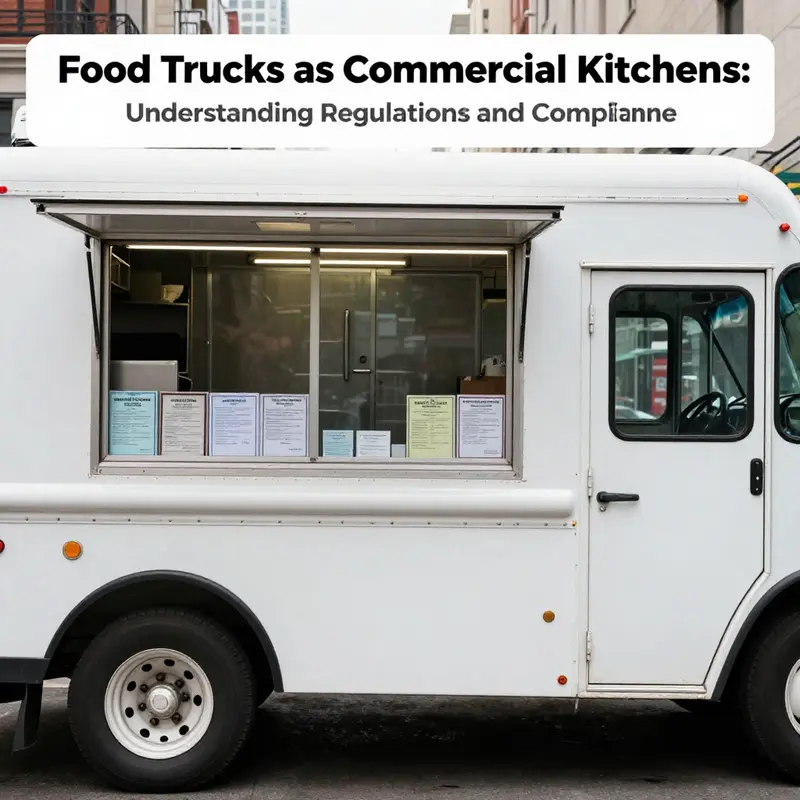
A food truck is not just a vehicle with a grill and a window; it is a compact, fully functional commercial kitchen on wheels. It brings the work of a kitchen to the streets, fairs, and parking lots, and with that mobility comes an obligation to meet the same standards that govern brick-and-mortar restaurants. The equipment inside—a weathered but purposeful stove, a robust refrigeration unit, a vented hood, a sanitation-ready prep area—speaks to a kitchen’s core purpose: preparedness, safety, and the ability to produce meals at scale. The logic is straightforward: if the space is used to prepare and serve food for the public, it must operate under the same health codes, sanitation expectations, and licensing requirements that apply to stationary kitchens. Yet the reality of how these rules are applied is anything but straightforward. The road to compliance for a mobile kitchen is often less about a single checklist and more about navigating a shifting regulatory landscape that is as mobile as the vehicles themselves.
Regulation begins where health departments, zoning boards, and fire agencies intersect—and the intersection is never uniform. In different cities and states, the same food truck might be deemed compliant in one jurisdiction and temporarily curbside in another. Health codes that apply to restaurants can be adapted for mobile environments, but adaptations vary. One veteran observer in the industry has framed the situation with a practical clarity: a food truck is both a kitchen and a vehicle, and the operator must meet the standards that apply to both. This dual identity explains why the regulatory conversation around food trucks frequently veers into questions of venue logistics, packaging, waste disposal, and on-site fire safety, in addition to the culinary standards diners expect. The end result is not a single, elegant rule set but a patchwork of mandates that operators must interpret and negotiate as they move from permit to permit, event to event.
The regulatory patchwork creates a set of tangible tensions for operators. Some cities require a precise distance between a food truck and a nearby brick-and-mortar restaurant, a constraint meant to reduce competitive friction or to keep pedestrian traffic flows safe. Others impose strict time constraints on where and when a truck can operate, a measure designed to manage congestion or protect neighborhoods from noise and waste. In practical terms, these rules complicate route planning, event booking, and the financial calculus of a given pop-up. The same operator may find that a permit secured for a popular downtown Friday market is invalid for a school campus event on Tuesday, or that a particular block is off-limits after dark. The sense of friction is real: the more venues a truck can access, the greater the potential revenue, but the more complex the compliance matrix becomes. An industry voice often underscores the core challenge: regulation should reflect the realities of both kitchen operations and vehicle movement, offering consistency without sacrificing safety.
This is where infrastructure and design come into direct contact with regulatory aims. Large, rectangular mobile units have gained traction because they optimize interior space, leaving room for multiple cooking stations, prep surfaces, and adequate storage. Those interiors are not merely about convenience; they are about meeting a standard of cleanliness, food handling, and workflow that keeps pace with a commercial kitchen. A broader interior layout supports broader menus, faster service, and more predictable sanitation routines. But the preference for size and capability carries regulatory implications. A bigger kitchen on wheels can demand more robust ventilation, higher-capacity electrical and gas systems, and stricter fire-safety measures. In turn, that can trigger more stringent inspections, higher permit costs, and additional operator training requirements. This is the paradox baked into the mobile kitchen economy: the same design choices that enable high throughput can also complicate compliance, because the regulations scale with capability as surely as they scale with heat and grease.
The evolution of the food truck from its earliest, more utilitarian roots to today’s sophisticated mobile kitchens mirrors broader shifts in the food service sector. The early model served as a cost-effective way to bring food closer to customers, a way to dip a toe into entrepreneurship without the risk of a full restaurant build-out. The contemporary food truck, however, operates as a brand on wheels. It uses social media and digital marketing to curate a following, and it often competes on the strength of its culinary concept as much as on its location. The affordability that once saved operators from capital-intensive constraints now collides with the need to uphold rigorous health and safety standards across a broader menu and a larger physical footprint. In short, the economics of mobile dining are increasingly tied to the quality of regulatory navigation. Prospective operators must demonstrate more than cooking chops; they must present a credible business plan, a tested operational track record, and the financial wherewithal to meet ongoing licensing and equipment costs. The industry’s forward momentum rests on both innovation and compliance, a combination that policymakers are increasingly called to support with more predictable, uniform standards that recognize the unique realities of food-on-wheels without compromising the public’s health.
The conversation around regulation is not simply a tug of war between operators and enforcers. It also touches how the public perceives safety and reliability across mobile dining platforms. When a city builds a permitting process that is transparent and predictable, vendors can plan a route calendar with confidence, allocate staff more effectively, and pass the costs of compliance onto customers in a controlled way. Conversely, a convoluted process with shifting interpretations can deter new entrants, dampen competition, and reduce the diversity of food offerings available to communities. The aspiration for policymakers is clear: streamline licensing, harmonize essential health and safety standards across municipal lines, and reduce the friction that deters innovation while preserving the safeguards needed for safe food preparation and service. In this sense, regulation becomes not a wall but a framework within which mobile kitchens can operate as reliable, standards-aligned extensions of the broader restaurant ecosystem.
For readers who want a sense of how this regulatory environment impacts the practicalities of the business, a broader industry blog that discusses buying and selling trucks offers an important backdrop. It highlights how operators balance fleet needs with compliance realities, and it serves as a stepping stone to imagining how a single truck becomes part of a larger compliance-driven operation. See the McGrath Trucks blog for an accessible overview of how fleets are planned, sized, and managed in light of regulatory expectations. This context helps anchor the regulatory discussion in the realities of how operators scale and adapt their kitchens on wheels rather than simply how they cook on them. McGrath Trucks blog
In the end, the regulatory landscape for food trucks as commercial kitchens is not a static menu but a dynamic recipe. It blends health science, building and fire safety, urban planning, and business strategy into a single, evolving mandate: keep people safe, keep food quality high, and keep the door open for culinary innovation to roam. The path toward more uniform standards—one that respects the mobility and flexibility of these kitchens while ensuring consistent safety outcomes—appears increasingly likely as policymakers recognize the economic and cultural value of mobile dining. The Los Angeles market, often cited for its vibrant street-food culture, illustrates both the promise and the challenge of this approach, where vibrant street-level entrepreneurship meets a highly scrutinized regulatory framework. External perspectives on the sector’s challenges and adaptation strategies illuminate how cities might balance these competing demands in the years ahead.
External context for readers seeking deeper background can be found in this in-depth industry discussion: https://www.latimes.com/business/story/2023-10-17/food-truck-regulations-challenges
Rolling Kitchens on Wheels: Designing and Equipping Food Trucks as Fully Functional Commercial Kitchens
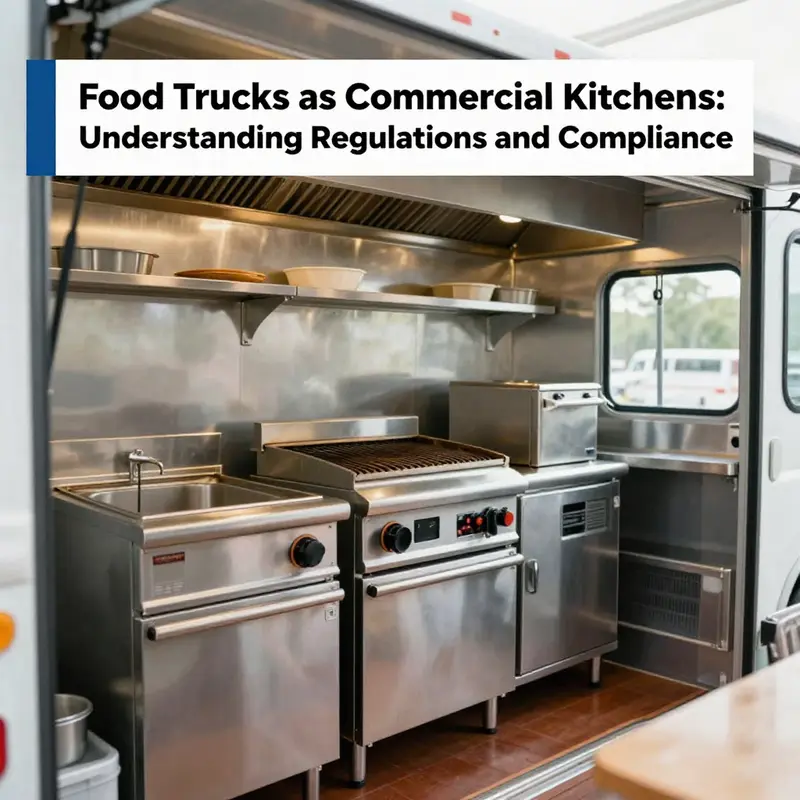
A food truck is more than a colorful façade and a sizzling skillet; it is a compact, highly engineered commercial kitchen that travels to where customers gather. The core idea that a mobile unit can operate as a full-fledged kitchen is grounded in the same principles that govern stationary restaurants: safety, sanitation, efficiency, and consistency. Yet the mobile medium imposes distinct constraints and opportunities. The chassis, the materials chosen for construction, the way equipment is arranged, and the systems that manage heat, smoke, and waste all converge to determine whether a truck can deliver meals with the same quality and compliance one expects from a brick-and-mortar kitchen. In practice, successful mobile kitchens blend culinary ambition with rigorous process design, turning space into a functional workflow that protects workers, protects the public, and protects the business from downtime and regulatory fallout. The result is a mobile unit that does not merely emanate aroma and energy at a curb; it embodies a safe, scalable, and legally compliant kitchen on wheels.\n\nAt the heart of design is a thoughtful alignment between space and purpose. Operators must decide early on how to optimize interior real estate for the menu, throughput, and service style. A large, rectangular chassis offers interior breadth that can accommodate multiple cooking stations, generous prep zones, and ample cold storage. This configuration—often seen in larger, box-style mobile units—maximizes the ability to stage courses, hold ingredients, and separate stages of production. The trade-off, however, is higher upfront cost, greater weight, and increased fuel consumption. For operators seeking high-volume output, catering or event-focused operations frequently lean into this approach, even as they balance the ongoing expenses of driving a larger mobile kitchen around crowded streets and venues.\n\nSmaller, more agile options tell a different story. Towable concession trailers and compact vans favor lower upfront costs and easier storage, which makes them attractive for farmers markets, seasonal fairs, and pop-up concepts that hinge on mobility rather than sprawling kitchen layouts. These trailers can be remarkably efficient when the design prioritizes modularity—quick-disconnect appliances, compact sinks, and clever pull-out work surfaces that create universal work zones. The choice of chassis, therefore, is not merely a matter of size; it is a strategic decision about how the kitchen will function under real-world constraints and what it will take to stay compliant while meeting customer demand.\n\nOnce the chassis is chosen, equipment selection becomes the next critical stage. A modern mobile kitchen must house commercial-grade cooking equipment, capable of sustained use in a moving environment. This typically includes grills or ranges, fryers, steam or induction units, a reliable refrigeration or freezer system, a handwashing sink, a clean and dirty dish area, and a robust ventilation system. Each piece of equipment carries its own set of safety and performance requirements. Ventilation is particularly pivotal: it must manage heat, smoke, and grease efficiently, while also mitigating the risk of fire and ensuring that the exhaust system complies with local codes. The emphasis on exhaust is not merely about comfort; it is a public safety measure that protects staff and customers alike from heat hazards, fumes, and the potential for grease buildup in a confined space.\n\nMaterial selection for the kitchen’s interior surfaces and equipment housing reinforces both safety and durability. Non-toxic, fire-resistant materials are often mandated to limit the growth of dangerous fumes and to reduce fire hazards. Surfaces must withstand constant exposure to heat, steam, and cleaning chemicals while staying easy to sanitize. This leads to a modular design ethos: components that can be replaced or upgraded without a full rebuild, reducing downtime during maintenance or regulatory inspections. Modern mobile kitchens increasingly emphasize energy efficiency and reliability, with many suppliers designing components that can be monitored remotely. Temperature data, energy consumption, and equipment status can be tracked to alert operators to anomalies before they become expensive failures.\n\nThe spatial layout of the kitchen—flow, zoning, and ergonomics—shapes daily performance as much as the equipment itself. The most efficient mobile kitchens implement a clear sequence: separate zones for prep, cooking, and assembly, with a dedicated area for washing and sanitizing. A thoughtful layout minimizes movement between hot and cold zones, reduces the risk of cross-contamination, and supports quick service during peak periods. Ergonomic design is essential in compact spaces. Shallow prep counters, accessible tool storage, and reachable shelving help staff operate with speed and precision while staying within safety margins. Because workers often operate in tight corridors and under time pressure, anti-slip flooring, secure storage for sharp tools, and easily cleanable surfaces become non-negotiables rather than optional upgrades.\n\nCompliance threads through every design choice. Food safety rules demand not only clean facilities but also traceability and proper storage practices. Temperature-controlled storage is essential to preserve ingredients, finished dishes, and equipment integrity. Sinks and handwashing stations must meet regulatory standards for water supply, drainage, and waste disposal. The exhaust and ventilation system must be properly designed to prevent grease-laden air from accumulating and to assure that air quality remains safe for staff over long service hours. Lighting must be bright enough to support precise food handling while also being energy efficient and durable in a mobile environment. Fire safety considerations include appropriate materials and the readiness of fire suppression measures where required by local jurisdiction. These are not abstract concerns; they translate into checklists, inspections, and ongoing training for staff who must operate safely in a moving, sometimes crowded, service setting.\n\nOperational practicality often drives choice in connectivity and monitoring. The modern mobile kitchen benefits from modular, durable appliances that can be serviced with relative ease and replaced with minimal disruption. Remote monitoring of temperatures and critical equipment status helps mitigate the risk of spoiled ingredients or failed components during back-to-back events. The capacity to perform quick diagnostics, schedule maintenance, and adjust temperature setpoints from a central hub translates into higher uptime and steadier service. It also aligns with a broader trend toward data-informed operations, where kitchens, even on wheels, behave like tightly managed production environments rather than ad-hoc setups.\n\nThe design narrative, however, is incomplete without acknowledging the regulatory atmosphere. A mobile kitchen must comply with health codes and licensing regimes that often mirror those applied to brick-and-mortar venues. Inspections assess plumbing, electrical systems, ventilation, sanitation practices, and the general safety of the working environment. This is not merely about passing a test; it is about cultivating a culture of ongoing compliance that travels with the truck. Operators must train teams to compartmentalize tasks by zone, maintain strict cleaning schedules, and document temperature and sanitation results. The ability to demonstrate consistent adherence to these standards is what sustains a viable mobile business, enabling operators to pursue diverse venues—from stadiums to street fairs—without sacrificing food safety or service quality.\n\nEven as the field establishes uniform expectations, the realities of mobility shape practical decisions. A larger unit may offer more kitchen space but also demands careful planning around fuel, maintenance, and licensing burdens that come with operating a bigger vehicle. Conversely, a smaller trailer or van can be nimble and cost-effective but may constrain the menu or the pace of service. In both cases, operators must design with redundancy in mind: backup power for critical equipment, easy cleanup routes that do not obstruct customer access, and flexible configurations that can accommodate evolving menus or events. The aim is a balance where the kitchen remains a robust engine of production, capable of sustaining a busy service while always keeping safety, sanitation, and compliance at the forefront.\n\nFor practitioners seeking practical guidance, resources that translate these principles into actionable steps can be invaluable. See the McGrath Trucks blog for perspectives on how mobile operations are planned, adapted, and scaled in real-world contexts. McGrath Trucks blog\n\nThe journey from concept to curbside is a continuous one. Designers and operators must iterate on layouts, test flows, and refine equipment choices as markets, regulations, and consumer expectations shift. This iterative process is not a luxury but a necessity for turning a mobile kitchen into a sustainable venture. It requires ongoing collaboration among architects, health inspectors, equipment fabricators, and the culinary team. The resulting unit is not merely a vehicle with a grill; it is a purpose-built micro-kitchen that travels, performs, and endures. When designed with care, a food truck can deliver the reliability and safety of a commercial kitchen, while retaining the mobility that defines its unique value proposition.\n\nAs the industry continues to evolve, the emphasis on energy efficiency, adaptability, and safety will likely intensify. Designers are increasingly asked to incorporate modular systems that can be reconfigured for different menus or events without extensive downtime. Manufacturers are responding with smarter, cleaner, and more durable components that stand up to the vibrations and variable climates of a mobile setting. In the end, the success story of a food truck as a commercial kitchen rests on the choreography of space, equipment, and process, all aligned to meet health codes, satisfy diners, and keep the wheels turning through season after season.\n\nExternal resource for broader industry trends: https://www.foodserviceequipmentnews.com/mobile-kitchen-design-trends-2026
Rolling Kitchens, Strict Codes: Health and Safety Compliance for Food Trucks as Commercial Kitchens
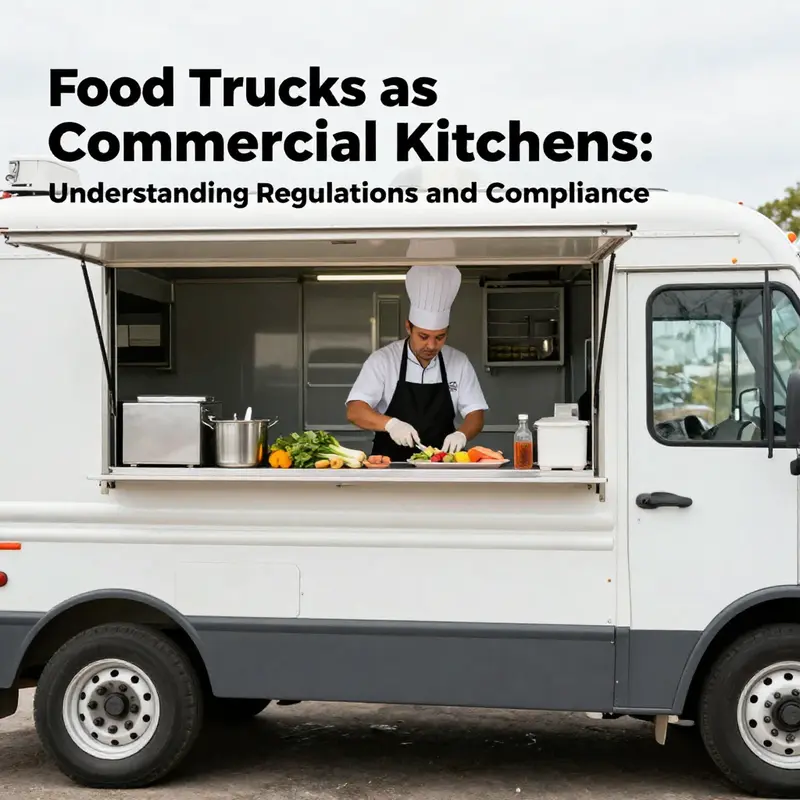
A food truck is often perceived as a kitchen-on-wheels, a colorful trailer where the sizzle of grilling meat and the rush of service create a moving microcosm of a dining room. Yet behind the aroma and the efficient choreography lies a regulated environment that must meet the same health safeguards as a stationary restaurant. In truth, a food truck functions as a small, fully functional commercial kitchen, designed to prepare, store, and serve food under the stringent oversight of local health authorities. This is not merely about keeping food warm or cold; it is about a deliberate, integrated system where engineering, sanitation, and regulatory compliance converge to protect public health while enabling a mobile business model. The stakes are high because the same risks that lurk in any kitchen—cross-contamination, improper temperatures, and unhygienic surfaces—are amplified by movement, varying locales, and the need to operate within tight confines. When health inspectors assess a mobile operation, they look for evidence that the truck’s design and practices reduce these risks as effectively as a brick-and-mortar kitchen would. The goal is not only to pass a pass/fail inspection but to sustain a safety culture that travels with the truck and travels with the brand itself. In that sense, the food truck becomes a testbed for practical, scalable compliance that supports customer trust, repeat business, and responsible growth.
The backbone of compliance begins with thoughtful design and construction. A well-planned mobile kitchen prioritizes ventilation, sanitation-ready surfaces, and a waste management plan that aligns with environmental and public health expectations. Adequate ventilation is the first line of defense against heat stress and smoky byproducts that can carry grease and particulates, which inspectors associate with lingering odors and potential contamination pathways. The choice of materials matters as well. Non-porous, easily cleanable surfaces—most commonly stainless steel or similarly sealed finishes—reduce the risk of bacterial harborage and simplify routine cleaning. This is especially important on prep counters, sinks, walls, and food-contact surfaces where spills and splashes are inevitable during service. The sanitation workflow, from handwashing to utensil washing and waste segregation, must be clear, logical, and consistently applied across all work zones. A dedicated waste disposal system, including proper separation of recyclables, organics, and refuse, helps safeguard against clogs, odors, and environmental concerns that can trigger inspections or fines.
Alongside design, equipment standards are critical. A mobile kitchen requires integrated refrigeration capable of maintaining safe temperatures for perishable goods during transport, service, and restocking. This means reliable, properly sized coolers and reach-in units that hold foods at or below 41°F (5°C) and ready-to-eat items at lower thresholds as needed. Temperature monitoring devices should be visible and functional, with records kept as part of a robust food safety program. Heating and cooking equipment must be certified for commercial use, with adequate clearance and ventilation to prevent the accumulation of grease and smoke. The presence of a grease management system or grease traps is often necessary to prevent environmental hazards and plumbing issues common in compact, mobile kitchens. These elements are not afterthoughts; they are core components of a compliant system that supports safe food handling, reduces downtime caused by equipment failures, and demonstrates to inspectors that the truck is designed for ongoing safety rather than a temporary workaround.
The regulatory landscape for mobile kitchens is not static. It hinges on local health codes, fire codes, and licensing requirements that can vary by city, county, or state. The idea that a food truck is a “kitchen on wheels” carries with it the expectation that the vehicle will be built to meet those codes and that operators will keep up with ongoing requirements, including regular inspections and equipment maintenance. Manufacturers and builders of mobile kitchens play a pivotal role here. The model you choose—whether a globally sourced chassis and fixture set or a domestically assembled unit—affects how smoothly a truck can pass inspections and adapt to changing rules. When considering a vehicle’s compliance readiness, operators weigh the advantages of different production approaches. Global manufacturers often provide a vertically integrated supply chain that can deliver certified components, such as certified stoves and exhaust systems, installed to align with widely recognized health standards. Domestic builders, meanwhile, may offer closer collaboration with local health departments, faster customization, and quicker response times for regulatory questions and post-sale service. The decision is not merely about cost but about the degree of alignment with local expectations, the ease of obtaining documentation proving conformity, and the practical support available during inspections.
Cost versus compliance is a balancing act that operators must navigate with foresight. While imported units from lower-cost suppliers may appear financially attractive, they can entail extraneous modifications later to satisfy specific jurisdictional requirements. The savings can quickly diminish if a vehicle needs rework to pass a health inspection or if components cannot be readily documented as meeting established safety standards. A careful due diligence process—evaluating the presence of required certifications, the ability to supply installation records and maintenance logs, and the compatibility of components with local health rules—often proves to be a smarter investment than chasing last-minute fixes. In the end, the most durable mobile kitchen is built around a compliance-first mindset: it is designed with the expectation that it will be scrutinized, tested, and verified by health officials who seek to protect public health and ensure consistent consumer experiences.
Compliance is not a bureaucratic burden but a strategic asset. A well-designed, compliant food truck offers tangible benefits beyond simply avoiding penalties. It minimizes the risk of foodborne illness outbreaks, which can generate costly recalls, negative publicity, and loss of customer trust. It also streamlines operations by providing clear workflows, predictable cleaning schedules, and reliable equipment performance, all of which contribute to higher service reliability during peak hours. When a truck is demonstrated to meet high safety standards, it reinforces brand credibility and supports expansion into new markets where regulators demand rigorous assurances of sanitary practices. For operators, this means that every decision—from layout and equipment selection to maintenance planning and staff training—has the potential to compound into safer meals, smoother audits, and stronger growth trajectories.
To translate these principles into action, operators should approach compliance as an ongoing discipline rather than a one-time hurdle. Thorough due diligence during manufacturer selection is essential. Ask for design blueprints, equipment specifications, and sources of certification that demonstrate alignment with recognized health and safety standards. Ensure the model includes all necessary features for safe food preparation and storage, and verify the availability of documentation that proves adherence to applicable safety standards. Training staff to execute proper food handling, cleaning, and sanitizing procedures is equally important. A culture of cleanliness and accountability should be evident in daily routines, checklists, and calibration practices for temperature control. In this way, compliance becomes part of the operational fabric rather than a separate, episodic effort.
As the industry evolves, operators can benefit from connecting with broader market insights that track how fleets and mobile kitchens are evolving, including shifts in deployment strategies, regulatory expectations, and maintenance paradigms. For instance, industry trends in used truck sales growth offer a lens into the broader ecosystem that supports mobile food ventures, including the kinds of vehicles and configurations that are proving resilient and adaptable over time. See Current trends in used truck sales growth for a practical glimpse into these dynamics. The link provides a sense of how operators are choosing trailers and trucks that can reliably accommodate kitchens designed for compliance and efficiency. While the specifics of hardware will vary by market, the underlying principle remains constant: a mobile kitchen succeeds when its design and operations consistently reflect the same standards that govern stationary establishments.
Ultimately, the heart of health and safety compliance for food trucks as commercial kitchens lies in the alignment of design, equipment, and processes with the safeguarding goals encoded in public health codes. The FDA Food Code and related local regulations provide the blueprint that guides these choices, but the implementation happens in the day-to-day rhythms of prep, cooking, cleaning, and service. When a truck operates with this mindset, it becomes more than a vehicle for food; it becomes a dependable, mobile source of safe dining that customers can trust wherever the truck travels. For operators, this trust translates into repeat business, smoother inspections, and a credible platform for growth across diverse markets. And for communities, it means safer meals, cleaner environments, and a dining landscape that travels with responsibility and accountability. As the industry continues to adapt to changing appetites and regulatory expectations, the food truck stands as a testament to how mobility and safety can coexist, turning a simple street-side kitchen into a durable, compliant, and respected enterprise.
External reference: FDA Food Code (2026) https://www.fda.gov/food/fda-food-code
On Wheels in the Kitchen: When a Food Truck Is a Commercial Kitchen in Motion
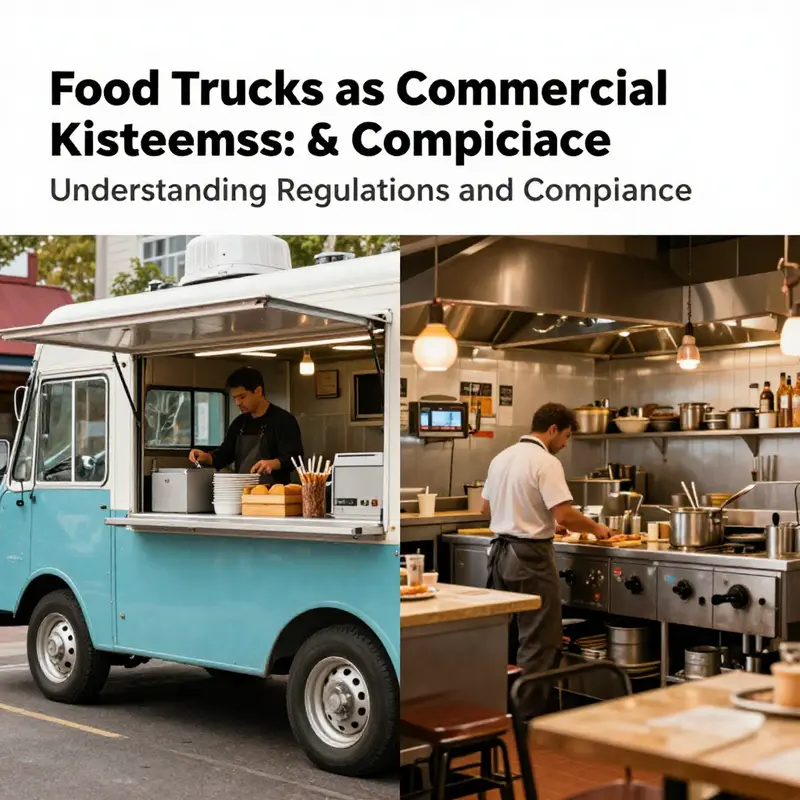
A food truck is not merely a vehicle that serves food; it is a fully equipped commercial kitchen on wheels. In most jurisdictions, the defining test is not whether the unit sits on a brick-and-mortar street, but whether it functions as a licensed, sanitary, and safety-conscious kitchen in motion. The onboard systems—commercial-grade ranges, grills, fryers, ovens, refrigeration, ventilation, and dedicated prep surfaces—are designed to meet the same standards that govern stationary kitchens. This alignment with health codes and sanitation requirements explains why many regulators treat a mobile unit as a portable extension of a commercial kitchen, complete with inspection regimes, licensing, and ongoing maintenance. The point is not the geography of service but the integrity of the cooking process and the safeguarding of public health during every shift of operation.
Mobility reframes the kitchen paradigm. A food truck can chase demand across days and seasons, sliding from business districts to festival grounds, stadium events, and street fairs in a way that a fixed restaurant cannot rival. This flexibility translates into a remarkable asset: the ability to place a kitchen where customers are, without the long-term financial commitment of a lease. Operators can respond to foot traffic patterns, seasonal appetites, and event calendars with a degree of agility that traditional restaurants rarely match. Yet mobility also introduces new constraints. Navigating permits, hydrant access, waste disposal, and variable power or gas supply requires meticulous planning. The kitchen on wheels must not merely survive these variables; it must function with the same reliability expected of a stationary dining room.
The contrast with brick-and-mortar venues is both practical and strategic. A permanent storefront offers stability: a fixed customer base, a branded ambiance, and the ability to invest in a large, ergonomic workflow. The cost equation, however, tilts toward higher fixed expenses—rent, utilities, property taxes, and ongoing maintenance. Those enduring costs shape not only prices but also menu strategy, staffing, and hours of operation. In exchange for stability, traditional restaurants demand a level of predictability that a mobile kitchen often cannot guarantee, especially in markets with zoning restrictions or unpredictable weather. The mobile kitchen, by comparison, earns its value through adaptability, a leaner footprint, and the potential to scale by moving rather than multiplying square footage.
When people discuss the interior architecture of mobile kitchens, the conversation often centers on space optimization. Large box trucks, rectangular and relatively unobstructed inside, emerge as particularly well-suited for full-scale kitchen operations. Such vehicles can be outfitted with multiple cooking stations, robust refrigeration, ample storage, and a practical zoning of dirty and clean tasks. The layout challenges are real but solvable: with careful planning, teams move between prep, cook, and service zones with minimal waist and maximum throughput. The compact design forces teams to optimize ingredients, minimize waste, and design workflows that minimize cross-traffic and potential contamination. In other words, the constraints of a small, mobile kitchen can become a catalyst for culinary and operational discipline rather than a handicap. This disciplined approach often yields benefits in consistency and quality that are essential for catering contracts and large events where reliability is a non-negotiable sale point. A practical reflection of this is found in industry discussions about how mobile kitchens serve as compact, scalable facilities on wheels, a concept that resonates with operators who view their trucks as true production hubs rather than mere serving platforms. For interested readers seeking practical insights from the broader mobile-kitchen discourse, the McGrath Trucks Blog offers an accessible lens into how mobile kitchens fit into the wider equipment and operations ecosystem.
In the kitchen-on-wheels, workflow design becomes a discipline in itself. A well-planned truck interior supports a smooth, continuous line from ingredient receipt to plate delivery. Because space is finite, teams must preassemble, portion, and preheat with precision. This discipline helps reduce waste, a critical factor for mobile operations that cannot rely on the same scale of inventory turnover as a bustling urban restaurant. The cooking process, therefore, is not simply about flavor; it is about mastering tempo, temperature control, and the sequencing of tasks under the pressure of high-velocity service. The efficiency of the kitchen directly informs profitability, especially for catering and event-based operations where the volume can be intense in short windows. In those moments, the vehicle is not just a kitchen; it is a capable, mobile production line designed to deliver consistent outcomes regardless of location.
Still, mobility carries notable trade-offs. Fuel consumption and maintenance demands rise because the kitchen is part of a vehicle that travels to customers rather than staying stably parked. Weather becomes a factor that can cap daily sales: heat, cold, rain, and wind influence customer visibility, line length, and even the ergonomics of cooking and serving. Regulations can further shape daily plans, as certain jurisdictions impose stricter rules on mobile food services in specific zones or during particular events. These variables require operators to build contingency calendars, have backup power or water supplies, and maintain flexible staffing models to adapt to shifting demand. The need for dependable supply chains and reliable equipment becomes more acute when the kitchen lives in motion, since downtime translates quickly into lost revenue. The result is a business that thrives on resilience as much as on culinary skill.
Traditional restaurants, with their larger, more ergonomic layouts, offer advantages that mobile kitchens cannot easily replicate. A brick-and-mortar kitchen benefits from full access to municipal infrastructure, including stable gas and water lines and sewer connections, which can simplify plumbing and facilities management. The physical footprint supports sophisticated equipment and teams capable of specialized roles, enabling complex techniques and high-volume service. Seating and ambiance become part of the customer experience, reinforcing brand identity beyond food alone. Yet this stability comes at a cost: capital outlays for real estate, ongoing occupancy expenses, and the rigidity of a fixed location can limit strategic experimentation. In a dynamic market, those constraints require a strong vision and careful financial planning to sustain growth over time.
The decision between operating a food truck or a traditional restaurant is ultimately a question of fit between business model and market opportunity. A mobile kitchen shines when the operator seeks geographic reach, lower fixed costs, and the ability to test new markets quickly. It is well suited for catering, festivals, and event-based revenue streams where flexibility is a strategic asset. A brick-and-mortar kitchen excels when the aim is to build brand equity through a stable customer base, consistent service, and the ability to deploy sophisticated culinary projects that benefit from a larger, steadier workspace. The two models are not mutually exclusive; many operators blend them, using a truck to seed markets and a storefront to anchor a flagship brand once a market is established. The core requirement across both approaches remains constant: a rigorous commitment to food safety, sanitation, and appropriate licensing, so that customers experience reliable quality wherever the service appears.
In practice, operators weighing these paths should consider their long-range goals. If growth hinges on rapid market entry, a truck allows rapid experimentation with menu concepts, price points, and service models. If growth centers on building durable customer relationships and brand narrative, a storefront provides a platform for a controlled dining experience that can amplify the chef’s signature technique and storytelling. The lessons learned in one mode can inform the other, with waste reduction, efficient workflow, and disciplined inventory management serving as universal levers for profitability. The ultimate measure is not the mode of service alone but the operator’s ability to deliver safe, tasty food consistently while aligning with local regulations and community expectations.
For a deeper dive into how mobile kitchens operate in practice, including production methods and regulatory considerations in California and similar markets, see the external resource linked in the references. This broader view helps illuminate the real-world implications of treating a food truck as a commercial kitchen on wheels, beyond theory and into daily operation.
External resource: The Science Behind Food Trucks in California: Properties, Production, and Applications — https://www.californiafoodtrucks.org/science-behind-food-trucks-sale-california
Rolling Kitchens, Rising Economies: The Economic Pulse of Food Trucks as Mobile Commercial Kitchens
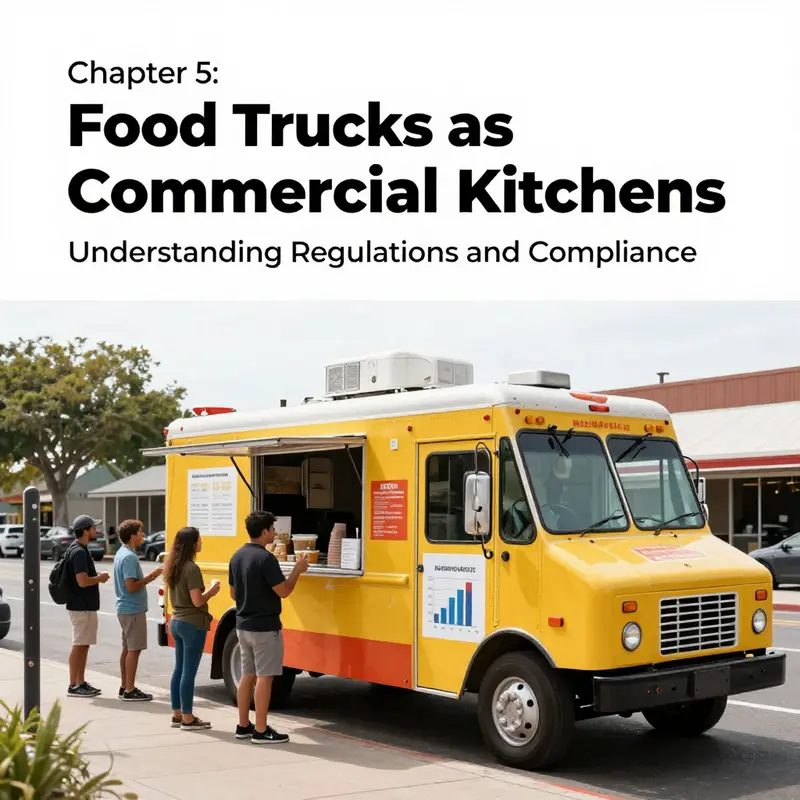
The rise of food trucks as mobile commercial kitchens marks a shift not only in how food is produced and sold, but in how urban economies behave. These rolling enterprises transform the traditional cost-structure of starting a restaurant, turning a compact vehicle into a fully equipped kitchen on wheels. The financial logic is straightforward yet powerful: lower fixed costs, faster time to market, and a built-in ability to chase demand rather than wait for customers to come to a fixed address. When a startup can launch with substantially reduced rent, utilities, and lease commitments, the barrier to entrepreneurship lowers dramatically. In this sense, a food truck is not merely a culinary vehicle; it is a flexible economic instrument that translates culinary skill into a scalable business without locking the owner into a costly lease or long-term facility. The implications ripple through the broader local economy, expanding the reach of food commerce into neighborhoods and venues that might not sustain a brick-and-mortar operation, and creating a ripple effect that benefits suppliers, event spaces, and employment ecosystems beyond cooks and servers.
The mobility of these kitchens matters as much as their equipment. A street-food unit can descend on a business district at lunchtime, pivot to a parkside corridor during weekend events, or position itself near a university campus for dinner service. This mobility translates into targeted demand capture—an attribute that fixed-location restaurants often cannot leverage with the same precision. The economic payoff is not only measured in sales; it is reflected in increased foot traffic for adjacent retailers, pop-up collaborations with local artisans, and the ability to convert underused spaces into vibrant, transient marketplaces. When a cluster of food trucks spends evenings in a corridor, the combined draw elevates the entire area’s activity, encouraging more pedestrians, longer stays, and higher spending across nearby services. In that sense, food trucks become catalysts of place-making, extending the concept of a commercial kitchen into the urban fabric.
Entrepreneurship flourishes in this framework because it rewards skill and speed over capital intensity. A chef with a unique concept can pilot a concept in a single vehicle with modest upfront investment, then scale through strategic expansion, a pathway that is particularly attractive to small business owners and culinary professionals who lack access to traditional financing. The job opportunities extend beyond cooking and serving; they include roles in logistics, compliance, marketing, and customer engagement. Drivers, prep staff, and event coordinators become integral components of an agile business model. The economic story is thus not solely about per-unit profitability but about the creation of flexible labor markets that can adapt to peaks in demand, seasonal events, and evolving consumer tastes. This facet resonates with regional economies that crave adaptable employment opportunities and recurrent, location-based revenue streams.
From an operations standpoint, the economic viability of mobile kitchens depends on how well the vehicle is designed to maximize throughput while maintaining rigorous health and safety standards. Large, rectangular mobile kitchens tend to offer the most interior space for multi-station cooking, robust refrigeration, and efficient waste management. These configurations support higher-volume catering, corporate events, and long-duration deployments such as campus dining programs or festival operations. In practice, the design choice directly influences throughput, inventory management, and compliance costs. A truck outfitted with multiple cooking stations and ample cold storage can serve a broader menu and serve more customers per hour, which reduces the incremental cost per meal and improves unit economics. The alignment of equipment, workflow, and sanitation protocols is essential not only for safety but for predictable cost control and reliability—factors investors watch closely when evaluating the long-term viability of a mobile kitchen investment.
The economic narrative also depends on market maturity and regulatory environments. In regions where city authorities support mobile food operations through clear licensing, designated service zones, and reasonable inspection regimes, operators can plan longer-term deployments with confidence. The regulatory framework matters because it shapes cost structures and risk exposure. Where compliance is predictable, owners can optimize scheduling, procurement, and staffing with less uncertainty, enabling stable profit margins even as input costs fluctuate. Conversely, in markets with evolving or opaque rules, operators may face higher administrative burdens, delayed permitting, or frequent policy shifts. These uncertainties translate into higher carrying costs and risk premiums that dampen the net economic benefit of mobility. The chapter’s economic lens, therefore, must account for the policy landscape as an essential driver of growth trajectories for mobile kitchens.
The international dimension of this sector adds further nuance. In California, regulatory support and a dynamic urban food scene have long encouraged innovation and experimentation with mobile kitchens. The state’s market environment demonstrates how regulatory clarity, combined with a thriving customer base, can accelerate scale and encourage more sophisticated configurations, including larger-capacity trucks that approach the capabilities of small, roaming commercial kitchens. Elsewhere, in growing economies such as India, food trucks are being increasingly positioned to support large-scale event services and campus catering. The adaptability of mobile kitchens across diverse markets underscores their capacity to function not as temporary stand-ins for brick-and-mortar restaurants, but as a permanent, flexible component of the commercial kitchen ecosystem. This scalability is not only about replication; it is about tailoring configurations to specific use-cases—catering fleets, festival circuits, or campus dining programs—while preserving core advantages: mobility, lower fixed costs, and the ability to respond quickly to demand cycles.
From a strategic purchasing perspective, buyers approach mobile kitchen investments with an emphasis on technical specifications, mechanical performance, and standards of operation. The most viable models balance interior space, storage capacity, and energy efficiency with reliability and ease of maintenance. Operators weigh the upfront capital against expected life-cycle costs, including fuel or energy usage, routine repairs, and ongoing compliance requirements. A robust evaluation framework considers how a truck’s layout supports parallel cooking tasks, how refrigeration capacity handles fluctuating inventory, and how waste management systems integrate with local disposal regulations. The literature in the field emphasizes the value of modular design and energy-efficient appliances—features that can reduce operating expenses and extend the serviceable life of the unit. Such attributes matter not only for profitability but for the resilience of the business in the face of economic headwinds, commodity price swings, and shifting consumer preferences.
The economic impact, in short, extends beyond the balance sheet of a single operator. Mobile kitchens contribute to a multiplier effect that reverberates through local supply chains. They create demand for suppliers of equipment, signage, and point-of-sale technology, as well as for maintenance services and vehicle customization specialists. They also stimulate consumer spending in areas that might otherwise struggle to attract consistent daytime foot traffic. The cumulative effect is a more dynamic urban economy, where streets, parks, campuses, and event venues transform into constantly evolving marketplaces. This dynamism has cultural and social implications as well: mobile kitchens introduce culinary diversity more rapidly and at broader scales, giving neighborhoods opportunities to experiment with flavors and concepts that a fixed-location venue might not sustain. In that sense, these operations do more than feed people; they contribute to the urban narrative of adaptability and opportunity.
To ground this analysis, industry reports have highlighted how mobile kitchen trucks are evolving in response to market realities. The shift toward modular, scalable designs, energy efficiency, and sustainable practices aligns with broader trends in the sharing economy and the push for more flexible, service-oriented business models. This alignment is a bellwether for long-term growth, indicating that the economic advantages of mobile kitchens are not ephemeral but embedded in a broader evolution of urban commerce. As the sector continues to mature, stakeholders—from aspiring chefs to city planners—are increasingly recognizing food trucks as viable, critical components of a modern commercial kitchen ecosystem. They are not merely temporary curiosities on the curb; they are strategic assets in the landscape of urban food production and service.
The upshot is clear: when a food truck functions as a commercial kitchen, it does more than deliver meals. It catalyzes entrepreneurship, invigorates neighborhoods, expands employment opportunities, and contributes to the resilience and adaptability of urban economies. The chapter thus treats mobile kitchens not as a niche trend but as a fundamental shift in how cities grow, how culinary businesses scale, and how communities experience food as a shared, mobile resource. The implications for planners, policymakers, investors, and operators are profound, inviting a rethinking of space usage, licensing regimes, and support infrastructure that can unlock the full economic potential of rolling kitchens. In this sense, the mobile kitchen is a catalyst for a more dynamic, inclusive, and resilient urban economy, aligning the practical realities of a truck-based culinary operation with a broader vision of growth and opportunity.
For readers seeking a deeper dive into related industry dynamics, see the broader discussion of market trends and asset availability in industry reports on mobile kitchen trucks. current trends in used truck sales growth. For a broader context on how these vessels are moving through markets, look to sector analyses that connect design choices to financial outcomes and customer reach.
External resource: Industry insights on the mobile kitchen trucks market growth provide a macro view of how energy efficiency, modular design, and regulatory supports are shaping growth trajectories across regions. https://www.foodtrukk.com/industry-reports/mobile-kitchen-trucks-market-growth-2026
Final thoughts
Food trucks serve as a compelling representation of modern culinary entrepreneurship, operating under strict regulations and standards that establish them as legitimate commercial kitchens. Their adherence to health codes, unique design requirements, and safety measures align them closely with the traditional restaurant framework. As their economic footprint continues to grow, understanding the impact of food trucks helps stakeholders not only appreciate their contribution to the food service industry but also facilitates informed decisions in logistics and business planning. The insights offered in this article underline the importance of recognizing food trucks as viable and compliant commercial kitchen entities.