
The classification of vehicles significantly impacts operations for trucking company owners, fleet managers, and logistics firms in California. Understanding whether every pickup truck registered in the state qualifies as a commercial vehicle is essential for compliance and operational efficiency. This exploration dives deep into the intricacies of pickup truck registration—from defining commercial vehicle criteria to the implications of weight limits, usage, and specific registration requirements. Each chapter aims to guide you through vital factors that influence vehicle classification, helping key stakeholders navigate the complexities of commercial vehicle registration.
Beyond the Badge: Demystifying California’s Pickup-Truck Classifications and the Real Use Behind the Registration
In California, the simple question, Is every pickup truck registered commercial? does not have a straightforward answer. The state does not badge every pickup with a single label based on its make or body style alone. Instead, classification hinges on how the truck is used and how its utilization aligns with regulatory definitions of business activity. This distinction matters not only for registration paperwork but for insurance, licensing, taxes, and ongoing compliance. To navigate this landscape, it helps to see trucks less as fixed categories and more as tools whose value is defined by purpose, weight, and the rhythm of daily use.
A practical way to think about the distinction is to separate primary use from potential use. If a pickup is routinely employed for personal purposes—Family hauling on weekends, trips to the hardware store for a home project, or driving to work as a commuter—it can be registered as a passenger vehicle. This path aligns with most privately owned pickups, where the vehicle serves private life rather than a business workflow. The registration choice is not a judgment about the truck’s appearance or its powertrain; it reflects how the vehicle functions in the owner’s ordinary routine. This is a common arrangement and, for many people, represents the most cost-effective and straightforward approach to ownership.
When the situation shifts toward business activity, the calculus changes. A pickup used to transport goods for hire, deliver products, or operate as part of a contractor’s fleet is typically considered a commercial asset. The state’s framework looks not just at what the truck is, but at what it does. If the vehicle’s purpose is tied to a business model—moving tools between job sites, carrying inventory for a home improvement venture, or supporting a service that charges customers—it’s likely to fall under commercial regulations. This is true whether the operator is a sole proprietor, a small business, or a larger enterprise with a staff. The emphasis is on use, not mere capability; a truck that could haul a heavy load remains a candidate for passenger registration unless its daily pattern demonstrates business utilization.
Weight also plays a decisive role in California’s classification. The gross vehicle weight rating (GVWR) is a critical threshold. In practical terms, trucks with a GVWR above 10,000 pounds are frequently treated as commercial vehicles, even if a portion of their use is personal. For lighter pickups, the door does not slam shut on a commercial designation, but use becomes the lever that tips the balance. A lighter truck that is regularly deployed for business activities can end up with commercial registration because its practical deployment mirrors a commercial operation. This weight-driven nuance helps explain why two trucks that look similar on a showroom floor can occupy different regulatory lanes once they are put to work in the real world.
These factors—use and weight—often intersect with licensing and insurance implications. Commercial vehicles commonly require different insurance coverage, and the operator may need specialized licensing or endorsements if the vehicle meets certain thresholds or if it operates in certain service contexts. The overarching truth is that registration and regulatory status reflect how the vehicle is used in practice, not solely its physical form. A pickup that doubles as a family workhorse on weekends but serves a business function during the workweek may demand a careful review of both registration and coverage to ensure there are no gaps when requirements shift.
Another dimension to consider is how owners navigate changes in use. A truck purchased for personal reasons can become a business tool if the owner launches or expands a service that relies on the vehicle. Conversely, a truck used for business can transition back to private use if the activity ends or scales down to the point where commercial operations are no longer a central feature. In both scenarios, the key move is transparency: communicating actual usage to the DMV and aligning registration with current, documented practices. This approach prevents mismatches that could complicate liability, insurance claims, or regulatory audits.
The practical upshot for vehicle owners is straightforward, even if the decisions feel nuanced at first glance. Start with the GVWR specification on the vehicle’s label or the manufacturer’s data. If the GVWR surpasses 10,000 pounds, there is a high likelihood that the vehicle will be treated as commercial for purposes of registration and related compliance. If the GVWR is lower, the safer default is to examine daily use. Is the truck’s primary mission personal, or does it routinely enable business activities such as delivery, hauling equipment, or transporting goods for hire? If the latter describes the routine, the owner should anticipate commercial registration. If the former dominates, passenger registration usually suffices. When in doubt, a visit to the official DMV resources or a quick conversation with a local DMV office can clarify the specific class that applies to the vehicle’s current utilization.
What this means for the broader narrative around pickups in California is that the category is a living one. It adapts not to a single moment of ownership but to the arc of how a vehicle is used over time. The same model can serve very different roles in two households, and the resulting regulatory treatment can reflect that duality. In a sense, pickup trucks are chameleons: their registration status follows the job they perform, not just the chassis on which they are built. For families buying a pickup to handle occasional towing and weekend trips, the passenger path remains a natural fit. For a neighbor who steadily climbs the ladder of a home-improvement business, the commercial path is the more accurate map.
To readers seeking a reliable anchor in this landscape, the rule of thumb is to align registration with actual use and to verify where necessary with state guidance. The California DMV provides the definitive framework and can illuminate edge cases that arise from mixed-use patterns or unusual workloads. It is worth taking a moment to cross-check documentation—GVWR labels, business use records, mileage logs, and any insurance certificates—to ensure that the vehicle’s status mirrors its practical function. When owners maintain this alignment, they reduce the risk of regulatory confusion and position themselves to benefit from the appropriate protections and obligations that come with their chosen classification.
For readers who want to extend their understanding beyond the immediate field notes, the broader discourse on how trucks fit into commercial and consumer ecosystems often benefits from a look at industry discussions and practical roadmaps. The McGrathTrucks blog offers broader conversations about truck usage, classification, and the ways owners navigate shifts between personal and business roles. McGrathTrucks blog
Ultimately, the question Is every pickup registered commercial in CA? has a layered answer. It depends on the vehicle’s weight, but more importantly, on how the truck is used day in and day out. A light pickup used strictly for family errands and personal tasks can remain a passenger vehicle. A heavier or frequently utilized work truck—whether owned by a contractor, a delivery service, or a small business—often becomes a commercial asset. California’s framework recognizes this practical diversity, asking owners to align paperwork with real-world use, not to apply a blanket label based solely on appearance. In doing so, vehicle owners protect themselves from regulatory misalignments and ensure they are meeting the letter of the law while leveraging the right protections for their particular operations.
External resource: California DMV Vehicle Classification page
How California Decides Whether Your Pickup Is Commercial: Weight, Use, and Real-World Rules
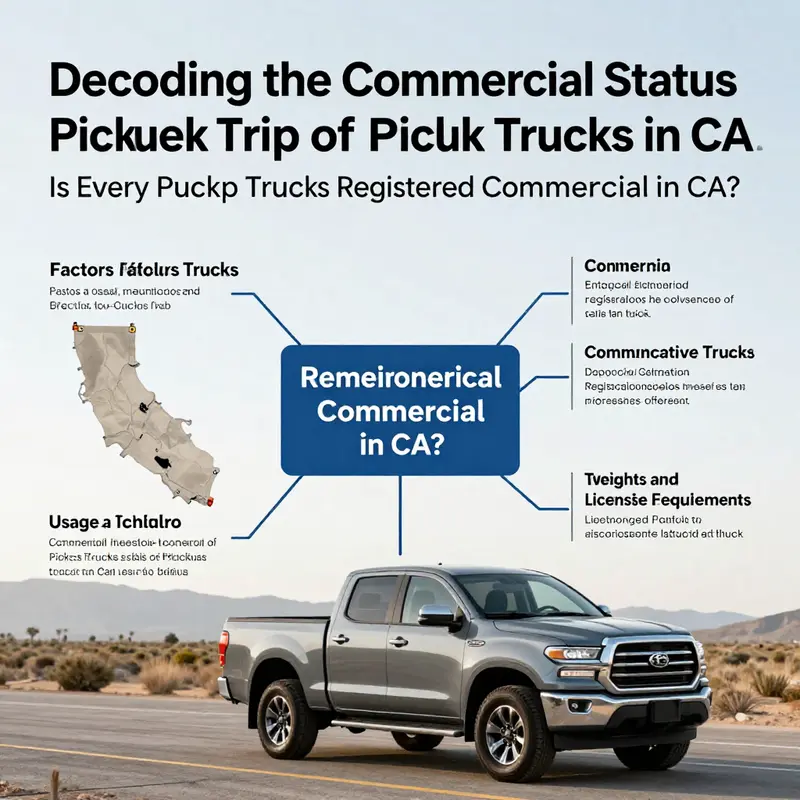
Understanding whether a pickup truck must be registered as a commercial vehicle in California comes down to more than the truck’s appearance. The state focuses on objective measures and how the vehicle is used. Two clear lines often determine classification: the truck’s gross vehicle weight rating (GVWR) and its primary use. Beyond those, licensing, insurance, emissions rules, and local exemptions can shift a pickup from private to commercial registration.
A central rule is straightforward: pickups with a GVWR of 10,001 pounds or more are treated as commercial vehicles for registration. This threshold captures most heavy-duty chassis and larger work trucks. If your pickup crosses that number as listed by the manufacturer, the DMV expects it to carry the commercial designation regardless of whether it is used for work every day. That automatic classification exists because larger trucks have different safety, emissions, and operational impacts than light passenger vehicles.
But many pickups fall below that weight limit. For trucks under 10,001 pounds, classification depends heavily on use. If the vehicle’s primary role is supporting a business — hauling materials, delivering goods, carrying tools for on-site work, or transporting paying passengers — the vehicle will typically need commercial registration. Occasional business errands for a vehicle primarily used for family transport do not automatically convert it to commercial status. The distinction rests on regular, ongoing business activity versus incidental or personal use.
Licensing requirements provide another angle. Certain commercial operations require drivers to hold a specific commercial driver’s license. When a pickup is used in ways that trigger that license requirement, the vehicle will follow commercial registration and operational rules. Similarly, commercial insurance is expected for vehicles engaged in business use. Insurers treat business operations differently than personal driving, often requiring separate coverage or endorsements. Operating a vehicle with personal insurance while using it primarily for business can lead to denied claims after an accident.
California also layers in safety and emissions standards. Commercial vehicles face stricter periodic inspections and emissions testing, depending on weight and use. These rules aim to control pollution and ensure vehicles that work hard on public roads meet safety standards. For owners, that can mean additional maintenance costs and compliance steps. For purchasers in the used-truck market, those compliance differences affect resale value and operating costs, so asking about the truck’s registration history is a practical step.
Local and sector-specific exemptions can blur the picture. Agricultural vehicles working within prescribed parameters may receive exemptions from certain commercial requirements. Utility trucks, government vehicles, and specialized emergency vehicles can follow different rules. Counties and municipalities sometimes add specific registration requirements or provide narrow exceptions, so an owner should check both state and local rules when in doubt.
Practical signs that a pickup may already be registered as commercial include license plate series reserved for commercial vehicles, registration paperwork listing a business name, or documentation showing the vehicle is used in a for-hire operation. Conversely, trucks registered to individuals for private passenger use and appearing on standard registration documents are typically not commercial. Still, registration status can change if the DMV discovers documentary or operational evidence of commercial use during an audit or enforcement action.
Consequences for misclassification are meaningful. Operating a truck that should be commercially registered but is not may lead to fines, back fees, and the requirement to correct registration and insurance. After an accident, misclassification can complicate insurance claims and liability. For business owners, the exposure extends to tax and regulatory compliance. Correct classification protects owners and drivers from penalties and ensures the right insurance and safety measures are in place.
For buyers and sellers, the registration status of a pickup is a key negotiation point. A pickup registered commercially may have higher operating costs and stricter maintenance records. Conversely, a truck that has been used commercially but registered privately can present hidden liabilities. When evaluating a used truck, check the manufacturer GVWR label inside the driver door jamb. Review registration documents, maintenance invoices, and any business records showing the truck’s role. Request a vehicle history report and, if warranted, discuss the vehicle’s past use with the seller.
If you determine a commercial registration is required, the DMV process involves specific forms, fees, and documentation. You will typically need proof of ownership, evidence of the vehicle’s GVWR, and information about its intended use. Businesses often register under a business name rather than an individual’s name. Insurance carriers will ask about intended use and may require a commercial policy. For those uncertain about classification, the DMV offers guidance and can review usage patterns and documentation to advise on correct registration.
Practical steps to avoid surprises include: verify the GVWR and review the owner’s manual or door jamb label; keep clear records of business use versus personal use; maintain appropriate commercial insurance when operating for business; and consult the DMV or a professional when buying a truck intended for mixed use. If a vehicle will be converted from private to business use, plan for higher operational costs and possible inspection or emissions requirements.
Understanding these factors also helps when choosing where to buy or sell a truck. Market channels can differ: some buyers focus on fleet-ready, commercial-registered vehicles, while others prefer private-registered trucks. If you want guidance on buying and selling trucks and campers efficiently, consider reading a practical overview of dealer and auction dynamics to learn how registration status affects price and suitability. dealer sales vs auctions: choosing your truck
A pickup’s appearance does not determine its registration. Weight, regular use, licensing, insurance, emissions standards, and local rules do. For most pickups under the 10,001-pound GVWR threshold that are used mainly for personal reasons, private registration is appropriate. But when a pickup supports a business, carries goods for profit, or meets thresholds for commercial operation, the state expects commercial registration and the additional compliance that follows. When in doubt, consult official resources and keep documentation that clearly shows how the truck is used.
For authoritative details and step-by-step instructions on registration categories and requirements, consult the California Department of Motor Vehicles: https://www.dmv.ca.gov
Weight, Use, and the Line Between Personal and Commercial: Unpacking California’s Pickup Truck Registration Rules
On California’s roads, the sight of a rugged pickup rolling past a construction site can prompt a quick assumption: that truck is a business tool, therefore a commercial vehicle. Yet the truth is more nuanced. In California, as in many states, registration as commercial rides on use and weight, not merely the truck’s badge or its bed length. This distinction matters beyond paperwork. It touches taxes, insurance, licensing, and how a vehicle is treated in inspections and enforcement. The line between personal and commercial is drawn at the intersection of GVWR and daily function, and understanding that intersection helps owners avoid misclassification and the penalties that can follow.
The primary hinge is the gross vehicle weight rating, the GVWR, the manufacturer’s estimate of how much weight the vehicle is built to carry safely including passengers, cargo, and fuel. In California, vehicles with a GVWR above 10,000 pounds are generally treated as commercial vehicles for registration purposes. That threshold isn’t a mere number; it’s a practical boundary that pulls many heavy-duty pickups—think the heavy models used for towing, hauling equipment, or running small service operations—into the commercial category. Yet the story does not end there. A heavy pickup with a GVWR just over the line does not automatically become a business-only asset if it is not used for business tasks. The DMV recognizes that the same truck can function as a private workhorse for a homeowner or a family, in which case non-commercial registration could still apply if the vehicle’s primary use is non-business related.
Conversely, a lighter pickup with a GVWR under 10,001 pounds can still fall under commercial rules if it is used in a business context. If a truck is regularly employed to transport goods, deliver items for profit, or support a service that generates income, it may be regulated as a commercial vehicle regardless of its lighter weight. This separation between weight-based classification and use-based classification is crucial. For instance, a shop that relies on a small, relatively light-weight truck to haul tools and parts to job sites might argue for private registration, but if the same truck is used to shuttle customers, transport inventory for a small business, or perform paid services, the commercial designation becomes more likely and, with it, different licensing and insurance requirements.
The California DMV sums up the practical reality with a clear emphasis on use: vehicles used for hire, delivery, or the transportation of goods for profit are considered commercial, regardless of their weight. That directive can upend assumptions. A light-duty pickup used by a freelance contractor to move equipment and deliver small loads may need to be registered as a commercial vehicle, even if its GVWR sits well below the 10,001-pound line. The logic is straightforward in principle: the vehicle is part of a business model, so the regulatory framework that governs commercial operations should apply. Understanding this helps prevent misclassification, which can lead to improper licensing, higher insurance costs, or penalties during audits and roadside checks.
In practical terms, the weight threshold remains a critical, though not exclusive, determinant. Heavy-duty pickups like the commonly configured F-250, Silverado 2500HD, or Ram 2500 typically have GVWRs that exceed 10,000 pounds, which places them in the commercial category by weight alone. Yet even among models that stay under the line, the decision to register as commercial hinges on how the vehicle is used. This means a truck user must assess both its technical specification and daily routine. The GVWR sticker found on the door jamb, the vehicle’s documentation, and the intended use across a typical week all factor into the final classification. The result is a nuanced picture: weight matters, but use matters just as much, and sometimes more.
The implications of classification extend beyond registration. Commercial vehicles generally face different licensing requirements and insurance considerations. They may be subject to additional inspections, compliance checks, and, in some cases, different tax treatment or fees. For business owners, the stakes can be high. Misclassifying a truck as private when it operates as a commercial asset can complicate insurance coverage, lead to billing disputes, or trigger retroactive fees if a regulatory body later determines the vehicle should have been registered as commercial. Likewise, misclassifying a commercial vehicle as private can result in noncompliance consequences that complicate audits or compliance reviews.
The decision often comes down to a simple, earthy test: does the truck serve a business process or a personal lifestyle? If the answer leans toward business—whether the vehicle is used to haul goods, perform paid services, tow equipment, or support a service-based operation—then commercial registration is typically warranted. If the truck functions primarily as a family vehicle, a commuter vehicle, or a personal weekend hauler, non-commercial registration may be appropriate, provided the GVWR and other relevant factors align with that designation. It is this blend of weight and use that defines California’s practical approach to pickup truck classification.
For readers seeking to place these ideas in a broader market context, recent discussions around truck usage, ownership, and pricing trends can offer a useful backdrop. There is value in staying aware of current shifts in how trucks are bought and sold, what conditions they operate under, and how actors in the market interpret the regulatory environment. These conversations can illuminate how buyers weigh the cost of commercial versus private registration, how insurance quotes may differ, and why some operators convert personal-use trucks into commercial assets as their business grows. For a concise view of the latest market dynamics, consider the broader discussion on trends in used-truck sales growth.
In all cases, the most reliable path to clear classification is a careful check of the GVWR label on the vehicle, a review of how the truck is used day to day, and a direct consultation with the DMV or a qualified regulatory advisor. The DMV’s own guidance is the best compass, and it is worth consulting when plans change—if a private-use pickup begins to serve a commercial function, or if a business expands to require a broader fleet with formal commercial registrations. While the rules may appear simple on the surface, the intersection of weight and use creates a nuanced landscape where accurate registration reflects both the truck’s technical specifications and its real-world function. For deeper exploration into market context and practical decision-making, see the linked discussion on current trends in used-truck sales growth, which offers a snapshot of how buyers navigate these choices in a shifting market. current trends in used-truck sales growth
Ultimately, the takeaway is practical, not bureaucratic. Not every pickup is commercial by default in California. The line is drawn where weight and use meet. If a vehicle’s GVWR sits under the threshold and its daily use remains personal, the non-commercial path is plausible. If, however, the truck underpins a paid service, moves goods for profit, or is used to hire transportation or equipment, commercial registration is the rational course. The DMV’s framework recognizes that the same physical vehicle can live in multiple worlds depending on what it actually does for the owner and for the business. Understanding this distinction helps prevent surprises at renewal time, reduces the risk of insurance gaps, and clarifies compliance responsibilities. For those seeking official, up-to-date guidance, the California DMV website provides authoritative details and the most current interpretations of registration rules. It is worth checking whenever plans evolve, to ensure alignment with regulatory expectations and to maintain a clear, compliant operational posture.
External resource: https://www.dmv.ca.gov
Not All Pickups Are Commercial: Untangling California’s Vehicle Classification Rules
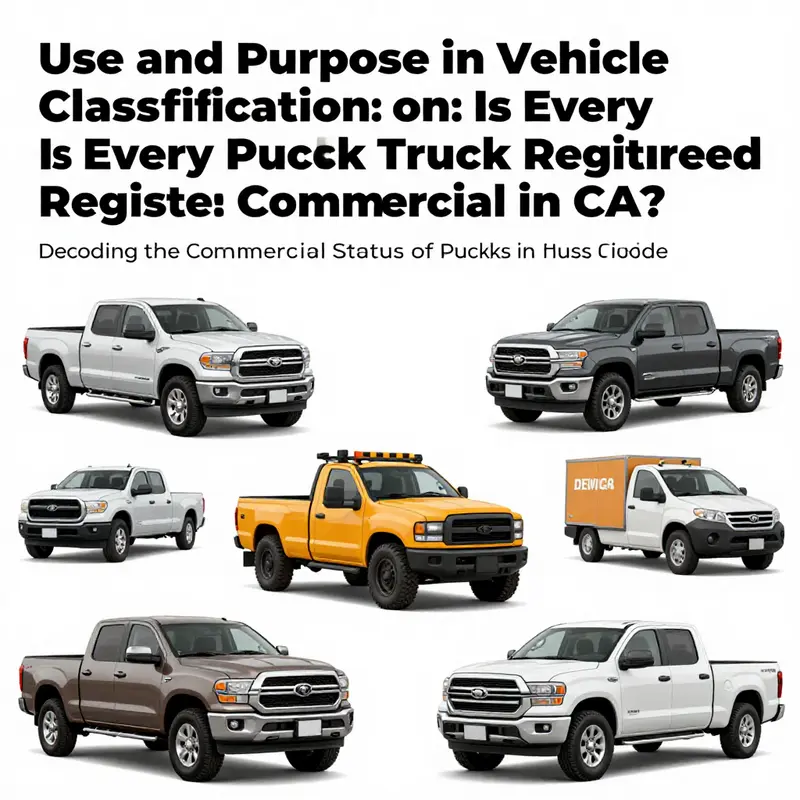
Not all pickups are commercial, at least not by California’s standards. The moment a truck leaves the driveway with a family load it can stay within private registration, and the moment it becomes a key tool of a business, the classification path can change. In California, as in many states, the line between personal and commercial use is drawn by how the vehicle is used, not merely by its make or appearance. A pickup truck can be registered as a private passenger vehicle if it is used primarily for non-business purposes, such as commuting, school runs, weekend projects, or carrying groceries. But once that same truck becomes a workhorse for a business—hauling equipment to a job site, delivering goods, or towing materials for hire—the state can require commercial registration. The distinction matters, because it touches licensing, insurance, fees, and compliance obligations that ripple through a business’s operations and even its taxes. California’s DMV outlines a straightforward, but sometimes nuanced, framework. The critical elements are use, weight, and intent. Light-duty pickups, with a GVWR under a certain threshold, are often treated as passenger vehicles if the primary mission is personal transport. A truck sized for family trips or weekend projects and used mostly to transport people and household gear may bear a Passenger or Passenger Utility designation. In practice, most light pickups under roughly 8,500 pounds GVWR fall into this category when the work they do is not business-driven. The official DMV wording uses weight thresholds that can push a vehicle into commercial territory if the payload and the configuration align with commercial classifications. Some resources quote a glancing threshold around 10,000 pounds GVWR as a trigger for commercial rules. Others emphasize that a truck over 8,500 pounds GVWR, even if used part-time for non-business tasks, can attract closer regulatory scrutiny due to size and safety considerations. The interplay between weight and use creates a practical reality: two pickups that look alike on a driveway can have very different registrations simply because one serves a trade and the other serves a family.
In the commercial path, the consequences multiply. Businesses that rely on trucks to transport goods, equipment, or materials for hire can expect to face commercial registration. That path brings increased fees and periodic inspections, as well as differences in required insurance and compliance with safety and emissions standards. The DMV has specific regimes for commercial vehicles, designed to protect road safety and ensure that trucks in commercial operation meet more stringent standards. The same logic applies to companies that use two or more vehicles as part of a fleet, or to independent contractors who run a service business with a pickup as the primary tool. When a truck is used to deliver goods, to transport workers, or to haul trailers for work, the case for commercial registration strengthens. The line is not simply about ownership but about the function of the vehicle in the market and the duties it performs for compensation.
What does this mean for a private vehicle owner who occasionally hauls building material? If a person uses a pickup strictly for personal tasks, the standard registration usually remains. But if business tasks become a regular feature—installing cabinets, running a small delivery route, or towing equipment to multiple sites—the use pattern shifts toward commercial in the eyes of the DMV. If the GVWR sits near or above the threshold, or if the payload and configuration suggest a commercial role, the state may require a commercial registration. That decision can trigger higher annual registration fees, more frequent inspections, enhanced safety and emissions requirements, and different licensing. Even when a vehicle is privately owned, commercial use—like providing services that rely on a truck to generate income—can necessitate insurance tailored to commercial risk, as opposed to standard consumer coverage. The practical effect is simple: use the truck to run a business and you tilt toward the commercial side, even if the truck is not a full-blown fleet vehicle.
For those weighing the costs and benefits, the path forward is practical and proactive. First, locate the GVWR label on the truck, typically found on the door frame or in the owner’s manual, and compare it to the thresholds referenced by local regulations. If the GVWR sits at or above a problematic threshold and business use is ongoing, it makes sense to consult the DMV or a licensed registration professional before the registration renewal comes due. In mixed-use scenarios—part personal, part business—keeping clear records of how the vehicle is used can help justify the appropriate classification. Some owners opt to keep a separate vehicle for business use, while others consolidate under a single registration if their operation fits a small business model. Either path has financial implications: commercial registration often carries higher fees and more documentation, but it can unlock appropriate insurance products and may align with tax deductions for business-related vehicle use. The key is clarity about how the truck is used and readiness to document that usage when required.
The question at its core is deceptively simple: is every pickup truck registered as commercial in California? The answer, grounded in current practice and official guidance, is no. A pickup can remain a private passenger vehicle when its primary function is non-business transportation. It becomes commercial when its use, weight, and purpose align with the needs of a business—whether as a carrier of goods, a tool for providing a service, or a component of a fleet. This nuance matters not only for registration and licensing but also for the broader economics of running a truck-based operation. It shapes insurance choices, maintenance planning, scheduling, and even eligibility for certain incentives or fleet programs. Readers who want to explore related considerations for fleet planning and the broader market dynamics behind heavy-truck usage may find it useful to review broader industry perspectives on trucking markets and demand trends. economic uncertainties in trucking markets.
Ultimately, California’s framework reflects a practical balance. It recognizes that a pickup’s value to a household differs from its role in a business. It acknowledges that weight thresholds influence safety and regulatory oversight. And it demands that anyone who turns a pickup into a tool for generating income approach the issue with clarity and documentation. For authoritative guidance, readers should consult the California DMV directly, since state policies and interpretations evolve over time. The DMV site contains the most up-to-date definitions, thresholds, and procedures for vehicle classification, registration, and compliance. External resources provide context, but the state’s official guidance remains the final word for determining how a given pickup should be registered and insured within California’s regulatory framework.
For those navigating the practicalities of ownership and operation, the essential takeaway is that the classification hinges on use and purpose as much as on the truck’s size. A light-duty pickup used solely for personal tasks tends to stay within private registration. A pickup that serves a business—whether delivering goods, transporting equipment, or moving a crew—likely becomes a commercial vehicle, with all the associated regulatory implications. The distinction is not merely bureaucratic; it affects monthly budgets, risk exposure, and the ability to scale a business that relies on transport as a core capability. As the landscape of vehicle use continues to evolve with changing work patterns and regulatory expectations, staying informed and prepared is the best way to ensure compliance and maximize the utility of the truck, no matter what role it plays in daily life or in enterprise operations.
External resource: California DMV official guidance on vehicle classification, registration, and commercial-use considerations: https://www.dmv.ca.gov
When Pickup Trucks Count as Commercial in California: Rules, Risks, and Real-World Consequences
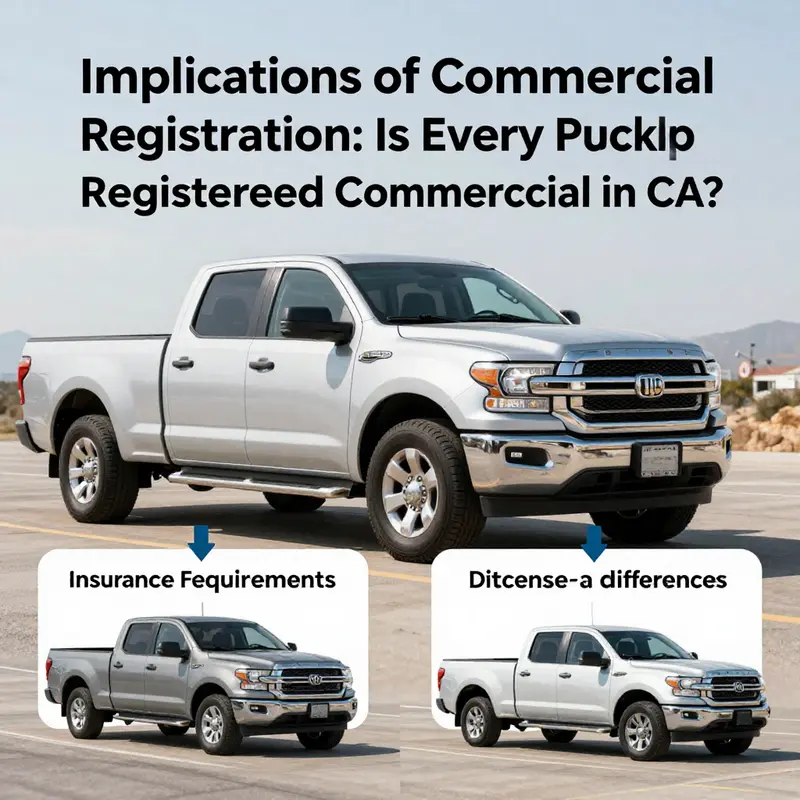
Not every pickup truck in California is registered as commercial. The state looks at how a truck is used, not just what it is. That distinction matters because registration category affects insurance, taxes, inspections, licensing, and resale value. Vehicle owners who understand the practical criteria can avoid surprise fees, rejected insurance claims, and compliance headaches.
A pickup used mainly for commuting, family errands, and recreation will normally receive private passenger registration. The DMV concentrates on primary use. If the truck spends most of its miles hauling work equipment, delivering goods, or serving customers, it will likely be considered commercial. This is true whether the owner is a sole proprietor, an LLC, or an employee using a company truck. Simple indicators like business signage, regular deliveries, or a steady pattern of work trips can push a DMV assessor or insurer toward a commercial classification.
Weight is an important technical factor. Heavier pickups, especially those with higher gross vehicle weight ratings, sit closer to commercial thresholds. California and federal rules place weight limits where different regulations kick in, and many stakeholders cite thresholds in the 8,000–10,000 pound GVWR range as meaningful. Above those bands, additional federal and state requirements often apply. Also note that some commercial licensing rules kick in at much higher weights, affecting driver qualifications and hours-of-service rules when a vehicle crosses certain gross weight thresholds used by federal regulators.
Use and function also matter beyond raw weight. If a pickup transports goods for sale, carries tools needed for a trade, or serves as the primary vehicle for a service business, it typically needs commercial registration. Passenger transport for hire is another clear commercial designation. A truck used to carry paying passengers, whether occasionally or regularly, triggers different safety, insurance, and licensing requirements. Likewise, trucks engaged in interstate commerce must meet federal standards that can compel commercial registration, even if the vehicle is light-duty by California standards.
Registration as commercial can bring both visible and hidden costs. Commercial plates or registration categories frequently carry higher fees. Insurance premiums rise to reflect increased risk and exposure. Insurers will expect commercial liability coverage, and policies designed for private passenger use may be invalidated if the vehicle’s actual use is commercial. Tax implications follow: a properly registered commercial truck may qualify for business deductions, but it may also be subject to different local assessments or excise rules. Emission standards and inspections can differ as well, and those differences can influence operating costs and resale value.
For owners who plan to sell later, the registration category can be material. Buyers consider registration history, insurance claims, and emissions compliance. A truck registered as commercial may carry a stigma of heavier use, frequent hauling, or modifications. That perception can depress resale values. Conversely, certain upgrades common for commercial work—reinforced suspension, auxiliary fuel tanks, or tool-management systems—may appeal to buyers with specific needs. This dynamic ties into broader market effects; for insight into how emissions and regulatory factors affect used truck pricing, the piece on the impact of emissions on used truck prices is directly relevant: impact of emissions on used truck prices.
Determining the right registration path requires a practical checklist. First, assess primary use by miles and purpose: what percentage of annual miles are business-related? Second, confirm the truck’s GVWR and any factory or aftermarket modifications that change it. Third, review contracts and work patterns: regular deliveries, route schedules, and consistent customer-facing activity strengthen a commercial case. Fourth, consult insurance: an insurer will review actual use and can advise on coverage gaps or required endorsements. Finally, consult the DMV for definitive classification because documentation and local interpretation can vary.
Registration itself usually means supplying proof of ownership, vehicle weight information, and declarations of intended use. For commercial registration, be prepared to show business paperwork, such as a DBA, LLC formation, or federal employer numbers, when applicable. Interstate operators may need a USDOT number, and vehicles registered for commercial use across state lines often enroll in apportionment programs for license fees. Drivers may require different licenses depending on vehicle weight and passenger count, so the registration decision can cascade into licensing obligations.
Noncompliance has practical consequences. Misstating a truck’s use can lead to fines and back fees. An insurer can deny a claim if a vehicle engaged in commercial activity lacks proper commercial coverage. For businesses, incorrect registration can complicate tax filings and reduce the ability to claim legitimate deductions. In worst-case scenarios, accidents involving underinsured or misregistered vehicles can expose owners to substantial personal liability.
There are real-world grey areas. Owners who occasionally use a truck for small jobs, weekends of paid hauling, or part-time side gigs face ambiguous outcomes. California tends to focus on the primary or predominant use, but the line between personal and commercial can blur. When in doubt, choose transparency: discuss usage with your insurer and seek clarity from the DMV. Small, consistent commercial uses are more likely to require commercial registration than infrequent, incidental work.
Practical steps for owners who change usage patterns include re-evaluating insurance, documenting business miles, and updating registration promptly. If converting a personally registered pickup into a work vehicle, notify the DMV and insurer before taking on regular commercial work. If scaling back a business truck to primarily personal use, document the change and discuss declassification with the DMV to avoid unnecessary commercial fees.
Understanding how California treats pickup trucks prevents surprises. The state’s focus is practical: weight, primary use, and whether the vehicle participates in commerce determine classification. That framework protects public safety and tax integrity, while creating obligations owners must meet. Truck owners who pay attention to usage patterns, consult insurers, and confirm registration details with the DMV minimize risk. For authoritative details on California vehicle classification, consult the DMV’s guidance at: https://www.dmv.ca.gov/portal/vrm/vrm-vehicle-classification/.
Final thoughts
Navigating the complexities of pickup truck registration in California is crucial for business owners and fleet managers alike. Not all pickup trucks registered in the state are classified as commercial; the determination hinges on usage, weight, and additional regulatory factors. Understanding these classifications helps ensure compliance and optimize fleet management strategies. As regulations and classification criteria evolve, staying informed will support effective decision-making in vehicle operations.