Becoming a commercial truck driver is not simply a matter of obtaining a Commercial Driver’s License (CDL). The journey encompasses navigating various legal and physical challenges, addressing language barriers that can impact compliance, and enduring the everyday realities of a demanding job. For trucking company owners, fleet managers, procurement teams, and logistics firms, understanding these intricacies is crucial to addressing workforce challenges and ensuring operational efficiencies. This article will explore the legal and physical requirements necessary for becoming a commercial truck driver, the language and regulatory barriers that pose significant challenges, and the harsh realities of life on the road that every prospective driver must contend with. By grasping these components, industry stakeholders can better assess the feasibility of attracting and retaining a skilled workforce in this demanding sector.
Gatekeepers, Paperwork, and the Road Ahead: Navigating Legal Gateways and Physical Standards on the Path to a CDL
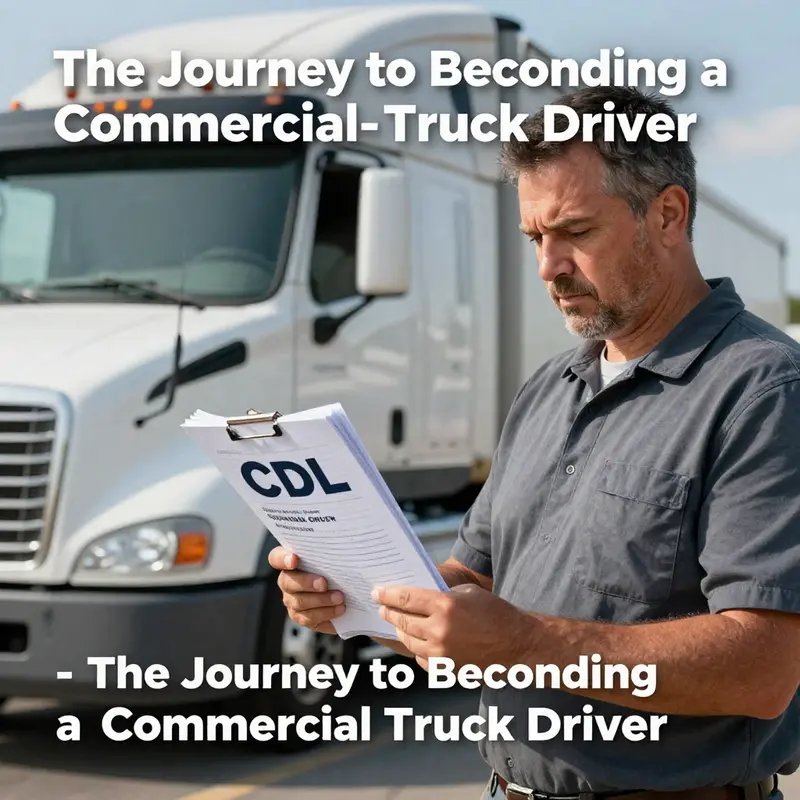
Becoming a commercial truck driver starts long before you sit behind the wheel. It begins at the door of the industry, where legal gates and physical standards decide who moves freight and who does not. Understanding these barriers helps anyone considering the career separate aspiration from reality. The path is not only about knowing road rules or mastering a manual shift; it is about proving that you are eligible to operate a heavy vehicle and that you meet health standards that keep the road safe for everyone. When you grasp how these requirements shape entry, you gain a clearer view of what you must plan for, what you must document, and what you must conserve in terms of time, money, and stamina.
Legal eligibility is the first gate. In the United States a driver must be at least twenty one years old to operate a commercial vehicle across state lines, a boundary known as interstate commerce. Some states permit intrastate driving, meaning within one state, at younger ages. The difference between interstate and intrastate work matters because most long haul and national routes operate across state lines and require the higher age threshold. Beyond age, a valid US Social Security number is required. You must demonstrate legal work authorization in the United States. For non citizens, that usually means lawful permanent resident status or another valid work visa that explicitly covers employment in transportation. The I-9 form is the standard employer side verification of this eligibility, and it is not optional. Employers are bound by law to confirm that a driver is legally allowed to work in the country before onboarding, even if the person holds a CDL.
The interplay between these legal prerequisites and the actual job prospects is telling. A person who meets the age and authorization milestones but cannot demonstrate a valid Social Security number or a clear work authorization will find the CDL process blocked at the outset. Conversely, someone who checks every box on paperwork but cannot meet the medical standards will also fail to cross the gate, albeit for a different reason. The duality of legal and medical gates creates a layered entry process where both compliance and health become the defining filters. This reality clarifies why becoming a driver is sometimes portrayed as a simple, quick path, only to reveal itself as a longer journey once the paperwork adds up and the clock starts ticking on medical cycles.
A newer, highly consequential factor in the legal landscape concerns language and regulatory compliance. An escalating emphasis on English proficiency has emerged as a practical necessity for reading road signs, communicating with law enforcement, and completing driving logs. While historically the core regulations implied a need to read and understand important information, enforcement has varied. The current policy focus elevates language as a gatekeeper that intersects with age, immigration status, and education. For non native speakers, especially older immigrant drivers, this emphasis can translate into real job entry barriers. The full impact is still unfolding, but the trajectory is clear: language competence is increasingly viewed as part of the compliance picture, adding another dimension to the already rigorous screening process.
If you navigate the legal gates successfully, you face the physical gates. The Department of Transportation sets health standards to ensure that drivers can operate a heavy vehicle safely. The essential mechanism is the DOT medical examination, conducted by a certified medical examiner. This exam is more than a formality; it is an objective assessment of whether you have the sensory, cardiovascular, and overall physical capacity to handle the demands of long hours, heavy equipment, and the stresses of road travel. Vision and hearing are core components because dual attention to the road and to roadside cues is critical for safety. The cardiovascular screen looks for conditions that could compromise stamina and endurance during long shifts. The examiner is not just checking a snapshot in time; they are evaluating your ability to perform the job under typical and stressful conditions.
A clean bill of health does not guarantee indefinite permission. The medical certificate is valid for up to two years, but periodic renewals are common, and certain conditions may require more frequent re-evaluation. This introduces a practical cadence to the career entry: you must plan ahead for medical renewals as you plan for training and testing. Some conditions can lead to temporary restrictions or more frequent monitoring, and in worst cases, they can disqualify you from driving altogether. The list of disqualifying conditions is clear in principle: uncontrolled epilepsy, severe sleep apnea that has not been adequately treated, and other significant medical issues. The presence of a health issue does not automatically rule you out, but it does require documentation, management plans, and sometimes specialized testing before a new certificate is issued.
The medical gate is complemented by the licensing gate. All commercial truck drivers must obtain a CDL from the state motor vehicle agency. The process combines both knowledge testing and a practical skills evaluation. The written tests cover general knowledge of traffic laws, safe vehicle inspection, and proper cargo handling. Depending on career goals, endorsements may be necessary or highly advantageous. A hazardous materials endorsement, for example, involves additional testing and background checks, reflecting the security considerations around transporting dangerous goods. The endorsements themselves are not merely a formality; they shape the kind of work you can legally perform and influence your employment opportunities. The training and testing burdens are real, and they compound when you factor in the cost and time required to prepare for both the written and the behind the wheel components.
The licensing gate also layers in employment verification. For non US citizens, the I-9 process continues to govern whether your immigration status permits employment in the trucking sector. In practice, this means a driver cannot simply hold a CDL and present it as proof of eligibility. Employers must confirm that the driver’s immigration status allows for legal employment and that all documentation aligns with federal and state rules. The double check reinforces the principle that a CDL is a credential tied to a lawful right to work, not a standalone permit to operate a vehicle. This linkage between credentialing and employment eligibility can surprise applicants who only focus on the driving tests and overlook the broader compliance framework that supports the industry.
The combined effect of legal, language, and medical gates is to ensure that anyone who reaches the truck cab is prepared to assume responsibility for a heavy machine on public roads. The stakes are high. A single misstep in judgment due to a medical episode, a lack of documentation, or an inability to comprehend required logs can have serious consequences for road safety and for the driver workload. Taken together, these gates shape the supply side of the trucking labor market as much as the demand side shapes it with freight volumes. They help explain why the entry path can feel slow, costly, and exacting, even as the industry itself sometimes faces shortages of willing, qualified drivers.
Practical preparation for these gates is rarely glamorous but always necessary. Prospective drivers often begin by assembling their documents early and verifying their eligibility to work. A common real world sequence is to obtain or confirm a valid Social Security number, gather passport or visa documents if applicable, and secure the I-9 paperwork with a potential employer. The DOT medical exam requires scheduling with a certified medical examiner; an appointment that might demand some flexibility, given the medical facility availability and the applicant schedule. The exam itself is not a one size fits all check; it is a tailored evaluation that considers your medical history, current conditions, medications, and lifestyle factors such as sleep quality and activity level. If a driver has a reversible or manageable condition, the medical examiner can provide recommendations or restrictions that still allow operation under certain conditions, often with periodic re evaluation.
From a budgeting perspective, the combined costs of training, testing, medical exams, and licensing can be substantial. Many aspirants underestimate the financial aspect of obtaining a CDL. Training programs, test fees, and potential re testing costs accumulate quickly, and the time spent away from work or family during training can be the hidden price. This is not merely about clever budgeting; it is about readiness and resilience. The more clearly you understand the gates what is required, what can delay you, and what could disqualify you the better you can plan your path and adjust expectations along the way. It is easy to be drawn by stories of immediate success; the sober truth is that the entry process often unfolds as a careful, staged journey with clear milestones and potential setbacks.
A key aspect of planning is acknowledging language and regulatory compliance as real barriers for some applicants. The enforcement trajectory around English language proficiency for reading road signs, interacting with law enforcement, and completing logs means language skills matter more than ever before. While training programs can help bridge gaps, the barrier is not purely academic. It translates into job readiness in a way that translates to the street: a driver who cannot read a log correctly or who misinterprets a sign due to language limitations could face safety risks and regulatory penalties. The evolving policy environment, including enforcement consistency, means that would be drivers must be proactive about language development and comprehension of regulatory expectations. In practice, many learners choose to engage in targeted language and regulatory literacy work alongside their driving preparation to ensure they meet both the letter and the spirit of the rules.
To illustrate how this topic fits into the broader article, consider the dual reality of entry barriers. On one hand, the basic requirement to obtain a CDL is within reach for many people with the right resources and support. On the other hand, the path is not simple or guaranteed. The legal, health, and regulatory layers interact in ways that can lengthen timelines and increase the upfront investment. This is why the question of difficulty is nuanced. It is not merely about passing a test; it is about aligning the entire profile whether it is legal status, health status, communication ability, and readiness for the disciplined safety first culture of the trucking industry.
For readers seeking practical guidance that connects these gates to concrete steps, one can start with a simple checklist and then expand into a detailed plan. Gather your identification and eligibility documents early. Confirm your ability to work in the United States and secure any necessary visas or permanent residency documentation if you are not a citizen. Schedule the DOT medical exam with a certified medical examiner and prepare for vision and hearing tests by addressing any known deficits in advance. Research the CDL knowledge and skills tests required by your state, and map out the endorsements you might want later, keeping in mind that hazmat endorsements require additional background checks and documentation. If you are navigating language barriers, seek resources to strengthen reading comprehension and regulatory literacy, recognizing that these are not optional add ons but essential components of compliance.
As you plan, you may find guidance and context helpful from established voices in the trucking community. For instance the McGrath Trucks blog offers practical insights into how drivers navigate training licensing and entry into the job market. While every journey is personal, reading about the sequence others have followed can illuminate the most efficient paths through the gates. The aim is not to mimic a single path but to understand the options costs and timelines so you can design a plan that fits your situation. If you want to explore this further you can visit the McGrath Trucks blog for broader guidance and perspectives on starting a trucking career.
The formal framework is only part of the story, however. Real world eligibility hinges on how well you prepare for what comes after the tests and the paperwork. The medical examination, the licensing process, and the background checks are not mere hurdles; they are indicators of the industry safety and reliability. For many applicants meeting these standards is the first clear signal that they are stepping into a career that demands discipline, continuous learning, and a willingness to adapt to a demanding schedule. The gates, as daunting as they may seem, are also filters that protect both the driver and the public. They clarify who is truly ready to handle the responsibilities that come with driving a heavy vehicle for long stretches and under variable conditions.
For those who want to dig deeper into official details the Federal Motor Carrier Safety Administration FMCSA maintains comprehensive guidance on medical and licensing requirements. This external resource provides the authoritative framework that underpins the gates described here and helps readers keep abreast of any updates in standards or procedures. You can explore it here: https://www.fmcsa.dot.gov.
In short, the path to a CDL is a structured journey through a series of gates rather than a single leap. It requires preparation, persistence, and a clear eyed understanding of what each gate demands. The legal gates ensure you are eligible to work and able to engage with the regulated environment of trucking. The medical gates ensure you are physically and mentally capable of sustained operation in a demanding role. When you recognize that the challenge is systemic and layered rather than a single hurdle, you can approach the process with a plan, set realistic expectations, and move forward with confidence.
If you are ready to pursue this path, start by consolidating documents, scheduling essential exams, and mapping out a realistic timeline that accounts for testing, training, and potential delays. With careful preparation, you can transform these gates from sources of anxiety into a clear navigable route toward a CDL and a career behind the wheel. And as you advance, remember that the journey is not just about the certification you earn. It is about building a foundation of compliance, health, and continuous readiness that will support you through the years of driving ahead.
External resource: For official up to date details on medical and licensing requirements consult the FMCSA guidance. https://www.fmcsa.dot.gov
Clear Roads, Clear Rules: Navigating Language and Regulatory Hurdles to Become a Commercial Truck Driver
Language and Regulation as Gatekeepers
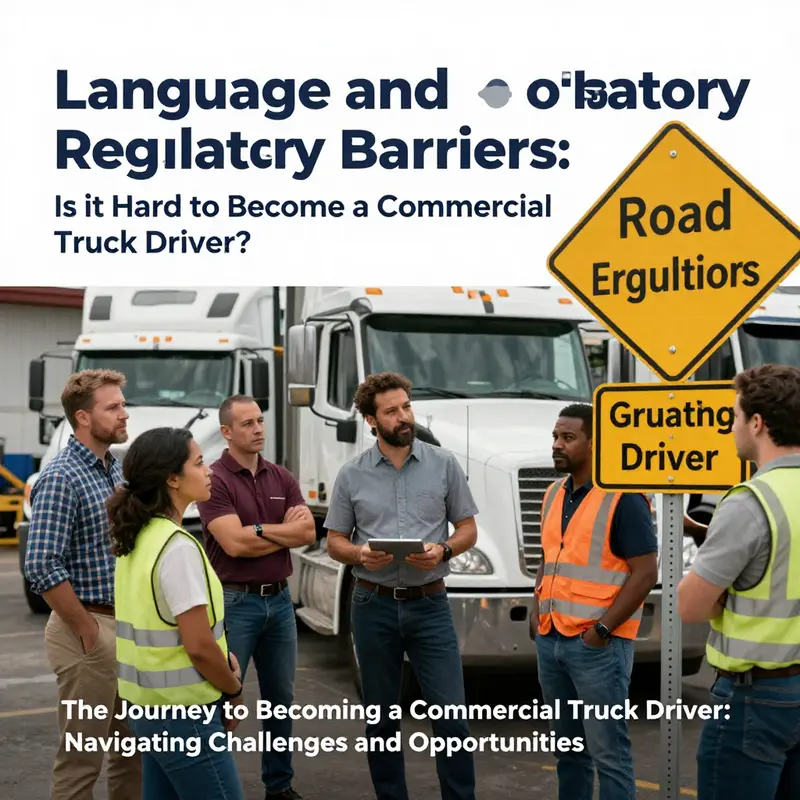
Becoming a commercial truck driver involves more than learning to manoeuvre a heavy vehicle. Language and regulatory requirements act as gatekeepers. They determine who can enter the industry, how fast they progress, and whether they can sustain a long-term career. These barriers are not insurmountable, but they are often underestimated. They shape both the experience of individual drivers and the broader supply of labour in the industry. Understanding how they work—what is required, why it matters, and how to approach each step—reduces surprises and shortens the path to steady work.
At the most basic level, the process in many countries follows a predictable pattern: secure the appropriate licence, pass medical and fitness assessments, clear background checks, and demonstrate competence through written and practical testing. In Australia, for example, that means progressing to a Heavy Vehicle (HV) licence through staged testing. Across other jurisdictions, a similar structure applies, even if the names and details differ. The common thread is this: regulators expect drivers to know how to operate large vehicles safely and to follow rules that protect other road users and the public.
Language sits at the heart of this regulatory framework. Tests, manuals, signage, and official forms are typically presented in English. Examiners conduct knowledge tests and practical assessments in English. Police interactions and safety briefings rely on clear communication. That places a premium on English proficiency. It is not about literary skill. It is about functional command: the ability to read road signs, interpret instructions, complete logbooks, and communicate with law enforcement or dispatch. Without this basic level of comprehension, a driver risks failing exams, misunderstanding safety procedures, and creating hazards on the road.
The language requirement has an immediate practical impact on aspirants from non-English speaking backgrounds. Older immigrants who have driven for years abroad often find themselves needing to translate a lifetime of experience into a new linguistic environment. Younger drivers or those who have completed schooling in English face fewer barriers. This divide is not just academic. It affects employment opportunities, licensing timelines, and long-term job security.
Regulatory standards extend well beyond language. A clean driving record is a universal prerequisite. Authorities will assess an applicant’s history for serious offences, habitual traffic violations, or patterns that suggest unsafe behaviour. Medical and fitness assessments serve to protect both the driver and other road users. Examinations evaluate vision, hearing, cardiovascular fitness, and other conditions that could impair driving. These checks are not chalked up as bureaucratic red tape; they exist because heavy vehicles magnify consequences when things go wrong.
Background checks complete the picture. Many employers and regulators require criminal history checks and, in some cases, identity verification tied to national databases. For drivers who will transport hazardous materials, additional security clearances and testing apply. This layered approach to vetting is intended to ensure that the people trusted to move large, sometimes dangerous loads are accountable, physically fit, and communicative.
For many, the rigour of these rules is a relief. They create a predictable, standardised pathway into the industry. That predictability is the reason structured training and staged licensing systems work. A candidate starts with an ordinary driver’s licence and advances through specific heavy vehicle classes. Each stage builds on the last, helping learners master the skills and knowledge that regulators deem essential. Step-by-step guides published by reputable sources break this sequence down and turn an intimidating process into a clear checklist.
But predictability does not equal simplicity. Time, cost, and access to training influence outcomes. Licence fees, medical examinations, and the costs of professional training add up. For people whose finances are tight, these expenses can delay entry or push them toward cheaper but less thorough options. Access to training facilities matters too. Rural applicants often travel long distances to take tests or attend driving schools, adding time and expense. These practical barriers amplify the difficulty of meeting regulatory requirements.
Beyond the upfront hurdles, regulatory changes can alter the landscape quickly. Recent shifts in enforcement have placed greater emphasis on ensuring drivers have the language skills needed for safety-critical tasks. Where previously compliance was uneven, more rigorous enforcement now means that applicants who were once able to rely on informal allowances must meet clearer benchmarks. For non-native speakers, this tightening raises the bar, potentially reducing the pool of eligible drivers and increasing the demand for targeted language support.
The industry responds to these pressures in different ways. Training providers increasingly offer language-aware instruction. Practical driving sessions are paired with focused lessons on the vocabulary of the road. Employers who rely on a diverse workforce invest in on-the-job language coaching to bridge gaps and reduce miscommunication. These approaches work, but they require time and coordination. Employers balance the cost of training against the practical need for reliable drivers. In tight labour markets, companies may be more willing to invest in training; where supply outstrips demand, they may favour candidates who already meet standards.
This dynamic has broader implications for workforce planning. Policymakers and industry leaders must decide whether to expand targeted training and language support or to keep the entry bar high in the name of safety and efficiency. The choice affects not only individuals seeking work but also supply chains and freight costs. In some regions, workforce shortages encourage investment in training and support. In others, a glut of applicants reduces the incentive for employers to fund additional development.
From an individual perspective, facing language and regulatory barriers is a matter of strategy. Preparation makes the process smoother. Start by understanding the exact requirements in your jurisdiction. Read the official guidance from licensing authorities. Break the pathway into steps and budget both time and money for each stage. Use practice tests and study materials in English, but seek support where needed. Community programs and vocational colleges often provide bridging courses that focus on the specific language used in driving tests. These courses are practical. They teach the terms on the test, the phrasing examiners use, and the common signs and instructions drivers encounter on the road.
Practical driving skills matter, but so does test technique. Many applicants fail knowledge tests not for lack of intelligence but for unfamiliarity with the format and language. Practising with mock exams, attending structured classes, and working with tutors who explain the meaning behind questions makes a large difference. For the practical assessment, consistent supervised driving is key. Time behind the wheel with feedback builds confidence and reduces the stress that can occur during a high-stakes practical test.
Medical and background checks are less about passing and more about planning. If you have health conditions, consult a medical professional early to understand how they will be assessed. Some conditions can be managed or monitored in ways that satisfy regulators, while others may impose permanent restrictions. Similarly, if you have past traffic offences or a criminal record, get clarity on how those issues are viewed by licensing authorities. In some cases, rehabilitation, time, or legal advice can mitigate the impact.
For employers, the decision to hire a candidate who needs language support involves calculations about retention and productivity. Investing in language training may reduce turnover and create a more competent workforce. The industry gains when drivers can communicate clearly during inspections, with customers, and in emergencies. These are not optional skills; they are safety-critical. Employers that partner with training providers or create internal mentoring programs often see long-term benefits in safety records and operational efficiency.
The interplay between regulation and the job’s realities shapes expectations about pay and career trajectory. Strict requirements can limit the number of eligible drivers, which in turn can influence wages. However, the promise of high earnings remains conditional. Niche specialisations, such as transporting hazardous goods or driving oversize loads, often command premiums, but they also require additional certifications and compliance steps. Those willing to invest in extra training and language skills position themselves for better opportunities—but not guarantees.
A realistic strategy for aspiring drivers balances ambition with practical decisions. Start by meeting the baseline: a valid licence, required medical clearance, and a clear understanding of the knowledge test. Layer on language preparation targeted at exam vocabulary and everyday traffic communication. Seek practice opportunities that mirror test conditions. If you lack the funds to pay for private courses, look for community training, apprenticeships, or employer-sponsored programs that reduce upfront expense.
At the systems level, better alignment between regulators, training providers, and employers would ease friction. Coordinated initiatives that offer integrated language and driving training can shorten the path to qualification. Public funding or subsidies for targeted training would help too, especially for older workers and recent immigrants who bring valuable driving experience but lack English proficiency. Industry associations can create credentialing frameworks that measure both language competency and technical skill in practical, job-relevant ways.
Language and regulatory barriers make the road to becoming a commercial truck driver more complex than simply learning to drive. They are designed to protect lives, ensure safety, and maintain public trust in an industry that moves essential goods. For the individual, meeting those standards requires planning, investment, and targeted practice. For the industry, supporting candidates through integrated training, language assistance, and realistic on-the-job mentoring unlocks a larger, more reliable workforce.
If you are preparing to enter this field, use reliable resources and follow a staged plan. Practical guides that outline every step and required document help you avoid surprises and wasted fees. For a clear, step-by-step roadmap specific to Australia, a helpful resource explains the licensing stages and eligibility in plain terms. It offers practical guidance on the tests and the progression from a standard licence to heavy vehicle classes. For industry context and broader market trends, insights on navigating economic uncertainties in the trucking markets can provide perspective on employer demand and regional differences.
Ultimately, the decision to pursue truck driving should factor in these non-driving hurdles. Language and regulatory requirements are part of the job’s core. They protect drivers and the public, but they also shape who can succeed. With preparation, targeted support, and realistic expectations, many people overcome these barriers and build solid careers. Those who do it well combine technical skill, reliable documentation, and functional language competence. That combination opens more routes, increases safety, and brings greater stability to both drivers and the companies that depend on them.
For guidance on how to approach the licensing pathway and what each stage entails, see this practical step-by-step guide. For industry-level analysis on demand, supply, and economic pressures that affect hiring decisions, consider reading insights on navigating uncertainties in the Canadian and U.S. trucking markets.
-
Internal resource: exploring market context and operational challenges can help candidates understand employer expectations and regional differences. (See: navigating economic uncertainties: key insights from the Canadian and US trucking markets).
-
External resource: for a clear, practical roadmap to becoming a truck driver in Australia, consult the step-by-step guide from Indeed Australia: https://au.indeed.com/career-advice/finding-a-job/how-to-become-a-truck-driver
null
null
Final thoughts
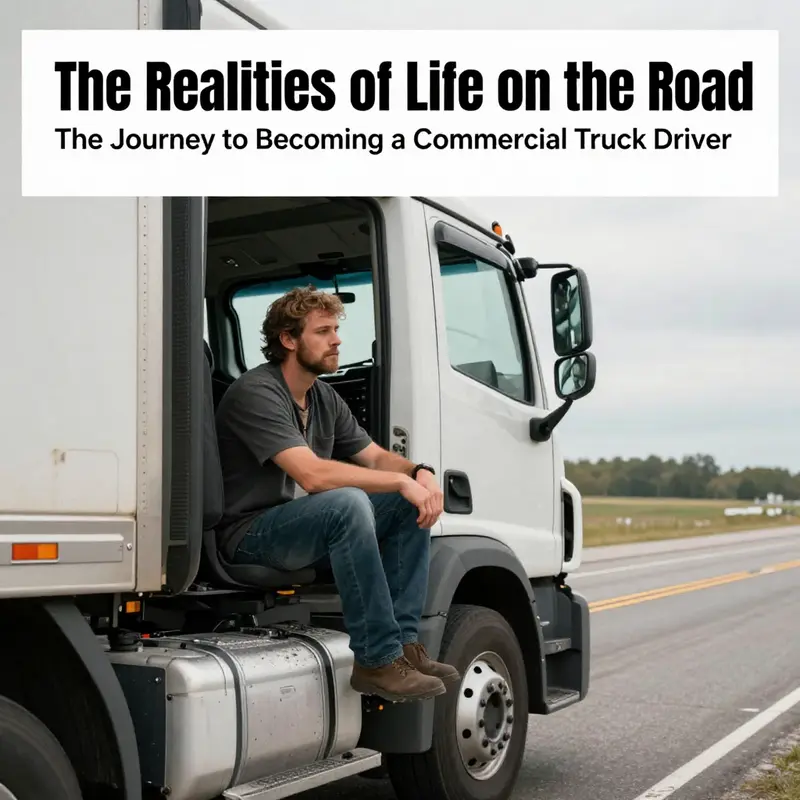
In summary, while the path to becoming a commercial truck driver may appear straightforward with the mere acquisition of a CDL, the broader context reveals numerous obstacles that can deter potential drivers. The legal and physical prerequisites demand significant commitment and compliance. Language and regulatory barriers further complicate the process, particularly for non-native speakers. Finally, the realities of life on the road—including isolation, demanding hours, and market competition—pose additional challenges that must be acknowledged and addressed. Understanding these factors is essential for trucking company owners, fleet managers, and logistics providers who aim to cultivate and sustain a competent, capable workforce in the face of ongoing industry evolution.